☕ Grab a cappuccino. Let’s talk about giving business debt the boot. |
|
|
|
Before we talk about paying down debt, let’s acknowledge something important: Debt isn’t bad.
In business, debt can actually be essential. It can help you buy equipment, get through a slow season, open a new location, hire employees, or take advantage of an opportunity you couldn’t otherwise afford. But when it comes to business debt, most owners have an invisible threshold. |
It’s the point where the amount you owe stops feeling manageable. Maybe it’s one more credit card balance. Another monthly payment. An interest charge that makes you cringe. Or simply a total number of monthly payments that has gotten bigger than you’re comfortable with. Cross that line, and debt can start to feel different. It goes from HELPFUL to HEAVY.
And if you’re there, I’m not going to tell you to pay it all off tomorrow. I’m going to suggest you make a plan. First, figure out exactly what you owe. Then look at what that debt is costing you, what your business can realistically afford to pay, and where it makes sense to start.
The goal isn’t to kick every dollar of debt out the door today. It’s to figure out which one gets the boot first. |
|
|
🌟 Small Business Spotlight: When business debt starts calling the shots |
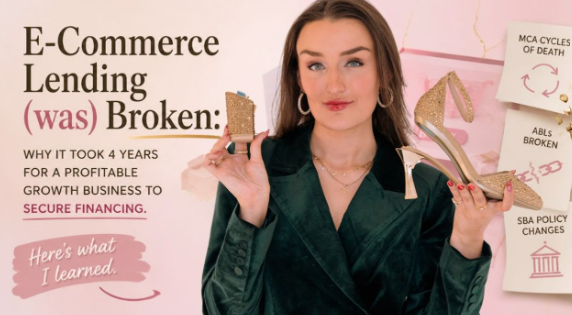
Pashion Footwear was growing fast. After sales jumped 450% in 2021, founder Haley Pavone placed about $1.5 million in inventory orders to keep up with demand. Then the supply-chain crisis hit.
The shoes were stuck waiting at the Port of Los Angeles for months, but Pashion's financing still came due. With inventory it couldn't sell and bills it still had to pay, the company turned to merchant cash advances and other short-term financing to stay alive. One loan led to another, and Pavone says the company came dangerously close to bankruptcy. Eventually, she decided waiting for someone to rescue the business wasn't a plan. She renegotiated with lenders, cut operating costs, leaned heavily into organic marketing, and concentrated on making Pashion profitable. The company grew 32% in 2023 and another 85% in 2024, all while continuing to service its debt. |
The debt didn't disappear overnight. In fact, Pavone says that at one point she was managing 11 lenders and roughly $180,000 a month in debt payments. She continued looking for a way to restructure it while keeping the underlying business profitable. This year, Pashion finally secured a $3.75 million revolving line of credit that allowed it to buy out its other debts and replace that complicated debt stack with one financing facility, while leaving the company with working capital. Pavone made a plan, worked on what she could control, and kept adjusting that plan until something worked.
That's a pretty good lesson for the rest of us. Your first debt plan doesn't have to be perfect. You just need somewhere to start. |
|
|
The processes that supported your last stage of growth may not be ready for what comes next. Attend TechRepublic and EverCommerce’s webinar on September 22, 2026, at 11:00 AM ET to identify operational bottlenecks, strengthen field and back-office coordination, and improve visibility before existing gaps become embedded in future plans. Determine whether your current operations are truly ready to scale. |
|
|
|
Take our quick poll: Business debt can fund growth, cover unexpected expenses, or simply help manage cash flow. But when it comes time to pay it down, every owner has a different approach. |
|
|
|
📊 If you were focused on paying down business debt, which strategy would you choose first? |
|
|
|
📖 What I’m Reading This Week |
🗓️ Don't let Sept. 15 sneak up on you: The third-quarter estimated tax payment deadline is Sept. 15 for individuals who make estimated payments. Partnerships and S corporations that received six-month filing extensions also have Sept. 15 deadlines. Check your calendar and cash flow now, rather than discovering the deadline the night before.
👨👩👧 Paid family and medical leave could come with a tax benefit: The IRS recently highlighted enhancements to the federal paid family and medical leave tax credit. Eligible employers, including small businesses, may qualify for the credit when providing paid family and medical leave to employees. If you're already offering paid leave, it's worth checking whether your business qualifies before leaving a potential tax credit on the table.
🌪️ Your disaster plan should include your financial records: Within the last week, the IRS reminded businesses and individuals to protect important tax and financial records before disaster strikes. Keep electronic copies of tax returns, insurance documents, bank records, and other essential business records somewhere you can access them even if you can't get into your workplace.
|
|
|
|
❄️ Steal This Idea: Get Your Debt Snowball Rolling |
Kick one debt off the list. Ultimately, the debt payoff plan you choose is up to you. But here’s one approach that has worked for me: Start with the smallest balance. It’s the lowest-hanging fruit and the most achievable option.
Keep making the minimum payments on everything else, then put whatever extra amount you can reasonably afford toward that smallest debt. Once it's gone, take the money you were paying toward it and roll it into the next-smallest balance. Will starting with the smallest debt always save you the most in interest? No. Paying the highest-interest debt first may save you more money overall. |
But there's another benefit to starting small: PROGRESS
Paying off one balance gives you something tangible to celebrate. You have one fewer payment to make every month, one fewer balance to track, and proof that your plan is working. Then you take that payment and aim it at the next one. One debt down. One monthly payment freed up. A little more momentum for the next. |
|
|
🤖 AI Prompt and Prosper: Build your own debt calculator |
🔒 A quick privacy note: Keep it anonymous. Don’t enter bank or lender names, account numbers, or other identifying financial details. We only need a few basic numbers to do the math.
Copy this prompt and paste it into ChatGPT or your favorite AI tool: |
|
|
|
Help me build a simple business debt payoff calculator.
Ask me for each debt one at a time, including: |
- Current balance
- Interest rate
- Minimum monthly payment
|
Do not ask me for any personal information like bank names, lender info, or account numbers. Then ask how much extra money I can realistically put toward debt each month. Once you have all the information, create a table showing each debt and compare two payoff strategies: 1. Debt snowball: Pay the smallest balance first.
2. Debt avalanche: Pay the highest-interest debt first. For each strategy, estimate: |
-
Which debt I would pay off first
- Approximate payoff timeline
- Total interest paid
- How much faster I could become debt-free by adding the extra monthly payment
|
Then show me the results side by side and explain the trade-offs in simple language.
Do not recommend using money needed for payroll, taxes, essential operating expenses, or emergency reserves to make extra debt payments. Customize this plan specifically for my business and make it as attainable as possible without creating undue hardship. |
|
|
7 Best HRIS for Small Business Owners for 2026 Stop juggling spreadsheets—find the HRIS that centralizes employee data, automates workflows, and scales with growth. We compare seven top platforms (Rippling, Gusto, BambooHR, etc.) to match payroll, compliance, or analytics needs—discover your best fit. |
|
|
|
🎥 Behind the Scenes - What Nobody Tells You! |
Sometimes your first business investor is you When I started my business, no investor was waiting with a check. I was the investor.
And that's not unusual. Many entrepreneurs use their own savings to get a business off the ground. The latest SBA data shows that personal savings are a common source of startup capital.
Using your own money can feel like the obvious choice. You believe in the idea. You want to get started. And every dollar you put in feels like an investment in something you're building for yourself. But here's what nobody tells you: There can come a point when you're no longer asking whether the business needs the money. You're asking how much more of your personal financial security you're willing to give it. That's a much harder question. Your savings, credit cards, home equity, and retirement money aren't just sources of business capital. They're also the money that protects you when something goes wrong. The SBA specifically cautions owners who self-fund not to spend more than they can afford and to be particularly careful about tapping retirement savings. Decide how much you're willing to invest. Decide what needs to happen before you put in more. And perhaps most importantly, decide what number you're not willing to exceed. Believing in your business is important, but so is protecting the person building it. |
|
|
| Top three things to remember
1. Set your limit before you need it. Decide how much personal money you're comfortable putting into the business.
2. Keep the finances separate. Even when you're funding the business yourself, keeping personal and business accounts separate makes it easier to track what's really happening.
3. Don't automatically reach for more personal money. If the business continually needs cash, stop and figure out why before writing yourself another check. |
|
|
|
🏆One Quick Win: Change a Due Date |
Compare when your business debt payments are due with when money typically comes into your business. If several payments hit during the same week, or right before your strongest cash-flow period, ask the lender or card issuer whether you can change your payment due date.
It won't reduce what you owe, but lining up payments with your cash flow could make managing that debt a little easier. Sometimes a better debt plan isn't about finding more money. It's about better timing. |
|
|
|
Was there something that resonated with you, or is there a topic you'd like me to cover in a future issue? Feel free to reach out to me anytime at rayanne.harmon@technologyadvice.com |
|
| |
Senior Small Business Writer and Entrepreneur |
Rayanne Harmon is an entrepreneur and finance professional with decades of experience building businesses while working in banking, accounting, and business finance. Inspired by a family of entrepreneurs, she successfully owned and operated a photography studio for 20 years before launching a social media marketing agency dedicated to helping small businesses grow. Through Small Business Insider, Rayanne shares practical advice, real-world insights, and actionable strategies to help entrepreneurs navigate the challenges of starting, managing, and growing a successful business.
|
|
|
|
About Fit Small Business Newsletters:
|
Whether you’re just launching or looking to level up your business, we have the latest on what products are #trending, how to reach more customers, tips for streamlining your operations, and actionable insights on the latest starting a business news. Delivered to your inbox every week. |
|
|
Visit our Subscription Center to get other free newsletters, manage your account settings or to be removed from Fit Small Business communications. |
|
|
|
|

 6 Best Small Business Grants in 2026
 5 Best Business Prepaid Cards for 2026
 The 8 Best Online Lending Platforms for 2026
 7 Best Easy Business Loans for 2026
 10 Best Cash Flow Loans for Small Businesses in 2026
 QuickBooks Free vs. Wave: Features, Pricing & Key Differences