






Business prepaid cards help companies control employee spending by limiting available funds and setting rules for how funds can be used. For this guide, I also considered corporate and charge cards that offer similar spend controls, such as employee budgets, card limits, and purchase restrictions, even when spending is backed by a credit line rather than funds loaded onto the card in advance.
The best options combine strong spending controls with low fees and useful expense management tools, such as real-time transaction tracking, receipt capture, approvals, and reporting.
Here are my top five picks for business prepaid cards and cards with prepaid-style spending controls:
Card | Best for | Annual fee |
| BILL Divvy Card | Best overall for managing employee expenses with built-in budgeting tools | $0 |
| Emburse Spend Card | Best for earning cash back on qualifying purchases | $0 |
| Rippling Spend Corporate Card | Best for all-in-one management of employee spending, expenses, and payroll | $0 |
| Rho Corporate Card | Best for daily or monthly credit terms with exclusive partner rewards | $0 |
| PEX Visa Business Prepaid Card | Best for custom payment platform | $0 |
My methodology
I evaluated business prepaid cards based on their costs, spending controls, funding requirements, and expense management capabilities. I also considered how practical each option is for businesses managing purchases across multiple employees, departments, or projects.
My evaluation focused on:
- Costs and fees: I reviewed monthly and annual fees, card fees, transaction costs, and other charges that can affect the overall cost of using the card.
- Funding requirements and limits: I considered how businesses add funds, applicable load and balance limits, and how easily available spending can be managed.
- Employee spending controls: I looked for customizable card limits, merchant and category restrictions, budgets, and other tools that help control purchases before they occur.
- Card management: I evaluated how easily businesses can issue physical or virtual cards, adjust limits, freeze cards, and manage access for multiple employees.
- Expense management: I considered features such as real-time transaction tracking, receipt capture, approval workflows, expense categorization, and reporting.
- Accounting and business integrations: I looked at integrations with accounting software and other business systems that can simplify reconciliation and financial management.
- Rewards and additional benefits: When available, I considered cash back, rewards, partner benefits, and other features that add value to regular business spending.
- Ease of use: I considered the application and setup process as well as how straightforward the platform is for ongoing card and expense management.
The strongest options combine useful spending controls with transparent costs and practical expense management tools while accommodating different business sizes and spending needs.
Why you can trust Fit Small Business
My knowledge spans five years as a financial professional, working in various roles within the banking industry.
I am committed to delivering expertise-led answers to your small business questions and helping you understand all things business finance.
I ensure that the best answers I provide are based on accuracy, clarity, authority, objectivity, and accessibility. These are aligned with the Fit Small Business Editorial Policy.
- Specialize in CRE, financial analysis, and banking operations
- Worked as a Credit Analyst, Loan Administrator, and Bank Teller
- Have been writing B2B finance content since 2024


- Overview of the best prepaid business cards
- BILL Divvy Card: Best for managing employee expenses with built-in budgeting tools
- Emburse Spend Card: Best for earning cash back on qualifying purchases
- Rippling Spend Corporate Card: Best for all-in-one management of employee spending, expenses, and payroll
- Rho Card: Best for daily or monthly credit terms with exclusive partner rewards
- PEX Visa Business Prepaid Card: Best for custom payment platform
- How to choose the right prepaid business credit card
- When to consider a business prepaid card alternative
- How I selected the best business prepaid cards
- Bottom line
Overview of the best prepaid business cards
| Additional fees | Unique features | ||
|---|---|---|---|
| BILL Divvy Card | None | Assign employee card limits to department or project budgets | Apply now |
| Emburse Spend Card | $8 per user per month | Offers cash back when meeting qualifying spend | Apply now |
Rippling Spend Corporate Card | $8 per user per month | Link employee spending directly to roles, departments, and payroll | Apply now |
Rho Corporate Card | None | Offers access to partner perks | Apply now |
| PEX Visa Business Prepaid Card | Plans from $0 to $200 monthly | Allows each card to have a maximum balance of $25,000 | Apply now |
BILL Divvy Card: Best for managing employee expenses with built-in budgeting tools
 | |
Pros
| Cons
|
Card details
Rewards and benefits
| |
Why I like it
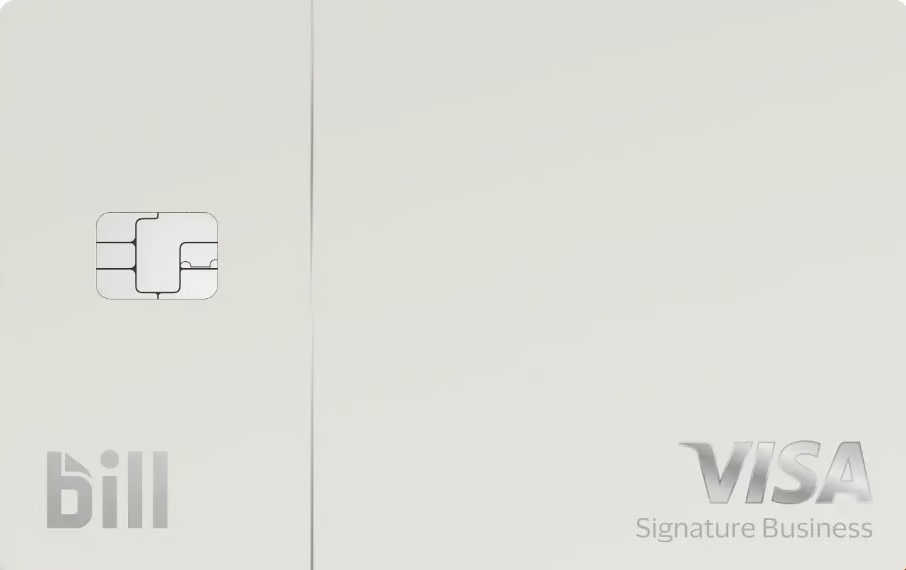
The BILL Divvy Card approaches employee spending through budgets rather than relying solely on individual card limits. Businesses can establish budgets for departments or projects, give employees access to those funds, and use card controls to determine how much they can spend. When an employee makes a purchase, BILL deducts the amount from the applicable budget, giving finance teams an updated view of available funds without waiting for an expense report.
It also offers several ways for businesses to structure their available spending capacity. BILL provides fixed and variable credit lines, as well as a pre-fund option that uses money provided upfront to secure spending. That last option is particularly relevant for businesses considering prepaid cards because it provides the ability to fund spending in advance while retaining BILL's budgeting, card controls, and expense management tools.
The main distinction is that the BILL Divvy Card itself isn't a prepaid card. BILL classifies it as a corporate charge card, and balances are due in full each billing cycle rather than carried as revolving debt. Businesses also need to consider the requirements attached to its rewards program. Earning rates vary by billing cycle and purchase category, and BILL imposes spending and redemption requirements before earned points can be used.
Emburse Spend Card: Best for earning cash back on qualifying purchases
 | |
Pros
| Cons
|
Card details
Rewards and benefits
| |
Why I like it
Emburse gives businesses several ways to control employee purchases before they happen. Instead of relying only on a general card limit, administrators can set daily, weekly, or monthly spending limits, cap individual transactions, and restrict purchases by merchant category.
With Emburse's expense management tools, employees can request funds before making a purchase, while businesses can create approval rules for those requests and tie card use to expense policy requirements. That combination can be useful for companies that want to give employees more purchasing independence without waiting until expense reports are submitted to identify out-of-policy spending.
Businesses meeting Emburse's qualifying spend requirements can also earn a 1% cash rebate. The main consideration is that Emburse Cards aren't a standalone card product. They're offered alongside Emburse expense management solutions, so businesses should consider the cost and functionality of the entire platform.
Rippling Spend Corporate Card: Best for all-in-one management of employee spending, expenses, and payroll
 | |
Pros
| Cons
|
Card details
Rewards and benefits
| |
Why I like it
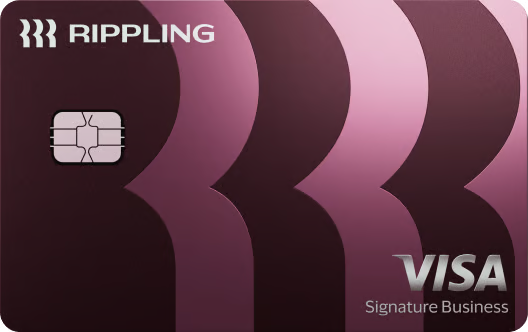
Rippling brings employee spending and workforce data into the same system. Businesses can create card policies based on factors such as an employee’s department, role, level, or location, then set the appropriate spending limits and purchase rules. Because those controls are tied to employee information, Rippling can adjust policies when someone changes roles or revoke access when an employee leaves.
The card also connects spending with expense management and accounting workflows. Transactions can be monitored as they happen, receipts can be requested automatically, and expenses can be categorized and synced with the general ledger. For businesses already managing payroll or other workforce processes through Rippling, that can keep employee spending from operating as a separate process.
Unlike a prepaid card, however, the Rippling Corporate Card uses a business credit limit and must be paid in full according to the company's assigned repayment terms. Rippling may establish daily, weekly, biweekly, or monthly payment terms based on the business's risk profile. That makes it an alternative for businesses that want prepaid-like controls over employee purchases but are comfortable using a charge card rather than funding cards in advance.
Rho Card: Best for daily or monthly credit terms with exclusive partner rewards
 | |
Pros
| Cons
|
Card details
Rewards and benefits
| |
Why I like it
Rho gives businesses a choice between two repayment structures instead of locking every account into the same schedule. Daily Terms require spending to be repaid the next business day, while Monthly Terms provide a 30-day billing cycle followed by a one-day repayment period. That flexibility can help businesses choose between faster repayment with a higher standard cashback rate or a longer window for managing cash flow.
The card also comes with a broader set of spending controls and expense tools. Businesses can issue physical, virtual, and vendor cards, establish custom limits, monitor purchases in real time, collect receipts, and automate transaction coding and approval routing. Rho charges no annual, subscription, or per-card fee, so companies can add cards as their purchasing needs expand without paying a separate fee for each one.
The tradeoff is that Monthly Terms aren't automatically available to every account. Rho starts customers on Daily Terms, and businesses must meet cash balance requirements and pass underwriting before moving to Monthly Terms. The rewards structure also depends on which repayment option and account tier you use, so businesses that want the highest cashback rate will need to weigh those requirements against the flexibility they want from their payment schedule.
PEX Visa Business Prepaid Card: Best for custom payment platform
 | |
Pros
| Cons
|
Card details
Rewards and benefits
| |
Why I like it
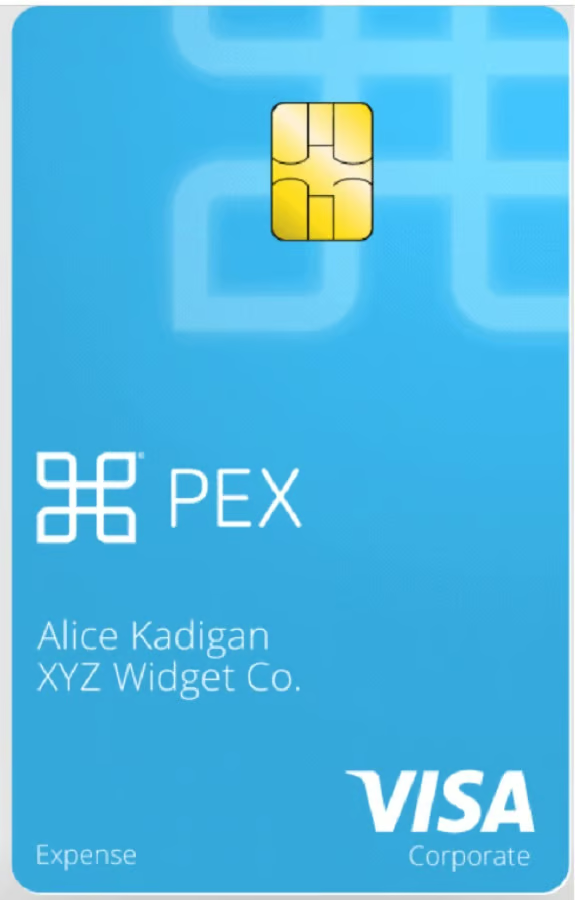
PEX gives businesses more control over how pre-funded money is distributed and used across a team. Instead of placing the same limit on every employee, administrators can create rules based on the cardholder, merchant, merchant category, department, project, or other spending criteria. Those restrictions can be changed in real time, which makes the card useful for businesses whose purchasing needs vary among employees or locations.
It also goes beyond basic card limits with approval workflows and virtual cards. Businesses can automatically approve smaller employee funding requests, send larger requests for review, and create virtual cards for one-time or recurring vendor payments. PEX also supports separate programs for different departments or locations under the same account, giving organizations a way to tailor spending policies without managing completely separate card systems.
Cost is the main factor to watch. The Base plan has no standard monthly subscription fee, but PEX charges a $25 maintenance fee in months when spending is below $1,000. Core costs $75 per month and Pro costs $200 per month for businesses, although subscription fees are waived in months when spending exceeds $50,000. The plans also include different numbers of free card accounts, so businesses with larger teams should consider both the monthly plan cost and potential per-card charges.
How to choose the right prepaid business credit card
When comparing business prepaid cards, start with how your employees spend and how much control you want over those purchases. Focus on these four areas:
- Choose the right funding structure: Decide whether you want to fund employee spending in advance or prefer a corporate charge card that provides similar controls while drawing from a credit line.
- Match the controls to your team: Consider whether basic card limits are enough or if you need budgets, merchant restrictions, virtual cards, or controls for individual employees, departments, and projects.
- Consider your expense management needs: If tracking receipts and reconciling purchases takes significant time, prioritize cards with automated receipt collection, approvals, reporting, and accounting integrations.
- Calculate the cost based on how you'll use it: Look for subscriptions, additional card fees, transaction charges, minimum spending requirements, and other costs that may apply.
The right option should make it easier for employees to make approved purchases without creating more work for the people responsible for tracking and reconciling those expenses.
When to consider a business prepaid card alternative
Business prepaid cards are useful, but there are scenarios where alternatives might be a better fit:
- You need to build credit: Prepaid cards don’t help build credit since they don’t report to credit bureaus. If improving your business credit score is a priority, explore our guide to the best small business credit cards or leading secured business credit cards for more options.
- You have high spending needs: Prepaid cards often have balance and reload limits. For businesses with substantial spending, start with our list of the top purchasing cards to find the right fit.
- You want extended payment terms: Prepaid cards require funds upfront, making them less flexible for managing cash flow. A small business credit card or P-card allows you to float expenses and pay later, giving you more time to manage cash flow.
- You need advanced expense management: While some prepaid cards offer basic tracking tools, alternatives like corporate credit cards often include comprehensive expense management systems, detailed reporting, and integration with accounting platforms.
- You’re looking for better rewards: Prepaid cards may have limited or no rewards programs. If earning rewards on business purchases is important, check out our guide to the best corporate cards to look for the card that fits your needs.
How I selected the best business prepaid cards
My methodology for choosing the best business prepaid cards focused on options that give business owners tight control over spending without relying on a traditional credit line. I prioritized providers that clearly explain how funding works, what limits apply, and which types of businesses can qualify.
Specifically, I selected cards based on total cost and fee transparency, funding methods and load limits, spending controls and employee card management, and the quality of expense tools like real-time tracking, receipts, approvals, and reporting. I also looked at how well each card fits into an existing finance stack through accounting or other integrations, plus the overall ease of setup and day-to-day usability.
The best options should work across different team sizes and use cases, make it easy to issue cards and enforce policies, and simplify expense tracking and closeout.
Frequently asked questions (FAQs)
Are prepaid cards accepted everywhere credit cards are accepted?
In most cases, yes. Prepaid cards that run on major networks like Visa, Mastercard, or American Express can usually be used anywhere that network is accepted. That said, prepaid cards can be hit-or-miss for situations where a merchant wants to place a large pre-authorization hold or keep a card on file, like hotels, car rentals, or some subscription services.
How do prepaid business cards work?
Prepaid business cards let you spend money you load onto the card ahead of time, so you’re using available funds instead of a credit line. After you connect a funding source, you can issue cards to employees, set spending limits, and track transactions through an online dashboard or mobile app. Because spending is typically capped by the balance and your controls, prepaid cards can be a straightforward way to keep budgets tight and reduce surprises.
Do prepaid business cards affect credit scores?
Prepaid business cards do not impact your credit score because they don’t involve borrowing or a credit line. Payments and spending activity aren’t reported to credit bureaus, making them a good option for managing expenses without affecting your business or personal credit history. However, if building credit is a priority, you may want to consider a secured or traditional business credit card instead. For options, check out our list of the leading secured business credit cards.
Bottom line
The best business prepaid cards make it easier to manage company spending with practical tools like spending limits, real-time tracking, and, in some cases, rewards. Whether you want to simplify employee purchases, keep day-to-day costs organized, or avoid relying on a credit line, there’s likely a prepaid option that fits. Starting with our recommendations can help you pick the card that aligns with your priorities and gives you clearer control over your business finances.