







Consumers are demanding more transparency from businesses than ever before. One way to appeal to this consumer behavior is through honesty and accountability in your supply chain processes. Supply chain transparency involves both internal and external access to information about product development, from sourcing to distribution. Let’s dive in.
What Is Supply Chain Transparency?
Supply chain transparency is when a business is completely aware of what is happening and all information at every stage of the supply chain. It then shares this information with its employees, customers, and stakeholders.
Transparency in supply chains covers a lot, including:
- Who and where the suppliers are
- Which materials are used, and where they’re sourced from
- Where and how products are made
- Labor practices and wages for workers
- How materials and products are transported
- Overall environmental impact and carbon footprint
Supply Chain Transparency in Action
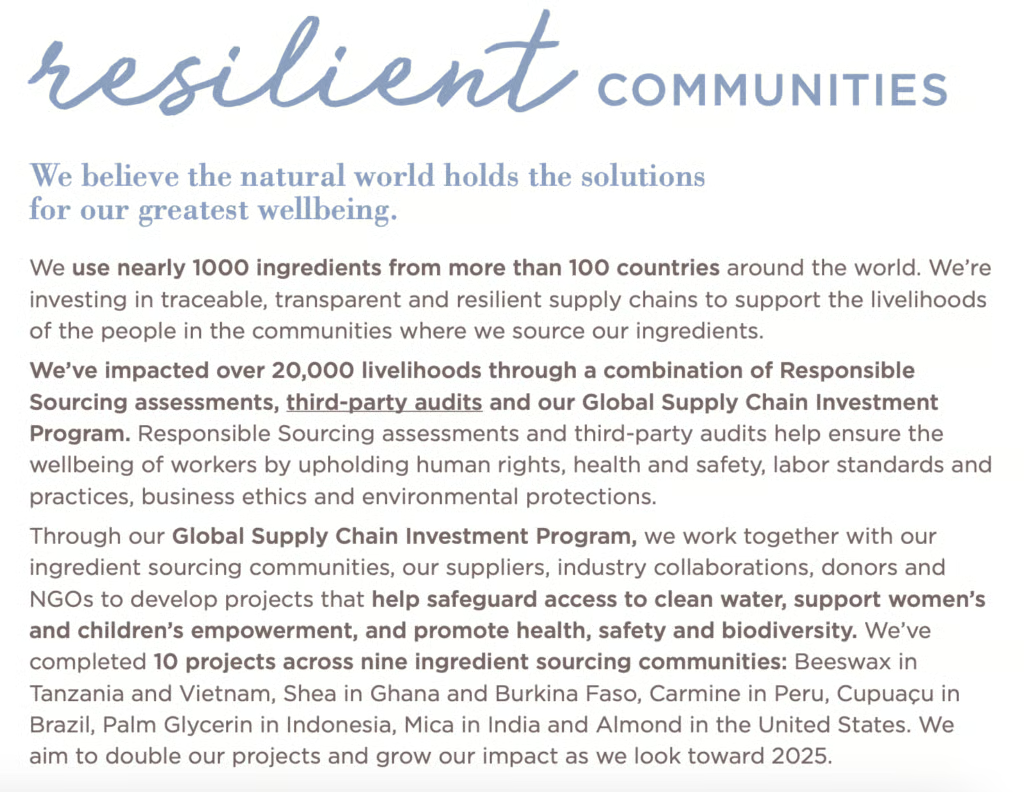
Here’s an example of a brand with supply chain transparency: Burt’s Bees. Burt’s Bees sells chapsticks and other skincare products made from beeswax and other natural ingredients. It’s committed to corporate social responsibility (CSR) and has a detailed five-year plan for how it will pursue ethical business practices in its supply chain.
Laws & Regulations
Depending on where you or your customers are located, you might have to abide by laws around supply chain transparency. For example:
The California Transparency in Supply Chains Act
The California Transparency in Supply Chain Act was passed in 2010, mainly targeting slavery and human trafficking. Affected businesses include retail sellers or manufacturers that do business in the state of California and have annual worldwide gross receipts exceeding $100,000,000. Those companies must do the following:
- Get third-party verification that supply chains do not support trafficking and slavery
- Audit suppliers to evaluate their compliance with company standards for trafficking and slavery
- Require suppliers to verify all materials are in compliance
- Maintain internal accountability standards and procedures for employees or contractors who don’t meet company standards
- Train employees on how to mitigate risks associated with trafficking and slavery
EU Corporate Sustainability Due Diligence Directive (CSDDD)
Adopted in 2022, the CSDDD promotes sustainable and responsible corporate business practices. The goal is to ensure that companies identify and address any negative impacts their business practices have on human rights and environmental sustainability—and it applies to their business practices both in and outside of the European Union (EU).
Companies that must abide by this law include large EU limited liability companies (LLCs) and partnerships with more than 1,000 employees and EUR 450 million turnover worldwide and large non-EU companies with more than 450 million turnover worldwide. Small businesses don’t have to comply but they may still be impacted.
Why Supply Chain Transparency Is Important
Beyond compliance, the benefits of supply chain transparency include:
- Customer trust: Consumers trust brands that are open and honest. When people trust you, they’re more willing to buy from you.
- Brand reputation: Showing that you proactively care about minimizing your business’s negative impact on the world around you is a surefire way to boost your reputation.
- Risk management: Constantly analyzing and optimizing your supply chain can also help you mitigate and manage risks. You can spot potentially hazardous supply chain practices before they cause larger issues.
- Proactive compliance: It’s not unlikely that more laws will come into effect regarding transparency and supply chains. If you pay attention now, you’ll be ahead of the game when it’s mandated.
- Improved sustainability: Not only is sustainability important to the world around you, but you can also feel good knowing you’re running a responsible and conscious business.
- Competitive advantage: If your competitors don’t share their supply chain practices, you can use this as a differentiator to win sales.
Challenges to Achieving Transparency in Supply Chains
While supply chain transparency has a lot of pros as listed above, there are some downsides and challenges to bear in mind:
- Cost: Compliance is costly, and even if you’re unaffected by regulations, the implementation of new supply chain practices can be a sizable investment—especially if your current or previous workflows were established without transparency in mind.
- Complexity: Cost aside, supply chain transparency can be a convoluted and challenging undertaking. There’s a lot to uncover and go through, so it can be difficult to implement and manage.
For instance, it’s good to have data in your business. But sometimes too much of a good thing can be exactly that—too much. A data overload can be costly to manage, difficult to analyze and standardize, and risky in terms of data privacy and exposing sensitive information.
- Resistance from suppliers: Many suppliers don’t have human rights or the environment in mind—in fact, lots care about the bottom line first and foremost. Cost efficiency is one of the key tenets of supply chain management (SCM). If you work with suppliers who don’t prioritize corporate social responsibility (CSR) or have major cultural differences, then you may face resistance and damaged relationships.
- Significant time commitment: Supply chain transparency requires continuous monitoring, ongoing regulatory compliance, and other time-consuming processes.
How to Make Supply Chains Transparent
Building a transparent supply chain includes knowing where your current processes stand, involving and communicating with stakeholders, using tech for optimization, analyzing data, and monitoring.
Audit Your Supply Chain
Assess your current supply chain situation to understand what’s going on. Flag any areas that lack transparency.
This is also a good time to define some goals for this undertaking. You want to know what you hope to achieve by providing supply chain transparency.
While you should conduct an initial audit, note that supply chain transparency is an ongoing process—it requires continuing monitoring and regular audits.
Onboard the Team
Involve all relevant stakeholders, including suppliers, customers, and internal teams, to gain their support and input. Remember, you’re doing this for them, too! Make sure you provide training and resources to both employees and supply chain partners to ensure they understand how to support your initiatives. It’s also important to have open lines of communication on both sides.
Get the Right Tech
Small business technology is important for every business function—especially so when it comes to supply chain transparency. Choose the tools that will help you meet your goals. This might mean inventory management and enterprise resource planning (ERP) systems.
Figure Out the Data
It’s important to create standardized data formats and protocols. Because this data can be so unwieldy to manage, these standards will help you maintain consistency and accuracy across the entire supply chain.
It’s also important to collect data at each stage of the supply chain and share it when necessary.
Communicate
Once you know the facts, it’s time to educate the public. Share the information with everyone, especially customers, employees, and suppliers. You can include this in marketing and advertising campaigns and post it on your website.
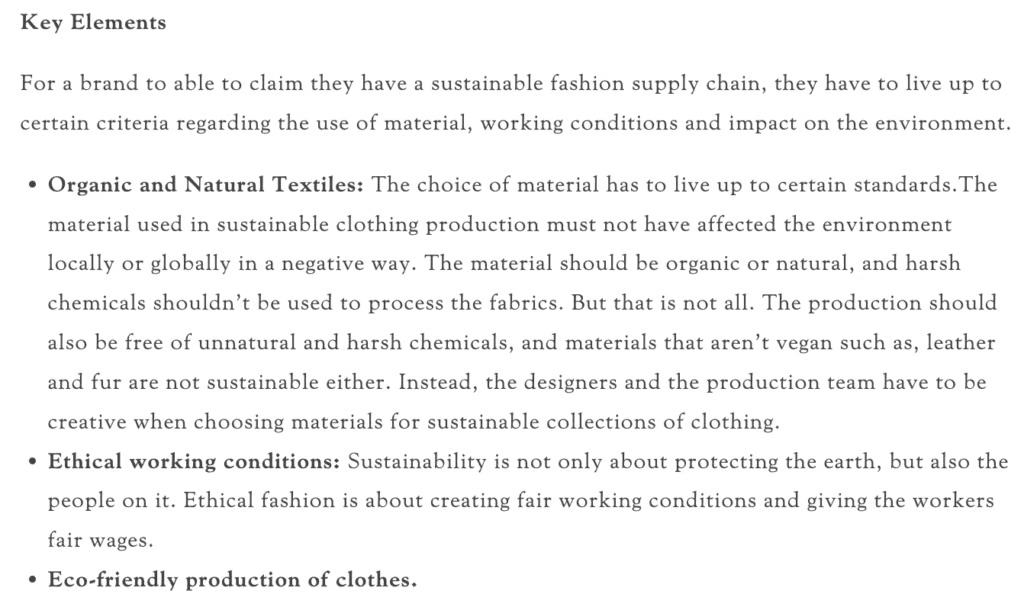
Sustainable fashion brand Kūla leans into its commitment to strong CSR, sharing information behind its supply chain as well as tips on how its customers can be more conscious in their everyday lives:
Optimize
Regularly review your transparency efforts and make necessary adjustments to improve processes. Supply chains are fluid, and keeping your transparency efforts updated with your latest data will take some dedicated time. Also, it will take some experimentation to learn how to present your transparency initiatives so that they are best received by current and potential customers.
Bottom Line
If you’re just starting your retail business, you can begin with transparency on the mind from day one. But if you’re an established business, supply chain transparency first requires an honest look at your current business practices and their impact on people and the environment.
At the end of the day, it’s never a bad idea to opt for more ethical and transparent business practices—to hold yourself accountable to do better and serve your customers, so you can have lasting business success.
Frequently Asked Questions (FAQs)
These are a few questions people frequently ask about supply chain transparency.
What is the Transparency in Supply Chains Act?
The Transparency in Supply Chains Act was passed in 2010 in California. It requires qualifying businesses to mitigate (and share how they do this) the risk of human trafficking and slavery in their supply chains.
What does transparency mean in supply chain coordination?
Transparency in supply chain coordination essentially means a business knows what is happening and all information at every stage of its supply chain. It then shares that information with its employees, customers, and stakeholders.
How do you create transparency in the supply chain?
You create transparency in the supply chain first by understanding what your supply chain is and how it impacts people and the environment. Then, you optimize your supply chain to mitigate negative impacts and share this information with stakeholders and the general public.
What are the problems with supply chain transparency?
Cost, complexity, resistance from suppliers, and significant time commitment are some challenges you’ll encounter with pursuing transparency efforts in your supply chain.
