







Customer testimonials highlight positive experiences with your brand. They shine a light on the value of your products or services, help nudge hesitant buyers, and nurture customer relationships, ultimately boosting your bottom line.
There are several types of customer testimonials to get to know. Let’s take a closer look at some client testimonial examples and how you can implement them into your business strategy.
1. Star Rating
Star ratings are typically on a scale of 1 to 5 or 1 to 10. They may or may not offer customers an option to leave additional feedback in the form of comments. The star rating review system quantifies the customer experience and makes it easy for people to leave feedback, even if they don’t necessarily have any specific comments to share.
Photo editing company Path, for example, features its star rating from Trustpilot on its website.
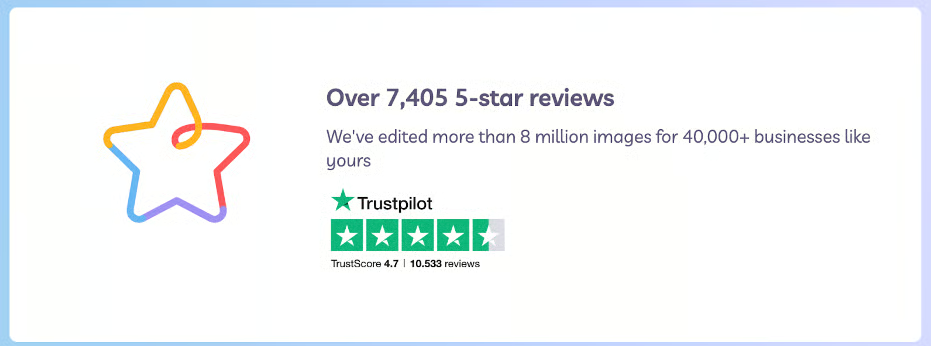
If implementing a star rating system, you can also offer categories. For example, Airbnb has categories to rate a property’s cleanliness, location, and other characteristics.
2. Written Customer Review
Customer testimonials can also be in written form, either by themselves or accompanying a star rating. These are typically one to five sentences, but some circumstances may call for more information.
Here’s how GoHenry features written testimonials on its website.
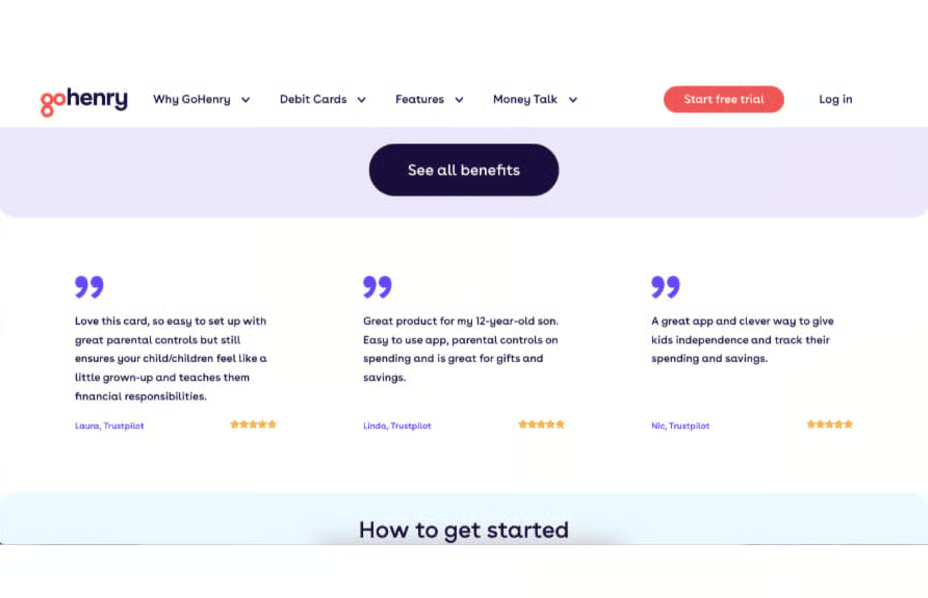
It’s a great idea to feature written testimonials on your website. Google can pick up the content and use it for search engine optimization (SEO) information and rankings. And you’ll know the content is already written in the voice of the customer—because it is the actual voice of the customer.
3. Survey
Customer surveys are another way to collect testimonials. You can send these via email or offer the opportunity to fill out a survey via a pop-up on your website.
Customer surveys can be just one question or a series of multiple questions. While it’s important to collect all the information you can, it’s also important to strike a balance—too many questions will be intimidating and may encourage some to skip it altogether.
Generally speaking, you’ll want your survey to be multiple-choice or select-all-that-apply. This makes it easier to quantify responses and analyze the data. You can offer an optional open-ended question at the end for those who want to share more.
4. Social Media Post
Customer testimonial social media posts can take many forms. You might have a customer posting content to their own profiles and platforms, in which case, you’ll want to share it with your audience, too. Kind of like how Arrive Outdoors, which rents outdoor gear to customers and then ships it to them via mail, shares its social media testimonials in its Instagram Stories.

Or, you might take customer testimonials published elsewhere and repurpose them for social media. That’s what Arrive Outdoors did with customer testimonials quotes:

5. Case Study
Case studies are in-depth stories about how a customer solved a specific problem with your product or service. They typically follow a “challenge, solution, outcome” format, though you can get creative with your execution. Many case studies now use video format, too.
Case studies are an effective way to give potential customers some perspectives they can relate to.
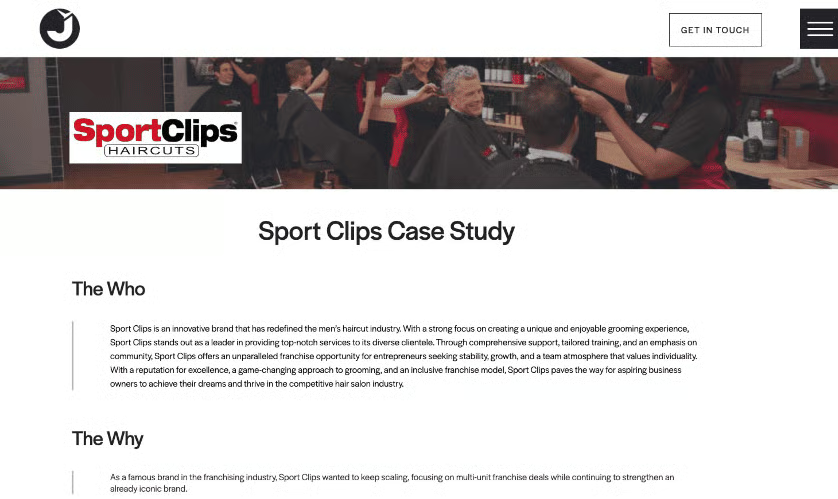
Here’s a Sport Clips case study from Brand J, a marketing firm, showcasing how it helped its client grow leads and locations.
6. Video
Video testimonials are somewhat broad and can overlap with the types listed above—you can have a video case study or customer review via Instagram Reel, for example. Unboxing videos are another great format for video testimonials.
When it comes to video testimonials, you can use videos created by your customers, or you can choose to produce them yourself. Unboxing videos might make sense as user-generated content, for example. Beertap Pro posted this user-generated customer testimonial to its YouTube channel as a YouTube Short, for example:
But you’ll likely want to do video case studies yourself—or hire a pro to do them for you! That seems to be the route Action Play Systems took with this customer testimonial video:
Learn more about user-generated content (UGC) for marketing and UGC for ecommerce.
7. Word of Mouth
Word-of-mouth customer testimonials are more difficult to track because they typically happen in customers’ inner circles—conversations with friends, family, and colleagues, for example. Businesses aren’t necessarily privy to these testimonials, but that doesn’t make them any less valuable.
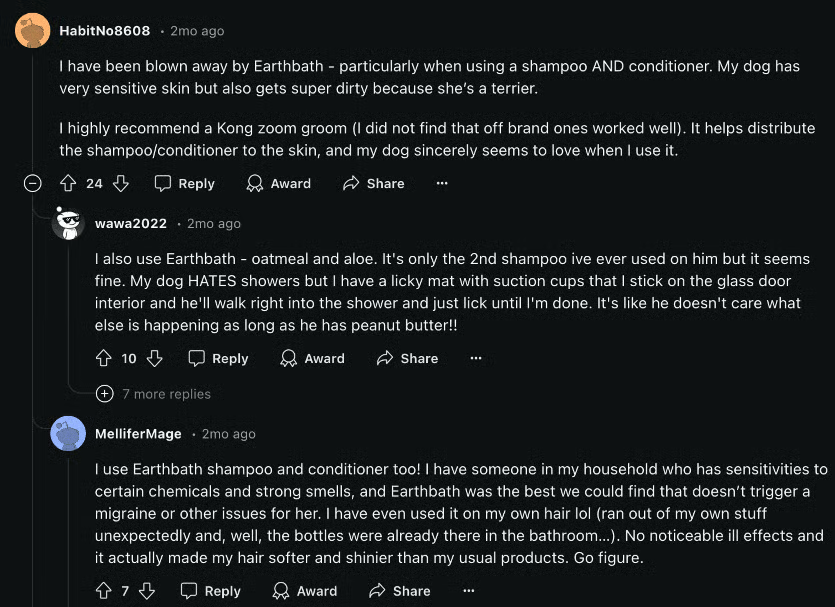
Word-of-mouth recommendations can happen in private or in public, though. Social media is a common place for word-of-mouth referrals, and you can also look out on forums or sites like Reddit.
Pet care brand earthbath, for example, is a common recommendation on this Reddit thread about the best shampoos for dogs.
Why Customer Testimonials Are Important
Customer testimonials are important for a number of reasons:
- Build credibility and trust: When potential customers see proof of satisfied customers, they’re more likely to trust that company. Plus, messages from peers are more trustworthy than messages from brands themselves.
- Gain valuable feedback: It’s important to have an endless cycle of feedback so you can continuously improve your business. This is the key to sustainable, long-term success.
- Save money on marketing: Rather than creating the content yourself, you can put this task in the hands of your customers. You can repurpose their testimonials into other assets to fuel marketing efforts.
Studies have shown that shoppers even seek out testimonials to feel comfortable with their purchase decisions.
Tips & Best Practices for Testimonials
If you want to incorporate customer testimonials into your retail marketing strategy, consider the following advice:
Share Your Testimonials
Don’t let your testimonials go into the void! Bring extra light to sample testimonials from customers. Highlight them in a section on your small business website, post them on social media, share them via email, and include corresponding reviews on product pages, for example. The more people who see your positive reviews, the better.
Encourage & Prompt Testimonials
While some customers are perfectly happy to share their feedback unprompted, others may need a nudge. Ask customers directly to provide feedback about their experience with your business. Here are some ideas:
- Set up automated post-purchase emails soliciting star ratings and customer reviews. Make sure you give customers enough time to experience your product—you don’t want to ask for a product review just 12 hours after they bought it, for instance.
- Send an email soliciting feedback. You might include a link to a customer survey or your review portal if you use something like Trustpilot.
- Reach out 1:1 to your top customers to see if they’d be interested in participating in a case study.
Depending on the platform, you could also incentivize testimonials. Just make sure it’s allowed—Amazon prohibits incentives, for example.
Act on Feedback
Perhaps even more important than receiving feedback is what you do with it. If you receive customer input and don’t implement changes based on trends in their feedback, you’ll have wasted a great opportunity. You want to show your customers that you listen to them and care about their experience.
Now, this doesn’t mean to change your whole offering as soon as you get some comments about it. But over time, you should start to see trends that can guide how you optimize your business.
Frequently Asked Questions (FAQs)
These are some questions we often see about customer testimonials.
What is a customer testimonial?
A customer testimonial is a person’s account of their experience with a business. It may take many forms, including written customer reviews, social media posts, and video case studies. Customer testimonials provide that person’s uninfluenced opinion of how positive or negative their interaction with the business was.
What are examples of testimonials?
- Star rating
- Written review
- Survey
- Social media post
- Case study
- Video
- Word-of-mouth
What is the difference between a customer review and a testimonial?
While there’s a lot of overlap, and they can arguably be used interchangeably, some consider slight differences between a customer review and a customer testimonial. A customer review is typically shorter in length and less detailed than a full-blown testimonial. Additionally, a review could be focused on a specific product or service, while a testimonial could be about the business or brand more broadly. Reviews tend to be more casual, and testimonials skew more formal.
Bottom Line
From the customer testimonial examples above, it’s easy to see how valuable they are for so many reasons. They can boost your marketing, build trust, and help you improve your offerings. But if you’re just starting a retail business, you might not have any customers to tap into. In this case, check your competitors’ testimonials to find trends—are there things customers love? Incorporate those into your offerings. Are there common complaints? Fill those gaps.
However you look at it, there’s no denying the value of customer testimonials.
