







Agile project management (APM) is the process of breaking down projects into smaller, manageable sections to focus on the continuous improvement of a product or service. With this approach, teams enhance their speed and collaboration by repeatedly adjusting to changing feedback and requirements throughout the project life cycle. In this article, we explore what agile project management is and learn how to apply its principles to your workflow.
How Agile Project Management Works
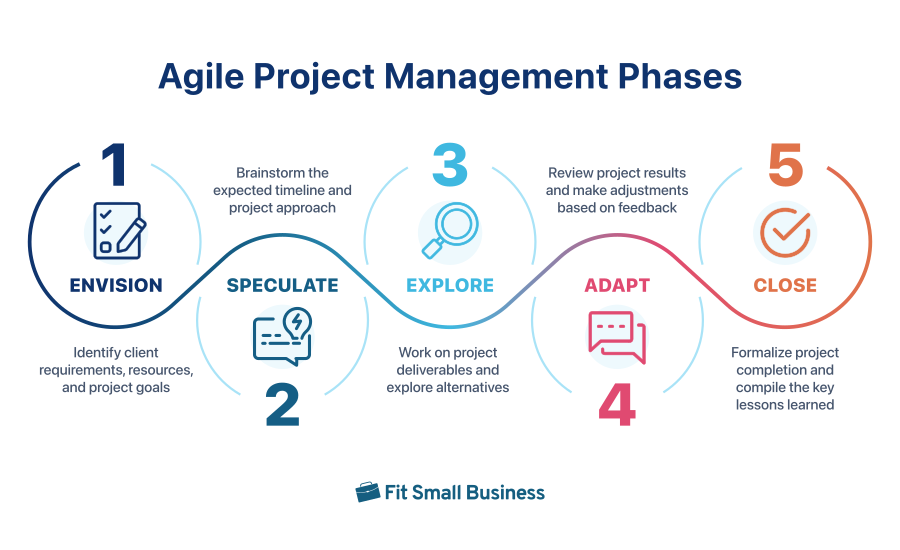
Based on the definition of agile project management and its flexible nature, many assume that it lacks structure or sequence. While it promotes self-direction, the APM approach has five specific phases, which we examine below.
1. Envision: Also called the inception phase, envision is the initial stage where key members collaborate to determine the scope and overall vision of the project. The following aspects are identified: objectives, time, resources, stakeholders, and customer needs.
2. Speculate: With the project vision decided, the team must now come up with an approach on how to meet the requirements and create an iteration plan that will adapt to changes. It involves two key activities: dividing the project into high-level milestones and setting the expected timelines.
3. Explore: This stage focuses on the execution of project deliverables with time and budget constraints in mind. It also involves exploring potential alternatives to fulfill project requirements and working in iterations before moving on to development and testing.
4. Adapt: In this stage, teams compare the project results against the initial plan and see if it aligns with the requirements and expectations. This presents an opportunity for adjustments and improvements as constant feedback is taken from the customer or staff perspectives.
5. Close: The final phase is about formalizing the project’s completion once the final iteration is executed. The team concludes the project by celebrating achievements and compiling the key lessons to apply in future endeavors.
Keep in mind that projects across various industries have different internal stages for each phase. They vary depending on the team, the scope of tasks, and the nature of the project itself. With the agile method being extremely adaptable, it’s easy to combine it with other project management methodologies to form hybrid frameworks.
Values & Principles of Agile Project Management
In 2001, a group of software developers created the Agile Manifesto, outlining the values and principles of the Agile philosophy. It was originally tailored for software development to introduce an alternative project approach that developers should adopt. Due to its popularity, it later expanded to other industries, including business, finance, fashion, automotive, and fashion, among others.
Values
The four values of the Agile Manifesto are the foundation of the agile project management process. They are as follows:
- Individuals and interactions over processes and tools: The human element should be valued more than fixed processes and tools because people are more equipped to mobilize development processes and address business needs.
- Working software over comprehensive documentation: While solid documentation is important, teams had to spend lots of time writing it. To avoid delays, agile prioritizes getting the product to the customer as quickly as possible.
- Customer collaboration over contract negotiation: Working closely with customers during the development process allows teams to build a successful product that specifically meets the users’ wants and needs.
- Responding to change over following a plan: The agile view encourages teams to be flexible throughout the project life cycle. Embracing change provides an opportunity to easily adapt and welcome new ways to improve.
Principles
The four core values of agile project management are further supported by 12 key principles that guide decision-making and product development.
- Customer satisfaction is the highest priority and is fulfilled through early and continuous launching of the deliverable.
- Embrace changing requirements even in the late stages. Use it as a competitive advantage to deliver better solutions.
- Frequent deployment of a product or service in short succession allows for quick adaptation.
- Project stakeholders and clients must collaborate frequently throughout the project.
- Give the team the resources and support they need and trust them to do the job.
- Face-to-face interaction is the most effective way to communicate.
- The final deliverable is the most important measure of progress.
- Project stakeholders must maintain a constant and sustainable work pace.
- Enhance agility by focusing on technical excellence and good design.
- Simplicity is essential as it focuses on delivering the most valuable work and avoiding tasks that do not contribute to the goal.
- Self-organizing teams deliver the best solutions.
- To become more effective, teams must regularly inspect and adapt their processes.
When to Use Agile Project Management
The principles of APM demonstrate that this approach is suitable for projects where timelines, resources, and constraints aren’t identified from the outset. These include customer-focused marketing campaigns and research-oriented projects.
An agile approach emphasizes adaptability in an uncertain environment as well as constant feedback, strong customer involvement, and quick project delivery. In this case, an APM approach works for ongoing projects requiring constant feedback from clients or stakeholders, which may affect project requirements.
On the other hand, APM is not suitable for projects with strict requirements, rules, or fixed-priced billing as well as those involving bureaucracy and high-level documentation. Examples include projects in highly regulated financial sectors and safety-critical industries like healthcare and automotive.
However, note that agile teams are unique. Learning about the different agile project management methodologies can help you find a better approach for your project while taking full advantage of its benefits.
Popular Types of Agile Methodologies
There are multiple project management methodologies that embody the agile mindset. Below we highlighted the top five popular approaches.
Scrum
Scrum is the most widely used agile framework, characterized by efficient planning, continuous deliverables, and collaboration. It focuses on project item ownership and deadlines for each step of the process.
A product owner works with a development team to create a product backlog—a list of the items required to deliver a successful deliverable. Log items are assigned with a timeline, wherein the team works in short iterations called “sprints,” which last for two to four weeks. Self-organizing teams produce deliverables in rapid increments and hold frequent meetings, which is facilitated by a scrum master who handles the project oversight for the entire log.
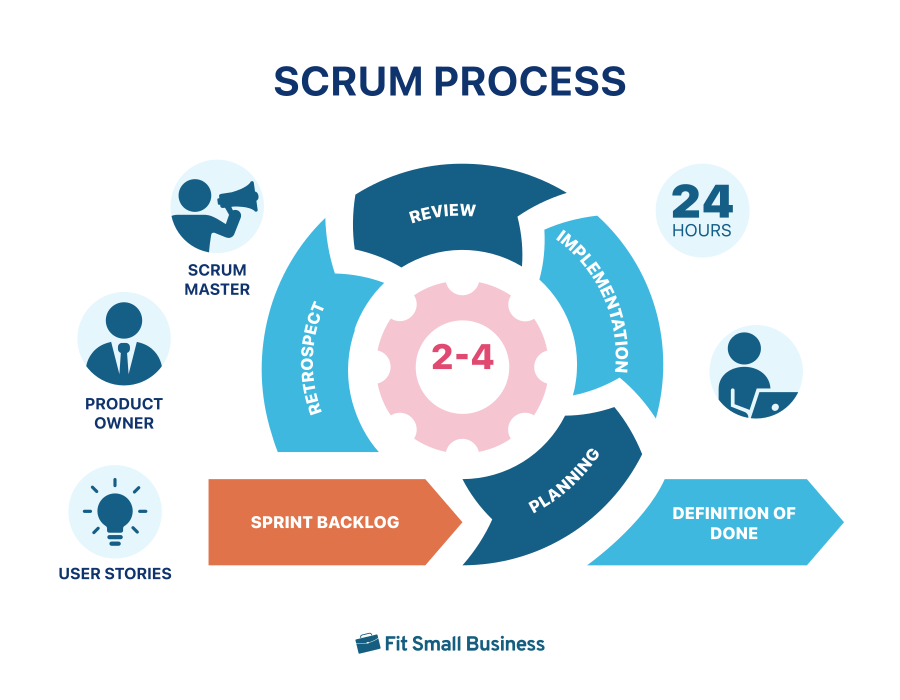
Besides daily scrums, other regular agile events include sprint planning, sprint review, and sprint retrospective. The scrum framework is best for projects with rapidly changing requirements and frequent cross-team collaboration. It also works in fast-paced environments where teams handle multiple deliverables simultaneously.
Kanban
Kanban is a Japanese-inspired workflow method emphasizing fast product delivery and stable flow efficiency. Teams use a visual board that is divided into columns (e.g., to do, in progress, and done) where work items are represented by cards. The board aims to enhance project visibility so teams can see the continuous flow of work items as they move through every stage of development.
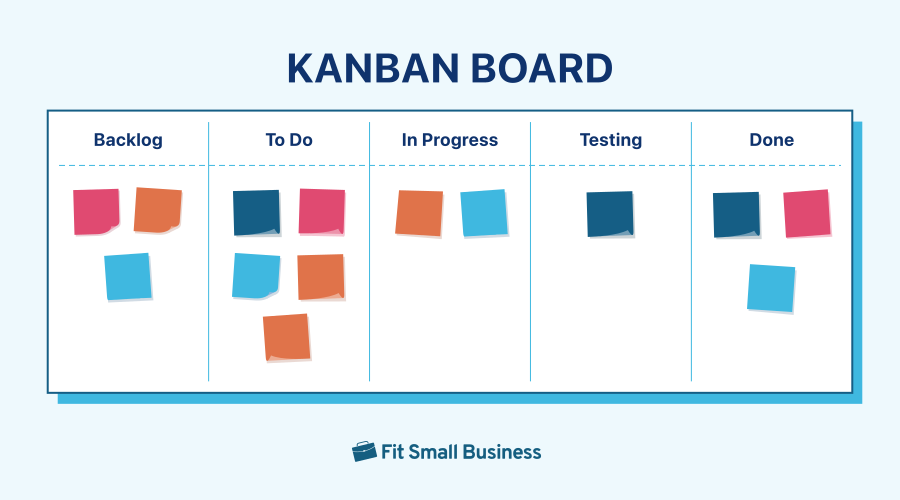
Kanban is best for individual business departments handling different-sized tasks or processes that undergo small changes and those working on repetitive tasks and changing product requirements. Note that Kanban is best for teams with a high level of communication and transparency to give everyone a better overview of the entire process.
Lean
Lean development emphasizes a minimalist approach to ensure extreme efficiency and quick project delivery. It embodies core principles of lean product development, such as ensuring quality, working toward the same goal, and eliminating activities that don’t bring value to the product.
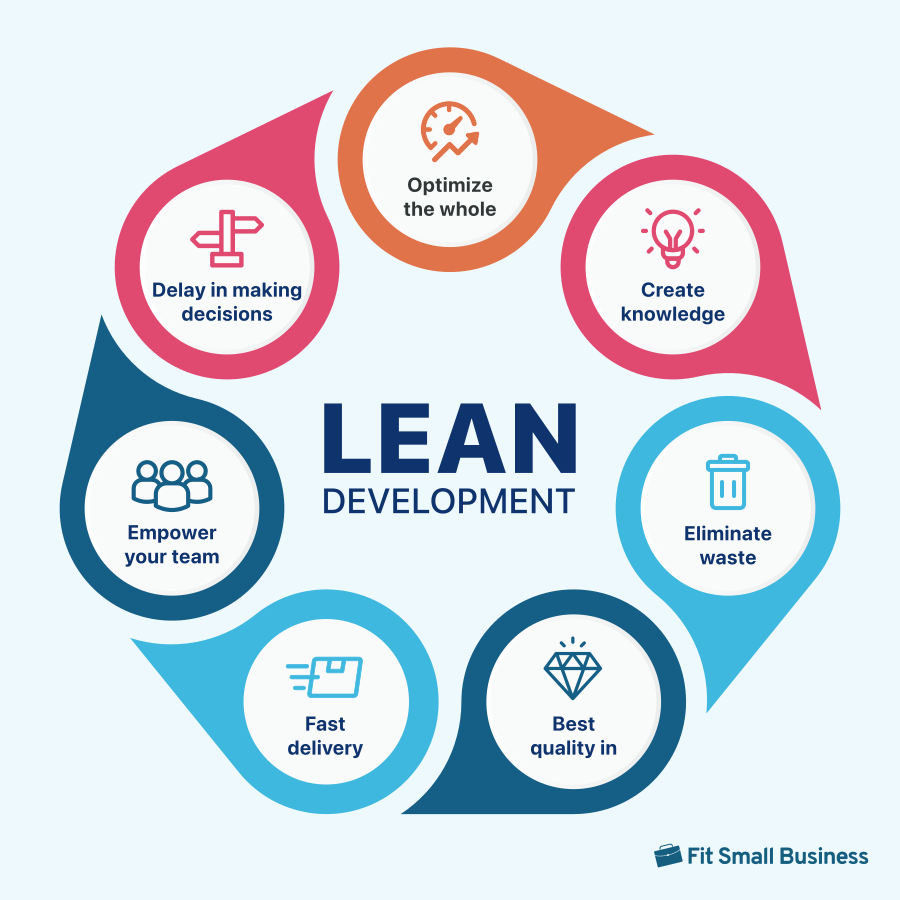
The lean approach focuses on delivering value and maximizing techniques suitable for a given plan. Key practices include customer feedback loops, working in cross-functional teams, and small batch sizes.
Experienced teams that can be trusted to decide on their own are likely to reap the benefits of lean methodology as well as small, cohesive groups that prefer detailed documentation. Lean is also widely adopted in highly regulated sectors that value compression and prompt delivery.
Extreme Programming
Extreme programming (XP) is an agile software methodology that emphasizes customer satisfaction, teamwork, and technical excellence. It involves a high level of participation between developers and clients—developers are encouraged to accept criticisms for the reworking of a program, while the client continuously reviews the working software to ensure it meets their expectations.
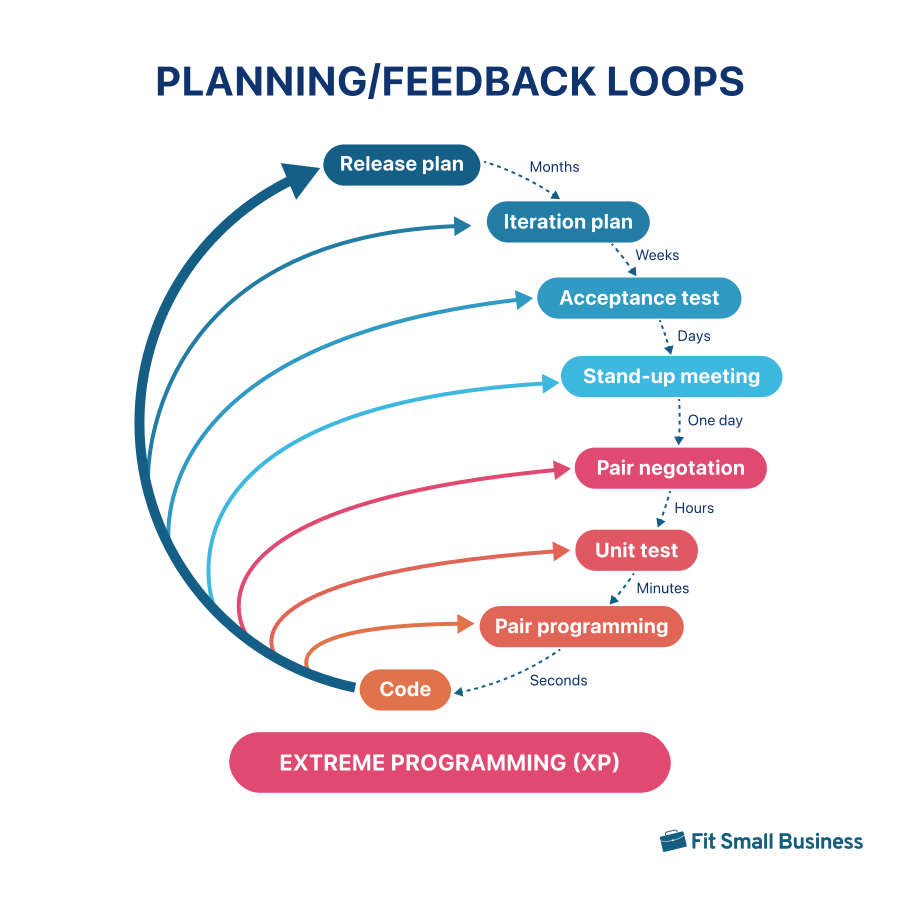
The XP development process revolves around several phases: coding, testing, planning, and listening. The main goal is to improve software quality through regular releases in short cycles and use checkpoints to adopt new client requirements.
This type of agile software method is popular for mixed-skill level teams where junior and senior programmers collaborate together. It’s also a great option for dealing with limited budgets, tight deadlines, and constantly changing project requirements. Since it values teamwork, XP is recommended for small, close-knit teams working in the same location.
Crystal
Crystal is a group of agile methodologies that encompasses different team sizes from teams of five to 1,000. Each method has its own framework that varies depending on team size, system criticality, and project value. For example, Crystal Clear is ideal for small projects with six team members or less, while Crystal Maroon is for bigger projects with 40 to 80 members.
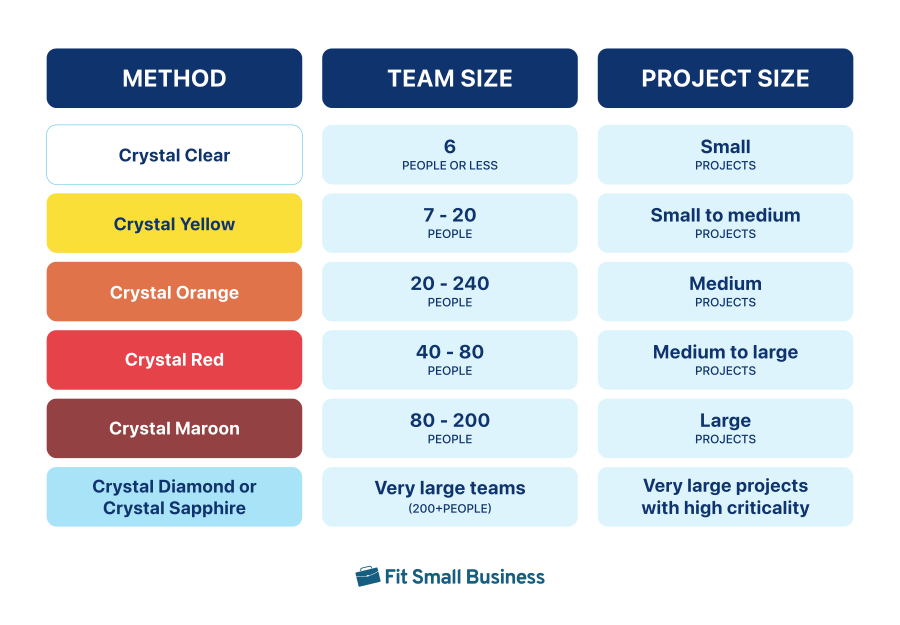
The Crystal approach is the most lightweight agile methodology as it simply proposes that each project possesses individual characteristics and requires different practices. It focuses on customization by empowering teams to adjust processes and define the best way to collaborate based on the number of team members and the type of project to be worked on.
Collaborative teams will benefit from the Crystal methodology as it allows regular communication without constant supervision from the higher-ups.
Top Agile Project Management Software Providers
Agile project management tools allow teams to work together efficiently and be responsive to changes in project requirements. Below we created a list of the top agile project management software that you can consider to help your team enhance overall project delivery.
| Agile Project Management Software Providers | Monthly Starting Price (per User) | Key Agile Features | Free Version |
|---|---|---|---|
 | $12 |
| Up to two seats |
| Visit monday.com | |||
 | $13.49 |
| Up to 10 seats |
| Visit Asana | |||
 | $10.00 |
| Unlimited users |
| Visit Wrike | |||
 | $10 |
| Unlimited users |
| Visit ClickUp | |||
 | $8.15 |
| Up to 10 seats |
| Visit Jira Software | |||
 | $6 |
| Unlimited users |
| Visit Trello | |||
 | $5 |
| Up to three users |
| Visit Zoho Projects | |||
Benefits of Agile Project Management
Agile is one of the most popular approaches for teams seeking flexibility and adaptability in project management. It introduces a new way of thinking and working on projects that affects teamwork, processes, and self-organization. Consider APM as your new project framework if you’re interested in the following benefits:
- Better control of projects: Daily sprint meetings and feedback integration allow teams to stay updated on project progress. With this high level of transparency, teams can instantly spot issues and apply quick fixes.
- Reduced risk: Agile’s iterative nature enables teams to respond to emerging changes, which reduces the risk of project failure. Also, working in increments allows them to take calculated steps to avoid potential risks.
- Increased flexibility: In an agile approach, teams work in smaller batches where they implement changes on short notice. This allows them to easily respond to change and deploy projects faster, giving them a competitive advantage to deliver better solutions.
- Higher customer satisfaction: The agile approach focuses on ensuring customer expectations are met through frequent feedback loops. Updates are delivered incrementally to ensure the final deliverable is based on what the customer asked and what they need.
- Enhanced team collaboration: APM fosters a culture of teamwork and collaboration to encourage an open exchange of ideas among team members. This leads to higher levels of team involvement and the ability to creatively solve problems.
- Efficient use of resources: An agile approach allows teams to rapidly adapt to changing customer requirements without wasting resources and incurring extra expense. Making changes to projects at the right time helps save significant resources and complete deliverables within budget.
Frequently Asked Questions (FAQs)
What is the difference between agile & waterfall project management?
Waterfall is a traditional project management method that emphasizes planning and documentation. It takes a more rigid approach where every project phase needs to be mapped out before moving to the next phase. Agile, on the other hand, is a highly flexible model that welcomes constant feedback and changes to quickly adapt to the customer’s needs.
What is Scrumban?
Scrumban combines two popular agile project management methodologies: Scrum and Kanban. It was developed to help teams seamlessly transition from Scrum to Kanban or vice versa. This approach merges Scrum’s sprint structure with a focus on Kanban’s visual workflow. It works for self-managed teams handling long-term projects.
What are the disadvantages of the agile project methodology?
The agile approach has certain limitations for teams with a linear approach to project management. Incremental product delivery leads to a fragmented output and a lower degree of predictability, which doesn’t work for long-term projects where the final deliverable must be fixed. It also lacks documentation and demands more time and commitment among stakeholders and clients as agile requires constant interaction.
Bottom Line
Agile project management is a nonlinear project methodology that emphasizes quick iterations, adaptability, and collaboration. Given customers’ ever-changing requirements, APM allows teams to embrace change and use it to deliver incremental value to their projects. So if your team highly values a culture of improvement and the ability to respond to changing market trends, consider switching to an agile approach.
