








Lean project management is the process of delivering value to the customer and minimizing waste. It is a subset of the larger agile project management framework, developed primarily for manufacturing to eliminate inefficiencies from work processes. Proper application of the lean methodology results in higher customer satisfaction, lower costs, and enhanced product quality. Discover what lean project management is and how to apply it in your business process.
How Lean Methodology Works (5 Principles)
The concept of lean project management was founded by the Toyota Production System, whose aim is to eliminate the three types of waste in the project process: Muda (waste), Mura (unevenness), and Muri (overburden).
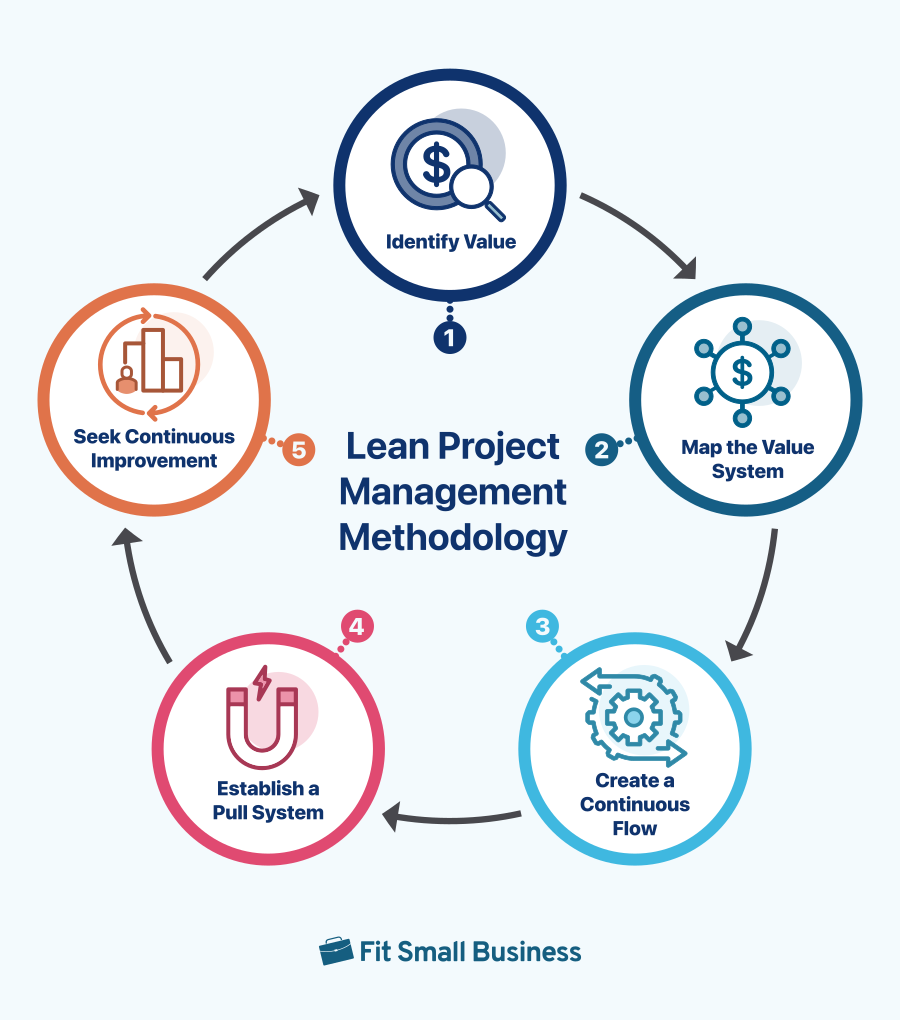
Understanding what lean project management is lies in learning its five key principles, which were first introduced by James P. Womack and Daniel T. Jones in the book “Lean Thinking.” It outlines the steps for attaining work process optimization and reaching greater customer satisfaction. Let’s define each of them.
- Identify value: Before starting a project, it’s important to clearly define the value from the perspective of the customer or stakeholder. For example, product value to a stakeholder may mean tackling an internal process need, while in the customer’s case, it may mean solving a specific pain point. To identify value, you must first identify the requirements, objectives, expectations, and timeline.
- Map the value stream: The next step—value stream mapping—involves using visual tools, such as diagrams, to plan the steps of a project lifecycle. Identify actions for creating the product, including ideation, design, procurement, and production. Mapping your overall process eliminates everything that doesn’t contribute to the product value.
- Create a continuous flow: With wastes removed, you can proceed to establish a continuous workflow. This means breaking down every stage of product development, reconfiguring the steps, and removing potential bottlenecks (e.g., delayed timelines or mismanaged backlog). In creating a flow state, open communication is necessary to better supervise and monitor the team’s workflow.
- Establish a pull system: The improvements in the previous step result in a faster time-to-market, allowing the customer to get the product more quickly. In a pull system, the team focuses on delivering the product only when the customer demands it and “pulls” the product from the project. This means a work item will only be started when there is an actual need for it to avoid excess inventory.
- Seek continuous improvement: The fifth principle emphasizes making continuous efforts to improve the implementation of the four principles. Customer demand is constantly evolving, so it’s important to continuously assess your product value and analyze the workflow for waste. This can be done by having regular team meetings to review the completed tasks and address encountered issues.
Keep in mind that the lean methodology is an iterative process and should not be treated as a one-time process or a static workflow. A lean project strives for perfection and requires ongoing efforts in order to establish a continuous learning system across the team.
When to Use Lean Project Methodology
Lean project management started its roots in car manufacturing, pioneered by the Toyota Motor Corporation. Today, lean strategies extend to various industries, specifically businesses wanting to reduce waste in any way possible to enhance efficiency. Here are examples of use cases of lean management:
- Product development: Adopting the lean methodology enables product developers to streamline the development process by reducing lead times and making sure the finished product meets customer expectations. With value stream mapping, teams produce higher-quality products focusing on value-added activities, such as needs analysis, quality assurance, and testing.
- Manufacturing: The goal of lean manufacturing is to reduce processes that don’t contribute to the final product while minimizing waste in the form of overproduction, defects, and stockpiling. Instead of supplying customers from the warehouse, lean focuses on producing the exact amount customers need at the exact time they need it.
- Software development: Lean techniques are also implemented in software development but with a few tweaks from the five principles. To respond quickly to changing requirements, the software is delivered in increments iteratively to customers in order to collect feedback and make adjustments as needed.
- Marketing: Lean thinking has also made its way into the marketing industry, where it is utilized in marketing campaigns to maximize impact and analyze return on investment. Campaigns are refined by launching them in increments to get feedback from the target audience and test different ad strategies.
Top Lean Project Management Software
Despite the abundance of project management solutions in the market, it’s important to consider whether your chosen provider is a great fit for a lean approach. To help you pick, here are the best project management for small businesses needing support for their lean journey:
| Lean Project Management Software | Monthly Starting Price (per User) | Key Features | Free Version |
|---|---|---|---|
 | $12 |
| Up to two users |
| Visit monday.com | |||
 | $10 |
| Unlimited users |
| Visit Wrike | |||
 | $8.15 |
| Up to 10 users |
| Visit Jira Software | |||
 | $8.99 |
| Up to five users |
| Visit Teamwork.com | |||
 | $13.49 |
| Up to 10 users |
| Visit Asana | |||
Benefits of Lean Project Management
Various industries have embraced lean project management methodology due to the wealth of benefits it offers. Its popularity lies in its core principles that focus on eliminating waste and improving product value. If you want to know if the lean approach is the right fit for your organization, take a look at the benefits below.
- Reduced costs: The lean methodology is ideal for companies with limited project budgets. It focuses on producing exactly what is needed to meet client demand and eliminating money-consuming wastes, such as overproduction. This ensures the project stays within financial constraints while maximizing profitability.
- Improved efficiency: Lean project management helps you save valuable time by eliminating wasted work hours on unnecessary motion, processing, and transportation. Through value stream mapping, teams focus more on being productive and delivering actual value, accelerating project delivery.
- Higher customer satisfaction: A lean approach emphasizes the importance of understanding the customer’s opinion and experience. Knowing what the customer wants allows you to deliver high-value products that meet their needs and expectations. Cultivating strong customer relationships leads to increased satisfaction and a positive reputation for your business.
- Better product quality: Companies that continuously seek improvement and pay attention to details are far more likely to deliver high-quality products to their customers. Teams practicing lean techniques streamline their processes, thus reducing defects and mistakes.
Frequently Asked Questions (FAQs)
What is the difference between lean & traditional project management?
The difference between the traditional and lean approaches lies in their project execution and core objectives. Traditional project management uses a more structured approach directed at stability and results. On the other hand, lean project management typically follows an iterative approach focusing on waste reduction and continuous improvement.
What are the potential disadvantages of lean management?
The lean methodology presents challenges if not implemented properly or applied in the wrong context. Working on a lean project can be restrictive since it demands minimal input to achieve the desired outcomes, leaving you with little room for errors. Also, excessive focus on work efficiency can lead to shortcuts or compromises in the effort to meet predefined targets.
What are the tools used in lean project management?
Lean project management utilizes various tools to streamline workflow, but two of the most popular are the Deming Cycle and Kanban boards. The Deming Cycle is a continuous improvement method that consists of four stages: plan, do, check, and act. A Kanban board is a visual tool for tracking tasks and optimizing workflow.
Bottom Line
Lean project management emphasizes continuous improvement in quality, efficiency, and value through the elimination of waste. When implemented well, a lean approach provides teams with a wide range of benefits, from improved customer experience and reduced costs to on-time projects. If your team is committed to improving and optimizing processes, make sure to combine lean methodology with the right project management software.
