




.jpg?w=288)

Industry research shows that 44% of shoppers still prefer buying in-store, even as ecommerce continues to grow. At the same time, 2025 retail trend reports indicate that consumers increasingly expect stores to offer more than shelves and checkout counters. They want engaging, hands-on experiences that justify the trip. That shift is driving renewed interest in experiential retail. The global experiential retail market exceeded $130 billion in 2025, underscoring sustained demand for interactive, experience-driven store formats.
If customers are already choosing to shop in person, this is your opportunity. You don’t need a flagship store or a six-figure buildout to make experiential retail work. Even small, interactive touches can keep shoppers in your store longer, encourage them to spend more per visit, and give them a reason to come back.
The key is keeping it practical. Focus on experiences that fit your space, your staff, and your budget, and make sure you can track whether they actually increase sales.
In this guide, I’ll show you how to implement experiential retail in a limited space, on a realistic budget, and how to measure whether it actually drives sales.
What is experiential retail?
Experiential retail is a strategy built around interactive, engaging in-store experiences rather than relying solely on product displays and transactions. You may also hear this referred to as immersive retail, where the store environment is designed to actively involve customers instead of simply presenting inventory.
Instead of focusing only on moving products, experiential retail encourages customers to test items, attend events, personalize purchases, and interact with staff before making a buying decision.
This gives physical retailers a clear way to compete with ecommerce. Online stores win on convenience and selection. Brick-and-mortar stores stand out when they offer something customers cannot get through a screen: hands-on demos, workshops, customization stations, community events, and real human interaction.
For small retailers, this does not require a remodel or expensive technology. It can be as simple as carving out a demo area, hosting a monthly workshop, or creating a small customization counter. The goal is to design experiences that fit your space and budget while supporting measurable sales growth.
Experiential retail vs traditional retail
Here’s a simple way to think about the difference:
| Traditional retail | Experiential retail |
|---|---|
| Product display + transaction | Interaction + education + community + transaction |
| Inventory is the focus | Engagement supports the sale |
| Customers browse and buy | Customers participate before they buy |
| Success measured mostly by sales volume | Success measured by sales, engagement, and repeat visits |
Traditional retail is optimized for efficiency. Products are stocked, priced, and organized to move quickly.
Experiential retail adds a layer of structured engagement. The experience is intentional and designed to increase confidence in a purchase, deepen product understanding, and strengthen the relationship with the customer. The transaction still matters. The difference is how you lead up to it.
Why experiential retail works for small businesses right now
Experiential retail isn’t just a trend. It aligns with how people are shopping today and plays directly to the strengths of independent retailers.
In-person shopping still drives real revenue
Physical retail continues to capture a meaningful share of consumer spending. Shoppers are increasingly choosing experiential shopping over passive browsing, especially in physical retail environments. Salesforce research projects that 41% of purchases will still happen in physical stores by 2026. That means nearly half of buying decisions are happening inside brick-and-mortar locations.
If customers are already walking through your doors, the opportunity is clear. The stores that give shoppers a reason to engage tend to see higher basket sizes and stronger repeat visits.
Shoppers want experiences, not just products
Consumers are no longer satisfied with passive browsing. Recent trend analysis shows that more than 60% of Gen Z shoppers prefer in-store experiences over online shopping, signaling demand for interactive and immersive environments.
When you offer demos, workshops, customization, or guided assistance, you increase purchase confidence. And confident shoppers typically spend more.
Social sharing extends your reach
In-store experiences don’t stay confined to your four walls. Deloitte reports that 64% of Gen Z consumers use social media to research products, and 35% discover products directly through social platforms.
A well-executed event or visually engaging display can generate organic visibility beyond foot traffic alone. For small retailers without large marketing budgets, that amplification can drive measurable traffic and incremental sales.
Independent retailers have a built-in advantage
Experiential retail can actually be easier to execute in a small store than in a large chain.
You control the physical environment. You can let customers test products, ask detailed questions, attend small events, or receive personalized recommendations in real time. Those interactions build trust in ways product pages cannot.
You’re also closer to your community. Independent retailers often know their customers by name. Hosting a workshop or themed event doesn’t just drive sales. It strengthens your role as a local hub, something large chains struggle to replicate.
And most importantly, you can move faster. Corporate retailers require approvals, budgets, and multi-location rollouts. You can test a demo table or a limited-seat class next week. That flexibility reduces risk and makes experiential retail more accessible for small businesses.
5 in-store experiential retail examples that work in small spaces
You don’t need a large footprint to implement experiential retail. The key is choosing formats that fit your layout, staffing, and margins. The following experiential retail case studies show how small businesses are applying these formats in practical, revenue-focused ways.
1. In-store workshops and classes
- Best for: Boutiques, craft stores, specialty food shops, bookstores
- Space required: 50 to 150 square feet cleared temporarily or after-hours floor space
- Staff needed: 1 host or instructor, 1 support staff for checkout
- Budget range: $200 to $1,500, depending on materials and marketing
- Revenue goal: Ticket sales plus product add-ons during or after the event
Workshops turn your store into a learning space. A styling session, cookbook demo, craft class, or tasting event gives customers a reason to block time on their calendar. The real revenue often comes from related product bundles sold immediately after the session.
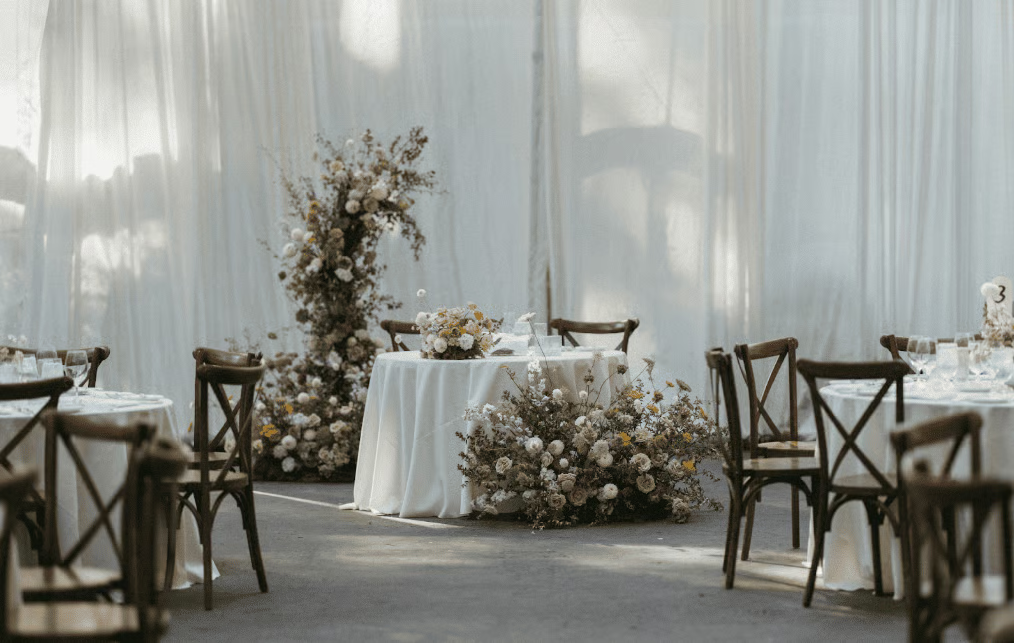
Flower Friends SF, a floral design studio in Oakland, California, started out hosting floral design workshops so customers could learn hands-on and create with their own hands. Over time, owner Emily Yates expanded from just workshops into offering floral event services after customer interest grew. That shift helped transform the business; Flower Friends SF increased its sales by 126% in three months as workshop attendees turned into event clients and repeat buyers.
2. Live product demos and test stations
- Best for: Beauty, hardware, kitchenware, tech accessories
- Space required: Small demo table or 4- to 6-foot display zone
- Staff needed: 1 knowledgeable staff member dedicated to demos during peak hours
- Budget range: $100 to $1,000 for setup materials and signage
- Revenue goal: Increase conversion rate and average order value
Live demos remove hesitation. When customers can try a skincare product, test a tool, or see a gadget in action, purchase confidence increases. This format works especially well for higher-margin or higher-priced items.
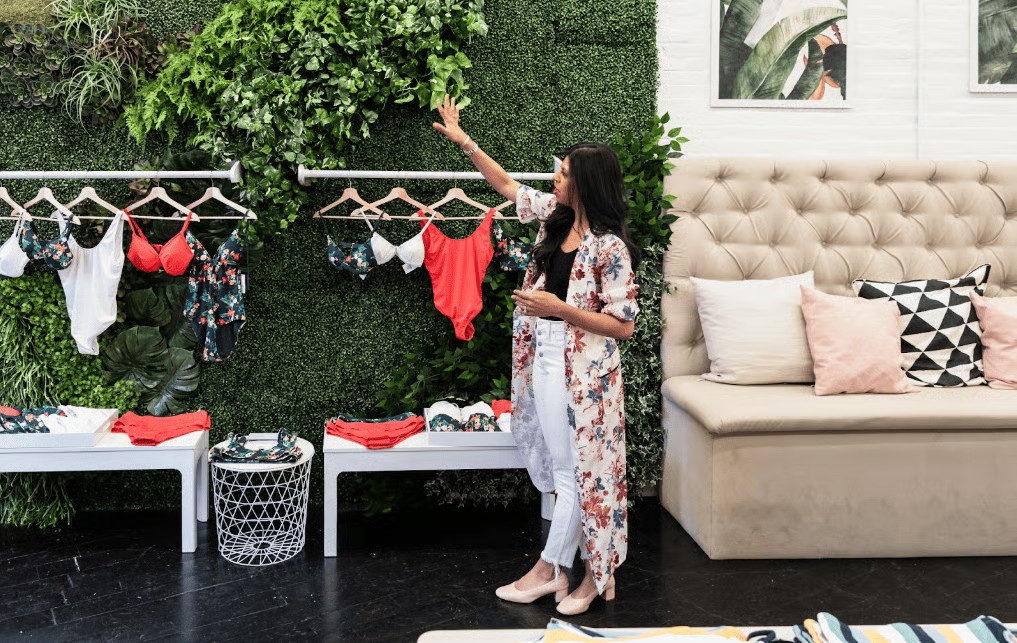
Lingerie retailer LIVELY built its store experience around personalized fitting sessions. Customers book bra fittings online, then meet one-on-one with a retail associate who helps them find the right size in-store. The goal is to create a relaxed, pressure-free environment that feels more like a clubhouse than a sales floor.
The results are measurable. About 30% of LIVELY’s in-store revenue comes from customers who booked a fitting session online, and those shoppers spend 60 to 80% more per order compared to walk-ins.
3. Customization bars
- Examples: Embroidery, engraving, build-your-own bundles
- Space required: Dedicated 4- to 8-foot counter or small workstation
- Staff needed: 1 trained staff member
- Budget range: $500 to $5,000, depending on equipment
- Revenue goal: Premium pricing and higher per-transaction spend
Customization allows you to charge more. Personalized items often carry stronger margins and lower return rates. Even simple add-ons like monogramming or curated bundles can increase basket size.
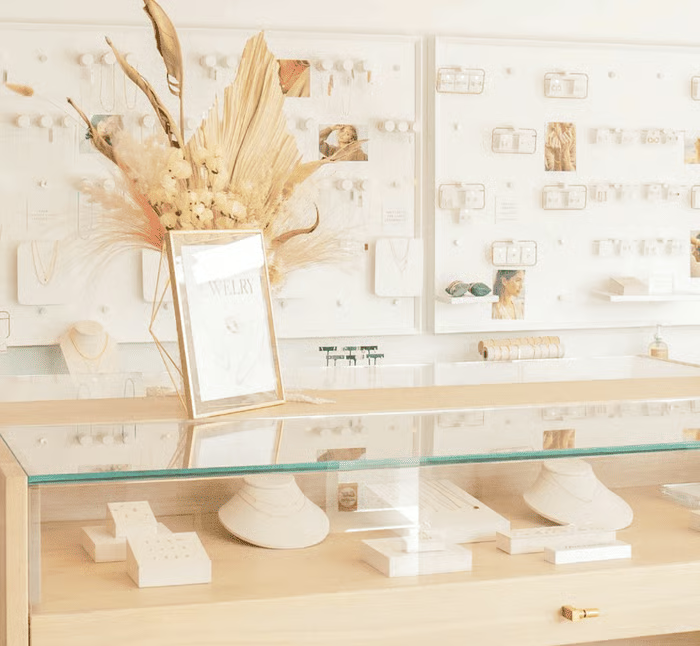
Jewelry brand Gorjana uses customization and personalization as part of its experiential retail strategy. In its stores, shoppers can explore hand-picked pieces and then customize them, such as layering bracelets or selecting personal engravings. This approach turns browsing into a participatory activity — customers are not just looking at products on display, they are helping create the final item.
4. Community nights or recurring events
- Examples: Run clubs, tasting clubs, DIY nights
- Space required: Flexible floor space or partial after-hours use
- Staff needed: 1 event lead, 1 support staff
- Budget range: $150 to $1,000 per event
- Revenue goal: Increase repeat visits and customer lifetime value
Some refer to these types of experiences as retailtainment, blending retail and entertainment to increase engagement. Recurring events create habit. When customers associate your store with a monthly gathering or club, they return more frequently. Over time, that consistency often matters more than one large event.
Examples:
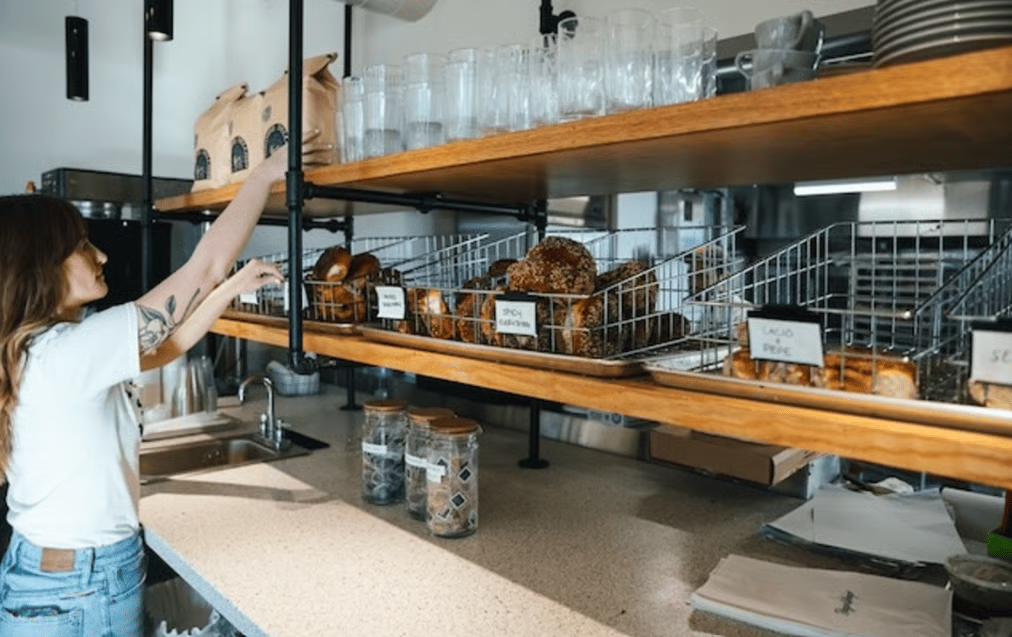
Bagel Shop Community Events
Bagel Shop turned its space into more than just a place to grab a bite by hosting recurring community activities. Rather than operating like a typical quick-serve spot, the shop built a sense of local belonging that kept customers coming back beyond breakfast hours.
These kinds of community-focused gatherings create regular touchpoints with customers and embed the business into local routines — meaning more consistent visits and stronger brand affinity.
- Soho Live Music Club
Soho Live Music Club showcases how a small venue can anchor its business around recurring events, in this case, live music nights. By turning the space into a local entertainment hub, Soho built a loyal audience who return regularly — boosting drink and food sales on event nights.
Programming that becomes a recurring fixture gives customers a reason to plan visits and spend time (and money) with you regularly. - Hi-Lo Liquor Market Community Events
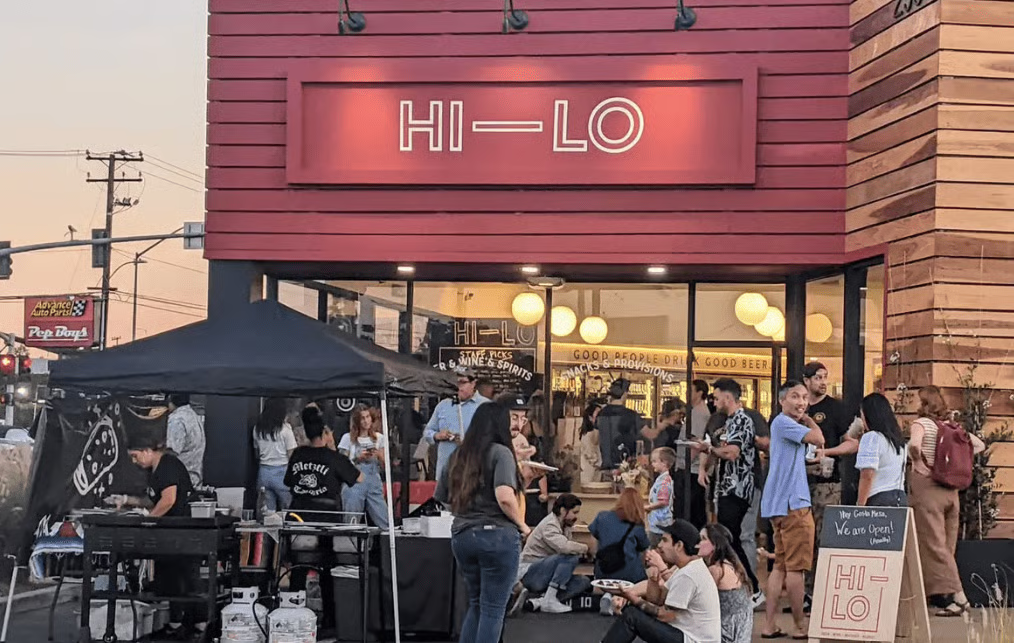
Hi-Lo Liquor Market used themed tasting nights and quarterly community events to bring people into the store beyond the usual bottle purchase. These tasting events turned casual shoppers into engaged participants and often resulted in incremental sales from customers trying new products they might not have otherwise considered.
Tasting nights and themed events make shopping a social occasion. Customers spend more time (and often more money) when they’re participating in something interactive and community-oriented.
5. Rotating themed displays or pop-ups
- Examples: Monthly theme resets, guest vendor corners
- Space required: Small front-of-store or window area
- Staff needed: Existing staff for setup and promotion
- Budget range: $100 to $2,000, depending on buildout
- Revenue goal: Drive urgency and increase impulse purchases
Changing themes regularly gives customers a reason to check back in. Limited-time displays or guest collaborations can create scarcity, which encourages quicker buying decisions.
Before opening a permanent location in Los Angeles, Woon Kitchen founder Keegan Fong hosted weekly pop-ups for a full year. Each Tuesday, customers showed up for a familiar menu in a new location. The pop-ups built a loyal following and created consistent demand before the brick-and-mortar even opened. By the time Woon launched its permanent space, it already had a strong base of repeat customers ready to support it.
Why it works: Pop-ups create momentum. They give customers a reason to show up now instead of later. They also allow you to test pricing, product mix, and branding before committing long-term.
Neighborhoods like Seongsu in Seoul, often called the “Brooklyn of Seoul,” are known for constant pop-ups and temporary brand activations. The steady rotation of new concepts keeps foot traffic high because visitors expect something different each time they return.
While you may not operate in a high-traffic district like Seongsu, the principle still applies: regular change creates a reason to come back.
Related reads:
- How to Open a Pop-up Shop
- 30+ Smart Pop-up Shop Ideas for Retailers
How to create experiential retail programs for your store
Experiential retail works best when it’s tied to a clear business outcome. Before you rearrange your floor plan or schedule an event, build a simple strategy around measurable goals.
Create a 30-day experiential retail pilot plan
Step 1: Define your primary goal
Start with one objective. Just one, not five. Ask yourself what you actually want to improve. Do you want to:
- Increase foot traffic?
- Raise average order value (AOV)?
- Improve customer retention?
- Grow your email or SMS list?
For example, if your goal is higher AOV, a customization station makes sense. If your goal is loyalty, recurring community nights may be a better fit. Pick one metric and define a number. “Increase AOV by $8” is clearer than “sell more.”
Step 2: Choose one experience to test
Start small. Similar to choosing one objective, choose one format that aligns with your goal. It may be any of the following:
- A weekend demo table
- A monthly workshop
- A limited-time themed display
- A small customization counter
Treat this like a pilot, not a permanent change. You’re testing what your customers respond to before investing more.
Step 3: Set a realistic budget
Tie your spend directly to your revenue goal. Break your costs into staffing hours, supplies or materials, promotion, and equipment (if needed). Then calculate your break-even point.
If your event costs $800 and your gross margin is 50%, you need $1,600 in incremental sales just to break even.
Step 4: Promote beyond your storefront
Do not rely on foot traffic alone. Even the best in-store experience won’t perform if customers don’t know about it. If you’re hosting something ticketed, create urgency with limited seats or early sign-up perks.
Promote through:
- Email campaigns
- SMS reminders
- Social posts
- Local partnerships
- In-store signage
Measure experiential retail ROI
Experiential retail should generate revenue, not just engagement. Before repeating an event or activation, measure whether it actually paid off.
Start with three simple calculations.
1. Calculate incremental revenue
Compare sales during your activation to a normal day. This shows what the experience added beyond your baseline.
Example:
- Typical Saturday revenue: $4,500
- Workshop Saturday revenue: $6,200
- Incremental revenue: $1,700
2. Measure average order value (AOV) lift
Experiential retail often increases basket size. If your normal AOV is $58 and the event-day AOV is $74, the experience is influencing customer spend. Even a $10 increase in AOV can justify repeat events.
3. Determine your break-even point
Before the event, calculate how much incremental revenue you need to cover costs. If your event costs $900 and your gross margin is 50%, you need $1,800 in incremental sales to break even.
4. Track long-term value, not just same-day sales
Some experiences don’t pay off immediately but drive future revenue. Track:
- New customers acquired
- Email or SMS sign-ups
- Loyalty enrollments
- Repeat visits within 30–60 days
If your event adds 120 new contacts to your marketing list, the lifetime value of those customers may exceed the one-day revenue impact.
5. Use your point-of-sale (POS) to isolate results
Tag event-related transactions, create specific SKUs for bundles, or apply event promo codes. That allows you to compare:
- Revenue by date
- Conversion rate
- Product performance
- Customer segments
This is where having an integrated POS system matters.
If you’re using a platform like Square, you can track event sales by date or location, keep inventory in sync across channels, and compare performance across stores from one dashboard. Square’s mobile card readers also let you process payments anywhere in your store during demos or pop-ups, without sending customers back to a fixed checkout counter.
When your payments, inventory, and reporting are connected, it’s much easier to see whether your experiential retail strategy is actually driving revenue.
How to make experiential retail work for small businesses
Creating experiential retail is not about adding more activity to your store. It’s about designing experiences that support revenue, fit your space, and are repeatable.
1. Unify your in-store and online data
Personalization drives spending. Research shows that nearly half of US consumers have purchased something more expensive than they planned because of a personalized shopping experience.
If you’re hosting workshops, demos, or events, use the data you already have to make those experiences more relevant. For example, if a customer purchased a cast iron skillet from your online store last month and then registers for your in-store cooking demo, you can:
- Offer a free seasoning kit sample during the class
- Provide a limited-time discount on complementary utensils
- Recommend your premium spice blends used in the demo
That kind of personalization feels relevant and helpful rather than pushy. You’re connecting their past purchase to what they’re learning in the moment, which naturally increases the likelihood of an additional sale.
This is where having unified data matters. With Square, you can sync in-store and online sales data and manage both channels from one system. That visibility makes it easier to tailor in-store experiences based on what customers have already purchased.
The more connected your channels are, the easier it becomes to turn one-time buyers into repeat customers.
2. Train your store associates for the experience
No matter how creative your experiential retail idea is, it will fall flat without proper staff execution.
According to a commissioned 2025 Forrester Consulting study conducted on behalf of Shopify, 57% of brands say coordinating experiential retail is a top challenge for physical stores. Another 44% plan to increase employee interaction time to improve in-store experiences.
Preparation matters. Training should match the type of experience you’re offering, but it should also go deeper than just product knowledge.
Train for conversion moments, not just information
If you’re hosting a workshop or demo, teach staff how to transition naturally from education to purchase. The experience should feel seamless, not like two separate events.
For example:
- After a cooking demo, associates should confidently suggest a bundled set of tools used during the session.
- After a styling workshop, staff should be ready with pre-curated outfit racks to simplify checkout.
Train for crowd flow and energy management
Experiential retail changes store traffic patterns. If you’re hosting a tasting event, a pop-up activation, or a sidewalk booth, your staff should know how to:
- Direct foot traffic
- Prevent congestion near checkout
- Keep energy high without overwhelming customers
Clear roles prevent chaos.
Train for data capture without friction
If growing your email list or SMS subscribers is part of the goal, associates need a script.
Instead of: “Do you want to sign up for our newsletter?”
Train them to say: “Since you joined us today, would you like early access to our next workshop?”
That framing increases opt-ins without feeling transactional.
Train for upsell awareness
Experiential events create high-intent moments. Those moments are opportunities to suggest premium versions or add-ons. Teach staff to recognize buying signals:
- Customers asking detailed product questions
- Attendees staying after the event
- Shoppers comparing options
Train for recovery and problem-solving
Not everything goes smoothly. If tech glitches, a product runs out, or a class starts late, your team should know how to respond calmly and offer alternatives. A smooth recovery often leaves a stronger impression than a perfect event.
Train for brand tone
Experiential retail puts your team front and center. Whether your brand is relaxed and community-driven, premium and educational, or fast and energetic, staff behavior should reflect that tone consistently throughout the experience.
3. Design the experience around your highest-margin products
Experiential retail should strengthen your margins, not weaken them. Center your demos, workshops, or customization around products that have strong markups, pair well with add-ons, or encourage repeat purchases. If you’re investing staff time, make sure the revenue upside justifies it.
For example, a skincare workshop should highlight premium serums, not clearance items. A tasting event should feature products with upsell potential.
4. Optimize your store layout without disrupting daily sales
You don’t need a remodel to create an experience. The goal is flexibility. Your store should be able to return to its standard layout easily.
Use these instead:
- Use temporary fixtures
- Repurpose underused corners
- Clear space during slower hours
- Host events after closing
TIP: Think in zones. A 4- to 8-foot demo table near checkout can drive incremental sales without affecting your core merchandising.
5. Build repeatability into what works
One event is not a strategy. If something performs well, turn it into a recurring format:
- Monthly workshops
- Seasonal themed displays
- Quarterly community nights
Consistency builds customer habits. Habits build predictable revenue. Before scaling, test your idea for 30 days. If results are strong, then consider investing more heavily.
Bottom line
Experiential retail is not about turning your store into an entertainment venue. It’s about giving customers a reason to engage before they buy.
You don’t need a massive budget, immersive tech, or a flagship buildout to make this work. A well-planned demo table, recurring workshop, customization station, or themed display can increase sales, strengthen customer loyalty, and differentiate you from online competitors.
Start with one clear goal. Test one experience. Track the results. If it drives revenue, refine and repeat.
The advantage you have as a small business is flexibility. You can move faster than large chains, adjust quickly based on feedback, and build real relationships inside your store. When executed intentionally, experiential retail becomes less about creating buzz and more about building predictable, measurable growth. That’s the real opportunity.
