







Holiday spending reached new highs in 2025, with total US retail sales surpassing $1 trillion and online purchases alone hitting a record $257.8 billion. Adobe Analytics’ holiday shopping report indicates, mobile shopping drove more than half of all online holiday sales, while buy now, pay later (BNPL) spending and AI-driven shopping traffic both climbed sharply.
These holiday spending statistics show how consumers spent, when they shopped, and which payment and shopping channels mattered most. Below is a breakdown of the most important 2025 holiday spending stats and trends you should understand when planning promotions, inventory, and sales strategies.
Total holiday spending
Holiday spending grew steadily in 2025, with both overall retail sales and ecommerce reaching record levels despite cautious consumer sentiment.
1. US holiday retail sales were expected to surpass $1 trillion in 2025
According to the National Retail Federation (NRF) holiday forecast, total US retail sales for November and December 2025 were expected to grow 3.7% to 4.2%, translating to $1.01 trillion to $1.02 trillion in holiday spending compared with 2024. NRF notes that consumers remain fundamentally strong despite economic headwinds. The retail authority defines the holiday season as November through December 31.
2. Online holiday spending reached $257.8 billion in 2025
US consumers spent $257.8 billion online during the 2025 holiday season, a 6.8% year-over-year (YoY) increase. Adobe Analytics reported that online spending set a new record despite slower growth compared to 2024.
3. Overall US holiday retail spending grew about 4% YoY
Total US holiday retail spending increased approximately 4.2% from November 1 through Dec. 21, 2025, compared to the same period in 2024. Visa reported that growth was driven by steady consumer demand across both online and in-store channels. This is about the same range noted in Mastercard SpendingPulse’s report, with an increased 3.9% YoY growth. According to the report, spending gains were spread across multiple categories and channels.
Online and mobile shopping trends
Online shopping continued to outpace in-store growth, with mobile devices accounting for the majority of digital holiday purchases.
4. Mobile shopping accounted for nearly 60% of all online holiday spending
According to the same Adobe Analytics report, mobile devices generated 56.4% of online holiday sales in 2025, marking the first full year that mobile made up more than half of total digital holiday spending. Adobe attributed this shift to increased smartphone use for browsing and checkout.
5. Shoppers spent $145.2 billion on mobile devices during the holidays
Adobe reported that mobile spending growth outpaced desktop throughout the season. Mobile holiday spending totaled $145.2 billion in 2025, up 10.7% YoY.
6. Online holiday sales grew faster than in-store spending
Online holiday sales rose 7.4% YoY, compared to 2.9% growth for in-store sales. The Mastercard SpendingPulse holiday report showed that ecommerce continued to capture a larger share of holiday spending.
7. In-store purchases still accounted for most holiday spending
However, Visa reports roughly 73% of total holiday retail spending still occurred in physical stores, while 27% came from online purchases. In-store shopping remained dominant despite faster online growth.
Peak holiday shopping days
Major deal days like Cyber Monday and Black Friday remained the biggest drivers of online holiday sales.
8. Cyber Monday generated $14.25 billion in online sales
Cyber Week remains to be the largest spending week for the 2025 holiday season, with Cyber Monday as the largest online shopping day. According to Adobe Analytics, Cyber Monday brought in $14.25 billion in online sales in 2025, up from $13.3 billion in 2024.
9. Black Friday online sales reached $11.8 billion
Meanwhile, Black Friday online spending totaled $11.8 billion in 2025, increasing from $10.8 billion the year prior. Adobe reported that Black Friday remained one of the top digital shopping days.
Read more:
- Black Friday Marketing Strategies
- Cyber Monday Strategies & Tips for Retailers
- Holiday Marketing Ideas for Retailers
Holiday spending trends by category
Electronics, apparel, and dining led holiday spending, showing continued demand for both physical goods and experiences.
10. Electronics and apparel were the top holiday spending categories
According to Adobe Analytics, electronics led holiday spending with $59.8 billion in sales, followed by apparel at $49 billion. Adobe reported that category rankings were consistent with previous holiday seasons.
11. Apparel spending rose between 5% and 8% during the holidays
Visa reports apparel and accessories spending increased about 5.3% during the 2025 holiday season, while Mastercard reported apparel growth closer to 7.8%. Both payment networks identified apparel as one of the fastest-growing categories.
12. Dining and experiences saw increased holiday spending
Restaurant and dining sales rose approximately 5.2% during the holiday period. Mastercard reported that consumers continued to spend on experiences alongside traditional gift purchases.
Holiday payment and technology trends
Flexible payment options and AI-powered shopping tools played a growing role in how consumers researched and paid for holiday purchases.
13. BNPL spending hit $20 billion during the 2025 holidays
The Adobe report shows shoppers spent $20 billion using BNPL services during the 2025 holiday season, reflecting 9.8% YoY growth. Adobe noted that BNPL usage increased steadily throughout the holiday period.
14. AI-driven traffic to retail websites rose by more than 690% YoY
As with recent trends, traffic to retail sites from AI-powered sources increased by 693% during the 2025 holiday season. Adobe linked this growth to shoppers using AI tools for gift discovery and product research.
Consumer spending behavior during the holidays
Shoppers entered the season value-focused, prioritizing essentials, trading down, and managing budgets more carefully across income groups.
15. Consumer confidence declined as shoppers entered the 2025 holiday season cautiously
According to McKinsey, overall consumer optimism declined throughout 2025, as households faced ongoing inflation, slower economic growth, and higher cost-of-living concerns. McKinsey reported that tighter budgets influenced how shoppers approached holiday spending decisions.
16. More than 40% of holiday shoppers planned to browse or buy before November in 2025
According to the NRF, 42% of holiday shoppers planned to start browsing or buying gifts before November, continuing a long-term trend of earlier holiday shopping. They also reported that while shoppers start earlier, 60% still expect to finish their holiday purchases in December, showing that demand stretches across the full season.
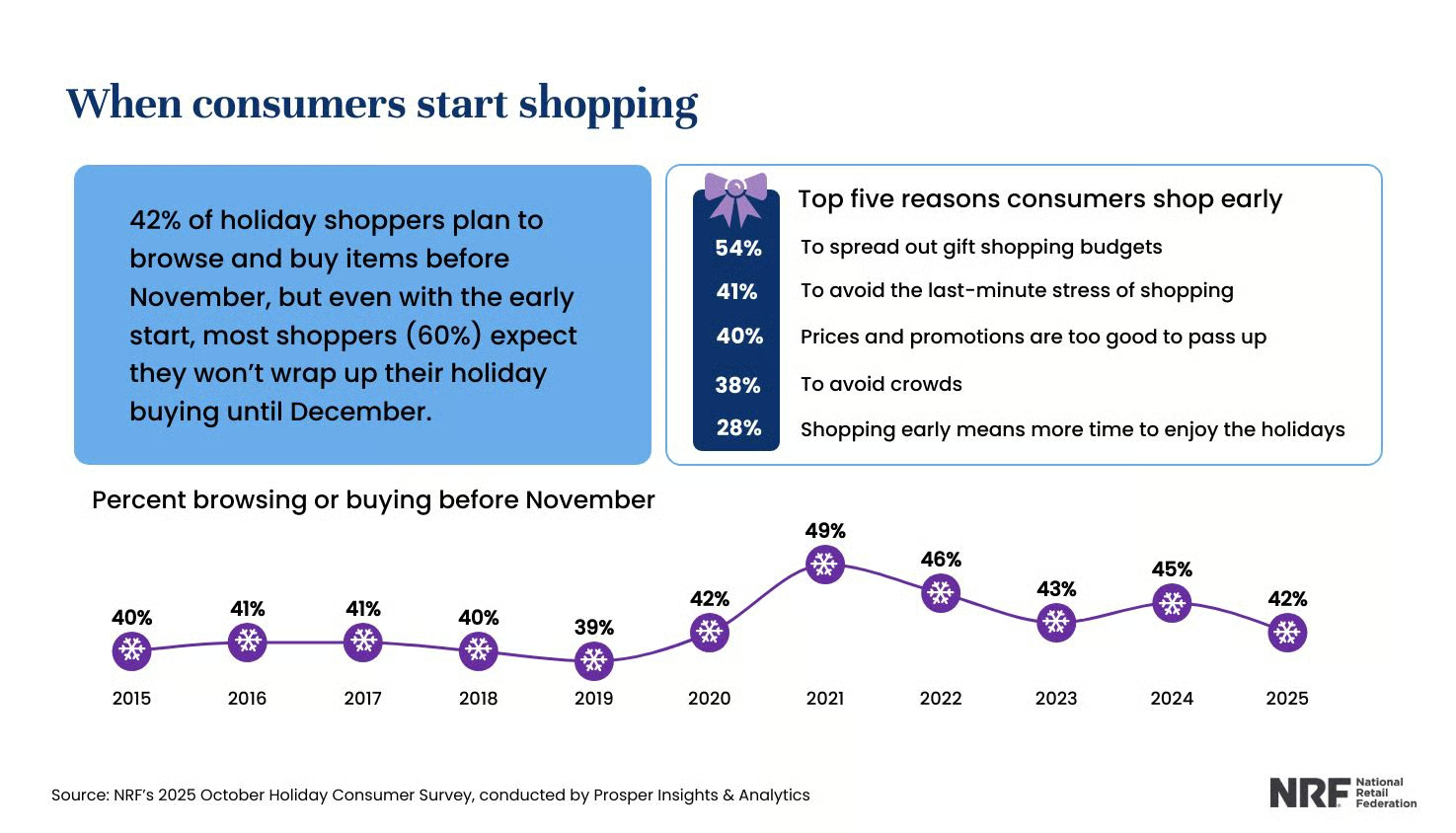
Conversely, a McKinsey holiday report noted that early shopping was often tied to budget management rather than increased spending.
17. About 75% of consumers traded down in at least one spending category
According to McKinsey’s ConsumerWise research, roughly three in four US consumers reported trading down by choosing lower-priced brands, smaller pack sizes, or cheaper retailers in at least one category. McKinsey found that this behavior held even as some shoppers still allowed room for small, selective splurges.
18. Consumers prioritized essentials while pulling back on discretionary purchases
The McKinsey report also showed that many consumers maintained or increased spending on necessities such as groceries while reducing spending on discretionary and semi-discretionary items. A significant share of shoppers reported plans to spend the same or less than last year during the holiday season.
19. Higher-income shoppers were more likely to maintain or increase spending
According to the same McKinsey report, higher-income households were more likely to hold steady or increase spending, while middle- and lower-income consumers remained more cautious. This created uneven spending patterns across income groups.
Bottom line
The 2025 holiday season showed that consumers are still willing to spend, but they are doing so more carefully. Mobile shopping, flexible payment options, and deal-driven shopping days played a major role in driving sales, while value-focused behavior shaped how and where shoppers spent their money. For small business owners, these holiday spending trends highlight the importance of mobile-friendly shopping experiences, flexible payment options, and early, well-timed promotions heading into future holiday seasons.
