






The best credit card payment apps let small businesses accept card payments from a phone, tablet, card reader, invoice, payment link, QR code, or online checkout. Square is my top pick for most small businesses because it combines a free POS app, built-in payment processing, Tap to Pay, affordable card readers, invoices, payment links, basic ecommerce tools, and offline payments in one account.
For this guide, I focused on merchant-side payment apps that help businesses get paid, not consumer wallet apps used only to send money or pay at checkout. I compared each provider by pricing, payment methods, app features, account tools, ease of use, payout speed, and real-world user feedback.
My picks for the best credit card payment apps for small businesses are ranked as follows:
| Rank | Provider | Best for | Monthly starting price |
|---|---|---|---|
| 1 | Square | Best overall credit card payment app | $0 |
| 2 | Helcim | Growing businesses | $0 |
| 3 | Shopify POS | Multichannel sellers | $5 |
| 4 | PayPal | Occasional sellers and familiar checkout | $0 |
| 5 | Chase Payment Solutions | Fast and free same-day funding | $0 |
| 6 | Stripe | Custom app-based payments | $0 |
| 7 | SumUp | Low-volume and low-ticket sales | $0 |
| 8 | Payanywhere | Restaurants and bars | $0 |
- Best credit card payment apps compared
- How I chose the best credit card payment app for small businesses
- Square: Best overall credit card payment app for small businesses
- Helcim: Best for growing businesses
- Shopify: Best for multichannel sellers
- PayPal: Best for occasional sellers
- Chase Payment Solutions: Best for fast and free same-day funding
- Stripe: Best for custom app-based payments
- SumUp: Best for low-volume and low-ticket sales
- Payanywhere: Best for restaurants and bars
- Methodology: How I evaluated the best credit card payment apps
- How to choose a credit card payment app for your business
- Frequently asked questions (FAQs)
- Bottom line
Best credit card payment apps compared
| Provider | Our score (out of 5) | Business type or need | In-person/ contactless fee | Funding speed |
|---|---|---|---|---|
| Square | 4.69 | Most small businesses | 2.4%-2.6% + 15 cents | 1 to 2 business days, instant for a fee |
| Helcim | 4.28 | Growing businesses | Interchange plus 0.15% + 6 cents to 0.4% + 8 cents | 1 to 2 business days |
| Shopify POS | 4.23 | Ecommerce sellers | 2.4% + 10 cents to 2.6% + 10 cents | 1 to 3 business days |
| PayPal | 4.17 | Occasional sellers | 2.29% + 9 cents | 3 to 5 business days |
| Chase Payment Solutions | 4.09 | Fast funding needs | 2.6% + 10 cents | Same day with Chase checking |
| Stripe | 4.00 | Custom online payments | 2.7% + 5 cents | Next business day; instant payouts available |
| SumUp | 3.88 | Low-ticket mobile sellers | 2.6% + 10 cents | 1 to 3 business days |
| Payanywhere | 3.86 | Food trucks, bars, restaurants | 2.69% | Same-day funding |
Credit card payment apps vs card readers vs processors
| Term | What it means | Example |
|---|---|---|
| Credit card payment app | Merchant-side software used to accept card payments. | Square POS, PayPal POS, Shopify POS, Stripe Dashboard |
| Mobile card reader | Hardware that connects to an app for swipe, chip, or tap payments. | Square Reader, PayPal card reader, Shopify Tap & Chip Card Reader |
| Payment processor | The provider that authorizes transactions, moves funds, and charges processing fees. | Square, Stripe, PayPal, Helcim, Chase |
| Mobile wallet | Customer-side payment method used to pay with a phone or wearable. | Apple Pay, Google Pay, Samsung Pay |
How I chose the best credit card payment app for small businesses
To evaluate the best credit card payment app, I fact-checked each provider to ensure that pricing and features were accurate. I then scored each one on 20 data points, prioritizing value for money and ease of use. See my full methodology below.
Why you can trust Fit Small Business
Square: Best overall credit card payment app for small businesses
Why I chose Square
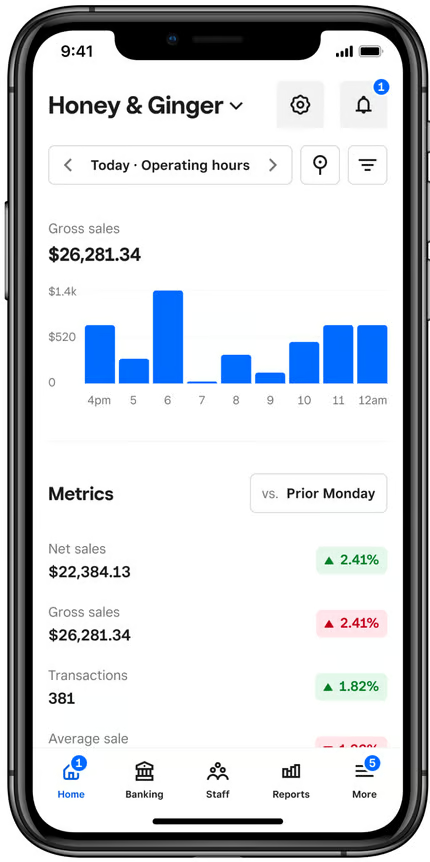
Square offers a free POS and credit card payment app that works seamlessly on iOS and Android mobile devices. It has one of the most intuitive interfaces I’ve ever seen on a POS system. Square consistently makes our list of top mobile credit card processors. The POS software includes inventory management, ecommerce, and checkout features, not to mention add-ons and integrations that allow the system to grow, making it a great choice for nearly any small business or startup.
In addition to an all-purpose credit card payment app, Square also has free POS apps for retail, restaurant, and appointment-based businesses.
Who should use Square
Square is best for small businesses that want a free, easy-to-use payment app with general-purpose POS features. It fits mobile sellers, service providers, market vendors, small retailers, appointment-based businesses, and startups that want one account for in-person, online, invoice, and mobile payments.
When to use a Square alternative
Use a Square alternative if you want to bring your own merchant account, negotiate interchange-plus rates, process high monthly volume, or need a provider with more traditional underwriting. Helcim is better for growing businesses that want lower effective processing costs, while Stripe is better for custom online or app-based payment flows.
Square pricing
- Monthly account fee: $0-$149 (including POS software)
- Mobile app fee: $0
- Card-present fee: 2.4%-2.6% + 15 cents
- Card-not-present fee: 2.9%-3.3% + 30 cents
- American Express transactions: $0
- Volume discounts: By request for businesses with sales volume greater than $250,000/year
- Chargeback fee: Waived up to $250 per month
- Mobile card reader cost: $0-$59
- Application/set-up fee: $0
- Cancellation fee: $0
Square standout features
- Multidevice register app: Square has a fully functioning POS register app that works on smartphones, tablets, and Square’s POS hardware and includes inventory tracking, taxes, and discounts. Square also has an integrated online store and can process card payments offline.
- Free mobile card reader: You’ll get one free smartphone-compatible magstripe reader when you sign up for a Square account, and affordable contactless readers are also available.
- Highly rated mobile app: Square ranks number one on our lists of best credit card readers for iPhones and card readers for Android and also leads our list of leading mobile credit card processors. In the Apple App Store, it has a 4.8 rating out of 5 based on more than 503,000 ratings. For Android, it has 4.6 stars and more than 234,000 reviews.
- Chargeback protection: Square is unique among the credit card processors on our list because it waives up to $250 a month in chargeback fees. This should be sufficient for a small business or solopreneur.
Square user reviews
Square is a well-known and highly regarded software and app, and its user reviews reflect this with an average of about 4.8 out of 5.
- Users liked Square’s organization, friendly pricing, no long-term contracts, and ease of use for both merchants and customers.
- Users did not like the occasional software glitches or disconnections, customer support difficulties, and sudden deactivation of accounts.
Helcim: Best for growing businesses
Why I chose Helcim
Helcim is a strong choice for growing small businesses that want more pricing transparency and account stability than a typical free payment app offers. While Square is easier to start with and Stripe is better for custom online payments, Helcim is built for growing businesses that are starting to process more card sales and want more control over long-term processing costs.
Its credit card payment app connects to a broader payment platform with inventory tools, customer profiles, invoicing, payment links, ACH payments, and a secure card vault with no monthly software fee. That gives Helcim more back-office depth than many basic mobile payment apps, especially for businesses that accept payments in more than one way.
I like that Helcim’s mobile POS app ties directly into a full merchant account. You can accept chip and tap payments, save cards securely for future transactions, create customer profiles, and run itemized sales from a centralized product catalog. For businesses that are moving beyond occasional sales, these tools make Helcim feel more like a long-term payment system than a simple card reader app.
Helcim also includes automated surcharging for businesses that choose to offset card fees, which gives you another way to manage processing expenses.
Who should use Helcim
Helcim is best for established small businesses, professional services, B2B sellers, medical offices, and growing retailers that process enough monthly card volume to benefit from interchange-plus pricing.
When to use a Helcim alternative
Use Square, PayPal, or SumUp if you only sell occasionally, need the fastest setup, or want the simplest payment app. Use Stripe if you need custom online payments, subscriptions, or marketplace tools.
Helcim pricing
- Monthly account fee: $0
- Mobile app fee: $0
- Card-present fee: Interchange plus 0.15% + 6 cents to 0.4% + 8 cents
- Card-not-present fee: Interchange plus 0.15% + 15 cents to 0.50% + 25 cents
- American Express transactions: + 0.10% + 10 cents
- Volume discounts: Automated
- Chargeback fee: $15 refundable
- Mobile card reader cost: $99
- Application/setup fee: $0
- Cancellation fee: $0
Helcim standout features
- Free invoicing tools: Helcim includes online invoicing at no extra monthly cost. You can customize invoice templates, add branding, offer multiple payment options, set alerts, create estimates and quotes, and add a payment button so customers can pay right away.
- Mobile POS and card reader: Helcim’s mobile payment app works with its card reader to accept swipe, chip, tap, and keyed-in payments from a smartphone, tablet, or computer. The app also connects payments with your Helcim account so sales data stays centralized.
- ACH payments and recurring billing: Helcim supports ACH payments through invoices, subscriptions, payment requests, and the virtual terminal. It also includes recurring billing tools and a hosted customer portal for subscription-based businesses.
- Free POS and customer management tools: Helcim includes free POS software with inventory management, customer profiles, employee management, custom tipping, custom taxes, shipping management, and omnichannel transactions. This gives SMBs more back-office tools than many basic payment apps.
- Hosted payment pages: Helcim lets businesses create hosted payment pages from templates, customize checkout fields, add shipping and payment options, and share pages through links, buttons, QR codes, email, or social media without coding.
- Fraud and dispute tools: Helcim includes Fraud Defender risk settings, tokenized card storage, encrypted card vaulting, and guided dispute management so merchants can review chargebacks and upload supporting documents from the platform.
Helcim user reviews
Helcim has mixed user reviews for its mobile POS app. The Helcim Point of Sale app has a 3.3 out of 5 rating from 97 ratings in the Apple App Store, while the Google Play listing shows 10K+ downloads for Helcim POS Payments and an average of 3.1 out of 5 rating.
- Users liked its low processing rates, easy-to-use app, card reader performance, and ability to manage online and in-person payments in one account.
- Users noticed longer deposit times, limited tipping options, customer support issues, account reviews, and fund holds.
Shopify: Best for multichannel sellers
Why I chose Shopify POS
I love Shopify’s checkout features and multichannel sales tools. It is on our list of the leading ecommerce solutions today and made our list of the best POS systems, especially for multichannel retailers.
The app comes free with every ecommerce account and can be used on iPhone and Android devices. However, you can rent full POS systems for special occasions, something none of the others on our list do.
Who should use Shopify POS
Shopify POS is best for ecommerce businesses, multichannel retailers, and online-first brands that need to connect in-person sales with online inventory, customer data, and shipping.
When to use a Shopify alternative
Use Square, PayPal, SumUp, or Payanywhere if you mainly sell in person and do not need a Shopify online store. Use Stripe if your online payment flow is custom-built.
Shopify POS pricing
Shopify’s mobile POS Lite is free with any of Shopify’s ecommerce plans. Large businesses can upgrade to the paid POS plan to access advanced features.
- Monthly account fee:
- POS only: $5
- Ecommerce + POS plan: $39-$399 + $0-$89
- Mobile app fee: $0
- Card-present fee: 2.4% + 10 cents to 2.6% + 10 cents
- Card-not-present fee: 2.5% + 30 cents to 2.9% + 30 cents
- American Express transactions: $0
- Volume discounts: Via paid plans + custom plans for enterprise-level businesses
- Chargeback fee: $15 refundable
- Mobile card reader cost: $49
- Application/set-up fee: $0
- Cancellation fee: $0
Shopify POS standout features
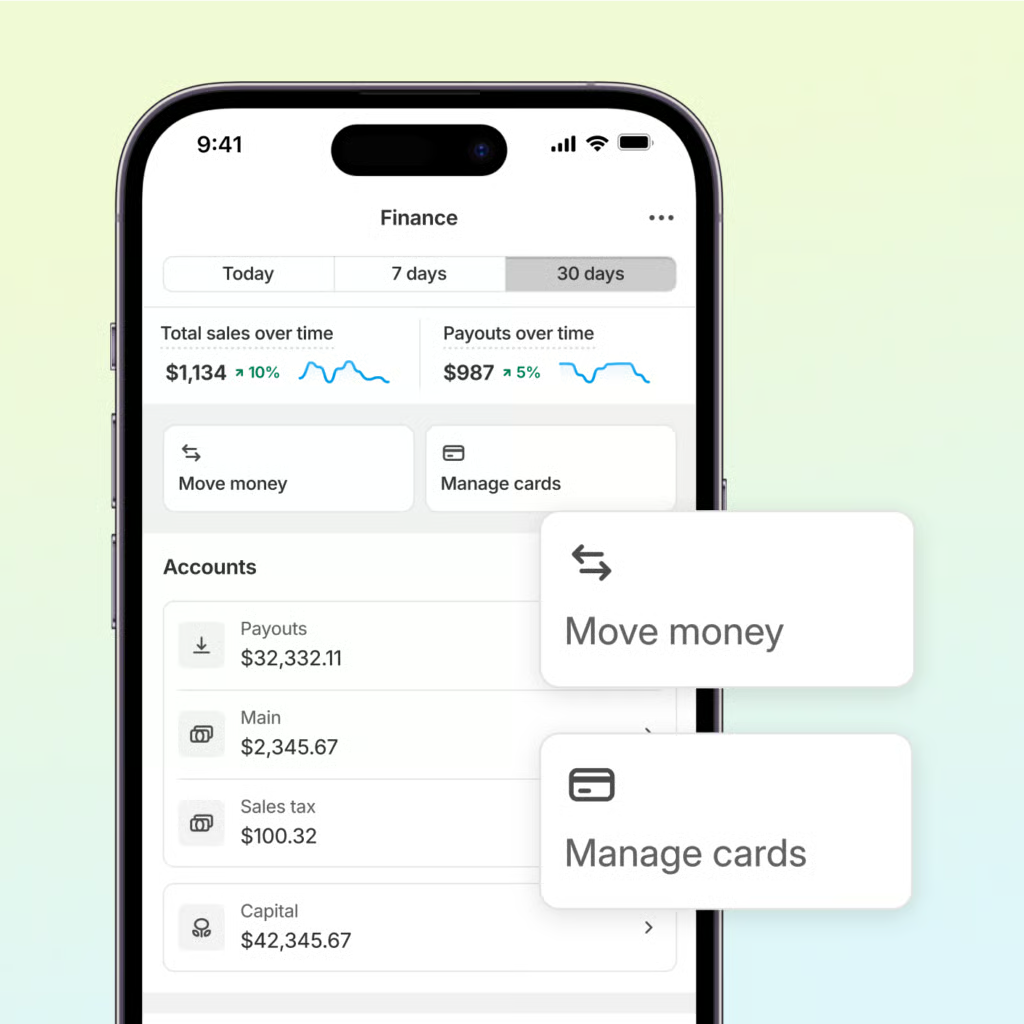
- Multichannel sales: Integrate with channels like eBay, Facebook, and other social or online venues. The credit card app itself allows you to create payment buttons and links to send via email or add to a social media post.
- Shipping discounts: The Shopify payment app also gives you access to logistics management (shipping and delivery). If you process mail orders, sell on eBay, or ship a lot of your products, then Shopify is worth considering for the shipping discounts alone, you can save up to 88%.
- POS hardware rental: Shopify allows you to rent a system by the day. This is a great tool for those times when you may need to up your game, such as for a big convention with high-traffic sales.
Shopify POS user reviews
Shopify is a great software for multichannel or ecommerce-focused sales and is a top-shelf online selling solution. App users gave it an average score of about 4.5 out of 5.
- Users liked Shopify’s easy inventory sync, good mobility, and easy sales transaction. They also appreciated its affordable starter plan and ability to scale as the business grows.
- Users did not like the problems with hardware connection, bad return policy, and system crashes. Some also complained about bad customer service.
PayPal: Best for occasional sellers
Why I chose PayPal
PayPal is one of the most popular credit card payment apps in the industry. Not only does its payment app help merchants manage all credit cards in one place, but it can also directly accept payments via QR codes and contactless methods. PayPal is also popular for its easy-to-use payment links, invoicing, crypto payment management tools, and exclusive PayPal user checkout options.
The POS is simpler than Square, easy to use, and free. It has discounted 3-in-1 card readers and cheaper in-person rates; the processing rates are also cheaper. Learn how PayPal stacks up against Square.
Who should use PayPal
PayPal is best for small businesses and seasonal sellers that process casual in-person sales, sell to tourists or international customers, or want PayPal and Venmo acceptance.
When to use a PayPal alternative
Use Square if you need stronger POS features, offline payments, inventory, and better all-around business tools. Use Helcim if your card volume is high enough that flat-rate pricing becomes expensive.
PayPal pricing
- Monthly fee: $0-$40
- Card-present fee: 2.29% + 9 cents
- Keyed-in fee: 3.49% + 9 cents
- QR code payments: 2.29% + 9 cents
- Chargeback fee: $20
- Mobile Card reader: $79, first one $29
PayPal’s in-person transaction fees are the cheapest on our list of apps for credit card processing. However, its rates vary for online sales, virtual terminal sales, donations, and country. Learn more about PayPal pros and cons.
PayPal standout features
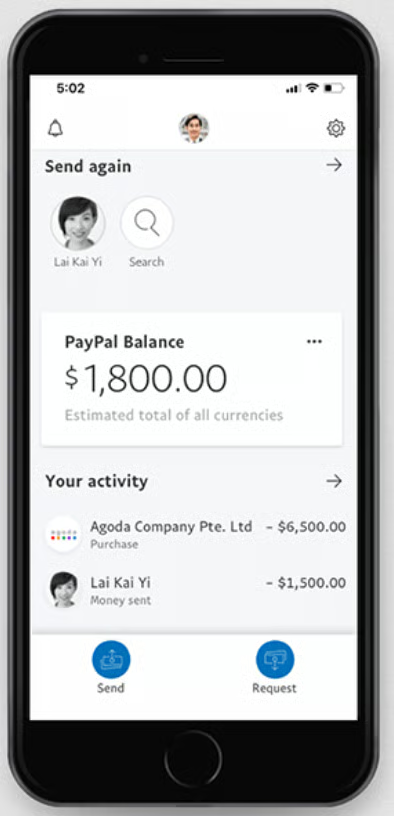
- PayPal Point of Sale (formerly Zettle): The PayPal mobile POS app is free for merchants accepting payments in person but requires pairing with the Zettle card reader to start accepting card payments. You can also manually enter your customer’s payment details on the app, but the fees are higher.
- Cryptocurrency payments: PayPal is among the first of the major payment processors to accept cryptocurrency payments. Each PayPal account (personal and business) comes with a digital crypto wallet. This is integrated with PayPal’s Zettle payment app, so your customers can opt to pay with cryptocurrency such as Bitcoin, Ethereum, and more.
- Social selling: PayPal lets you include links for social selling, and you can create payment buttons and payment links directly from the mobile app. Adding a PayPal option to your sales increases your chance of making a sale. It also offers direct integration with popular peer-to-peer payment app Venmo. Learn how to create a Venmo account for your business.
PayPal user reviews
PayPal is a highly popular credit card payment app that makes it easy for customers to pay. Users gave this software an average score of about 4.5 out of 5.
- Users liked its security, invoicing tools, reminders, and utility for international payments.
- Users noticed system crashes, occasionally absent customer support, and difficulty navigating the app.
Chase Payment Solutions: Best for fast and free same-day funding
Why I chose Chase Payment Solutions
Chase is one of the biggest banks in the world, but one of the rare few that directly works with small businesses. Merchants with or without a Chase bank account can sign up with Chase Payment Solutions, but you will need one if you want access to free same-day funding.
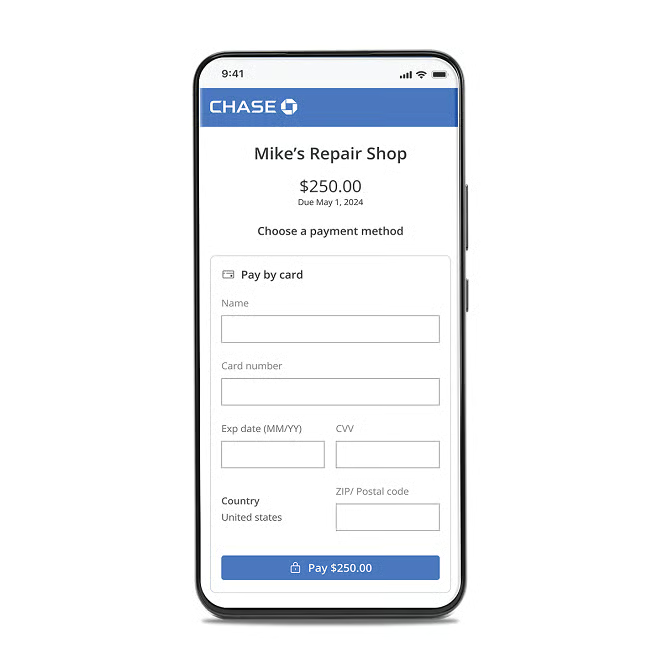
Chase Mobile Checkout (for non-Chase bank account holders) and Chase Quick Accept (for merchants with a Chase bank account) both support a range of swipe, chip, and contactless credit card payment methods. There’s also a separate Chase mobile POS app with built-in payment processing tools.
Who should use Chase Payment Solutions
Chase is best for businesses that already use Chase business banking, or are willing to open a Chase business checking account to access free same-day funding.
When to use a Chase alternative
Use Square if you do not want payments tied to a bank relationship. Use Helcim if processing cost matters more than same-day funding. Use PayPal if you sell only occasionally and want a lower-cost reader.
Chase Payment Solutions pricing
- Monthly account fee:
- Merchant services: $0
- Chase business bank account: $0-$15 (monthly fee waived with $2,000 monthly maintaining balance)
- Transaction fees:
- In-person transaction fee: 2.6% + 10 cents
- Online transaction fee: 2.9% + 25 cents
- Keyed-in transaction fee: 3.5% + 10 cents
- Custom rates available for larger transactions
- Chargeback fee: $25-$100 per transaction depending on dispute volume
- Same-day funding: Free (for Chase business bank account holders), otherwise free next-day funding
- Mobile card reader: $99 ($129 for reader + base)
Chase Payment Solutions standout features
- Mobile checkout: Chase Mobile Checkout is available for merchants without a Chase bank account. It comes with an image-based product catalog and a range of credit card payment methods supported by Chase 3-in-1 mobile credit card reader (sold separately for $99). Free next-day funding is available for deposited funds.
- Chase QuickAccept: Chase QuickAccept is like Chase Mobile Checkout except that it offers same-day funding and is only available for merchants with a Chase bank account. It also works with the same 3-in-1 card reader that you can get for free with QuickAccept.
- Free same-day funding: Free same-day funding is available for merchants with a Chase bank account. Merchants without a Chase bank account have access to next-day deposits at no extra cost.
- Customer Insights: Every Chase merchant account comes with a business intelligence platform that provides analytics for key metrics such as daily sales and trends. On top of that, it also provides robust customer data profiles and peer benchmarking based on Chase’s rich merchant-acquiring and card-issuing data.
Chase Payment Solutions user reviews
Chase offers mobility and options to users; they can choose whether or not to sign up for a Chase bank account and can use the app regardless. However, you’ll have more tools at your disposal if you do create an account. App users gave it an average score of about 4.6 out of 5.
- Users liked the great customer service, large set of features, good security, better app experience than many other rival apps, and fast transactions.
- Users noticed that the app sometimes doesn’t open or connect to the internet and has problems with passwords and logins. There are also occasional technical glitches.
Stripe: Best for custom app-based payments
Why I chose Stripe
Stripe is a strong choice for small businesses that need more than a basic card reader app. It supports checkout pages, payment links, recurring billing, customer portals, app-based payments, marketplace payments, and developer tools, making it a better fit for online-first businesses with more advanced payment needs.
I like Stripe for SMBs that want flexibility across online and in-person sales. It can connect payments to websites, apps, subscriptions, customer databases, and internal systems. It also supports international payments, multiple currencies, and custom checkout flows, which gives growing businesses more room to build around their payment setup.
That said, Stripe is not the easiest mobile POS app on this list. Square, PayPal, and SumUp are simpler if you just want to take payments from a phone or card reader with minimal setup. Stripe makes the most sense when payments are part of a larger online sales system, custom app, subscription business, or marketplace, not as a standalone credit card payment app for a small shop or mobile seller.
Who should use Stripe
Stripe is best for online businesses, SaaS companies, marketplaces, subscription businesses, custom websites, and mobile apps.
When to use a Stripe alternative
Use Square if you want a ready-to-use mobile POS app. Use Helcim if you want lower in-person processing costs without building a custom setup. Use Shopify if you need ecommerce tools but do not want to build your own checkout.
Stripe pricing
- Monthly account fee: $0
- Mobile app fee: From $0 (for custom-designed apps); third-party mobile payment apps will charge anywhere from 1%-1.5% per transaction.
- Card-present: 2.7% + 5 cents
- Keyed-in: 3.4% + 30 cents
- Touchless: 2.9% + 30 cents
- Tap-to-pay on mobile: +10 cents per authorization
- Volume discounts: Custom interchange-plus pricing for larger businesses
- Chargeback fee: $15
- Mobile card reader cost: $59
- Application/set-up fee: $0
- Cancellation fee: $0
Stripe standout features
- Custom checkout: Stripe Checkout lets businesses create hosted checkout pages for one-time or recurring payments, support local and international payment methods, and add conversion tools like address autocomplete and one-click payments.
- Payment links: Stripe lets businesses create payment links from the Dashboard and send customers to a Stripe-hosted checkout page, making it useful for SMBs that want to accept online payments without building a full store.
- Invoicing and subscriptions: Stripe supports custom invoices, recurring billing, customer portals, trial periods, discounts, usage-based pricing, and tiered pricing.
- International payments: Stripe supports more than 135 currencies and local payment methods, making it a strong fit for ecommerce businesses that sell across borders.
- Developer tools: Stripe offers APIs, developer tools, and hundreds of integrations for businesses that want to connect payments to a website, app, marketplace, or internal system.
- Fraud and security tools: Stripe includes PCI Level 1 compliance, encrypted card data, Stripe Radar fraud prevention, dispute tools, and chargeback protection options.
- Unified Dashboard: Stripe’s Dashboard lets businesses manage payments, reporting, disputes, permissions, risk tools, and integrations from one place.
Stripe user reviews
Stripe Dashboard has strong user reviews, with an average rating of 4.7 out of 5 in the Apple App Store and 4.5 out of 5 in Google Play.
- Users liked its clean interface, real-time payment tracking, payment notifications, low processing fees, and reporting tools.
- Users noticed account holds, payout delays, limited support when issues arise, and a need for more customizable customer information fields.
SumUp: Best for low-volume and low-ticket sales
Why I chose SumUp
SumUp is a reliable, straightforward credit card processor that takes swipe, chip, and contactless payments. You will need the mobile payments app that comes with it to process transactions. Zero monthly fees and zero per-transaction markup make SumUp a competitive option for businesses with low-volume and low-ticket sales. There is also a relatively low chargeback fee of $10; strictly speaking, this fee is paid not to SumUp itself but to its provider partners.
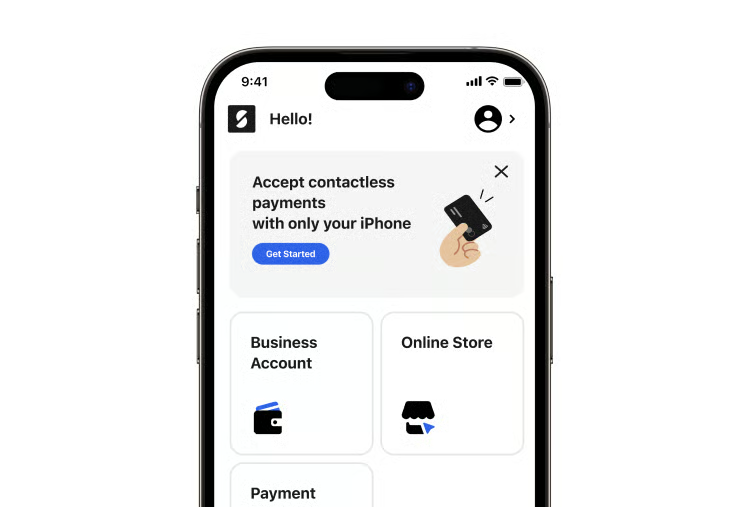
The app itself comes with an inventory management function that’s easy to set up, or you can simply process charges manually with notes. In addition to card processing with a basic POS system, you can send links, create QR codes, set up an online store for free (Shopify charges for this), and even create digital gift cards.
However, you must pay an extra monthly fee of at least $99 for POS functions. SumUp also has no same-day funding option and no interchange-plus pricing.
Who should use SumUp
SumUp is best for small businesses and solopreneurs that process low-volume or low-ticket sales and want a simple card reader and mobile payment app.
When to use a SumUp alternative
Use Square if you need a stronger free POS and offline payments. Use PayPal if customer familiarity matters more. Use Helcim if your processing volume is growing and cost control matters.
SumUp pricing
- Monthly costs:
- POS plan: $99-$289 (Optional)
- Payment app: $0
- In-person transaction: 2.6% + 10 cents
- Online and manually keyed-in transaction: 3.5% + 15 cents
- Virtual terminal processing: 3.25% + 15 cents
- Gift card processing: 3.25% + 15 cents
- Invoice processing: 2.9% + 15 cents
- Chargeback fee: $10 payment provider fee
- Mobile card reader: From $54
SumUp standout features
- Cheaper for low-ticket sales: Like Payanywhere, SumUp offers good rates for low-ticket sales. Compared with Square and Zettle, your low-ticket transactions will be cheaper with SumUp.
- POS system: SumUp offers its own POS system; however, unlike Square, this is a separate add-on service that will cost you up to $289 per month. Payment processing fees are slightly lower than when using the mobile card readers. It’s 2.6% + 10 cents for in-person and 3.5% + 15 cents for online and keyed-in transactions.
- Basic in-app invoicing: SumUp also offers a free invoicing tool with customizable invoices, embedded payment links, and automatic reconciliation between payments and open invoices. You can create and monitor invoices right from the app, including resending overdue invoices.
SumUp user reviews
Average user scores come in at around 4.7 out of 5.
- SumUp is easy to use, generally makes transactions go quickly and smoothly, and has good rates.
- Users didn’t like the glitchy payment links, unreliable customer support, and unexpected payment stoppages.
Payanywhere: Best for restaurants and bars
Why I like Payanywhere
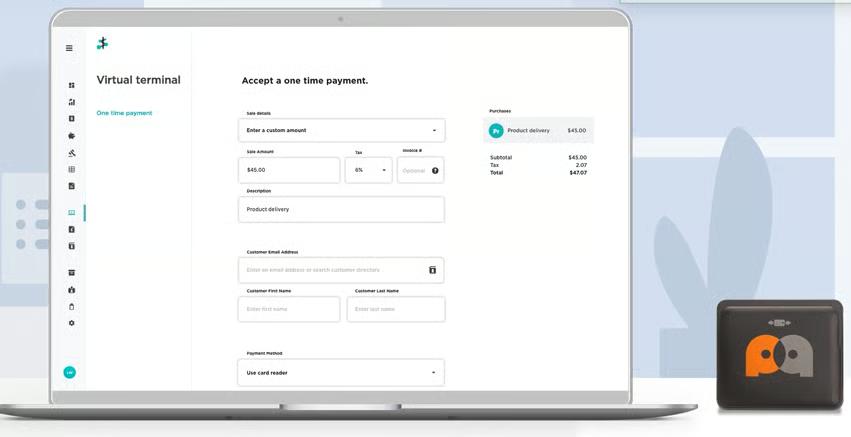
Payanywhere is a mobile-first solution with free built-in payment processing and a POS app designed for restaurants, bars, and food trucks. It rivals Square in features (see more details in our Payanywhere vs Square comparison). It also offers a range of card readers and mobile smart terminals with competitive processing fees, especially for small-ticket items. Like Square, Payanywhere works offline and can manage different payment options like open tickets, tipping, split payments, and even signature capture.
Overall, Payanywhere has a robust and easy-to-use credit card payment app with a mobile POS system. It offers a free same-day payout, something many other processors don’t do. However, some of Payanywhere’s hardware is quite expensive, you must pay extra for some POS functions, and chargeback fees are not transparent.
Who should use Payanywhere
Payanywhere is best for food trucks, bars, restaurants, and mobile food businesses that need tipping, tabs, split payments, and mobile POS tools.
When to use a Payanywhere alternative
Use Square if you want a stronger all-around POS ecosystem. Use SumUp if you sell low-ticket items and want a simpler low-cost setup. Use a dedicated restaurant POS if you need advanced table management, kitchen display tools, or deep menu controls.
Payanywhere pricing
- Monthly fees: $0 (mobile POS)
- Payanywhere software used on POS hardware: Up to $39.95 per month
- Card-present fee: 2.69%
- Keyed-in fee: 3.49% + 19 cents
- Mobile card reader: $59.95 (3-in-1)
- Inactivity fee: $3.99/month after 12 months of inactivity
Payanywhere standout features
- Fast payouts: Payanywhere has next-day funding with a 10 p.m. cutoff time. However, if you have later hours, you can get a “same-day” funding option with a 10:30 a.m. cutoff time, so your transactions from overnight will be deposited later that day. (Saturday and Sunday deposits will appear on Mondays.) This is the fastest turnaround of the systems on our list and, even better, comes with no added fees.
- Restaurant features: Payanywhere offers open tabs, split payments, and tip functions that make it a good choice for restaurants—and a good alternative to Square for Restaurants. If your tickets are smaller, like in food trucks, you may save money with Payanywhere. An offline mode is available as well.
- Employee management: Unlike most of the apps for credit card payments on our list, Payanywhere includes employee management tools through Homebase at no extra charge. This includes hiring tools, time clocks, scheduling, and tracking employee sales. See our full Homebase review for more details.
Payanywhere user reviews
Designed for both mobility and richness of features, Payanywhere is a good solution for restaurants and bars. App users gave it an average score of about 3.8 out of 5.
- Payanywhere has a good support team, free or affordable pricing, and regular security updates.
- Users didn’t like the technical glitches, problems with connecting card readers, and slightly lacking reporting tools.
Methodology: How I evaluated the best credit card payment apps
Testing each credit card payment app is at the core of providing the best recommendations for small businesses. We took that expertise and combined it with reviews from real-world businesses to find the easiest to use, then looked at other important factors for small businesses: price, versatility, and primary functions.
Square is the best app for taking credit card payments because of its ease of use and free POS. It’s also on our lists of best mobile POS apps and top-recommended payment processors in general. It’s a highly flexible program that works for the hobbyist or the full-time retailer with a store and ecommerce website.
- Pricing (25%). The best credit card payment applications have low transaction fees with no monthly subscriptions, either for use or for a POS system. They can be used both with or without a card reader.
- Payment app features (25%). This criterion considered a payment app’s overall simplicity and range of payment features. We also evaluated real-life iOS and Android user reviews of each payment app.
- Account features (25%). We considered each payment processor’s overall merchant services features—how fast you get paid, the chargeback policy and fees, ease of merchant account application and setup, and available business management tools.
- Expert score (25%). This is a value score that considers features, pricing, popularity, and criteria like stability, options, and UX.
How to choose a credit card payment app for your business
1. Map how and where you accept payments
List whether you sell at a counter, at events, in the field, through invoices, by payment link, over the phone, or online. This tells you whether you need Tap to Pay, card readers, keyed payments, QR codes, invoices, ecommerce integrations, or full POS tools.
2. Estimate monthly processing volume and average ticket size
Processing fees are one of the largest ongoing costs for businesses that accept cards. Compare in-person, online, invoice, and keyed-in rates, then estimate your monthly cost using your sales volume and average ticket size.
3. Compare funding speed and account stability
Fast deposits matter if you rely on daily cash flow. Check standard payout times, instant transfer fees, same-day deposit rules, and user complaints about frozen funds or delayed deposits.
4. Check device, hardware, and offline support
Make sure the app works with the phones, tablets, readers, and POS hardware you plan to use. If you sell at markets, events, food trucks, or job sites, look for offline mode and reliable Bluetooth reader connections.
5. Review integrations and growth features
A basic app may be enough at first, but growing businesses may need inventory, customer profiles, employee permissions, accounting integrations, ecommerce syncing, recurring billing, or developer tools.
6. Test the app and support experience
Download the app, review the setup flow, and test the basic checkout workflow when possible. Before committing, contact support with a practical question about payouts, account holds, chargebacks, or hardware issues.
Frequently asked questions (FAQs)
Click through the sections below to learn more about credit card payment apps, how to use them, and how much they cost.
What is the best credit card payment app for small businesses?
Square is the best credit card payment app for most small businesses because it combines a free POS app, built-in payment processing, Tap to Pay, card readers, invoices, payment links, basic ecommerce tools, and offline payments.
What is the cheapest credit card payment app?
The cheapest option depends on your sales volume and transaction type. PayPal has a low in-person rate, Square has a strong free POS app, SumUp can work well for low-ticket sales, and Helcim may be cheaper for growing businesses because it uses interchange-plus pricing.
Can I accept credit card payments on my phone without a card reader?
Yes. Many apps support Tap to Pay on compatible iPhone or Android devices, payment links, invoices, QR codes, or manual card entry. Card readers are still useful if you want chip, swipe, or tap payments from a dedicated device.
Is Square or PayPal better for taking card payments?
Square is better for most small businesses that need a full payment app with POS tools, inventory, offline payments, and more business features. PayPal is better for occasional sellers that want a familiar checkout option, PayPal and Venmo acceptance, and a simple reader setup.
What is the best credit card payment app for fast payouts?
Chase Payment Solutions is best for fast free funding if you use a Chase business checking account. Square, PayPal, and Payanywhere also offer faster funding options, but rules and fees vary.
Do I need a merchant account to use a credit card payment app?
Not always. Apps like Square, PayPal, Shopify, Stripe, and SumUp let you sign up through a payment service provider model. Providers like Helcim and Chase use a more traditional merchant services structure.
Are credit card payment apps safe?
Yes, reputable credit card payment apps use encryption, tokenization, fraud monitoring, and PCI-compliant payment flows. You should still use strong passwords, enable two-factor authentication, keep devices updated, and avoid manually storing card information.
Bottom line
Whether you have a brick-and-mortar business with an online store or an artist who sells their creations at the local flea market, credit card processing apps for small businesses can make taking payments easy while helping you keep track of your sales. Some, like SumUp, offer simple POS systems for the smartphone, while others are more complex, like Square, which has extra programs for employee management, reservations, and even payroll.
Square is our choice for the best credit card payment app because while it can handle a multitude of business functions beyond credit card processing, it is also simple enough for the hobbyist or solopreneur. The system is free, and you’re only charged for processing transactions, so sign up for Square today.
