







Corporate cards are typically charge cards or prepaid cards designed for medium- to large-sized companies with high revenue and hundreds of employees. That said, a few options in this list can also work well for small businesses. Because corporations usually have more complex financial needs than smaller operations, the best corporate cards typically offer higher spending limits, robust expense controls, streamlined reporting and accounting tools, flexible billing options, and valuable rewards.
Here are the five best corporate credit cards for 2026:
| Provider | Best for | Annual fee |
| Ramp Card | Expense automation and spend controls | $0 |
| Rippling Spend Credit Card | Custom card policies, control, and cash back | $0 |
| Coast Fuel Card | Frequent fuel expenses | $0; $4 per active user, per month |
| Rho Card | Daily or monthly payment terms with exclusive partner rewards | $0 |
| BILL Divvy Card | Businesses that want to maximize rewards | $0 |
How I selected the best corporate cards
To choose the best corporate cards, I focused on options that can work for companies of different sizes, from growing small businesses to large enterprises. I prioritized cards that make it easier to manage employee spending, simplify expense reporting, and integrate smoothly with the tools teams already use.
Here’s what I looked for:
- Employee cards and easy onboarding so teams can issue cards quickly and scale as they grow
- Expense management features like receipt capture, approval workflows, and real-time reporting
- Spending controls, including limits by employee, merchant category, and transaction type
- Integrations with common business software, such as accounting platforms and ERPs
- Low or transparent costs, including minimal fees and straightforward pricing
- Rewards value, especially strong earning rates on everyday business purchases
When choosing a corporate card for your company, I recommend weighing these factors alongside any must-have requirements based on how your team spends, reports expenses, and manages cash flow.
- Why you can trust Fit Small Business
- Overview of the best corporate credit cards
- Ramp Corporate Card: Best for expense automation and spend controls
- Rippling Spend Corporate Card: Best for custom card policies, robust control, and cash back
- Coast Fuel Card: Best for businesses with frequent fuel expenses
- Rho Card: Best for flexible payment terms
- BILL Divvy Card: Best for businesses that want to maximize rewards
- Bottom line
Why you can trust Fit Small Business
Overview of the best corporate credit cards
| Best for | Annual fee | Rewards rate | ||
Ramp | Expense automation and spend controls | $0 | Up to 1.5% cash back on eligible purchases | |
Rippling Spend Credit Card | Custom card policies, robust control, and cash back | $0 | Unlimited 1.75% cash back on eligible purchases | |
Coast Fuel Card | Frequent fuel expenses | $0; $4 per active user, per month | 1% cash back on all purchases | |
Rho Card | Flexible payment terms | $0 | Up to 1.5% cashback (subject to terms and conditions) | |
BILL Divvy Card | Businesses that want to maximize rewards | $0 | Up to 7× points on purchases, depending on expense categories |
Ramp Corporate Card: Best for expense automation and spend controls
 | |
Pros
| Cons
|
Card details
Rewards and benefits
| |
Why I like it
Ramp stands out because it combines a corporate card with a comprehensive finance platform. Instead of managing employee spending, expense reports, bill payments, and accounting workflows across multiple tools, finance teams can handle them from a single dashboard. For companies with growing teams, that can reduce administrative work while providing better visibility into company spending.
Another reason I chose Ramp is its approach to underwriting. Rather than relying on an owner's personal credit, Ramp evaluates the financial health of the business to determine eligibility and spending capacity. Combined with customizable spending controls, unlimited employee cards, and automated expense reporting, it's a strong choice for companies that want to scale their corporate spending without adding unnecessary complexity.
Rippling Spend Corporate Card: Best for custom card policies, robust control, and cash back
 | |
Pros
| Cons
|
Card details
Rewards and benefits
| |
Why I like it
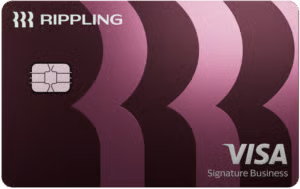
What separates Rippling from most corporate card providers is the way it connects employee data with company spending. Because the platform already knows an employee's department, manager, location, and role, it can automatically determine who receives a card, how much they can spend, and which purchases require approval without creating separate rules from scratch.
That makes Rippling an especially strong choice for businesses already using the platform to manage HR and payroll. As employees are onboarded, promoted, or offboarded, Rippling can automatically issue cards, update spending policies, or revoke access based on those changes, reducing manual administration while helping spending controls stay aligned with your workforce.
Coast Fuel Card: Best for businesses with frequent fuel expenses
 | |
Pros
| Cons
|
Card details
Rewards and benefits
| |
Why I like it
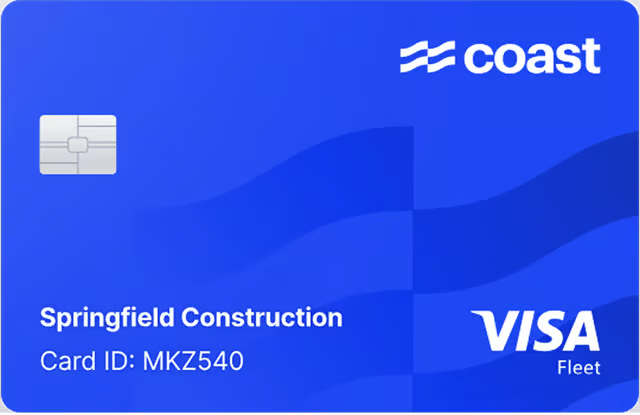
Fuel is one of the largest recurring expenses for many fleet-based businesses, and Coast is built specifically to help control that cost. Rather than functioning as a general-purpose corporate card with a few fuel perks, it gives businesses tools to manage where drivers fuel up, what they purchase, and how much they can spend, all while earning rebates on everyday fleet expenses.
The platform also provides real-time visibility into spending across drivers and vehicles, making it easier to identify unusual activity, reduce fuel fraud, and keep operating costs under control. For businesses that rely on company vehicles every day, those fleet-specific controls make Coast a more practical choice than a traditional corporate card.
Rho Card: Best for flexible payment terms
 | |
Pros
| Cons
|
Card details
Rewards and benefits
| |
Why I like it
Most corporate cards ask businesses to adapt to a single repayment schedule. Rho takes a different approach by giving eligible companies the option to prioritize either higher cashback or greater payment flexibility. That makes it easier to choose a structure that aligns with your cash flow instead of forcing your business into one billing model.
I also appreciate that the corporate card is part of Rho's broader financial platform. Businesses can manage banking, payments, expenses, and card spending from one place instead of piecing together multiple financial tools. For companies looking to consolidate their financial operations while keeping repayment options flexible, Rho offers a well-rounded solution.
BILL Divvy Card: Best for businesses that want to maximize rewards
 | |
Pros
| Cons
|
Card details
Rewards and benefits
| |
Why I like it
Most rewards cards offer the same earning rates regardless of how you manage your account. BILL Divvy takes a different approach by rewarding businesses that pay more frequently, giving companies an opportunity to earn substantially higher rewards if they have the cash flow to support weekly or semi-monthly payments.
Beyond the rewards program, I like how budgeting is built directly into the platform. Managers can assign spending limits to departments, projects, or employees before purchases are made, making it easier to keep spending aligned with company budgets while reducing the need for manual oversight. For businesses that want to turn everyday operating expenses into meaningful rewards, BILL Divvy is one of the strongest corporate card options available.
Frequently asked questions (FAQs)
What’s the difference between purchasing cards vs small business credit cards?
The key difference is how the payment terms are structured. Small business credit cards typically let you carry a balance and pay interest based on the card’s APR, while purchasing cards are usually issued as charge cards that require full payment each month or as prepaid or debit cards that use preloaded funds. Both can be used for business expenses, but purchasing cards are designed specifically to streamline business-to-business transactions.
For a detailed comparison, check out our comprehensive guide on small business credit cards vs purchasing cards.
Where can I use purchasing cards?
You can use purchasing cards when creating a purchase order, check request, or petty cash that needs to be processed with any vendor that accepts credit cards. You can benefit from using purchasing cards due to their convenience and lower transaction costs, and by using them as an alternative to petty cash.
Can purchasing cards help improve a company’s cash flow?
Yes. Because many P-cards offer real-time spend visibility, customizable controls, and automated reconciliation, they reduce delays and errors in tracking expenses. Some cards also provide rebates or rewards that can indirectly support cash flow management.
Bottom line
Corporate credit cards can be a strong fit for companies that want the account liability tied to the business, rather than to an individual employee. The best options pair built-in expense management and reporting with flexible controls, competitive rewards, and pricing that stays predictable as you add users. Most issuers require a formally registered business, such as an LLC or corporation, and you may also need to meet minimum revenue, cash balance, or time-in-business requirements, depending on the card program.
You might also like:
Small Business Credit Cards vs Purchasing Cards
