







Customer feedback refers to the thoughts and opinions of customers about a certain product, service, or brand. Whether it is positive or negative, this feedback can serve as pointers for enhancing product features, improving the quality of customer service, and facilitating business growth. Here, we give you common customer feedback examples, provide examples of how to respond to reviews, and explore the importance of responding.
Here are 10 common types of customer feedback examples classified according to how they are collected or gathered.
- 1. Product Rating
- 2. Customer Behavioral Data Insight
- 3. Technical Issue Report
- 4. Customer Survey Feedback
- 5. User Review
- 6. Feature Request
- 7. Customer Support Conversation
- 8. In-app User Feedback
- 9. Customer Interview
- 10. Social Media Mention
- Customer Feedback Response Examples
- Why Respond to Reviews?
- Frequently Asked Questions (FAQs)
- Bottom Line
1. Product Rating
A product rating measures customer satisfaction with your product or service. It is a fairly straightforward survey and usually does not require respondents to provide context to the rating they submitted.
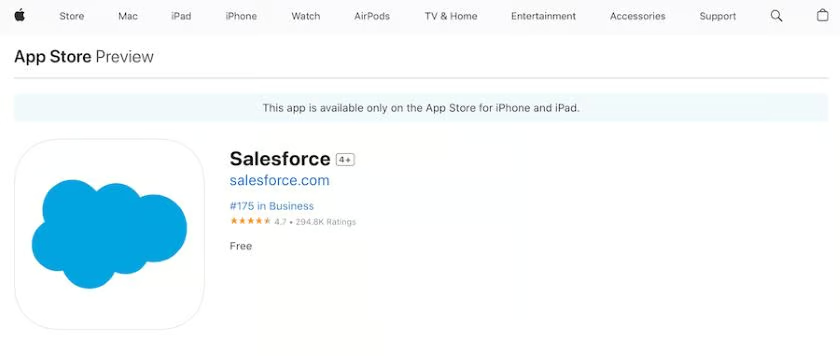
Normally, users are asked to rate the product or experience on a scale of 1 to 5 or 1 to 10. Then, the average rating is usually displayed on the page for product reviews. In the example below, we can see the average rating of the mobile customer relationship management (CRM) app Salesforce on the App Store is 4.7 out of 5 stars.
2. Customer Behavioral Data Insight
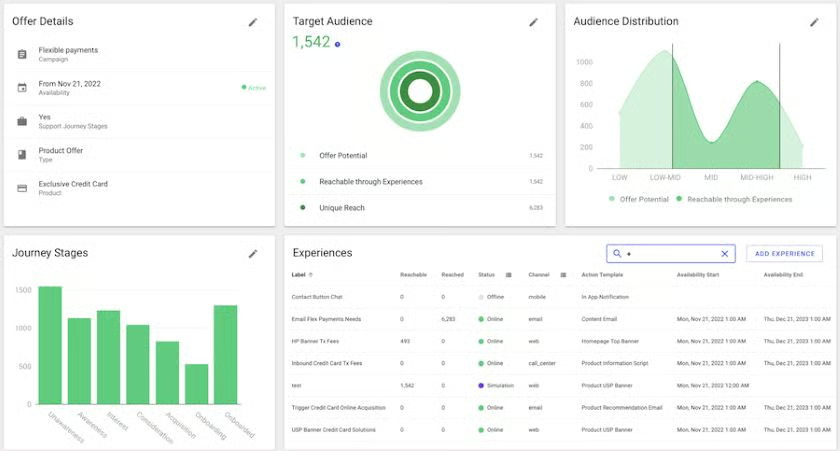
In customer service for small businesses, customer behavioral data provides insights into what consumers do rather than what they say. For instance, if a software observes that many users don’t sign up after completing a free trial, they could use that data to look for problems in the sign-up process.
Behavioral insights from a platform like NG Data are a more objective form of customer feedback since they do not rely on customers’ opinions and biases. Instead, tools like this track patterns of customer behavior over time to identify those who are about to quit using your product or service. This way, businesses can take proactive steps to retain them, such as offering a loyalty program or customized products and services.
3. Technical Issue Report
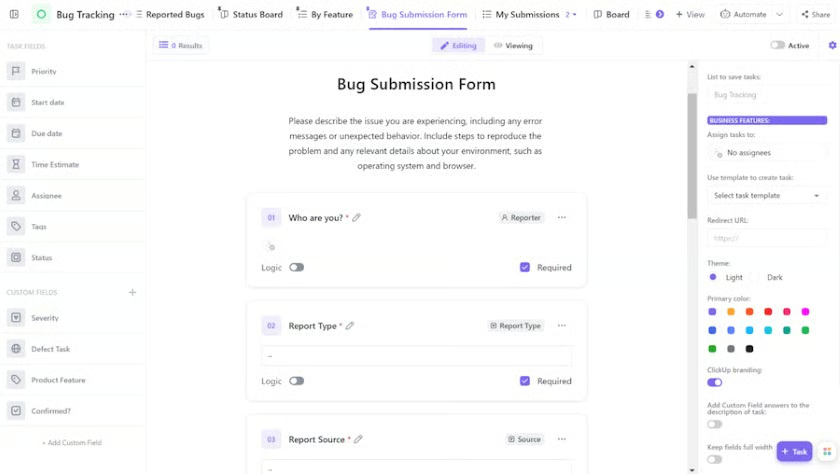
Technical issue reports pertain to bugs, glitches, or errors encountered by customers. In the example below, you can see a bug submission form template from work management platform ClickUp. For businesses, reports like this can help them make informed decisions in future product development. Allowing customers to send bug reports makes them feel that you value their experience and that you take their concerns seriously.
4. Customer Survey Feedback
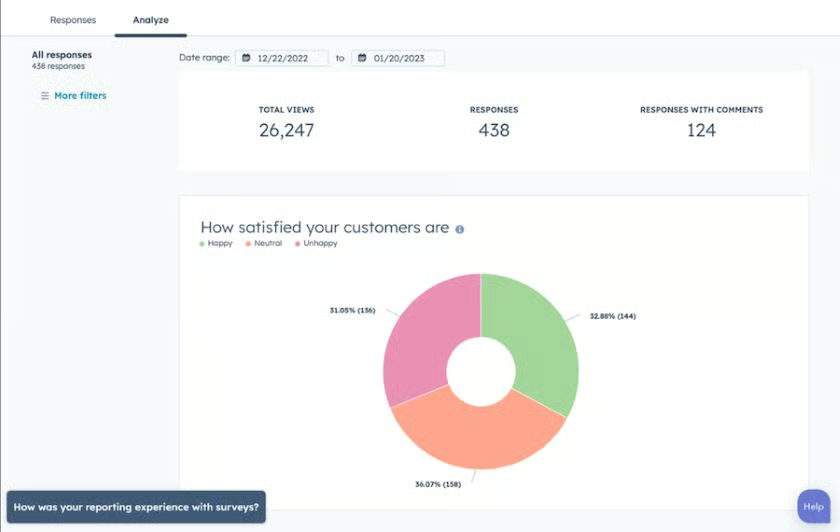
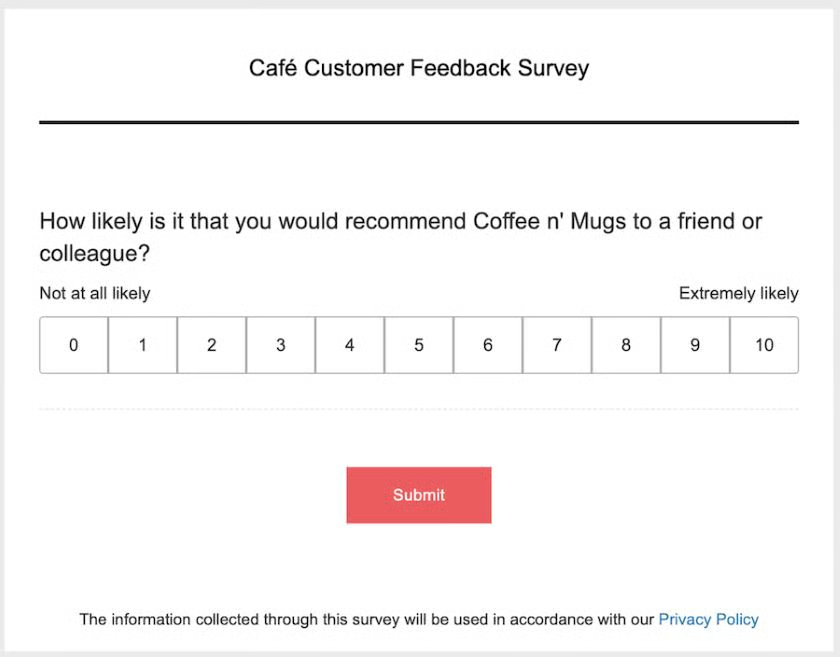
Sending out surveys is one of the most popular ways to measure customer service satisfaction or how well they would recommend your product and service. Surveys are cost-effective, easy to set up, and have a wide range of use cases. You can gather data to determine your net promoter score (NPS), as seen in the example below. You can also send out a survey focusing on granular details, such as a specific product feature.
5. User Review
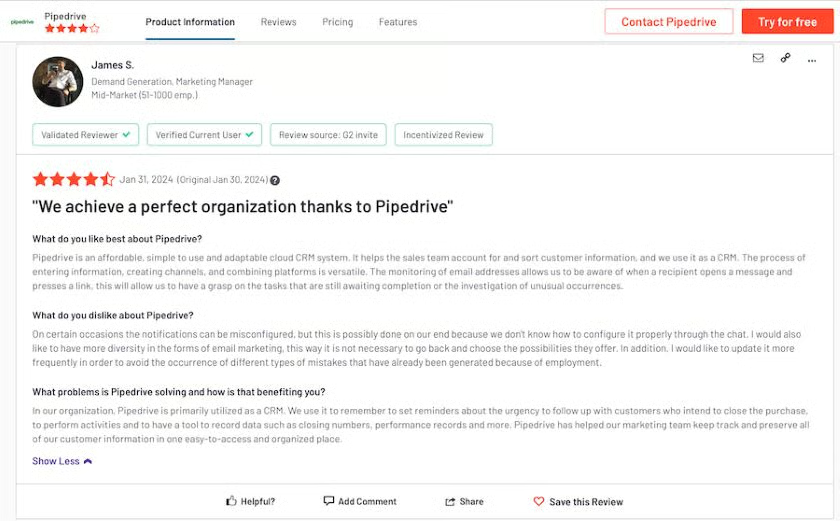
User reviews are a form of feedback that is initiated by the customer and is usually posted on a public medium, such as a review site, social media profile, or app store. One example is the user review for Pipedrive CRM submitted on the website G2. Reviews like this can help businesses pinpoint customer pain points, reinforce product strengths, and improve the whole customer experience. Potential customers also use them as a basis for their purchase decisions.
6. Feature Request
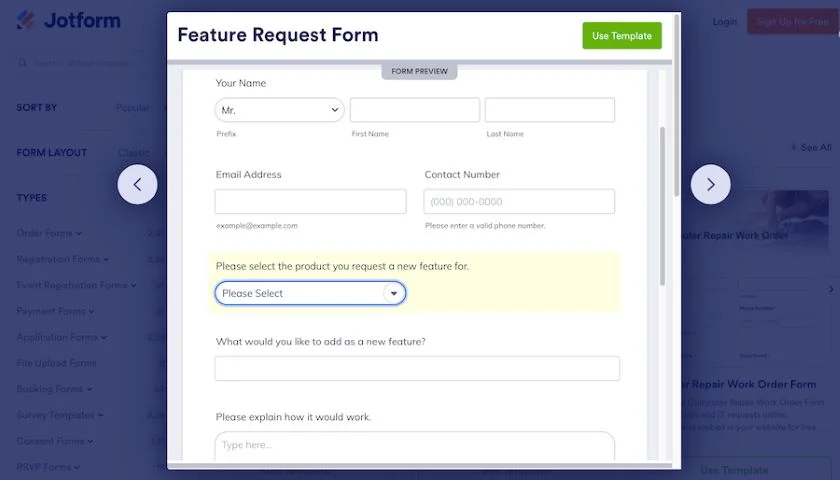
The feature request is a kind of feedback that users send if they want a new feature to be added to a product. This request provides product developers with insight into what users want or need, as well as what the current feature gaps in a product are. Businesses usually let users submit their requests via community forums, surveys, or dedicated feature request forms like the example below from online form builder Jotform.
7. Customer Support Conversation
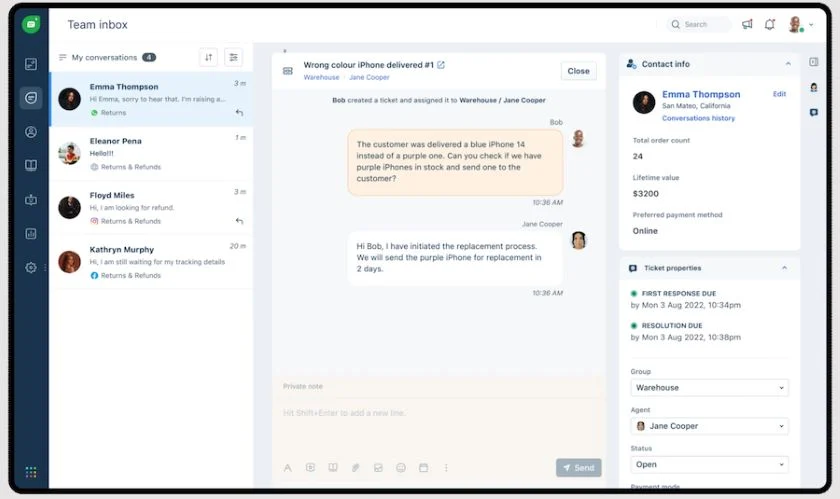
A customer support conversation is an interaction that takes place when a customer requests assistance after hitting a roadblock with your product or service. This can happen through different channels like live chat, phone, email, and social media messages. An interaction like this is a great way to gather customer feedback and insights in real time to uncover patterns of issues that affect customer experience.
8. In-app User Feedback
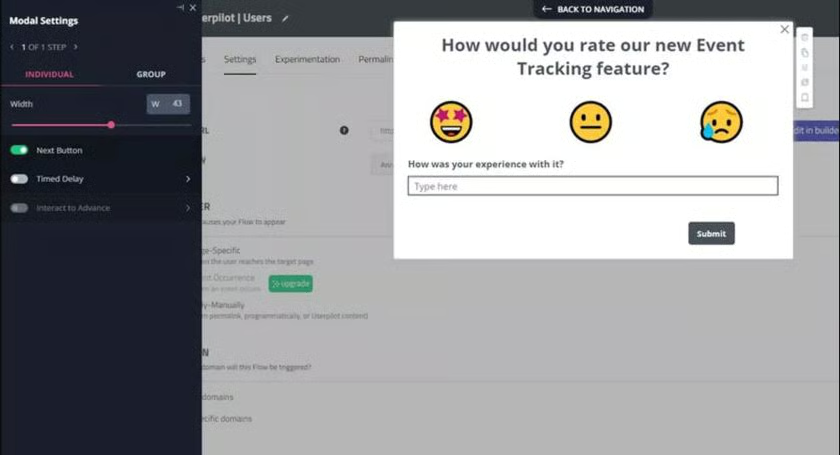
In-app user feedback is collected by incorporating and enabling feedback tools like Userpilot into your software product. This tool gathers real-time context into the product through shared screen recordings, feedback on a new software feature, or product design preferences.
A survey window usually pops up right after the user has had a positive interaction with your product or has completed a certain task within the app. Then, use the data collected as a basis for efforts to improve your product or service.
9. Customer Interview
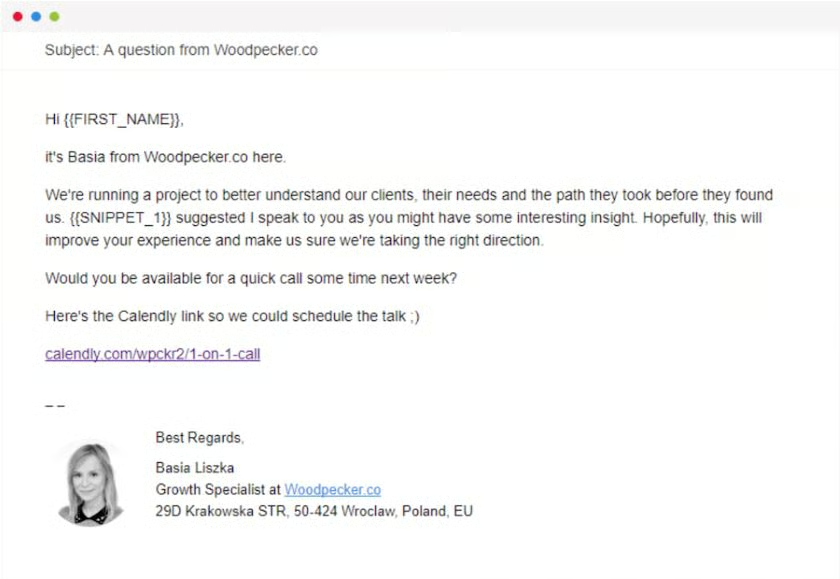
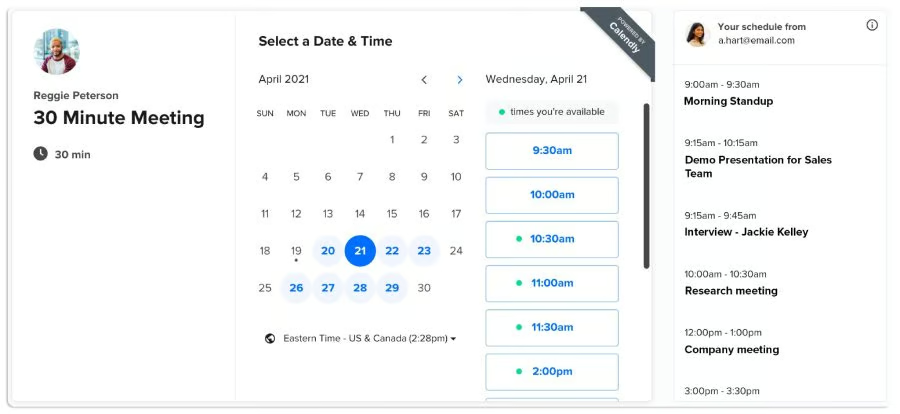
Unlike most customer feedback examples in this list, a customer interview—usually via recorded calls—is initiated by a business entity. This helps uncover deeper insights and context using strategic questions that encourage detailed discussions on customers’ pain points and product experience. Some companies offer incentives like discounts or gift cards to encourage customers to really take some time to participate in an interview.
10. Social Media Mention
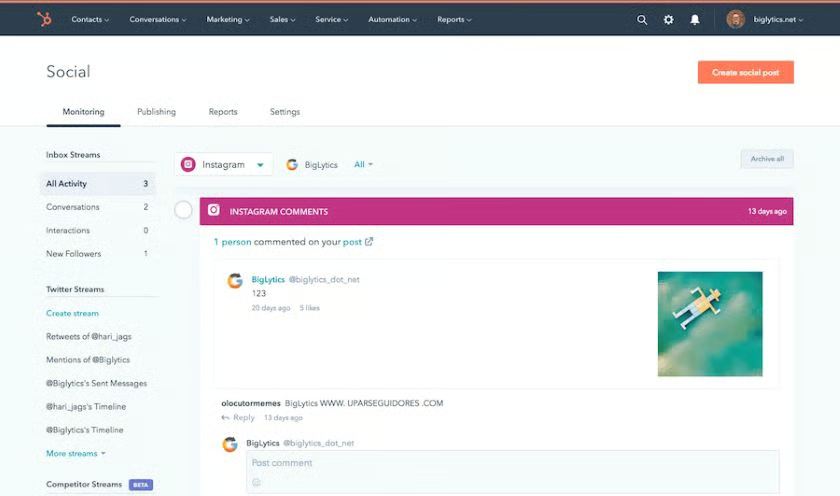
Social media is a gold mine for collecting customer feedback on a product or service. You can run a manual search for mentions or your brand on any social media site or automate this process using a social media monitoring tool like HubSpot CRM. Aside from that, you can also ask for feedback via social media posts in order to better understand customer sentiment on your product.
Customer Feedback Response Examples
Whether you receive positive, negative, or neutral customer feedback, it is important to have ready-made reply templates at hand. This way, your reps can respond to them faster and easier because they won’t have to compose messages from scratch. Here are some of the most common feedback response examples that you can use or customize:
General Customer Feedback Response Template
This is one of the general feedback response examples that you can tweak and customize according to your use case. You can add details pertaining to the customer’s request or suggestion or simply fill the brackets in with the required information.
Hi [customer name],
Thank you for choosing our company as your dedicated provider for [product/service name].
We are so grateful to you for taking the time to send us your feedback regarding our product/service. Upon reading your message, we find your opinions and suggestions to be very insightful. Rest assured that we will relay it to our product development team so that they could consider including any of those changes in the future product/service updates. We will also update you on the progress of this discussion.
Again, thank you and we look forward to continuing our company’s relationship with you.
All the best,
[Name of service rep]
Neutral Customer Feedback Response Template
There are times when the customer will share a neutral review that merely describes their experience with your product or service. Such reviews could be open to interpretation, and here is a sample response that you can send to this kind of feedback as part of your brand reputation management process.
Hi [customer name],
Thanks for sharing your experience with our product/service. We value your feedback, and we will use it to improve our product/service for all our customers.
Should you be open to discussing how we could improve your experience with our product/service, please feel free to touch base with us at [phone number]. You can also send us a response via this email. We look forward to hearing from you soon.
Thank you very much,
[Name of service rep]
Positive Customer Feedback Response Template
Below are a few positive review response examples for different types of good customer feedback. These include responses for rating-only reviews, replies to reviews that mention one of your team members, and good review responses.
When you receive a positive review from your customers, make sure that you respond to them and let them know how much you appreciate their feedback. Here’s a template that you can use to reply to a good review from your customers:
Hi [customer name],
We are so grateful that you took the time to share your good experience with our product/service. We truly prioritize the satisfaction of our customers, and we are so glad that you enjoyed our product/service. Rest assured that we will continue striving to maintain the quality of our product/service to make all our customers happy.
We look forward to your continued patronage.
Cheers,
[Name of service rep]
As mentioned in the previous section, there are customer reviews that only contain a score or rating and do not require elaboration for the feedback. You can use this template to respond to positive rating-only customer reviews.
Hi [customer name],
We are thrilled that you are satisfied with [name of product/service] and that you have given it a generous rating of [rating/score]. [Company name] works hard to deliver and maintain the best customer experience, and knowing that you are happy with our product/service tells us that we have accomplished those goals.
All the best,
[Name of service rep]
There are times when a customer mentions one of your team members in their positive review. Take this opportunity to acknowledge that team member’s efforts when you use this template to respond to that customer review.
Hi [customer name],
We are grateful for your excellent feedback. We are also thrilled to know that you had a great experience with our product/service. Indeed, [name of team member] always goes to great lengths to ensure our customers are satisfied with our service. Rest assured that we will relay your praises to them.
Thanks again, and we look forward to your continued satisfaction with our brand.
All the best,
[Name of service rep]
Negative Customer Feedback Response Template
Below are some negative review response examples that you can use for different types of customer feedback. These include rating-only reviews, reviews that mention one of your team members, spam or fake reviews, and bad review response templates.
Receiving negative customer reviews is an unpleasant experience for any business, but we have to remember that there is no perfect product or service. Use this template to respond to negative feedback and strive to improve your offerings based on what customers are saying about your product and service.
Hi [customer name],
Thank you for sharing your feedback with us and for highlighting this particular issue. We’re so sorry to hear that you are not satisfied with your experience with [product/service brand name], and we sincerely apologize for this.
In light of the issue you shared with us, could you kindly provide us with specific details about your experience with our product/service? We would love to help you as much as we can and relay your concerns to our product/service development team. However, we would appreciate it if you could send us a bit more information.
We know how disappointing it is to pay for a product/service only to have it be less than satisfactory compared to your expectations. We hope to sort this out with you. Otherwise, we are willing to issue you a refund for your purchase.
Please get in touch with us at [phone number] or respond to this email with additional details about your experience so that we can help you resolve this issue.
Thank you for doing business with us.
Sincerely,
[Name of service rep]
There are also customer reviews that only contain a rating and do not include an explanation for the given score. Use the template below to respond to negative rating-only customer feedback.
Hi [customer name]
We are so sorry to hear that you were less than satisfied with [product/service name] and that it did not meet your personal expectations. Still, we thank you for sharing your feedback with us and know that we value your insights. In light of your experience, could you please share more details with us about your experience so that we can use that information to improve our product/service. You can reach us at [phone number] or simply reply to this email.
Best regards,
[Name of service rep]
A customer review mentioning the name of one of your team members is not to be taken lightly. Make the customer feel heard by acknowledging the error on your team’s side and taking measures. This could include designing additional rep training when creating your customer service program to ensure that it does not happen again. Use the negative feedback response template below to respond to this kind of customer review.
Hi [customer name],
Thank you for highlighting this issue in your feedback. First of all, we would like to sincerely apologize that your experience with [agent name] was less than ideal. While we always strive for excellent service, we acknowledge that we have not achieved that goal in your case.
In light of your feedback, we are conducting additional customer service training to make sure that this unfortunate incident does not happen again.
If there are other concerns or issues that you think we can help you with, please feel free to let us know, and we would be very glad to assist you. We appreciate your honesty, and we value your business.
Thanks again,
[Name of service rep]
Fake and spam reviews are frustrating because they could taint the reputation of your business or brand. As much as you want to remove them immediately, you first have to verify if they are really fake before you take action. Once you have confirmed that it is fake based on your customer records, you can use this template to respond to the poster:
Hi [customer name],
Upon checking our system, we have confirmed that you are not in our customer database. The review you posted violates the policies of [name of review site], and we have already flagged it to have it taken down.
However, if you are using another name that is different from your username in [name of review site], kindly let us know so that we can resolve this issue. If you have other questions or concerns, feel free to reach us at [phone number and/or email address].
Kind regards,
[Name of service rep]
Why Respond to Reviews?
Customers who are satisfied with your product or service are more likely to recommend your brand to their network. Plus, they are more likely to stay loyal to your brand. That said, it is important to respond to customer feedback as it helps you establish a connection with your customers and show them that you care about what they think. Below are some of the main reasons why you should take time to properly respond to customer reviews.
- Encourages repeat sales: Responding to reviews shows customers your level of professionalism when it comes to delivering customer satisfaction. Doing this helps build and improve trust between your company and your customers, which could lead to repeat purchases and more positive reviews in the future.
- Raises product/service rating: When customers notice that your company actively responds to their comments, they might look at your brand in a more positive light and decide to use your product. You can convert non-believers into customers who are happy with your product, and in turn, make them more likely to give you higher ratings on review sites because of this positive experience.
- Provides guidance for future improvements: Constructive criticisms and negative reviews can pinpoint the issues in your product that you need to fix. When you respond to a review, you let the customer know that you value their feedback and that you are doing something to address their concerns.
- Strengthens brand loyalty: Responding directly to positive reviews can help turn happy customers into loyal ones. This can be another good experience that could prompt them to share your product or service with their family and friends.
- Improves brand visibility: You can incorporate keywords like your business name and products into your review responses, increasing your brand’s online visibility. Prospects who are reading reviews before purchasing will also be able to see your replies, resulting in increased brand awareness.
Frequently Asked Questions (FAQs)
How do you write a response to customer feedback?
The first thing to remember when responding to customer feedback is to send your response quickly. It is also important to use polite language and express gratitude for their time and effort in sharing their feedback. While using response templates is convenient, you also have to personalize and vary your responses to make them sound natural. Lastly, make your reply brief so that it is easy for your customers to read and understand.
What are good review examples?
A good customer review is usually detailed and specific, as opposed to a vague “It was OK” review. It could also mention the name of a specific employee who helped them or identify the ways in which a company went the extra mile to assist them. Lastly, good customer reviews tend to have responses from the brand itself. For consumers, good reviews tell them if they could trust a certain business. For companies, these reviews help them attract new customers.
What are the disadvantages of online review sites?
One of the top disadvantages of online review sites is the possibility of one negative review affecting how a potential customer views your business. In addition, some third-party review sites require payment before consumers can post a review. Moreover, there are risks of attracting fake or spam reviews, which could also impact your brand reputation.
Bottom Line
Customer feedback helps businesses gain valuable insight into what customers want, what the business needs to improve in their product or service, and how they could attract new customers. Use our guide above on how to respond to a good review and how to address negative feedback. No matter which of the response templates you choose when replying to customer reviews, remember that you can leverage feedback to expand your business revenue and reputation.
