




What are Labor Law Posters? Federal & State Compliance Guide

What are Labor Law Posters? Federal & State Compliance for Employers

Written By
Karina Fabian
Karina Fabian
Reviewed By:
May 16, 2024
14 minute read

Labor law posters are graphics that the federal and local governments require you to display in your business area. These contain information to help your employees understand their rights when it comes to wages, work conditions, and compensation for accidents or unemployment—among other things. Failure to follow labor poster compliance puts you at risk of fines and legal action.

Learn more about what labor law posters are, the required types you’ll need to display, the compliances you’ll have to follow, and each state’s particular requirements.

Labor Law Poster Requirements

In general, your industry, government contractor status, employee headcount, and employee demographics (like age and disability status) determine what federal labor laws you’re subject to and, in turn, what labor law posters you’re required to display. For example, if you employ at least two employees, you’re subject to the Fair Labor Standards Act (FLSA) and must post the Employee’s Rights Under the Fair Labor Standards Act.

Fortunately, the DOL offers a FirstStep Poster Advisor, which asks you a few questions and then tells you which posters you need to display. States also have their own requirements for posters about state laws and programs. Look below for your state’s requirements.

Your employees must be able to read and understand the posters, and many offer multiple language options. However, only the Family and Medical Leave Act (FMLA) requires that you post in multiple languages, depending on your employee demographic.

Advertisement

Common Federally Required Posters (+ Guidelines & Samples)

The most common federally required workplace posters are:

Employee Rights Under the Fair Labor Standards Act (FLSA)*

This poster lists the federal minimum wage, overtime pay, recordkeeping, and youth employment standards for full-time and part-time employees.

Penalties for not posting: Fines up to $211 per violation. Possible debarment from future government contracts.
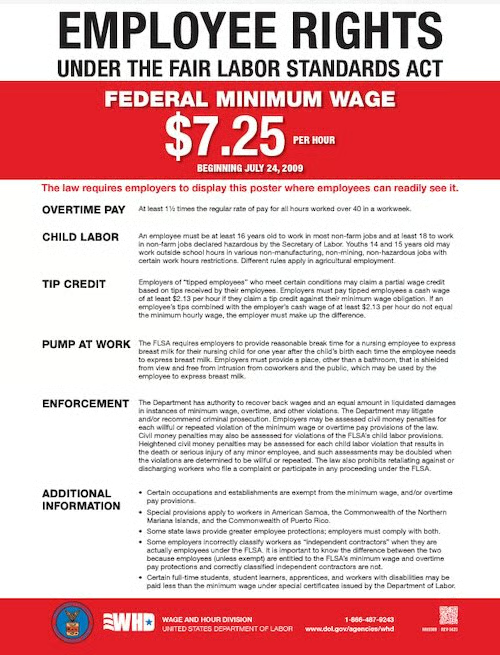
The general FSLA poster.
There are several FLSA posters depending on language and industry. Find the right one from the DOL website. (Source: DOL)

Know Your Rights: Workplace Discrimination is Illegal (EEOC)*

In June 2023, this poster replaced all older versions. It summarizes federal antidiscrimination laws and explains how employees can file a complaint.
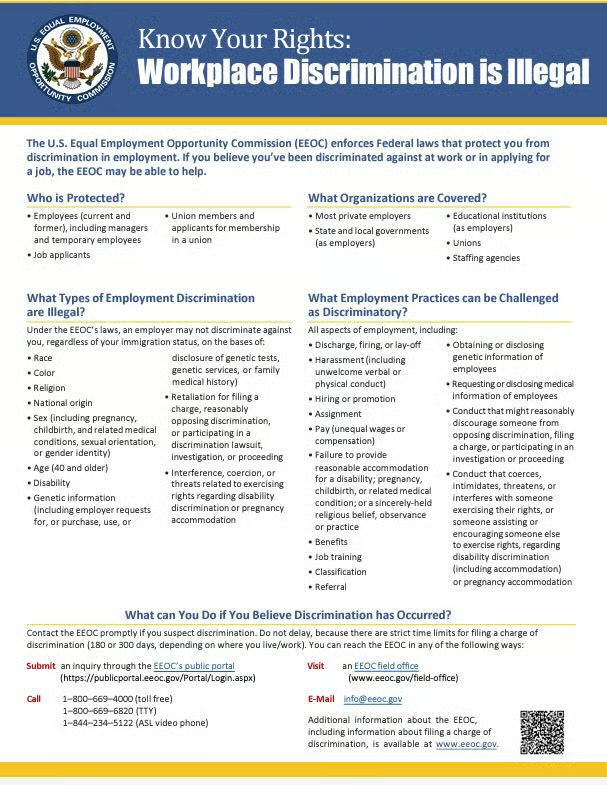
EEOC Know Your Rights poster, page 1.
Download this two-page poster from the Department of Labor. (Source: DOL)

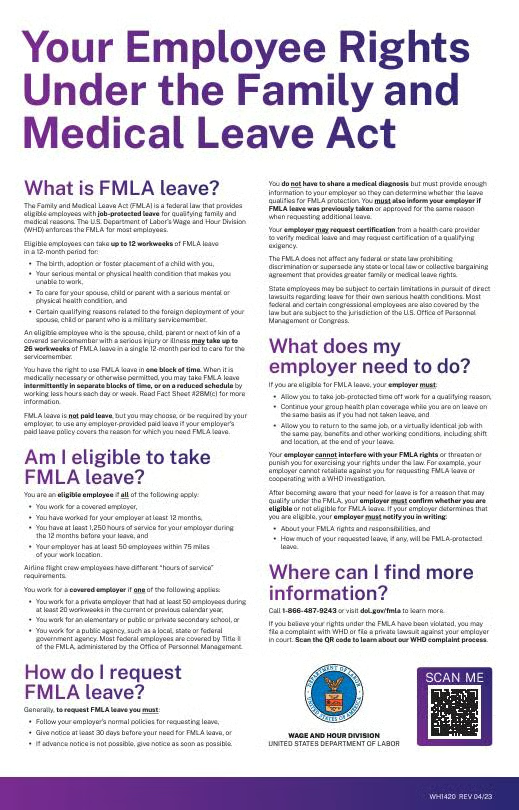
Family And Medical Leave Act (FMLA)*

This poster explains FMLA leaves, who is eligible, how to request it, and what employers need to do. It also offers contact information for employees who need to file a complaint.
Advertisement
FMLA poster.
Download the FMLA poster from the DOL website. (Source: DOL)

Uniformed Services Employment & Reemployment Rights Act (USERRA)

This poster explains the rights of military servicemen for re-employment after an absence while serving in the armed forces. It also explains employers cannot discriminate based on military service or obligation.
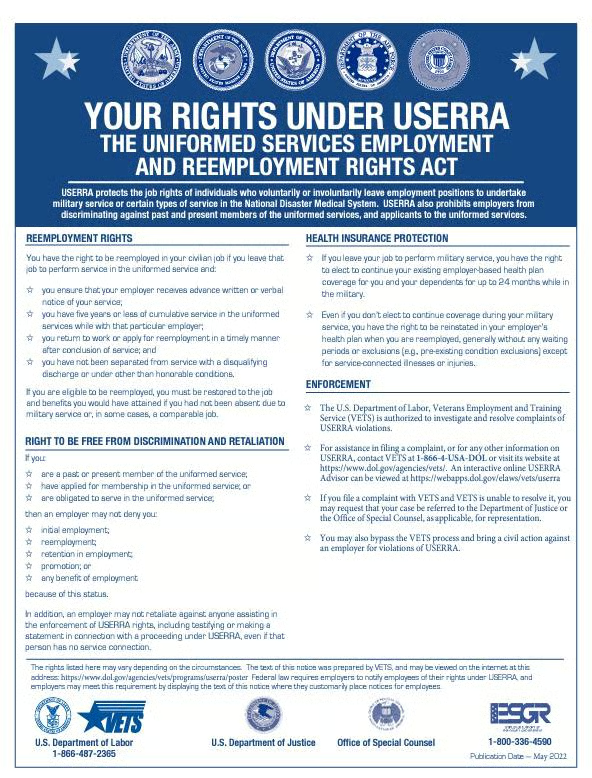
USERRA poster.
Download this poster from the DOL. (Source: DOL)

Job Safety and Health Protection (OSHA)

OSHA sets health and safety standards for the workplace. The poster includes worker rights, employer responsibilities, and contact information for OSHA. Some states have their own OSHA programs, in which case, you’ll need to post their posters as well.
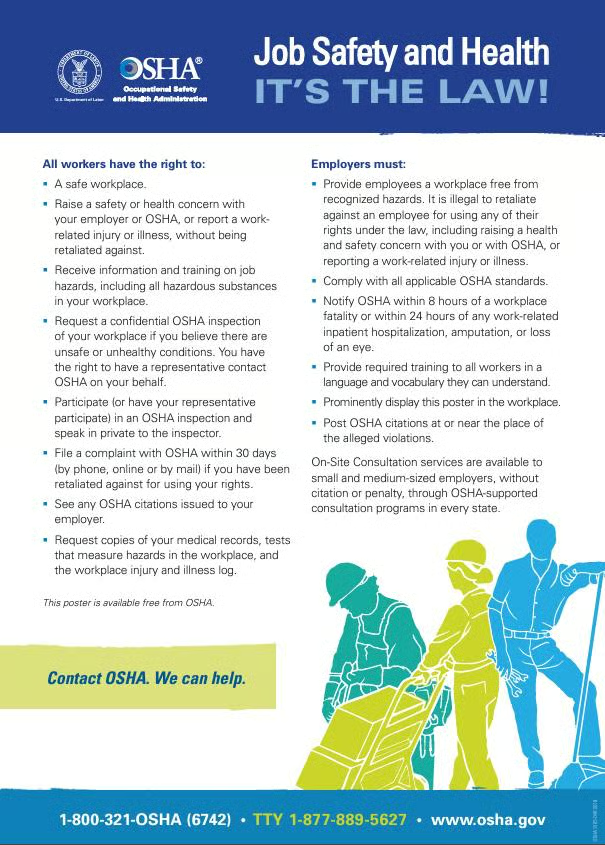
OSHA poster.
Download the OSHA Poster from the website—there are also language variants available. (Source: OSHA)

Employee Polygraph Protection Act (EPPA)

Explains that with few exceptions, private employers (with few exceptions) cannot use lie detector tests for employment screening or during employment.
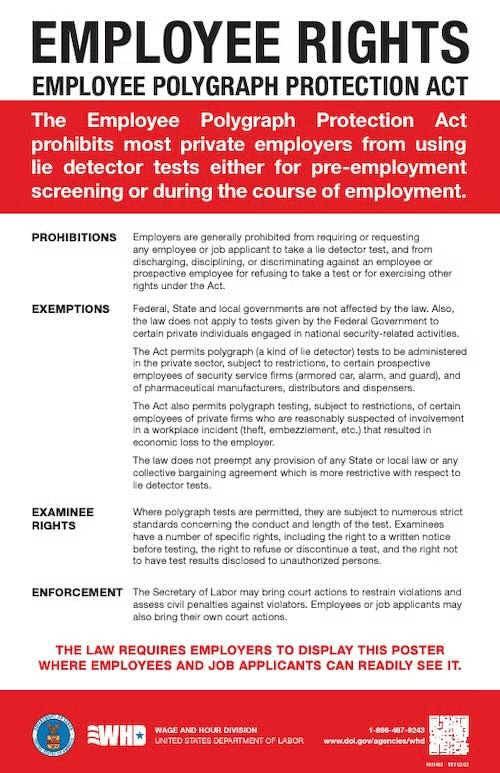
Employee Polygraph Protection Act of 1988 (EPPA) poster.
Get this poster from the DOL here. (Source: DOL)

*Updated in 2023; older versions no longer fill this requirement.

Where Posters Must Be Placed

You have to post these in a place that’s easy for your employees to see and read them. Most companies put their labor law posters in a break room or cafeteria. A great place to put them is near the coffee or water, as most employees frequent those areas of your workplace. Near the bathroom is also a common spot.

If you operate multiple work locations, you have to display your state and federal labor law posters at each location. Also, if your facility is huge, like a warehouse, or separated, like the workshop versus the office, you may need to place posters in more than one spot to stay compliant.

Advertisement

Even though most federally required workplace posters don’t recommend a size, you should avoid shrinking the posters. If the font is not readable, then you may be out of compliance. Some states provide combination posters that have all the state and sometimes federal information needed in a single large poster.

Job Applicant Posting Requirements

Not all posters are for employees only! Some labor law posters, such as the EEOC, FMLA, and EPPA, also need to be posted where potential job applicants can see them. This is just one of the many hiring rules you need to follow.

This gets tricky if you recruit online. To stay compliant, make sure your public job ad states that applicants have rights under federal and state employment laws. You can use language like this:

This company is an Equal Opportunity Employer (EOE). All qualified applicants will receive consideration for employment without regard to race, color, religion, sex, sexual orientation, gender identity, national origin, disability, or status as a protected veteran.

The DOL also says to “place a prominent notice on the website where the job postings are listed stating that ‘Applicants have rights under Federal Employment Laws’ and link to the three posters: Family and Medical Leave Act (FMLA) Poster; Know Your Rights Poster; and Employee Polygraph Protection Act (EPPA) poster.”

When Posters Need to be Updated

It’s best practice to update your compliance posters every year. To stay compliant, labor law posters should be updated whenever the applicable law changes. The federal and state governments will issue a new version of the poster.

Remote Work Posters

Remote employees have the same rights as in-person ones, so you need to make the information found on labor law posters available to them, too. In fact, during the pandemic, the DOL issued updated guidance on compliance posters for hybrid and remote workforces.

Remote employees need to have 24/7 electronic access to the same labor law posters as your in-place employees. This means you can’t just email them the links and files and be done. Your best bet is to post them on a website link, in the employee handbook, or make them available in the cloud through your HRIS employee portal.

For hybrid environments, where you have some employees working fully remote and some who come into a physical workplace, you should display physical labor law posters as normal. But you’ll also need to provide your remote workers with electronic access to the labor law posters.

Advertisement

Penalties for Noncompliance

The government can fine you if you don’t post the required workplace posters. While companies are usually only fined for repeated violations, there are situations where you may receive a fine for your first violation, so it’s best to follow the rules from the get-go.

In addition, the government can take away government contracts, ban you from future contracts, and in some cases, cite you for labor law violations. If you are violating a law covered by a poster and don’t have that poster displayed, that adds to your trouble.

There’s also civil law to consider. If an employee can prove posters weren’t adequately displayed, they could file a lawsuit and may receive additional damages because of your company’s non-compliance.

Acquiring Labor Law Posters

You can get labor law posters for free from the DOL and your state’s DOL. They provide links to downloadable files that you can then print and post. Be sure you check if there are any size requirements and remember that they must be easy to read. Many states and the federal government offer combined posters that include all the information. This is a large poster that you may have to print at a shop.

There are services that sell already printed and laminated workplace posters. It may be worth the convenience, but it is not mandatory to use a service like this. In January 2024, the Washington State Attorney General is both suing and prosecuting Labor Law Poster Service for allegedly coercing businesses into buying these posters rather than getting them from the free government sites.

Advertisement

State Labor Law Poster Requirements

In addition to the required federal labor law posters, each state has its own requirements. Click below to see the requirements for your state. Most of these links also lead to places where you can download the posters for free from your state government.

StateRequired Notices
Alabama
  • Workers’ Compensation
  • Unemployment Insurance
  • Child Labor
  • Right to Work
  • E-Verify
  • Employee Assistance Program
Alaska
  • 2024 Summary of Alaska Wage & Hour Act
  • Emergency Information
  • Safety and Health Protection on the Job
  • Unemployment Insurance
  • Summary of Alaska Child Labor Law
Arizona
  • Minimum Wage
  • Fair Employment
  • Worker Exposure to MRSA, Spinal Meningitis, TB
  • OSHA
  • Unemployment Insurance
  • Workers’ Compensation
  • Paid Sick Time
  • Right to Work
  • E-Verify
  • No Smoking
Arkansas
  • Notice to Employer and Employee, covering:
    • Minimum wage & overtime
    • Child Labor
    • Wage Collection
  • Unemployment Insurance
  • Workers’ Compensation
  • Human Trafficking
California
  • Notice of Inspection by Immigration Agencies
  • Industrial Welfare Commission (Iwc)
  • Minimum Wage
  • Paid Sick Leave
  • Payday Notice
  • Safety and Health Protection on the Job
  • Emergency Phone Numbers
  • Workers’ Compensation
  • Whistleblowers’ Protection Act
  • No Smoking
  • Log and Summary of Occupational Injuries And Illnesses
  • Fair Employment
  • Transgender Rights
  • Pregnancy Disability Leave
  • Family Care and Medical Leave (CFRA Leave) and Pregnancy Disability Leave
  • Unemployment & Disability Insurance Benefits
  • Voting Time Off

California also has industry-specific poster requirements.

Colorado
  • Minimum Wage & Overtime
  • Workplace Health Rights
  • Anti-discrimination
  • Unemployment Insurance
  • Workers' Compensation
  • Notice of Pregnancy Accommodations
  • Payday Notice
  • Paid Leave and Whistleblower
Connecticut
  • Administrative Regulations
  • Employers' Written Notice to Employees of Rights
  • Pregnancy Discrimination In The Workplace
  • Paid Sick Leave
  • Human Rights & Opportunities/Sexual Discrimination
  • Connecticut Managed Care
  • Worker’s Compensation

There are also posters specific to the mercantile/retail and restaurant/hotel industries.

StateRequired Notices
Delaware
  • Fair Employment
  • Minimum Wage
  • Workers' Compensation
  • Child Labor
  • Payment of Wages
  • Breaks
  • Whistleblowers' Protection
  • Unemployment Insurance
District of Columbia
  • Accrued Sick and Safe Leave Act
  • Right to Breastfeed
  • Minimum Wage
  • Workers' Compensation
  • FMLA & Parental Leave
  • Wage Theft Prevention
  • Fair Employment
  • Protecting Pregnant Workers
  • Child Labor
  • No Smoking
  • Paid Family Leave
  • Unemployment Insurance
  • Family and Medical Leave Act During COVID-19
  • Time Off to Vote
Florida
  • Minimum Wage
  • Unemployment Insurance
  • Workers' Compensation
  • Fair Employment
  • Child Labor
Georgia
  • Workers' Compensation
  • Vacation Unemployment
  • Fair Employment - Equal Pay
  • Unemployment Insurance
  • No Smoking
  • Smoking Allowed
  • Right to Work and E-Verify
Hawaii
  • Labor Law Poster, covering:
    • Disability Compensation Law
    • Laws Prohibiting Employment Discrimination
    • Occupational Safety & Health Laws
    • Required Notice to Dislocated Workers/Plant Closings
    • Unemployment Insurance Law
    • Wage and Hour Law
Idaho
  • Unemployment Insurance
  • Minimum Wage
  • Fair Employment
  • Workers' Compensation
Illinois
  • Unemployment Insurance
  • Workers' Compensation
  • Minimum Wage
  • Child Labor
  • Payday Notice
  • Pregnancy Rights
  • ISERRA
  • Fair Employment
  • No Smoking
Indiana
  • Fair Employment
  • Minimum Wage
  • Child Labor
  • OSHA
  • Workers' Compensation
  • Unemployment Insurance
Iowa
  • Unemployment Insurance
  • OSHA
  • Minimum Wage
  • Fair Employment
  • No Smoking
  • Employee Assistance Program

StateRequired Notices
Kansas
  • Workers' Compensation
  • Fair Employment
  • Child Labor
  • Unemployment Insurance
  • No Smoking
Kentucky
  • Unemployment Insurance
  • Child Labor
  • OSHA
  • Minimum Wage
  • Fair Employment
  • Wage Discrimination
  • Workers' Compensation
Louisiana
  • Independent Contractor
  • Earned Income Credit
  • Child Labor
  • Genetic Discrimination
  • Age Discrimination
  • Sickle Cell Trait Discrimination
  • Unemployment Insurance
  • Timely Payment of Wages
  • Workers' Compensation
  • Pregnancy Rights
  • No Smoking
  • Right to Work and E-Verify
Maine
  • Workers' Compensation
  • Minimum Wage
  • Child Labor
  • Regulation of Employment
  • Sexual Harassment
  • Video Display Terminal
  • Whistleblower Protection
  • Unemployment Insurance
Maryland
  • Health Insurance
  • Minimum Wage
  • Equal Pay for Equal Work
  • Fair Employment
  • Workers' Compensation
  • Unemployment Insurance
  • Pregnant and Working
  • Earned Sick and Safe Leave
  • Child Labor
  • No Smoking
  • OSHA
Massachusetts
  • Earned Sick Time
  • Unemployment Insurance
  • Minimum Wage
  • Maternity and Parental Leave
  • Fair Employment
  • Workers' Compensation
  • Paid Family and Medical Leave
  • No Smoking
  • COVID-19 Emergency Paid Sick Leave
Michigan
  • Child Labor
  • Minimum Wage
  • Unemployment Insurance
  • Whistleblower Protection
  • Right to Know
  • Safety Data Sheet
  • Fair Employment
  • OSHA
  • Paid Medical Leave
  • No Smoking
Minnesota
  • Age Discrimination
  • Employer-sponsored Meetings Or Communications
  • Minimum Wage Rates
  • Safety and Health Protections On The Job
  • Unemployment Insurance
  • Workers' Compensation
  • Veterans Benefits and Services
  • Earned Sick and Safe Time (encouraged, not required)
  • Pregnant Workers and New Parents (encouraged, not required)
Mississippi
  • Notice Concerning Changes to the Workers' Compensation Law
  • Unemployment Insurance
  • Workers' Compensation
  • Right to Work and E-Verify
Missouri
  • Fair Employment
  • Minimum Wage
  • Workers' Compensation
  • Unemployment Insurance
  • Child Labor
  • No Smoking
Montana
  • Minimum Wage
  • Fair Employment
  • No Smoking
  • Workers' Compensation
  • Unemployment Insurance

StateRequired Notices
Nebraska
  • 2024 Annual Minimum Wage Bulletin
  • Discrimination in Employment, Housing, and Public Accommodations is Prohibited by State Law
  • Unemployment Insurance Advisement
Nevada
  • Fair Employment
  • Minimum Wage
  • Annual Minimum Wage Bulletin
  • Annual Daily Overtime Bulletin
  • Unemployment Insurance
  • Emergency Phone Numbers
  • Lie Detector Tests
  • Payday Notice
  • OSHA
  • Workers' Compensation
  • Pregnant Workers' Fairness Act
  • Paid Leave
  • Employee Sick or Sustained Injury
  • No Smoking
  • Nursing Mother's Accommodation Act
  • Domestic Violence Victim's Bulletin
New Hampshire
  • Whistleblowers' Protection Act
  • Criteria to Establish an Employee or an Independent Contractor
  • Unemployment Insurance
  • Minimum Wage
  • Protective Legislation
  • Right to Know
  • Fair Employment
  • Equal Pay
  • Workers' Compensation
New Jersey
  • Payment of Wages
  • Minimum Wage
  • Family Leave Insurance
  • Family Leave Act
  • Fair Employment
  • Conscientious Employee
  • Gender Equity
  • Safe Act
  • Worker Misclassification
  • Earned Sick Leave
  • Unemployment Insurance
  • No Smoking
  • Employee Recordkeeping
  • Workers’ Compensation
New Mexico
  • Minimum Wage
  • Fair Employment
  • OSHA
  • Workers' Compensation
  • No Smoking
  • Human Trafficking
  • Unemployment Insurance
New York
  • Fair Employment
  • Minimum Wage
  • Correction Law
  • Right to Know
  • Fringe Benefits & Hours
  • Time Off to Vote
  • Whistleblower Protection Law
  • No Smoking
  • Smoking Permitted
  • Unemployment Insurance
  • Workers' Compensation
  • Paid Family Leave
  • Child Labor Schedule of Hours
  • Disability Benefits
North Carolina
  • Minimum Wage
  • OSHA
  • Fair Employment
  • Right to Work
  • Workers' Compensation
  • Unemployment Insurance
  • Right to Work and E-Verify
North Dakota
  • Minimum Wage
  • Unemployment Insurance
  • No Smoking
  • Workers' Compensation
Ohio
  • Minimum Wage
  • Fair Employment
  • Child Labor
  • No Smoking
  • Workers' Compensation
Oklahoma
  • Fair Employment
  • Workers' Compensation
  • Minimum Wage
  • Unemployment Insurance
  • Minimum Wage Statutory Language
  • USERRA
  • No Smoking
Oregon
  • Minimum Wage
  • Family Leave Act
  • OSHA
  • Domestic Violence
  • Paid Sick Time
  • Equal Pay Law
  • Pregnancy Accommodations
  • Breaks and Overtime
  • No Smoking
  • Unemployment Insurance
  • Workers Compensation

StateRequired Notices
Pennsylvania
  • Minimum Wage
  • Equal Pay
  • Fair Employment
  • Workers' Compensation
  • Child Labor Law Abstract
  • Child Labor Schedule of Hours
  • No Smoking
  • Unemployment Insurance
Rhode Island
  • Minimum Wage
  • Whistleblower Protection
  • Unemployment Insurance/Temporary Disability Benefits
  • Fair Employment
  • Parental and Family Leave
  • Workers' Compensation
  • Right to Know
  • Pregnancy Discrimination
  • Ban-the-Box
  • Healthy and Safe Families and Workplaces Act
  • No Smoking
South Carolina
  • Labor Law Abstract
  • OSHA
  • Fair Employment
  • Workers' Compensation
  • Unemployment Insurance
  • Right to Work and E-Verify
South Dakota
  • Workplace Safety
  • Unemployment Insurance
Tennessee
  • Workers' Compensation
  • Fair Employment
  • Wage Regulations
  • Child Labor
  • Unemployment Insurance
  • OSHA
  • No Smoking
  • Right to Work and E-Verify
Texas
  • Payday Law
  • Unemployment Compensation Act
  • Reporting Workplace Violence (in English and Spanish)
  • Equal Employment Opportunity
  • Workers' Compensation
  • Employer's Notice of Ombudsman Program
  • Notice Regarding Certain Work-related Communicable Diseases and Eligibility for Workers' Compensation Benefits
  • Required Workers' Compensation Coverage
  • Earned Income Tax Credit
Utah
  • Workplace Safety and Health in the State Of Utah
  • Worker’s Compensation Notice
  • Unemployment Insurance Notice to Workers
  • Equal Employment Opportunity Is the Law
Vermont
  • Minimum Wage
  • Unemployment Insurance
  • Family Leave
  • Sexual Harassment
  • Employer's Reinstatement
  • OSHA
  • Workers' Compensation
  • Protections for Victims of Crime
  • Posting of Safety Records
  • Earned Sick Time
  • Accommodations for Pregnant Employees
  • Child Labor
Virginia
  • Earned Income Tax Credit
  • OSHA
  • Workers' Compensation
  • Unemployment Insurance
  • Covenants Not To Compete
  • Pregnancy Accommodation
  • Human Rights
  • Disability Accommodation
Washington
  • Rights as a Worker
  • OSHA
  • Unemployment Insurance
  • Domestic Violence Resources
  • Paid Family and Medical Leave
  • Workers' Compensation
  • No Smoking
West Virginia
  • Unemployment Insurance
  • Minimum Wage
  • Wage Payment
  • Fair Employment
  • Workers' Compensation
Wisconsin
  • Employee Rights Under Wisconsin's Business Closing/Mass Layoff Law
  • Hours and Days of Work Minors May Work in Wisconsin
  • Fair Employment Law
  • Applying for Wisconsin Unemployment Benefits
  • Family and Medical Leave
  • Employee Protections Against Use of Honesty Testing Devices
  • Notification Required for Cessation of Health Care Benefits
  • Wisconsin Bone Marrow and Organ Donation Leave Act
  • Minimum Wage Rates
  • Minimum Wage, Workers With Disabilities Paid at Special
  • Retaliation Protection For Health Care Workers (when applicable)
  • Public Employee Safety and Health (when applicable)
  • Hazardous Chemicals in the Workplace (when applicable)
Wyoming
  • OSHA
  • Minimum Wage
  • Workers' Compensation
  • Unemployment Insurance

Labor Law Posters Frequently Asked Questions (FAQs)

What are labor law posters?

Labor law posters are posters that explain federal or state laws concerning aspects of employment, from work hours to minimum wage, and leave policy to workplace safety requirements. They have specific information, direct quotes from the law, and links for more information. You can purchase these from private vendors or download them from government websites.

Is the employer required by the FLSA to display a poster?

Yes, if you are subject to the Fair Labor Standards Act’s minimum wage, you must display a compliant labor law poster explaining the act and keep it in a conspicuous place so employees can easily see it.

What is labor poster compliance?

Businesses with employees are required by federal and state law to post notices explaining their rights under specific labor laws. This is called labor poster compliance.

Do remote employees need labor law posters?

Yes. If you have remote employees, then you need to make electronic copies of the posters available. You might have them in a file or as an appendix to the electronic employee handbook.

Why are labor law posters important?

The employer is responsible for ensuring employees know their employment rights. By hanging labor law posters in a place where employees can read them, you make the information readily available. Labor poster compliance is also required by law.

How often do OSHA posters need to be updated?

This depends on your state law, but in general, you need to update your required workplace posters every time there’s a change in the law. Regardless, we recommend reviewing your labor posters yearly to ensure compliance.

Where should you place labor law posters?

There’s no specific place that you must place labor law posters. However, wherever you put them, your employees need to be able to see and read them. Break rooms are the most common places, as are bathroom areas.

Do job applicants need to see labor law posters?

Yes! According to the Department of Labor, “The FMLA, EEO, and EPPA posters are also required to be placed where they can be seen by applicants for employment.”

Bottom Line

Posting labor law posters for your in-person and remote employees is not only the law, it’s also a service to your people. These posters make it easy for them to understand their rights and the basis of the employer-employee relationship. They’re free to get from the US and state departments of labor and simply need to be posted in a conspicuous area.

Karina Fabian

Karina Fabian has more than seven years of experience writing on business topics and reviewing software. Before writing for The Restaurant HQ, she reviewed business software and services for other online websites. Karina has also worked as a marketing content specialist for Naviga. In her free time, she writes science fiction and fantasy.

Fit Small Business Logo

Our mission is to provide small business owners with the information you need to succeed. Learn how to start, market, run, and grow your business today!

Property of TechnologyAdvice. © 2026 TechnologyAdvice. All Rights Reserved

Advertiser Disclosure: Some of the products that appear on this site are from companies from which TechnologyAdvice receives compensation. This compensation may impact how and where products appear on this site including, for example, the order in which they appear. TechnologyAdvice does not include all companies or all types of products available in the marketplace.