







Artificial intelligence (AI) is rapidly transforming the landscape of phone systems, and contact centers are no exception. While many providers have adopted AI tools for quality monitoring and workflow automation, there is growing interest in solutions that elevate agent productivity and customer satisfaction. Enter Agent Assist, an innovative AI-powered tool that acts as a co-pilot for busy agents.
These technologies deliver real-time feedback and support during customer interactions, as well as after the call has ended. If you’re thinking about integrating an AI agent assist solution into your operations, I’ve put together a list of some of my top favorite tools available today. Plus, I’ll break down how this technology works and share some best practices for maximizing its potential to enhance your contact center experience.
What is agent assist?
Agent assist is one of many AI features offered in cloud contact center subscriptions that enhance how human agents interact with customers. By providing real-time analysis and feedback during conversations, agents can respond more quickly and accurately during interactions and improve customer satisfaction. With agent assist, the aim is to create a smoother and more enjoyable experience for agents, customers, and supervisors.
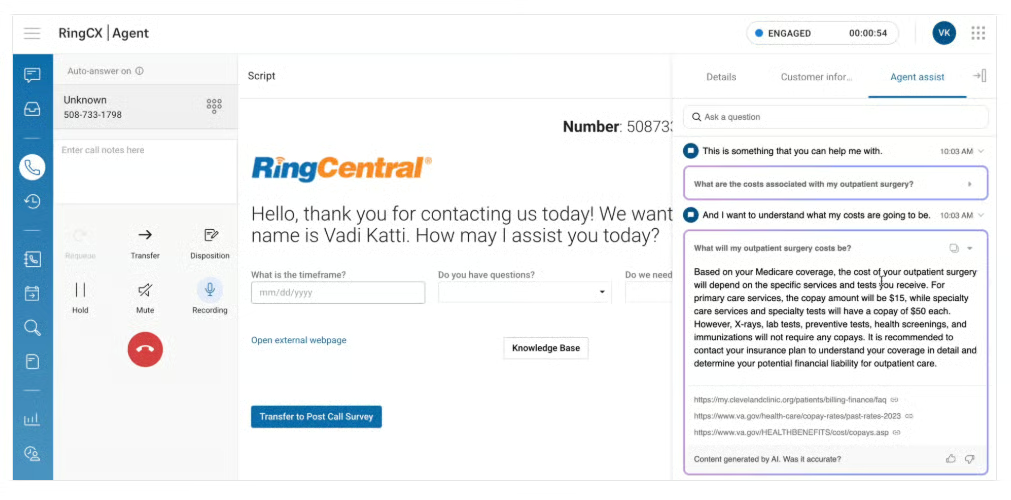
Many agent assist tools act as co-pilots or companions, designed to streamline repetitive tasks and enhance conversational interactions within a workspace. In moments when supervisors cannot provide real-time feedback, agent assist tools can step in to offer hands-on training and support, enabling even the newest team members to gain confidence and capability in their customer support skills.
How agent assist works
Before we delve into the benefits of agent assists, let’s examine the technology behind these tools. As an artificial intelligence tool, agent assist technology utilizes automatic speech recognition (ASR) and natural language processing (NLP) algorithms to convert spoken language into text that can be analyzed and understood. These AI assistants are then trained on your company’s specific data, allowing them to provide personalized support and advice to agents based on contextual understanding.
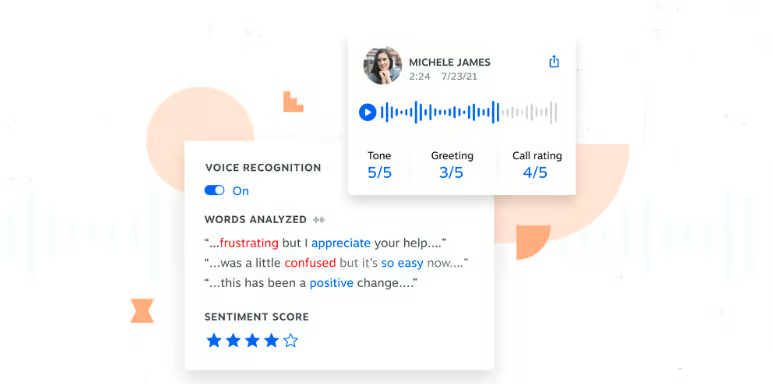
To enhance the quality of this support, many businesses utilize agent assist tools that integrate with other workplace applications, including customer relationship management (CRM) platforms. This integration provides the assistant with access to detailed data about your customers and their previous interactions. By leveraging this data, agent assist tools can provide real-time support to agents, thereby improving the quality of feedback they offer to customers.
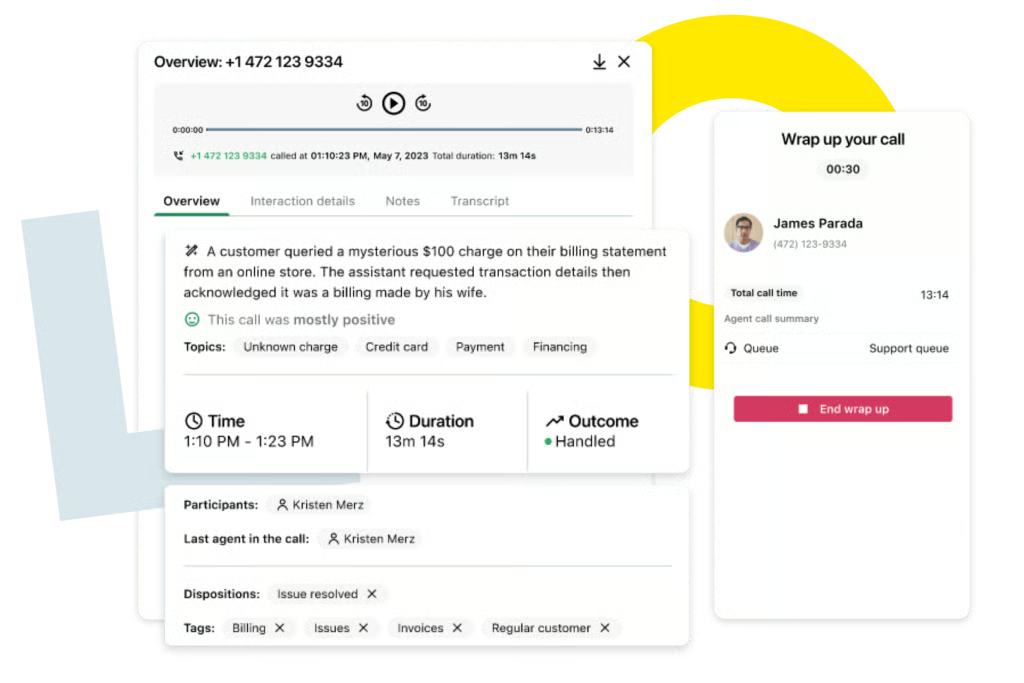
For example, agent assist tools can automate tasks and support contact center workforce management by automatically gathering and analyzing customer information and data following an interaction. Specifically, these tools initiate recordings and generate transcriptions or post-interaction summaries, providing valuable insights into the customer experience.
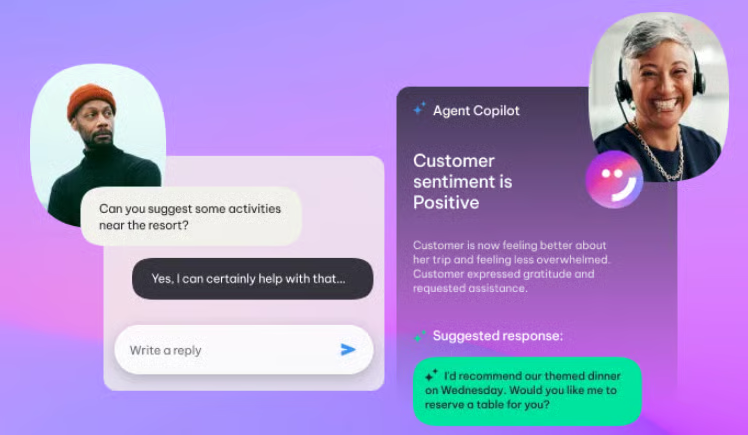
Additionally, many agent assist tools utilize sentiment analysis to enhance their understanding of customer interactions and feedback, allowing teams to deliver faster responses and improve customer satisfaction scores.
Benefits of using agent assist tools
Just like any AI tool, agent assist offers a myriad of benefits, particularly when it comes to automating workflows and boosting your business’s efficiency. This is especially true for contact centers, where the pressure of busy periods can make it challenging to respond effectively to every customer or support agent.
To help tackle issues such as agent burnout, enhance customer satisfaction, and ensure quality management, the following table highlights the key areas where agent assist tools make an impact.
Contact centers are known for having multiple moving parts that demand extensive oversight and day-to-day management. By incorporating agent assist tools, organizations provide additional support for staff in handling a variety of daily tasks.
One of the primary concerns in contact centers is the high employee turnover rate, often caused by agent burnout and dissatisfaction. Therefore, agent assist tools are an effective solution to help reduce agents’ workload. These tools provide hands-on training and support, ranging from onboarding to daily tasks on the floor.
In a contact center, customer satisfaction is often determined by the speed of assistance and the quality of interactions. By integrating agent assistance tools into the workspace, agents can receive real-time feedback and recommendations. This enables them to respond more quickly and accurately, tailoring their responses to meet the individual needs of each customer.
Although some call centers have consistent call volumes, many experience fluctuations that can make it costly to increase staff during peak periods. However, by incorporating agent assist features into your contact center subscription, you can provide various methods of support typically offered by agents or supervisors, such as real-time feedback and coaching.
Key features of agent assist solutions to look for
When it comes to agent assist solutions, the options can be overwhelming, with many tailored to specific needs. However, despite their differences, most of these tools share a core set of features designed to boost agent productivity and elevate the customer experience. To help you navigate your choices, here’s a list of key features to consider when selecting the perfect agent assist tool for your team.
- Interaction recording: While most call centers prioritize providing call recordings, it is also important to capture recordings of interactions across various channels. This approach offers valuable context for the feedback generated by agent assist tools and supports future customer engagement.
- Automated transcriptions: One of the main ways agent assist tools can support agents with their daily workflow is by taking over the role of note-taking. Instead of having to focus on recording everything a customer says, most agents use call transcriptions, making it easier to keep track of key details during and after an interaction.
- Post-interaction summaries: By providing high-level summaries of interactions, agent assist tools can help reduce the time spent on after-call work by human agents. This makes it easier to transition from one customer to another, as well as providing more detailed notes for agents to review before taking a call.
- Recommended customer responses: Not every agent is quick on their feet, which can be frustrating for customers who have to wait for an adequate response to their inquiries. Instead of spending time trying to figure out what to say next, agents can view a series of AI-generated prompts based on scripts or previous customer interactions to assist them.
- Sentiment analysis: During and after interactions, it is important to understand customer experience through detailed reporting and analytics. By providing an analysis of speech or text, agent assist tools can help evaluate the quality of agent calls and measure customer satisfaction.
- Real-time feedback: While supervisors are often accustomed to providing feedback to agents, they are not always able to offer assistance immediately. In the meantime, agent assist tools can offer real-time coaching and advice during and after interactions.
Top agent assist tools
Several AI tools are available on the market, designed to support agents in addressing various concerns. The following chart highlights some of the top contact center providers and outlines the best use cases for their agent assist tools.
| Agent assist tools | Monthly starting price | Best for | Key features |
|---|---|---|---|
 | $65 per agent | Interaction analytics |
|
| Visit RingCentral | |||
 | $129 per agent | Customer experience |
|
| Visit Nextiva | |||
 | Contact sales | Call monitoring and feedback |
|
| Visit GoTo Connect | |||
 | $119 with 36-month contract | Compliance and quality management |
|
| Visit Five9 | |||
 | $71 | Workflow automation |
|
| Visit Nice CXOne | |||
Key challenges and considerations for contact centers
While adopting artificial intelligence in VoIP phone systems offers numerous benefits, it also presents several key challenges. Select from the following list to uncover some of the main concerns associated with implementing agent assist tools, along with suggestions for addressing these issues in your workspace.
Successful integrations with knowledge sources
One of the primary ways agent assist tools acquire the necessary context to provide effective feedback to agents is by integrating with your workspace tools and accessing specific knowledge resources. Often, this means accessing tools such as CRMs or quality monitoring tools; however, not all platforms work well together, and it can be a challenge if there isn’t seamless integration between your technologies.
Therefore, one of the most important considerations before integrating a tool into your workspace is whether it is compatible with the tools you already use. Additionally, before training employees on how to use the agent assist tool, ensure that you test its ability to retrieve information from all these different knowledge sources and identify any areas where the tool struggles to grasp or interpret the context of your contact center.
Data privacy and security
One of the primary concerns across AI solutions is how data is collected and shared through the technology. Especially when working with clients and customers, concerns may arise about accessing their private information, such as payment data or details about their previous interactions. Additionally, agents may feel that a workspace tool is being used to monitor their activity, which raises further concerns about security and surveillance.
To address these concerns, it is essential to select platforms that adhere to data security standards compatible with your industry and meet the specific needs of your business. Additionally, you should develop a clear data governance plan that transparently outlines how you intend to integrate agent assist tools into your workspace, as well as how these tools will collect and store data. It’s also essential to establish clear protocols for auditing and monitoring how data is collected, accessed, and shared over time.
Human oversight and supervision
Although it is beneficial to outsource repetitive or mundane tasks to an artificial intelligence tool, that does not mean humans should be kept out of the loop of your system. One of the primary concerns with using agent assist is incorporating these tools without proper human oversight or using them as a replacement for agent supervision within the contact center.
Agent assist tools are designed to be companions in the workspace, but they still require human engagement. They should not be the sole method for coaching and training staff. This principle also applies to customer interactions. Agents should not depend entirely on these tools to dictate their responses to customers. It is essential to maintain a balance between the roles that human agents play in the contact center and the functions of agent assist tools.
Agent adoption and training
Although artificial intelligence has become increasingly popular in our daily lives, it does not mean everyone knows how to utilize these technologies. Additionally, there are many negative beliefs about AI, which can lead to resistance from employees when adopting agent assist tools in contact centers. They may be concerned about how these tools are being used and what they will mean for their current roles and responsibilities.
Therefore, instead of creating a mandate that everyone must use agent assist without explanation, it is essential to communicate to your employees why you are using these tools and how they can benefit their daily tasks. This involves offering training and guidance on how to use the tools, as well as providing a space for employees to ask questions and give feedback on whether these tools are improving their productivity or if there are barriers to adoption that need to be addressed.
Establishing guardrails and feedback models
Even after you have successfully integrated an agent assist tool into your contact center and trained employees on its use, challenges may still arise regarding its implementation. This is why it is essential to establish clear guardrails and safety protocols that focus on monitoring how these tools are being utilized in the workplace over time. Additionally, implementing feedback models to collect data and gain insights on their usage is crucial.
For example, many agent assist tools give account administrators access to a dashboard that offers data on how agents and supervisors are using these tools and whether they are helping you meet your performance goals. Therefore, it is essential to continually monitor the use of these tools and hold them to high standards to ensure you’re getting the most out of this resource.
How to choose the right agent assist solution
Whether you already have a phone system provider and are thinking about adding an agent assist feature, or you’re in the market for a new provider with robust agent assist solutions, there are some key factors to keep in mind. To assist you in the decision-making process, I have outlined a series of steps below to help you find the right tool for your needs.
Step 1. Identify your needs
Before choosing an agent assist tool, it’s essential to pinpoint your goals for incorporating an AI companion. Begin by examining your current contact center data to identify areas where an assistant can make a significant impact. For example, if you find that your agents often struggle to complete their after-call work efficiently, an automated tool for post-call summaries and notes could be a game-changer.
On the other hand, if your primary challenges don’t revolve around agent performance, you might want to explore alternative solutions, such as workforce management systems to better support supervisors or quality monitoring tools that ensure compliance with regulatory standards. By understanding your specific needs, you can select the right tool that enhances your team’s performance and boosts overall efficiency.
Step 2. Understand the industry
When selecting the right tools for your business, it’s crucial not only to understand your specific needs but also to consider the unique requirements of your industry. With a variety of agent assist tools flooding the market, remember that not all of them are designed to suit every business type. For example, if your focus is on sales, opting for a platform tailored for healthcare services wouldn’t be the smartest choice.
Additionally, if your industry relies on specialized terminology and standards for client interactions, finding an agent assist that aligns with those nuances becomes even more essential. While making the right choice can significantly enhance your business’s effectiveness and customer connection, the wrong choice might not result in the boost in efficiency and productivity that adopting these tools should provide.
Step 3. Evaluate key features
Once you grasp the unique needs of your business and the dynamics of your industry, you can start pinpointing the essential features you want in agent assist tools. If you need more context, don’t hesitate to revisit the earlier sections of this article, where we explore the core functionalities of agent assist and the comparison table showcasing the top industry tools, their key features, and the best use cases.
Step 4. Consider your current tools
For this step, it’s important to recognize that not everyone is starting from scratch when it comes to agent assist tools. If you already have a contact center plan in place, take a moment to assess whether your current provider offers agent assist features. You’ll want to determine if this capability is included in your existing plan or if an upgrade incurs additional fees.
However, if you discover that your current provider doesn’t offer agent assist or you’re simply curious about exploring new options, you should look beyond just your contact center subscription to consider all the tools you intend to use to run your business effectively.
With this comprehensive understanding, you’ll be better equipped to select an agent assist tool that seamlessly integrates with your entire workflow, making the implementation process much easier than troubleshooting integration issues after the fact.
Step 5. Assess onboarding and ease of use
When selecting the right agent assist tool, the final step is all about ease of use. If you’re searching for a new provider, I highly recommend booking product demonstrations or hands-on trials with various tools. This way, you can discover which ones seamlessly fit into your workspace and which are more user-friendly for your agents. You can also consider beta testing tools with your agents to get more insight into user-friendliness.
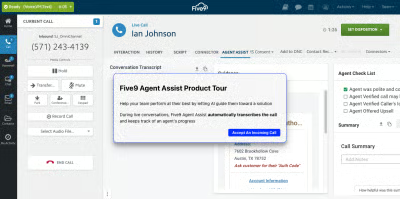
Remember, even the most feature-packed tool won’t be helpful if it’s overly complicated. It’s crucial to prioritize simplicity and intuitiveness in your choice. Additionally, ensure that you select a provider that offers robust support during the implementation process, especially if you anticipate challenges in adapting to new technology. The right tool should empower your team, not overwhelm them.
Frequently asked questions (FAQs)
What is the difference between an agent and an assistant?
The primary distinction between an artificial intelligence agent and an assistant lies in the level of autonomy in decision-making. AI agents are typically used to proactively respond to inquiries and make decisions on behalf of your business, like a customer service agent. In contrast, agent assistants serve more as helpers, providing feedback on how to improve responses and effectively complete tasks.
Is agent assist AI or a chatbot?
Agent assist is an artificial intelligence-powered tool designed to support human agents in call or contact centers. Unlike chatbots, which primarily facilitate customer self-service, agent assist tools are specifically intended to aid agents as they interact with customers.
What are the risks of agent assist tools?
Like all AI tools, utilizing agent assistance raises concerns about data security, privacy, and the reliance on technology for decision-making. Therefore, it is important to implement clear data governance models and provide proper training for agents to ensure that the information received from them is as accurate as possible. Additionally, safeguarding sensitive information and data is essential.
Bottom line
In a busy contact center, managing numerous tasks while supporting agents can be overwhelming. Even when there’s calm in the chaos, it can be challenging to deliver the real-time feedback and hands-on guidance needed to ensure that agents feel supported and remain productive in addressing customer concerns. During those moments when supervisors find themselves too busy or overburdened, agent assist tools can provide vital support.
As an AI-powered workspace assistant, agent assist solutions streamline workflows, boost agent productivity, and expedite response times to customer inquiries by providing feedback, coaching, and automated interaction monitoring when needed. If you’re ready to unlock the benefits of automation and AI, consider adopting an agent assist tool.
