


Having been in the ecommerce and retail industry for over a decade, I have seen firsthand how disruptive AI can be to every aspect of business operations and the shopping journey. Recently, a new form of AI has started reshaping how people buy and how stores need to sell: agentic commerce.
Agentic commerce is the next big shift in online shopping. From content generation (generative AI) where AI agents just recommend products, AI agents are now gradually taking over tasks like product discovery, comparison, purchase execution — all with less human input.
For small businesses, this shift matters. It affects how customers find you, how they pay, how secure those transactions are, and whether your product data actually gets seen. Over the years, I’ve seen similar technology advancements (mobile commerce, voice search, etc.), and agentic commerce looks to be on par in impact.
In this guide, I’ll walk you from what agentic commerce is and why it matters, through risks and infrastructure requirements, to what you should do now. If you follow, you’ll be in a stronger position when agents increasingly shop on behalf of your customers.
- What is agentic commerce?
- Why agentic commerce matters for SMBs
- How agentic commerce works
- The impact of agentic commerce on payments and security
- Agentic commerce in action: Use cases
- AI agents for ecommerce: Real SMB tools and providers
- How to implement AI agents for your ecommerce store
- Frequently asked questions (FAQs)
- Bottom line
What is agentic commerce?
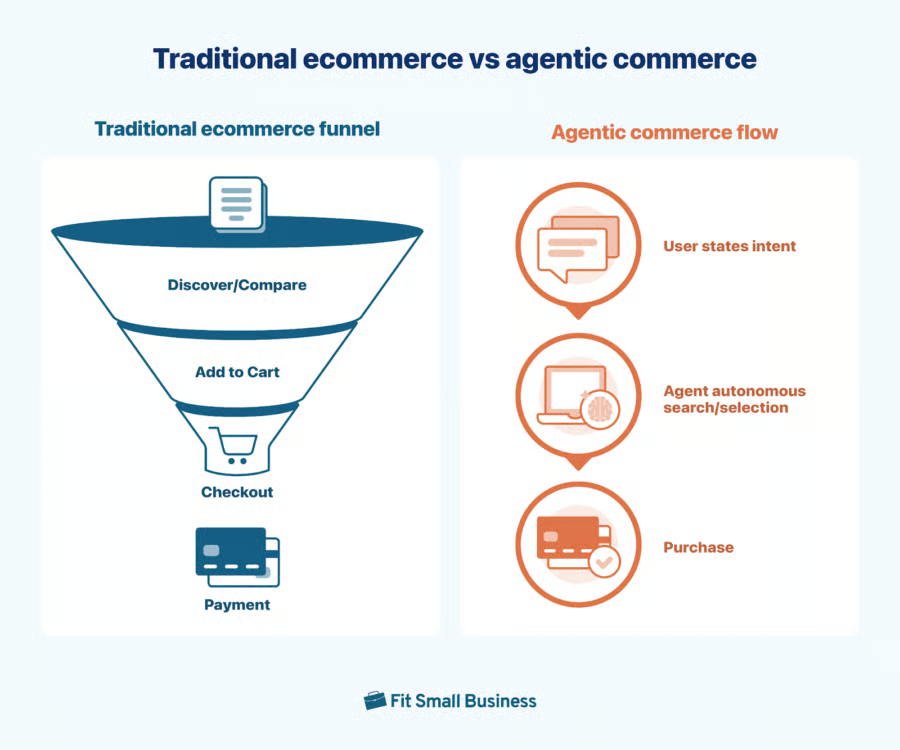
Agentic commerce means AI agents handle the entire shopping journey: from search and comparison to purchase and post-purchase actions.
This is different from traditional ecommerce or simple chatbots. Here’s a quick comparison:
| Feature | Traditional Ecommerce | Chatbots / Virtual Assistants | Agentic Commerce |
|---|---|---|---|
| Customer must browse & decide | ✅ | ✅ | ❌ (agent decides & buys) |
| Can complete purchase | ❌ | Limited | ✅ |
| Depends on product feeds / APIs | Optional | Somewhat | Essential |
| Human oversight needed | High | Medium | Configurable (set limits, permissions) |
Example: A chatbot can answer “Do you have size M in stock?” but ecommerce AI agents can go further by shopping for the customer. A customer can say, “Order me two size M shirts under $50 from the most trusted seller with fastest shipping,” and the AI agent can do the task.
Why agentic commerce matters for SMBs
- Changing buyer behavior: Shoppers want speed and personalization, not hours of browsing. AI shopping agents do the heavy lifting by finding, comparing, and buying products.
Example: If a customer typically buys skincare products every six months, an agent can detect the pattern and automatically reorder before they run out.
- Payments are being rebuilt: Visa and Mastercard are rolling out APIs so agents can use tokens or passkeys instead of card numbers.
Example: If a customer’s AI agent tries to buy office chairs from your store but you don’t support tokenized checkout, the agent may route the order to a competitor that does.
- Trust will make or break adoption: Customers will only allow AI agents to shop on their behalf if they feel protected. Guarantees like Amazon’s A-to-Z may need to expand to agentic shopping — covering cases where an AI agent orders the wrong size or falls for a fraudulent listing.
- Visibility depends on clean data: Agents don’t browse banners or homepages; they rely on structured product info.
Example: An agent searching for a “waterproof dog bed, medium, under $60” will skip a vague “Durable dog bed” listing and choose the competitor with clean, detailed product data.
How agentic commerce works
Agentic commerce follows a clear workflow. Instead of a customer clicking through pages, the agent handles the full cycle.
Example: Rather than logging in to buy ink every month, an AI agent can automatically place the order the moment it detects your printer is running low.
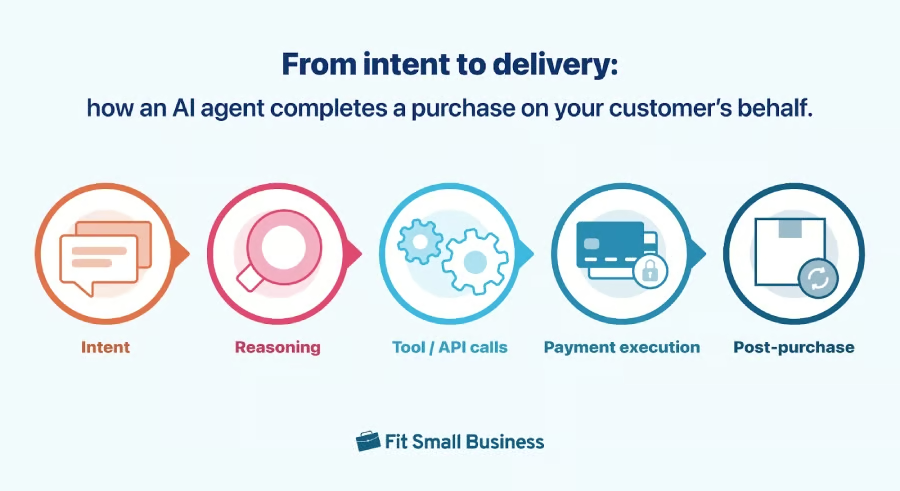
Here’s how agentic commerce works step by step:
- Intent capture: A customer says, “Order new printer ink.”
- Reasoning: The agent compares brands, reviews, prices, and availability.
- Tool/API calls: It pulls product data directly from ecommerce platforms.
- Payment execution: Using secure rails (tokens, passkeys), it checks out.
- Post-purchase: It tracks shipping, manages reorders, or starts a return.
The impact of agentic commerce on payments and security
Adopting agentic commerce isn’t just about faster checkouts; it changes how money moves and how risks are managed. As a small business, risks are higher because a single payment error or security gap can erode customer loyalty.
Understanding the impact on payments and security helps you prepare without overspending or exposing your business to unnecessary risk.
Payments and safety basics
Visa, Mastercard, and other networks are testing agent-ready systems so AI agents can transact securely. You don’t need a full overhaul, but you should understand the basics:
- Tokenization
- Passkeys
- Consent scope
- APIs/toolkits: Developers can add agent-friendly payment features into your ecommerce stack.
Security and governance
Security is where agentic commerce succeeds or fails. You need rules and monitoring in place before agents touch live transactions.
- Set permissions. Define what agents can access.
- Add rate limits. Cap frequency and spend.
- Use approval thresholds for high-value orders.
- Test in a sandbox before launch.
- Track with monitoring dashboards.
- Keep an incident playbook for errors or fraud.
- Run a red team test to expose weaknesses before customers do.
Learn more:
Agentic commerce in action: Use cases
Agentic commerce is already here in ways you can see and test. Both buyers and merchants are starting to benefit from AI agents that can reason, compare, and act without needing constant human clicks. Here’s how it looks in practice:
For buyers (your customers)
- Concierge purchase: An agent can handle requests like, “Find me the best laptop under $800 with 16GB RAM” and complete the order.
- Replenishment: Instead of customers remembering to reorder, agents automatically buy consumables like ink, pet food, or skincare products on schedule.
- Bundles: Agents suggest complementary items, like an outfit or a DIY toolkit, boosting cart size without upsell pressure.
- Travel booking: A single request can return flight, hotel, and rental options, removing hours of manual searching.
For merchants (you)
- Returns automation: Agents manage return requests, issue labels, and update stock in your system.
- Inventory balancing: AI moves stock between locations or updates availability across channels in real time.
- Promo operations: Agents automatically surface your discounts and offers to customers actively shopping for them.
Example: Walmart’s “Sparky” shopping assistant already compares products, summarizes reviews, and even helps with reorders. While Walmart invests heavily, you can access similar capabilities through ecommerce platforms like Shopify and BigCommerce.
AI agents for ecommerce: Real SMB tools and providers
Early tools are already available for smaller businesses that want to prepare. Many plug directly into ecommerce platforms you may already use, making it easier to start experimenting without heavy investment:
| Tool / Provider | What it does well | Benefit |
|---|---|---|
| Stripe | Connects product catalogs and checkout flows to agentic platforms via APIs | Widely used, affordable, strong plugin ecosystem |
| Visa Intelligent Commerce | Provides tokenization, passkeys, and secure rails for agent-based payments | Future-proof payment infrastructure with added trust |
| Shopify / BigCommerce apps | Plugins for conversational agents, subscriptions, and product feed helpers | Low-cost entry point, many apps already available in marketplaces |
Shopify and BigCommerce are always my top recommendations for ecommerce platforms, and their innovations are proof that they are leaders in the ecommerce industry.
Both platforms are beginning to roll out agentic commerce features through their app ecosystems. Shopify has released three features — Shopify catalog, universal cart and checkout kit — that will let developers tap AI-powered commerce without a lot of extra code or having to manage compliance.
BigCommerce is investing in APIs and integrations that let AI shopping agents access real-time pricing, stock levels, and product details. These developments mean you can start testing agent-driven workflows without leaving your existing platform.
How to implement AI agents for your ecommerce store
AI agents can improve efficiency, personalize shopping, and reduce friction, but only if you adopt them thoughtfully. If you have limited resources, you don’t need to jump in all at once. A phased approach lets you test safely, keep costs in check, and build trust with your customers.
Phase 1: Get the basics ready
Before experimenting with AI agents, make sure your foundation is solid. If your data isn’t clean or your payments are limited, agents won’t work well with your store.
- Clean up product data: Standardize categories and attributes (size, color, specs). Keep pricing, shipping, and tax info updated.
- Enable structured data and feeds: Use apps on Shopify, BigCommerce, or WooCommerce that expose product metadata to agents.
- Review your payments setup: Support multiple payment methods, including digital wallets, and explore tokenization or passkeys.
- Define agent permissions: Set spending limits, allowed categories, and enable audit logs so you can see which actions agents took.
Related reading:
- How to Grow an Ecommerce Business & Optimize for Sales
- 10 Checkout Optimization Tips for Small Businesses
Phase 2: Add agent-friendly tools and test
Once your basics are covered, begin experimenting with tools that enhance discoverability and automate simple tasks.
- Try plugins or apps: Use AI-powered recommendation engines, auto-reordering apps, or conversational assistants (Shopify Magic, for example).
- Pilot small use cases: Start with tasks like automated product descriptions or subscription reorders instead of full checkout automation.
- Monitor performance: Track agent-referred sessions, agent-assisted conversions, and chargebacks tied to agent activity.
- Beware of “agent-washing”: Ask vendors for demos and proof of use cases before committing to new tools.
Phase 3: Build for autonomy and trust
If you see more customers using AI agents, scale your systems to handle agent-driven commerce securely and transparently.
- Strengthen security: Apply least-privilege access, rate limits, and monitoring dashboards for agent actions.
- Adopt advanced payments: Use APIs that support tokenization and passkeys, and keep an eye on new rails (like stablecoins) as they emerge.
- Communicate clearly with customers: Let them know when an agent has acted on their behalf and make refunds or reversals simple.
- Measure ROI: Track conversion improvements, customer satisfaction scores, and time saved from automation. Use these metrics to decide whether to expand agent use.
Start with one area where AI can save you time, like automated product descriptions or reorders. Test, monitor results, and expand gradually. Small steps will help you minimize risk while capturing early benefits.
Frequently asked questions (FAQs)
What is agentic commerce in ecommerce?
Agentic commerce is when AI agents perform shopping tasks like comparing products, completing checkouts, and managing post-purchase support. Unlike traditional ecommerce, these agents can act autonomously, saving you and your customers time while reducing friction in transactions.
How do ecommerce AI agents work?
Ecommerce AI agents capture intent (like “find me laptops under $800”), analyze options, and execute purchases using APIs and secure payment networks. They also handle follow-ups, such as returns or reorders, making the buying process faster and more efficient for both you and your customers.
Do I need new payment systems for agentic commerce?
No. Payment providers like Visa and Mastercard are updating current rails to work with AI agents. You’ll mostly need clean data feeds and API support, not an entirely new payment stack, which makes adoption easier for small businesses without large tech budgets.
Are AI shopping agents safe for my customers?
Yes, as long as you set clear limits. Features like tokenization, passkeys, and consent scopes ensure transactions remain secure. You can control permissions, spending caps, and monitor logs, so agents only do what you’ve authorized them to do in your ecommerce system.
How can I prepare my site for agentic shopping?
Start by cleaning product data and ensuring your feeds are accurate. Add APIs where possible for pricing, availability, and checkout. Test in a sandbox with low-risk limits, and track performance through monitoring tools. This phased approach helps you adopt agentic commerce safely and effectively.
Bottom line
Agentic commerce is still new, but it’s scaling fast. You don’t need to overhaul your store today, but you should prepare. Clean up your product data, adopt flexible payments, and make trust a priority. Experiment in safe, low-cost ways now, and when agentic shopping becomes mainstream, your business will already be the one agents recommend.
