






The best free employee scheduling software provides web-based and mobile options that you can use to create, manage, and publish staff schedules. Aside from helping you keep costs down and streamline and digitize scheduling processes, it should also have a clean interface, provide access to user support, allow integrations with other tools, and have robust reporting tools.
We evaluated 13 solutions, and our top free employee scheduling software picks are as follows:
| Software | Best for | Key features |
| Homebase | Overall free employee scheduling | Best free all-in-one option for one-location teams. |
| Connecteam | HR features | Scheduling plus onboarding, training, and employee comms. |
| ZoomShift | Seasonal teams | Simple scheduling for fluctuating staffing needs. |
| SocialSchedules | Hospitality and retail | Position-based scheduling with compliance tools. |
If you already know you will need more advanced scheduling automation, compliance tools, or you have a large workforce, our broader employee scheduling software guide includes paid options with more room to grow.
Why you can trust Fit Small Business
The Fit Small Business editorial process follows strict standards to ensure that our best answers are founded on the basis of accuracy, clarity, authority, objectivity, and accessibility.
My recommendations draw on more than eight years of experience reviewing and testing HR and payroll software, along with 10 years of HR experience working with HRIS, time tracking, and pay processing systems. That background helps me evaluate not just whether software can build a work schedule, but how well it handles the day-to-day scheduling changes, employee availability, time tracking, and manager workflows around it.
To evaluate the best free employee scheduling software for small business owners, I compared 13 products using a weighted rubric that puts the most emphasis on scheduling functionality and ease of use, followed by pricing, security, reporting, popularity, and my expert assessment. I also considered how useful each free plan is in a small-business workflow, including the employee and location limits that can determine how long a business can realistically use it without upgrading.
See my full methodology below.


Methodology
To determine the best free employee scheduling software for small businesses, I compared 13 products with free scheduling plans. I looked at how much businesses can realistically do without upgrading, along with the scheduling, employee self-service, reporting, security, and support tools available across each platform.
After applying the same scoring framework to each product, I selected the four systems that offered the strongest combination of free functionality, usability, and value for small businesses.
My rubric used the following criteria:
- Scheduling functionality (20%): I evaluated the core tools businesses need to build and manage employee schedules, including shift creation, recurring schedules, availability, time-off requests, shift changes, team communication, mobile access, multi-location support, and time tracking where available.
- Ease of use and support (20%): Scheduling software touches both managers and employees, so I considered how easy each platform is to set up and use for routine tasks. I also looked at mobile access, training resources, integrations, and the customer support options available when users need help.
- Pricing (15%): Because this guide focuses on free software, I looked closely at what each $0 plan actually includes. Employee and location limits, feature restrictions, pricing transparency, and the cost of the first paid plan all affected the score. I used month-to-month pricing rather than lower annual-billing rates when comparing paid upgrades.
- Security and schedule controls (15%): I reviewed tools that help businesses control how employees use the system, such as administrator permissions, geolocation or geofencing, clock-in restrictions, and other safeguards around employee scheduling and time records.
- Expert review (15%): I considered how well each product fits a real small-business scheduling workflow, including whether its free plan is useful enough to operate day to day and how quickly common limits could force a business to upgrade.
- Reporting (10%): I looked for standard workforce reports as well as options to export or customize scheduling and time data. Products received more credit when managers could easily turn schedule information into something useful for labor planning or payroll.
- Popularity (5%): I considered ratings and feedback from users on third-party review sites such as G2 and Capterra, including overall satisfaction and recurring themes in customer reviews.
- Free employee scheduling software compared
- Homebase: Best overall free employee scheduling software for small businesses
- Connecteam: Best free employee scheduling with HR features
- ZoomShift: Best for seasonal businesses
- SocialSchedules: Best for hospitality and retail companies that assign shifts by position
- How to choose free employee scheduling software
- Frequently asked questions (FAQs) about free employee scheduling tools
Free employee scheduling software compared
| Software | Expert rating (out of 5) | Free plan limits | Paid plan: Starter monthly fee | Multi-location scheduling | Free basic time tracking |
| Homebase | 4.5 | One location, up to 10 employees | $30/location | Included in paid plans | ✓ |
| Connecteam | 4.05 | Up to 10 employees | $35 for the first 30 employees + $1 for each additional employee | ✓ | ✓ |
| ZoomShift | 4.04 | One location, up to 20 employees | $2.50/employee | Included in paid plans | ✕ |
| SocialSchedules | 3.84 | One location, up to 10 employees | $19.99/location | Included in paid plans | ✓ |
The biggest differences come down to the number of employees and locations you can schedule for free, plus how quickly you may need to move to a paid plan.
ZoomShift supports the largest free team at up to 20 employees, while Homebase, Connecteam, and SocialSchedules cap free access at 10. Multi-location scheduling also becomes an important dividing line as a business grows, so it is worth checking the first paid tier before settling on a free plan.
Homebase: Best overall free employee scheduling software for small businesses
Who should use Homebase
- Businesses with a small team in one physical location: Homebase is free for one location with up to 10 employees, which makes it a practical fit for very small businesses that mainly need straightforward scheduling and time tracking.
- Restaurants, retailers, salons, cafes, and other businesses with hourly staff: The platform is built around shift-based work and keeps scheduling close to availability, employee hours, and day-to-day team communication.
- U.S. small businesses that want payroll connected to workforce management: Homebase offers full-service payroll as an add-on, so businesses can keep employee hours and payroll in the same ecosystem instead of patching together unrelated tools.
Why I chose it
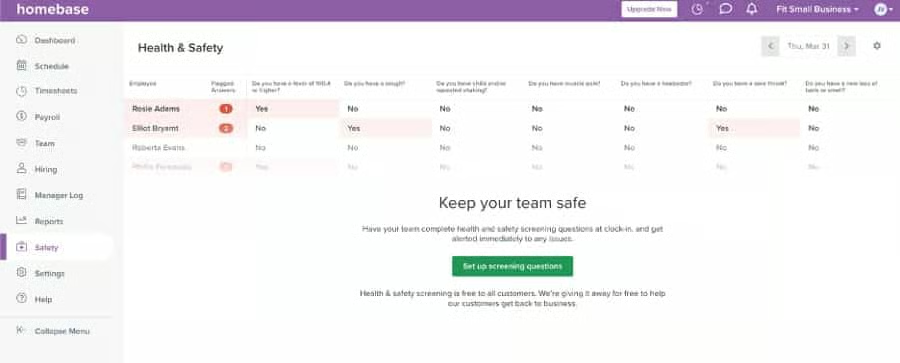
For a small hourly business, Homebase gets the basics right without making the free plan feel like a teaser. A manager can build and publish the weekly schedule, employees can keep track of when they work, and routine workforce information stays in one place. For a 10-person shop, cafe, salon, or similar workplace, that can be enough to retire the spreadsheet and group-text routine.
What gives Homebase an edge is everything surrounding the schedule. Hiring tools help when an uncovered shift turns into a genuine staffing gap, and optional payroll gives growing businesses a cleaner path from hours worked to pay. Paid plans also charge by location instead of employee count, which can work in your favor if one site eventually grows from 10 employees to 30 or 40.
Growth is also where the main limitation shows up. Once you add employee number 11 or open another location, the free plan no longer fits. ZoomShift gives you more free headcount if you mainly need scheduling, while Connecteam makes more sense when training, forms, tasks, and HR tools are just as important.
Free plan features
- Schedule builder and employee availability: Managers can build shifts around employee roles and availability instead of recreating the week from scratch. Once the schedule is ready, publishing it pushes the latest information to employees through the app.
- Team messaging and notifications: Basic communication lives in the same system employees already use for work. That gives managers a cleaner place for schedule updates and team announcements than a mix of personal texts and group chats.
- POS integration: Supported point-of-sale connections can tie Homebase into systems already used in restaurants and retail. For managers watching both labor and sales, keeping those systems closer together can make day-to-day workforce decisions easier.
Homebase pricing
Paid plans (month-to-month billing)
- Essentials: $30 per location monthly
- Plus: $70 per location monthly
- All-in-One: $120 per location monthly
Essentials expands scheduling, time tracking, and team communication. Plus adds deeper time-off controls, departments and permissions, and AI-assisted scheduling. All-in-One moves further into onboarding, labor-cost management, and HR and compliance tools.
Add-ons
- Payroll: $39 base fee per month + $6 per employee per month
- Tip manager: $25 per location monthly
- Task manager: $13 per location monthly
- Background checks: $30 each
- Job post boosts: Starting at $50 per post
- Hiring assistant: Starting at $99 per month
Discounts: Annual billing reduces Homebase's advertised plan rates by 20%, but requires upfront and lump-sum payment of all fees.
Looking for stronger time tracking? Read our guide to the best time tracking software for small businesses for options with deeper tools for employee hours, projects, GPS tracking, and payroll handoffs.
Connecteam: Best free employee scheduling with HR features
Who should use Connecteam
- Very small businesses trying to consolidate several employee-management tools: Teams with up to 10 users can combine scheduling with communication, training, HR, and operational tools instead of maintaining a stack of separate free apps.
- Construction, cleaning, field service, and other businesses with deskless employees: Its mobile-first design gives workers access to schedules, job information, forms, tasks, and company updates while they are away from a central office.
- Businesses with high turnover rates: Documents, checklists, and onboarding tools can help managers get new hires ready for work without relying on a separate training app.
Why I chose it
Connecteam earns its place here because the free plan does far more than put names into shifts. Small businesses with up to 10 users get access across its Operations, HR & Skills, and Communications hubs, which means one system can cover schedules, forms, training, documents, team updates, and everyday employee tasks.
That wider scope is useful for businesses where most of the work happens away from a desk. A field-service manager can schedule a technician, send job details, collect a completed form, and follow up with the team in the same app. A restaurant or retailer can use that same setup for onboarding checklists, training, announcements, and shift management. Compared with Homebase, Connecteam feels more like a lightweight workforce-management platform than a scheduler with extras.
Things get less tidy once you outgrow the free plan. Paid functionality is split across three hubs, so costs can climb if you need advanced tools from several areas. Homebase is simpler if your main priorities are scheduling, time tracking, and payroll. ZoomShift is easier to budget around seasonal staffing changes, while SocialSchedules is more tailored to hospitality and retail teams dealing with detailed labor and scheduling rules.
Free plan features
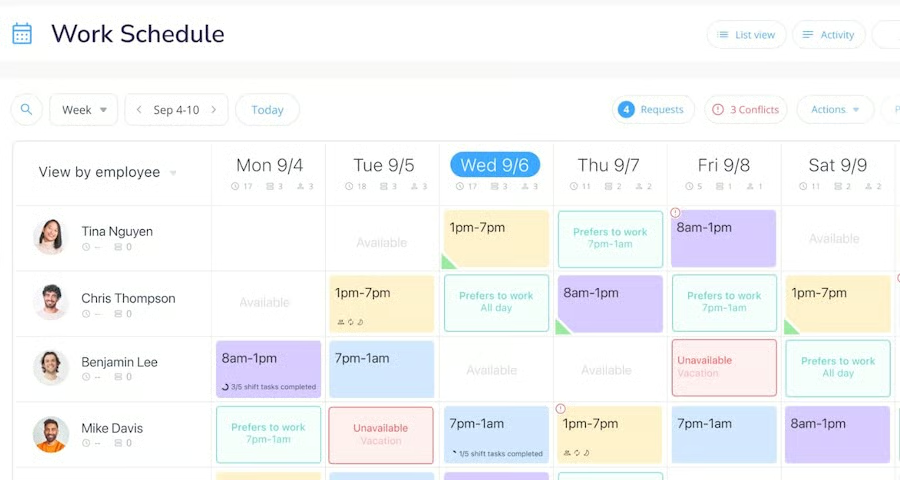
- Job scheduling: Managers can create and publish shifts, assign employees to jobs, and include details such as locations, instructions, or other information workers need for the day. This is especially handy for field and service teams where knowing where to go and what to do matters just as much as the shift time.
- Tasks, forms, and checklists: Managers can assign work, collect information, and turn paper processes into simple mobile workflows. For field crews, restaurants, or service teams, that can mean fewer clipboards, scattered forms, and follow-up texts.
- Employee communication: Chat, company updates, directories, surveys, and other communication tools give deskless employees a central place to stay informed without needing corporate email accounts.
- Time clock and GPS tools: Mobile time tracking with GPS capabilities can help businesses connect employee hours with where work happens. That is particularly useful for field teams moving between customer sites or jobs throughout the day.
Connecteam pricing
Connecteam divides its paid platform into three hubs:
- Operations: Time clock, employee scheduling, forms, and quick tasks
- Communications: Chat, updates, employee directory, surveys, events, knowledge base, and help desk
- HR & Skills: Time off, training, documents, recognition, hiring, onboarding, and other HR tools
Each hub has Basic, Advanced, Expert, and Enterprise plan options. You can subscribe only to the hub you need or combine several at different tiers, which gives you flexibility but also makes the pricing less straightforward than a single-plan system.
Paid plans (month-to-month billing)
- Basic: $35 per month for the first 30 users + $1 per additional user
- Advanced: $59 per month for the first 30 users + $3 per additional user
- Expert: $119 per month for the first 30 users + $5 per additional user
- Enterprise: Custom pricing
If scheduling is the main reason you are considering Connecteam, Operations is the hub to watch. Basic covers essential scheduling, time tracking, forms, and tasks, while higher tiers add more scheduling flexibility, controls, and automation.
Discounts: Annual subscriptions let you save 18%, but require upfront and lump-sum payment of all fees.
Need a broader HR system? See our best free HR software for small businesses guide for platforms that go beyond scheduling into employee records, onboarding, HR administration, and other workforce tools.
ZoomShift: Best for seasonal businesses
Who should use ZoomShift
- Seasonal retailers, restaurants, hotels, tour operators, and service businesses with small teams: Businesses can pause service during quieter months without losing their account data.
- Multi-location businesses with relatively lean teams: Paid plans support unlimited locations and charge by active user rather than by location, which can work well when each site only has a handful of employees.
- Businesses that want scheduling without a larger HR platform: ZoomShift fits companies that mainly need help organizing shifts, coverage, and employee availability and do not want to pay for a wider HR suite.
Why I chose it
Businesses that want scheduling without a larger HR platform: ZoomShift fits companies that mainly need help organizing shifts, coverage, and employee availability and do not want to pay for a wider HR suite.
If your biggest frustration with free scheduling software is running into the employee cap too quickly, ZoomShift gives you more breathing room. Its free plan supports up to 20 users, which is double the limit of Homebase, Connecteam, and SocialSchedules. For a small business that only needs straightforward scheduling, that extra headcount can delay the point where software starts costing money.
Seasonal businesses have another reason to keep it on the shortlist. Paid pricing is based on active users, so a business can add spots during a busy period and scale them back later. ZoomShift also lets customers pause subscriptions during the off-season and reactivate without starting from scratch. For a beach shop, holiday retailer, tour operator, or other business with predictable staffing swings, that flexibility is genuinely useful.
The free plan stays pretty lean, though. Availability, time-off requests, shift swaps, templates, multi-location scheduling, and time tracking all require a paid plan. Homebase is the better choice if you want free scheduling and time tracking together, while Connecteam gives you far more employee-management tools.
Free plan features
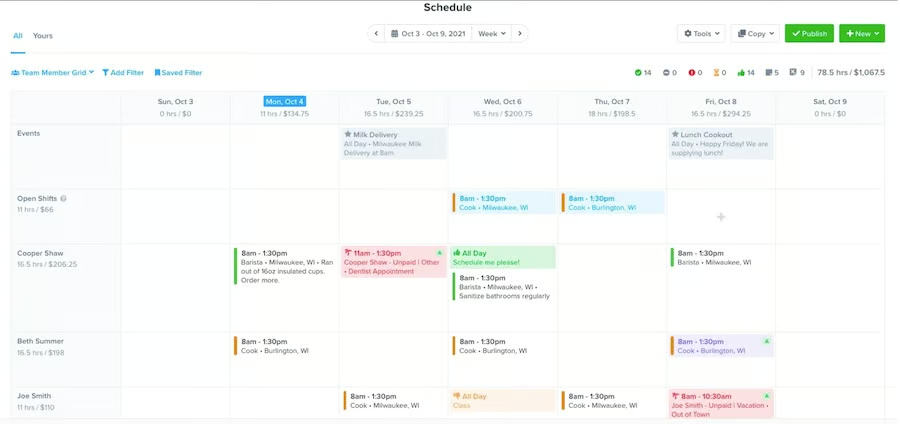
- Automatic shift reminders: Employees receive reminders about upcoming work, which can cut down on the manual “Are you still coming in at 4?” messages managers end up sending.
- Shift confirmation: Workers can acknowledge upcoming shifts, giving managers an earlier heads-up if someone cannot make it instead of finding out shortly before the shift starts.
- Team communication and shift notes: Managers can keep schedule-related instructions and team messages near the schedule itself, which is much easier to follow than hunting through texts or email threads.
- Unlimited positions: Businesses can create as many job roles as they need. That helps when coverage depends on having the right mix of cashiers, supervisors, servers, technicians, or other positions on a shift.
ZoomShift pricing
Paid plans
- Starter: $2.50 per employee monthly
- Premium: $5 per employee monthly
Starter removes the free tier's headcount, location, and scheduling-horizon restrictions. It also adds employee availability, time-off requests, shift swaps, templates, time tracking, PTO, break tracking, and payroll reporting.
Premium is the step up for businesses that want more automation and control, including auto-scheduling, overtime warnings, overlap prevention, geofencing, custom permissions, and additional onboarding and support.
Discounts: ZoomShift offers discounted annual billing, but requires upfront and lump-sum payment of all fees.
SocialSchedules: Best for hospitality and retail companies that assign shifts by position
Who should use SocialSchedules
- Restaurants, bars, cafes, and hotels: Managers can build schedules around different employee positions, which helps when each shift needs a mix of roles such as servers, cooks, bartenders, or supervisors.
- Retailers and service businesses with frequent shift changes: Employees can update availability and help fill open shifts through shift opportunities, swaps, and drops.
- Businesses that expect scheduling rules to become more complex: Paid plans add tools for breaks, overtime, certifications, and other labor requirements that may become harder to manage manually as the business grows.
Why I chose it
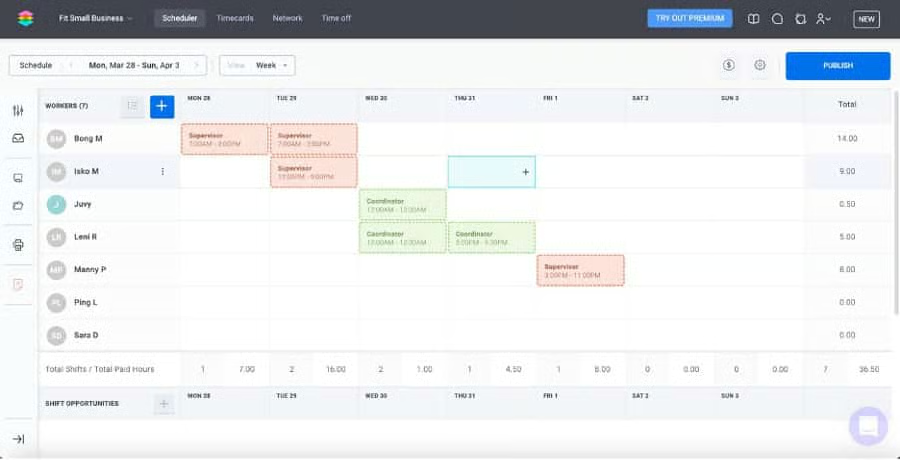
SocialSchedules works well for businesses where employees do different jobs during the week. A restaurant manager, for example, may need to make sure each shift has enough servers, kitchen staff, bartenders, and supervisors. Organizing employees by position and department makes it easier to build a schedule around those staffing needs instead of simply filling empty time slots.
It also gives employees more ways to help with everyday schedule changes. Workers can update their availability, request time off, and use shift opportunities, swaps, or drops when plans change. For restaurants, retailers, and other businesses where last-minute coverage changes happen regularly, that can take some of the coordination off the manager's plate.
The free plan is fairly small, though, with support for one location, one department, and up to 10 workers. Many of SocialSchedules' stronger compliance and attendance tools also require the Premium plan. Homebase is a better fit if you want a broader workforce platform for a similarly sized team, while ZoomShift lets you schedule more employees for free. Connecteam is the stronger option when training, communication, HR tools, and field operations matter more than hospitality-focused scheduling.
Free plan features
- Schedule templates: Managers can reuse common weekly schedules instead of rebuilding the same shift pattern from scratch. This can save time for restaurants and retailers with fairly predictable staffing needs.
- Shift opportunities, swaps, and drops: Employees can help fill open shifts or exchange work with coworkers, reducing some of the back-and-forth managers normally handle when coverage changes.
- Employee availability: Workers can update when they are available to work, giving managers better information before they start building the schedule.
- In-app messaging: Private and group messages give managers and employees one place for schedule-related conversations and updates.
SocialSchedules pricing
Paid plans
- Starter: $19.99 per location monthly
- Premium: $49.99 per location monthly
Starter removes the 10-worker limit and adds more scheduling and attendance tools, including manager logbooks and overtime tracking.
Premium adds deeper time and attendance, labor compliance, certification management, reporting, and payroll connectivity. These tools are more relevant once a business needs tighter controls around labor rules rather than simply a better way to publish shifts.
Add-ons
- Payroll: $29.99 per EIN monthly + $5 per employee; US only and requires Premium
- Tip manager: Custom pricing
Discounts: SocialSchedules offers a 20% discount for annual subscriptions, but requires upfront and lump-sum payment of all fees.
How to choose free employee scheduling software
Free employee scheduling software can work well for a small team, but the $0 price should not be the only thing driving the decision. Look at how the system handles everyday scheduling, employee changes, growth, and the workflows that sit around the schedule.
- Ease of use: Managers should be able to build and adjust schedules quickly, while employees should be able to check shifts, update availability, and request time off without much training.
- Availability and shift changes: Look for tools that let employees submit availability, request time off, and, when supported, pick up, swap, or drop shifts with manager approval.
- Locations, roles, and scheduling rules: Check whether the system can organize schedules by location, department, position, or team and whether rules for overtime, breaks, or certifications require a paid tier.
- Integrations and reporting: Useful payroll, POS, HR, or timekeeping connections can reduce duplicate work. Reports should also help you spot scheduled hours, coverage gaps, or overtime trends.
- Access controls: Make sure supervisors can manage schedules without getting access to payroll data, employee records, or administrative settings they do not need.
- Leave management: If you only need availability and time-off requests, basic tools may be enough. Formal PTO balances, accruals, and leave policies usually require deeper functionality.
- Upgrade costs: Check what will trigger your first bill, such as a second location, employees beyond the free plan’s limits, more advanced shift tools, or stronger reporting.
- Customer support: Review the help center and available support channels before rollout, especially if your scheduling setup involves multiple teams or locations.
Frequently asked questions (FAQs) about free employee scheduling tools
Is free employee scheduling software actually free?
Yes, but free plans usually come with limits on employees, locations, scheduling features, or how far ahead you can publish shifts. The better question is whether those limits fit your business today and how soon growth will push you into a paid plan.
Can employees swap shifts with free scheduling software?
Some free scheduling tools let employees pick up, swap, or drop shifts, while others reserve those features for paid plans. If coverage changes often, this is worth checking because employee self-service can save managers a lot of manual back-and-forth.
Can free employee scheduling software work for multiple locations?
Sometimes, but multi-location scheduling is often one of the first features providers move behind a paid tier. A free plan can still work well for a single shop, restaurant, salon, or office, but businesses planning a second location should compare upgrade costs early.
When should I upgrade from free employee scheduling software?
Consider upgrading when the free plan starts creating workarounds, such as managing shift changes outside the system, splitting schedules between locations, or losing access to tools your managers need regularly. Free software stops being a bargain once its limits create more administrative work than a paid plan would remove.