



.jpg?w=288)
.jpg?w=288)


Ramp and Engine X both offer corporate charge cards with no annual fee, employee cards, and built-in spend controls, but they approach business spending from very different directions. Ramp positions its card as part of a broader finance operations platform, combining corporate spending with expense management, accounts payable, reimbursements, accounting automation, and other financial workflows. Engine X, by contrast, was built around business travel, allowing companies to manage travel bookings, employee spending, and billing through a single Engine account and dashboard.
Choosing between them depends less on the card itself than on the platform behind it. In this comparison, I'll examine how Ramp and Engine X differ across rewards, expense management, travel capabilities, integrations, eligibility requirements, and the types of businesses each platform is designed to support.
Head-to-head card comparison: Ramp vs Engine X at a glance
Category | Ramp | Engine X |
| Best for | Businesses prioritizing expense automation, spend controls, and finance operations | Businesses wanting to manage company spending and business travel from a single platform |
| Annual Fee | $0 | $0 |
| Card type | Corporate charge card | Corporate charge card |
| Personal credit check | None | None |
| Business eligibility | Available to eligible US-registered companies; sole proprietors are not eligible under the reviewed card agreement | Available to US-incorporated legal entities with US operations and a US physical address; sole proprietors and unincorporated businesses are not eligible |
| Application and approval | Application and underwriting are based on business and financial information; approval timing varies | Application takes about 15 minutes; most businesses receive a decision and assigned credit line within 24 hours, though extended review may take 5 to 7 business days |
| Credit limit | Based on business financial factors such as revenue or funding; limits may be adjusted over time | Determined after review of the company’s business profile and financial information. |
| Rewards | Up to 1.5% cash back on eligible card purchases; exact rates and availability may depend on account terms | Up to 10% back in points on eligible Engine travel and 1.5% back in points on other qualifying purchases; actual travel rate depends on reward tier and company profile |
| Reward redemption | May be redeemed toward the card balance, deposited into a business account, or used for travel and gift cards | May be redeemed for statement credits or eligible Engine bookings |
| Repayment | Charge card with 30-day payback; applicable card agreements may require the balance to be paid in full at the end of the month | Full amount due by the date shown on each periodic statement; statements may be weekly, biweekly, or monthly |
| Expense management | Receipt collection and matching, transaction coding, policy enforcement, reporting, reimbursements, and accounting automation; advanced features vary by plan | Real-time transaction tracking, spend categorization, centralized billing, configurable card limits, and combined visibility into travel bookings and card activity |
| Travel features | Booking for flights, hotels, and rental cars with company travel policies, card controls, and expense integration | Flights, hotels, and rental cars booked through Engine, with bookings and card transactions sharing one dashboard, statement, and line of credit |
| Accounting integrations | Direct integrations with QuickBooks, NetSuite, Xero, Sage Intacct, and other systems | QuickBooks Online (Engine states that it is continuing to expand accounting and finance integrations) |
| Employee cards | Unlimited physical and virtual cards | Unlimited physical and virtual cards |
| Customer support | Support team, Help Center, live training, and onboarding resources | 24/7 Member Support, phone and live chat access, plus a Help Center |
My methodology
When comparing Ramp and Engine X, I evaluated each corporate card based on the factors most likely to influence a business' decision. My comparison is based exclusively on information published by Ramp and Engine, including their official product pages, pricing information, and support documentation.
- Corporate card features: I evaluated each provider's corporate card, platform capabilities, spending controls, and supporting business tools to understand how they fit into day-to-day financial operations.
- Rewards and costs: I reviewed each provider's rewards program, annual fees, and repayment structure to determine the overall value businesses can expect based on different spending patterns.
- Travel capabilities: I compared each platform's travel booking features, travel-related spend controls, expense visibility, and rewards to understand how they support businesses with employee travel.
- Integrations and business tools: I considered each platform's accounting integrations and additional business management features to evaluate how easily they fit into existing financial workflows.
- Eligibility requirements: I reviewed each provider's application process, qualification requirements, underwriting criteria, and business eligibility guidelines.
Core features
A corporate card is only one part of each company's platform. Beyond employee spending, both Ramp and Engine X include additional business tools that help companies manage financial operations. The difference is how those tools are organized. Ramp centers its platform around finance operations, while Engine X combines company spending with business travel management.
Ramp card features

Ramp combines its corporate charge card with a financial operations platform that extends beyond employee spending. Depending on the selected plan, businesses can manage purchasing, payments, reimbursements, and accounting workflows from the same platform.
Core platform components include:
- Corporate cards: Unlimited physical and virtual cards with customizable spending controls.
- Expense management: Automated expense reporting, receipt collection, reimbursements, and transaction categorization.
- Accounts payable: Invoice processing, approval workflows, and vendor payments.
- Procurement: Purchase requests, approvals, and purchasing workflows.
- Accounting automation: Direct integrations with supported accounting systems and automated data synchronization.
- Travel: Built-in business travel booking with company travel policies and spend controls.
Engine X card features
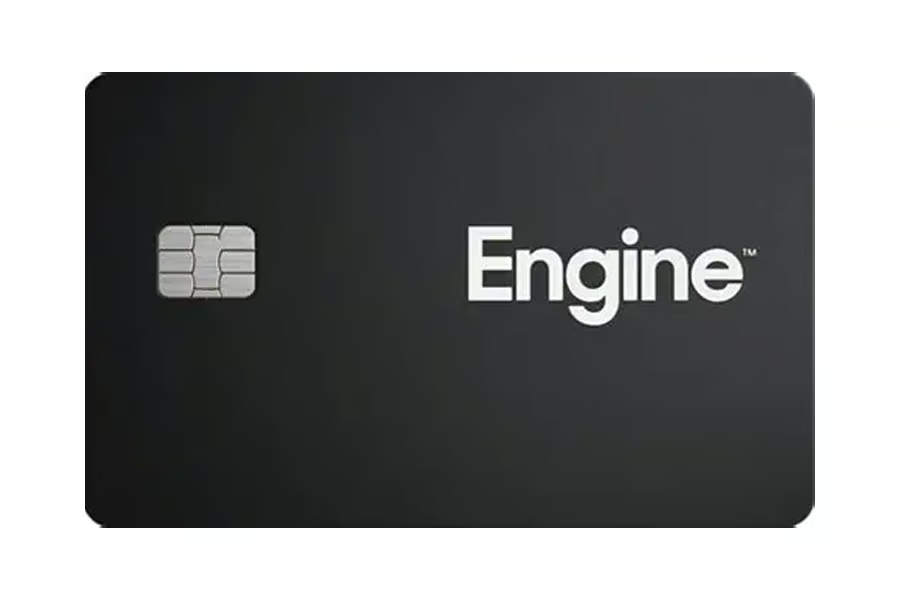
Engine X combines its charge card with Engine's travel management platform, allowing businesses to manage travel bookings and employee spending through the same account.
Platform components include:
- Corporate cards: Unlimited physical and virtual cards for employees and eligible contractors.
- Business travel: Hotel, flight, and rental car booking through Engine.
- Centralized billing: Travel reservations and card purchases appear on a single statement.
- Travel administration: Company travel policies and spend controls managed from one dashboard.
- Rewards: Travel rewards on eligible Engine bookings alongside rewards on everyday purchases.
- Accounting connection: QuickBooks Online integration with additional integrations in development.
Card rewards, fees, and eligibility
Rewards may attract the most attention when searching for the right card for your business, but repayment requirements and qualification standards are just as important to consider. Ramp and Engine X charge no annual fee, yet their rewards programs place value on different types of spending.
Card feature | Ramp | Engine X |
| Annual fee | $0 | $0 |
| Rewards | Up to 1.5% cash back on eligible card purchases; exact rates and availability may depend on account terms | Up to 10% back in points on hotels and rental cars booked through Engine and 1.5% rewards on eligible purchases |
| Card type | Corporate charge card | Corporate charge card |
| Personal credit check | None | None |
| Repayment | Balance must be paid in full each billing cycle | Balance must be paid in full each billing cycle |
Repayment structure
Both Ramp and Engine X are corporate charge cards rather than traditional business credit cards. Instead of carrying a revolving balance and paying interest over time, businesses are expected to repay the outstanding balance according to the billing schedule assigned to the account.
Ramp describes its card as a corporate charge card with a 30-day payback period. Engine X similarly requires the full balance to be paid by the due date shown on each periodic statement, which may be issued weekly, biweekly, or monthly depending on the account.
Rewards program
The two cards reward different spending behaviors.
Ramp offers up to 1.5% cash back on eligible purchases, giving businesses a straightforward rewards program that doesn't depend on spending categories. Cash back can be redeemed in several ways, including reducing the card balance, depositing funds into a business account, or redeeming rewards for travel and gift cards.
Engine X places more emphasis on business travel. Eligible travel booked through Engine can earn up to 10% back in points depending on the company's rewards tier, while eligible everyday purchases earn 1.5% back in points. Rewards can be redeemed for eligible travel bookings or statement credits, and businesses already participating in Engine Rewards can carry existing points into the Engine X rewards program.
Eligibility and approval
Neither provider requires a personal credit check during the application process. Instead, approval is based on the business itself and its financial profile.
Ramp evaluates factors such as revenue, funding, and other business financial information when determining approval and credit limits.
Engine X is available to US-incorporated businesses with US operations and a physical US address. The application is completed within the Engine platform, typically takes about 15 minutes, and most applicants receive a decision within 24 hours, although additional review may take several business days. Businesses seeking higher credit limits may be asked to provide financial statements during the review process.
Expense management tools
Expense management extends well beyond issuing employee cards. Businesses also need ways to control spending before purchases happen, monitor transactions as they occur, simplify expense reporting, and move approved expenses into their accounting system. Ramp and Engine X both address those needs, but they emphasize different parts of the workflow.
How Ramp manages expenses
Ramp's expense management platform focuses on reducing manual work across the entire expense lifecycle. Instead of simply recording transactions after they occur, the platform combines spending controls, automated expense collection, approval workflows, and accounting synchronization to reduce administrative work for finance teams.
Its expense management tools include:
- Automated receipt collection: Employees can submit receipts via SMS, the mobile app, or supported integrations, and Ramp automatically matches receipts and can generate them for certain eligible purchases.
- Preventive spend controls: Administrators can create merchant, category, employee, and spending restrictions before purchases occur, with questionable transactions routed for approval.
- Approval workflows: Custom approval chains help route purchases to the appropriate reviewers based on spend amount, department, or team responsibilities.
- Accounting automation: Expense data syncs with supported accounting platforms, helping reduce manual coding and reconciliation.
How Engine X manages expenses
Engine X approaches expense management by bringing employee spending and business travel onto the same platform. Card transactions and Engine travel bookings appear within a single dashboard, giving administrators one place to monitor spending, apply card controls, review categorized transactions, and manage billing.
Its expense management capabilities include:
- Configurable card controls: Set spending limits by employee, expense category, project, transaction type, or merchant restrictions before purchases occur.
- Unified spend visibility: Travel reservations booked through Engine and everyday card transactions appear in one dashboard and one billing view, reducing the need to reconcile multiple systems.
- Real-time transaction tracking: Monitor employee spending as purchases occur and review company-wide spending from a centralized dashboard.
- QuickBooks Online integration: Export transaction data directly to QuickBooks Online, with additional accounting integrations planned.
Which card is right for your business?
Choosing between Ramp and Engine X comes down to how you expect your corporate card to support your business. Both cards let you issue employee cards, set spending controls, and manage company expenses without a personal credit check or annual fee. The biggest difference is what each card is designed to complement. Ramp supports broader finance operations, while Engine X is built to work alongside Engine's business travel platform.
When to choose the Ramp Card
Ramp is a strong choice for businesses looking to simplify financial operations and reduce administrative work across their finance team, as it’s designed to fit into a larger financial operations workflow. In addition to employee spending, the card connects with expense management, reimbursements, accounts payable, procurement, and accounting tools, making it well-suited for businesses that want their corporate card to support day-to-day financial operations beyond purchases alone.
Best for:
- Businesses that want a corporate charge card connected to broader finance operations.
- Companies looking to automate expense reporting, approvals, and accounting workflows.
- Finance teams that value extensive accounting integrations.
- Organizations that prefer simple cash back on eligible purchases instead of travel-focused rewards.
When to choose the Engine X card
Engine X is a better fit for businesses that regularly book employee travel and want to connect travel management with everyday company spending. It’s designed to work alongside Engine's travel platform rather than as a standalone corporate card. Businesses can issue employee cards, book travel, monitor purchases, and review travel activity through the same account, helping keep travel spending and everyday business expenses connected throughout the billing cycle.
Best for:
- Businesses that regularly book employee travel.
- Companies that want their corporate charge card connected directly to travel bookings.
- Organizations looking to manage travel expenses and everyday purchases from the same account.
- Businesses that expect to earn most of their rewards through eligible Engine travel purchases.
Frequently asked questions (FAQs)
What are the biggest differences between Ramp and Engine X?
The biggest difference is the platform that surrounds the card. Ramp is designed as a finance operations platform that includes corporate cards alongside tools like accounts payable, reimbursements, procurement, and accounting automation. Engine X combines its charge card with Engine's travel platform, allowing businesses to manage travel bookings and employee spending from the same account.
Is Ramp or Engine X better for companies with frequent business travel?
Engine X is likely to be the better fit for businesses that regularly book employee travel through the Engine platform. It combines travel reservations, employee cards, centralized billing, and rewards within the same account. Ramp also offers business travel capabilities, but its platform places greater emphasis on broader financial operations rather than travel management alone.
Can I carry a balance with Ramp or Engine X?
No. Both are corporate charge cards rather than traditional revolving business credit cards. Businesses are expected to pay the outstanding balance according to the account's billing cycle instead of carrying a balance and paying interest over time.
Do Ramp and Engine X require a personal credit check?
No. Neither provider requires a personal credit check as part of the standard application process. Instead, approval is based primarily on the business and its financial profile, although each provider may request additional business information during underwriting.
Also read…
7 Best High-limit Business Credit Cards for 2026
6 Best Fuel Cards for Small Business 2026
Authorized User on Business Credit Card: Controls, Liability & Setup