







Customer service problems can harm your business, affecting customer satisfaction, trust, and loyalty. Some of the most common issues in customer service are slow response time, rude communication by the support staff, and lack of real-time engagement. Continue reading as we discuss the reasons for these issues, give tips on how to solve customer service problems, and share tools that can effectively support your teams.
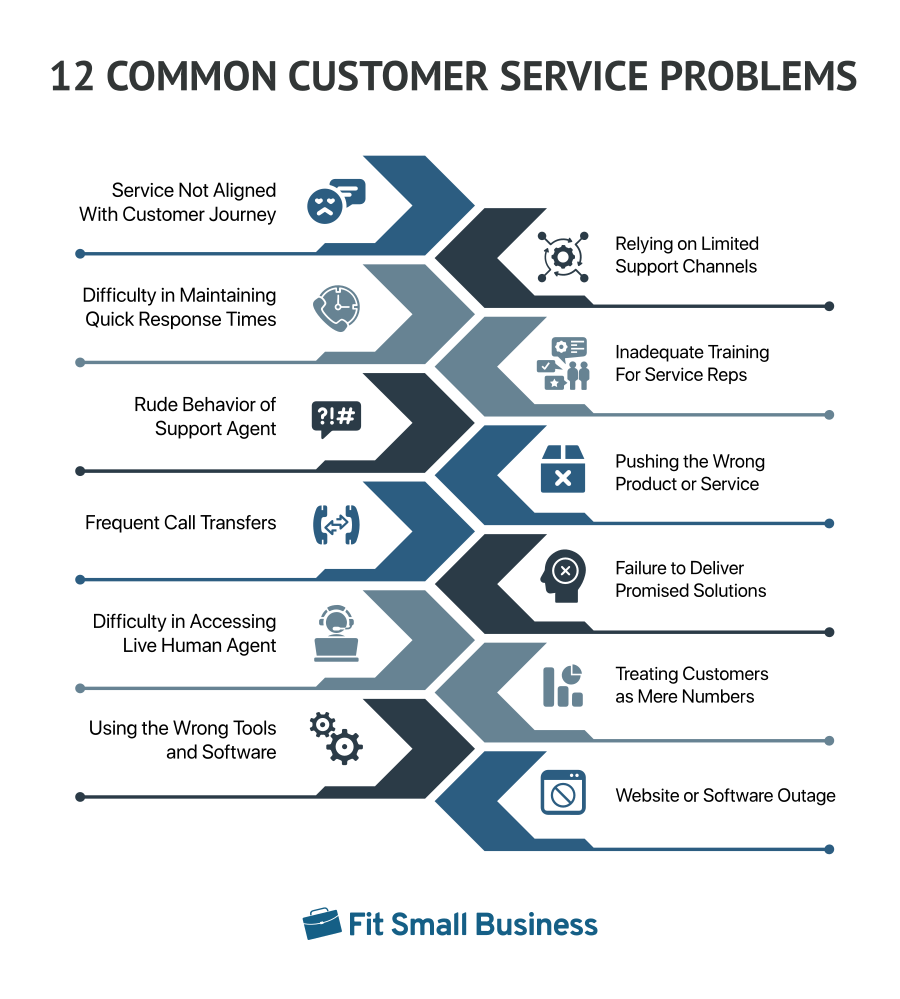
- 1. Service Not Aligned With Customer Journey
- 2. Difficulty Maintaining Quick Response Times
- 3. Rude Behavior of Support Agent
- 4. Frequent Call Transfers
- 5. Difficulty Accessing Live Human Agent
- 6. Using the Wrong Tools & Software
- 7. Relying on Limited Support Channels
- 8. Inadequate Training for Service Reps
- 9. Pushing the Wrong Product or Service
- 10. Failure to Deliver Promised Solutions
- 11. Treating Customers as Mere Numbers
- 12. Website or Software Outage
- Frequently Asked Questions (FAQs)
- Bottom Line
1. Service Not Aligned With Customer Journey
Over 70% of consumers expect businesses to provide a conversational care experience during their interactions. Unfortunately, you could easily fall into the trap of inconsistent service when customer service is not properly aligned with the customer journey. This could happen to any small business customer service team, especially those growing and expanding quickly.
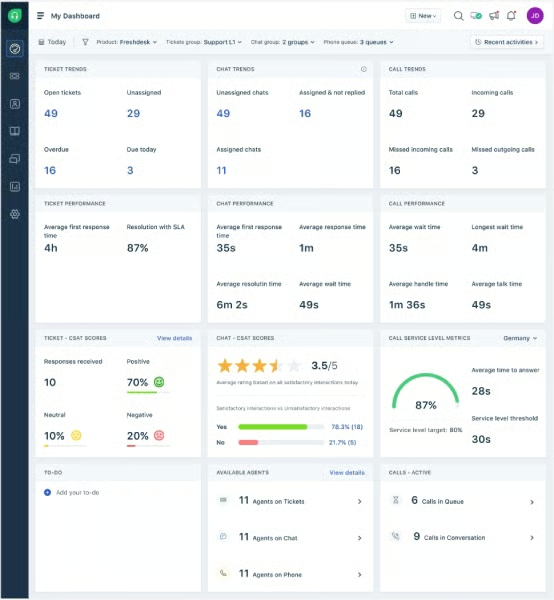
Curious about how this platform can help your business grow? Read our comprehensive Freshdesk review and learn how to solve problems in customer service with the help of this tool.
2. Difficulty Maintaining Quick Response Times
Consumers often expect instant or quick customer service problem-solving. In fact, 70% of customers say the acceptable response should come within the same day the request was sent. Almost half (46%) are willing to wait until the next day, and only 16% would wait up to three days. However, factors such as insufficient manpower and lack of tools like live chat could affect queue time significantly.

3. Rude Behavior of Support Agent
Customer service reps could exhibit rude behavior for several reasons. These could include constant challenges to customer service solutions, a rude customer unprovoked by the rep, and personal issues that the rep could not push aside at the moment. However, no matter how irate the customer becomes, a rep should not be rude to a customer.
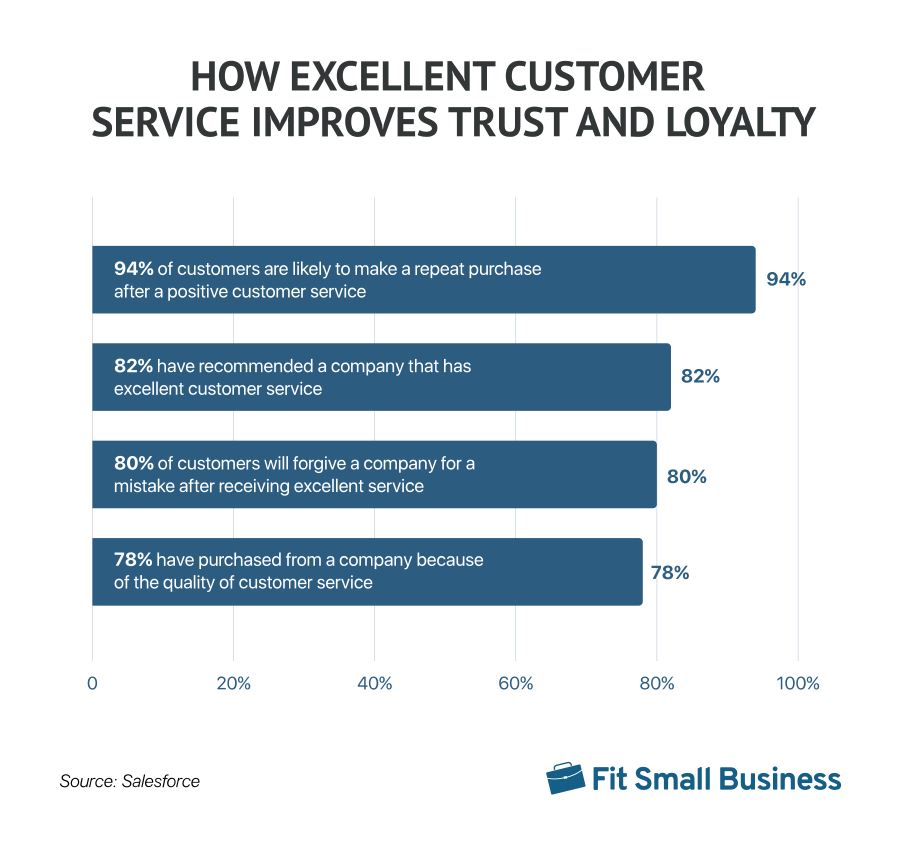
Rude communication and behavior from customer support staff is one of the worst things for a business. There are instances where human reps are pushed to their limit and unintentionally lash out at customers. Fortunately, 80% of consumers will forgive a company for a mistake after receiving excellent customer service. This is why it is important to integrate basic customer service etiquette into your business.
Want to learn the best practices for customer service communication? Read our article on customer service response templates to learn about the standard replies to customers’ most common complaints and issues. Download these templates for free and customize them to reflect your brand voice in your chat scripts.
4. Frequent Call Transfers
Agents sometimes have to transfer a customer to another agent when they don’t have an immediate solution to the query. This also happens when the rep feels like another agent or a superior can offer a better customer resolution. For consumers, it’s frustrating to have to repeat the process of detailing their concerns each time they are transferred.
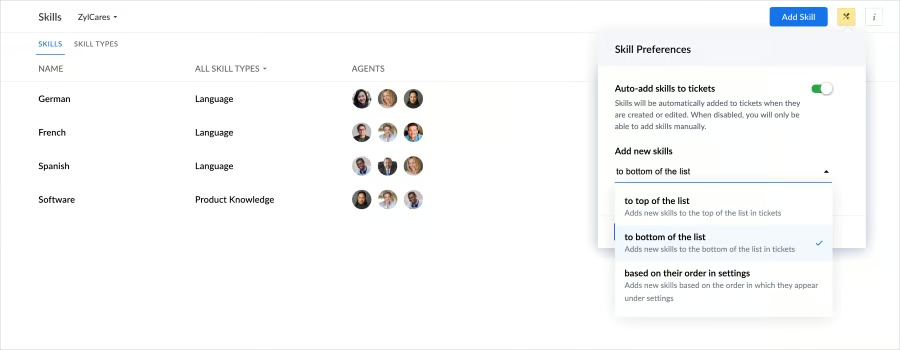
Interested in learning more about this platform’s features and capabilities? Check out our in-depth Zoho Desk review.
5. Difficulty Accessing Live Human Agent
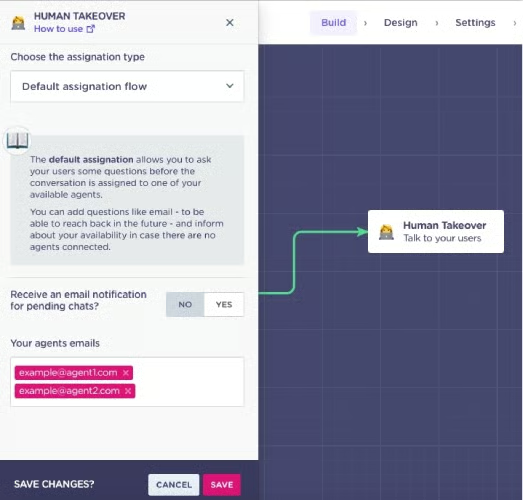
Studies show that 69% of customers are willing to interact with a chatbot for simple issues and frequently asked questions (FAQs). Automation should be used to start a conversation with a customer and to minimize customer wait time, but you should know when to use chatbots and human live chat. For instance, complicated customer problems like payment disputes require elaborative conversations with a human agent.
6. Using the Wrong Tools & Software
There are several factors that go into selecting software and tools for your business. These include your unique operational requirements, budget, and feature needs. Choosing software that does not fit your business needs could lead to complicated service processes, slow response times, and decreased satisfaction among reps and customers.
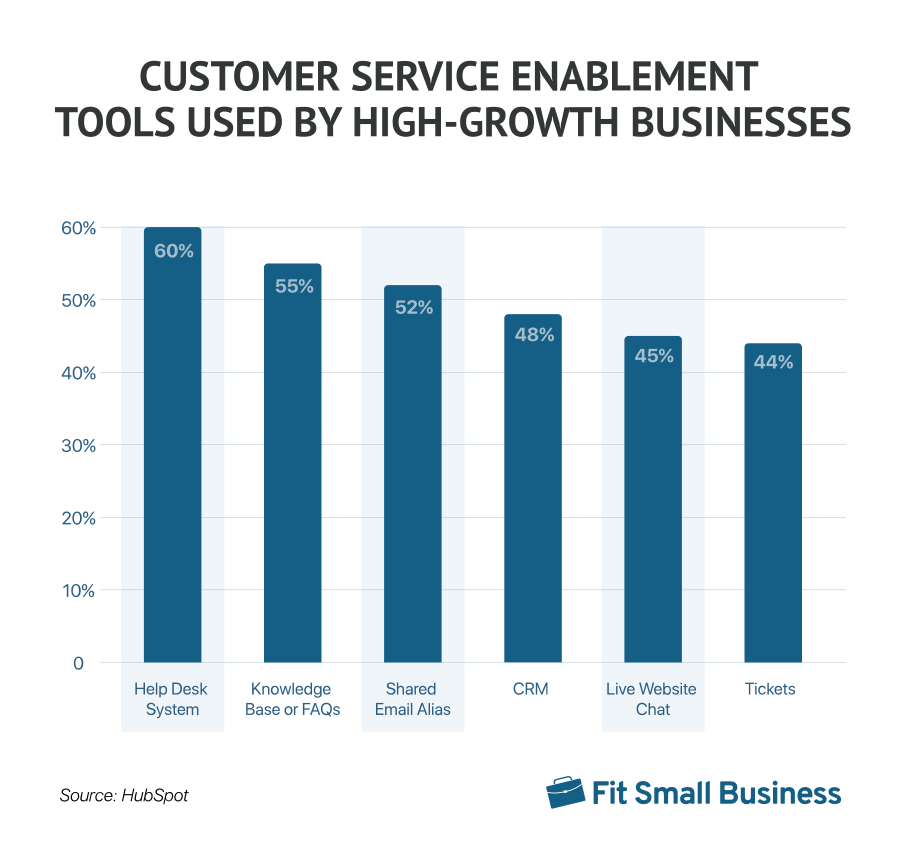
Data shows that 60% of high-growth businesses use help desk software to enable their support team. Other top options include a knowledge base, shared email alias, customer relationship manager (CRM), live chat, and support tickets.
7. Relying on Limited Support Channels
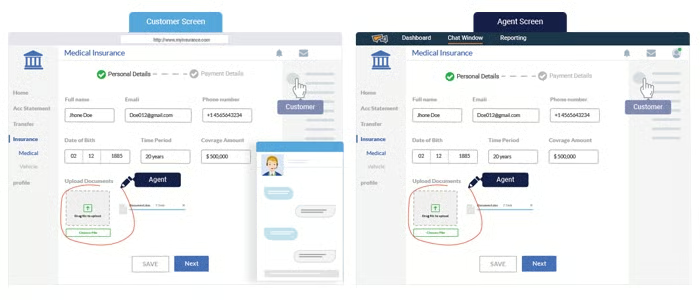
Online portals and email ticketing are still among the top customer support channels that customers prefer. However, there are situations, such as in troubleshooting, where customers are not satisfied with live chat support and would seek a face-to-face conversation to resolve the issue. Statistics show that almost half (46%) of customers prefer to engage with service reps in person, and 59% want access to phone support.
8. Inadequate Training for Service Reps
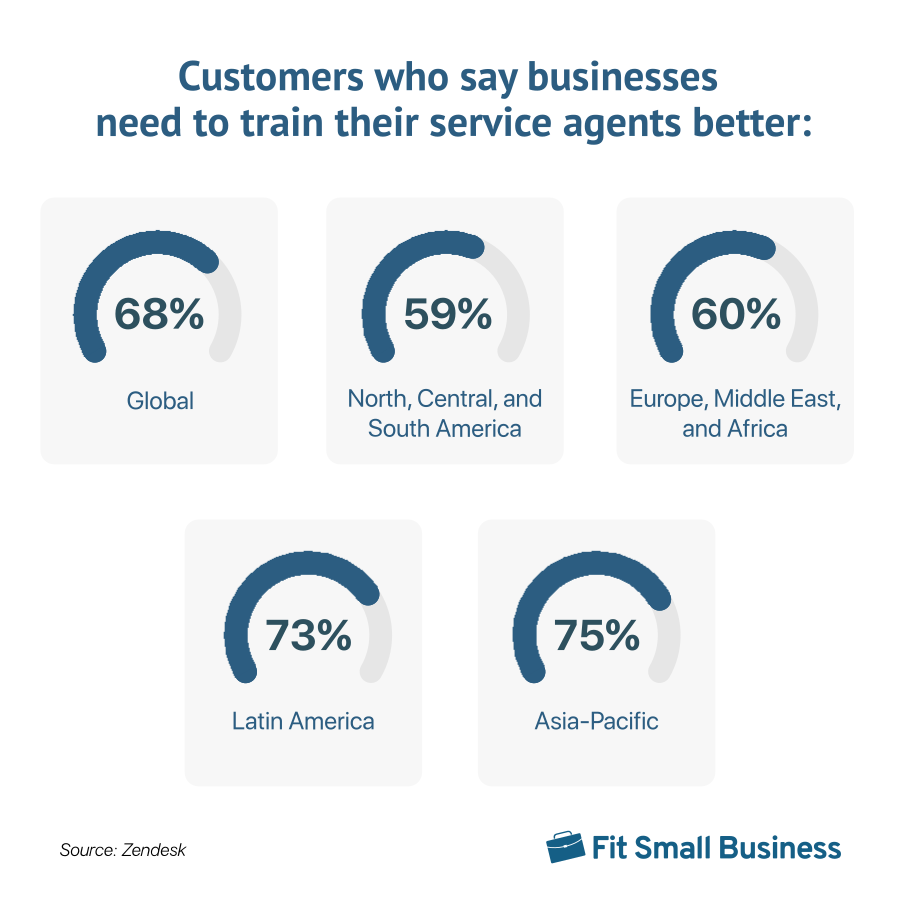
More than half (68%) of customers feel that most businesses need better training for their customer service agents. This could be due to several reasons, including the lack of solution guidelines for specific customer queries and inadequate training on proper communication. Businesses should ensure that their agents are well-equipped to deal with different types of issues in their field to maintain good customer experience.
9. Pushing the Wrong Product or Service
There are times when reps offer the wrong product because they are unable to understand what their customers want or need. Other factors that could contribute to this problem include lengthy and unclear conversations, a one-size-fits-all approach to all customer issues, or the lack of a competitive analysis of customer needs. All these could lead to a rep mistakenly pushing the wrong product or service to a customer.
While better deals and product quality primarily drive brand defection among consumers, 48% of customers switch to another brand in search of better customer service. No matter what the reason is, offering the wrong product to a customer reflects poorly on the company you are working for.
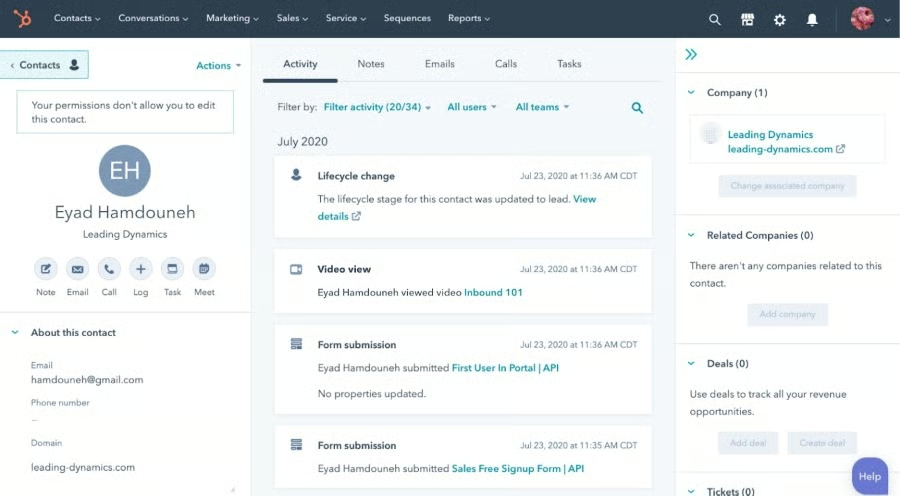
Want to know more about this platform’s customer service features? Head on to our HubSpot Service Hub review page.
10. Failure to Deliver Promised Solutions
Failure to deliver a promised solution impacts your brand negatively. On the other hand, doing what you promised would help improve customer satisfaction (CSAT), especially because their expectations of you will continue to rise. Research shows that 68% of customers trust businesses to tell them the truth. That said, don’t make any promises you can’t keep to avoid losing customers’ trust.
For example, if your company promises to respond to support requests within 24 hours, your team should aim to do so on or before the promised deadline. Anything beyond that deadline should be unacceptable because it would lead to a breach of trust.
11. Treating Customers as Mere Numbers
Lack of after-sales support could make your customers feel deserted, and sadly, 56% of customers feel that companies treat them as mere numbers. Some businesses are done interacting with customers once they close a sale. This should not be the case. Excellent customer service involves making your customers feel appreciated even after they have made a purchase.
Interested in simplifying your customer follow-up communication? Download and customize our free sales and customer service follow up templates to check in with your customers after closing a sale.
12. Website or Software Outage
Service downtime could happen to every business, and one out of five organizations report experiencing severe outages that cause significant financial losses. Such a situation will cause your customers to panic and bombard the customer support line with calls or requests. It is difficult to deal with the influx of support calls and the fact that these occurrences are out of your control.
Frequently Asked Questions (FAQs)
What are the types of complaining customers?
Complaining customers generally fall into five categories:
- Meek: Avoids confrontation and only makes their customer complaint known when you actively seek feedback
- Aggressive: Complains loudly and tends to be dismissive of reasons for an unsatisfactory service
- High-roller: Expects the highest level of customer service and is willing to pay for it
- Rip-off: More interested in getting something they are not entitled to receive rather than actually solving customer problems
- Chronic: Never satisfied with any solution and will always find something to complain about
Why is bad customer service a problem?
Bad customer service could lead to lost revenue and lower profits. When you ignore customers’ needs and provide them with bad experiences, you might lose them to your competitors. Aside from losing your current customers, it could also prevent you from acquiring new ones. This is why it is very important to know how to solve customer service problems.
How do you resolve customer service problems?
Problem-solving and troubleshooting customer issues involve the following steps:
- Ask relevant questions to find out what is upsetting the customer.
- Identify the problem and describe it precisely.
- Formulate various solutions and present them to the customer.
- Deliver the promised solution within a reasonable time frame.
- Follow up with customers to assess their satisfaction with the solution.
Bottom Line
Customer service problems are inevitable and will continue to evolve as customer expectations change over time. The important thing to do is to have a well-outlined plan on how to solve customer service problems quickly and effectively. You should also invest in good customer support tools that can help you manage and streamline customer engagement, as well as monitor your team’s performance with ease.
