



.jpg?w=288)

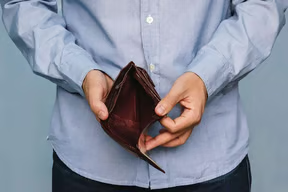
The National Retail Federation (NRF) came out with its latest Halloween trends report, and its key findings are that consumers are mostly expecting higher prices (79%) and, similar to last year, shopping earlier (49%). Per-person spending has also reached an all-time high.
Based on the NRF report and other Halloween trends findings, I listed all the important Halloween trends for retail, along with Halloween costs, the economics of Halloween, and actionable items you can implement to leverage the start of the holiday season and boost sales.
Halloween demographics
The NRF Halloween trends report indicates shoppers are doing their shopping even earlier this year compared to past years, and millennials are the driving force behind this trend because of their love for the holiday. Below are some of the NRF findings, unless otherwise noted.
Here are some of the key insights:
1. Majority of consumers plan to celebrate Halloween this year
NRF reports that 73% of US consumers plan to celebrate Halloween this year in one way or another. This figure is consistent with last year’s record of 72%. Most plan to hand out candy (66%), decorate their home or yard (51%), dress up in costume (51%), carve a pumpkin (46%), and throw or attend a party (32%).
As you can see, there are plenty of opportunities for retailers in every Halloween activity consumers plan on doing. It will all boil down to packaging, marketing, and the right timing.
2. Nearly half (49%) of consumers began Halloween shopping in September or earlier
Consumers are shopping earlier than ever. The NRF says that 49% of consumers began shopping before October, up slightly from last year’s 47%.
Feel like you missed out on sales opportunities? Don’t fret. Consumers are shopping earlier because they like to plan ahead and spread out their spending for the holiday, but Nielsen IQ insights found that three-quarters of consumers expect to get their shopping done by mid-October.
3. Halloween-themed items were spotted in retail chains as early as June
Retail giants were the first to respond to the calls for early Halloween shopping, with Lowe’s coming out with their offerings as early as July, with many rushing imports ahead of tariff changes.
Michaels dropped its first Halloween collection of the season in stores in late June, earlier than ever, announcing a “100 Days to Halloween” campaign.
Meanwhile, Target quietly dropped its Halloween items as early as May.
4. A love for the fall season is one of the top reasons why shoppers shop early for Halloween
When asked by the NRF, consumers say the main reasons they shop early for Halloween are that they are looking forward to fall (47%), Halloween is just their favorite holiday (37%), they don’t want to miss out on desired items (33%) and they would like to avoid the stress of last-minute shopping (38%).
5. Parents are the top shoppers of the season
According to PwC data, parents are the power spenders of Halloween shopping. Surveyed consumers were prepared to spend up to $445 across spending categories.
6. Discount stores are the top destination when buying Halloween items
Shoppers trek to discount stores (42%) the most when shopping for Halloween items — up five percentage points from last year — followed by specialty Halloween or costume stores (31%) and online (31%), according to the same NRF report.
7. Online search is the leading source of Halloween inspiration
The leading sources of Halloween inspiration continue to be online searches (37%), within a retail store or costume shop (27%), and friends and family (21%).
Appealing to Halloween shoppers: What you can do
- Plan ahead: Planning ahead is the only way to stay on top of the holiday season. I recommend planning at least 12 weeks before an upcoming holiday (or sale event you plan to hold). Holiday readiness is doable, and your retail store can really thrive in this season.
- Study preferences: Knowing consumers’ preferences is key to generating sales. In this case, learning millennials’ and Gen X shopping behaviors can help attract those who are going to be eager to buy Halloween items
- Don’t forget your website: Online shopping is now the preferred way for a majority of consumers to shop. Ecommerce merchandising can greatly help your online store generate sales this Halloween. Personalization, cross-merchandising, product bundling, and leveraging AI and automation (like using chatbots for customer support or shopping assistants) are a few techniques you can implement.
- Lean into seasonal merchandising: Even if online searches take the lead for Halloween inspiration, consumers still get inspiration in person at stores. So take advantage of your retail displays. I list a lot of retail Halloween display ideas you can build on to encourage customers to enter your store. From there, an effective visual merchandising strategy will encourage them to shop.
Halloween spending: History and trends
Shoppers are prepared to spend more for Halloween than ever this year — so if you haven’t already, it’s time to double down on those campaigns. For the numbers below, I referenced the same NRF report unless otherwise indicated.
8. Halloween spending is set to reach record highs this year
Total Halloween spending is expected to reach $13.1 billion after last 2023’s record-setting $12.2 billion. According to NRF Vice President of Industry and Consumer Insights Katherine Cullen, even amid concerns about price increases, the holiday continues to resonate with shoppers.
9. Halloween costs are projected to be an average of $114.45 per person
Those taking part in the spooky season plan to spend an average of $114.45 per person, nearly $11 more than the 2024 average — and another record high.
10. Candy remains the most popular Halloween item shoppers purchase
Across spending categories, candy remains the most popular, with total spending expected to reach $3.9 billion. Total spending on costumers is expected to hit $4.3 billion, followed by spending on decorations at $4.2 billion. Greeting cards come in last at $0.7 billion.
11. Halloween spending for costumes is expected to reach $4.3 billion
Total spending on Halloween costumes is projected to be higher than last year, with total spending on adult costumes to reach $2 billion, children’s costumes at $1.4 billion, and pet costumes at $0.86 billion — all categories are forecast to see increased spending this Halloween.
Halloween breakout trends
Over half of consumers plan to decorate their homes for Halloween. Additionally, most people who are celebrating the holiday plan to attend Halloween parties. So, there is plenty of opportunity to capitalize on this year’s breakout Halloween trends:
12. Summerween
The term “Summerween” hasn’t had any searches since Google Trends started in 2004, but the term suddenly peaked in July 2024 and continues to be popular this year, with Halloween shoppers starting early. Amazon has Summerween products, and TikTok has 203k posts with the hashtag #summerween. Michaels also came out with its own Summerween collection this June.
Consumers are welcoming an early and extended celebration of the spooky season in summer, where Summerween parties are in full swing. As such, in the future your business would be smart to bring out Halloween-themed products as early as July!
13. Healthier alternatives
According to the PwC survey, a subtle trend creeping into Halloween 2025 is health-consciousness, with 10% of survey respondents opting to give out healthier alternatives to trick-or-treaters. Whether it’s through creative packaging, recipe alterations, or non-candy options, it’s going to be interesting to see how these consumers are reimagining traditional Halloween treats.
14. DIY/Sustainability
Meanwhile, Nielsen IQ found that 55% of millennials and 42% of Gen Z are prioritizing DIY or reused decor this year. Leaning into more conscious and creative ways to celebrate, consumers are seeking durability and multi-season use in their holiday purchases.
And shoppers are looking to you for inspiration — make it easy with personalized kits or bundles and integrate tech through creative tutorials and ideas that empower DIY culture.
15. Spooky spaghetti (Halloween-themed food items)
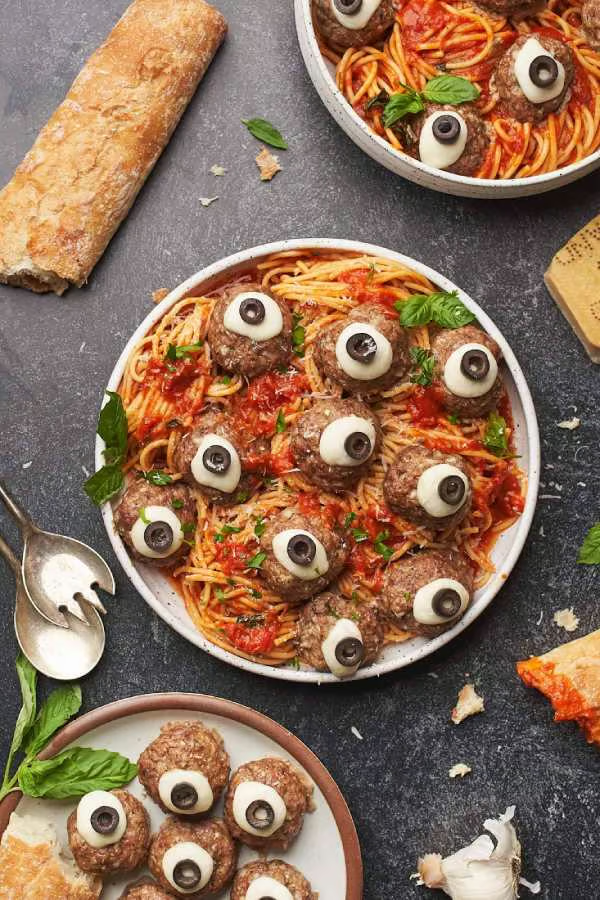
Spooky spaghetti is one of the Halloween-themed treats perfect for families and friends looking to celebrate simply. This trend has grown by 80% since last October, marked by colorful noodles, eyeballs for meatballs, and monster faces piled on top of the sauce.
Along with spooky spaghetti, classic party foods with a spooky twist have gained popularity leading to Halloween. For example, searches for “ghost pizza” are up 850%. Even Halloween breakfast is an emerging trend. Here are some trending searches according to Pinterest’s Halloween Trend Report.
- Ghost pizza +850%
- Halloween popcorn bar +110%
- Pumpkin s’mores cookies +390%
- Pumpkin fluff +240%
- Ghost brownies +200%
- Eyeball cookies +100%
- Halloween breakfast +80%
16. Pop culture
Pop culture drives most of the Halloween costumes consistently. This year, Google reports top trends driving Halloween costumes, including Kpop Demon Hunters characters, Labubus, Wicked, and more:
- Rumi from Kpop Demon Hunters is the most searched costume, with “dragon braid” and “purple hair” search terms skyrocketing.
- Search interest for Labubus reached an all-time high this year.
- “Elphaba costume” has been searched more than ever this year.
- Wednesday Addams has the top searched “black dress with white collar” of all time.
How to tap into 2025’s breakout Halloween trends
- Summerween: Bright splashes of color among common Halloween elements communicate a message of solidarity and support for those early Halloween celebrations.
- Health-conscious treats: Candy may be the top-selling category as usual, but flex your creative muscle by coming up with healthier alternatives bundles or product recommendations.
- Sustainability: Highlight durable and multi-use products from your collections and create inspiration through marketing, such as tutorials.
- Spooky spaghetti: Halloween extends to food served at spooky parties! By offering Halloween-related food decorating accessories, you are catering to the majority of Halloween celebrators who plan to host Halloween parties. If you don’t sell food-related items, decorating displays with Halloween food items will work, too!
- Pop culture: Offer these popular pop culture Halloween costumes or plan your Halloween displays according to the latest films and TV shows with a spooky twist.
Frequently asked questions (FAQs)
See below to find out the answers to the frequently asked questions regarding Halloween trends for retail.
What category of Halloween retail attracts the most spending?
Candy tops the list of products that people spend the most on at 96%, followed by decorations (78%), costumes (71%), and greeting cards (38%).
What sells the most for Halloween?
Candy remains the most popular product, with total spending expected to reach $3.9 billion this Halloween 2025. Decorations and customers follow with expected spending at $4.2 billion and $4.3 billion, respectively.
What type of retail store is most used for Halloween?
For the Halloween season, consumers flock to discount stores the most, followed by going to specialty Halloween or costume stores. Browsing and buying online comes a close third.
Why do stores sell Halloween items so early?
Halloween items are sold earlier because consumers want to shop early as they are looking forward to the fall season, want to avoid the stress of last-minute Halloween shopping, and want to shop early because Halloween is one of their favorite holidays.
How much is spent on Halloween each year?
The National Retail Federation (NRF) reports that historical Halloween spending has hit all-time highs after the COVID-19 pandemic. Halloween spending for 2023 was at $12.2 billion, the highest since 2014. This year, spending is expected to reach $13.1 billion, surpassing the previous record.
Bottom line
Halloween is evolving from a weekend celebration into an entire season of festivities and celebrations. As such, the selling season for retailers has grown longer, providing countless opportunities for sales. As retailers, it’s crucial to identify emerging Halloween trends to optimize product placements, retail displays, and implement effective in-store and online marketing campaigns that maximize shopper engagement and boost profitability during the spooky season.
