






I’ve spent years evaluating small business software, and I’ve found that the best appointment scheduling tools do more than put bookings on a calendar. They make it easier for customers to view your availability, schedule services, receive reminders, and, in some cases, pay online without requiring you to manage several separate platforms.
For this guide, I evaluated nearly a dozen scheduling tools based on their free-plan limits, booking features, usability, integrations, and overall value for small businesses. Square Appointments is my top choice because its free plan combines unlimited bookings for one user with integrated payments, client management, and automated notifications. However, the right option will depend on your team size, appointment volume, and whether you need features such as video meetings or group scheduling.
Appointment scheduling provider | Best for | Starting monthly price |
Overall free scheduler for solo service providers | $49 per location | |
Managing appointments across multiple locations | $3 per user* | |
Creating a customizable booking website | $11.90 per month* | |
Simple, reliable professional scheduling | $10 per seat* | |
Small teams needing scheduling and payment support | $5 per user* | |
Hosting video appointments and meetings | $9 per member* |
*Price reflects the monthly equivalent when billed annually.
- Best free appointment scheduling software compared
- Square Appointments: Best overall free appointment scheduling provider
- Picktime: Best free appointment software for multiple locations
- SimplyBook.me: Best for a customizable booking website
- Calendly: Best for simple, reliable scheduling
- Setmore: Best for small teams that need payment support
- Appointlet: Best for video appointments and meetings
- How to choose the right free scheduler for your business
- Key features to look for in free scheduling software
- How I evaluated the best free scheduling software
- Bottom line
- You might also like
Best free appointment scheduling software compared
The comparison below shows the core features and usage limits included in each provider’s free plan. I focused on the factors that matter most when choosing free appointment scheduling software, including booking volume, team access, locations, payments, and scheduling-page limits.
Appointment scheduling provider | Key features | Free plan limits | My score (out of 5) |
| Free for one location; payment processing fees apply | 4.03 | |
| Three users, two locations, three resources, and unlimited appointments | 3.75 | |
| One provider, 50 bookings, and one custom feature per month | 3.43 | |
| One user, one event type, one connected calendar, and unlimited meetings | 3.29 | |
| Four users and 200 appointments per month | 3.23 | |
| Five members, 25 meetings, and one scheduling page per month | 3.03 |
My expert opinion on Square Appointments
I like Square Appointments because it gives solo providers a complete setup without extra cost. I can create a booking page where clients see my availability, book their spot, and even pay upfront. That page links easily to social media or my website, which helps streamline client bookings.
Since every Square Appointments account also comes with Square’s payment processing, POS, and website builder, I don’t need to patch together separate tools to run my business.
The free plan really stands out because it offers unlimited appointments, client records, and integrated payments — things that many competitors restrict to paid tiers. However, growing teams may still need Square Plus for Google Calendar syncing, multi-staff appointments, classes, multiple locations, waitlists, and cancellation or no-show policies.
Square is also less suitable for businesses that primarily schedule virtual consultations because it does not provide native Zoom, Google Meet, or Microsoft Teams scheduling integrations. If you want to learn more about setting up your Square Appointments account so that you can start taking clients, check out our guide to setting up Square Appointments.
Who should use Square Appointments:
Square Appointments is best for service businesses that want to manage scheduling and payments through the same platform. It is particularly well suited to stylists, barbers, personal trainers, wellness providers, consultants, and other appointment-based businesses that already use or plan to use Square for payment processing.
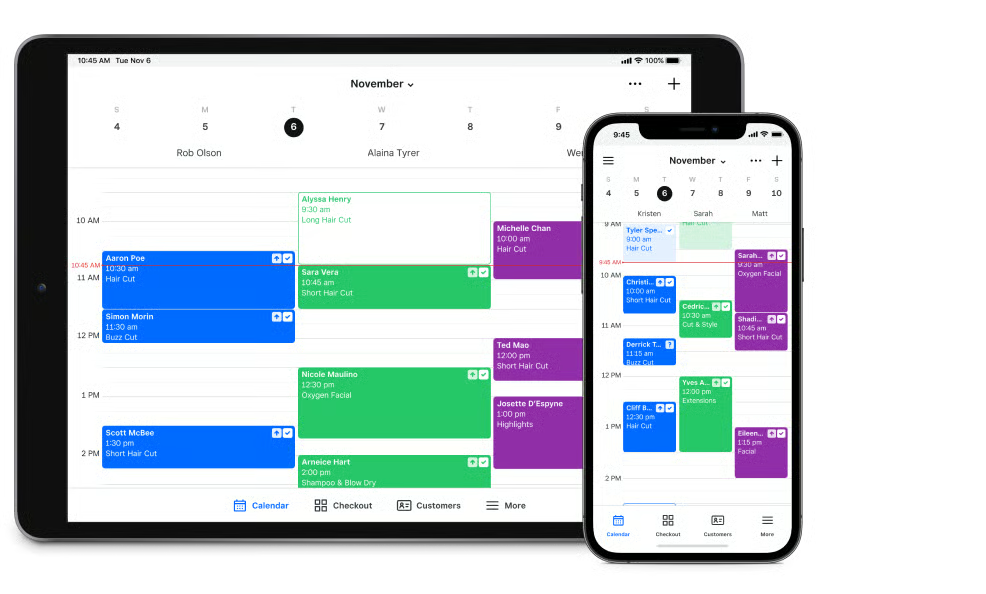
What you get with Square Appointments’ free plan
- Unlimited staff calendars
- Unlimited appointment scheduling
- Customizable online booking site
- Automated email and SMS reminders
- Integrated payment processing
- Customer profiles and history
When to upgrade to a paid Square Appointments plan
I would upgrade to Square Plus if you need Google Calendar syncing, cancellation policies, no-show fees, class scheduling, multiple locations, a waitlist, or appointments involving more than one staff member. These features provide greater control over scheduling and make the paid plan more useful for a growing team or a business with more complex services.
Square Premium is a better fit for larger salons or service businesses that need resource management, service cost tracking, team-performance reporting, and more advanced operational oversight. Because both paid tiers are priced per location, businesses should calculate the full cost across every location before upgrading.
Square Appointments pricing
- Square Free: $0 per location, per month for an online booking site, appointment reminders, unlimited staff calendars, customer profiles, and integrated payment processing. Phone support is available from 6 a.m. to 6 p.m. Pacific time, Monday through Friday, during the first 90 days.
- Square Plus: $49 per location, per month for Google Calendar sync, multiple locations, multi-staff bookings, classes, packages, waitlists, cancellation policies, no-show fees, and additional scheduling controls. Phone support is available from 6 a.m. to 6 p.m. Pacific time, Monday through Friday.
- Square Premium: $149 per location, per month for resource management, service cost tracking, future-bookings reports, team-performance reporting, and 24/7 phone support.
- Square Pro: Custom pricing for businesses processing more than $250,000 annually that may need custom payment rates, implementation assistance, technical specialists, or account management.
My expert opinion on Picktime
Picktime is my recommendation for businesses that need to coordinate appointments across more than one site without immediately paying for scheduling software. Its free plan supports three team members, three bookable resources, two locations, two classes, and unlimited appointments, making it one of the most generous options for a small multilocation operation.
I also like that Picktime includes an online booking page, website widgets, mobile apps, customer records, and PayPal payments at no monthly cost. However, the free plan only provides email notifications rather than reminders, and external calendar connections are limited to one-way syncing. Businesses needing attendance tracking, recurring bookings, SMS reminders, video integrations, or Stripe and Square payments will need the Starter plan.
Who should use Picktime:
Picktime is a great choice for small businesses that manage appointments, classes, staff, or bookable resources across two locations. It is particularly useful for salons, tutors, fitness instructors, rental businesses, and service providers that need several calendars but do not yet need advanced automation.
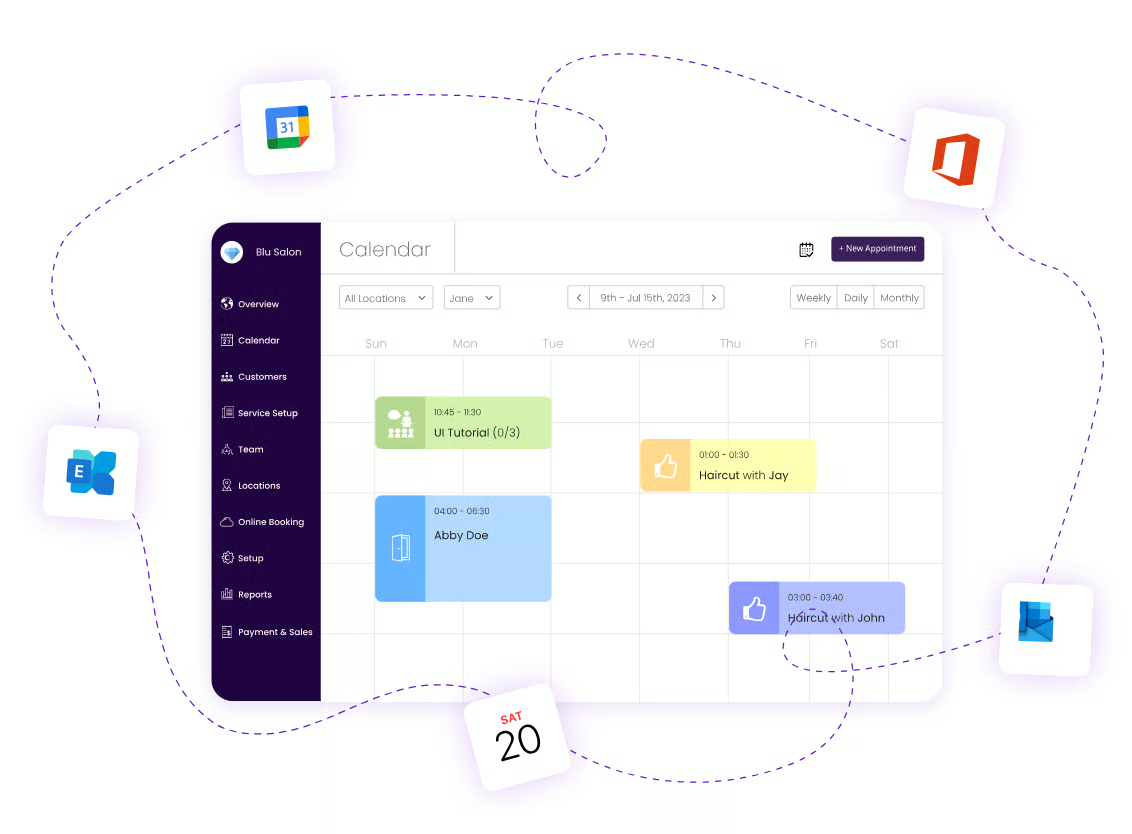
What you get with Picktime’s free plan
- Unlimited appointments for up to three users
- Support for multiple locations
- Online booking page with website embed option
- Email notifications for appointments
- Calendar sync with Google, Outlook, and Office 365
- Basic client management with booking history
When to upgrade to a paid Picktime plan
I’d upgrade to Starter for two-way calendar syncing, recurring bookings, attendance tracking, email and SMS reminders, automatic time-zone conversion, or video meeting integrations. Starter also expands payment choices to PayPal, Stripe, and Square.
The Pro plan is more appropriate for a larger operation that needs up to 10 team members and resources, unlimited locations and classes, round-robin scheduling, waitlists, approval controls, coupons, or a customized booking flow.
Picktime pricing
- Free: $0 for three users, three resources, two locations, two classes, unlimited appointments, PayPal payments, and one-way calendar sync.
- Starter: $3 per user, per month when billed annually for three users, five classes, two-way syncing, recurring bookings, attendance, reminders, video integrations, and expanded payment options.
- Pro: $2.25 per user, per month when billed annually, sold for 10 users, with unlimited locations and classes, 10 resources, waitlists, round-robin scheduling, coupons, and advanced customization.
My expert opinion on SimplyBook.me
I like SimplyBook.me because it gives me a fully customizable booking website for free, which makes it feel more professional than the simple booking links you get with other providers. I can also add intake forms to collect client details up front.
The downside is the 50-booking cap per month, which makes it less flexible than Picktime or Square Appointments, both of which allow unlimited appointments. Free users can only activate one “custom feature,” which means you have to choose between things like intake forms, coupons, or Google Calendar sync.
That said, the system scales very well if you were to upgrade, since SimplyBook.me offers branding removal, more integrations, HIPAA compliance for healthcare users, and even AI-generated booking page descriptions.
Who should use SimplyBook.me:
SimplyBook.me is best for solo service providers that want a professional booking website and handle fewer than 50 appointments per month. It is a particularly strong fit for consultants, wellness providers, tutors, beauty professionals, and other businesses that want to display services, availability, and booking information in one place.
/upl
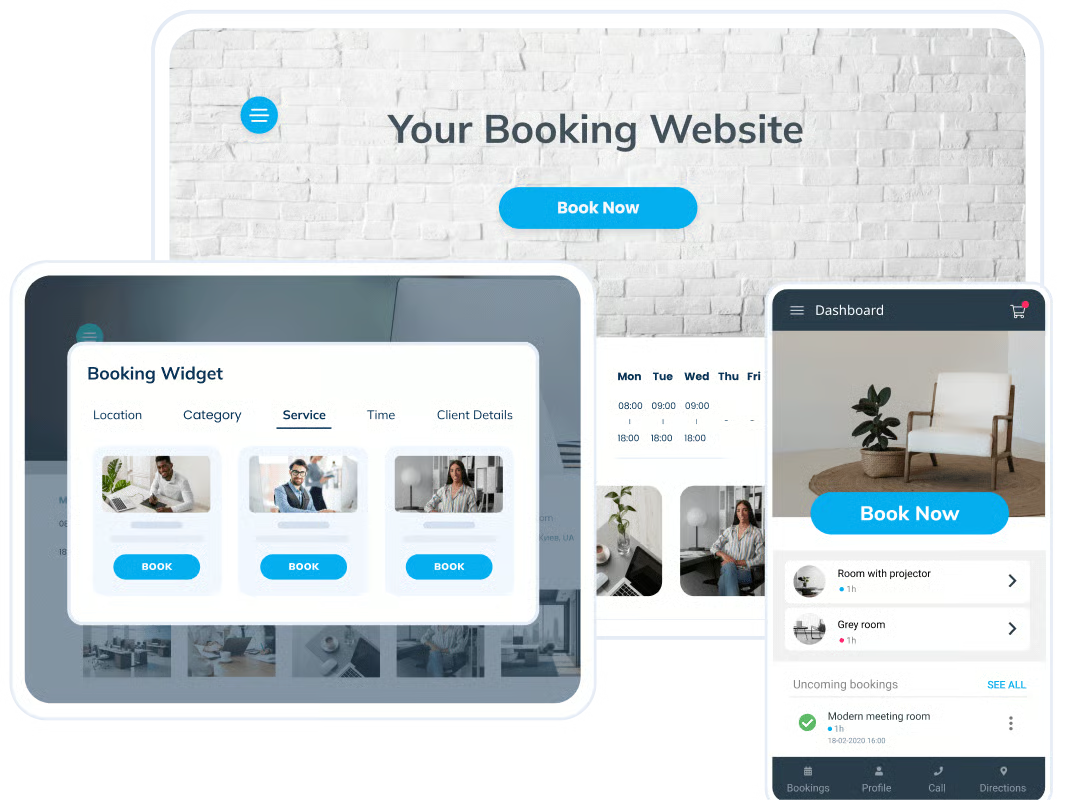
What you get with SimplyBook.me’s free plan
- 50 bookings per month for one user
- Customizable booking website
- One custom feature (choose from intake forms, coupons, or Google Calendar sync)
- Email reminders for clients (SMS is paid)
- Basic client management with booking history
When to upgrade to a paid SimplyBook.me plan
I would upgrade to Basic after reaching the 50-booking limit or when I needed several custom features at the same time. Basic also adds online payments, deposits, tips, point-of-sale tools, five providers, and up to 100 monthly bookings.
Standard is better for a growing team that needs up to 15 providers, 500 monthly bookings, eight custom features, or access to the HIPAA and SAML SSO options. Premium increases the allowance to 30 providers and 2,000 bookings while adding unlimited custom features, accounting integrations, advanced payment tools, and white-label options.
Related: 9 Best Appointment Scheduling Apps for Small Business
SimplyBook.me pricing
Annual subscriptions provide two months free. SimplyBook.me also sells additional booking and SMS-credit packages separately. Prices may vary by location and displayed currency, so remember to confirm the final price at checkout.
- Free: $0 per month for one provider, 50 bookings, one custom feature, a booking website, booking widgets, and the admin app
- Basic: $11.90 per month with annual billing for five providers, 100 bookings, three custom features, a client app, payments, deposits, tips, and POS tools
- Standard: $24.90 per month with annual billing for 15 providers, 500 bookings, eight custom features, a branded client app, HIPAA support, and SAML SSO
- Premium: $49.90 per month with annual billing for 30 providers, 2,000 bookings, unlimited custom features, advanced payment tools, accounting integrations, and footer branding removal
- Enterprise: Custom pricing for tailored booking limits, providers, multilocation access, account management, queue management, high-load API access, custom contracts, white labeling, and data-location selection
My expert opinion on Calendly
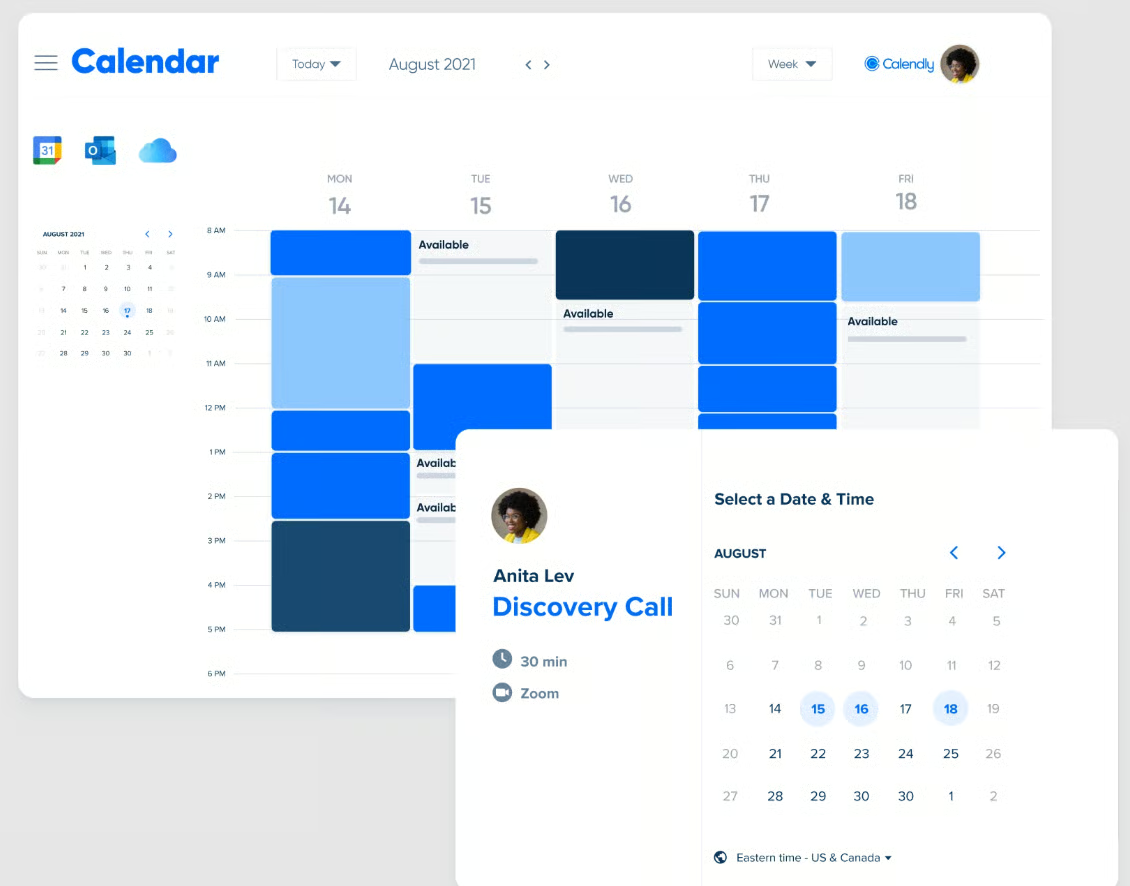
Calendly is my recommendation for professionals who want a dependable scheduler that is quick to configure and easy to share. I can connect a shared calendar, create an event type, and send a booking link in minutes. Its straightforward booking links and automatic time-zone handling make it especially useful for consultants, recruiters, sales representatives, and other professionals who schedule across organizations.
The limitation is that the free plan only includes one event type and one calendar connection, while competitors like Picktime and Setmore allow multiple staff in their free tiers. Calendly also doesn’t support intake forms or payment collection unless you upgrade.
Who should use Calendly:
Calendly is best for solo professionals who primarily schedule one type of meeting and want a simple booking experience without a steep learning curve. It is particularly useful for consultations, interviews, discovery calls, office hours, and other one-on-one meetings.
What you get with Calendly’s free plan
- Unlimited appointments for one user
- One event type
- One calendar connection (Google, Outlook, or Office 365)
- Customizable booking page
- Website scheduling embed
- Video conferencing integrations
When to upgrade to a paid Calendly plan
I’d recommend an upgrade if you need to manage multiple event types, collect payments, or embed a booking widget on your website. Specifically, Standard can check up to six calendars for conflicts and integrates with Stripe, PayPal, HubSpot, Mailchimp, Zapier, and webhooks.
In contrast, Teams is more appropriate for sales, recruiting, or customer-facing departments that need round-robin scheduling, lead qualification, routing forms, Salesforce syncing, or centralized administrative controls.
Calendly pricing
New accounts begin with a 14-day Teams trial before automatically moving to the Free plan unless the user subscribes. Calendly also offers discounted annual Teams pricing for organizations with more than 30 seats.
- Free: $0 for one user, one event type, one calendar connection, unlimited meetings, website embedding, and video conferencing
- Standard: $12 per seat monthly or $10 per seat, per month when billed annually, for unlimited event types, six calendar connections, payments, group and collective meetings, workflows, and integrations
- Teams: $20 per seat monthly or $16 per seat, per month when billed annually, for round-robin scheduling, lead routing, Salesforce syncing, and advanced administration
- Enterprise: Starts at $15,000 per year for SSO, domain control, audit logs, advanced provisioning, dedicated onboarding, and priority support
My expert opinion on Setmore
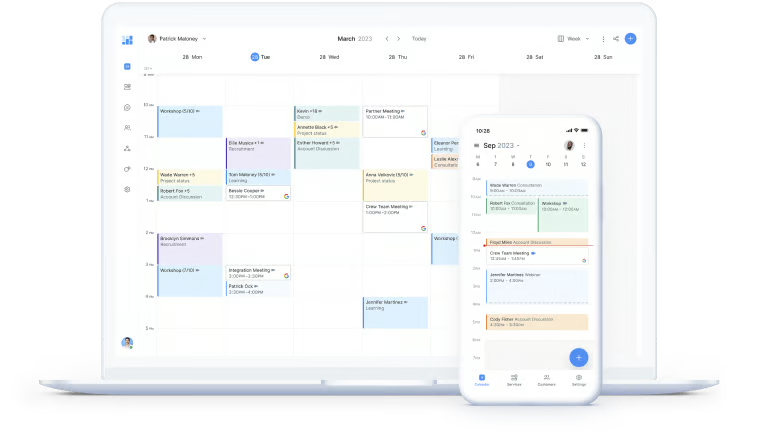
I chose Setmore because it’s one of the free scheduling apps like Appointlet and Picktime that actually support small teams instead of just solo providers. Unlike Square Appointments or Calendly, its free plan supports up to four users, giving each team member an individual profile, login, calendar, and booking link. Customers can also schedule one-on-one services or group classes through a branded online booking page.
I particularly like that Setmore supports Square, Stripe, PayPal, and LawPay on its free plan, allowing businesses to accept online payments or deposits when customers book. The primary limitation is the 200-appointment monthly cap. Businesses also need Setmore Pro for recurring appointments, SMS reminders, video meetings, two-way calendar syncing, and branding removal.
Who should use Setmore:
Setmore is best for salons, wellness practices, tutors, consultants, and other small service teams that need up to four staff calendars and integrated payment collection. It is most suitable for businesses that schedule fewer than 200 appointments per month and can rely on email rather than SMS reminders.
What you get with Setmore’s free plan
- Unlimited appointments for up to four users
- Online booking page with basic customization
- Square payments integration
- Email appointment notifications
- Calendar sync with Google, Outlook, and Office 365
- Client management with booking history
The free plan also includes customer profiles, appointment history, team calendar views, mobile and desktop apps, analytics, website booking widgets, and booking buttons for Google, Facebook, and Instagram.
When to upgrade to a paid Setmore plan
I’d recommend an upgrade to Setmore Pro after reaching the 200-appointment limit or if you need recurring appointments, SMS reminders, video meetings, or two-way calendar syncing. The paid plan is especially useful for businesses that manage a high booking volume or want to connect appointments automatically with Google or Outlook calendars.
Setmore pricing
- Free: $0 for up to four users, 200 monthly appointments, a booking page, group classes, email reminders, customer management, and payment integrations
- Pro: $12 per user, per month or $5 per user, per month with annual billing for unlimited appointments, unlimited users, SMS reminders, recurring bookings, video meetings, two-way calendar sync, and branding removal
My expert opinion on Appointlet
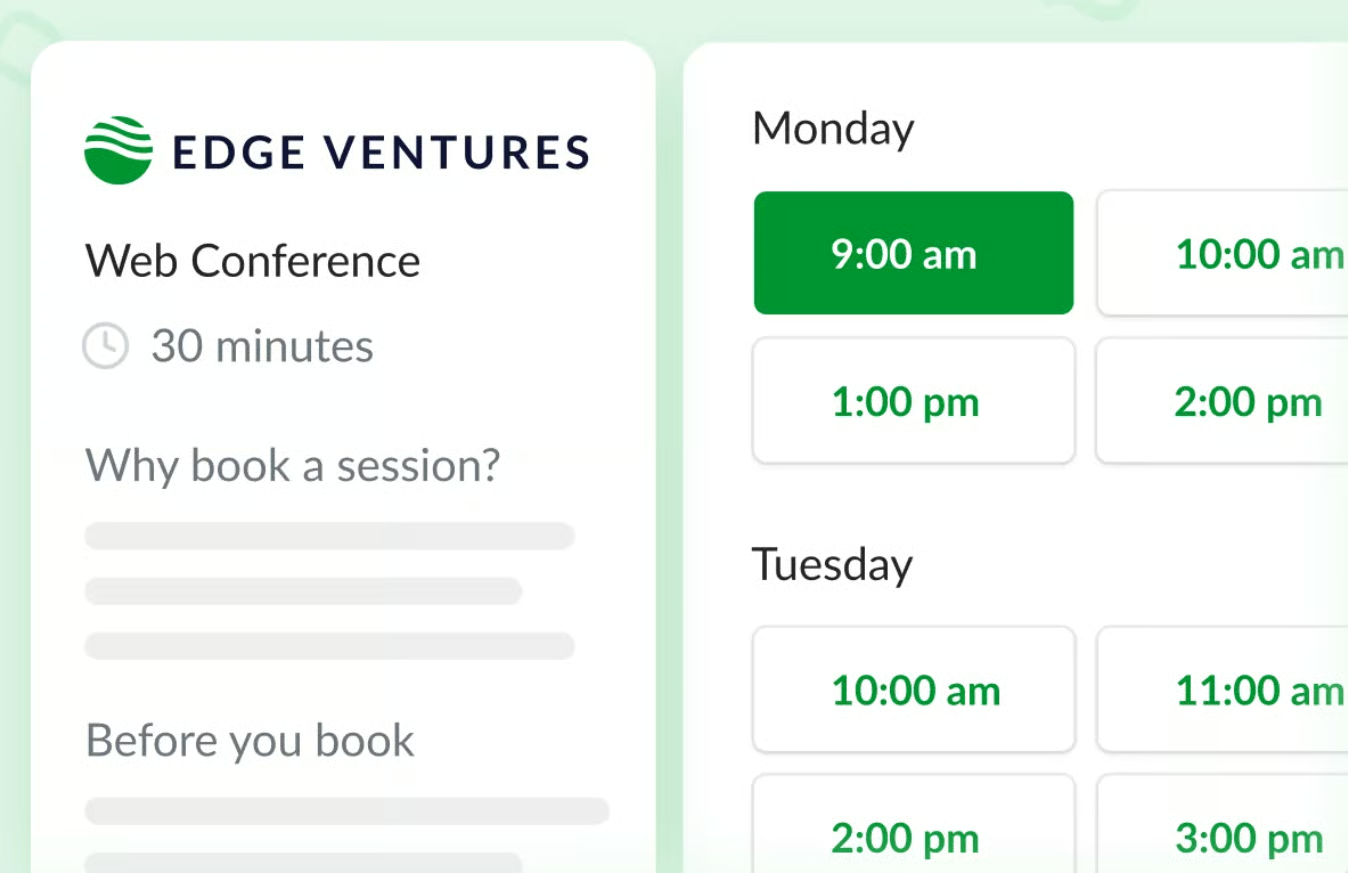
I like Appointlet because it’s designed with virtual meetings in mind. I can connect it to Zoom, Google Meet, Microsoft Teams, Webex, and other conferencing platforms. When someone schedules a meeting, Appointlet can create the video link and include it in the calendar event and confirmation email. That makes it one of the strongest free options for consultants, coaches, or freelancers who run remote sessions.
The free plan also includes intake forms, which let you gather client details before the appointment. However, the 25-meeting monthly limit is restrictive. Businesses also need Premium to accept payments, send automated reminders, remove Appointlet branding, or connect other business applications through Zapier.
Who should use Appointlet:
Appointlet is best for consultants, coaches, recruiters, educators, and other professionals who host a limited number of virtual appointments each month. Its five-member allowance also makes it suitable for small teams with relatively low booking volume.
What you get with Appointlet’s free plan
- Unlimited bookings for up to five users
- Booking page with basic customization
- Intake forms for client details
- Google Calendar and Outlook sync
- Zoom and Google Meet integrations
- Email confirmations and reminders
When to upgrade to a paid Appointlet plan
Upgrade to Premium after reaching the 25-meeting limit or if you need automated reminders, payment collection, multiple scheduling pages, or branding removal. Premium is also necessary for Zapier connections, webhooks, manual booking approval, prefilled form fields, and post-booking redirects.
Businesses with more advanced security, onboarding, or account-management requirements can request Enterprise pricing. However, smaller organizations should compare the cost of each member because Appointlet charges per seat.
Appointlet pricing
- Free: $0 for five members, 25 monthly meetings, one scheduling page, intake forms, calendar connections, and video integrations
- Premium: $12 per member monthly or $9 per member, per month with annual billing for unlimited meetings, automated reminders, payments, Zapier, webhooks, customization, and branding removal
- Enterprise: Custom pricing for advanced security, priority support, quarterly account reviews, and organization-specific needs
How to choose the right free scheduler for your business
When choosing a free scheduling app, go with one that gives you the features you need under its free tier but can still scale with you when your scheduling needs expand. Here’s how I recommend narrowing down the best free plan for your business:
- How many people will use it? If you’re the only one taking bookings, a solo-focused tool like Square Appointments or Calendly will cover the basics without limits on appointments. If you have a small team, Setmore (up to four users free) or Picktime (up to three users free, plus multiple locations) give you more flexibility.
- How many appointments do you expect each month? Not every provider allows unlimited bookings, so if you expect steady traffic, check these limits before committing.
- What type of appointments do you run? Your format matters. If you run virtual sessions, Appointlet stands out with free Zoom and Google Meet integrations. For group classes, either Picktime or SimplyBook.me has the right setup.
- Do you need to take payments? Some providers reserve payment collection for paid tiers. Square Appointments and Setmore are the only ones that let you accept payments on their free plans, which can make a big difference for service providers handling deposits.
- What kind of client information do you need upfront? If you want intake forms, SimplyBook.me and Square Appointments give you ways to collect details during booking. Calendly’s free plan, on the other hand, doesn’t include this feature.
- Do you want a booking page or a full website? All free tools offer a booking page, but SimplyBook.me is the one that gives you a customizable booking website. Picktime also lets you embed scheduling directly on your existing site, which Calendly only allows in its paid plans.
- Do you need extras like SMS reminders or branding removal? All providers include email notifications in their free plans. SMS reminders, branding removal, and advanced integrations are nearly always paid features, so budget for an upgrade if those are must-haves.
Key features to look for in free scheduling software
Not all free scheduling apps give you the same set of tools. But there are certain key features that save you time, reduce no-shows, and make the booking process easier for clients. Here are the essentials I check for when evaluating a free plan:
- Booking page or website: Every provider offers a booking page, but the quality varies. SimplyBook.me lets you build a full booking website, while Picktime allows website embedding for free.
- Appointment limits: Most providers give unlimited bookings on free plans — Square Appointments, Picktime, and Calendly are examples.
- Number of users: Square and Calendly only support one user in the free tiers. Setmore (up to four users) and Picktime (up to three users) stand out for team use without a subscription.
- Notifications and reminders: The best solutions will send you and your customers automatic appointment reminders via text and email. Most free plans include email confirmations, while SMS reminders are nearly always paid-only. Only Square Appointments offers them under a free tier.
- Calendar management options: The best free scheduling software will include an app and an online portal where you can manage your calendar, view events, and make changes. Look for syncing with your main calendar to avoid double-booking.
- Client intake forms: Collecting information up front is helpful for service providers. Square Appointments and SimplyBook.me both support custom fields on free plans.
- Payments: Be sure customers can pay for their appointments online when they book and in person, so they can choose based on their preferences. If you want to charge at booking, only Square Appointments and Setmore include payments in their free plans. Others reserve payment collection for paid tiers.
- Time-zone conversion: Automatic detection is essential if you book across regions. For example, Calendly and Appointlet each handle time zones reliably.
- Branding and customization: All free plans include provider branding. If you want a fully branded booking experience, plan on upgrading.
How I evaluated the best free scheduling software
When comparing free appointment scheduling apps, I used a structured scoring system based on four categories: free plan limitations, appointment booking tools, back-office features, and overall expert score. I personally signed up for and tested each provider’s free plan to evaluate setup, ease of use, and functionality.
After testing and scoring each scheduling app using this updated rubric, Square Appointments came out on top. It earned the highest overall score thanks to unlimited bookings, integrated payments, and ease of use in its free plan.
Here is the breakdown of my evaluation criteria when reviewing the best free scheduling software:
- Free Plan Limitations (30%): I looked at whether features were locked behind paid plans, how many users were included, and whether bookings were capped.
- Appointment Booking Tools (30%): I checked for must-have scheduling features like booking pages, group/class options, intake forms, deposits/no-show protection, calendar sync, and video integrations.
- Back Office Features (20%): I evaluated client management, payments, reminders, and software integrations that help businesses run day to day.
- Expert Score (20%): I factored in ease of use, overall value for money, and provider popularity, as well as my own experience signing up, testing, and comparing these tools side by side.
Frequently asked questions (FAQs)
Is there a completely free appointment scheduling app?
Yes. Each provider in this guide offers a free plan with no required monthly subscription. However, free plans may restrict users, locations, event types, custom features, or monthly bookings. Square Appointments also charges transaction fees when you accept a payment, even though the scheduling plan itself is free.
Which free scheduler is best for a small team?
Setmore is my recommendation for a small team because its free plan supports up to four users, 200 appointments per month, payment acceptance, email reminders, and a team booking page. Picktime is another option for teams that need to manage more than one location.
Can free scheduling software accept payments?
Some free scheduling platforms support payments, but availability and processing fees vary. Square Appointments includes integrated online and in-person payment processing, while Setmore also lists payment acceptance as part of its free plan. Review each processor’s transaction fees and deposit features before choosing a platform.
What happens when I outgrow a free scheduling plan?
You can usually upgrade without rebuilding your account or booking page. The most common reasons to upgrade are adding users, creating more event types, exceeding monthly booking limits, removing provider branding, enabling advanced reminders, or connecting additional calendars and integrations. Compare the paid-plan cost before signing up so you know how much future growth will cost.
Bottom line
The best free appointment scheduling software should make it easy for customers to book while giving you enough control over your availability, services, reminders, payments, and client information. Before choosing a platform, compare its free-plan restrictions with your expected appointment volume, team size, and the features you are most likely to need as your business grows.
Square Appointments is my top choice because it combines unlimited scheduling with a booking website, customer management, payment processing, and automated communications in one platform. Based on my testing and comparison, it provides the strongest overall value for a solo service provider that wants to manage bookings and payments without paying a monthly software fee. If you want to know more, visit Square Appointments to create a free account.
You might also like
Vagaro vs Square Appointments: Comparison
7 Best Shared Calendar Apps for Small Business
Best Free POS Software in 2026
