







To help you find the right one, I ranked the top solutions based on price, waiting room tools, security features, user-friendliness for professionals and patients, and recording and storage capabilities. Based on my expert evaluation, these are the six best HIPAA video conferencing platforms available.
- Webex Meetings: Best overall HIPAA-compliant video conference software
- VSee: Best for platform customization and white-labeling
- Zoom for Healthcare: Best for collaboration and medical device integration
- Google Meet: Best for scalable video conferencing
- GoTo Meeting for Healthcare: Best for artificial intelligence
- doxy.me: Best free HIPAA-compliant video conferencing
- Which are the best HIPAA-compliant video conferencing solutions?
- Webex Meetings: Best overall HIPAA-compliant video conference software
- VSee: Best for platform customization and white-labeling
- Zoom for Healthcare: Best for collaboration and medical device integration
- Google Meet: Best for scalable video conferencing
- GoTo Meeting for Healthcare: Best for artificial intelligence
- doxy.me: Best free HIPAA-compliant video conferencing
- What are the key security features to look for in a HIPAA-compliant video conferencing platform?
- How to choose a HIPAA-compliant video platform
- Frequently asked questions (FAQs)
- Bottom line
Which are the best HIPAA-compliant video conferencing solutions?
| Best HIPAA-compliant video software | Monthly starting price (per user) | Key features | Rating (out of 5) |
|---|---|---|---|
 | $14.50 |
| 4.78 |
| Visit Webex Meetings | |||
 | $29 |
| 4.58 |
| Visit VSee | |||
 | $16.99 |
| 4.47 |
| Visit Zoom for Healthcare | |||
 | $8.40 |
| 4.43 |
| Visit Google Meet | |||
 | $14 |
| 4.28 |
| Visit GoTo Meeting | |||
 | $35 |
| 3.78 |
| Visit doxy.me | |||
Webex Meetings: Best overall HIPAA-compliant video conference software
My expert opinion
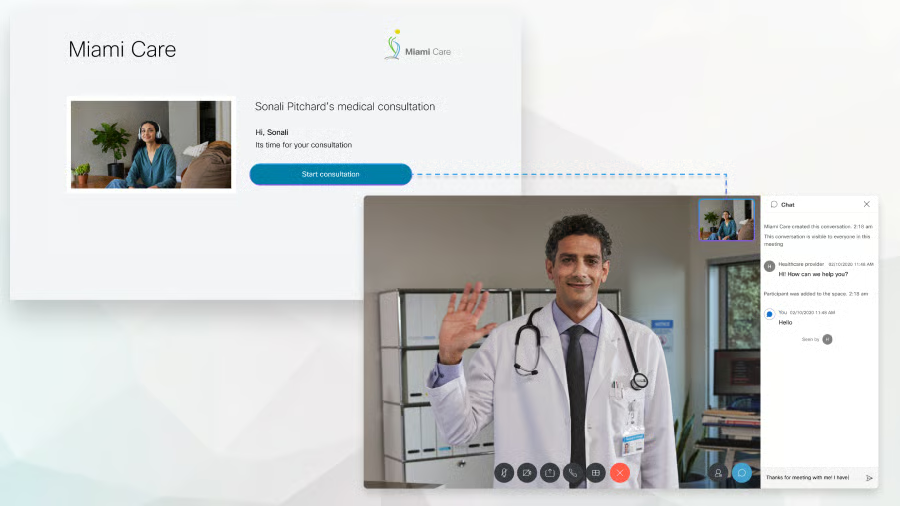
Webex Meetings stands out as the best all-around choice when you need a HIPAA-compliant video conferencing solution because it balances security, features, and reliability. For healthcare providers that must protect PHI, having an established vendor like Cisco that will sign a BAA, that has undergone self-assessments and offers strong encryption and administrative safeguards, makes compliance more attainable.
But, if you run a small clinic or are an individual practitioner, the free or lower-tier plans may not be sufficient for your needs. To ensure full HIPAA compliance and longer meetings, you will need to invest in a higher-tier or enterprise plan and enable all recommended security controls. In this case, it is more beneficial for solo practitioners to choose a platform specifically designed for healthcare providers, such as doxy.me.
Pricing
| Plans and pricing (per user) | Webex Free | Webex Meet | Webex Suite | Enterprise |
|---|---|---|---|---|
| Monthly | $0 | $14.50 | $25 | Contact sales |
| Annual | $12 | $22.50 |
Standout features
- Automatic transcription: Create HIPAA-compliant transcripts for documentation and follow-up, ensuring privacy safeguards are maintained.
- Secure file sharing: Share sensitive health documents like intake forms, lab results, or treatment plans directly during meetings, with notifications sent to participants.
- Instant Connect: Allow patients to enter virtual visits directly from their medical records system with minimal friction (no extra logins), ensuring secure scheduling, patient identification, and streamlined workflows.
VSee: Best for platform customization and white-labeling
My expert opinion
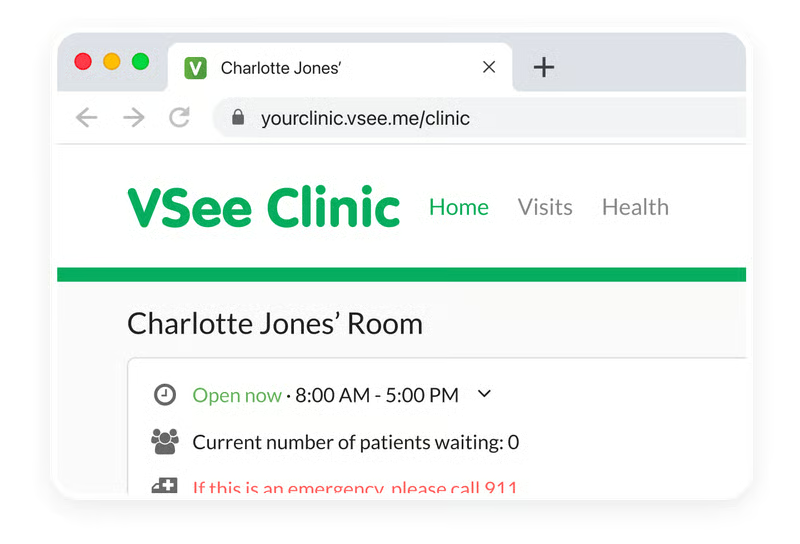
VSee is a HIPAA and BAA-certified solution that offers customizable products like Messenger, APIs, and the VSee Clinic. These can function as stand-alone healthcare solutions or be embedded into your website with single sign-on. This means you can create a white-labeled virtual clinic experience featuring custom subdomains, analytics dashboards, and SMS notifications. VSee Health also provides 24/7 care through its iDoc Telehealth solutions.
At the same time, VSee has specific software requirements, supporting only Chrome, Safari, and Microsoft Edge, excluding Internet Explorer. Additionally, their Premium plan has a $200 setup fee, which may be too costly for solo providers on a budget. For a more affordable option, consider Google Meet, starting at $8.40 per user per month, offering scalability and 30GB of cloud recording storage.
Pricing
VSee Health plans
| Plans and pricing (per provider) | Free | Plus | Premium* | Enterprise |
|---|---|---|---|---|
| Monthly | $0 for an individual | $29 | $49 | Contact sales |
*The Premium plan has a $200 one-time setup fee and is only for teams of up to 50. Group pricing is also available for more than three providers.
VSee Messenger plans
| Plans and pricing (per provider) | Free Messenger | Pro Messenger | Device Streaming |
|---|---|---|---|
| Monthly | $0 | $49 | $299 |
Standout features
- Patient portal: Give patients the ability to communicate with your clinic, including scheduling appointments, viewing visit notes, and filling out intake forms.
- HD group video: VSee’s video conferencing tools are encrypted with AES 256-bit encryption, allowing one-on-one or group conversations. HIPAA-compliant video recording with server storage on local drives or via the cloud is also available for an additional fee.
- Personalized weblinks: Make it easier to refer your patients to specific clinicians with customizable meeting links for each provider.
Zoom for Healthcare: Best for collaboration and medical device integration
My expert opinion
Zoom for Healthcare is an excellent video conferencing platform for organizations, offering HIPAA compliance, ease of use, and seamless integration with medical devices. Zoom Rooms enhance workflows in patient care, while the Zoom AI companion supports non-clinical collaboration, such as team meetings and training.
Unfortunately, solo practitioners looking for a free plan for clinicians should choose a different provider because Zoom requires an account with at least one paid license to enter a BAA. If you’re looking for a free plan that meets HIPAA requirements, consider VSee. This provider offers a free plan that comes with a BAA agreement.
Pricing
| Plans and pricing (per user) | Pro | Business, Business Plus & Enterprise |
|---|---|---|
| Monthly | $16.99 | Contact sales for pricing |
| Annual | $159.90 |
Standout features
- Call queues: Configure routing of your incoming calls to designated users or offices, such as reception, billing, or the pharmacy.
- Access controls: Owners, admins, and members have multilayered access control with passwords or waiting rooms to protect meetings. Hosts can also lock a session in progress.
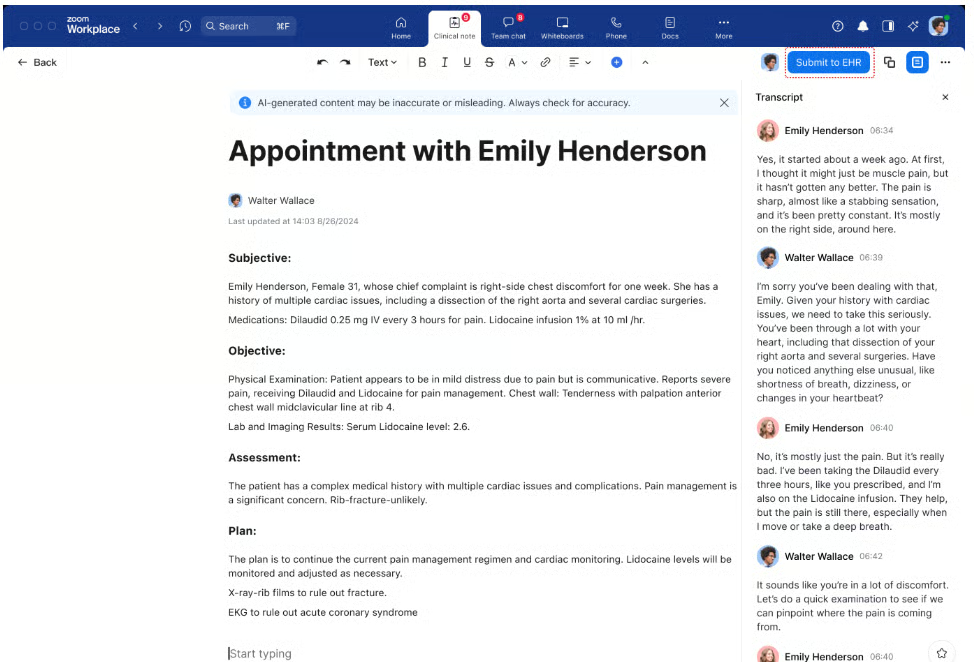
- AI notes: Use the Zoom AI companion to generate notes from patient visits directly within the Workplace platform from meeting or call transcriptions.
Google Meet: Best for scalable video conferencing
My expert opinion
Google Meet is the most scalable video conferencing software compared to other platforms mentioned in this guide, thanks to its extensive data storage capacity and cost-effective monthly pricing. To ensure compliance with HIPAA standards, Google Meet incorporates built-in encryption, verification, and controls designed to protect your data and patient health information. Additionally, Google safeguards the flow of data across devices and its storage in the cloud.
With data plans ranging from 30GB to 5TB, you have ample space for patient data retention and scalable growth. However, it is important to note that not all versions of Google Meet are HIPAA-compliant. Therefore, those seeking a more customizable and healthcare-specific service may want to consider providers such as VSee or doxy.me.
Pricing
| Plans and pricing (per user) | Starter | Standard | Plus | Enterprise Plus |
|---|---|---|---|---|
| Monthly | $8.40 | $16.80 | $26.40 | $42 |
| Annual | $7 | $14 | $22 | $35 |
Standout features
- Recorded meetings: Record staff meetings or healthcare training videos and store non-PHI meetings in Google Drive for easy access and sharing within a hospital or provider network.
- Quick deployment: Health crises can arise unexpectedly, and providers need resources to adapt. Google offers an accessible suite of affordable cloud-based services for delivering healthcare anytime, anywhere.
- Private video consultations: Virtual visits expand your availability and provide patients with more convenient consultation options. Create custom waiting rooms and meeting details to schedule appointments and maintain confidentiality.

GoTo Meeting for Healthcare: Best for artificial intelligence
My expert opinion
GoTo Meeting for Healthcare is the best HIPAA-compliant video conferencing solution for appointment scheduling, thanks to its AI features and seamless healthcare integrations. No matter your practice, GoTo Meeting offers specialized integrations, including Curve Dental and Epic software. It also includes AI functionalities such as meeting summaries and note-taking, which are beneficial for capturing nonclinical information and calls.
However, not all plans provide the same features. To access AI tools, organizers must upgrade to a higher-tier plan. Additionally, professional onboarding and training are only available with the enterprise plan. Small businesses or solo professionals seeking a more user-friendly platform might want to consider Zoom for Healthcare.
Pricing
| Plans and pricing (per organizer) | Professional | Business | Enterprise |
|---|---|---|---|
| Monthly | $14 | $19 | Contact sales |
| Annual | $12 | $16 |
Standout features
- Diagnostic reports: Meeting disruptions can waste time and delay appointments in various ways, whether caused by poor video quality or dropped calls. Use personalized reports to identify and diagnose any issues with audio and video quality.
- In-session chat: Apart from software integrations, you can use chats to communicate with team members or patients during meetings. You can also instantly share files and send updates without the hassle of follow-up emails or messages.
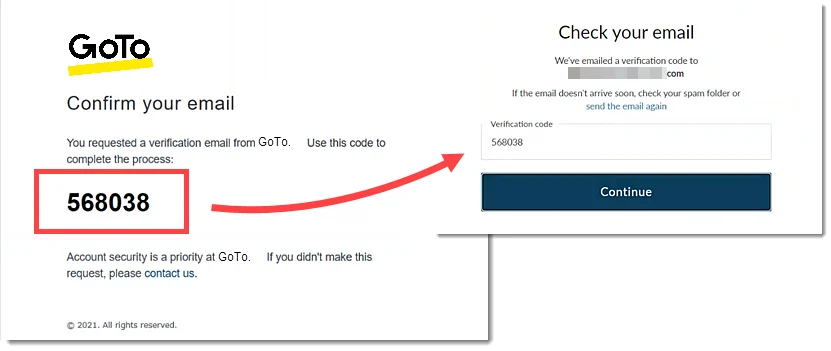
- Password-protected meetings: Add an extra layer of authentication to secure patient appointments and staff meetings. Generate one-time passwords for each participant to verify identities and restrict access to sensitive healthcare records.
doxy.me: Best free HIPAA-compliant video conferencing
My expert opinion
doxy.me is a browser-based, HIPAA-compliant video conferencing platform that offers a free plan with unlimited sessions and no time limits. Its user-friendly interface requires no software installation or app download, making it accessible for older and non-tech-savvy users. The platform also supports both individual and group calls, which is beneficial for practitioners in clinics and mental healthcare providers.
However, the main drawback of doxy.me is its mobile-focused design. While the company is currently developing a telehealth app for its paid plans, clinicians who need remote telehealth options for both patients and providers should consider VSee. It offers a free, HIPAA-compliant app for scheduling and conducting telehealth consultations.
Pricing
| Plans and pricing (per user) | Lite-user | Singel-user | Multi-user | Custom solution |
|---|---|---|---|---|
| Monthly | $0 | $35 | $50 | Contact sales |
| Annual | $29 | $42 |
Standout features
- Live chat: Use live chat to enhance patient engagement and remote consultations. This feature works in conjunction with video conferencing, allowing you to communicate with patients directly through your clinician dashboard.
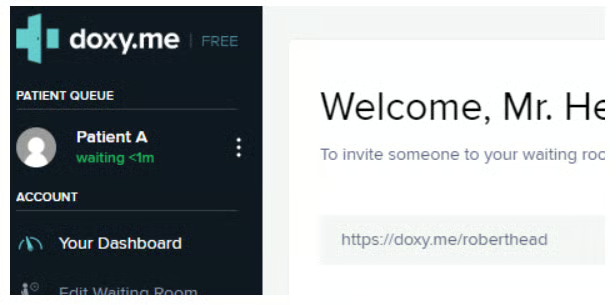
- Customizable waiting room: You can customize this virtual space with messages, pictures, and videos to make patients feel more comfortable. Show certifications and personalize your information so patients are assured they’re in the right place.
- Patient queue: Busy providers and clinics would benefit from the patient queue. Use this feature to show who’s checked in, move between sessions, or click the message button to send quick updates to those next in line.
What are the key security features to look for in a HIPAA-compliant video conferencing platform?
HIPAA-compliant video conferencing platforms are built to safeguard patient privacy and secure sensitive health information. Key features to consider include:
- Data encryption: End-to-end encryption ensures that video, audio, and file sharing is securely protected both during transmission and while stored. This technology is designed to prevent unauthorized access, safeguarding your data from potential breaches.
- Access controls: Look for options that offer password protection for meetings, role-based permissions to manage participant access, and waiting rooms to ensure that only authorized individuals can join the session. These features help create a safer and more organized virtual environment for discussions.
- Business Associate Agreement (BAA): A legally binding agreement in which the service provider commits to protecting PHI and adhering to the regulations outlined by HIPAA. This ensures that sensitive patient data is handled with the utmost care and in compliance with legal standards.
- Multi-factor authentication (MFA): Add an extra layer of protection by requiring multiple forms of verification before gaining access. This process goes beyond merely entering a password, adding an additional layer of protection to safeguard accounts and sensitive information.
- Audit trails and logging: To ensure HIPAA compliance, it is crucial to implement robust data governance protocols and evaluation metrics that monitor system access. These measures should accurately track who accessed the system, when they did so, and what actions were taken during each session.
Some platforms go further by obtaining third-party security certifications like HITRUST CSF or TRUSTe Privacy. These show that the provider undergoes regular audits, breach reporting, and compliance checks to uphold HIPAA standards.
For covered entities, such as healthcare providers, health plans, and clearinghouses, these features aren’t optional; they’re vital for maintaining patient trust, meeting regulatory requirements, and avoiding costly data breaches.
How to choose a HIPAA-compliant video platform
When choosing a HIPAA-compliant video conferencing platform, there are several things to consider, including your specialization, the cost, and the overall experience.
Evaluate medical team & patient needs
Before settling on a provider, consult your team and brainstorm from an administrator’s and patient’s point of view. This will give you a better idea of the specific features you need. For example, if you’re a geriatrician treating aging clients who aren’t always the most tech-savvy, it would be best to use a user-friendly solution that doesn’t require any software download or installation.
Compare cost & pricing
While cost shouldn’t be the only factor in your decision, it is crucial to consider it. Have a working budget before you begin scouting so you know what’s within your price range from the get-go. Small practices with limited funds can benefit from free trials and plans to understand how a platform works. At the same time, always be mindful of which platforms provide HIPAA-compliant free trials.
Research software integrations
Take stock of your current systems and commonly used software. Some providers offer cloud storage, patient management, and business phone solutions if you need a new system. If you continue using your current software, check which video conferencing solutions integrate with relevant CRMs, patient management, and billing services.
Check safety & security
Ensure your chosen platform upholds the HIPAA security rule. For example, the platform should offer end-to-end encryption for video transmission, controlled access to virtual meetings, and privacy protection methods. On the back end, the platform should also receive regular audits and cybersecurity checks to detect data breaches or tampering.
Consider data storage
Many video conferencing solutions offer note-taking, call recording, and access to patient records saved on a local server or cloud storage system. Depending on your practice’s or provider network’s size, this data can add up over time, so you should choose scalable video conferencing solutions to ensure that your storage capabilities match the speed of your data collection.
How I evaluated the best HIPAA-compliant video conferencing solutions
To assess the best HIPAA-compliant video conferencing platforms, I considered each platform’s subscription costs and the availability of discounts. I also considered whether it carries essential features, offers niche tools, and is user-friendly. My evaluation concluded with each service provider’s support channels and my expert opinion on its overall value. Review the tabs below to learn more:
To determine affordability, I considered the cost of each HIPAA-compliant video software platform’s base-level and second-tier subscription plans and compared them with market rates. I awarded higher points to providers offering competitive plans and discounts for annual billing or volume-based usage.
I considered whether platforms had password-protected meeting rooms and appointment scheduling capabilities. Since health professionals require interactive conversations and high-level confidentiality, I assessed the availability of desktop screen sharing and assigned more points to service providers with robust security measures.
The specialized features I considered were meeting recording, robust integrations, and compliance with GDPR requirements. I also administered top points for HIPAA video conferencing software with end-to-end encryption.
When reviewing solutions specific to video conferencing, I considered HIPAA-compliant software providers and their support channels when determining my overall rating. Providers offering email, phone, and live chat support received higher points. I also considered the hours these channels are active and operational, and those with 24/7 support ranked higher than those without.
When determining the best free HIPAA-compliant video conference software, I considered the skills and expertise required to set up and operate it. I also assessed whether the providers have an intuitive interface that makes it easy for patients and medical teams to use the service.
I assessed each HIPAA video conferencing provider’s overall performance and quality by considering its standout features and value for money. The user-friendliness and popularity of each solution formed part of my criteria.
Frequently asked questions (FAQs)
What are common HIPAA violations in telehealth video calls?
Common HIPAA violations include unauthorized access from compromised devices, lack of encryption, and using insecure platforms. Improper handling of PHI occurs when recording calls without consent, sharing sensitive info on screens, or discussing patient data publicly. Insufficient staff training on HIPAA and telehealth can also lead to violations and legal repercussions.
Do I need a BAA for HIPAA-compliant video calls?
Having a Business Associate Agreement (BAA) is essential for HIPAA-compliant video calls with third-party services. This agreement ensures that vendors comply with HIPAA regulations when handling protected health information (PHI). For example, healthcare providers must review and accept the BAA before using services for any activities involving PHI.
Which HIPAA video platforms are free?
While most HIPAA-compliant video conferencing platforms aren’t completely free, some offer free subscription tiers with basic features. For example, both VSee and doxy.me provide free tiers of their platform for secure video calls.
Bottom line
Telehealth solutions make healthcare more accessible and cost-effective while upholding high standards of privacy and confidentiality. While many software providers offer virtual healthcare solutions, not all platforms are suitable for small businesses. Therefore, I evaluated several HIPAA-compliant video conferencing platforms to find affordable, easy-to-use software that facilitates real-time collaboration with patients, providers, and medical staff.
Overall, I chose Webex Meetings as the best HIPAA-compliant video conferencing software due to its strong security features and healthcare-specific integrations. It offers enterprise-level security and collaboration tools suitable for providers wanting to protect patient data while delivering effective telehealth services. For more details, reach out to the Cisco Webex sales team to find the right plan for you.
