







When it comes to protecting sensitive information, choosing the best HIPAA-compliant cloud storage provider can make a big difference. Look for services that seamlessly integrate with your existing tools and include essential security features like audit logs and strong encryption. Also, consider advanced sharing options that allow you to lock files with passwords, receive notification alerts, and enjoy unlimited uploads and storage.
Based on my expert review of several HIPAA-approved cloud storage providers, here are the six top choices and their primary use cases.
- Box: Best overall HIPAA-compliant cloud storage provider
- Google Drive: Best for low-cost cloud storage solutions
- Microsoft OneDrive: Best for MS Teams users
- Tresorit: Best for virtual collaboration
- Sync.com: Best for encryption and advanced sharing options
- Dropbox Business: Best for accessible cloud storage
- Why HIPAA compliance matters for cloud storage
- Comparing the best HIPAA-compliant cloud storage providers
- Box: Best overall HIPAA-compliant cloud storage provider
- Google Drive: Best for low-cost cloud storage solutions
- Microsoft OneDrive: Best for MS Teams users
- Tresorit: Best for virtual collaboration
- Sync.com: Best for encryption and advanced sharing options
- Dropbox Business: Best for accessible cloud storage
- Frequently asked questions (FAQs)
- Bottom line
Why HIPAA compliance matters for cloud storage
But before we discuss the providers, I wanted to give some more detailed information about what HIPAA is and why it matters when choosing cloud storage. HIPAA compliance refers to federal regulatory standards concerning the lawful use and disclosure of protected health information (PHI) in the United States.
HIPAA compliance is regulated by the Department of Health and Human Services (HHS), and these national standards are essential for healthcare entities like health insurance companies and clinics. Therefore, when healthcare providers or businesses that handle PHI need to store or share data, it is crucial to select HIPAA-compliant cloud storage providers that can protect PHI from disclosure.
Comparing the best HIPAA-compliant cloud storage providers
| HIPAA approved cloud storage | Monthly starting price | Key features | Rating out of 5 |
|---|---|---|---|
 | $20 |
| 4.68 |
| Visit Box | |||
 | $8.40 |
| 4.63 |
| Visit Google Drive | |||
 | $5 |
| 4.38 |
| Visit Microsoft OneDrive | |||
 | $24 |
| 4.31 |
| Visit Tresorit | |||
 | $8 |
| 4.29 |
| Visit Sync.com | |||
 | $11.99 |
| 3.84 |
| Visit Dropbox Business | |||
Box: Best overall HIPAA-compliant cloud storage provider
My expert opinion
Box is the top choice for HIPAA-compliant cloud storage, thanks to its unlimited storage options and extensive integration with third-party applications. It connects with over 1,500 apps, offering teams a seamless content experience. Explore the Box App Center, and if your favorite apps aren’t listed, you can use Zapier to link Box with other popular applications.
Box also provides file storage and sharing, content management, collaboration, e-signature, and workflow solutions in a single platform. Its enterprise plans comply with various regulations, including HIPAA, HITECH, and FedRAMP. Additionally, these plans offer security features such as device trust, password policy enforcement, and document watermarking.
At the same time, Box works best for teams since the business and enterprise plans require a minimum of three users per plan. If you’re a solopreneur or professional who needs a single-user account, check out Sync.com. Its solo professional plan is priced at $20 per user, monthly, and comes with 6TB of storage, custom branding, and HIPAA compliance.
Pricing
| Plans and pricing (per user)* | Monthly | Yearly |
|---|---|---|
| Business | $20 | $15 |
| Business Plus | $33 | $25 |
| Enterprise | $47 | $35 |
| Enterprise Plus | Only offers annual billing | $50 |
| Enterprise Advanced | Contact sales for pricing | #colpsan# |
*Box also offers free, individual, and team plans, but they are not HIPAA compliant and don’t offer advanced security features; business plans require a minimum of three users.
Standout features
- Box AI: Use artificial intelligence (AI) to summarize documents, create meeting agendas, and outline action items. It can also help generate content by drafting press releases and writing personalized sales emails.
- Box Notes: Align everyone and synchronize efforts with Box Notes. It allows users to share ideas and take live notes online to enhance productivity and teamwork.
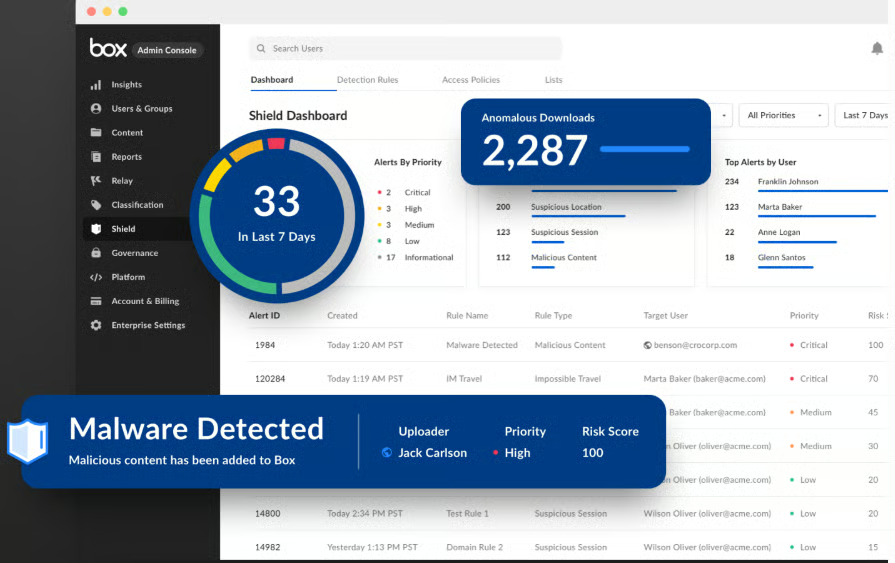
- Box Shield: Protect your files by establishing a classification system for sensitive data with permissions and access policies. Native threat detection also alerts you in case of a data breach.
Google Drive: Best for low-cost cloud storage solutions
My expert opinion
Based on its features, Google Drive offers some of the best pricing for cloud storage, making it an excellent choice for existing Google Workspace users. Although Google provides a free personal plan with 15GB of secure cloud storage, only paid plans are HIPAA-compliant. Specifically, Google Workspace business plans have flexible pooled storage per user shared across the organization, starting at 30GB on the base plan for $8.40 a month.
Google Workspace supports HIPAA compliance with a few caveats. For example, Google Workspace customers subject to HIPAA must sign a Business Associate Agreement (BAA) with Google, and this covers other Google apps, such as Gmail, Google Drive, Google Calendar, and Google Vault. Google Meet also offers HIPAA-compliant video conferencing for those who want a completely integrated Google Workspace solution.
Overall, Google Drive provides excellent productivity tools, generous storage, and seamless cross-platform integration. However, it does not offer password protection for shared files. If you require additional security, consider using Sync.com. It features advanced sharing options, including restricted downloads and password-protected sharing.
Pricing
| Plans and pricing (per user) | Starter | Standard | Plus | Enterprise Plus |
|---|---|---|---|---|
| Monthly | $8.40 | $16.80 | $26.40 | $42 |
| Yearly | $7 | $14 | $22 | $35 |
Standout features
- File syncing: Easily sync files from your computer, mobile devices, and tablets without manually transferring or uploading. Sync photos, videos, documents, and other files with Google Drive, and choose which files to sync.
- Advanced search: Google Drive’s advanced search features are useful when you have many files in your drive. You can search for files and folders that contain specific words in the title or content.
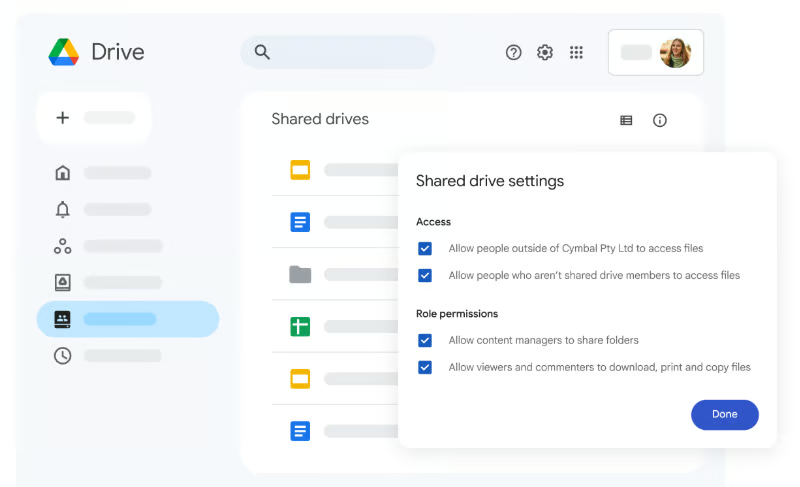
- Shared drive: Store, access, and manage all of your files in one shared space. This feature also allows you to configure user permissions and access controls easily.
Microsoft OneDrive: Best for MS Teams users
My expert opinion
Some HIPAA-compliant file storage providers are ideal for integration with various workspace suites. In this case, Microsoft OneDrive is the best option for MS Teams users due to its seamless integration with Microsoft products. With a Microsoft 365 subscription, users benefit from advanced protection features such as ransomware detection and recovery, OneDrive restore options, custom passwords, and personal vaults.
Microsoft implements a standard business associate agreement (BAA) for users who handle protected health information (PHI). The services included have been subjected to audits by accredited independent auditors to obtain certifications such as the Microsoft International Organization for Standardization/International Electrotechnical Commission (ISO/IEC) 27001 certification and the HITRUST Common Security Framework (HITRUST CSF) certification.
Unfortunately, Microsoft OneDrive does not offer monthly contracts, only annual contracts. If you’re looking for a feature-rich cloud-storage solution with monthly billing, check out Google Drive. It offers seamless integration with Google apps, providing a cloud-storage solution with access to voice-over-internet-protocol (VoIP) and productivity services.
Pricing
| Plans and pricing (per user)* | OneDrive for Business | Microsoft 365 Business Basic | Microsoft 365 Business Standard |
|---|---|---|---|
| Annual | $5 | $6 | $12.50 |
*Subscriptions are paid annually, and prices do not include taxes.
Standout features
- Personal vault: This is OneDrive’s special folder where you can store your sensitive and highly confidential files. It’s password-protected, and you can add a personal identification number (PIN), face scan, or fingerprint for extra security.
- Document scanning: Use your phone as a hand-held document scanner and store digital copies of all critical files, such as receipts, notes, and business cards, in OneDrive.
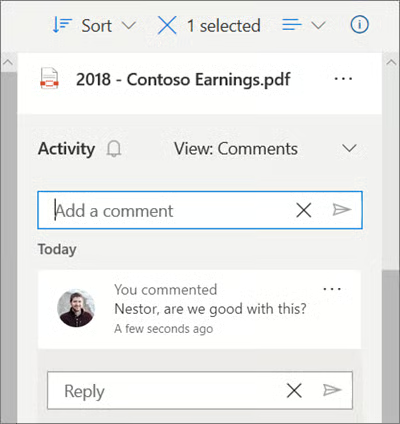
- Comment notifications: Get notified when someone adds comments to a document or replies to a comment on files stored in OneDrive. If this is too distracting, simply turn off this feature.
Tresorit: Best for virtual collaboration
My expert opinion
Among all the providers on this list, Tresorit stands out as my top choice for healthcare practitioners who prioritize secure virtual collaboration. It offers several features that enhance oversight and transparency when sharing documents in the cloud. These include cooperative links and audit logs, which enable users to track changes made to documents, identify who made those changes, and view when they occurred.
With detailed security and administrative policies, you can customize your workspace to determine which users have access to specific resources. This feature is excellent for ensuring secure data stewardship. In addition to offering HIPAA-compliant cloud storage, Tresorit provides Engage plans that include access to virtual data rooms (VDR). These VDRs can serve as portals for patients or providers to share important documents, such as onboarding forms, or to manage internal audits.
However, Tresorit does have limitations in file capacity compared to some other providers on the list. Even its Enterprise plan caps the file upload size at 20 GB. Additionally, none of its plans offer unlimited storage. If you are looking for subscription options that can handle larger data requirements, consider Box. They provide unlimited storage and file uploads of up to 50 GB and 150 GB on the Enterprise plans.
Pricing
| Plans and pricing (per user)* | Business* | Professional | Enterprise |
|---|---|---|---|
| Monthly | $24 | $33.99 | Contact sales for pricing |
| Yearly | $19 | $27.49 |
*Minimum of three users
Standout features
- Cooperative links: When working with clients or patients, Tresorit enables you to share secure links to documents, so you can edit them without needing separate links and file requests.
- Version history: Keep a record of previous versions of your files in the cloud, which enables you to recover or restore content when needed, within the limit of versions allowed by your plan.
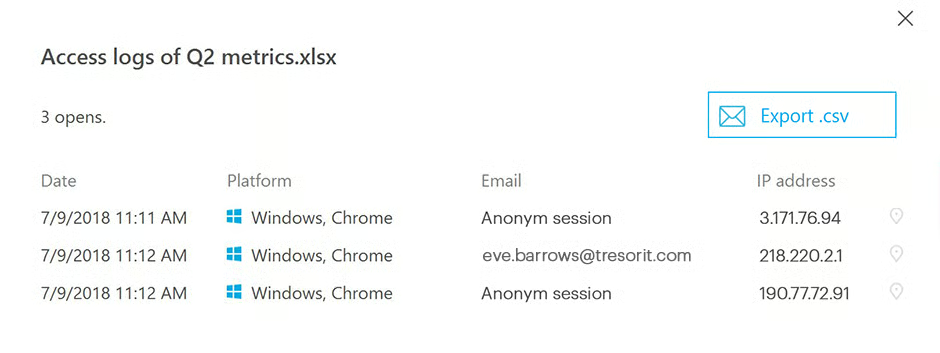
- Access logs: When sharing content via links, users with a Solo, Business, or Enterprise account can enable tracking to monitor link opens and have the option to revoke a link if the information or access is compromised.
Sync.com: Best for encryption and advanced sharing options
My expert opinion
Of all the providers on this list, Sync.com offers standout security and sharing options that effectively prevent unauthorized access to files. With its zero-knowledge encryption policy, even users on the free plan can rest assured that their stored files are kept private, as Sync.com does not have access to the encryption keys necessary for decrypting any data. This ensures that your information remains secure and protected.
On the paid plans, Sync.com also provides secure, HIPAA-compliant file storage with excellent file-sharing features like password protection, download limits, and expiration dates. These features give users complete control over their shared data. However, businesses seeking to integrate various applications may find other platforms with more robust integration options better suited to their needs.
Specifically, I recommend Dropbox Business, which integrates with popular productivity and team collaboration apps like Slack and Zoom. For more information on how cloud storage solutions can integrate with team communication platforms, read our best video conferencing software guide.
Pricing
| Plans and pricing (per user)* | Monthly | Yearly |
|---|---|---|
| Pro Solo | $10 | $8 |
| Pro Solo Professional | $24 | $20 |
| Pro Teams Standard | $8 | $6 |
| Pro Teams + Unlimited | $18 | $15 |
| Enterprise | Contact sales for pricing | |
*Sync.com also offers a personal account for individual users, but it isn’t HIPAA compliant.
Standout features
- Activity logs: Stay up-to-date with all of the activity in your account, making it easier to retain oversight of file-sharing and compliance with legal requirements.
- File request with links: Easily and securely receive files from people, and they will only upload to your specified folders.
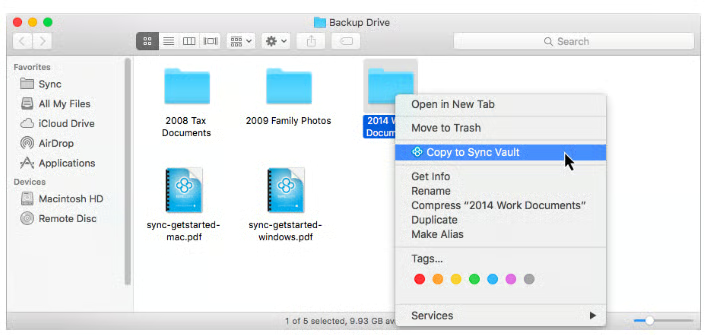
- Sync vault: This cloud-only storage space is typically used to store backup folders and files. This is great for freeing up space on your mobile devices, especially when traveling for business.
Dropbox Business: Best for accessible cloud storage
My expert opinion
Dropbox Business stands out for its accessibility, with a drag-and-drop design that allows users to upload files into folders easily. For those who are less tech-savvy and use Dropbox primarily for backup, the synchronization feature ensures that any changes made in the desktop app are updated in the cloud automatically.
Dropbox offers HIPAA-compliant Standard and Advanced plans, making it a suitable option for hospitals, doctors, and medical clinics. To enhance the security of your PHI, you can integrate third-party applications like Active Directory with your Dropbox Business account. This integration not only provides greater functionality but also authenticates the identities of your team members, ensuring that your data remains secure.
However, HIPAA-compliant file storage is only available with the highest tier monthly plans, which start at $18 per user. Microsoft OneDrive is a more affordable option, thanks to its monthly base plan that starts at just $5 per user. Although it only offers annual billing, a subscription gives you access to Microsoft’s productivity tools and services suite.
Pricing
| Plans and Pricing (per user)* | Monthly | Annual | Users |
|---|---|---|---|
| Plus | $11.99 | $9.99 | 1 |
| Professional | $19.99 | $16.58 | 1 |
| Standard | $18 | $12 | 3+ |
| Advanced | $30 | $19.20 | 3+ |
| Enterprise | Contact sales for pricing | ||
*Dropbox also offers a Basic free plan, but it is not HIPAA-compliant.
Standout features
- File locking: When collaborating on a document, you can lock the file to keep others from making changes to it. This is especially useful for healthcare professionals who want to retain editorial oversight on patient files.
- Full text: Search the content of all files, including those scanned, using your Dropbox mobile app. This feature is available for all Dropbox plans.
- Dropbox paper: Collaborate in real time, assign tasks, and make and share to-do lists from this co-editing tool. Paper is a single workspace for your team to create and collaborate on.

How I evaluated the best HIPAA-compliant cloud storage providers
I examined various cloud storage solutions supporting HIPAA compliance and identified platforms that offer free subscriptions, annual billing, and volume-based discounts. I also considered its general and niche features, like unlimited data transfer, file restoration, and offline access. I rated each provider according to price and features to develop scoring criteria showing overall value and ease of use. Learn how I evaluated the best HIPAA-compliant cloud storage providers by clicking on the tabs below:
I reviewed the prices of all HIPAA-compliant online storage providers, including discounts for annual prepayment and multiple-user subscriptions. Then, I assessed each provider based on the availability of free trials and the cost of its base plan.
I examined each provider’s general features, including whether it offers unlimited data transfer and storage. I also prioritized solutions with file restoration and team collaboration tools, such as whiteboarding.
For niche features, I considered a provider’s security metrics, industry standard compliance, and offline access. Similarly, I awarded additional points if solutions supported robust software integrations.
I assessed each provider’s user-friendliness by testing the platform to see if it is intuitive and evaluating its interface design. I checked user reviews from reliable third-party websites and considered whether there were learning curves during the setup and configuration phase.
I looked at the support channels offered by each HIPAA-compliant data storage solution to determine the overall rating. I then checked each provider’s customer support channels, such as phone, live chat, and email, awarding extra points for 24/7 availability.
I assessed each provider’s overall performance and quality by considering its standout features and value for money. The provider’s popularity and user-friendliness were also part of my criteria.
Frequently asked questions (FAQs)
Is VoIP HIPAA compliant?
Yes, several VoIP providers with unified communication tools, like Dialpad and RingCentral, support HIPAA compliance. Healthcare providers must ensure their partners and service providers follow HIPAA guidelines and protect sensitive PHI data.
Why do I need HIPAA compliance?
HIPAA compliance is essential for organizations that manage Protected Health Information (PHI). Entities and individuals who do not adhere to HIPAA standards may face significant consequences, including financial penalties and potential imprisonment. Healthcare professionals must understand and implement these regulations to safeguard sensitive patient information.
Is cloud storage better than local storage?
Cloud storage is preferable to local storage for two main reasons: cost and accessibility. It stores data such as files, videos, or images on remote servers managed by third-party providers and can be accessed via the internet. As a result, cloud storage is accessible from anywhere, and since it doesn’t require physical devices, it tends to be more economical.
Bottom line
If you run a medical practice and handle confidential health data, adhering to HIPAA standards and regulations is non-negotiable. With a variety of cloud storage solutions available, choosing the right HIPAA-compliant provider means exploring what matters most to you: your budget, the storage capacity you require, and the security features that keep your data safe. Specifically, you should look for options that offer tools like file-sharing, passwords, and expiration dates to enhance your data protection.
Based on these key features, Box received the highest rating because it offers robust security features, intelligent content generation, and unlimited storage. Try out Box’s 14-day free trial to determine if it’s the right solution for you.
