






Counterfeit money is currency produced by someone other than the government intended to deceive the recipient into believing it is authentic. The Federal Reserve’s 2025 report estimates around $30 million worth of US currency (or 1 in 40,000 notes) is counterfeit. This is why learning how to detect counterfeit money is a crucial part of store management.
We go through the details below, but first, download our counterfeit money checklist to serve as a guide.
Related: Store Management: Managing a Retail Shop for Success
1. Learn to identify 8 US currency security features
The Bureau of Engraving and Printing designs and produces Federal Reserve Notes to include a number of security features. Counterfeiters can sometimes duplicate one or two of these unique characteristics but rarely all of them.
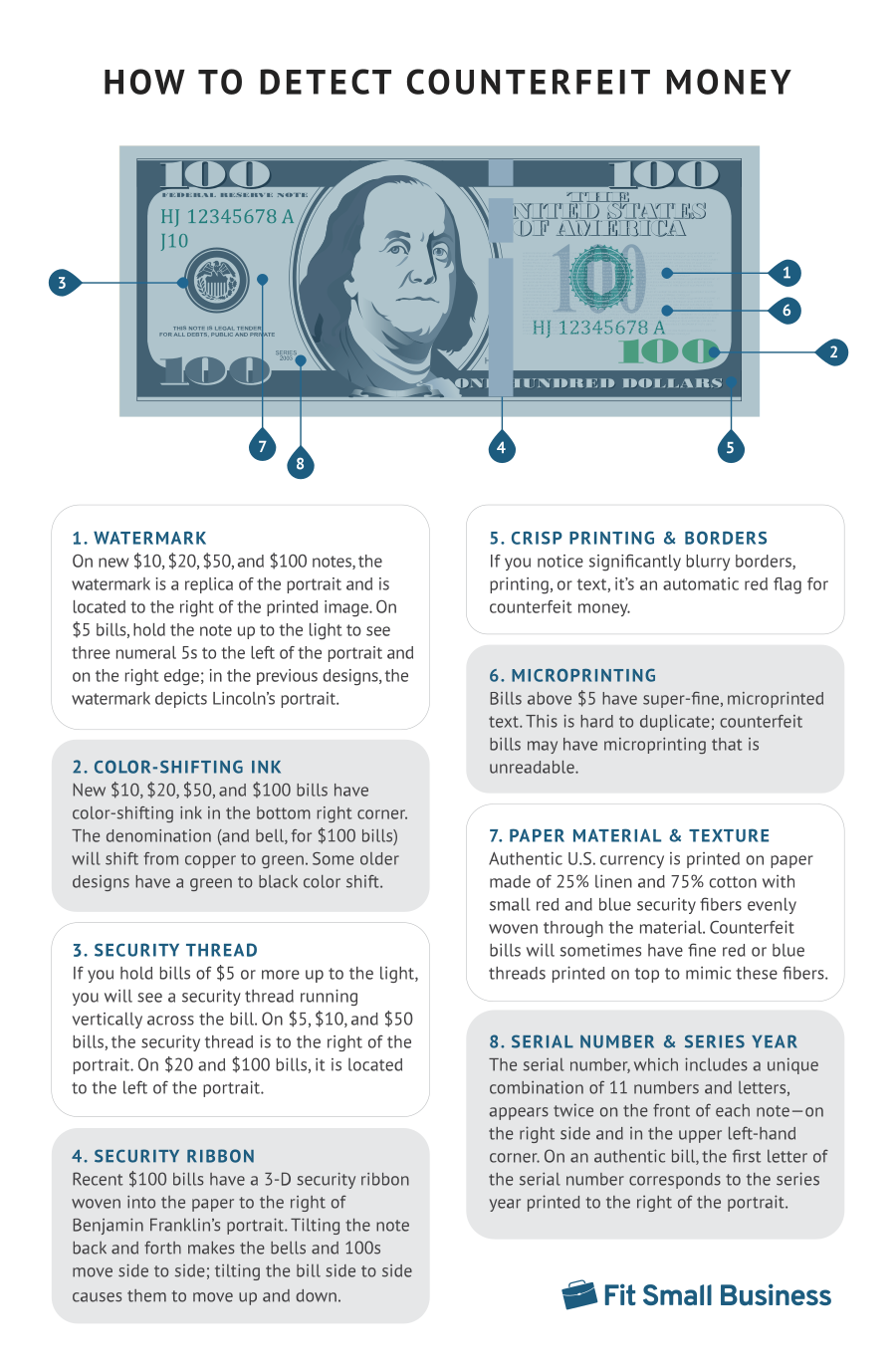
Note: Most of the examples we use in our guide are of a $20 bill because it is one of the most counterfeited denominations of currency in the US. However, some security features vary by denomination. Likewise, security features have improved over time as currency is redesigned, so old bills may be more difficult to evaluate.
Here are eight US currency security features you should know:
Watermark
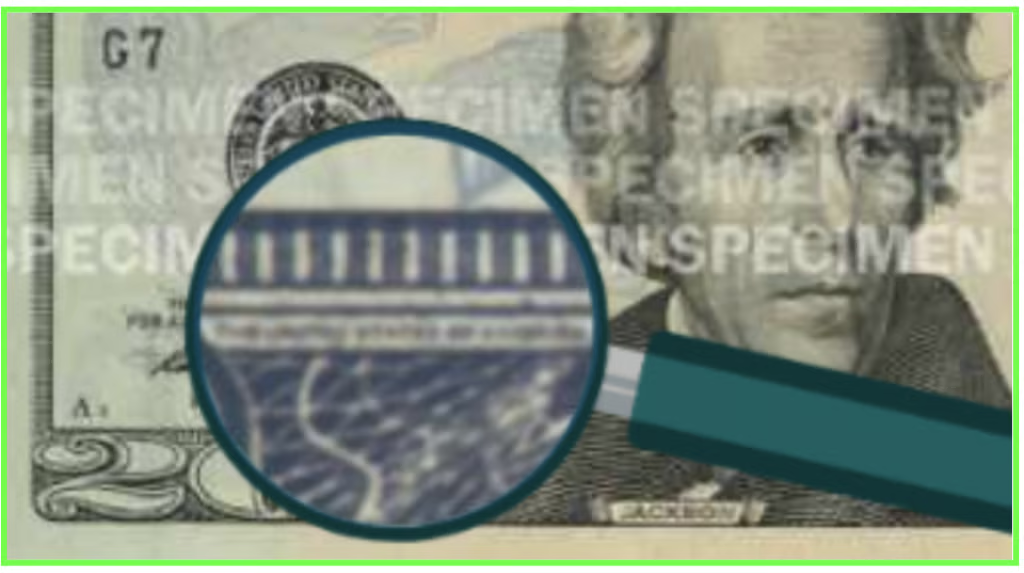
Watermarks in currencies are a characteristic security feature of authentic banknotes. Real watermarks are:
- Only visible when you hold it up to the light
- Visible from both sides of the bill, and
- Found in different areas, depending on the denomination
| Denomination | Watermark location | Watermark type |
|---|---|---|
| $5 | Left of the portrait Right edge | Three vertical “5 5 5” Large numeral “5” |
| $10 | Right of the portrait | Hamilton portrait |
| $20 | Right of the portrait | Jackson portrait |
| $50 | Right of the portrait | Grant portrait |
| $100 | Right of the portrait | Franklin portrait |
Generally speaking, if there is no watermark or the watermark is visible without being held up to the light, the bill is likely a counterfeit.
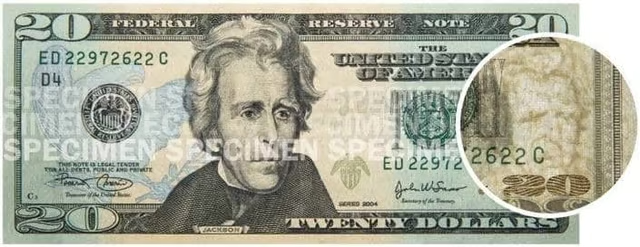
Close-up of portrait watermark on a $20 bill (Source: US Currency Education Program) 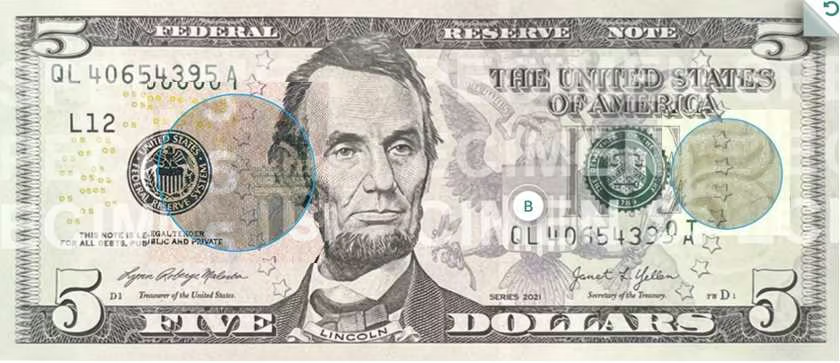
The $5 bill is the only note whose watermark is not a replica of the portrait, but of three numeral 5s. (Source: US Currency Education Program)


When evaluating the most recent $5 bill design, hold the note up to the light to see three numeral 5s to the left of the portrait and on the right edge; in the previous design, the watermark depicts Lincoln’s portrait.
On new $10, $20, $50, and $100 notes, the watermark is a replica of the portrait and is located to the right of the printed image.
Color-shifting Ink
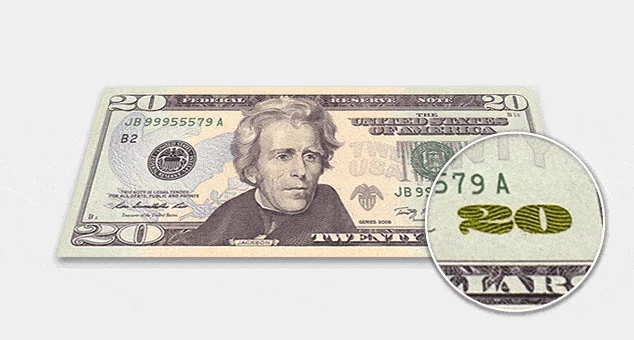
Tilt the note 45 degrees and look for color-shifting ink on the numbers (denomination) in the lower right corner of a $10, $20, $50, or $100 bill.
| Denomination | Color-shifting ink location | Color-shifting ink description |
|---|---|---|
| $5 | None | None |
| $10 | Front lower right numeral | Copper to green |
| $20 | Front lower right numeral | Copper to green |
| $50 | Front lower right numeral | Copper to green |
| $100 | Front lower right numeral + bell in the inkwell | Copper to green |
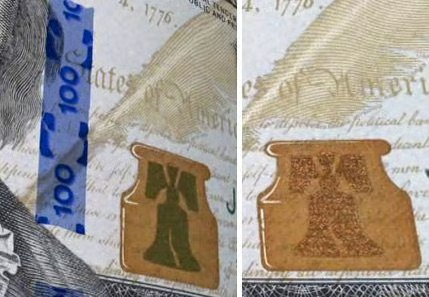
In addition to the color-shifting denomination, the 2013-style $100 bills feature a color-shifting bell in the inkwell. While the inkwell remains a copper color, the bell shifts from copper to green when viewed from a different angle.
Security Thread
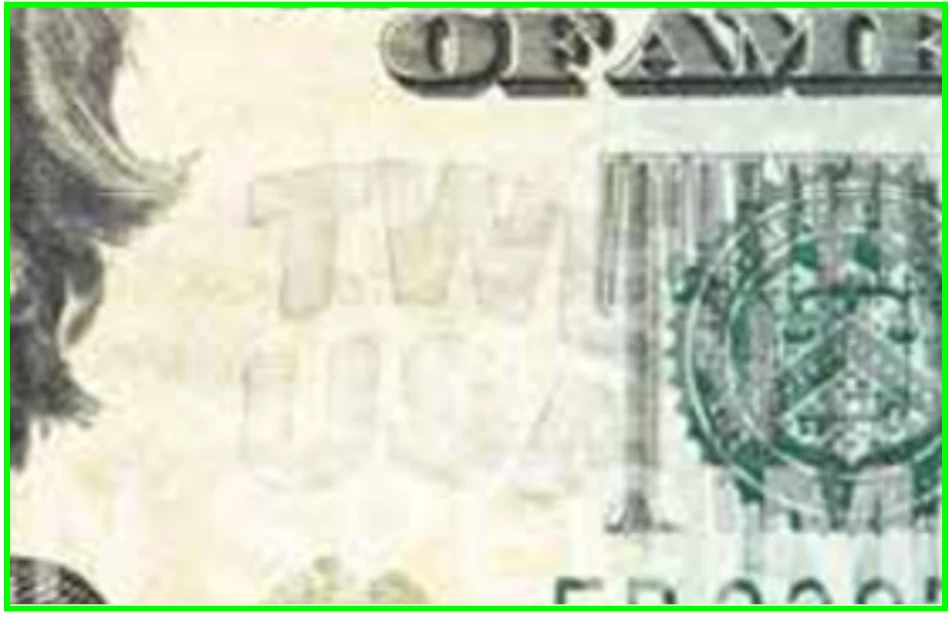
The security thread is one of the most distinctive security indicators of an authentic bill. If you hold a genuine bill with a denomination of $5 or more up to the light, you will see a security thread running vertically across the bill to the right or left of the portrait.
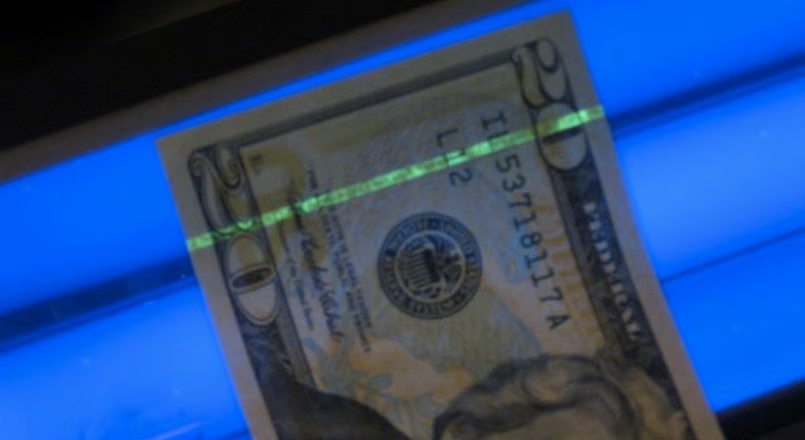
That said, the ultimate test involves viewing the bill under an ultraviolet (UV) light to confirm the security thread glows the correct color. This extra security measure was originally added to provide a quick way for bartenders to check the legitimacy of a bill. Based on these features, fake bills will either lack a security thread entirely or have a security thread with text, location, and/or color that does not match the denomination.
Security Thread Features for Each Denomination
| Denomination | Location of Security Thread* | Text Imprinted on Thread | Color Under UV Light |
|---|---|---|---|
| $5 | Right of the portrait | USA 5 | Blue |
| $10 | Right of the portrait | USA TEN and a small flag | Orange |
| $20 | Left of the portrait | USA TWENTY and a small flag | Green |
| $50 | Right of the portrait | USA 50 and a small flag | Yellow |
| $100 | Left of the portrait | USA 100 | Pink |
| *Federal Reserve notes designed before 1990 do not contain security threads. | |||
Security Ribbon
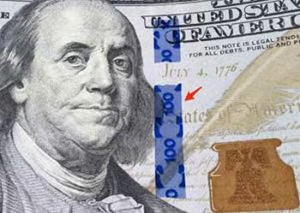
Unlike other notes, the most recent $100 note design has a 3-D security ribbon woven into the paper to the right of Benjamin Franklin’s portrait. By moving the bill, you can see images of bells and 100s shift as you move. Tilting the note back and forth makes the bells and 100s move side to side; tilting the bill side to side causes them to move up and down. This 3-D security ribbon reportedly cannot be duplicated by counterfeiters, making it an easy way to confirm the authenticity of a $100 bill.
Crisp Printing & Borders
Authentic US currency is printed using extremely detailed, die-cut printing plates capable of creating impressively fine lines. Because of that, counterfeit printers are rarely capable of duplicating the level of detail.
To spot a counterfeit bill, take a close look at the printing quality—especially the borders—to see if there are any blurred areas. If you notice significantly blurry borders, printing, or text, it’s an automatic red flag for counterfeit money.
Microprinting
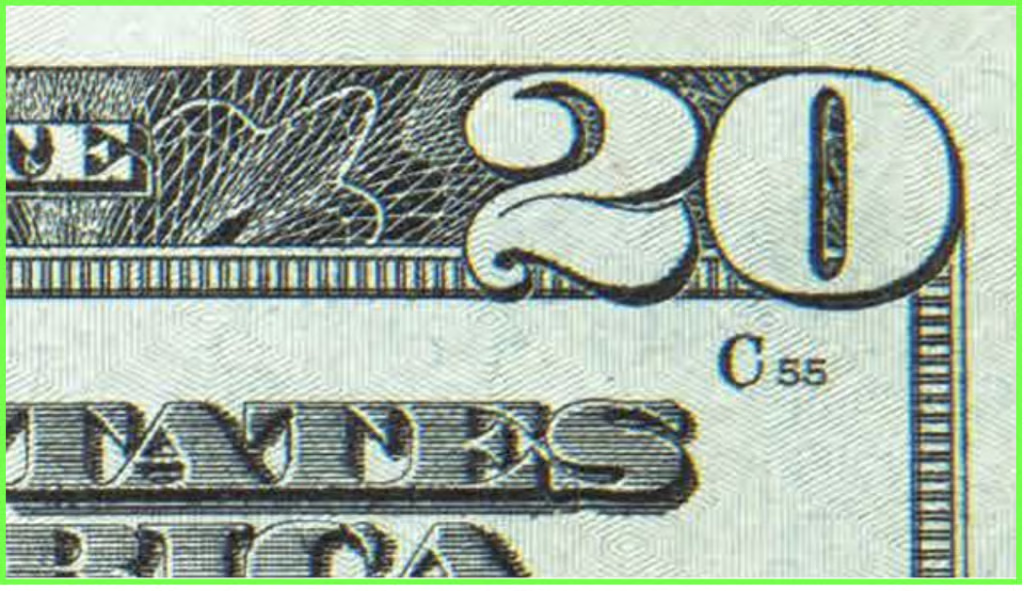
Genuine US currency of $5 denominations and greater is characterized by microprinting. This super-fine text is difficult for counterfeiters to reproduce with their less advanced equipment. For that reason, counterfeited bills may exhibit unreadable microprinting when viewed under magnification.
The location—and text—of microprinting on US currency varies by denomination, so look out for these features when checking the most recent version of each note for authenticity.
Denomination-specific Microprinting
| Bill | Microprinting |
|---|---|
| $5 |
|
| $10 |
|
| $20 |
|
| $50 |
|
| $100 |
|
| *Federal Reserve notes designed before 1990 do not feature microprinting. | |
Paper Material & Texture
The paper used by the Federal Reserve for US currency is made up of 25% linen and 75% cotton; it has been supplied to the US Bureau of Engraving and Printing by Crane and Co. since 1879. In addition to their composition, authentic bills feature small red and blue security fibers evenly distributed throughout the material of the bill.
Counterfeiters attempt to reproduce this effect by printing red and blue threads onto fake bills in a similar pattern. But, a close look often reveals that the “fibers” are merely on the surface level—and indicates you have a fake bill on your hands. All Federal Reserve notes are printed on paper with embedded security fibers.
By running your fingers across portions of the bill, you’ll be able to feel this raised texture that’s not present in most counterfeit currency. The best place to check is along the shoulders of the people on the bills; you should be able to feel bumps and ridges. This is one of the simplest ways to spot a fake bill and should be part of staff training for those starting a retail store.
Related: How to Start a Retail Business
Serial Number & Series Year
A final check when evaluating the authenticity of a bill is to compare the serial number and the series year printed on the front of the note. The serial number, which includes a unique combination of 11 numbers and letters, appears twice on the front of each note—on the right side and in the upper left corner. On an authentic bill, the first letter of the serial number corresponds to the series year printed to the right of the portrait.
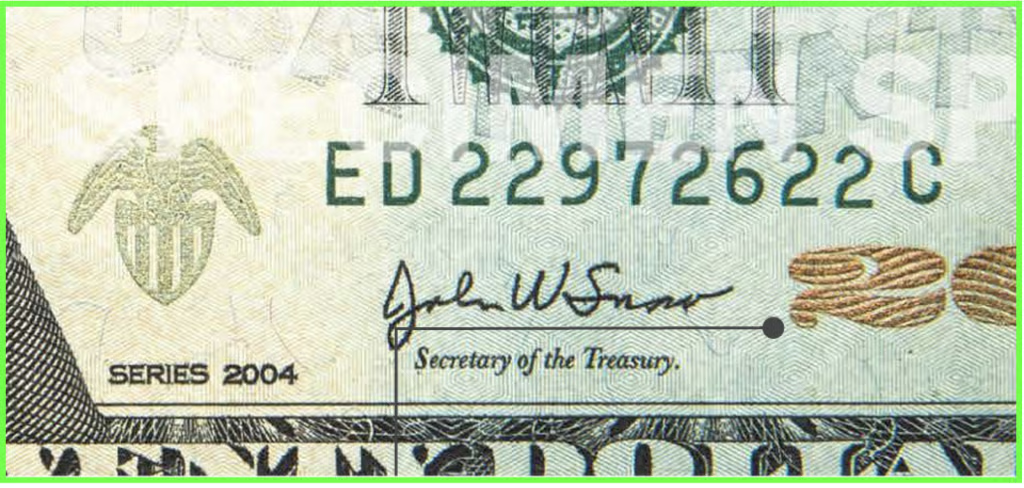
Serial Years With Corresponding Serial Letters
| Year | Series Letter | Year | Series Letter |
|---|---|---|---|
| 1996 | A | 2006 | I |
| 1999 | B | 2009 | J |
| 2001 | C | 2006A | K |
| 2003 | D | 2009A | L |
| 2004 | E | 2013 | M |
| 2003A | F | 2017 | N |
| 2004A | G | 2017A | P |
| 2006 | H | 2021 | Q |
2. Use this quick guide to spot fake bills
We picked some key features for each denomination that are quick to check and put them together in a guide for spotting fake $5, $10, $20, $50, and $100 bills.
Let’s start with the basics and easiest to see — the main back and front images. It’s not unusual to miss a counterfeit when focusing too much on the finer details:
- $5 bill: President Abraham Lincoln (front), Lincoln Memorial (back)
- $10 bill: Treasury Secretary Alexander Hamilton (front), Treasury building (back)
- $20 bill: President Andrew Jackson (front), White House (back)
- $50 bill: President Ulysses S. Grant (front), U.S. Capitol Building (back)
- $100 bill: Benjamin Franklin (front), Independence Hall (back)
Different bills have different security features to help you spot fake money. Keep in mind that these are not the only features to look for, but if any of the features in the table below is missing from a bill you are checking, it is likely counterfeit.
| Security Feature | $5 | $10 | $20 | $50 | $100 | |
|---|---|---|---|---|---|---|
| F E E L | Paper | Slightly rough texture (raised printing) | ||||
| T I L T | Color-shifting ink (front lower right numeral) | None | Copper to green | Copper to green | Copper to green | Copper to green (+ bell on the inkwell) |
| C | Security thread | Blue (right of portrait) | Orange (right of portrait) | Green (left of portrait) | Yellow (right of portrait) | Pink/red (left of portrait) |
| Watermark | Numeral 5s on the left of the portrait; Numeral 5 on the right | Alexander Hamilton portrait on the right | Andrew Jackson portrait on the right | Ulysses S. Grant portrait on the right | Benjamin Franklin portrait on the right | |
| M A G N I F Y | Microprinting | 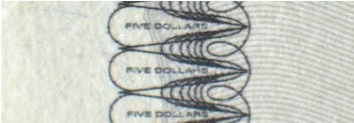 “FIVE DOLLARS” repeated inside the borders of the note | 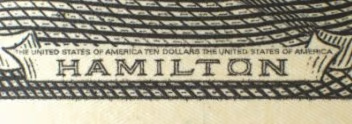 “THE UNITED STATES OF AMERICA” and “TEN DOLLARS USA” printed below the portrait | 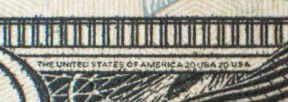 “THE UNITED STATES OF AMERICA 20 USA 20” printed in black in the border below the Treasurer’s signature | 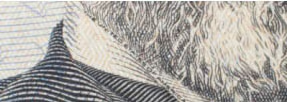 “THE UNITED STATES OF AMERICA” printed in President Grant’s collar | 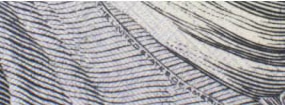 “THE UNITED STATES OF AMERICA” printed on Benjamin Franklin’s collar |
3. Invest in tools for detecting counterfeit money
Just as it’s important to prevent chargebacks in a credit card-driven business, business owners and employees should know how to distinguish between authentic and fake currency during cash transactions. To simplify the process—and improve accuracy—there are a variety of products available.
Examples of Counterfeit Money Detectors
| Tool | What Security Feature It Checks | How It Works |
|---|---|---|
| UV Lights | Security threads, watermarks, hidden markings | Shows currency notes’ security threads, ribbons, and watermarks. |
| UV Light Systems | Security threads, watermarks | It has UV light indicators in its base to show where security threads should be. You can check if the security thread lines up correctly and glows the correct color by placing bill on the base. |
| Currency Counters/Detectors | Security threads, magnetic ink | Most counters employ the use of UV, magnetic, and/or infrared technology. |
| Counterfeit Detector Pens | Correct paper | Pens contain iodine-based inks that react with starches contained in wood. When reacting with counterfeits, the ink turns dark. For authentic notes, the ink remains clear or slightly yellow. |
| UV Light / Counterfeit Pens | Correct paper, security threads, watermarks | Pens like these have ink and UV light (both ends) to test for more security features. |
| Magnifying Glasses | Printing errors, microprinting | These help make it easier to read serial numbers and notice printing errors in counterfeits, such as the absence of microprinting. |
The Cash Assist mobile app
The Cash Assist mobile app is primarily for training cash handlers to recognize counterfeit cash. However, the app is highly interactive so it’s handy to have at the checkout counter. Capture the banknote with your smartphone camera and the app will recognize the denomination. Once it does, the app will provide you with options for verifying the security features such as the “Tilt Check Simulator”
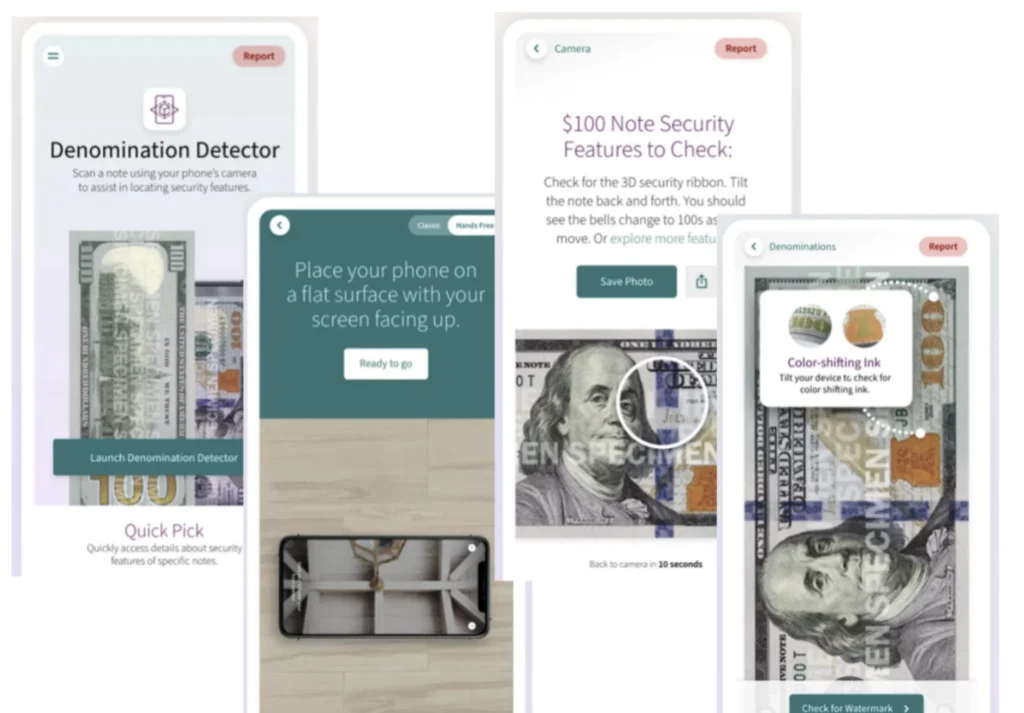
Download the Cash Assist app:
Best Counterfeit Money Detectors
AccuBANKER LED430
 | |
|---|---|
 | Key features:
*Does not support mixed cash counting |
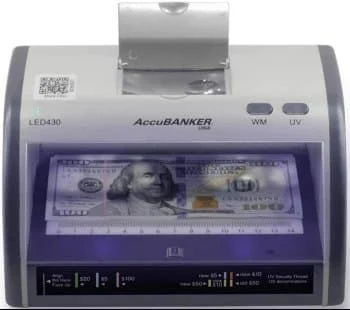
An all-in-one counterfeit money validator, like the AccuBANKER LED430, includes several features to help employees evaluate the authenticity of suspect bills. This detector includes LED lights, a UV light, an integrated ruler for checking bill dimensions, a magnetic sensor to check the authenticity of the ink, and a magnifier to confirm the presence of microprinting. If you operate a largely cash business and need to quickly verify large bills based on several characteristics, this type of tool may be the best option.
Dri Mark UV Light Counterfeit Bill Detector
 | |
|---|---|
 | Key features:
*Requires dark surroundings and training for UV light detection |
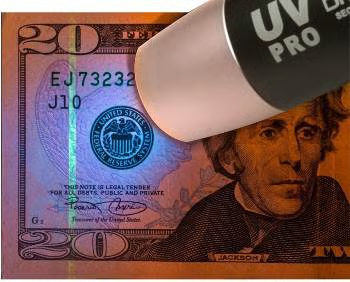
To fully evaluate the authenticity of a bill’s security thread, invest in a UV light for each payment station or employee who handles cash. A small, affordable tool like a handheld UV light like the Dri Mark UV Light Counterfeit Bill Detector can help employees quickly and accurately identify counterfeit money. Consider this option if you own a bar or other business that relies on several employees to process a large amount of cash in a short amount of time.
Dri Mark Dual Test Pen
| |
|---|---|
 | Key features:
*Cannot detect bleached (reprinted) bills - should be used in combination with other tools or a careful visual review of relevant security features. |
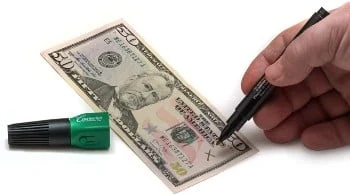
Counterfeit pens work by identifying fake notepaper using an iodine solution that reacts with the starch in wood-based papers. Iodine does not react with the cotton and linen fibers found in authentic bills. So, if a counterfeit bill was printed on basic paper, the pen will leave a dark stain; if the bill is authentic, it will not.
AccuBANKER D585 (Automatic detector)
| |
|---|---|
 | Key features:
*High price point (~$200) |
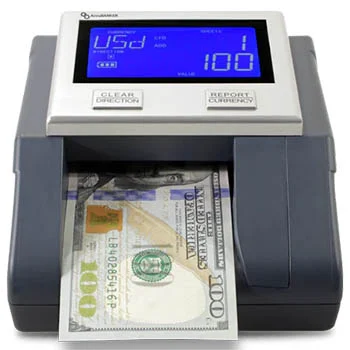
Unlike counterfeit validators that only provide tools to manually check if a bill is counterfeit, an automatic bill detector like the AccuBANKER D585 can automatically detect counterfeit bills. This kind of detection tool is best for you if your employees are not well-trained on what to look for in fake bills. It is a faster way to detect counterfeit money, but it is also more expensive than other tools, making it more suitable for businesses that have higher volumes of cash transactions.
If you’re intimidated by the threat of counterfeits and want to reduce the risk of losing profits due to fraud, consider using a merchant account to cut down on cash transactions and improve the security of credit card payments.
4. Know what to do if you receive a counterfeit bill
If you suspect you’ve been given a counterfeit bill, follow the recommended steps below to protect yourself and ensure that the US Secret Service can evaluate the fake currency.
- Avoid putting yourself in danger. If you think a bill is counterfeit, do not make any statements or take any actions that might cause the passer to threaten or harm you.
- Do not return the bill to the customer. Keep the bill so that you can pass it along to law enforcement. You won’t receive any financial remuneration for surrendering a counterfeit bill to law enforcement, but doing so can help combat counterfeiting.
- Jot down some notes about the passer. Observe and record as much about the passer and their companions as possible—characteristics like height, weight, eye color, hair color, and any other unique features. Where possible, write down the passer’s license plate number and other identifying information.
- Contact local law enforcement or the local US Secret Service Office. As soon as you suspect that a bill is counterfeit—and you’re not at risk—contact local law enforcement. Once you’ve made contact, only surrender the note to an identified police office or Secret Service Special Agent; you may also be directed to mail it to the nearest Secret Service field office.The US Secret Service’s Counterfeit Currency Processing Facility (CCPF) accepts and processes suspected counterfeit currency submissions from businesses and financial institutions in all 50 states.
- Write your initials and the date on the border of the bill. Before passing a suspected counterfeit bill to law enforcement, write your initials and the date in the white border area of the note.
- Handle the bill as little as possible. In some cases, there may be remnants of fingerprints, DNA, or certain processing chemicals that can help the police tie a bill to a certain counterfeiter. Handle a potential counterfeit as little as possible and separate the bill from your other cash by putting it in a protective cover, plastic bag, or marked envelope until you can submit it to the Secret Service.
Counterfeit Money Frequently Asked Questions (FAQs)
How can you detect a fake dollar bill?
Authentic US banknotes have characteristic security features—watermark, security thread, and color-shifting ink, to name a few. Fake bills can have one or two of these unique characteristics but rarely all of them. Familiarize yourself with each bill’s security features. Generally, to check for fake dollar bills, it is advised to feel the paper, tilt the note, and check with light and with magnification.
What color does money turn if it’s counterfeit?
If you are using counterfeit pens to check the authenticity of banknotes, fake bills will turn the ink black or dark blue. Genuine bills will turn the ink yellow. Note, though, that counterfeit pens are not as accurate on more advanced fake money. However, they still can help identify some fake bills.
Does counterfeit money feel real?
Yes, it may feel similar to authentic bills. However, one sign of counterfeit money is that it feels smooth. Run your fingers over the shoulders of the portraits. Real money has bumps and ridges.
What happens if you accidentally acquire counterfeit money?
If you realize it’s fake, immediately contact the police. Follow the steps listed above as they apply to your situation. It should go without saying that you should not try to use it. If, however, you are caught accidentally trying to use counterfeit money, then work with the store owner to contact the police. Try to remember where you got the bill and (of course) pay for your purchase with legitimate bills. If you are charged with using counterfeit currency, contact your attorney.
What are the most common mistakes counterfeiters make?
The most common mistakes are errors in color or paper and poor printing. The easiest way is to check for color-shifting ink and to feel for the texture of the paper.
How does counterfeit money affect me?
First, the bills are worthless; the government will not honor them even if you turn them in. Second, it’s a felony to pass counterfeit bills. It also hurts the economy and can contribute to inflation, which means higher prices for the things you want.
Where am I most likely to find counterfeit money?
Bogus bills are more often passed along at retail stores. Banks usually have more safeguards to detect counterfeit money, so it’s less likely you’ll find them from an ATM.
Bottom Line
Learning to identify fake money and training your employees to do the same is important. Start by introducing your staff to each of the security features incorporated into authentic US currency — of each denomination. Then, consider investing in tools like UV lights or all-in-one counterfeit detectors if you want to provide an extra line of defense for your business.
Retail employees who know how to spot fake bills can help reduce losses to counterfeit money. However, if your business continues to struggle with counterfeit money, consider reducing your dependency on cash transactions.
