







Retail theft is an unfortunate reality that impacts both brick-and-mortar and ecommerce businesses. Beyond the financial cost, it compromises the trust and safety between retailers and their customers and is the leading cause of retail shrinkage across the industry.
In this article, we give you seven strategies for retail theft prevention and shoplifting prevention to protect your business.
1. Identify the Source of Your Retail Theft
Before you can start mitigating your losses (or shrink, as it is often called in retail), you have to determine where they are coming from. In general, there are three ways that retailers can experience shrinkage: employee theft, shoplifting by customers, and clerical errors in inventory counts.
As you can see, theft accounts for two of the three ways you can experience shrink as a retail business—via employees (internal theft) and via store patrons (external theft/shoplifting). The two types of retail theft require different strategies for addressing them, so determining exactly where your losses are coming from is the only way to start devising a prevention plan.
Shoplifting
Shoplifting is a major source of loss for retailers, with retail businesses losing an average of $461.86 in every incident of external shoplifting theft. When considering shoplifting prevention for your store, you should know the common ways that shoplifters will steal so that you can begin to detect issues:
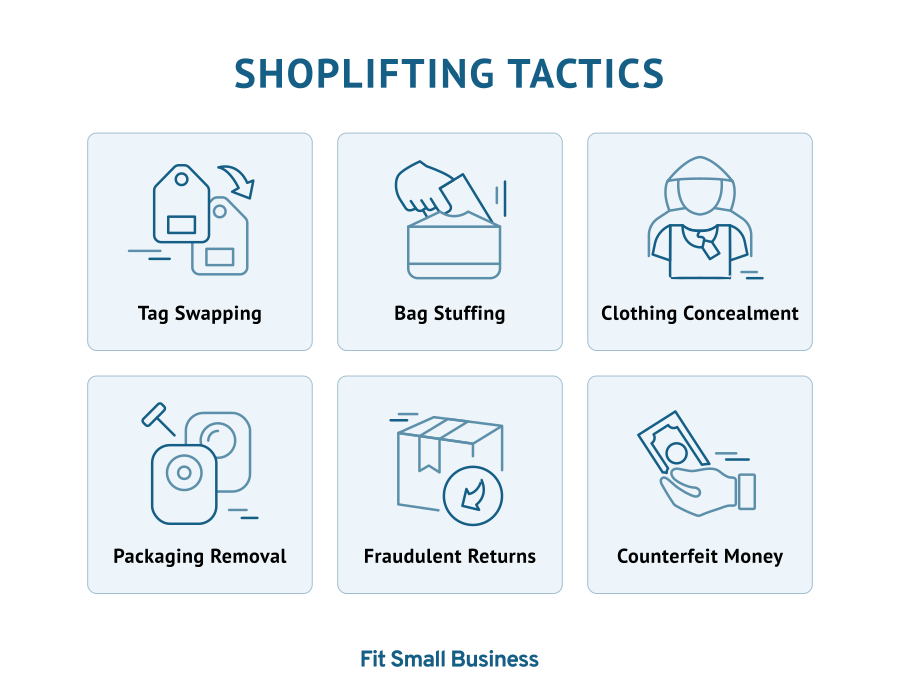
- Tag swapping: Switching high price tags with lower ones.
- Bag stuffing: Filling a bag or purse with your goods.
- Clothing concealment: Concealing products under their clothing.
- Packaging removal: Removing packaging and security tags to avoid setting off alarms.
- Fraudulent returns: Trying to return an item they did not purchase or making false claims to get their money back.
- Counterfeit money: Using fake currency to pay for goods. Another version of this tactic is using fake gift cards to buy merchandise without paying.
Learn how to avoid dealing with fake currency in our guide to detecting counterfeit money.
Employee Theft
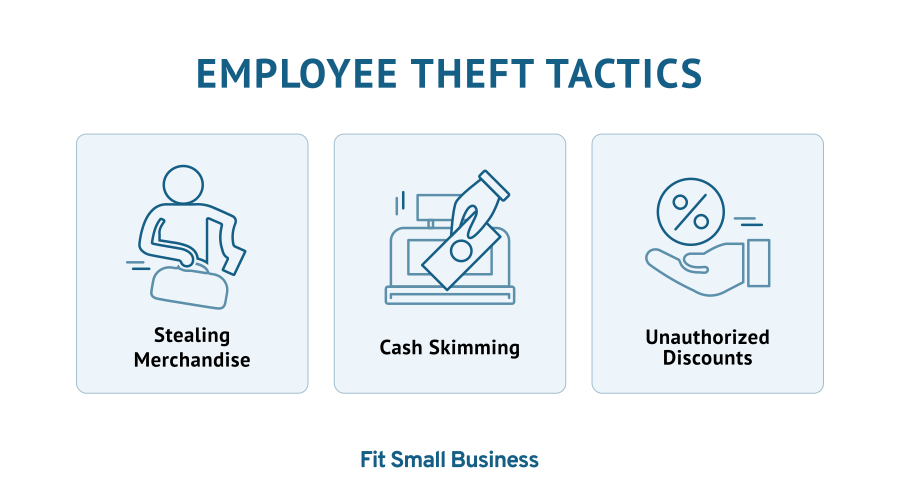
Employee theft is the other major contributor to retail theft and it happens more than you might think. Sometimes employees will outright take merchandise from their employers—because they are dissatisfied, feel underpaid, or simply want the merchandise or extra cash they can make from selling it. Additionally, employee theft can look like cash skimming, offering discounts to friends, or ringing things up incorrectly to save themselves or others money.
You can learn more about retail shrink and how you can also prevent clerical error losses with our guide to retail shrink.
Test Your Knowledge
Question 1 of 1
Compared to 2019, how many shoplifting incidents were there in 2023?
2. Train Your Staff

One of the best ways to ensure that your store is safe is to train your staff on retail theft prevention and detection techniques that they can practice in-store. Here we will take a look at some of the top strategies that your staff can implement for shoplifting prevention.
Promote Customer Engagement
If you have attentive and engaged staff, thieves will feel watched, making them less likely to steal from under your nose. Tell your staff to greet everyone upon entry, offer frequent fitting room check-ins, and be attentive to all your shoppers should any needs or questions arise. In addition to theft prevention, this level of engagement will also foster a positive customer experience for your regular customers.
For example, at my boutique, we greeted every person who came into the store with a warm hello and an introduction to all the promos we had going on at the moment. Then we would continue to offer assistance and would get fitting rooms started as soon as shoppers had things in their arms. This engagement not only ensured that our regular customers got tons of customer service and felt cared for, but it also made thieves feel watched and deterred them from stealing.
Keep Your Fitting Rooms Staffed
Fitting rooms are a hot spot for thieves since they are concealed. The best way to ensure that your fitting rooms are secure is to keep them staffed and monitored at all times. For every shift, be sure that there is at least one person on the register and one in the fitting area.
Train every employee to be attentive to shoppers trying on merchandise—asking them questions, giving them advice, and offering assistance outside the dressing rooms. You can also use a numbered door hanger system so employees can keep track of how many items go in and come out of each room. These measures should make thieves feel less secure and help to prevent theft.
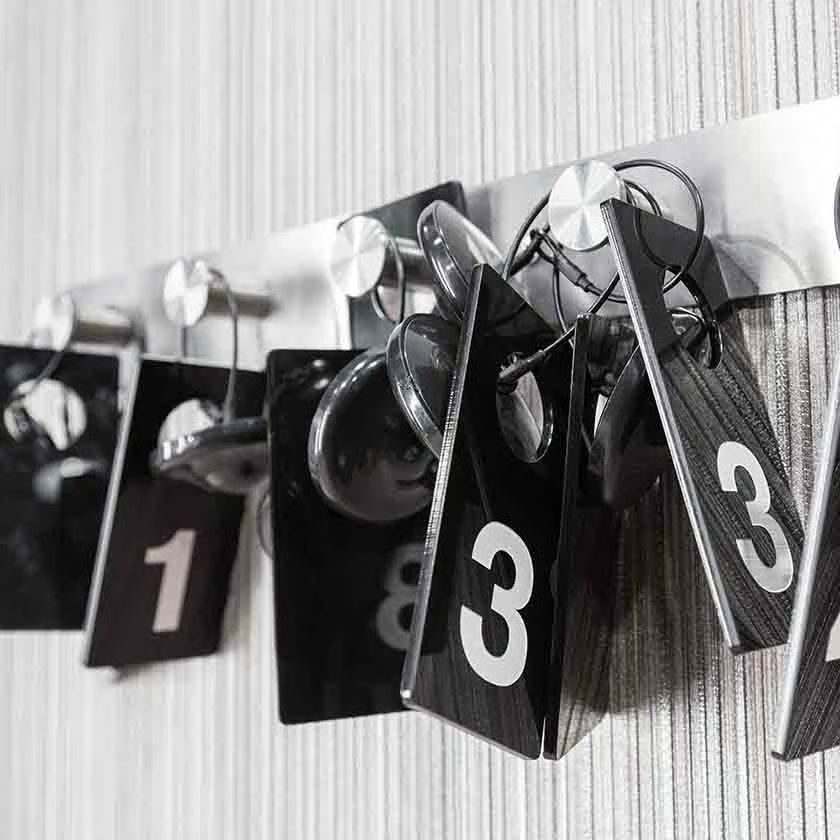
In my store, staff were trained to ensure that customers were never left unattended in fitting rooms for an extended time. After just a few minutes, we’d provide a polite knock on the door to ask if they needed any assistance or wanted to remove any items. This approach strikes a fine balance between elevated customer service and effective theft prevention.
Provide Safety Resources
Another thing you should consider when training your staff to prevent theft in retail is the resources they have at hand. Provide your employees with phone numbers for local security, police, and upper management so they always have someone to turn to if they are feeling unsafe or need to report an incident.
You should not only cover these resources during onboarding, but also keep them posted both at the cash register, in the staff room, and in your training materials. This way, employees can always access them.
Equip Staff With a Theft Action Plan
You should also equip your staff with a plan of action in case they do notice retail theft. While I would not advise promoting intervention (as this can lead to liability issues and potentially put your staff in precarious or unsafe situations), you might ask them to:
- Discreetly take a picture of the thief so you can post it in the staff room as a person to keep a lookout for
- Take note of the time so you can go back and review security footage
- Report the incident immediately to upper management so they can follow up
- Remove themselves from the store if they feel unsafe
- Note what is being stolen so you can mark the items in your inventory reports
- Seek out and alert other staff members so they can have strength in numbers
- Offer customer service without indicating they know the thief is stealing
Educate Staff on Employee Theft
The final thing you should do when training your employees on theft prevention is to make them aware of the measures you take to detect and prevent employee theft. If your staff knows that you are on the lookout and are taking steps against all theft, then they will be much less likely to engage in the behavior.
Let your staff know about all the retail theft prevention tactics you are taking—that you track inventory and source shrinkage problems, run audits, and have a video camera installed. Additionally, if you are using a POS system, consider creating separate log-ins for each employee so you can track which employees rang up specific transactions.
3. Optimize Your Store Layout for Theft Prevention
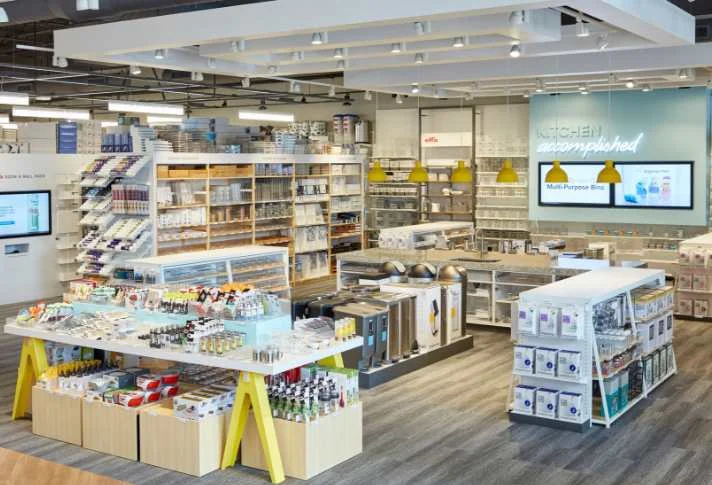
You should also prepare your physical space to stop theft. An organized storefront without clutter or disarray makes it more difficult for thieves to steal by opening up your sightlines and making it obvious when something goes missing. Additionally, smart product placement and loss-prevention merchandising techniques can also help in shoplifting prevention.
Identify High-risk Items & Areas
When organizing your store, you should start by identifying your most at-risk items. Typically, these are smaller items that are easy to conceal or more expensive items that are a bigger theft target. You should do what you can to place these products close to the register or in areas with high visibility.
In my store, for example, we kept all of our jewelry at the register. We knew that our small and higher-value jewelry pieces were the most likely to attract thieves. By placing our most “stealable” goods at the register, we could keep an eye on it at all times and intercept any shoplifters.
Here is a list of the top types of stolen retail items so you can take steps towards shoplifting prevention:
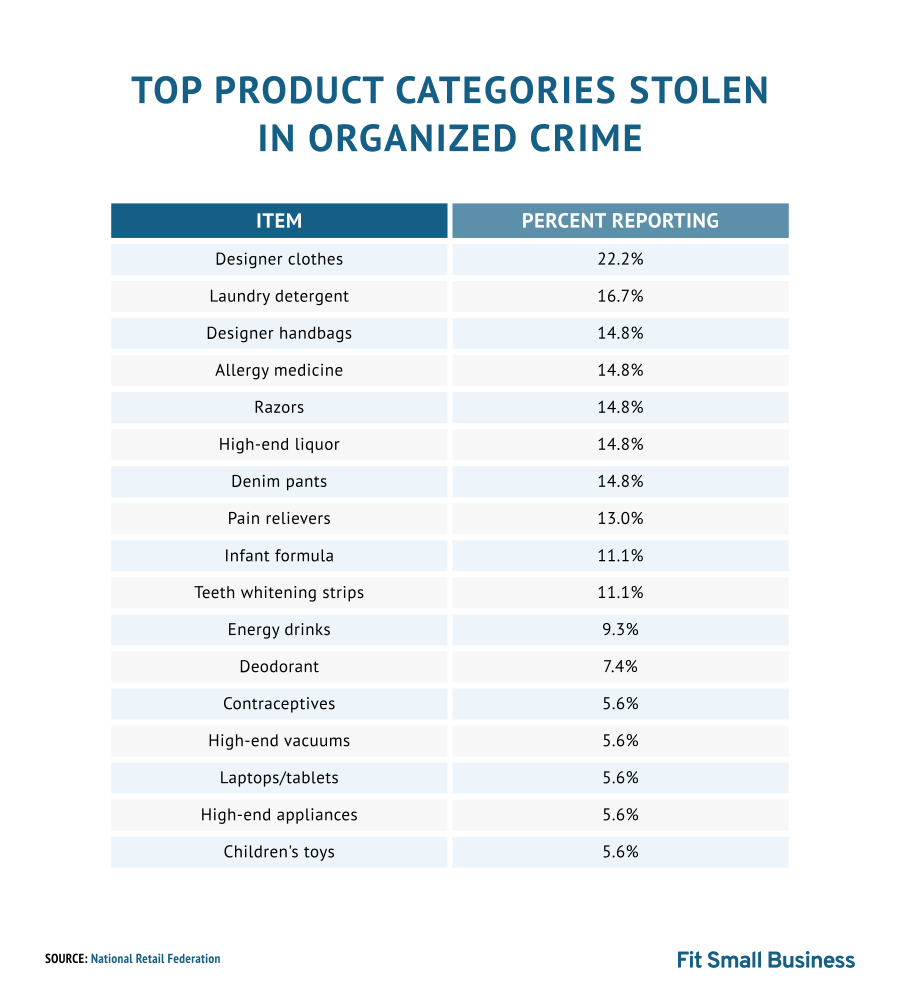
From there, you should also identify the areas of your store that are at the highest risk for theft. Concealed areas or places where you keep a lot of easy-to-nab items are popular with thieves. As you organize your space, try to move shelving, open up spots with poor sightlines, and keep smaller merchandise in open areas.
Put High-value Items in Locked Cabinets
Another way that you can organize your merchandise for shoplifting prevention is to place your highest-value items in a locked case located centrally in your store. This will keep your goods secure and allow you to keep an eye on them from all areas of your store.
You will often see this strategy in jewelry stores, where all their merchandise is displayed in cases that clerks operate behind. This same strategy, however, can be applied to many different settings on a smaller scale. Take the first image below, for example. This trendy boutique did not have to sacrifice its brand or store flow to create a secure and stylish display case for its most expensive goods
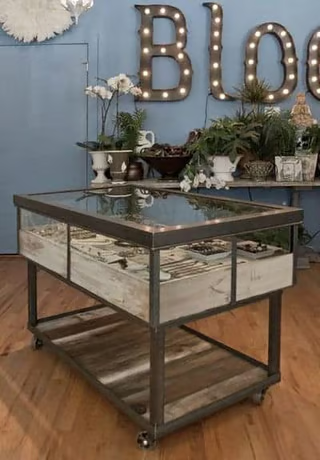
Using locked glass cases is a great way to keep your most expensive items safe.(Source: Pinterest) 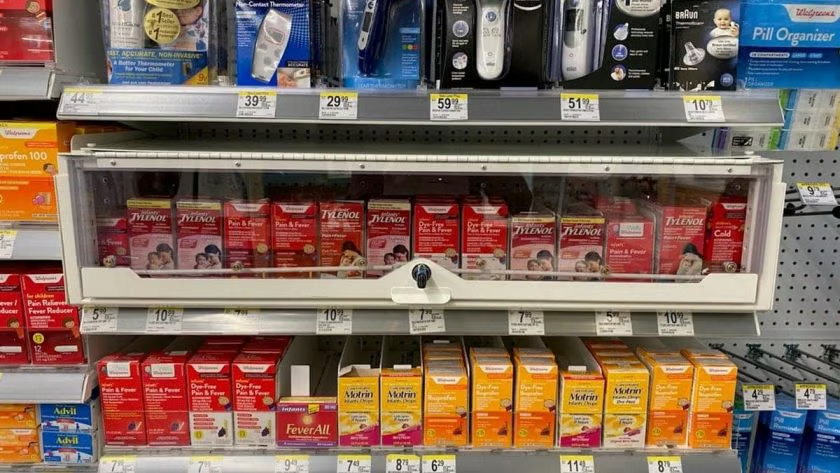
Sometimes you can even install glass cases within shelves to protect shelf-stocked goods.(Source: Forbes) 
Merchants who sell extremely high-value items sometimes even lock all of their merchandise behind glass.(Source: Pinterest)


Place Your Cash Wrap Near the Exit
Another organizational strategy that you can use to prevent theft is to place your cash wrap, otherwise known as the checkout counter, near the exit of your store. In general, when shoppers enter a space, they will naturally turn to the right and then make a loop through your store. With this in mind, the best place for your cash wrap is to the left of your entrance

This placement will allow you or your associates to greet shoppers when they enter, signaling to them that you are aware of their presence, it will also allow you to keep an eye on everyone leaving the store. Both greeting people at entry and stationing yourself close to the exit path will make thieves feel like they are being monitored, working to deter them from theft.
4. Install Signs & Mirrors

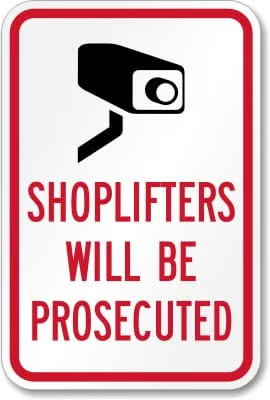
Signs and mirrors are a cost-effective way to send a message to shoplifters. (Sources: Amazon (r) and My Security Sign (l))
In addition to setting up your employees and space to create an attentive, watchful environment, you can also use signs to let thieves know they are being watched. If you have security cameras, use signs to tell shoppers that they are on camera or display signs that let people know that you take shoplifting seriously. If used appropriately (and in moderation), these signs won’t disrupt the average shopper but will prevent thieves from committing a crime.
For example, at my store, we had a “smile, you’re on camera” sign posted at our door. As a boutique in a nice neighborhood, this was the extent of our security signage. It was enough that everyone saw it as they came in, but not so much that it became accusatory toward normal shoppers.
Another security feature that you can install in your store are mirrors, like the ones below. On the left, you see a convex mirror, perfect for installing in corners with poor sightlines either due to the shape of your space or the arrangement of your furniture pieces. On the right, you have another option: the dome mirror. These are perfect for giving you a 360-degree fisheye view in large spaces.
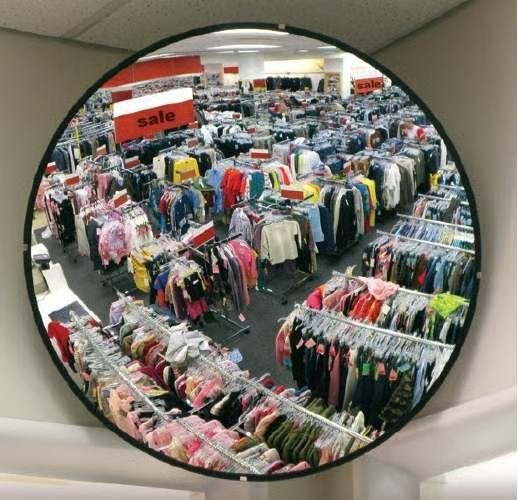
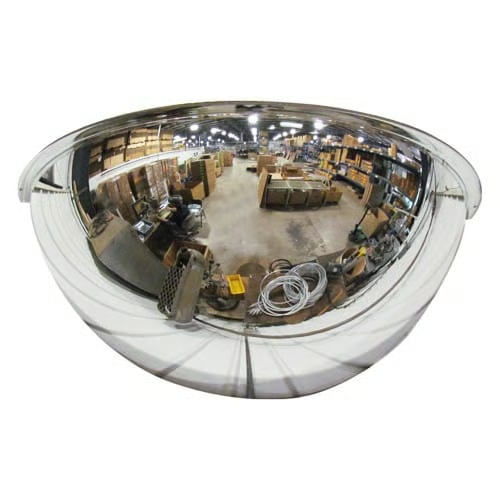
Add mirrors to create better visibility throughout your store. (Source: Bullseye Protection (l) and Amazon (r))
Mirrors are great for improving your visibility, and thieves know this. You can use mirrors to ensure that no area of your store is out of sight, so thieves don’t have an opportunity to engage in their crimes.
5. Adopt Security Technology
Although training, signs, and mirrors are great theft prevention measures for small businesses, if you want to level up your protection you should consider installing security equipment, such as cameras and RFID tags.
Video Surveillance
The most obvious security technology option is a video surveillance system. Video security cameras not only allow you to check on your customers and employees but also will provide an obvious visual deterrent to would-be shoplifters. Further, cameras will capture any criminal activities on tape, giving you photographic proof should you ever need to prosecute a shoplifter.
While discreet cameras are sleek and won’t impede on the look of your space, they are not really your best choice for business security. You want your surveillance system to be obvious. I recommend opting for larger surveillance cameras paired with a monitor where people can see that they are being recorded.
Entrance Alert System
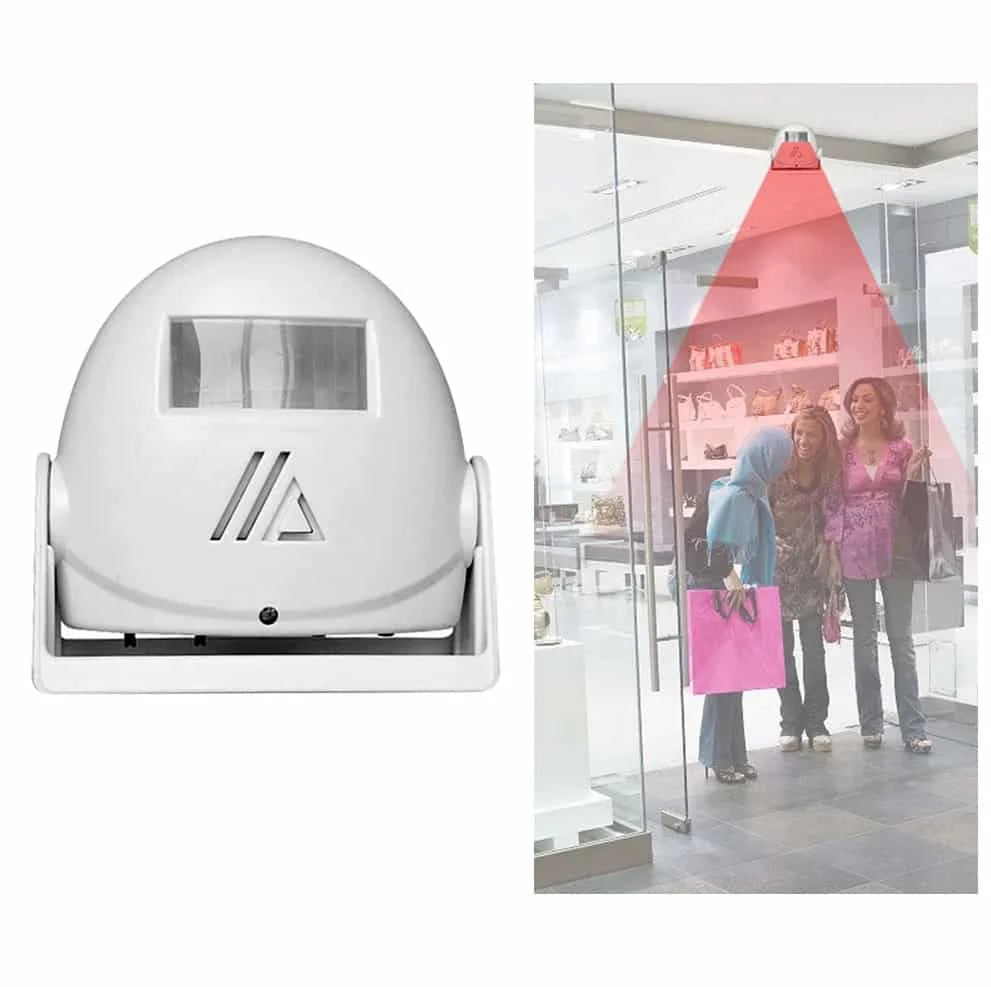
One of the most common types of security technologies is an entrance alert system. This can be as simple as a bell on your door that chimes each time the entry swings open, or it can be an automated alert that senses each time someone new enters your space and dings for you to hear. Either way, alert systems let shoppers know that you know they are in the space and can be a deterrent for thieves.
RFID Tags
RFID or radio frequency identification tags are small stickers that you attach to the back of product tags that send radio signals to a small receiver. An RFID scanner at checkout will deactivate RFID tags. However, if someone tries to leave your store before the tag is deactivated, an alarm will sound.
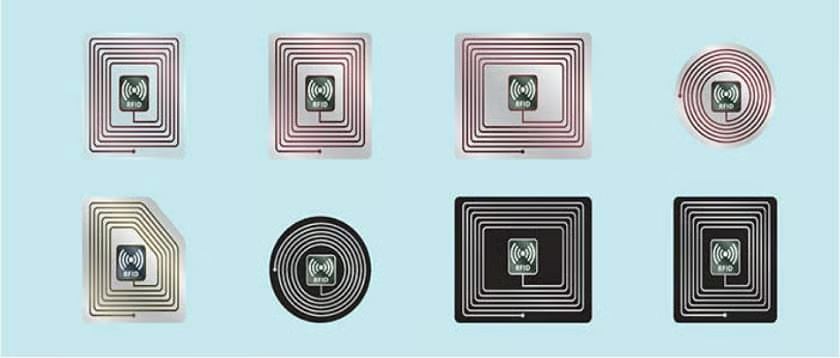
While RFID tags are a great deterrent and can be highly effective at catching thieves in the act, shoplifters are often aware of their use and will remove the tags. The best way to spot this behavior is to introduce nightly tag checks to see if there are any lost RFID tags that a shoplifter might have removed. Another option you can try is RFID tags that are attached by an ink-loaded plastic piece, as pictured below, that you have to remove manually with a special device at checkout.

6. Fortify Your Online Store
In addition to taking retail theft prevention measures in your physical store, you also need to protect your ecommerce shop. Theft online can look like credit card fraud, data breaches, return fraud, and more. Ecommerce theft can be incredibly costly if you fall prey, with experts projecting that ecommerce businesses will lose more than $48 billion to ecommerce fraud by the end of 2023.
Read through the prevention strategies below to learn more about how you can protect your business online.
Use a Secure Ecommerce Platform
One of the best ways that you can protect yourself against ecommerce theft is to use a secure ecommerce platform. We have broken down our top picks for the best ecommerce website builders, but some of the things you can look for include:
- Level 1 PCI DSS compliance
- Secure Sockets Layer (SSL)
- Secure data backups
- Cardholder data protection
- Secure network guarantee
- Fraud prevention services
Update Your System Regularly
Another measure you can take to fortify your online store against retail theft is to update your ecommerce platform and other software regularly. Software updates often include new security measures and can even roll out due to security concerns.
Our recommendation is that you update your systems as soon as you receive notification to do so or at least within 24 hours. There are also often auto-update settings that update your systems around peak times to avoid disturbing your workflows. Turn those auto-update settings to on.
Utilize Two-Factor Authentication
Another precaution that you can take against retail theft is to use two-factor authentication for your ecommerce platform as well as any other systems that hold sensitive information. We recommend tying your login to your personal cellular device and requiring your staff to do so as well.
Install a Firewall
Another ecommerce security recommendation is to install a firewall. A firewall is a website network security device that monitors traffic going through your site. The firewall you choose allows or blocks traffic based on a defined set of security rules. Firewalls are best for protecting any data stored on your site and intercepting malware that might hurt your store.
7. Protect Customer Data
In addition to keeping your online store secure, you should also take security measures on your other systems that store customer data, like your POS, payment gateways, and other software (CRM, loyalty, etc.) This is important not only because customer data is valuable to running a successful business, but also because customers will lose all their trust in your brand if their personal information is stolen on your watch.
Below are a few ways that you can protect your customers’ information.
Boost Your POS Security
One of the most common ways that hackers will steal business and customer information is via point-of-sale systems. It is imperative that you use secure practices when operating your POS to ensure that it does not become a point of weakness. A few POS security practices you can adopt include:
- Get end-to-end encryption
- Regularly change passwords (and use strong ones!)
- Install antivirus and malware protection to your POS as well as all devices connected to your network
- Check for card skimmers, cables, or any other tampering on a regular basis
Read more about POS security with our guide, What Is POS Security? A Guide to Protecting Your Data.
Use Secure Payment Gateways
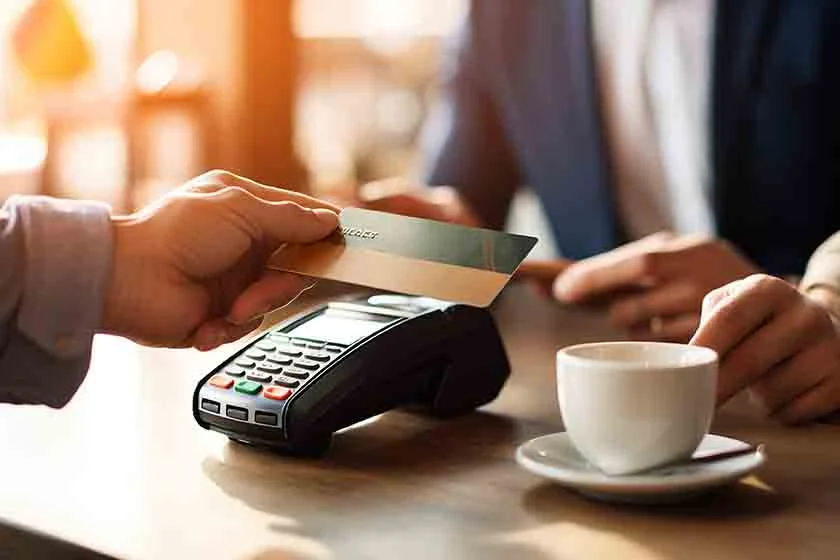
Payment gateways are another area that hackers will target as they contain customer and business financial information. The best payment gateways will include security measures like encryption, PCI compliance, and other measures that keep information stored on payment processors secure. Be sure to choose a reputable payment processor to ensure your and your customers’ security.
Utilize Access & Permission Controls
The final way that you can keep your data secure is by using access and permission controls on all your devices that hold sensitive information. Many software options let you assign roles with set permissions and access restrictions for non-owner accounts. This is a great way to give your staff access to the things they need and to keep them out of the things they don’t.
Bottom Line
Theft is an unfortunate part of the retail industry and can cause your business to incur major losses if not taken care of systematically. With the tools in this article, you will be able to take steps for retail theft prevention in your business. Whether you use a high-tech solution or rely on attentive staff, you can work to mitigate and stop theft.
