


A sales pitch is a brief explanation or conversation used to get a potential customer interested in your products and/or services. These “propositions” help businesses generate qualified leads by carefully gauging interest while articulating a clear value with a call to action that moves a lead to the next stages of the buying process. In this article, we explore the seven steps of learning how to make a sales pitch and offer examples to help you create your own.
- Free Sales Pitch Deck Template
- 1. Define Your Unique Selling Proposition
- 2. Understand Your Ideal Market
- 3. Craft Your Value Proposition
- 4. Define Your Sales Pitch Objectives
- 5. Ease Into Your Pitch
- 6. Prepare Your Call to Action Request
- 7. Modify Your Pitch for the Proper Channel
- Key Components of a Sales Pitch
- Bottom Line
Free Sales Pitch Deck Template
As you learn how to make an effective sales pitch that wins more deals, we’ve created a pitch deck to get you started. Customize this template with your company branding and the solutions you offer to use sales presentations with prospects.
While the way your sales pitch is delivered will vary depending on whether you’re speaking in-person, via email, phone, or video conferencing, the process for building your pitch is the same. Here’s how to make a sales pitch in seven steps:
1. Define Your Unique Selling Proposition
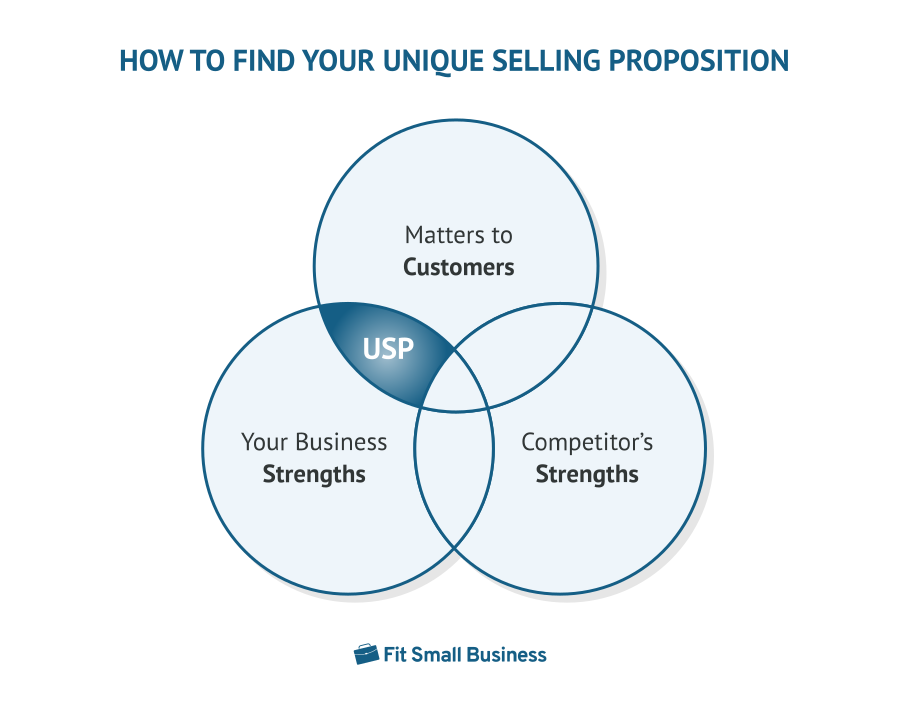
Your sales pitch must articulate how your product or service adds value to your customers and how it’s unique from your competitors—thus defining your unique selling proposition (USP).
A USP answers the question “Why choose us?” Focus on a product or service feature that stands out over other providers such as lower prices, premium quality, better customer service, or a favorable aspect of the user or customer experience like product ease of use.
For example, an HR management consulting firm offers free consultations and a guided experience with their clients where they are with them every step of the way. This would contrast other HR consulting firms that don’t offer the same services but instead only provide advice rather than help implement the solutions. These unique attributes need to be understood before you can incorporate them into a pitch.
2. Understand Your Ideal Market
Next, narrow in on who will get the most value out of your offerings. You may have a specific niche market such as only small IT management companies or broader customer groups such as nonprofits. Having an ideal market in your pitch makes it more relatable to the person listening to it.
For example, imagine you own an accounting firm. A sales rep from a staffing service approaches you about how they can help you find temporary help during the busy “tax season” as well as permanent employees. This service provider staffs several verticals, including IT engineers, security analysts, sales reps, administrative staff, and software developers—showing you they’re a generic staffing firm.
Another sales rep tells you the exact same thing except that they only work with accounting and tax preparation firms. Odds are, you assume they know more about your needs and have more qualified candidates because they only work in that market. This same approach should be used in your small business.
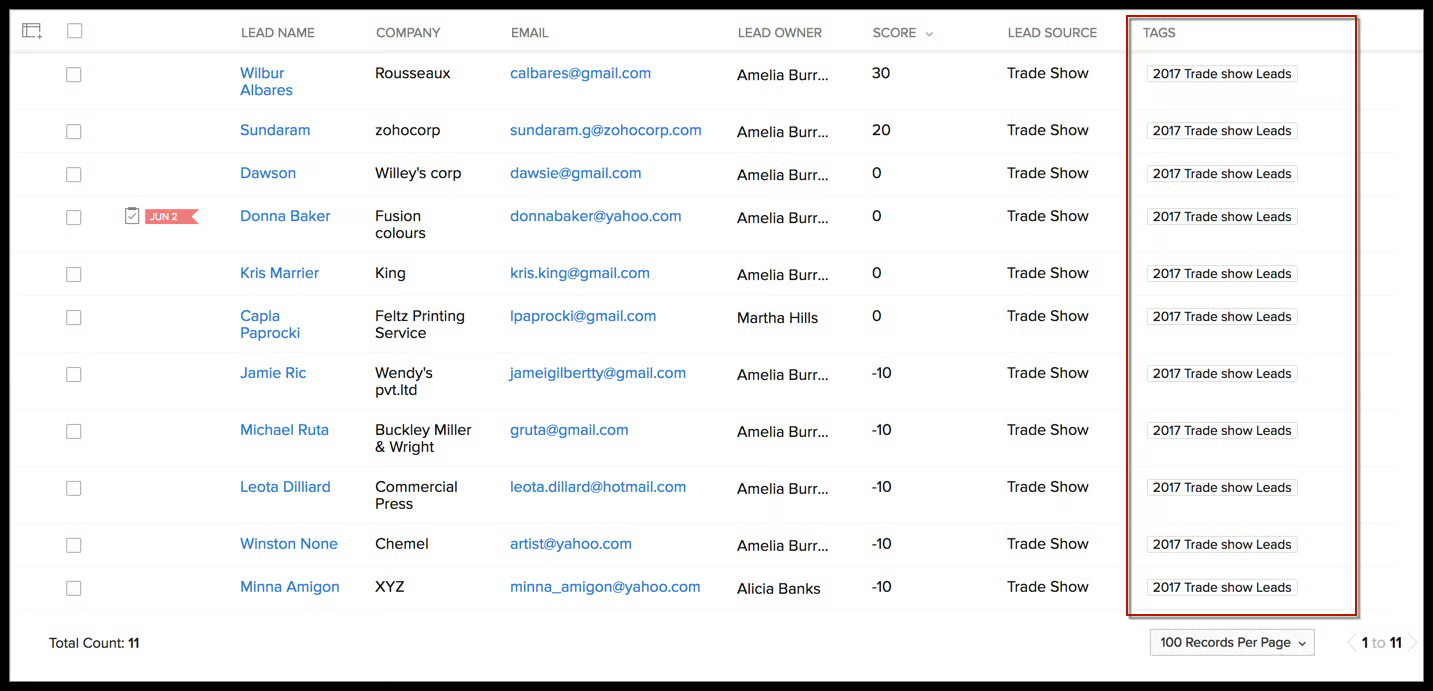
Whether you know your niche already or are looking into targeting a specific market group, below are some factors (and examples) that can condense your market, allowing you to specialize your offer and tailor your marketing to your specific customer profile:
- Gender (e.g., only targeting women customers)
- Age (e.g., only targeting customers aged 25 to 30)
- Industry or vertical (e.g., only targeting IT businesses or government contractors)
- Organization size (e.g., only targeting firms within 10 to 30 employees or under $1,000,000 revenue)
- Geography (e.g., only targeting customers or businesses within 20 miles)
- Interests (e.g., only targeting customers who love sports)
- Lifestyles (e.g., only targeting moms or people who travel frequently)
3. Craft Your Value Proposition
We recommend crafting your body before your introduction. This is because your introduction can come in many forms—which we’ll discuss later, but the body and value proposition will be the same across the board.
Once you have your USP and ideal market, combine those into a value proposition, which will be the body of your sales pitch. Below are business-to-business (B2B) and business-to-consumer (B2C) examples of value propositions for your reference.
B2B
We help small businesses navigate the tax space for their unique situations through customized tax preparation and tax planning services that meet their needs and budget.
In this example, the ideal market is “small businesses” and the USP is a great customer experience through “customized tax preparation and tax planning services.”
B2C
We help parents in the DC area find trusted vendors and care providers through our thousands of partnerships and in-depth quality screening process.
This example targets “parents in the DC area” and has a USP focusing on high-quality concierge services through “thousands of partnerships” and “in-depth quality screening process.”
4. Define Your Sales Pitch Objectives
Just expressing your unique value proposition without context or next steps isn’t a complete sales pitch. Start with a way in and have an exit/next step strategy in mind—both of which require you to understand the objectives of your sales pitch.
Lead generation is the main purpose of explaining the value you offer to your prospects. Therefore, the steps taken next will be based on how your unique sales process is constructed and will likely be one of the following:
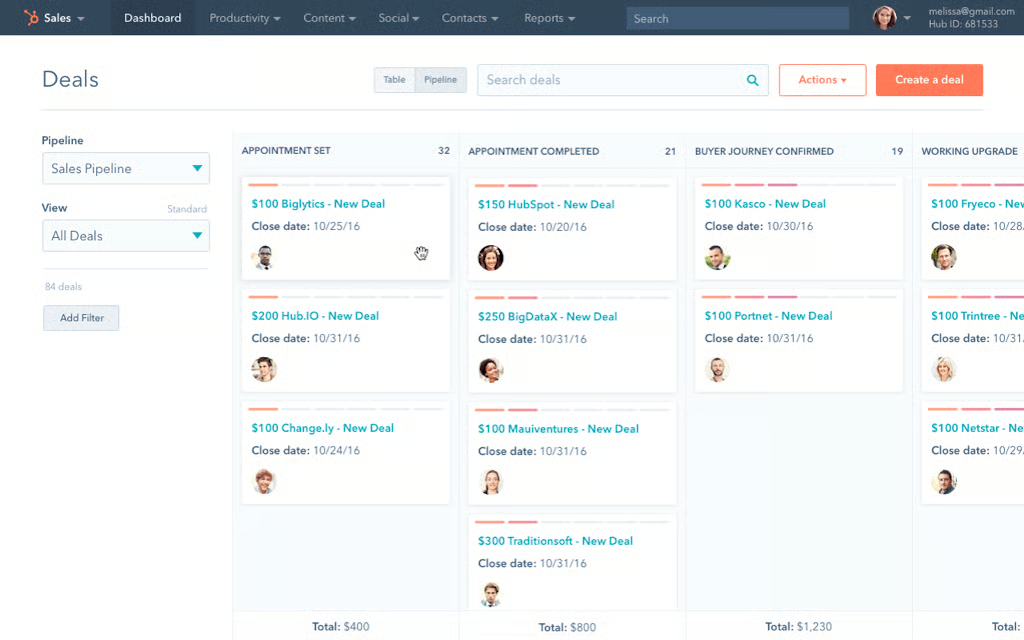
- Scheduling an introduction appointment, sales presentation, or product demonstration
- Getting the lead to make a purchase decision or sign a contract
- Convincing the lead to agree on letting you send them additional information or marketing materials
- Getting the lead to move to a required next step such as underwriting them, evaluating them for a quote, or agreeing to a free audit/evaluation
5. Ease Into Your Pitch
This step provides context to lead you into the sales pitch through probing questions or engaging with the lead by citing relevant news or a connection you have with them. For instance, you were at a networking event talking to a decision-maker who is part of your target market. After a little small talk, you might ease them into your pitch by talking about a news story that’s affecting their industry to see how it’s impacted them.
The relevant story could spark them to list off some of the problems they have, which you can acknowledge in your sales pitch. The other route you could take is asking probing questions to segue into your offerings. For example, when selling business insurance, you might start by asking “When was the last time you had your coverage reviewed?” If they answer that it’s been a few years, you have the perfect launch pad to go into the “body.”
The whole point of an introduction, whether in-person, phone, or through email, is to prevent you from going right into a pitch without contextual information or building rapport first. Since many sales pitches are done through email, check out our effective email introduction templates to guide you through various email introduction scenarios.
6. Prepare Your Call to Action Request
The final part of a full sales pitch is to get the lead to take action. This step is still used even if the prospect expressed disinterest. For example, if you gave your pitch and the lead said “I’m not interested at this time,” your call to action request should be something like “No worries, I’ll follow up in four months and see if anything has changed.”
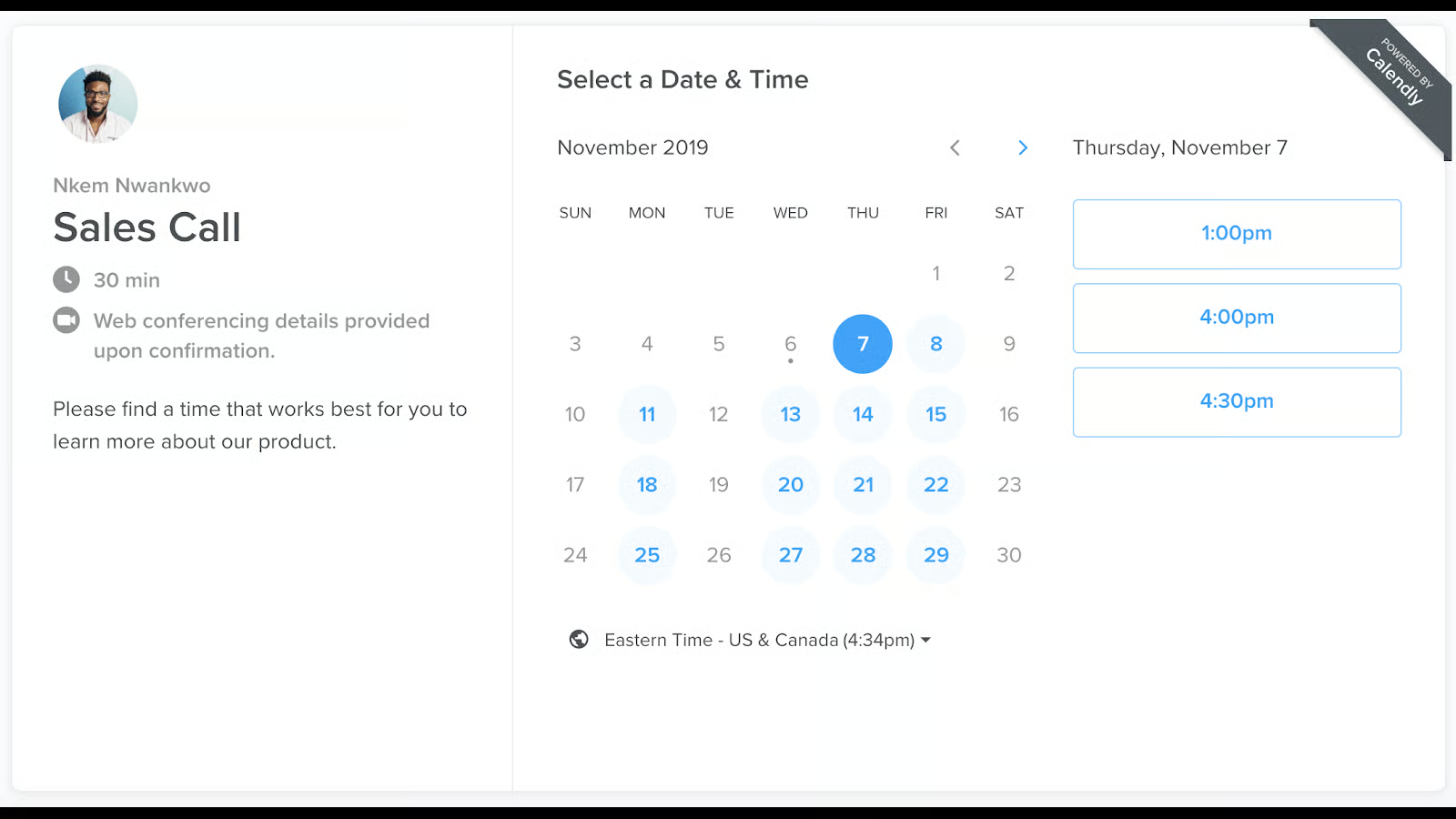
The key to a strong call to action (CTA), whether it’s during a conversation or through email, is to provide a clear next step, making it easy for them to take that step. Many CTAs might go with something along the lines of “I’d love to schedule a call and learn more about your business to see if we could be a good fit.” After that statement, they could click a link to schedule an appointment or coordinate to find a time that works.
If you are pitching in-person, you might collect a business card from the lead and tell them you’ll send an email to get an event scheduled. The point of the call-to-action request is to have the lead fulfill your sales objective. While most scenarios involve scheduling a sales presentation or demo, you could also have them agree to receive additional marketing materials or let you audit/underwrite them for a quote.
Below is a template you can use to initiate your call to action:
(After the body of pitch is delivered)
I’d love the opportunity to [fulfill sales objective] so we can [purpose of said sales objective]. What is your [availability over the next few days/email address so I can send you some additional information]?
7. Modify Your Pitch for the Proper Channel
As part of a robust sales training, teach your sales reps how to formulate a sales pitch, but also how to tailor it to the proper channel. Conducting this activity in an email is much different than during in-person conversations, phone calls, or video conferencing calls. In an email, for instance, you would start with introducing yourself briefly within your introduction.
Hi [lead name],
My name is Joe Mozeyko, an account executive at ABC Corp. I’m reaching out in regard to the recent regulatory change for financial institutions such as [their organization name]. As you may or may not know, the new regulations require [industry] businesses to [regulation requirements]. With that said, we may be able to help.
[Body of sales pitch]
If you were in-person or on the phone, your pitch would be more conversational with more questions and back-and-forth. Additionally, these channels assume you introduced yourself personally already.
[After small talk or personally introducing yourself]
So what impacts have the new regulations had on your business thus far?
[Lead answers]
Have you been finding anything particularly difficult about them? Maybe something you would prioritize finding a solution for?
[Lead answers]
Those are some excellent insights. I guess that is a good segue into what we do. [Enter body of pitch].
The body can often be virtually identical across all channels while the introduction and closing need tailor-fitting for the channel you’re using. Below are closing and call-to-action examples applicable to an email and in-person/call channel.
I’d love to schedule a product demo to show you how our software solution helps financial institutions improve operational efficiency while also keeping in compliance. You can use the Schedule Appointment button in my signature to find a time that works for you.
In-person/Call
If you have any time in the next week or so, I’d love to schedule a product demo and show you some of the features for workflow automation, data organization, and compliance assistance. [What is the best email address to reach you at / Do you have a business card? I can follow up with an email].
Key Components of a Sales Pitch
There are three main parts in making a sales pitch that work holistically with one another moving a lead through the sales journey. These must work in unison to build rapport with the prospect, help them understand what you offer, and lay out the next steps to move forward. The three components of a sales pitch include:
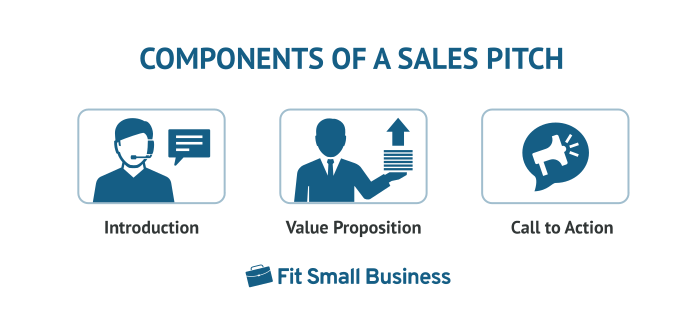
- Introduction: The act of easing a lead or potential customer into the value proposition through probing questions, acknowledgments, or any other method of sparking a conversation
- Value proposition (body): The “meat” of the sales pitch, where you explain how your products or services add value to your target market
- Call to action (closing): The shift to get the lead to move to the next step of the sales process, such as purchasing a product or agreeing to a conference call
While the way your sales pitch is delivered will vary depending on whether you’re speaking in-person, via email, phone, or video conferencing, the intro-to-body-to-closing structure remains consistent.
Bottom Line
A solid sales pitch is one of the most important ingredients in generating leads or gauging their interest. Sales management personnel and business owners must carefully craft the messaging for easing a prospect into the pitch, explaining the unique value they offer, and lay out the next steps of the process. Once the messaging is set, it needs to be tailored properly to fit any communication channels used during sales activities.
