







Knowing how to value a business is essential for small business owners, buyers, and investors. A proper valuation provides a clear picture of a company’s worth, based on its financials, growth potential, and market position. It helps you set a fair asking price, negotiate with confidence, and make informed decisions about selling, buying, or planning for the future.
In this guide, I explain the process of valuing a company for sale using proven methods, simple business valuation formulas, and easy-to-use valuation calculators. You’ll learn how to gather the right records, understand the main types of valuation methods, and apply the one that works best for small businesses.
I’ll also show you how to adjust for factors like industry trends, how to figure the value of a business, and how to improve your valuation before putting your business on the market.
Business valuation basics
To understand how to value a business accurately, you need to understand a few financial terms and how different valuation methods work. These basics will help you decide which method makes the most sense for your business and how to plug in the right numbers.
Key valuation terms
Before you can apply any valuation method, it’s important to understand the financial terms that drive the numbers. These terms help define how much money your business earns, how efficiently it runs, and what a potential buyer might be willing to pay.
Most valuation methods rely on at least one of these figures, so getting familiar with them now will make the next steps much easier.
| Term | Definition |
|---|---|
| EBITDA | Stands for Earnings Before Interest, Taxes, Depreciation, and Amortization. It’s a quick way to measure a business’s true operating performance without the impact of debt or non-cash expenses. |
| SDE | Short for Seller’s Discretionary Earnings. It includes net income plus the owner’s salary, perks, and personal expenses. It shows the full financial benefit to a hands-on owner. |
| Annual Revenue | The total sales your business brings in over a year, before expenses. Often used in quick valuations based on industry revenue multiples. |
| Cash Flow | The money flowing in and out of your business. Steady, predictable cash flow signals lower risk and can increase your business’s value. |
Types of business valuation methods
There are many ways to value a business, but they don’t all apply in the same situations. Most small businesses use one of four core methods focused on assets, earnings, or projected cash flow. These are widely accepted by buyers and brokers.
Alternative methods are used in special situations, such as distressed sales or highly regulated industries. These often act as supporting benchmarks or fallback options.
| Best for | What it measures | |
|---|---|---|
| Core methods | ||
| Asset-based | Asset-heavy businesses | Total assets minus liabilities (net asset value) |
| Earnings multiple | Profitable small businesses | EBITDA or SDE × industry multiple |
| Revenue multiple | High-revenue or growth-focused businesses | Annual sales × industry revenue multiple |
| Discounted cash flow | Established businesses with stable forecasts | Future cash flow discounted to present value |
| Alternative methods | ||
| Market-based | Businesses in industries with comps | Compares value to recent sales of similar businesses |
| Book value | Traditional industries with lots of records | Historical asset cost minus liabilities |
| Liquidation value | Distressed or closing businesses | What the business could sell for quickly |
| Rule of thumb | Businesses in standardized industries | Industry-specific formulas (e.g., 2× net income) |
For most small businesses, the earnings multiple method is the most practical and widely used. It’s based on either SDE or EBITDA and gives a realistic picture of what a buyer might pay based on your actual earning potential.
This method is especially useful if your business is profitable, owner-operated, and doesn’t rely heavily on physical assets. It’s also commonly used by brokers and lenders when valuing small businesses for sale.
How to value a business using the earnings multiple method
The earnings multiple method is one of the most common ways to value a small business. This method is popular because it’s straightforward, based on real financials, and widely accepted by buyers, brokers, and lenders.
To use it, you’ll calculate your earnings, usually using SDE or EBITDA, then multiply that figure by a number that reflects your industry, business model, and risk level. The result is a ballpark estimate of what your business may be worth if sold today.
To make this easier to follow, we’ll use a hypothetical business as an example: Jake’s Commercial Cleaning, a profitable, owner-operated cleaning company with steady revenue and low overhead.
Step 1: Calculate your earnings
So, how do you figure the value of a business? The first step is calculating your annual earnings. Most small business valuations use SDE, as it gives a more complete picture of the income available to a hands-on owner. If your business is larger or not owner-operated, you might use EBITDA instead.
To calculate SDE, take your net profit and add back the following:
- The owner’s salary
- Personal or nonessential business expenses (e.g., travel, car lease)
- One-time costs (e.g., legal fees, equipment repairs)
- Interest, taxes, depreciation, and amortization (if not already excluded)
This gives you the total financial benefit the owner receives from the business, which is what a buyer would want to see when evaluating value.
Here’s what that looks like for Jake’s Commercial Cleaning:
| Line item | Amount |
|---|---|
| Net profit | $60,000 |
| Owner’s salary | $50,000 |
| Personal vehicle expense (added back) | $5,000 |
| One-time equipment repair | $3,000 |
| Depreciation & amortization | $2,000 |
| Estimated SDE | $120,000 |
Step 2: Find your multiple
Once you have your earnings, the next step is to apply a valuation multiple. This number reflects how businesses like yours are typically valued in your industry and depends on factors like size, profitability, growth, and risk.
For small businesses, this multiple usually ranges from 2 to 3, although it can vary higher or lower depending on your specific situation.
Factors that influence the multiple:
- Industry norms and trends
- Recurring revenue and customer retention
- Growth potential
- Owner dependence
- Local competition and market conditions
- Financial documentation and cleanliness
Businesses with consistent cash flow, strong systems, and low owner involvement usually earn higher multiples. Here are some ballpark figures of typical valuation multiples by industry:
| Industry | Typical multiple range |
|---|---|
| Cleaning services | 2.0 – 3.0 |
| Retail stores | 1.3 – 2.5 |
| Restaurants | 1.5 – 2.5 |
| Professional services | 2.0 – 3.5 |
| Online businesses | 2.5 – 4.0 |
| Construction/trades | 2.0 – 3.5 |
| Health & wellness (e.g. gyms, spas) | 1.5 – 3.0 |
For Jake’s Commercial Cleaning:
Jake runs a stable business with long-term commercial contracts, clean books, and low overhead. However, he’s heavily involved in daily operations. Based on cleaning industry averages and business-specific factors, a reasonable multiple is 2.5.
Step 3: Estimate your business value
Now that you have your earnings and a realistic multiple, it’s time to calculate your estimated business value. You can start with the basic formula:
For Jake’s Commercial Cleaning, this would be:
- SDE = $120,000
- Multiple = 2.5
- Estimated business value = $120,000 x 2.5 = $300,000
This gives you a base valuation, but in most asset sales, you’ll also need to factor in business assets and current liabilities that are not already included in the multiple.
Adjustment for assets and liabilities
Most small business sales are structured as asset sales, where the buyer purchases the tangible and intangible parts of the business, and the seller retains most liabilities.
Add tangible assets
These are physical or monetary assets not typically included in SDE:
- Real estate (if the business owns property)
- Accounts receivable
- Cash on hand
- Equipment not fully depreciated
These should be added to the base value.
Subtract liabilities
Most sellers retain business debt, but you’ll still want to estimate:
- Current outstanding loans or credit lines
- Unpaid taxes or bills
- Any debt that might transfer with the sale
These should be subtracted from the total.
Optional: Get a business info report
To double-check the business’s liabilities, you can order a Dun & Bradstreet Business Information Report. This costs around $139.99 and can offer extra clarity before entering negotiations. It includes:
- Debt obligations
- Payment history with suppliers
- Any past-due balances
Free business valuation worksheet
Use our business valuation worksheet to calculate your SDE quickly and accurately. This fillable worksheet walks you through each line item and also lets you input your valuation multiple. It will automatically compute your estimated business value.
Business valuation formula
Let’s use this business valuation formula to compute a more accurate valuation using our initial estimate, assets, and liabilities:
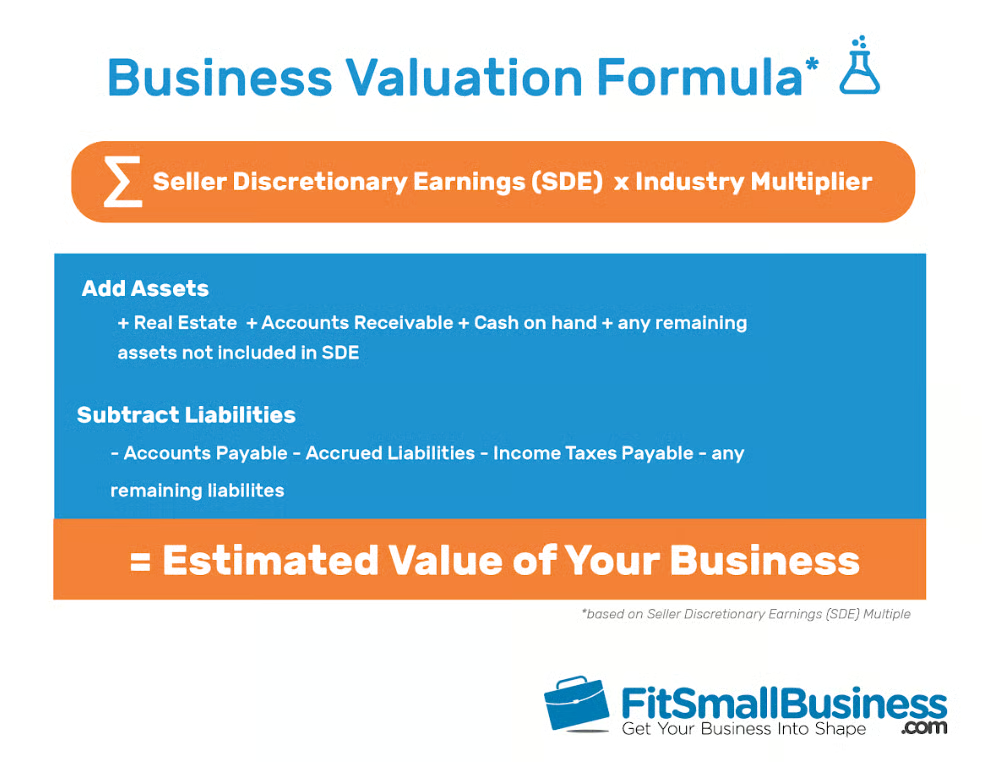
Let’s say Jake’s Commercial Cleaning also includes $25,000 in accounts receivable and equipment, and the business has $10,000 in short-term liabilities.
Jake’s Commercial Cleaning will have a final estimated valuation of $315,000.
Step 4: Adjust for qualitative factors
The initial estimate gives you a baseline, but it’s important to account for non-financial factors that can raise or lower your business’s value. Buyers will consider things beyond the numbers, such as how dependent the business is on you, how well systems are documented, or how competitive your local market is.
Common qualitative factors include:
- Owner involvement: Can the business run without you?
- Customer concentration: Is most revenue coming from just a few clients?
- Staff and systems: Are operations streamlined and documented?
- Lease or location quality: Is your physical location an asset or a risk?
- Market conditions: Is demand growing, flat, or declining?
For Jake’s Commercial Cleaning:
Jake handles most of the client relationships and oversees day-to-day operations himself. However, the business has long-term contracts and loyal commercial clients. While the 2.5× multiple reflects these factors fairly well, a buyer concerned about owner dependency might try to negotiate down or ask Jake to stay on during the transition.
Buyers often adjust the multiple up or down based on these factors, even if the financials look strong on paper.
Step 5: Use a calculator or consult an expert
Once you’ve estimated your business’s value using the earnings multiple method, you can refine your results using a business valuation calculator or by speaking with a professional. These options help double-check your math, adjust for market specifics, or prepare for negotiations.
Use a business valuation calculator
Online calculators guide you through the same steps you’ve just learned, but automate the process. They’re useful if you want a second opinion or a quick way to test different earnings and multiple scenarios.
Here are some of the most popular calculators small business owners use:
| Tool | Method | Best for |
|---|---|---|
| Fit Small Business | SDE x Multiple | General use, easy SDE-based calculator |
| CalcXML | SDE x Multiple | Quick financial snapshot |
| BizEx | SDE x Multiple | Brokers and sellers preparing for sale |
| Nationwide | Simplified DCF (no discount rate) | Profit and growth-based valuation |
| Western & Southern | Full DCF (with discount rate & marketability discount) | Valuations that include risk and marketability |
| Empire Flippers | Revenue & Net Profit Multiple | Online businesses and content-based sites |
| MassMutual | SDE/EBITDA | Starting point for small business owners |
Work with a broker or CPA
If you’re planning to sell your business soon, getting a professional valuation may be worth the cost. Brokers, accountants, or valuation specialists can help you:
- Justify a higher asking price
- Navigate buyer negotiations
- Account for legal or tax implications
A professional valuation can help you plan long-term, even if you’re not selling yet. Consider working with an experienced business valuation provider like Guidant. They offer a detailed valuation report that includes a financing assessment and a comprehensive industry analysis to help you understand where your business stands and how to improve its value.
Business valuation tips from experts
Experienced brokers and valuation professionals agree on one thing: small changes can lead to big gains when it’s time to sell. The insights below from industry experts highlight what truly impacts your valuation, from clean financials and strong vendor relationships to smart tax strategies and brand positioning.
 | “It’s important to get your financials in order before you sell. Not having strong bookkeeping or accounting is, without doubt, the No. 1 deal killer when selling small businesses.”Jock Purtle, Founder of Business Exits |
|---|---|
 | “You wouldn’t sell your house without clearing the clutter, giving it a fresh coat of paint, and engaging a crackerjack real estate agent. Business valuations are similar. First, review your external face to the market (e.g., website, sales materials, business cards). Are they dated? Do they positively reflect your business? Take the time to make your promotional materials work for you. “If you have time to engage in a promotional strategy, it could raise the visibility of your firm and demonstrate market leadership and awareness. By elevating public perception of your business, you improve your market positioning, customer awareness, and you may also increase your new business pipeline—all important factors as you enter into a business valuation and get ready to sell.”Katy Herr, Founder of Audacia Strategies |
 | “Be proactive and get letters of intent from both your key employees and your key suppliers or vendors. Don’t wait until you have a buyer or until your contracts expire. Show all potential buyers that all of your important pieces want to remain with the company for the foreseeable future.”Brandon Crossley, CEO of financial projections software company Poindexter |
 | “Consider paying more in income taxes. This has two particular benefits. One, the fewer adjustments an appraiser has to make, the more favorable a potential buyer looks at the operation. Two, businesses are sold based on a multiple of earnings. That means for every dollar on the bottom line, one may pay 40% of it in income taxes, but that same dollar may count two to five or even more times in value when selling.”Shawn Hyde, CBA, CVA, CMEA & Business Appraiser at Canyon Valuations |
How to boost your valuation before selling
You don’t have to overhaul your business to increase its value. A few smart moves can improve how buyers perceive your operations and what they’re willing to pay.
- Clean up your financials: Make sure your books are accurate, up to date, and easy to understand. Use accounting software, separate personal expenses, and get a CPA to review your statements if possible. Clean books = buyer confidence.
- Reduce owner dependency: If your business can’t run without you, buyers see risk. Start delegating day-to-day tasks, create standard operating procedures (SOPs), and document workflows so someone else can step in more easily.
- Diversify your revenue: Relying on one customer or product line can drag down your multiple. Try to spread revenue across multiple clients, products, or locations to show stability.
- Lock in recurring revenue: Subscriptions, service contracts, retainers, or long-term agreements increase value because they guarantee future cash flow. Try converting one-time customers into ongoing relationships.
- Cut unnecessary expenses: Improving your profit margins, even a little, can increase your valuation significantly. Review your expenses, renegotiate contracts, or streamline operations to boost your bottom line.
- Strengthen your brand and online presence: Buyers want a business with good visibility and reputation. Make sure your website, social media, and online reviews reflect a strong, consistent brand.
- Fix what could be red flags: Resolve outstanding tax issues, clean up expired licenses, pay down overdue bills, and organize legal documents. The fewer red flags, the smoother and more valuable the sale.
Related: What Is the Profit First Method & How to Use to Increase Profits
How to set the right asking price
Once you’ve estimated your business’s value, setting the right asking price is just as important. The price you choose sends a signal to buyers about the quality of your business, your seriousness as a seller, and how flexible you might be in negotiations.
Use your valuation as the foundation
Your asking price should be based on your earnings multiple valuation, adjusted for tangible assets and liabilities. This number reflects the real-world value of your business and gives you the facts to back it up during negotiations.
Avoid common pricing traps
Many small business owners either price too high (based on emotion) or too low (out of fear). Other mistakes to avoid include:
- Setting your price based on what you “need” financially
- Ignoring similar listings in your industry or area
- Failing to adjust based on market conditions or business risk
- Changing your price repeatedly after listing
Use the psychology of pricing to your advantage
Buyers often respond to certain pricing cues. Round numbers can feel cleaner and more professional, while slightly higher pricing can create a stronger anchor point for negotiations. For example, listing at $325,000 instead of $299,000 may imply more value and give you room to come down without dipping below your floor.
Leave room to negotiate, but know your bottom line
Buyers expect to negotiate. Add 5% to 15% to your target price to allow some wiggle room, but be clear on your absolute minimum so you don’t get talked into an unfair deal. Being flexible without being vague gives you leverage.
Back it up with data
You don’t have to justify your price emotionally. Show buyers how you arrived at your number using earnings, industry multiples, and clean financials. This builds trust and positions you as a confident, well-prepared seller. The strongest asking prices are rooted in data, packaged with strategy, and delivered with clarity.
Frequently asked questions (FAQs)
Click through the sections below to answer common questions about business valuation:
How do you determine the value of a small business?
Start by calculating your earnings, usually using SDE or EBITDA, then apply a valuation multiple based on your industry, profitability, and risk. You may also add assets and subtract liabilities not included in earnings. This gives you a realistic estimate of what your business could sell for today.
What is the formula for valuing a business?
The most common small business valuation formula is:
Business Value = SDE × Industry Multiple
You can adjust this further by adding business assets (like accounts receivable or equipment) and subtracting liabilities.
What are the three ways to value a business?
The most common methods are asset-based, earnings multiple, and discounted cash flow (DCF). Asset-based looks at what the business owns minus what it owes. The earnings multiple method uses SDE or EBITDA multiplied by an industry multiple. DCF projects future cash flow and adjusts it to present value based on risk.
How do business valuation calculators work?
Most calculators ask for your annual earnings (like SDE), expected growth, and an industry multiple. Some tools also let you include assets or risk adjustments. Based on your inputs, they generate a quick estimate of your business’s market value.
Bottom line
Knowing how to value your business puts you in control. It helps you make informed decisions when you’re preparing to sell, bringing on investors, or simply tracking your company’s worth. The earnings multiple method is one of the easiest and most effective ways to estimate value, especially for small, owner-operated businesses.
If you want a professional opinion and a more detailed valuation, consider working with Guidant. They provide expert reports, financing assessments, and in-depth industry insights to help you understand your business’s true value and build a strategy for selling successfully.
