QuickBooks Capital Review: Is It Worth It for Small Business Owners in 2026?
QuickBooks Capital offers fast funding for QuickBooks users. Learn how its loans work, rates, requirements, and whether it’s worth it for small businesses in 2026.
Digital lending has changed the game in connecting business owners with funding opportunities. Instead of having to seek a traditional bank to finance your business, online lending platforms allow borrowers to compare and apply for a variety of business loans, often providing quick access to funds for a wide range of business uses. The best…
Plumbing insurance coverage is an important part of a successful plumbing company and consists of general liability and equipment coverage. Depending on the size of the business, plumbing insurance will include workers’ compensation and commercial auto, too. Plumbing insurance costs between $45 and $100 a month for general liability. Plumbers will pay a lot less for their tools, around $20 to $30 a month for equipment and tool coverage.
Plumbing insurance coverage is a policy, or collection of policies, that, when necessary, can be used to help a business facing a loss. There can be two types of loss: first-party and third-party losses. A first-party loss is when your business sustains damages or some kind of loss, like theft, to its property. In these situations, plumbing insurance will help replace or repair damaged items.
The other type of loss is third-party losses, commonly called liability claims. For instance, they can be in the form of a claim that someone files against the business because while working on a pipe in their home, an employee broke a ‘Ming Dynasty’ vase. This coverage will help provide protection from a lawsuit, or it can resolve damage or injury claims.
Of course, depending on the size of the operation, some plumbing businesses may need a few types of coverage.
Types of Plumbing Insurance Coverage
Type of Insurance
What It Covers
General Liability
Third-party claims for injuries, property damage, and reputational harm
Commercial Property
Repairs or replaces damaged, stolen, or vandalized business property
Commercial Auto
Third-party injuries and property damage caused by business-owned vehicles
Workers’ Compensation Insurance
Employees’ work-related illnesses and injuries
Surety Bonds
Clients’ financial losses if you fail to deliver on contracted services
General Liability Insurance for Plumbers
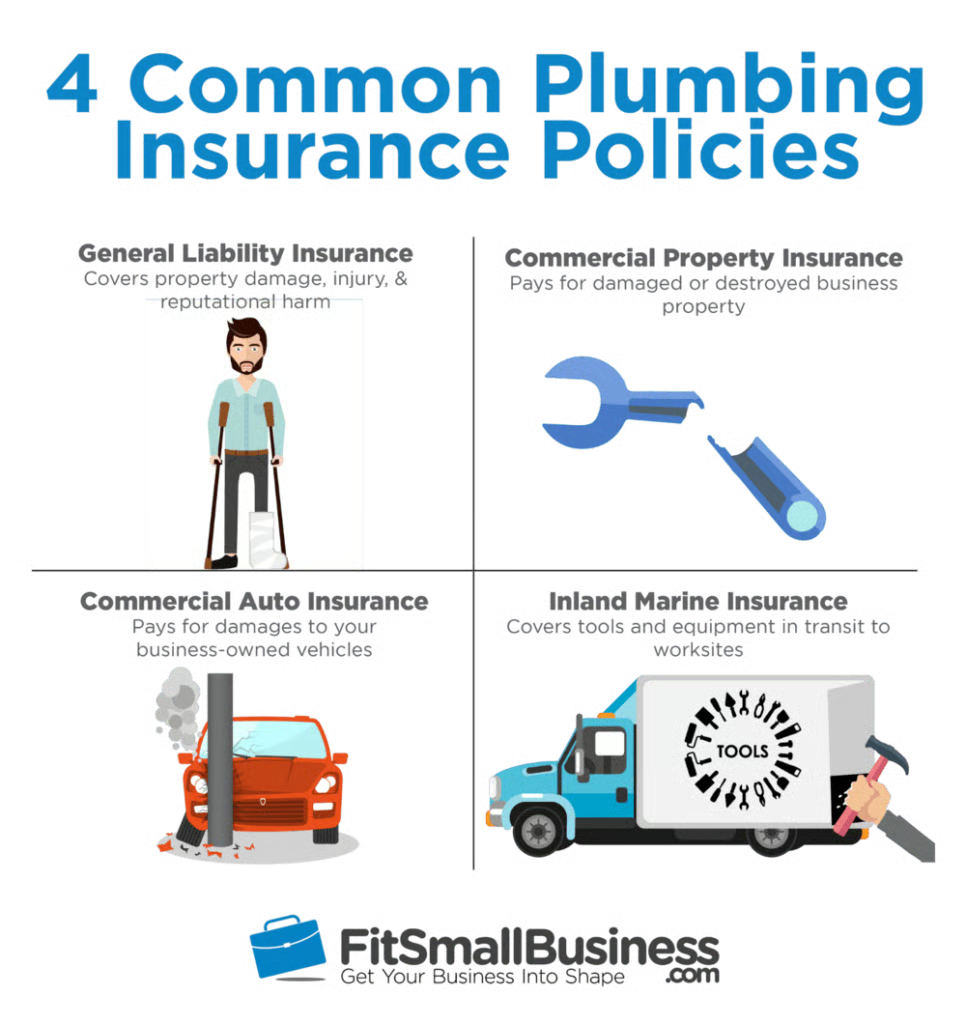
General liability insurance is the most important policy for plumbers because it covers the risk of third parties suing over property damage, bodily injury, and reputational harm. One type of general liability claim can be a bodily injury loss. For a plumber, two common ways for a bodily injury claim can be as follows:
A delivery person breaks their leg, tripping over the hosepipe you forgot to put away.
A homeowner slips and falls on water from a worksite that is not properly cleaned up or lacks any type of caution signs to let people know there is standing water.
For losses like these, general liability helps with court costs, attorney’s fees, and settlements or judgments against you.
Commercial Property
Commercial property is a first-party insurance, meaning it exists to help a business with its property. It does so by paying to repair or replace any business property that is damaged, lost, or stolen and falls under a covered loss. Commercial property losses are covered under a named peril basis and typically include the following:
Theft
Vandalism
Fire
Windstorm
Hail
Commercial property can be purchased for a building and its contents. In those situations, the coverage is limited to the location listed on the policy.
If you need your tools and equipment covered when they aren’t at the office, you’ll want inland marine insurance. Sometimes, insurers will sell inland marine as “tools and equipment” coverage as an endorsement for general liability.
Commercial Auto Insurance for Plumbers
Not every plumber will need a commercial auto policy. If you drive your regular vehicle to job sites, this is just like commuting to work. However, if you have a work truck or van used primarily or solely for the business, you will need a separate commercial auto policy. Commercial auto insurance is a special policy with multiple types of coverage that you can add.
Liability: Pays for injuries to a third party or damage to their property
Collision: Pays for repairs to your business-owned vehicle if it is damaged in a car accident
Comprehensive: Pays for repairs to your business-owned vehicle if it is damaged in an event other than a collision, such as vandalism or theft
Medical payments: Pays medical bills for you, your insured driver, and your passengers regardless of fault
Workers’ Compensation Insurance for Plumbers
The other type of required coverage is workers’ compensation insurance. This important policy is required in every state except Texas and South Dakota. However, every state has a different threshold of requirements based on how many employees your business has.
Select Your StateSelect Your StateAlabamaAlaskaArizonaArkansasCaliforniaColoradoConnecticutDelawareWashington, D.C.FloridaGeorgiaHawaiiIdahoIllinoisIndianaIowaKansasKentuckyLouisianaMaineMarylandMassachusettsMichiganMinnesotaMississippiMissouriMontanaNebraskaNevadaNew HampshireNew JerseyNew MexicoNew YorkNorth CarolinaNorth DakotaOhioOklahomaOregonPennsylvaniaRhode IslandSouth CarolinaSouth DakotaTennesseeTexasUtahVermontVirginiaWashingtonWest VirginiaWisconsinWyoming
State
Workers’ Compensation Requirements
State Website
Alabama
Coverage is required for businesses with five or more employees (part-time or full-time).
Required for any business with one or more employees. Casual employees who make less than $1,500 during 12 consecutive months prior to an injury are exempt.
Without workers’ compensation, plumbers would be responsible for covering their injured employees’ medical bills and lost wages or paying death benefits to the survivors of an employee who is killed on the job.
Surety Bonds for Plumbers
While not insurance, a surety bond functions very similarly to insurance. Here is how a surety bond works: it is a financial guarantee that your work will follow regulations and be completed on time. If your work is incomplete or not up to code, your customer can file a claim with the bond issuer, who then reimburses your client. A significant difference from insurance is that with a surety bond, bond issuers expect you to pay back the claims they pay.
Importantly, surety bonds are often required by state governments, local governments, or local license boards. Even if you don’t need a surety bond for a plumber’s license in your state, you may find clients who only want to work with plumbers who are bonded.
Plumbing Insurance Costs
Plumbing insurance costs are the combined premiums of all the policies purchased plus the deductible.
Insurance Type
Estimated Annual Premium
Typical Deductible
Coverage Amount
General Liability
$500-$1,300
No deductible
$1 million per occurrence and $2 million aggregate
Commercial Auto Insurance
$900-$2,200
No deductible for liability
$500,000 in combined liability
Surety Bonds
0.75%-15% of coverage amount*
$0
$3,000-$25,000*
Inland Marine Insurance
$225-$700
$500-$1000
$30,000
*The amount required for a surety bond will vary depending on the job or license requirements.
Plumbers insurance costs will necessarily have some variance due to several key factors. For instance, a plumber who owns a storefront typically pays more for their commercial property policy. Some other factors that impact plumbing insurance costs are as follows:
Deductibles: Selecting higher deductibles lowers your premium but means more out-of-pocket costs for claims.
Coverage limits: Insurers increase your premium when you opt for higher coverage limits because it means they pay more when you file a claim.
Your revenue: Plumbers with higher revenue typically pay more for insurance because carriers assume they have more to lose and raise costs accordingly.
Your employees: Plumbers with employees have to get workers’ compensation insurance, plus hiring more staff usually means greater liability risk. This higher risk means you’ll see an increase in your premiums.
Your claims history: Unfortunately, filing a claim can make a plumber look too risky for an insurer. If you’ve filed a claim in the last three to five years, you can expect to pay higher rates.
Geographic location: The location of your business can have a significant impact on the premium. Some zip codes within a state are more prone to loss than others, and some states have laws that are friendly to a plaintiff. In both situations, these factors can mean you’ll pay a higher premium.
While the above list is standard for nearly every insurer, there are other proprietary factors that a company will use when determining plumbing insurance costs. So it’s a good idea to compare quotes from multiple carriers before purchasing a policy.
Frequently Asked Questions (FAQs) About Plumbers Insurance
What happens if I don’t get plumbing insurance coverage?
Short answer: nothing good. If you are faced with a loss while being uninsured, it could cost you your business and, depending on how it is structured, your personal assets, too. If it is a workers’ comp loss and you are uninsured, you may be hit with compliance fees from the government on top of being responsible for the loss. The cost of insurance is far less than the cost of being uninsured when something goes wrong.
Why do you need plumbing insurance?
Plumbing insurance can help you if your business suffers a loss by paying to repair or replace your property or stepping in and handling a lawsuit on your behalf. But plumbing insurance coverage can also benefit your business if you are trying to bid on a job and need proof of insurance.
Is plumbing insurance required?
Workers’ compensation and commercial auto are the only two types of insurance for plumbers that are required. Workers’ comp requirements will come down to the specific laws of your state. Beyond that, there are no broad requirements for plumber’s insurance. However, many local governments and licensing boards can require general liability and a surety bond to be licensed.
Bottom Line
Plumbers play an important role in our society by making it possible for people to have access to clean drinking water while also giving us ways to be clean and hygienic. When something happens, like a clogged pipe or a broken water line, the plumber is one of the first people called to fix the problem.
Plumbing insurance coverage is there to help plumbers when they run into a problem and need someone to help them fix it. From replacing your tool chest to helping negotiate the settlement to a property damage claim, plumbing insurance coverage is an important part of any plumbing business.
Simply Business is an online digital broker specializing in offering small businesses insurance. Plumbing insurance costs an average of $41 a month for general liability for Simply Business customers. In just minutes, you can compare multiple quotes and buy a policy online without needing to speak with anyone.
Nathan Weller is a licensed insurance adjuster, with more than a decade of experience in commercial insurance. He has helped build a claims department at an insurance start-up, and currently advises small business owners about insurance topics. In between his time working at different insurance carriers, he spent 8 years running a small, non-profit organization. Nathan understands small business pain points alongside the complexities of insurance.
Loading more content…
Our mission is to provide small business owners with the information you need to succeed. Learn how to start, market, run, and grow your business today!
Advertiser Disclosure: Some of the products that appear on this site are from companies from which TechnologyAdvice receives compensation. This compensation may impact how and where products appear on this site including, for example, the order in which they appear. TechnologyAdvice does not include all companies or all types of products available in the marketplace.