







TikTok Shop ties checkout to short-form video and live streams, so products can take off when creators get behind them. Sellers pay a category-based referral fee, with a 3% promo for new shops, and there is no monthly software charge. The tradeoff is operational: payouts depend on delivery and account tier, buyers can open cases after delivery, and last-mile issues can eat time and margin.
If you already sell on Shopify or Amazon and can recruit affiliates, TikTok Shop is a smart add-on to amplify proven SKUs. If you need predictable cash flow or have complex returns, keep this as a secondary channel and tighten your processes before scaling.
In this article, I will discuss the pros, cons, and alternatives to selling on TikTok Shop. I will also summarize TikTok Shop reviews from TikTok sellers and share my experience navigating the platform’s backend as a seller.
- TikTok Shop overview
- Is TikTok Shop right for you?
- Overview: How TikTok Shop works
- TikTok Shop fees and pricing plans
- TikTok seller reviews: What sellers say in TikTok Shop reviews
- Registration and onboarding
- Seller management
- Marketplace and marketing tools
- Ease of use
- Expert score
- Methodology: How I evaluated TikTok
- Frequently asked questions (FAQs)
- Bottom line
TikTok Shop overview
Deciding factors
| Supported business types | Ecommerce brands and retailers, DTC sellers, creators/affiliates, marketplace-style sellers of physical goods (policy-eligible categories). |
|---|---|
| Ecommerce functions | Shoppable videos and posts, live shopping, in-app storefront with checkout, order and catalog management in Seller Center, affiliate program, coupons/ads, and optional Fulfilled by TikTok (FBT) logistics. |
| Standout features |
|
| Monthly fees | Free, no subscription fees |
| Payment processing Options |
|
| Fees |
|
| Customer Support | Help center available 24/7; live agents available during business hours via the app; seller support portal online |
Is TikTok Shop right for you?
TikTok Shop is ideal for the following:
- Small businesses that want to drive sales and brand awareness will definitely benefit from selling on TikTok Shop. TikTok is known for its vast audience and huge potential for virality, given the numbers from Exploding Topics.
- Online sellers whose products are made for younger audiences, particularly Gen Z. Almost 20% of TikTok users are from Gen Z, and out of this age group, 68% are more likely to purchase from the platform.
- Established online stores looking to add a new sales channel to increase sales will benefit from having their presence on TikTok.
Consider an alternative for the following cases:
- If you are serious about online selling and scaling your online business, go with an ecommerce platform that can grow with your business like Shopify. It is an ecommerce platform that lets you build a full website and is ideal for new businesses but has room for growth and scalability.
- If you want to sell on social media and cover most platforms, go with Facebook. Facebook is still the top social channel for selling in the US (20.6% of consumers), according to social commerce statistics. Moreover, you can also sell on Instagram by just setting up a Facebook Shop.
- If you seek the audience reach of a marketplace but need to use an automated fulfillment service, consider Amazon. Ecommerce giant Amazon is the most visited online marketplace—averaging 2 billion monthly visits—in the US. If you are looking to tap into Amazon’s buyer reach, apply as a seller for Amazon.
Alternatives
| Best For | Monthly Fee Starting Price | Learn More | |
|---|---|---|---|
 | Small businesses with serious plans to scale and multichannel retailers | $5 | Full Shopify review |
| Visit Shopify | |||
 | Sellers who want to sell across Meta platforms | $0 | Learn how to sell on Facebook |
| Visit Facebook | |||
 | Sellers who want to use an automated fulfillment service | $39.99 | Learn how to sell on Amazon |
| Visit Amazon | |||
Looking for more options? Read our guide to the best ecommerce platforms for small businesses to find a service or software that’s right for you.
Overview: How TikTok Shop works
TikTok Shop is a built-in shopping feature of the TikTok platform. Launched in 2023 in the US, it allows businesses to have a storefront on the short-form video platform while showcasing their brand and products. In turn, TikTok users can buy them without leaving the platform.
As an ecommerce platform, TikTok Shop lets retailers provide an immersive and engaging shopping experience for their customers. It also allows them to leverage the power of viral content to promote and ultimately sell products.
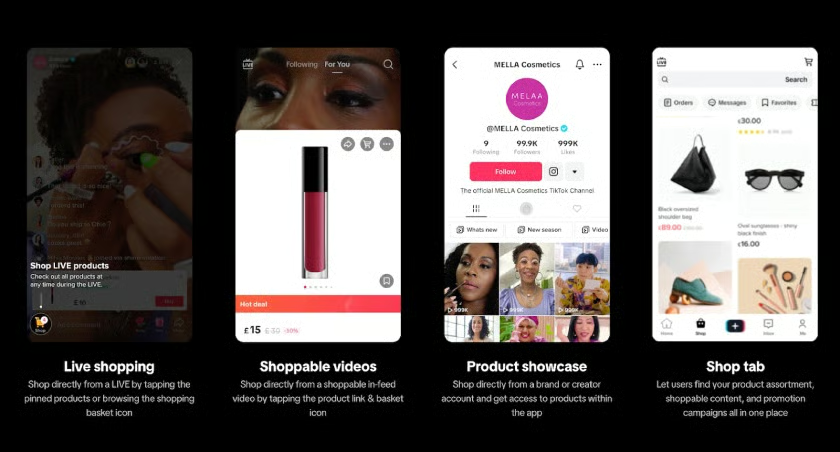
TikTok Shop allows retailers to sell products in the following ways:
- Through embedded product links in their in-feed videos
- Through the Product Showcase tab in their TikTok profile
- Through TikTok Live Shopping
- Through the Shop tab
To get started with selling on TikTok, apply as a Seller with your email address or phone number. You can also use an existing TikTok account and switch to a Business account. You will need to submit relevant documents and wait for your account approval within two to three days. Once approved, you can upload your products, link a bank account, and start selling.
As a TikTok seller, a huge part of successfully selling on TikTok will rely on your marketing strategy. Marketing on TikTok will heavily rely on authentic and entertaining content, collaborating with influencers, and leveraging user-generated content (UGC). Read our guide on developing an ecommerce marketing strategy for TikTok.
TikTok Shop fees and pricing plans
Selling on TikTok is free — there are no subscription fees associated with selling on the platform. TikTok just charges a referral fee for every item successfully sold and shipped. The fee is category-based. Current TikTok Shop US documentation shows 5%-6% by category, with 6% as the standard rate on qualified transactions.
New-seller promo (April 1, 2025 onward): If your first sale happens within 60 days of onboarding (GMV > 0), your referral fee drops to 3% for 30 days starting within 48 hours of that first order, then reverts to your category rate. TikTok can change or end this promo.
A note about earlier 8% reports: Some 2024 reporting projected a move to 8%. The current US Seller Academy page still documents a 6% standard rate with category exceptions; therefore, this guide reflects what TikTok’s own documentation shows as of October 20, 2025.
You can learn more about how much TikTok Shop takes from sellers along with example calculations in our TikTok Shop Fees Guide.
TikTok seller reviews: What sellers say in TikTok Shop reviews
It was a bit hard to find TikTok seller reviews, as most of what you can see on third-party sites covers buying on TikTok, not selling. However, TikTok seller reviews abound on YouTube and Reddit, and that is where most of what we cover in this section comes from.
| Users like | Users dislike |
|---|---|
| Strong sales potential when the product-audience fit is right | Delivery disputes and missing parcels (UK reviewers frequently cite Evri) |
| Creator/affiliate engine that can scale faster than brand-only content | Refunds and returns feel buyer-sided; appeals close without clear resolution |
| Easy add-on channel if you already run Shopify/Amazon and have inventory | Payment holds and unpredictable settlements (reports of 30-60+ days) |
At the time of publication, TikTok Shop seller reviews earned the following scores from user review sites:
- Site Jabber: 1.3 out of 5 based on almost 200 reviews
- Trust Pilot: 1.3 out of 5 based on nearly 250 reviews
User feedback highlights a big upside if you have creator distribution and inventory discipline, but recurring pain around delivery disputes, refunds, holds, and support. Buyers complain about parcels marked delivered to the wrong address and slow or denied refunds. Sellers say disputes skew “customer-sided,” funds sit on hold, and support feels automated.
- “TT always sides with the customer… Support is terrible, like zero! It runs on a very poor AI.” — Reddit
- “19k daily.” — Reddit (seller success anecdote)
- “Evri sent proof of delivery… NOT my address… customer service completely unhelpful.” — Trustpilot
- “Orders… automatically canceled… customers refunded by TikTok.” — Trustpilot (seller)
During my evaluation, I didn’t notice any consistently positive feedback among recent TikTok Shop seller reviews.
Registration and onboarding
You can sell on TikTok by connecting your existing online store or registering as a TikTok Seller to be able to run a TikTok Shop.
But before registering, there are a few things you need to take note of, mainly the following:
- TikTok Shop enforces strict product guidelines and requires businesses to undergo verification to determine legitimacy.
- To be a TikTok Shop seller, you need to go through a seller vetting process that may include a background check.
- TikTok doesn’t allow the sale of trademarked or copyrighted products, such as Disney or Marvel—more so, dupes of the said products.
- On another note, TikTok Shop has invested in AI and machine learning to detect instances of potential fraud, infringement, and unsafe content. Be very careful when crafting your marketing strategy and content. A TikTok ban is the last thing you want.
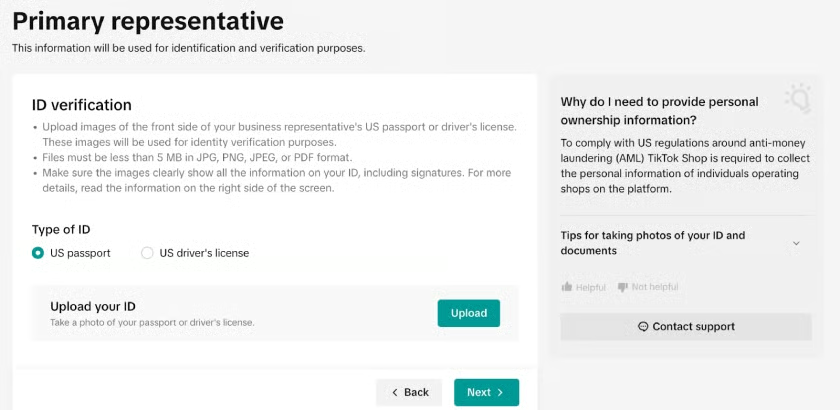
Connecting a Shopify store to my TikTok account was really easy because of Shopify’s built-in integration with the app. Registering to be a TikTok Seller is also easy, but you need to be ready with your documents for verification.
When applying for a Seller account, you need documentation that proves your identity (driver’s license or passport), validates your address (a utility or credit card bill), and your W9 form for tax purposes.
Seller management
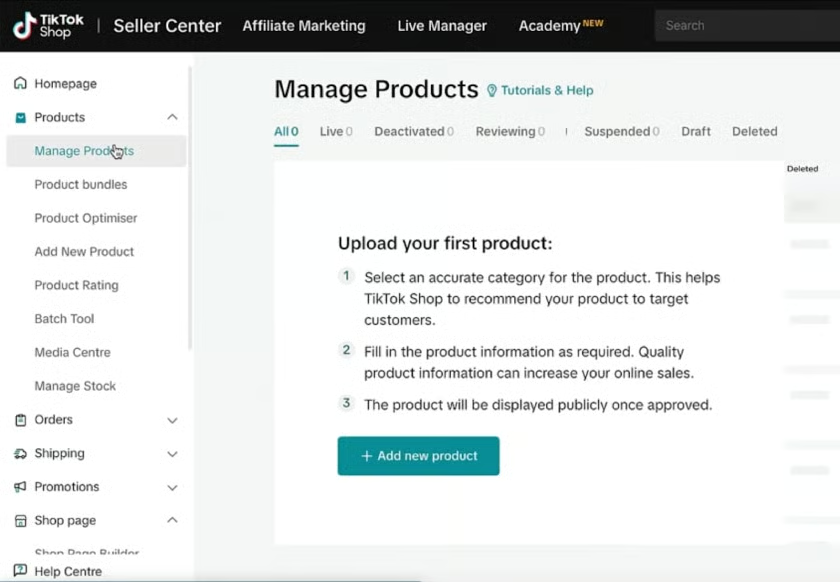
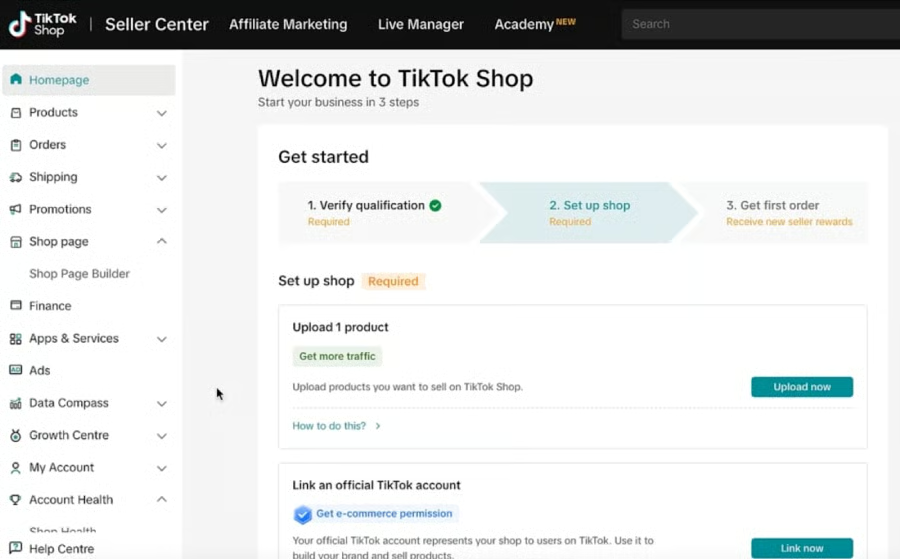
As a TikTok Shop seller, you have access to the seller dashboard, which allows you to manage all aspects of your shop. I was able to easily set up products and manage inventory. Fulfilling orders can also be done intuitively; you can easily see which products are marked paid and need to be shipped.
There are two things to note, though, as these are points frequently discussed by TikTok Shop sellers when I was doing my research—shipping and payouts.
TikTok Shop’s shipping policy
By default, sellers on TikTok Shop US are required to ship orders within two business days. This means TikTok Shop requires the package to be in the hands of the post office and marked as “in transit” within the timeframe to qualify as “shipped.”
Sellers narrate that this poses a problem. Even if they have the packages in the post office within the specified time, if the post office hasn’t scanned the shipping label (and more often than not, they do not do this upon receipt of packages), their packages would not be marked shipped, and TikTok would automatically cancel the order and refund buyers their money, with the item still getting shipped!
TikTok Shop’s payout schedule
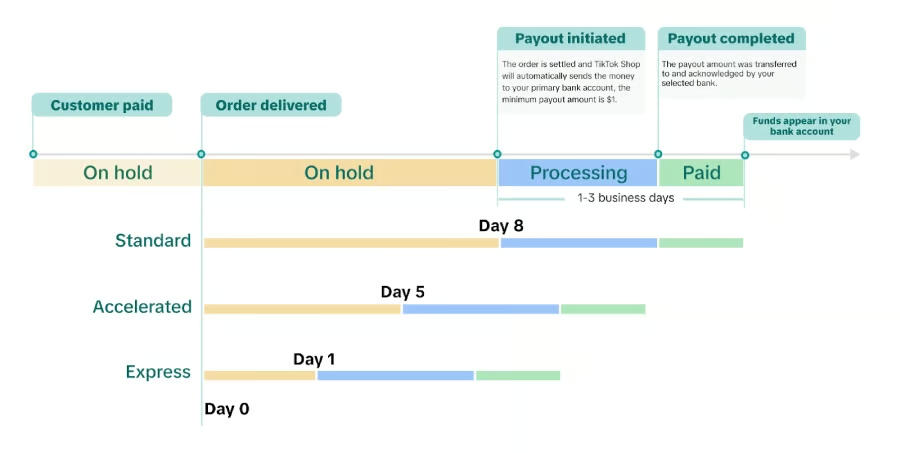
Originally set at 15 days, TikTok Shop’s payout schedule now ranges from one to eight days after the item is tagged as successfully delivered. However, this still depends on your store’s shipping performance. As a new seller, expect payouts to happen on the eighth day.
This means you need to consider payouts, especially when ordering products and keeping inventory stock.
For example, once a product is placed and paid for, you have two days to ship the order. Say it gets delivered within five days, so it will take about a week for an order to get marked successfully delivered. Add eight days to this delivery timeframe (one week), so it will take around two to three weeks before you get payouts.
Marketplace and marketing tools
TikTok is a platform known for its huge potential for virality. The hashtag #TikTokMadeMeBuyIt is proof of how effective promoting and selling on TikTok is. Since the platform is more focused on short-form and unstaged videos, marketing tools are a bit different.
Marketing tools that encourage engagement and community collaboration are TikTok’s focus, and you would benefit from leveraging these for your shop. For example, TikTok regularly releases new filters and features that help users ride off each other’s videos, like Duet and Stitch.
TikTok’s affiliate program, where a user can post about a product they don’t necessarily sell and earn commission when somebody buys from their video’s product link, encourages collaboration between sellers and TikTok content creators.
Influencer marketing is a bigger version of this, where sellers can pay content creators with huge or niched followings to endorse their products.
There are also the tried-and-tested paid advertisements called TikTok Ads where sellers pay the platform for targeted ads to run on specific audiences. It’s not as targeted as how Meta Ads work, according to sellers that have used it. However, it’s cheaper and helps widen reach, especially during TikTok LIVEs.
Ease of use
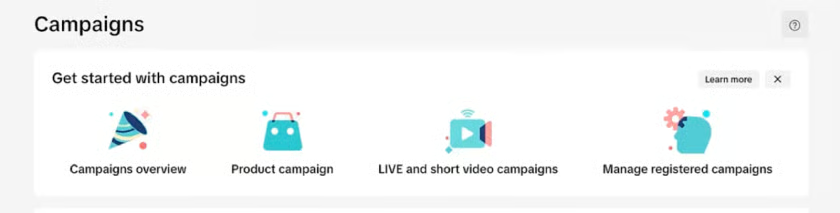
TikTok Shop’s backend is intuitive and easy to set up. Whenever you feel stuck, you will certainly find guides helpful in its Academy, conveniently linked in the top navigation bar of the Seller Center.
TikTok, as a new social shopping platform, regularly releases updates and new policies, and it is efficient in cascading important announcements to sellers.
What I find lacking is the presence of live human support for the seller side of things. You can “chat” with an agent, but responses show it is run by AI, and as of this writing, I have not been able to find a phone number for TikTok Shop sellers to contact in the US.
For concerns, you can send a support ticket through its Contact Page in the Seller Center dashboard.
Expert score
TikTok Shop is the social channel of the moment. If you want another sales channel for online selling, TikTok Shop is it. It is safe, and payouts are consistent, albeit handed out a bit later compared to other ecommerce platforms. Shipping can be a challenge, but it’s a fairly new social shopping platform. I expect it to roll out better updates in the near future.
While setting up shop is easy and the increased audience reach might seem encouraging, I need to stress that getting a viral product hit on TikTok is not just luck, it is extremely hard work. You need to be on your toes, keep your eyes out for trends, and be ready to experiment with marketing ideas and engage a lot with creators, users, and customers.
And if I am going to do a lot of hard work, I would want to do it for my own store where I have complete control over everything. I would promote heavily on TikTok if my audience is there and have my products offered there, too. But if I am serious about scaling my business, I would definitely open my own online store.
Methodology: How I evaluated TikTok
To help you decide if TikTok is the selling platform for you, we signed up for a TikTok seller account and evaluated the Seller Center dashboard using the following criteria: price, ease of use, store builder and design tools, inventory management, and sales tools. Together with Meaghan Brophy, we then added our own expert opinion based on years of experience testing different ecommerce platforms. We also heavily considered real feedback from TikTok Shop sellers and those that have used the platform.
The evaluation criteria include the following:
- Pricing and Payment Integrations: Since selling on TikTok is technically free, I evaluated its fees and compared them to other marketplace fees, what plan options are available as your business grows, and payment processing options, including fees, flexibility, and one-click checkout options.
- Sales and Product Features: I looked at what kinds of products TikTok can accommodate, its built-in marketing tools, and shipping options.
- Ease of Use: Because online stores operate 24/7, I made note if TikTok offers 24/7 customer support through multiple touchpoints, such as phone, email, and chat. I also considered how easy or complicated it was to manage a TikTok Shop.
- Expert Score: Here, I considered overall value, quality of features, popularity, customer satisfaction, and ease of use. Together with Meaghan Brophy, we also factored in our own experience working with the platform and feedback from real-world TikTok Shop sellers.
Frequently asked questions (FAQs)
Is selling on TikTok Shop worth it?
Yes, selling on TikTok Shop can generate huge returns, but it largely depends on your product choices and marketing strategy. TikTok Shop can only give you access to its massive audience reach, especially Gen Z, but it is up to you to leverage that potential revenue source.
Is TikTok Shop legit?
Yes, TikTok Shop is a legit place to sell and buy products. As a seller, TikTok Shop has a payment system in place that lets you receive payouts regularly. As a buyer, TikTok Shop is a generally safe place to shop, but like most marketplaces, due diligence is required. Check shop reviews before buying.
Why is TikTok Shop cheap?
You can sell products at cheaper or less expensive prices because you don’t have many overhead costs like monthly fees associated with ecommerce store subscriptions. TikTok also gives platform discounts that slash prices further, but this doesn’t come at a cost to you as a seller as it gives back the discount fees in your payments.
How do I sell on TikTok Shop?
Open a seller account, verify your business, list products, set shipping, then drive traffic with content, ads, and an affiliate program.
Do I still need a Shopify site if I sell on TikTok Shop?
Yes, I recommend you retain your online storefront. Keep your site as the owned channel for stability and repeat customers. Use TikTok Shop to amplify proven SKUs with creators and live shopping.
How much are TikTok Shop fees in the US?
TikTok Shop doesn’t have any monthly fees for its sellers but charges a per-order fee. US referral fee is typically 5%-6% by category, with a 3% promo for 30 days after your first sale for new sellers.
Bottom line
TikTok Shop can move products quickly if you have creators and inventory ready. Fees are simple and competitive, but cash flow and returns require tight controls. Treat it as an add-on channel to amplify proven SKUs, not your only store. If you need predictable payouts or have complex returns, keep TikTok as secondary while you harden operations.
