





.jpg?w=288)

Involuntary termination occurs when a company (as opposed to an employee) initiates the termination of an employment relationship. It is often the result of cost-cutting measures such as downsizing or poor work performance or inappropriate workplace behavior by the employee. Below we will dive deeper into the reasons your company might use involuntary termination and cover some of the legal considerations and other impacts associated with that decision.
Reasons for Involuntary Termination
Involuntary termination happens for many reasons, and the business usually determines these factors. Below are some of the most common motives for terminating employees.
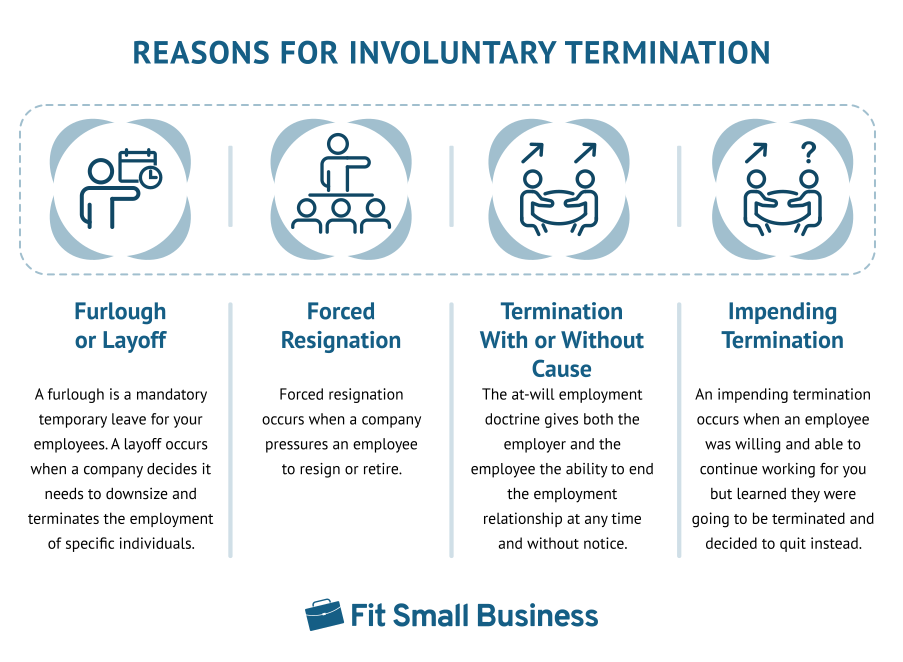
A furlough is a mandatory temporary leave for your employees, as was often the case with those that occurred during the pandemic. However, if the company is restructuring or no longer needs the employee’s skill set, it results in a permanent layoff.
A permanent layoff occurs when a company decides it needs to downsize and terminates the employment of specific individuals. A company may do this when restructuring or trying to lower operating costs. At the start of the COVID-19 pandemic, many companies laid off employees, which made for the largest layoffs in history at 15 percent.
Forced resignation occurs when a company pressures an employee to resign or retire. Be careful about trying this approach as it could be illegal. When your company pressures an employee to resign against their will because they are a member of a protected class or are requesting covered leave under the Family and Medical Leave Act (FMLA), that could be illegal.
It is best to avoid potential legal headaches and not try to force an employee to resign. Instead, go through your company’s termination process and ensure you’re following the law and terminating an employee correctly.
The at-will employment doctrine gives both the employer and the employee the ability to end the employment relationship at any time and without notice. Therefore, you’re not required to give a reason for terminating an employee. But companies often do, and it usually happens because of poor work performance or inappropriate workplace behavior.
You should have clear documentation about the substandard performance and what steps were taken to help the employee succeed, including any disciplinary actions leading up to the termination. Generally, termination for poor work performance does not happen on a whim, unlike misconduct or inappropriate behavior.
Your company handbook outlines the policies and standards you expect your team to follow, including a requirement that they behave professionally and without discrimination toward their fellow employees. When they violate policies, you have reason to terminate them, possibly on the spot if their behavior is egregious. Violence in the workplace, harassment, drug use, and theft of company property are all legitimate reasons to immediately terminate an employee for cause.
When an employee quits, most employers consider that to be voluntary termination. However, depending on the circumstances, it’s possible that the employee-initiated termination is actually involuntary.
When an employee was willing and able to continue working for you but learned they were going to be terminated and decided to quit instead, that may be considered an involuntary termination. This is a legally hazardous situation that varies based on the situation, so seek advice from an employment lawyer to ensure you’re handling the situation correctly.
Impacts of Involuntary Termination
When you terminate someone, that employee may be entitled to certain disclosures and benefits they would not be entitled to if they quit voluntarily. There are also things you need to prepare for to keep your employee engagement high.
You need to ensure that your termination letter does not reference any discriminatory reason for terminating the employee, something which could quickly lead to a wrongful termination lawsuit. Title VII of the Civil Rights Act of 1964 prohibits employment discrimination based on certain protected classes (race, color, religion, sex, and national origin). If an employee is terminated for being a member of a protected class, you can expect a wrongful termination lawsuit.
You also need to be aware of additional legal protections, including
- Age Discrimination in Employment Act of 1967 (ADEA)
- Americans with Disabilities Act of 1990 (ADA)
- Uniformed Services Employment and Reemployment Rights Act of 1994 (USERRA)
When terminating an employee, be aware of two types of discrimination, both affecting the above laws:
- Disparate Treatment: Occurs when a company terminates an employee because of or with consideration of their protected class.
- Disparate Impact: Occurs when a company policy appears neutral on its face but has a disproportionately negative impact on employees of a protected class.
Under the Consolidated Omnibus Budget Reconciliation Act of 1985 (COBRA), terminated employees may be eligible for benefits continuation. As it relates to COBRA, the Internal Revenue Service (IRS) has recently clarified the definition of involuntary termination, which is the primary trigger for whether a former employee is eligible for COBRA.
According to the IRS, involuntary termination only occurs when the employer unilaterally decides to terminate an employee when the employee is willing and able to continue working. In this scenario, an employee must be notified of their COBRA rights and how to continue their benefits.
Often offered to terminated employees, a severance package is not mandatory. Many companies offer severance packages to employees who have been employed for a long time or as a way for your company to get the employee to sign a release.
You can condition a severance on the employee signing a release agreement, absolving your company from any claims they may have in return for additional compensation upon their termination. As with any legal document, make sure your employment attorney reviews the severance agreement before you present it to the employee.
An involuntary termination (such as a layoff) is considered uncontrolled and is therefore chargeable to an employer’s unemployment insurance (UI) account. Employees who file an unemployment claim following an involuntary termination are considered unemployed through no fault of their own—typically making them eligible to collect benefits.
Every employer with employees on their payroll must have a UI account. These accounts are charged to employers at a percentage of their total payroll. Each claim against your account can affect your percentage rate for up to three years.
When you know it’s time to terminate an employee, you need to be prepared for potential blowback. With proper people management skills, you can work to keep employee morale high by getting ahead of the conversation. You don’t want to disclose confidential information or why the employee was terminated. Providing a clear, brief explanation to relevant team members about the employee’s departure and how their duties will be handled, however, is key to continuing business operations and keeping worker loyalty high.
Setting expectations and following a formal progressive discipline policy that ensures everyone is treated equally is effective in maintaining employee engagement even during these difficult situations.
Voluntary vs Involuntary Termination
A voluntary termination occurs when an employee leaves your company by their choice, whereas an involuntary termination occurs when you decide to terminate an employee.
| Scenario | Type of Termination |
|---|---|
| Employee quits to go work at another company | Voluntary |
| Employee retires | Voluntary |
| Employee on a performance improvement plan learns they are not meeting minimum job standards and quits | Involuntary |
| Employer unilaterally determines to lay off employee | Involuntary |
| Employer terminates employee for inappropriate workplace behavior | Involuntary |
Bottom Line
Countless reasons why companies terminate employees exist. Most states and cities do not require an employer to give an employee a reason for their termination because of the employment-at-will doctrine. However, some states and cities are passing laws requiring employers to provide employees with a reason for their termination, so make sure your company follows proper practices. Managing involuntary terminations effectively and legally is crucial to protecting your small business and keeping your staff engaged.
