






Bringing a new product to market takes more than just a good idea. It requires a clear plan, careful testing, and the ability to adapt to challenges like shifting tariffs or supply chain delays. In this guide, I’ll walk you through the whole new product development (NPD) process, from idea to post-launch, with real examples, timely sourcing tips, and tools built for lean teams.
- New product development stages at a glance
- What is new product development?
- 8 stages of the new product development process
- Benefits of the new product development process
- New product development examples: Use cases for small businesses
- Challenges in new product development
- Frequently asked questions (FAQs)
- Bottom line
New product development stages at a glance
| NPD Stage | Purpose | Key Activities |
|---|---|---|
| 1. Idea generation | Source promising product ideas | Brainstorm from personal pain points, trends, or communities |
| 2. Idea screening | Weed out poor-fit or unprofitable ideas | Check feasibility, sourcing, margins, and market demand |
| 3. Concept development | Turn the idea into something testable | Create visual mockups or descriptions, gather early feedback |
| 4. Business analysis | Assess financial viability and risk | Forecast costs, revenue, break-even points, and formulate get-to-market (GTM) strategy |
| 5. Product development | Build a prototype or minimum viable product (MVP) | Choose production path, test usability, refine the product |
| 6. Test marketing | Soft launch to refine product and marketing strategy | Release to a sample audience, collect feedback, adjust offer |
| 7.Commercialization | Launch your product at scale | Finalize fulfillment, marketing, customer support, and risk plans |
| 8. Post-launch review | Learn from results and set up future product development | Track metrics, product reviews, and customer retention |
What is new product development?
New product development is the structured process of transforming an idea into a product you can sell. It includes generating ideas, validating them, designing a prototype, testing it in the market, and finally launching it. For retail businesses, NPD is a way to reduce risk, control costs, and make sure your product meets real customer needs before investing heavily.
New product development vs product development
New product development differs from product development in terms of scope and time limitations. NPD focuses specifically on launching something entirely new. Think of it as solving a new customer problem or filling a gap in the market with a product that doesn’t currently exist. For example, if you develop a compostable shipping solution for eco-conscious shoppers, that’s new product development.
In contrast, product development is broader. It includes NPD but also covers updates to existing products, such as improving packaging, adding new sizes, or adjusting features based on customer feedback. Let’s say you already sell a reusable water bottle, and you decide to add a built-in filter. That’s product development, but not new product development.
In retail, product development tends to be ongoing. You might revisit earlier stages, like product design or market research, every time you want to improve something. NPD, on the other hand, follows a clear beginning and end: it ends once the new product is launched.
| Aspect | New Product Development (NPD) | Product Development |
|---|---|---|
| Definition | Creating and launching an entirely new product | Improving or evolving an existing product |
| Goal | Solve a new problem or fill a market gap | Enhance product performance, usability, or appeal |
| Start and end point | Defined stages from idea to market launch | Ongoing, often cycles back to earlier stages |
| Common activities | Ideation, concept testing, prototyping, go-to-market planning | Packaging updates, feature additions, cost optimization |
| Example | Designing a new compostable mailer for eco-conscious consumers | Updating an existing product’s packaging to reduce material costs |
| When to use | When entering new markets or addressing unmet customer needs | When optimizing existing products or responding to user feedback |
Why does new product development matter?
Let’s say you notice your customers are frustrated by long shipping times or limited product options. If you’re only improving what you already offer, you may miss the chance to win new customers or grow into new markets. That’s where NPD comes in. NPD helps you build products that match what your customers want today and what they’ll expect tomorrow. It’s not just about making something new. It’s about building a product that fits market demand and aligns with your business goals.
In a market where consumer behavior shifts fast and global factors like tariffs or supply chain delays can throw off your operations, having a clear NPD strategy helps you stay proactive. You’re not just reacting to changes, you’re building with them in mind.
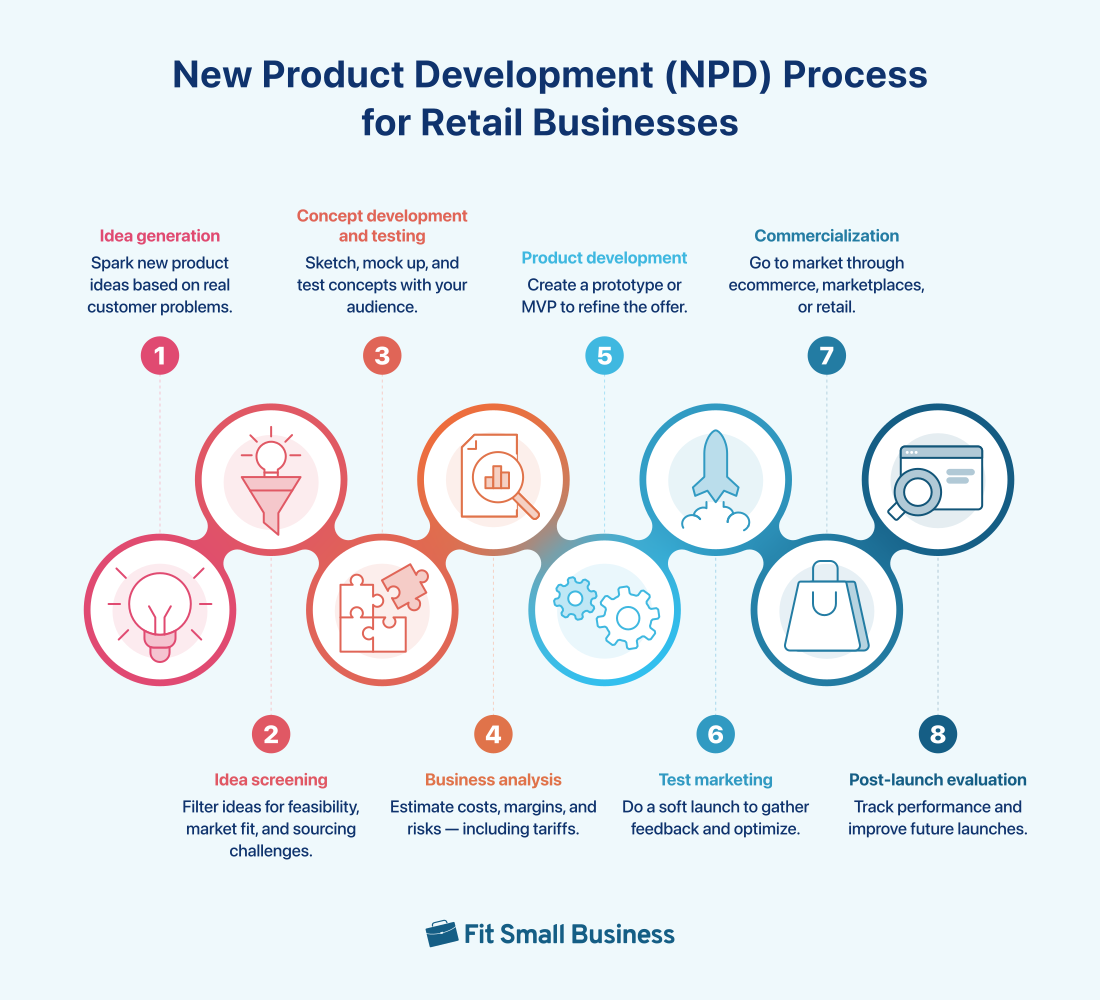
8 stages of the new product development process
The new product development process follows a clear path — from first idea to final product launch. Each stage helps reduce risk, improve product-market fit, and keep your development on track, even when you’re managing everything as a small business owner.
1. Idea generation
Great product ideas don’t come out of nowhere. They’re usually the result of asking the right questions and paying attention to patterns. Your best ideas will usually come from a mix of curiosity, observation, and research.
Just remember — people do not buy products, they buy solutions. You don’t buy cold medicine because you like taking it — you buy it because you want to stop feeling sick. You don’t buy a water bottle because it holds liquid — you buy it because you want to stay hydrated and avoid using single-use plastic. What people really pay for is the outcome, not the object. That mindset should guide how you come up with product ideas.
Here are three ways to approach idea generation:
Explore your own interests and pain points
Some of the strongest product ideas come from problems you’ve encountered yourself because you already understand the frustration, and that gives you an edge when creating the solution.
Let’s say you run a small skincare brand. You notice your hands dry out every winter, even when using “moisturizing” soaps. Most options either smell too strong, strip the skin, or come in wasteful packaging. That’s your pain point. You dig deeper and learn about oat-based cleansers and solid bar alternatives. Then it clicks: what if you created a moisturizing, plastic-free hand soap that actually delivers on its promise? That’s a product idea rooted in personal experience, and it’s more likely to resonate with others facing the same issue.
Start with:
- What frustrates you about the products you already use?
- What do you wish existed in your routine, home, or workday?
- What do your friends or customers complain about?
Write these down and start thinking through possible solutions.
Dive into passionate communities
Another strong source of product ideas is passionate communities — groups of people who care deeply about a specific activity, identity, or lifestyle. These communities often want niche products that help them do what they love, express who they are, or live according to their values.
Let’s say you’re active in the outdoor hiking and camping community. You notice a common complaint in forums and gear reviews: people love hiking with their dogs, but most dog gear, like backpacks or harnesses, either doesn’t hold up in rough terrain or doesn’t fit comfortably. That’s your opportunity. You realize there’s space in the market for a durable, trail-tested dog harness with modular add-ons, such as water bottle pockets, ID pouches, and built-in reflectors. The existing options may be mass-produced or too basic for serious trail users. Because you’re already part of the community, you understand what matters: gear that’s rugged, lightweight, and practical. And your product idea fits right into their world.
To generate these kinds of ideas:
- Pay attention to discussions in Reddit subs in your community.
- Look at product reviews to see what’s missing.
- Think about your own frustrations as a community member.
When you build for a group you already belong to, you reduce the guesswork and increase your odds of building something that sticks.
Leverage AI tools and search trends
If you’re stuck or want to pressure-test ideas, today’s tech gives you a serious advantage. Trends move fast, whether it’s changes in consumer values, overseas sourcing issues, or emerging product categories. Using AI and search data helps you stay ahead instead of playing catch-up.
These tools can help you spot real-time opportunities:
- ChatGPT: Brainstorm product categories, refine ideas, or explore variations based on customer needs.
- Google Trends: See if interest in a product category is growing, steady, or declining — especially useful for seasonal or trending items.
- Answer the Public: Find out what customers are asking about your niche or product idea in real time.
- Trend Hunter: Browse emerging product ideas across retail, lifestyle, and technology.
- Think with Google: Access insights on shifting consumer behavior, retail trends, and market opportunities.
Let’s say you’re exploring the idea of an at-home fitness accessory. Google Trends shows a recent spike in “ankle weights” tied to TikTok workout trends. But when you review the current options, they’re mostly black neoprene and lack aesthetic appeal. That insight could lead to a new angle: stylish, fashion-forward ankle weights for at-home workouts — combining performance with design.
These tools won’t give you a fully formed product, but they’ll help you connect the dots faster and act while demand is still rising.
Action steps:
- List 3-5 personal pain points you’d pay to solve.
- Browse 2-3 niche communities and take note of product-related frustrations.
- Use tools like Google Trends and ChatGPT to explore what’s gaining traction.
- Look for gaps between what exists and what customers clearly want.
2. Idea screening
Once you’ve got a list of product ideas, it’s time to get objective. Idea screening is where you narrow things down and figure out which concepts are worth pursuing and which ones might lead to wasted time, money, or frustration. This step helps you avoid building a product that’s either too expensive to make or too hard to sell.
Start by asking a few basic but critical questions: Can I make this profitably? Are there tariffs or import restrictions that affect this product? Will it be difficult or expensive to manufacture or source? Is there already strong demand, or will I be creating that demand from scratch?
You’re not just asking, “Do I like this idea?”— you’re asking, “Will this product sell, and is it worth the investment?”
Your answers don’t need to be perfect at this stage, but they should reveal major red flags. If a product relies on overseas materials with volatile shipping costs or enters a saturated market where differentiation is tough, that may be enough to put it on hold for now.
The goal at this stage isn’t just to prove your idea is “good” — it’s to prove that people want it, would pay for it, and can’t easily find a better version elsewhere.
Now that you know not every product idea is worth pursuing, use these five criteria to quickly assess whether yours is a good fit for your brand, market, and operations.
| Criterion | What to Ask | Example or Tip |
|---|---|---|
| 1. Fit with your brand and goals | Does this align with your store’s identity and customer expectations? Will it enhance the overall experience you offer? | A wellness shop adding essential oil diffusers makes sense. A tech gadget probably doesn’t. |
| 2. Market demand and relevance | Is there demand for this type of product?- Does it solve a real need or tap into a growing trend? | Use tools like Google Trends, Etsy Marketplace Insights, or TikTok search trends to spot interest early. |
| 3. Operational feasibility | Can you source and ship this product reliably with your current resources? Will it stretch your team or fulfillment process? | If you need overseas production, check for tariffs, MOQs, and longer lead times. |
| 4. Profit potential | What are the estimated production and shipping costs? Can you price it for a healthy margin without losing customer interest? | Retail products priced $30–$150 often balance cost coverage and buyer willingness. |
| 5. Differentiation and defensibility | What sets this product apart from competitors? Can you offer a better experience, feature, or brand position? | If it’s not new, it needs to be clearly better or more tailored to a specific customer group. |
Action steps:
- Evaluate each idea for feasibility, cost, and scalability. Rate each idea across the five criteria above to see which ones score highest overall.
- Research your target audience’s needs and buying habits.
- Compare your idea against competitors for uniqueness and value.
- Run a quick survey, poll, or landing page test to gather feedback.
3. Concept development and testing
At this stage, you’re moving from idea to something tangible, something others can see, react to, and critique. The goal is to bring your product concept to life in a simple, testable form. You’re not building the actual product yet — you’re just testing whether people understand and want it.
- Clarify the product concept: Turn your idea into a defined product vision. That might be a rough sketch, a product outline, or a simple write-up of its key features and benefits. You’re shaping how it looks, what it does, and who it’s for.
- Develop early mockups: Create a visual version of your product using digital tools. This could be a 2D render, packaging concept, or even a simulated product photo. For ecommerce, mockups help show how your product might appear online or on the shelf — without the cost of a physical prototype. Save physical prototyping (samples, MVPs) for Stage 5, after you’ve confirmed the product is worth producing.
- Test reactions with real people: Now that you have something visual, gather feedback from potential customers. Use Google Forms, or even social polls to gauge clarity and appeal. The goal is to spot confusion, validate interest, and capture suggestions before you invest in production.
Read also: Product Validation: What It Is & How to Do It
4. Business analysis
Now that your concept has been validated, it’s time to ask: Can I afford to make this product, and will it make me money? Business analysis helps you assess whether your product idea is commercially viable and aligned with your financial goals. You’ll also start shaping your go-to-market strategy, which includes how you’ll price, market, and sell the product once it’s ready.
Analyze commercial viability
Use this phase to estimate your costs, potential revenue, and overall risk. Your goal is to understand whether this product can be produced and sold at a profit and how long it’ll take to get there.
Do the following:
- Cost analysis: Calculate production, packaging, shipping, marketing, platform fees, and labor costs. Don’t forget tariffs and potential delays if sourcing overseas. If you’re sourcing internationally, tariffs can significantly impact your margins. Learn how tariffs affect small businesses and how to plan around them.
- Revenue projections: Estimate potential sales based on your target audience, pricing, and sales channels.
- Profitability: Calculate expected profit margins and ROI. Will this product generate meaningful income or just cover costs?
- Break-even analysis: Determine how many units you need to sell to cover all upfront and recurring costs.
- Risk factors: List potential risks, such as supplier reliability, inventory shortages, seasonality, or customer adoption gaps.
Define your go-to-market (GTM) strategy
Your GTM strategy outlines how you’ll launch and promote the product so it reaches the right audience. This doesn’t have to be overly complex, but it should be specific enough to guide your first few months of selling. This should include the following:
- Target market: Describe your ideal customer: who they are, what they care about, and how they shop
- Positioning and messaging: Clarify your product’s value proposition. What makes it different or better than what’s already out there? Learn more in our article about product positioning.
- Marketing channels: Choose the best platforms to reach your customers — Instagram, TikTok, email, search ads, or PR.
- Sales strategy: If you are starting a new retail business, learn how to start a retail business in our guide, but if you want to expand your business or focus solely on selling online, there are plenty of ways to sell online. Learn how to sell online in our guide. Decide whether to sell via Shopify, marketplaces like Etsy or Amazon, or in person — or multiple channels.
- Pricing strategy: Set a price that reflects the product’s value, covers costs, and stays competitive. Read our pricing strategy guide.
- Distribution plan: Plan how you’ll fulfill orders — whether in-house or outsourced, dropshipped, or through a 3PL.
5. Product development (prototyping)
At this stage, you’re moving from concept to a working version of your product. This is where physical details come to life — materials, construction, packaging, and overall functionality. The goal is to build a minimum viable version of your product (MVP) that’s ready for testing, refinement, and small-batch production.
You’re no longer just testing the idea. You’re testing the execution.
- Start with a minimum viable product (MVP): Your MVP doesn’t need to be perfect; it just needs to function well enough to gather feedback. Focus on your product’s core features and eliminate anything that adds cost without adding value. In retail, this could be a single size, color, or variation. For example, if you’re developing a wellness candle, your MVP could be one scent in your chosen jar with basic labeling — enough to test the scent throw, burn quality, and customer response.
- Choose your production path: Depending on your product type, you have a few common options: print-on-demand platforms like Printful or Gelato for soft goods and home decor, domestic manufacturers or local makers for artisan or handmade goods, overseas sourcing through Alibaba or Thomasnet for higher-volume, cost-sensitive production. Our guide on how to manufacture a product can help. If you’re using international suppliers, factor in longer lead times for samples and bulk shipments, tariff classifications and possible import duties, and minimum order quantities (MOQs) that could affect your cash flow
- Test for quality and usability: Once your prototype is in hand, review it like your customer would. Does the product feel durable? Are the materials and finishes what you expected? If it has packaging, does it match your brand’s positioning? Ask a few trusted customers or beta testers for honest feedback. You’ll use what you learn here to make final improvements before going to full production.
6. Test marketing
Test marketing, also known as a soft launch, is your opportunity to put your product in front of real customers before going public. It helps you uncover how your product performs in the market, what customers love (or don’t), and how your messaging lands. For small retail brands, this step can make the difference between a slow start and a strong launch.
You’re not just testing the product — you’re testing the offer, pricing, packaging, and overall experience.
Choose the right audience sample. Start with a small group that reflects your ideal customer. Consider age, income level, values, and purchasing habits. Whether you sell online or in-person, this sample should give you honest, actionable feedback.
Example: If you’re targeting eco-conscious Gen Z shoppers, a local college pop-up or TikTok beta group might be more insightful than a general survey.
Select your testing method. There’s no one right way to run a soft launch. A few common retail-friendly options:
- Create a private product page on your Shopify store
- List the item quietly on Etsy and send direct traffic
- Host a booth at a market or event to test in person
- Offer early access to your email subscribers or loyalty list
Each method gives you a low-risk environment to gather real-world insights before you invest in a full campaign.
Collect and use feedback. During your test, track how customers interact with the product and what they say about it. Look at conversion rates, reviews, return rates, and price sensitivity. Use this information to refine your offer, adjust messaging, tweak your packaging, or even improve the product itself.
Read also: The Ultimate Guide to Product Sampling
7. Commercialization (full launch)
Once your product has been tested and refined, it’s time to go live. Commercialization is the full-scale launch of your product to the market. The goal is to deliver a smooth customer experience — from product availability and shipping to marketing and support — so you can start building momentum and generating sales. This stage is where everything comes together.
Deployment. This phase ensures that every operational and customer-facing element is ready for launch. It ties together logistics, marketing, support, and contingency planning so you can confidently go to market.
- Finalize logistics and fulfillment: Confirm that your inventory is stocked and ready to ship. Test your fulfillment method and double-check your packaging, shipping labels, and delivery estimates. You should also have a system in place to monitor orders and respond to fulfillment issues quickly.
- Prepare your marketing assets: Make sure product pages, launch emails, promotional graphics, and ad campaigns are finalized and scheduled. Your messaging should clearly communicate your product’s strongest benefit and why customers should buy now. If you’re running a launch offer, early access, or influencer campaign, confirm timing and deliverables.
- Support readiness: Create customer support documentation, including FAQs, returns instructions, and help contact info. Even if you’re a solo founder, your process for responding to customers should be fast and easy to manage. Good support builds trust, especially for first-time buyers.
- Run final quality checks: Review a sample of your inventory to make sure everything meets your quality standards. Look for defects, labeling issues, or packaging damage. Fix anything that might result in a poor customer experience.
- Plan for what could go wrong: Have a buffer of packaging materials and shipping supplies ready. If you’re working with external suppliers, identify a backup option or keep your production schedule flexible. Prepare clear messaging in case of inventory shortages, delays, or other disruptions during the first few days of launch.
Launch with confidence, not perfection. At this point, you’ve tested, refined, and planned. Now it’s about execution. Your product pages should be live, pricing locked in, and your fulfillment process stress-tested. If you’re working with overseas suppliers, make sure your timelines and inventory buffers are realistic, especially if tariffs or delays are a concern. If you’re producing locally, confirm that your partners are ready to scale with you.
Start with the best-fit channel. You don’t have to launch everywhere at once. Many successful brands begin by selling directly through their own site, which keeps margins higher and customer relationships stronger.
Monitor and adapt in real time. Your first few weeks after launch are critical. Watch customer reviews, shipping feedback, and early returns closely. Use this insight to improve your marketing, adjust messaging, or even fine-tune your product or pricing if needed.
A launch isn’t the end of the process—it’s the beginning of learning at scale.
8. Post-launch evaluation
Your product is live, but the work isn’t done. This stage is about evaluating what worked, what didn’t, and where you can improve — setting it up for future product developments. A successful launch isn’t just measured in sales, it’s about retention, feedback, and what you learn for next time.
- Track key performance metrics. Know some key retail metrics you should monitor in our article.
- Evaluate product-market fit. Look at product reviews, customer messages, and return reasons. Are buyers happy with the quality, value, and experience? If you see high satisfaction and repeat interest, that’s a strong signal you’re on the right track. If not, identify where the disconnect is — messaging, packaging, functionality, or price — and make adjustments.
- Plan for iteration and growth. Use what you’ve learned to inform your next move. Can you improve your current offer? Add a new variant? Expand into other channels? Post-launch evaluation isn’t just about fixing, it’s about scaling smarter.
Benefits of the new product development process
A structured NPD process might take more time at the start but it saves money, minimizes risk, and leads to stronger and more profitable products. Here are some benefits why the process is worth following:
- Improves customer alignment: You’re not building on guesswork. Involving customer feedback early helps you create a product that solves real problems and meets demand.
- Reduces wasted time and money: Filtering out weak ideas upfront keeps you from spending resources on products that won’t sell.
- Helps you respond to market shifts: Built-in checkpoints let you reassess when things change, like tariff hikes, supply chain delays, or evolving customer trends.
- Makes it easier to pivot if sourcing breaks down: If a supplier increases costs or lead times, you can adjust without restarting the entire process.
- Improves product-market fit: Testing and validation steps help you fine-tune your offer so it resonates with your target audience.
- Reduces risk: With 25% of products failing in the first year and 40% by year two, skipping steps only increases your chances of launching something that flops. A formal process protects against that.
- Enables a smoother rollout: Instead of scrambling to fix overlooked issues after launch, you’ll have systems in place for production, marketing, fulfillment, and support.
- Supports innovation: Structure gives you time and space to research, test, and refine, so you don’t just launch quickly, but launch smart.
New product development examples: Use cases for small businesses
Schmidt’s Naturals (schmidts.com)
Founder Jaime Schmidt began making natural deodorant in her kitchen in Portland, Oregon. After testing small batches at local farmers’ markets, she refined her formula, packaging, and messaging based on real customer feedback before scaling.
But Jaime had bigger aspirations. She envisioned Schmidt’s Naturals not just as a boutique product, but as a category-defining brand in mainstream retail. That vision paid off: by targeting untapped retail shelves and holding onto quality and branding, Schmidt’s grew into a national brand and was sold to Unilever in 2017.
Key NPD steps this brand used:
- Idea generation grounded in personal pain points
- Hands‑on testing at markets and co-ops
- Continuous refinement before expanding into retail
NPD takeaways for SMBs:
- Start local: Use farmers markets or pop-ups to gather real-world product feedback.
- Iterate on quality and brand story: Packaging, scent profiles, and visual identity helped Schmidt’s stand out in a crowded personal care market.
- Think beyond boutique: Big-box stores may seem out of reach, but they’re looking for authentic brands that fill untapped categories.
Lolly Wolly Doodle
Brandi Temple began sewing clothes for her children in Lexington, North Carolina. When she found herself with extra pieces, she listed them for sale on eBay and quickly sold out. By 2010, she had shifted her business entirely to Facebook, where she posted new clothing designs and let customer engagement, from likes to comments, dictate which styles to produce next.
This customer-driven approach became central to the company’s product development model. Rather than guessing what would sell, each design was vetted in real time by her Facebook audience. That live feedback powered a just-in-time production method: orders were manufactured only after they were placed, enabling Temple to avoid unnecessary inventory and design only what her audience wanted.
Steve Case’s venture firm, Revolution Growth, recognized the potential of this lean, social-powered model and invested $20 million in 2013, calling Lolly Wolly Doodle a demonstration of “social commerce that actually works” and a reinvention of apparel manufacturing in America.
Key NPD steps this brand used:
- Community-based ideation using Facebook as a feedback loop
- Lean production with low inventory risk
- Iteration of product styles driven by quick customer response
NPD takeaways for SMBs:
- Test designs directly with your community: Use social comments, polls, or builds to validate ideas before manufacturing.
- Produce only what sells: A flexible, just-in-time approach minimizes inventory risk and costs.
- Convert engagement into forecasting: Followers become your design focus group and demand signal.
- Lean model can attract investment: A clear, data-driven production strategy can lead to external growth opportunities.
Challenges in new product development
Retail and ecommerce small businesses face a unique set of hurdles when developing new products. Unlike larger brands with in-house R&D teams or deep supplier networks, SMBs often work with tighter budgets, leaner teams, and limited access to manufacturing or logistics support. Every decision, from sourcing to pricing, carries more weight, making it even more crucial to follow a structured development process that minimizes risk, maximizes feedback, and accounts for supply chain disruptions such as tariff shifts or rising shipping costs.
Common challenges include:
- High failure rate without structure: An often-cited McKinsey study shows average failure rates are over 40% across industries, with consumer and retail performing worst.
- Competitive clutter and differentiation: Ecommerce platforms (online selling channels) are saturated already, making it hard to stand out. Without a unique value or branding angle, products often get lost in the noise.
- Sourcing and logistics pressures: For small retail brands, overseas production comes with growing risks. With 2025 tariff hikes on the table and ongoing shipping delays, relying on international suppliers can squeeze margins, delay launches, or force costly pivots. Even modest changes in MOQs or import fees can throw off your pricing and profitability models.
- Resource constraints: Entrepreneurs and small businesses may lack access to advanced R&D, prototyping tools, or cross-functional teams, making structured testing harder, but also more critical.
Recognizing these risks early helps you build smarter. You can design your product development process to include validation steps, backup sourcing options, and ways to stand out—so you’re not caught off guard when costs shift or trends change.
Frequently asked questions (FAQs)
What are the stages of new product development?
The eight stages of new product development are: idea generation, idea screening, concept development and testing, business analysis, product development (including prototyping), test marketing, commercialization, and post-launch evaluation. Each step helps reduce risk, clarify costs, and ensure your product is viable before a full launch.
Why is the NPD process important?
Following a structured NPD process helps you make better decisions, avoid costly mistakes, and bring products to market with more confidence. It gives you checkpoints to adjust when things change, whether that’s customer feedback, supplier issues, or shifting demand.
How long does it take to develop a product?
Timelines vary depending on complexity and sourcing. Simple products manufactured locally can be ready in 2–3 months, while those involving custom designs, overseas suppliers, or regulatory hurdles may take 6–12 months or longer.
How do tariffs affect small businesses?
Tariffs can significantly increase landed costs or disrupt production timelines, especially if you’re sourcing from overseas. SMBs should monitor trade policy changes and build flexibility into their supply chain, like having domestic backup suppliers or negotiating smaller minimum order quantities.
Bottom line
A structured new product development process doesn’t slow you down, it helps you build better, faster, and more profitably. It is the main differentiator between guessing and growing. Use this guide to test smart, adapt quickly, and bring products to market that actually sell.
