


.jpg?w=288)
.jpg?w=288)


Storefront signs live outside your business, announce your brand name, and provide the first impression of your store. They also play a significant role in defining your brand, driving foot traffic, and ensuring that people can see your business day or night. While storefront signs can run up to $10,000 for premium materials, you can also find signs that make an impact for only a couple hundred dollars.
The steps in this article will guide you in creating a beautifully finished storefront sign that is in line with your brand, products, and services. We’ll cover different signage options, their associated costs, and best practices.
1. Know Your Local Zoning Regulations
Before you start looking at materials and design, you should understand your local zoning regulations and the types of exterior signage allowed in your area. Understanding zoning restrictions in advance will help you save time and money upfront and avoid potential fines and expensive rework. Your local zoning commission can help you identify which rules apply to your business. You will find requirements related to:
- Width
- Height
- Color
- Font size
- Materials
- Protrusion from building
- Messaging (some communities restrict message content)
To find out about your zoning laws or where your commission is located, check with your local Chamber of Commerce or do a couple of Google searches. You can use this search string on Google:
Your ZIP Code + Signage Zoning Regulations or Your City + Signage Zoning Regulations
2. Weigh the Variables
The market for storefront signs is very diverse, and you can choose among countless material and styling options when selecting the storefront sign for your business. When selecting your sign type, you should consider several things.
The materials and design you use will leave different impressions on customers. For example, at my boutique, we used a rustic wooden sign with black frilly metal lettering. The unfinished wood helped to communicate the boho aspect of our brand. The lettering pointed to our position as a women’s clothing retailer and allowed for durability—keeping our signage intact throughout the seasons.
Consider the environment where your sign will live. If you have lots of sunshine, you should think about the effects of fading. For rainfall, you will want to think about coverage. If you have snow and ice, you should think about rusting. Your weather and environment, as well as if you have an outdoor or indoor storefront, will affect the material you use for your storefront sign.
Consider how much room you have to display your storefront signs. Most shopping centers have restrictions regarding the types of signage you can use. As we covered earlier, there also might be zoning regulations that could impact where you can place your signs. Local laws can affect where you can put your signs, as well as their size, illumination level, and much more.
You should set a budget for how much you want to spend on your signage. The amount you spend depends on your business size and industry. We provide estimates for different sign types below.
3. Review & Choose the Best Type of Storefront Sign for Your Business
Once you have an idea of the regulations your store sign has to meet and have considered your budget and other variables, you are ready to select the type of storefront sign you want to use.
There are 10 different types of storefront signs; in the following sections, we will review the pros and cons, features, and average costs for each of them so you can make an informed decision about the type of storefront sign that will best service your business and its needs.
Fabric Storefront Signs
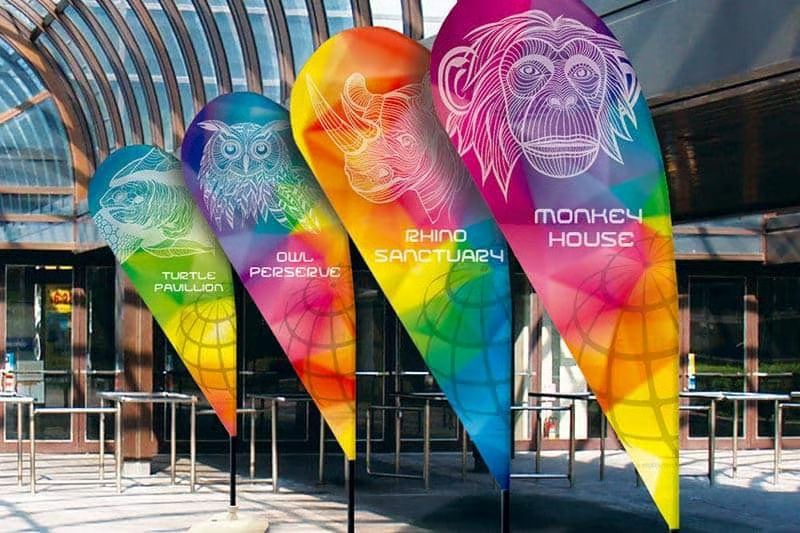

Fabric signs can be anything from free-standing displays to banners. (Sources: Yak Graphics/L and Signarama/R)
Fabric storefront signs are, you guessed it, signs made out of fabric. Typically, fabric signs are either free-standing signs or banners that lay flush on building exteriors. Fabric signs are constructed from vinyl, plastic, or nylon to increase their longevity, but they still tend to fade and get worn over time. You should expect to replace synthetic fabric signs every five to 10 years, depending on your climate and the quality of the materials.
- Pros: Low upfront cost, easy to ship and install, impermanent so can be updated, highly customizable, mobile
- Cons: Require frequent upkeep and replacement, not durable, cost more over time
- Best uses: Advertise rotating specials, pop-up locations, low budgets, mobile shops
- Average cost: $200–$400
Plywood Storefront Signs
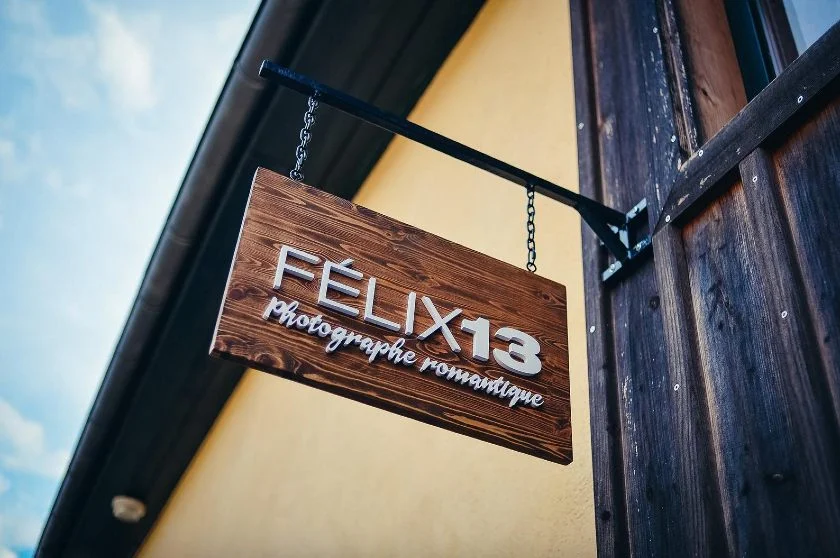
Plywood storefront signs create a rustic appeal and provide good durability for the cost. (Sources: Woodpeckers/L and Pinterest/R)
Plywood signs are constructed from plywood slats and can be composed of many different kinds of wood. Plywood signs are highly customizable and great for giving a rustic look to your storefront. Additionally, plywood signs are coated in weather-resistant finishes, making them highly durable and great for outdoor use.
- Pros: Mid-range cost, durable, statement piece, many wood options
- Cons: Typically require professional installation
- Best uses: Businesses with a more rustic, vintage-inspired, or old-fashioned brand image
- Average cost: $100–$700
Screen Printed Window Storefront Signs
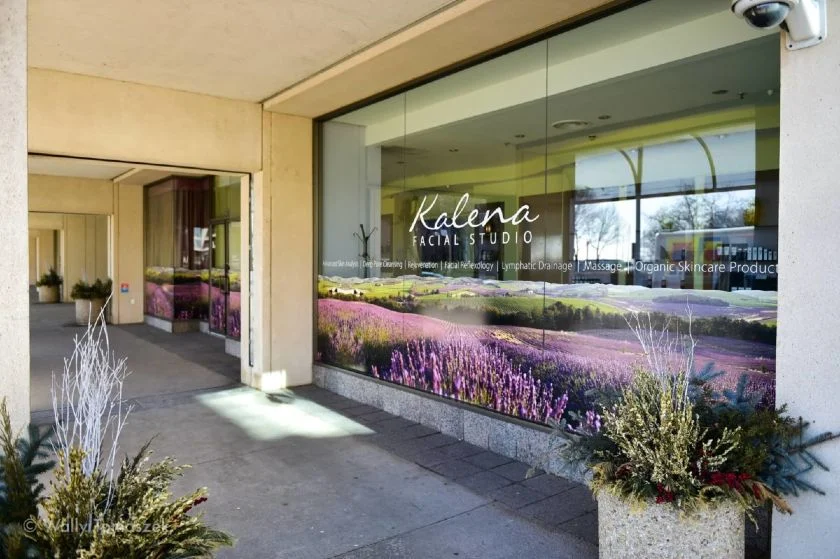
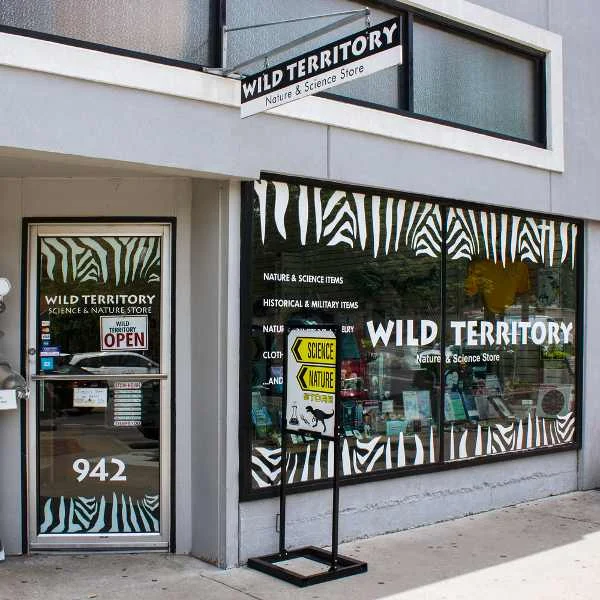
A window decal creates a stunning and space effective storefront sign. Sources: (Signarama Toronto/L and Blue Collar Press/R)
Screen-printed window signs are sticker decals that you adhere to your store windows. You can also choose to use hand-painted options, but these will be more expensive. Additionally, while some businesses choose to use window signs as their primary signage, it is also common to use these as secondary signs on windows and doors.
- Pros: Easy to install, durable, cost-effective, customizable, take up no additional space, highly durable materials available
- Cons: Less visible from the street and during peak sunlight due to glare, can peel and chip over time
- Best uses: Stores with large front windows, stores with limited exterior space, stores with multiple entrances
- Average cost: $150–$600
Punched Metal Signboard or Laser Cut Storefront Sign
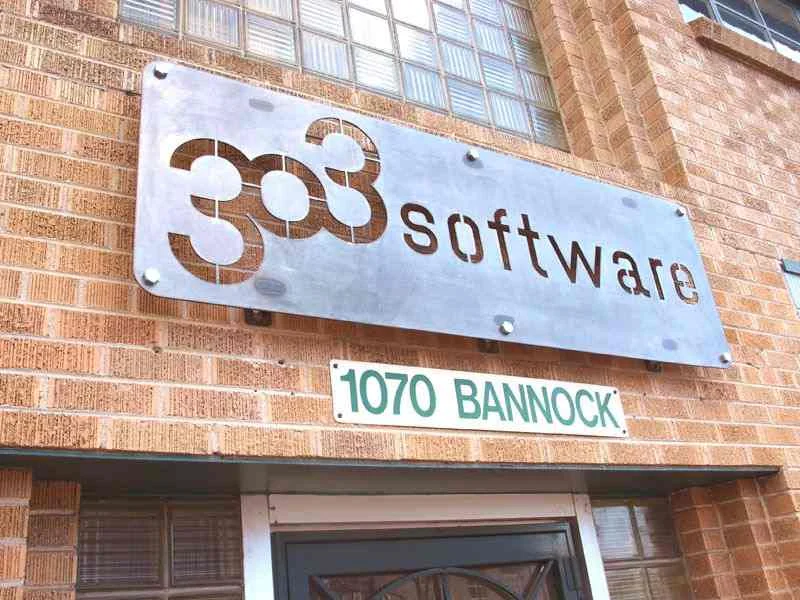
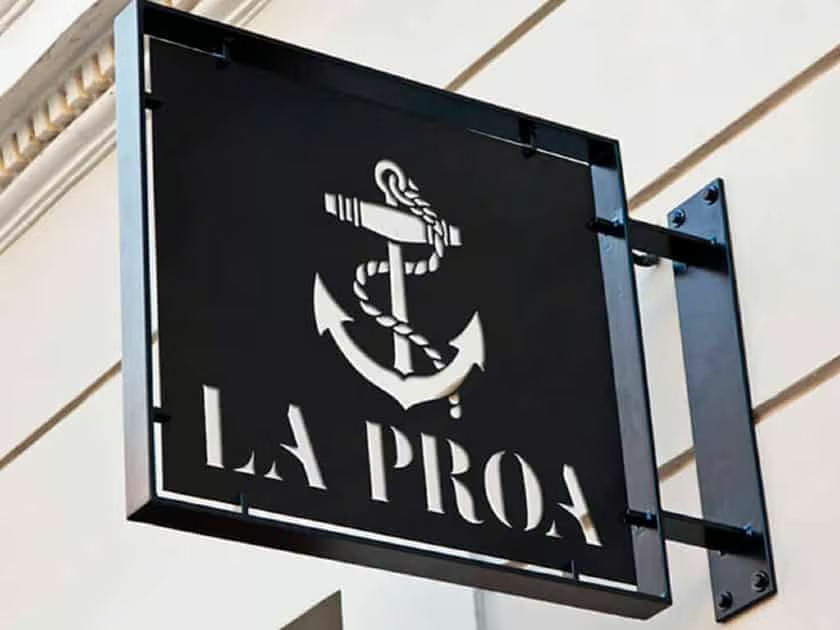
A laser-cut sign can create both rustic and sleek looks outside of your business. (Sources: Pinterest/L and Laserboost/R)
Punched metal or laser cut storefront signs are metal signs with etched or laser cut designs. These signs come in various styles that can elicit anything from a sleek and modern to rustic ranch branding.
- Pros: Extremely durable materials and finishes, many custom online retailers available
- Cons: May rust over time with wrong materials, potentially expensive upfront cost
- Best uses: Stores looking to evoke a sleek design, a ranch-inspired look, or a retro feel; raw materials retailers
- Average cost: $100–$1,500
Metal Logo & Lettering Storefront Sign
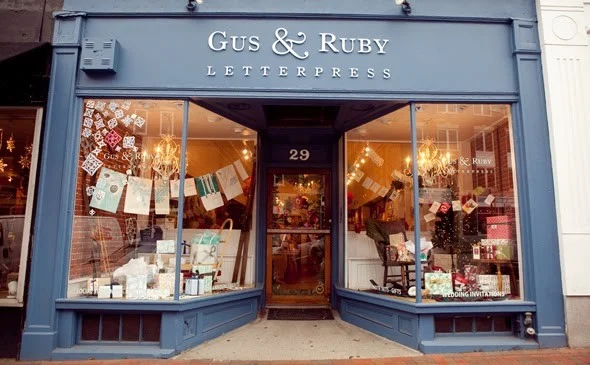
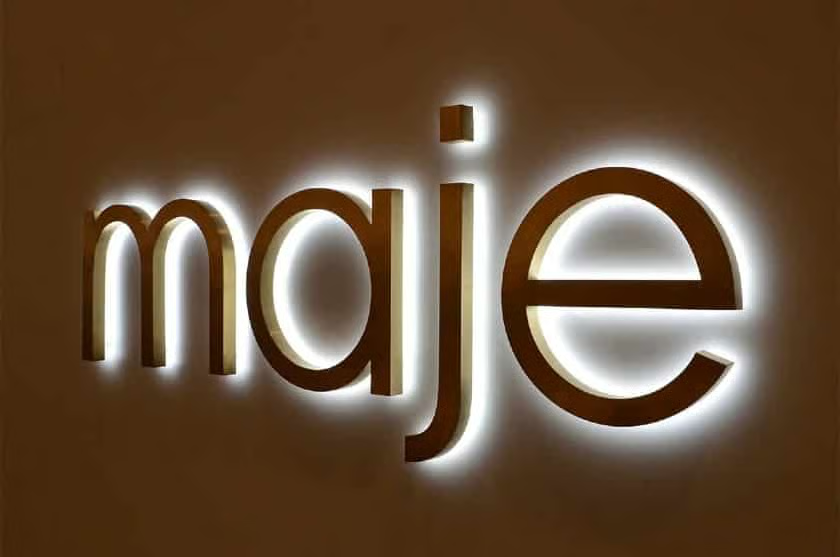
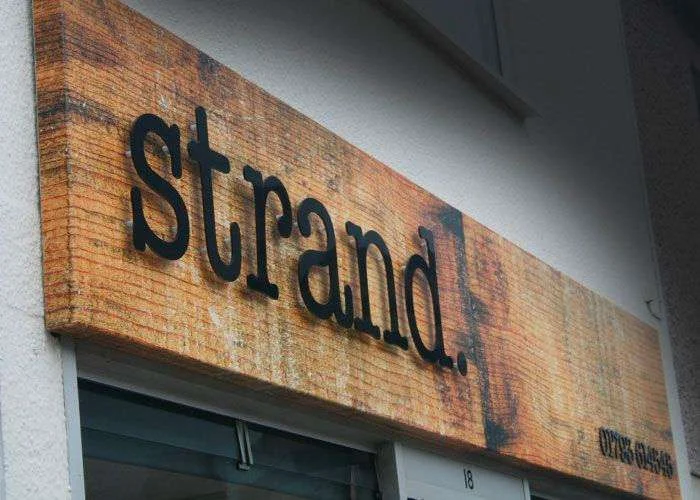
Metal lettering is a great way to give your storefront a custom, polished look. (Sources: The Daily Portsmouth/L and Pinterest/R)
Metal logo or lettering signs are signs in which individual pieces of metal lettering or design elements form your business’s name or logo. While they can be more expensive, metal logo storefront signs create a polished look and are highly durable.
- Pros: Extremely durable, highly customizable, take up little space
- Cons: High upfront cost, requires a light source for evening use, requires professional installation
- Best uses: Stores going for a polished look, high budgets
- Average cost: $200–$1,000
Awning Storefront Sign
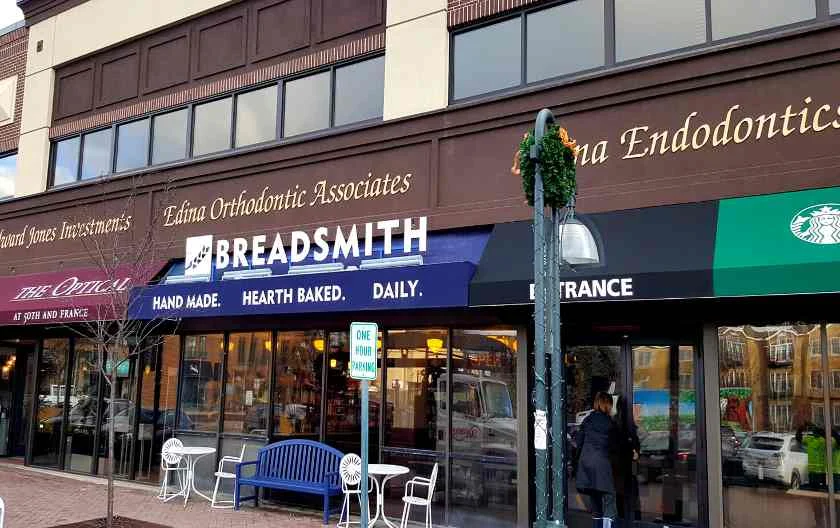
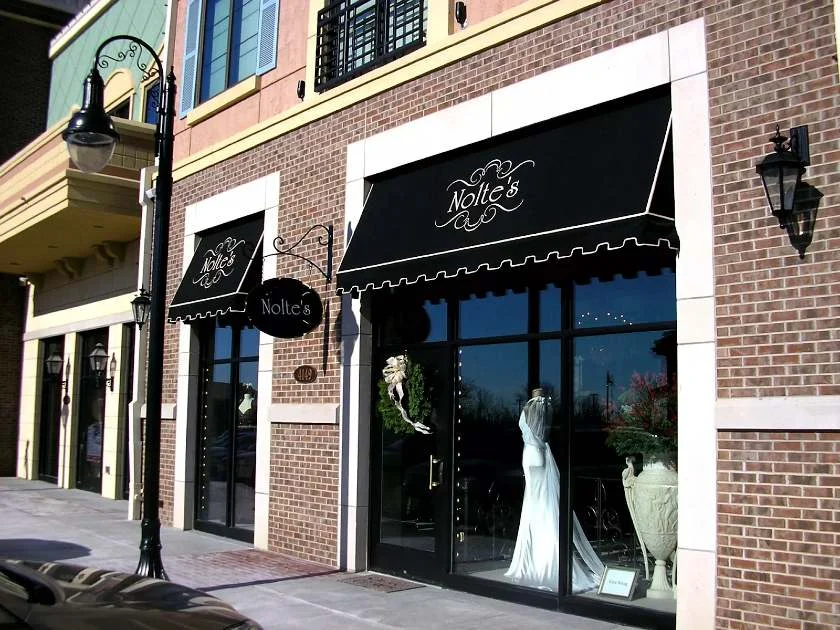
Awning signage increases visibility, creates a design element on the exterior of its shop, and provides some weather protection.
(Sources: Indigo Signworks/L Kansas City Tent & Awning Company/R)
Awning storefront signs are a type of signage where your name or logo is screen printed onto a window awning. These signs are great for making your brand name stand out from your storefront, increasing visibility, and creating an exterior design feature. They also provide some weather shelter if you want to place a clothing rack or some seating outside your store.
Where awnings used to be made of canvas materials that needed to be replaced every five to seven years, they are now made of synthetic fabrics that are water-repellent and treated to resist mildew and fading. This new tech can last anywhere from five to 15 years, depending on weather conditions.
- Pros: Provide shade to customers, good visibility, durable
- Cons: High upfront cost, require professional installation, vulnerable to weather wear
- Best uses: Stores with high sun exposure, locations with bland exteriors, outdoor shopping areas, and stores with lines for entry
- Average cost: $500–$5,000
Rock Storefront Sign
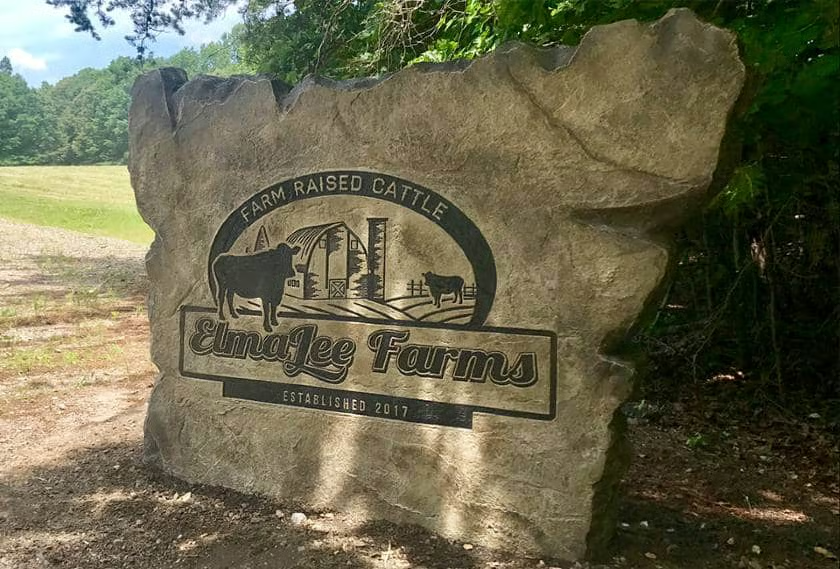
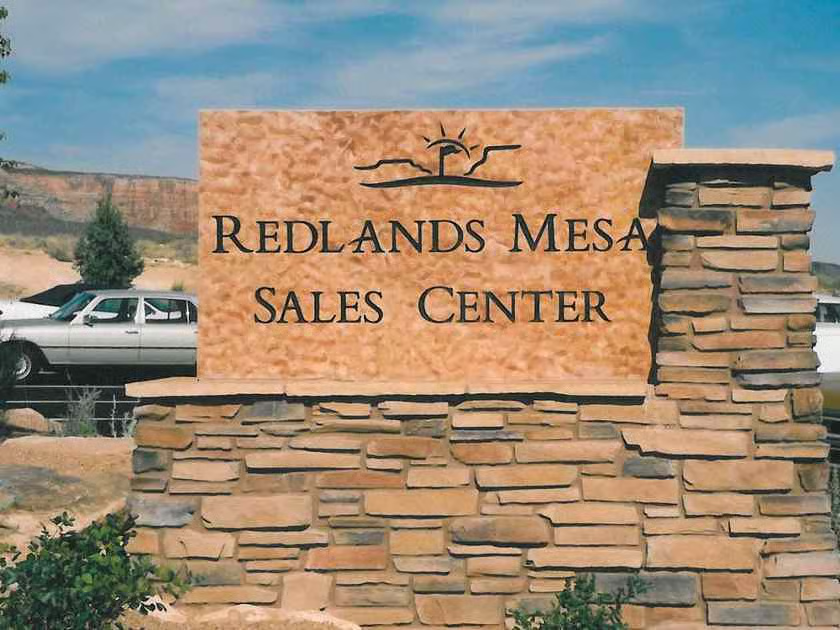
Rock signage creates a rustic look and packs a visual punch. (Sources: Boulder Design Raleigh Durham/L and Pinterest/R)
Rock storefront signs are an option where a professional etches your logos or branding into an actual rock or boulder. You often find these at the entrances to neighborhoods and parks, but they are also popular for businesses that want to create an outdoorsy or natural feel.
The greatest challenge for rock storefront signs is their size. Be sure you have enough square footage surrounding your storefront that a rock can fit without impeding traffic flow. They are also heavy, making them extremely difficult to move.
- Pros: Durable, attention-grabbing, no replacements needed
- Cons: Costly to relocate due to size and weight, high shipping and delivery cost, take up a lot of space
- Best uses: Stores with an outdoorsy brand, outdoor retailers, stores that have a lot of square footage surrounding their business
- Average cost: $500–$10,000
Tube Light Storefront Sign
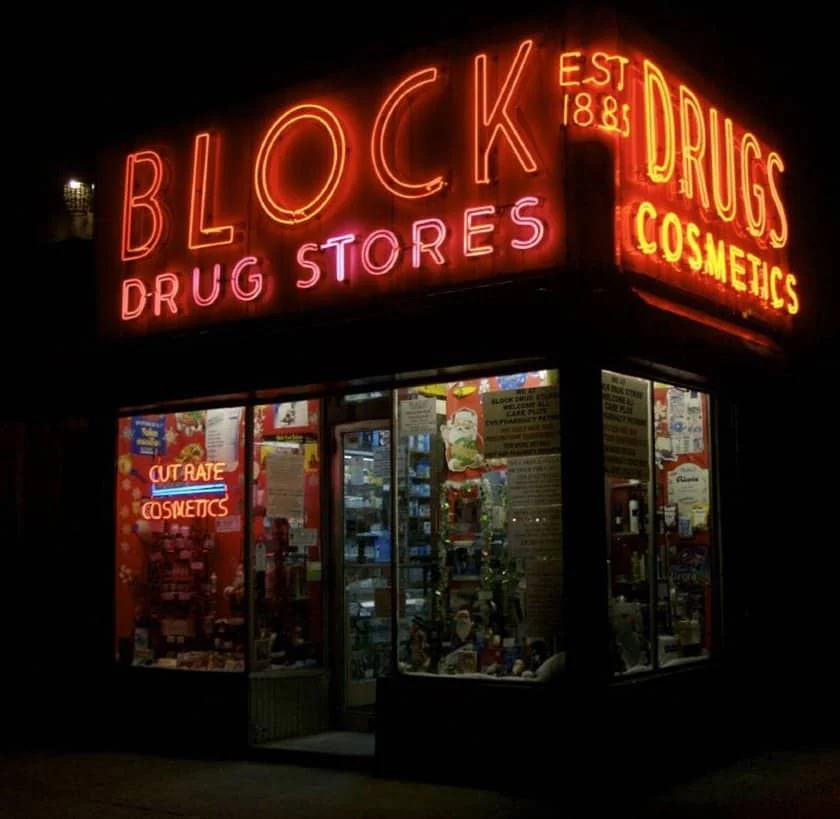
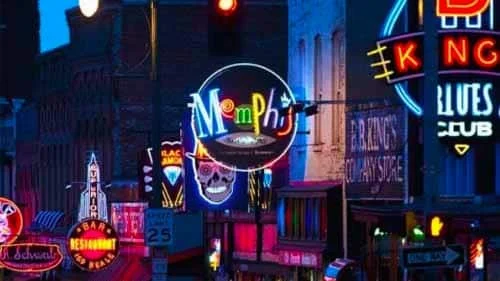
Light up your storefront and make sure that people can see you at nighttime with tub lighting.
(Sources: CollectorsWeekly/L and Ginde Star/R)
Tube light storefront signs are a type of lit signage that features thin, colorful glass tubes formed into letters or logos. Think of the classic red and blue “OPEN” signs that sit in almost every convenience store window.
Tube light signs are bright and attention-catching and your best option for being visible at nighttime. While used frequently in more utilitarian spaces like convenience stores and gas stations, when designed differently, they can also be very stylish and evoke a retro feel.
- Pros: Attention-grabbing, low energy consumption, nighttime visibility
- Cons: Fragile, need tube replacement on occasion, require professional installation, might require a heat sink
- Best uses: Businesses that operate at night, businesses located in brightly lit neighborhoods, businesses trying to evoke a retro feel, convenience stores, groceries, drug stores, and corner markets
- Average cost: $1,000–$10,000
Digital Storefront Signs
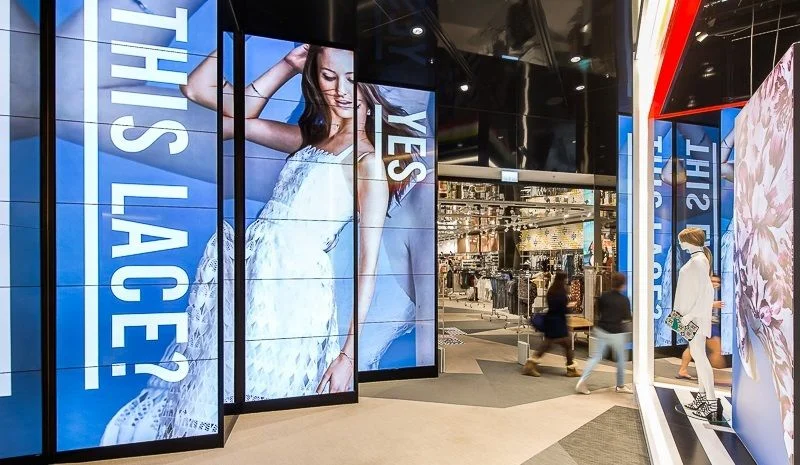
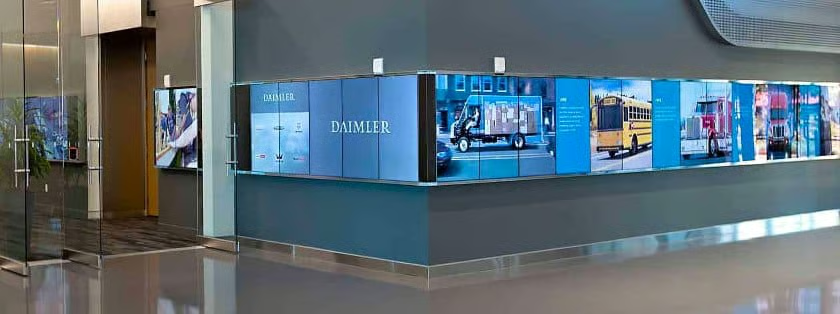
Digital signs are a versatile and eye catching option for storefront signage. (Sources: Integrate Expo/L and Microsoft Developers/R)
On the cutting edge of storefront signages are digital signs, or signs with interactive and/or digital elements. With digital signs, you can use features like rotating photos, virtual reality (VR), promotional displays, and product information pages. Additionally, digital displays can be changed and updated easily and frequently at no cost.
- Pros: Attention-grabbing, encourages engagement, boost sales, update/change display at no cost
- Cons: Associated energy cost, expensive upfront investment, some are vulnerable to weather conditions
- Best uses: Stores that need to display a lot of information (menus, class schedules, more about what is inside), stores going for a modern and sleek design, indoor storefronts
- Average cost: $500–$10,000
Roadway or Pole Storefront Signs
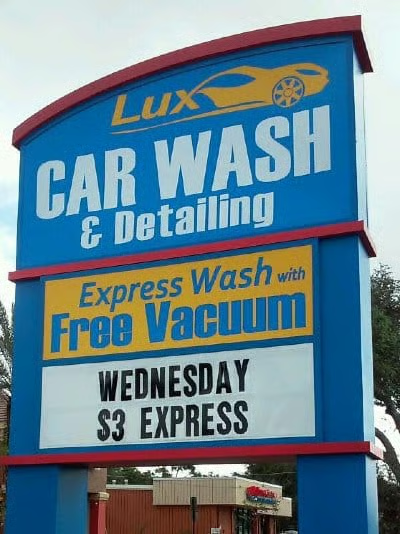
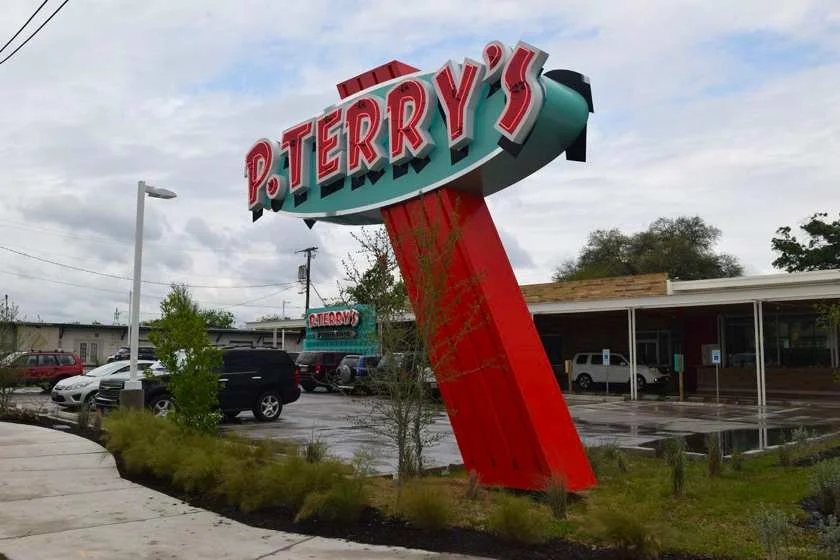
Roadway signs provide visibility for stores located in areas with fast moving traffic. (Sources: L&J Signs/L and Comet Signs/R)
Roadway signs are the large signs that stores place on long poles or within structures outside their businesses. For example, almost every gas station has a roadway sign that displays its brand name and prices for that day.
Roadway signs are great for creating an attention-grabbing display or increasing visibility if you are off a busy throughway. Additionally, roadway signs can also be digital, allowing you to flash and rotate information and images. They can also include lit signage or be lit through spotlights, great for shops that are open late at night.
- Pros: Attention-grabbing, good visibility, elevate store name
- Cons: Expensive, take up a lot of space
- Best uses: Stores located on busy throughways or near a highway, stores that operate at night
- Average cost: $700–$10,000
4. Create Your Storefront Sign Design
When it comes to designing your final product, consider the following tips to maximize your storefront sign’s potential for enticing the right customers and driving sales.
Storefront signs define people’s first impression of your brand and are a major factor in making customers want to enter (or not enter) your store. With your storefront sign playing such a big part in defining how people perceive your business, you want to be sure that your signage is consistent with your brand and giving the right impression.
When designing your storefront sign, put yourself in the shoes of a customer who is unfamiliar with your shop. Ask yourself whether your signage would create an impression in line with your brand, services, and products. If the answer is no, it’s back to the drawing board.
.cls-1{fill:#155E85;fill-rule:evenodd;}
To reinforce your brand with your storefront sign, start by using what you have. Incorporate any existing logos or imagery in addition to your store name. You do not always have to start from scratch.
For example, say I own a bohemian-inspired flower shop and choose a sign with heavy, red lettering in a gothic font on black metal background. This design would create a false impression of what my business actually is and the services and products it offers. It would drive away my target market. On the other hand, if I used pastel colors and floral details in my sign, customers would get a much better idea of what my business has in store.
.cls-1{fill:#155E85;fill-rule:evenodd;}
Target market:
The demographic group that shops at your store or a group you think your brand and products would appeal to.
In the flower shops signs below, one is using sleek and modern design, indicating a more urban and chic aesthetic, while the other takes a more whimsical and cottage-inspired approach. Both of these stores have a unique brand image that is reflected in their store signage design.
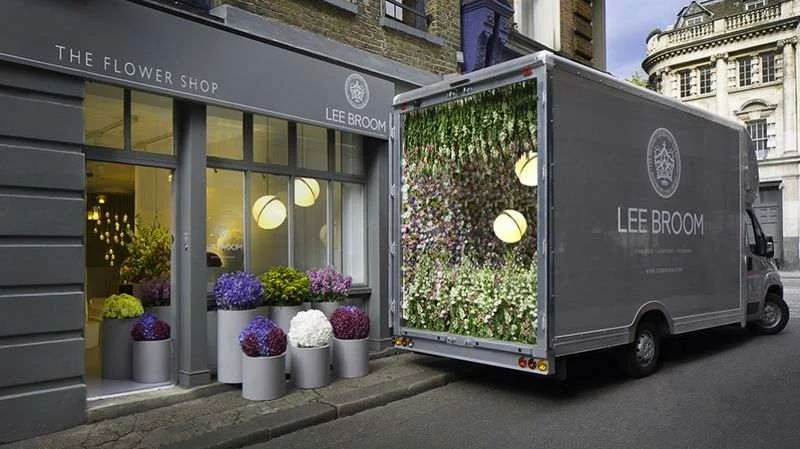
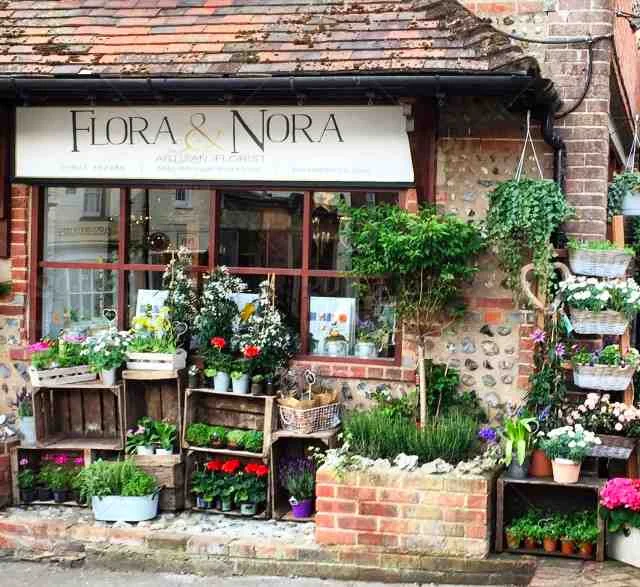
The signage you design should evoke your brand so that it can attract your target market and give a good picture of your offerings. (Source: Pinterest/L and Twenty20/R)
If you find yourself in a design rut, one of the best things you can do is take cues from your competitors. Take a walk around your neighborhood, see what store signs speak to you, and analyze what you do and don’t like. Remember, larger retail corporations have entire departments dedicated to store design, so look to big name brands to see what signage strategies they are using and consider how you can implement their strategies at your own store.
For more inspiration, you can also look to resources like Pinterest or design portfolios from online signage retailers.
Local sign shops typically have in-house graphic designers that can help with your artwork. Ask for samples of designs and make sure they meet your standards. Keep in mind, however, that design services come with fees that can be hundreds of dollars. Ask upfront about how much design services will cost to avoid any unforeseen expenses.
There are also online design services. Although not as common as in local shops, online retailers sometimes incorporate design consulting into their platform. You can find design services at websites like Signs.com or Signs by Tomorrow.
Your storefront sign will be what customers use to identify your store from the street. So, you want to be sure that you are using a font that is large enough to be seen, as well as colors and designs that will catch the eye.
To increase your visibility, use these design elements to make your storefront sign pop:
- Contrast: Be sure there is enough contrast between your font and background colors so people can read your sign even from a distance.
- Bold colors: Consider using bright colors to make your signage eye-catching. Bright colors are especially useful for stores located off the beaten path or for roadway signs.
- Proportions: Use a sign that suits the size of your storefront—an oversized sign in front of a tiny shop could appear cluttered, and a sign that is too small will impede visibility.
- Size: Choose a sign that will leave appropriate space between all your design elements and text so that it is legible.
- Protrusion: You can make your sign protrude up or out from your storefront to increase the distance from which people can see it.
For example, my boutique was tucked away on a side street of a large shopping area. To make us stand out, we chose a large sign that protruded from the side of our storefront and used dark lettering on a light background. The size, bold placement, and high contrast of our sign helped people see us from the main shopping area and drew attention our way.
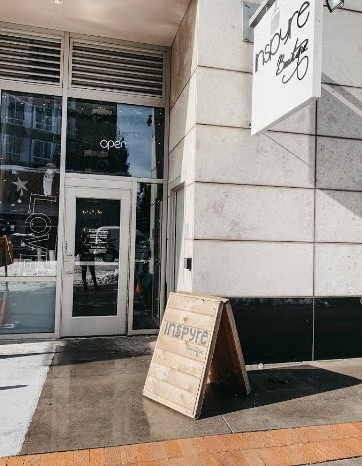
Dark lettering on a light background and a platform that pushed it out from the building made our storefront sign visible in this busy shopping center. (Source: Yelp)
5. Source Your Storefront Sign
There are many resources that you can look to when it comes to sourcing your storefront sign. From local shops you can visit to ecommerce sites you can browse from home, you should consider your options and select a signage retailer that works with your schedule, budget, and desired end-product.
Most areas have a sign shop close by or in town—they are just a Google search away—and they are a great option for anyone wanting their storefront sign to be made on-site or wanting a more hands-on experience.
.cls-1{fill:#155E85;fill-rule:evenodd;}
One way to research local suppliers is to ask other local business owners where they got their signs made. You can also check online reviews of specific shops via sites like Yelp or Etsy. Additionally, local shops will typically offer free consultations, where you can learn more about offered services and get a sense of quality.
Overall the pros and cons of working with a local shop include:
| PROS | CONS |
|---|---|
| One-on-one attention during the design process | Consultation and design service fees |
| Available experts that can help you create your sign | Longer production times (two+ weeks) |
| Personal consultations throughout the design and installation process | Potentially higher prices |
| Lower shipping and handling fees | Limited materials |
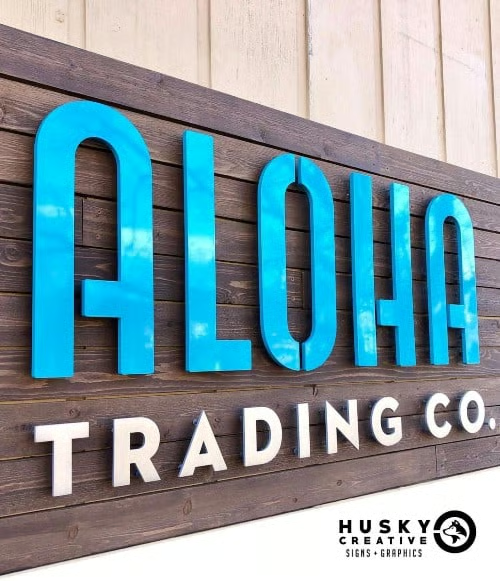
In addition to working with a local sign shop, there are also a variety of online sign retailers. Websites like Vistaprint and Signomatic offer low-cost sign printing with fast turnaround times.
Note, however, that online sign retailers are only there to create the final product and won’t offer the same hands-on experience and design help that you find at local shops. Be sure that you have created your design, defined your needs, and done your research before working with an online retailer. The better your planning, the better an ecommerce signage shop will be able to serve you.
In general, the pros and cons of working with an online sign printing shop include:
| PROS | CONS |
|---|---|
| Low-cost options | No in-person design help |
| Typically completed in 5–7 business days | No preview of materials |
| Virtual design help | Can be difficult to get your exact image |
| Rich customization features | Limited materials |
Questions to Ask When Sourcing Signage
Regardless of which type of signage company you work with, you want to ask the right questions. This will ensure that your sales rep exposes you to all the available services and you get the best price.
Here are some questions to ask when you contact a sign company:
- Will the sign company apply for any needed construction permits?
- Does the company offer design services?
- What are the cost differences among materials?
- What sizes are available?
- How do you determine pricing?
- How does adding additional colors or design elements affect my cost?
- Does the company offer installation?
- Is there an extra installation fee?
- What maintenance and cleaning does this material require?
- Does the company offer maintenance? At what cost?
- Does the company offer insurance or warranties for installation or any mishaps that might happen to the sign?
- What is the timeline, from the time you select your sign to the time it is installed?
6. Place Your Storefront Sign
With your sign ready to go, it’s time to position it outside of your storefront. When placing your sign, the biggest thing that you will want to think about is visibility.
Consider the following when thinking about visibility:
- Your shopping environment: How are people shopping? Are they right outside and in close range or driving by on a nearby road? Look at how customers are viewing your exterior and place your sign accordingly.
- How much space you have: If you have a lot of space, you can use large signs. If you do not, you can still use large signs but they must be space-effective like banners or lit displays.
- How the sign will compliment your storefront: You want your sign to be placed in the best spot for visibility without compromising your storefront aesthetic. Place your sign in a way that both complements your storefront and provides good visibility.
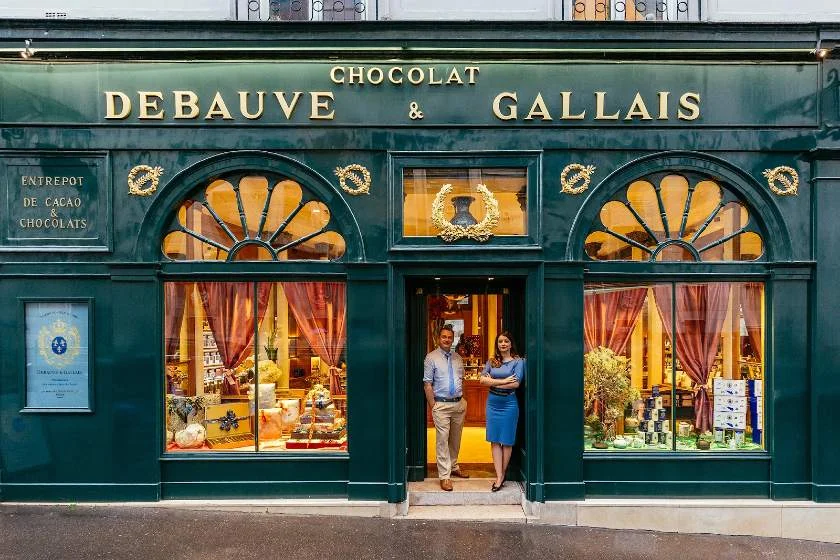
For example, this chocolatier is located on a walking street in a shopping center, so it opted for a sign that is flush with its storefront. This not only makes its signage a design feature for the store exterior, but the height also allows it to be visible from the other side of the street.
Bottom Line
Designing a storefront plays a major role in creating your first impression, defining your brand, and enticing people into your store. The type of sign you choose, the materials you use, and the actual design you create are all choices unique to your business. Using this guide, you will be ready to design a storefront sign that is right for your business and gets customers running through your doors.
You May Also Like …
- How to Start Your Retail Business
- Planning Your Retail Store Layout
