






Call monitoring software helps managers review live and recorded customer conversations to improve agent performance, service quality, and compliance. The best platforms go beyond basic listen, whisper, and barge tools by adding call recording, real-time dashboards, AI coaching, and quality management workflows.
After comparing pricing, monitoring tools, and ease of use, Freshdesk is my recommendation for the best call monitoring software for contact centers. It offers affordable plans, call metrics, call recording, and an intuitive interface for teams that need practical call-quality tools without enterprise-level complexity.
Below are the best call monitoring software providers:
| Call monitoring software providers | Best for | Starting price |
|---|---|---|
| Freshdesk | Comprehensive call monitoring | $23/agent/month |
| RingCentral Contact Center | Agent performance management | $75/user/month |
| Nextiva Contact Center | Omnichannel reporting | $75/agent/month |
| Vonage Contact Center | Conversation analysis | Custom pricing |
| Zendesk | Call quality historical reporting | $83/agent, plus plan pricing |
| Talkdesk | Industry-specific compliance | $85/user/month |
| Zoho Voice | Budget-conscious teams | $39/user/month |
- Why you can trust FitSmallBusiness
- Best call monitoring software at a glance
- Freshdesk: Best overall for comprehensive call monitoring
- RingCentral Contact Center: Best for agent performance management
- Nextiva Contact Center: Best for omnichannel reporting
- Vonage Contact Center: Best for conversation analysis
- Zendesk: Best for call quality historical reporting
- Talkdesk: Best for Industry-specific Compliance
- Zoho Voice: Best for budget-conscious teams
- How to choose the best call monitoring software
- Methodology: How I evaluated the best call monitoring software
- Frequently asked questions (FAQs)
- Bottom line
Why you can trust FitSmallBusiness
Best call monitoring software at a glance
| Best Call Monitoring Software | Best-fit team type | Key Features | My score (out of 5) |
|---|---|---|---|
| Freshdesk | Small support teams needing affordable, practical monitoring |
| 4.58 |
| RingCentral Contact Center | Growing contact centers focused on agent coaching |
| 4.45 |
| Nextiva Contact Center | Customer experience teams managing multiple touchpoints |
| 4.41 |
| Vonage Contact Center | CRM-driven teams with complex customer interactions |
| 4.39 |
| Zendesk | Zendesk-based support teams adding voice monitoring |
| 4.38 |
| Talkdesk | Regulated or industry-specific contact centers |
| 4.34 |
| Zoho Voice | Budget-conscious voice teams using Zoho apps |
| 3.61 |
Freshdesk: Best overall for comprehensive call monitoring
My expert opinion
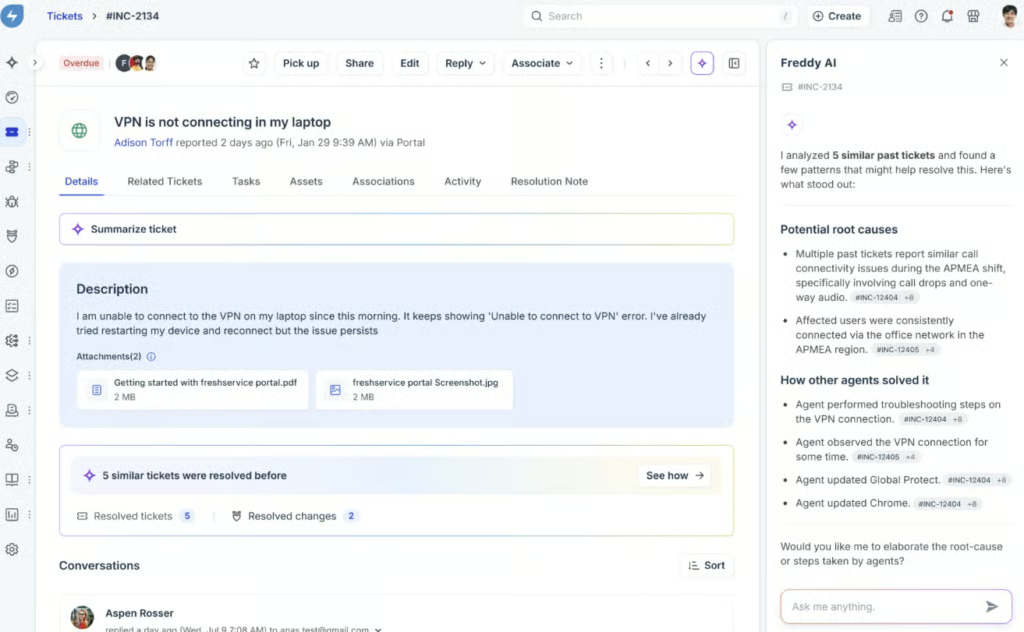
I chose Freshdesk as the best overall call monitoring software because it combines contact center visibility with broader customer support tools, making it useful for teams that want to manage calls, tickets, customer context, and agent performance in one place. Its reporting tools, real-time dashboards, and SLA management give supervisors a clearer view of team activity and service quality.
Freshdesk is also a strong fit for teams that want to pair call monitoring with help desk workflows. Features like ticketing, shared inboxes, customer portals, knowledge bases, routing, and role-based access controls help businesses connect phone support with the rest of their customer service operation. However, many Freddy AI capabilities are paid add-ons, so remember to review the total cost before choosing a plan.
Pricing
| Plans and pricing (per agent) | Growth | Pro | Enterprise |
|---|---|---|---|
| Monthly | $23 | $66 | $107 |
| Annual | $19 | $55 | $89 |
Standout features
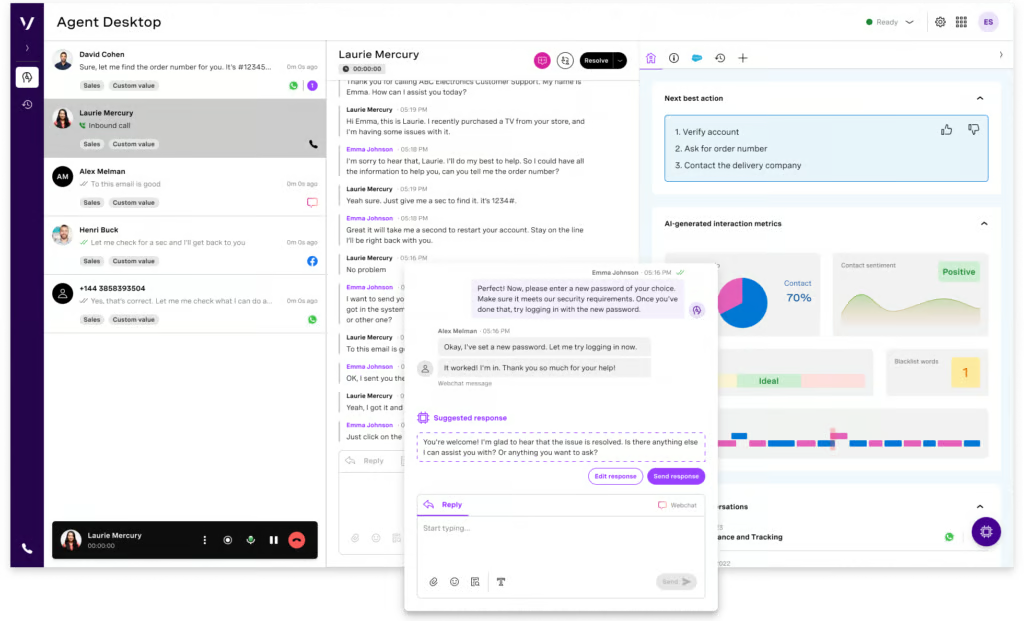
- Real-time reporting: Freshdesk includes standard reports, real-time dashboards, and custom real-time dashboards on higher-tier plans, helping managers track service activity and performance.
- Agent availability dashboard: Supervisors can monitor agent availability to better understand team capacity and adjust coverage when call or ticket volume changes.
- Freddy AI tools: Freshdesk offers AI-powered assistance for sentiment analysis, response suggestions, live translation, call or ticket summaries, resolution support, and proactive insights.
RingCentral Contact Center: Best for agent performance management
My expert opinion
RingCentral Contact Center is my primary recommendation for teams that have outgrown basic call monitoring and need a more structured way to coach agents. What stands out to me is how much visibility it offers to supervisors across the customer journey.
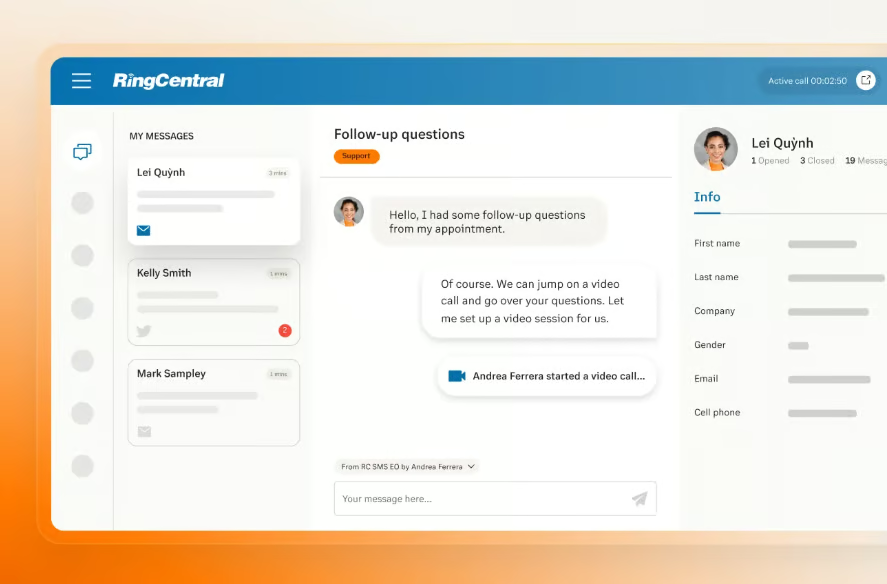
Instead of only reviewing isolated phone calls, managers can evaluate conversations across voice and digital channels and then use tools such as screen recording, quality monitoring, and AI coaching to understand where agents need support.
That depth is also what makes RingCentral less ideal for very small teams or businesses that only need simple listen, whisper, and barge tools. However, RingCX has many moving parts, and its most valuable AI features may require higher-tier plans or paid add-ons.
Pricing
| Plans and pricing (per user) | Monthly | Annual |
|---|---|---|
| Standard | $75 | $65 |
| Professional | $110 | $95 |
| Elite | $165 | $145 |
| Enterprise | Contact sales for pricing | |
Standout features
- AI Quality Management: Automates agent scoring, coaching, and feedback to help supervisors evaluate more conversations consistently.
- Agent Assist: Gives agents real-time answers and guidance during live customer interactions.
- Interaction Analytics: Uses AI to surface customer satisfaction insights from calls and conversations.
Nextiva Contact Center: Best for omnichannel reporting
My expert opinion
Nextiva is consistently one of my top choices for customer experience, and it stands out here for teams that want call monitoring integrated with omnichannel reporting. Its Essential plan starts at $75 per agent, per month, and includes voice and web chat, skills-based routing, journey orchestration, and AI transcription and summaries, giving supervisors more context when reviewing customer conversations.
Where Nextiva really shines is in how it connects performance monitoring with the full customer experience. Instead of only helping managers listen to calls or review recordings, it gives teams tools to understand what happened before, during, and after an interaction. However, many of its integrations are add-on features, which is why I would recommend RingCentral for teams that need broader access to third-party business apps.
Pricing
| Enterprise plans (per agent) | Essential | Professional | Premium |
|---|---|---|---|
| Starting price | $75 | Contact sales for pricing | |
Standout features
- Journey orchestration: Helps teams guide customer interactions across channels and automate steps in the support process.
- AI transcription and summaries: Automatically captures call details and summarizes conversations, making it easier for supervisors to review interactions.
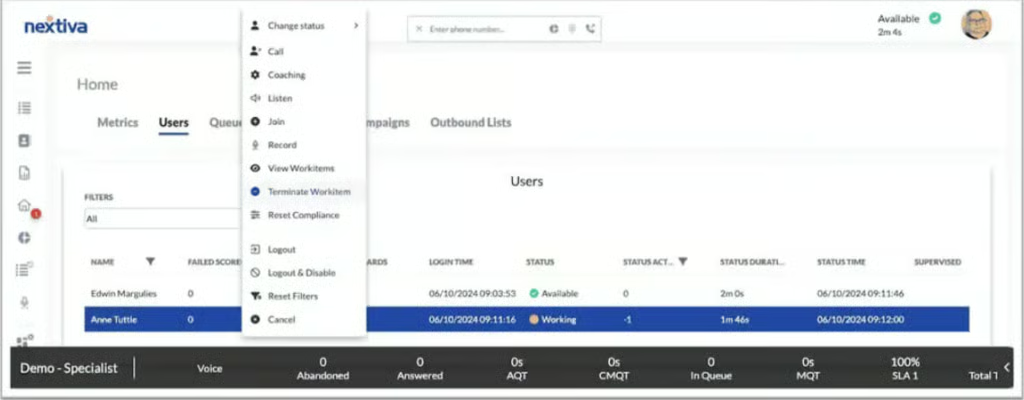
- Real-time supervisor support: Gives managers tools to assist agents during customer conversations and improve service quality.
Vonage Contact Center: Best for conversation analysis
My expert opinion
Vonage Contact Center stands out for teams that already rely heavily on CRM data to analyze customer conversations. Its biggest advantage is its use of customer context to support routing, supervisor visibility, and post-call review. Instead of treating call monitoring as a standalone function, Vonage ties it into the broader customer journey, which is useful for teams handling repeat customers, sales follow-ups, or support cases with longer histories.
I like Vonage best for organizations that want more control over how calls are routed, reviewed, and analyzed, but it may feel less straightforward than lighter platforms like Freshdesk or Zoho Voice. Many of its strongest tools, including speech analytics and workforce management, are add-ons, so the final cost can climb depending on your setup.
Pricing
Vonage Contact Center offers two main contact center plans with custom pricing:
- Priority: Includes analytics, reporting, dashboards, screen pops, call recordings, IVR, skills-based routing, SLA optimizer, post-call quality rating, priority call handling, personal queues, single sign-on, and contextualized notifications.
- Premium: Includes everything in Priority, plus dynamic and multilingual announcements, dynamic routing, queued callback, whisper coaching, post-call surveys, and APIs for agent availability, authentication, reporting, interactions, and user administration.
Standout features
- Conversation analytics: Speech analytics and reporting tools help teams identify patterns in customer conversations and uncover coaching opportunities.
- Whisper coaching: Supervisors can guide agents during live calls without the customer hearing, which is useful for training and escalation support.
- CRM-connected routing: Vonage supports routing and contextual notifications based on CRM data, helping agents deliver more personalized service.
Zendesk: Best for call quality historical reporting
My expert opinion
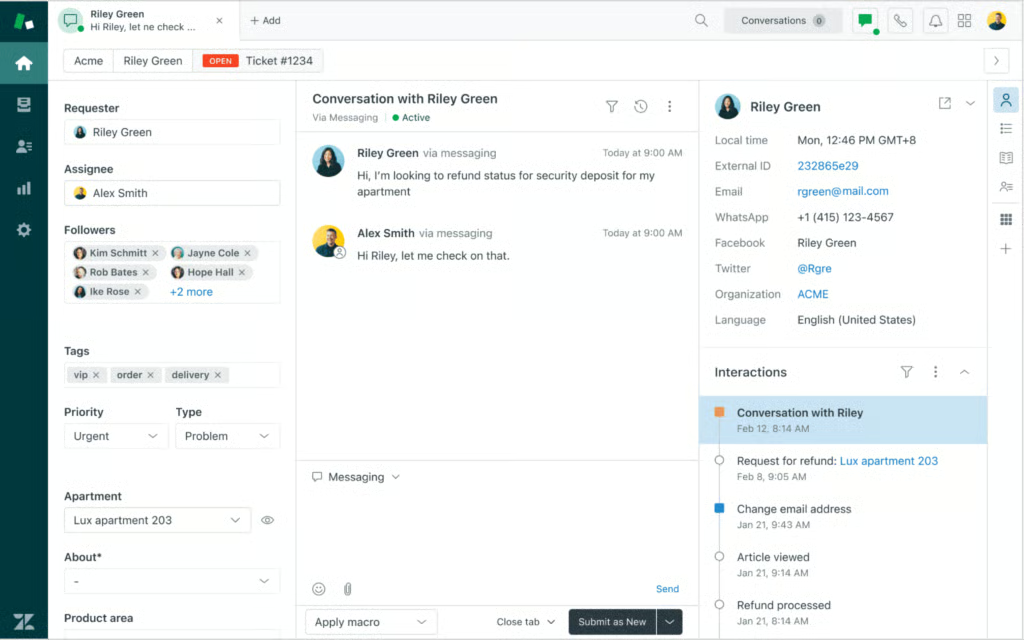
Zendesk is strongest when call monitoring is part of a broader customer service operation, not a standalone phone system. What I like about Zendesk is how naturally voice fits into the same workspace agents already use for tickets, chat, email, and customer history. For teams that depend on Zendesk every day, adding voice via Zendesk Contact Center can make call reviews more useful, as supervisors can evaluate conversations alongside the full customer record.
The trade-off is that Zendesk’s setup is more layered than simpler call monitoring tools. Since it combines Zendesk Suite plans with Amazon Connect and optional add-ons, buyers should review the total cost before committing. It makes the most sense for support teams already invested in Zendesk who want call recording, transcription, quality assurance, and workforce engagement integrated into their existing service workflows.
Pricing
Zendesk Contact Center pricing starts at $83 per agent, per month, billed annually, plus the cost of an eligible Zendesk Suite plan. A Zendesk Suite plan and a Premier plan are required.
Additional voice and quality management options include:
- Minutes Block: $33 per agent, per month, billed annually
- Copilot: $50 per agent, per month, billed annually
- Quality Assurance: $35 per agent, per month, billed annually
- Workforce Engagement Bundle: $50 per agent, per month, billed annually
Standout features
- Agent Workspace: Agents can manage calls alongside customer conversations from other service channels, giving supervisors better context for reviews.
- Real-time transcription and call recording: Zendesk supports call review workflows with searchable transcripts and recorded conversations.
- Quality assurance: Teams can evaluate service quality more consistently with structured QA tools and performance insights.
Talkdesk: Best for Industry-specific Compliance
My expert opinion
Talkdesk is my pick for industry-specific compliance because it offers more specialized oversight than a basic call monitoring platform. For teams in fields like healthcare, financial services, and other regulated industries, features like quality management, screen recording, feedback, automated notifications, real-time dashboards, and custom reporting make it easier to review agent activity and maintain consistent service standards.
Its Industry Experience Clouds include tailored workspaces, AI agents, system integrations, and workflows built around sector-specific customer journeys. However, this depth may be more than very small teams or solopreneurs need. If your main goal is simply call monitoring at a lower cost, Freshdesk or Zoho Voice will likely be easier to manage.
Pricing
| Talkdesk CX Cloud plans | Monthly starting price (per user) |
|---|---|
| Digital Essentials | $85 |
| Voice Essentials | $105 |
| Elite | $165 |
| Industry Experience Clouds | $225 |
Standout features
- Automated notifications: Talkdesk automatically sends SMS notifications when an event is triggered, such as order confirmations, appointment reminders, or shipping status updates.
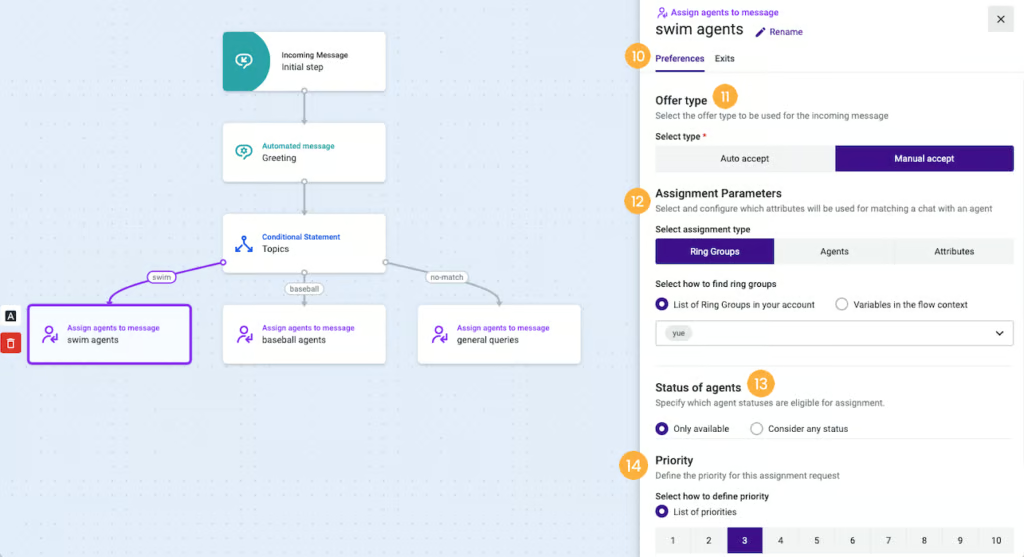
- Talkdesk Studio: A self-service visual routing designer lets you create a call flow structure instead of code. Use it to trigger call flow actions, such as menu options, callbacks, and CRM data dips.
- Real-time dashboards: Provide dashboards and wallboards for real-time visibility into contact center performance against key metrics.
Zoho Voice: Best for budget-conscious teams
My expert opinion
Zoho Voice is the best call monitoring software for budget-conscious teams because it offers practical call center tools at a lower starting price than many enterprise contact center platforms. Its Enterprise Telephony plans start at $39 per user, per month, and include live call monitoring, call metrics, call recording, call detail records, voicemail transcription, and queue performance metrics.
What I like about Zoho Voice is that it keeps the experience focused on phone-based support. It is not trying to be a full omnichannel customer experience platform like Nextiva or Talkdesk, which makes it easier to evaluate for small teams that mainly need call monitoring, reporting, and basic supervisor visibility. However, businesses that need call listening, whispering, and barging should choose the Contact Center plan.
Pricing
| Plans and pricing (per user) | Monthly | Annual |
|---|---|---|
| Solo | Free | |
| Basic | $39 | $34 |
| Standard | $59 | $49 |
| Contact Center | $79 | $74 |
Standout features
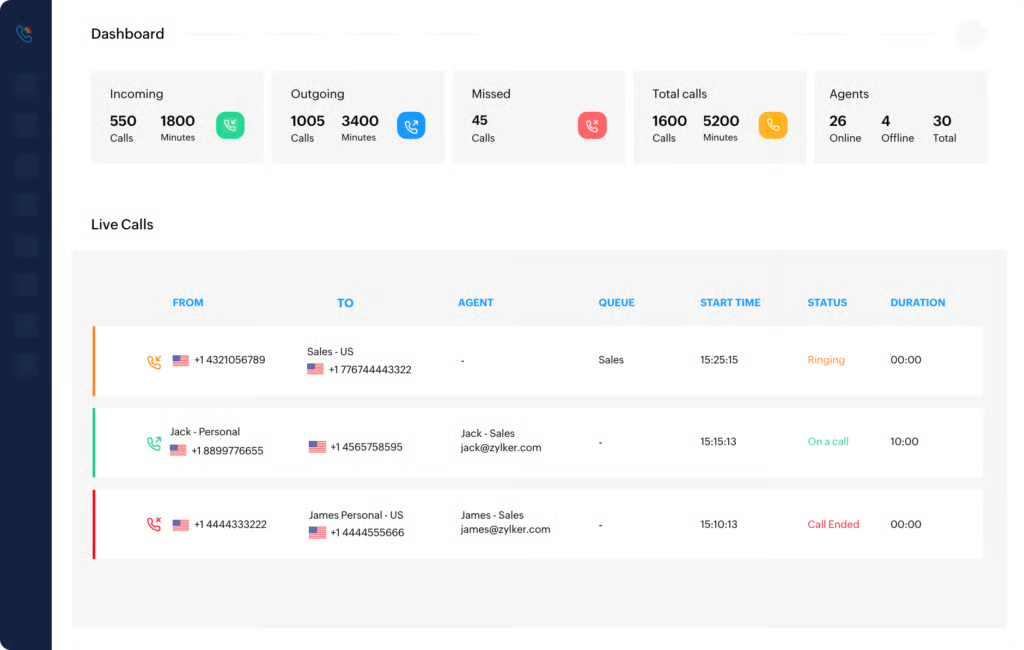
- Live call monitoring: Supervisors can monitor active calls on Enterprise Telephony plans, making it easier to track agent performance in real time.
- Queue performance metrics: Zoho Voice shows call queue activity, helping managers understand how many calls are answered, abandoned, or timed out.
- Power dialer: This feature dials a phone number immediately after a call is finished. Agents need not worry about manually dialing phone numbers, which allows them to reach as many customers as possible in a given time.
How to choose the best call monitoring software
Choosing the best call monitoring software depends on how your team handles customer calls, how much coaching your agents need, and whether you need basic supervision tools or a full quality management platform. The right solution should help managers monitor live calls, review past conversations, coach agents, and track performance without adding unnecessary complexity.
When comparing call monitoring platforms, consider the following:
- Live monitoring tools: Look for core features like listen, whisper, barge, and takeover. These tools let supervisors observe calls, privately coach agents, join conversations, or take over when a customer issue needs immediate attention.
- Call recording and storage: Choose a platform that records calls securely and makes it easy to search, review, and share recordings. This is especially useful for training, dispute resolution, compliance reviews, and performance coaching.
- Quality management features: If your team regularly evaluates agents, prioritize software with scorecards, call tagging, customer sentiment tracking, and post-call surveys. These features help managers measure call quality consistently instead of relying on random reviews.
- Analytics and reporting: Strong call monitoring software should include dashboards for call volume, abandoned calls, service levels, wait times, agent performance, and customer experience trends. These insights help leaders identify staffing gaps and training opportunities.
- AI and conversation intelligence: AI tools can help summarize calls, flag sentiment changes, identify keywords, and suggest coaching opportunities. These features are especially helpful for busy teams that need to review a high volume of customer conversations.
- Compliance and security: Businesses in regulated industries should look for call recording controls, audit logs, role-based permissions, data encryption, and compliance-focused features. This is important for protecting customer information and meeting industry requirements.
Methodology: How I evaluated the best call monitoring software
To assess the best call monitoring solutions, I considered each provider’s subscription costs, contact center capabilities, usability, and customer assistance. My evaluation also includes my expert opinion on its value for money and popularity.
Learn how I evaluated the best call monitoring solutions below:
- Pricing (10%): To assess affordability, I considered the cost of the base-level subscription plan and compared it with prevailing market fees. I checked the number of available plans and whether the provider caters to different budget requirements. I favored those with discounts for annual billing and bulk purchases.
- General features (30%): I looked at automatic call distribution, call monitoring, and call activity analytics. Those with omnichannel support received more points.
- Advanced features (20%): The specialized features I checked were virtual assistant and workforce management. I gave more points to platforms with robust outbound dialers and third-party integrations.
- Ease of use (10%): I evaluated ease of use by determining the expertise required to set up and operate the phone system. I also assessed whether the providers have an intuitive interface.
- Customer support (10%): The variety of customer communication channels was part of my evaluation. I awarded more points to providers that offer email, phone, and live chat support. I considered the hours these channels are active and operational.
- Expert score (20%): This includes my evaluation of the provider’s standout features, value for money, and ease of use. I checked user ratings in third-party review sites to gauge the platform’s popularity.
Frequently asked questions (FAQs)
What is call monitoring software?
A call monitoring solution is a platform that lets you observe live calls between agents and customers and check metrics and reports detailing call center activities. It’s a built-in tool in business phone or call center systems.
Is call monitoring legal?
Yes, as long as call participants approve of it. The United States federal law mandates one-party consent for call monitoring and recording. This means one of the participants in the call must give permission to the monitoring and recording.
Meanwhile, state laws order one-party and all-parties consent. All-parties consent means all those involved in the call must approve of the monitoring and recording of the conversation. To comply with the regulations, most businesses have prerecorded messages informing customers that the call will be recorded and monitored.
What kind of software do call center agents use?
Most companies use cloud-based call center software systems, as they are easier to set up and require no hardware. Depending on the business needs, companies opt for inbound or outbound call center or omnichannel contact center platforms.
Inbound call center solutions cater specifically to answering customers’ concerns and questions, while the outbound call center is focused on reaching out to prospects and leads to increased sales. Meanwhile, companies choose omnichannel contact center platforms to keep all customer communications in different channels in one place.
Bottom line
Overall, a robust call monitoring tool improves agent training and performance, ensures compliance with business and industry standards, and addresses customer concerns faster. Among the solutions I reviewed, Freshdesk is the best for providing valuable tools to observe live conversations between agents and customers and to measure overall call center performance. You can sign up for its forever-free version to see if it’s the right solution for your needs.
