


Cloud contact center providers help small businesses manage customer conversations across voice, chat, email, SMS, and other digital channels without maintaining on-premise call center hardware. The best platforms include tools like automatic call distribution, call monitoring, agent dashboards, reporting, and AI-powered automation to improve customer service and team productivity.
After comparing pricing, features, ease of use, support, and overall value, Nextiva Contact Center is my top pick for the best cloud contact center provider. It offers scalable contact center plans, customer experience tools, intelligent routing, and analytics for businesses that need a flexible, cloud-based solution.
Here are the best cloud contact center providers:
| Cloud Contact Center Providers | Best for | Starting price |
|---|---|---|
| Nextiva Contact Center | Overall cloud contact center | $75/agent/month |
| Genesys Cloud CX | Self-service systems | $75/user/month |
| CallHippo | Fluctuating call volumes | $19/user/month, billed annually |
| Zoom Contact Center | Customer engagement | $69/user/month |
| NICE CXone | Quality management | $110/agent/month |
| RingCentral Contact Center | Omnichannel support | $65/user/month, billed annually |
| GoTo Connect | Team collaboration | Contact sales |
- Why you can trust Fit Small Business
- Comparing the best cloud contact center providers
- Nextiva Contact Center: Best overall cloud contact center
- Genesys Cloud CX: Best for self-service systems
- CallHippo: Best for fluctuating call volumes
- Zoom Contact Center: Best for customer engagement
- NICE CXone: Best for quality management
- RingCentral Contact Center: Best for omnichannel support
- GoTo Connect Contact Center: Best for team collaboration
- How to choose the best cloud contact center provider
- How I evaluated the best cloud contact center providers
- Frequently asked questions (FAQs)
- Bottom line
Why you can trust Fit Small Business
Comparing the best cloud contact center providers
| Cloud contact center providers | Deployment strength | Key features | My score (out of 5) |
|---|---|---|---|
| Nextiva Contact Center | CX-focused routing and analytics |
| 4.5 |
| Genesys Cloud CX | AI-powered customer journeys |
| 4.48 |
| CallHippo | Flexible calling and queue management |
| 4.47 |
| Zoom Contact Center | Video-first customer support |
| 4.42 |
| NICE CXone | AI-driven coaching and monitoring |
| 4.34 |
| RingCentral Contact Center | Unified voice and digital engagement |
| 4.29 |
| GoTo Connect | Supervisor dashboards and coaching |
| 4.21 |
Nextiva Contact Center: Best overall cloud contact center
My expert opinion
Nextiva Contact Center is my top choice for the best cloud contact center and call center phone system for small businesses, thanks to its future-focused customer experience (CX) tools and advanced features. Although I often recommend Nextiva for small-business phone plans, its enterprise plans offer a breadth of contact center solutions.
At the same time, some of Nextiva’s features, such as workforce management tools and advanced analytics, are only available on the Premium plan. The contact center plans are also separate from Nextiva’s business phone systems. In contrast, RingCentral’s Contact Center plans include AI features and unified communications (UC) capabilities, providing an all-inclusive option for businesses of all sizes.
Pricing
| Enterprise plans | Essential | Professional | Premium |
|---|---|---|---|
| Starting price | $75/agent/month | Contact sales for pricing | |
Standout features
- Workflow engine: Nextiva’s drag-and-drop interface enables process automation, the creation of complex call routing systems, and the use of collaborative customer support tools. Specifically, customer service automation combines chatbots, IVR menus, and a workflow engine to enable more efficient call management.
- Single-screen recording: Check in on agents and customers by capturing and recording an agent’s screen. This screen recording facilitates improved training, ensuring that agents handle calls effectively and efficiently.
- Intelligent virtual assistant (IVA): Use automated call routing or bots to handle incoming customer calls within a self-service system or to match customers with agents. Customers can also use the IVA to navigate menu options and receive personalized support.
Genesys Cloud CX: Best for self-service systems
My expert opinion
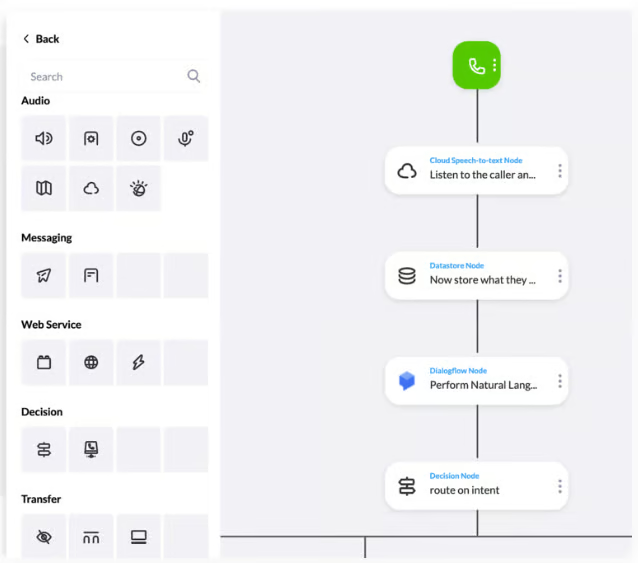
I am always impressed by Genesys Cloud CX, as it offers the best self-service contact center solutions through its robust speech-enabled IVR and AI features. This empowers customers to handle their own inquiries by navigating menus and interacting with chatbots, while the system’s dialer automates agent outreach and optimizes wait times.
While powerful, keep in mind that workforce engagement management (WEM) tools are available only on the highest-tier plan. Additionally, advanced AI features like Agent Copilot and predictive routing operate on a token system, which can lead to extra monthly fees if you exceed your allowance. If your business requires seamless omnichannel support, I recommend exploring NICE CXone, which offers more comprehensive plans.
Pricing
| Plans & pricing (per user/month, billed annually)* | Cloud CX 1 | Cloud CX 2 | Cloud CX 3 | Cloud CX 4 |
|---|---|---|---|---|
| Named license | $75 | $115 | $155 | $240 |
| Concurrent license | $110 | $170 | $230 | $360 |
*Hourly billing is also available upon request.
Standout features
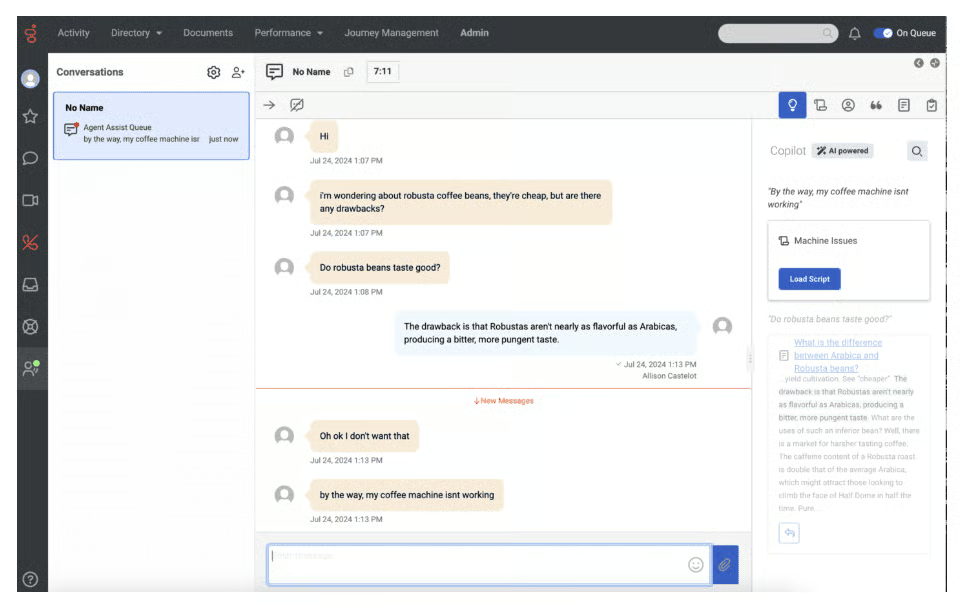
- Predictive routing: Improve call management by using AI to rank your agents’ ability to handle specific interactions. The system can then automatically route calls based on a match between agent interactions, resulting in more efficient queuing.
- Journey flows: Visualize the customer experience by designing journey flows that map self-service and agent interactions. You can also use the flows to gather data on the effectiveness of your call journeys and adjust call management features accordingly.
- Agent Copilot: Receive assistance from artificial intelligence while communicating with customers to save time on writing responses and completing after-call work. The agent can take notes on the interaction and generate summaries.
CallHippo: Best for fluctuating call volumes
My expert opinion
I added CallHippo to this list because it offers flexible plans tailored to varying call volumes, making it a great fit for businesses that experience unpredictable spikes in call volume. I particularly appreciate the unlimited calling minutes shared among users, which simplifies management during busy periods, and the inclusion of AI voice agents to ensure customers receive support even when my team is unavailable.
But keep in mind that many essential features, such as call recording, are limited to the more expensive Pro Suite and Enterprise plans, which might not be cost-effective for smaller teams with lower call volumes. If you need a more affordable base plan that includes call recording and other core tools, I recommend considering Zoom Contact Center instead.
Pricing
| Essential plans (priced per user) | Basic | Starter | Professional | Ultimate |
|---|---|---|---|---|
| Monthly | Free | $25 | $39 | $55 |
| Yearly | $19 | $30 | $45 | |
| Pro Suite plans (priced per user) | Bronze | Silver | Platinum | Enterprise |
| Monthly | $39 | $49 | $59 | Contact sales for pricing |
| Yearly | $35 | $39 | $49 |
Standout features
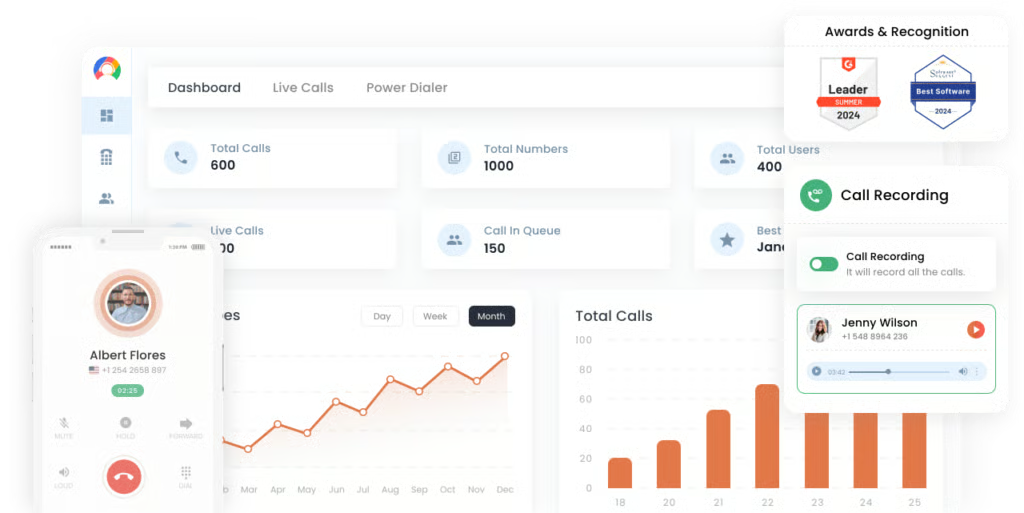
- Queue callback: Instead of waiting for the next agent to answer, customers can opt for a callback at a later time. By incorporating an in-queue callback system, you can reduce the time customers spend waiting, allowing them to continue their own activities until an agent becomes available.
- Skill-based routing: Direct customers to agents who are most qualified to assist with their concerns by automatically routing calls based on agent background and experience. This routing can help improve key metrics, such as first-call resolution and customer satisfaction scores.
- Call tracking: The reporting dashboards enable you to monitor key metrics, including trends in call queueing and customer interactions, which is beneficial for quality assurance and predicting changes in call volume.
Zoom Contact Center: Best for customer engagement
My expert opinion
I chose Zoom Contact Center for customer engagement because it delivers personalized care across multiple channels and integrates seamlessly with CRMs, giving agents vital customer context. Beyond standard calls, its ability to elevate audio to video is a major advantage for industries like tech and healthcare, where screen sharing and visual interaction enable faster, more effective problem-solving.
However, Zoom’s contact center plans lack essential VoIP features, such as virtual and toll-free numbers, which incur additional fees. While it excels in engagement, I recommend Nextiva if you need a provider with more robust, all-inclusive telephony services, CX tools, and customizable dashboards.
Pricing
| Plans & pricing (per agent/month) | Essentials | Premium | Elite |
|---|---|---|---|
| Annual | $69 | $99 | $149 |
Standout features
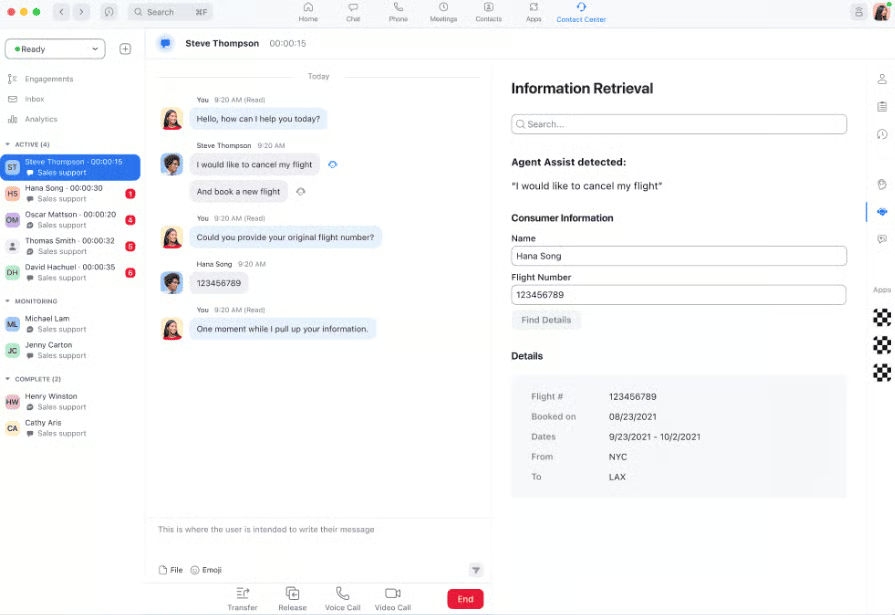
- Co-browse: Share screens between agents and customers to browse the same website or troubleshoot technical issues.
- Customer surveys: Post-call surveys will generate feedback on customer sentiment and satisfaction with the call service. You can then use this information for agent training or to improve call flows and self-service routing.
- Agent desktop: Contact Center plans provide access to additional features in the Zoom Workplace interface, including customer data and engagement tracking.
NICE CXone: Best for quality management
My expert opinion
Recently, I have expanded my writing on call center monitoring as more providers incorporate these features. But NICE CXone isn’t a new player in this market, as it consistently delivers top-tier quality management, including call monitoring, reporting, and AI features. Small teams new to contact center phone systems may find report-building challenging, but CXone lets you customize templates or use prebuilt reports to simplify data analysis.
Each plan also includes automation and AI features that provide deeper insights into call quality and customer interactions. However, it’s worth noting that it ranks among the pricier options available. Many of its advanced capabilities are also locked behind higher-tier plans. If you’re a small business seeking a budget-friendly, cloud-based contact center solution, consider exploring RingCentral, which starts at just $65 per month with annual billing.
Pricing
NICE CXone offers multiple packages with starting pricing focused on agents:
- Omnichannel Suite: $110 per agent, per month
- Essential Suite: $135 per agent, per month
- Core Suite: $169 per agent, per month
- Complete Suite: $209 per agent, per month
- Ultimate Suite: $249 per agent, per month, plus $0.25 per session
Standout features
- Proactive AI Agents: Boost efficiency and interact with customers 24/7 using AI bots. CXone enables you to build your bots or reuse previously built ones.
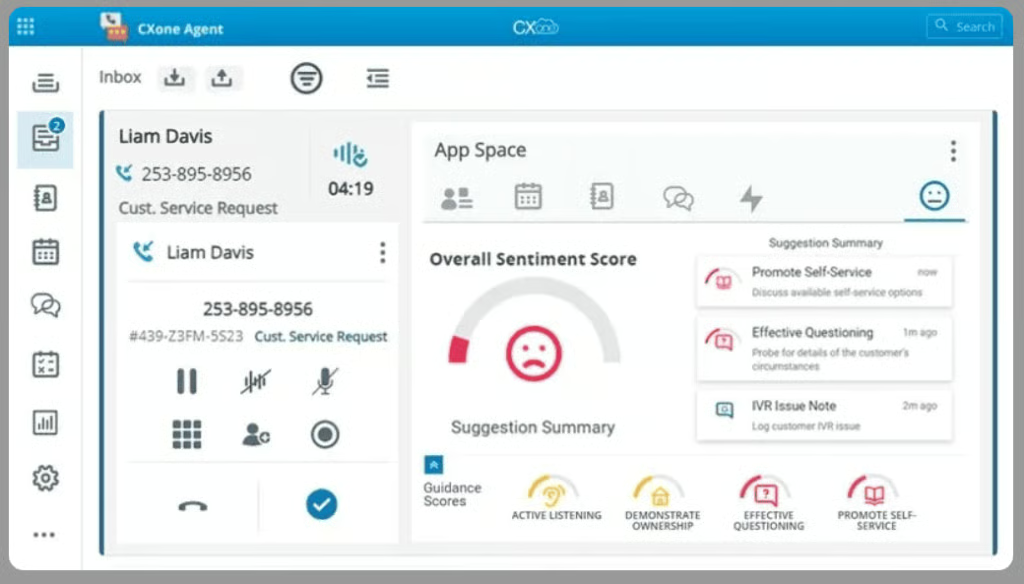
- Enlighten Copilot: NICE CXone uses AI to alert a supervisor when their assistance or inquiry is needed. This includes negative sentiment alerts and prompts to explore call data in greater depth.
- CXone agent workspace: The browser-based agent dashboards allow you to interact with customers and clients through multiple communication channels. The web app is also compatible with mobile operating systems for remote call management.
RingCentral Contact Center: Best for omnichannel support
My expert opinion
I chose RingCentral Contact Center as the best option for omnichannel support because it provides seamless customer interactions across communication channels. RingCX allows agents to handle customer calls within a single, centralized system across multiple channels, including voice, chat, email, and more than 20 digital channels such as Facebook Messenger and WhatsApp. Upgrading to the Contact Center plan expands these options to over 30 digital channels.
Despite its strengths, RingCentral currently limits scalability by offering only two plans: RingCX and an enterprise plan. I also noted that transparent pricing is not provided for the enterprise plan. For a provider with more scalable options, I would recommend considering Genesys Cloud CX, which offers four plans and multiple licensing options.
Pricing
| Plans and Pricing | Monthly | Annually |
|---|---|---|
| Standard | $75 | $65 |
| Professional | $110 | $95 |
| Elite | $165 | $145 |
| Enterprise contact center | Contact sales for pricing | |
Standout features
- Skills-based routing: Match the agent with the most relevant skill set with each of your customers. This approach is more deliberate and efficient than routing clients to the first available agent.
- CRM integrations: In addition to digital channels, RingCentral Contact Center offers seamless integrations with multiple CRMs, including HubSpot, Zendesk, and Microsoft Dynamics.
- Speech analytics: Accelerate the analysis of calls and customer interactions using artificial intelligence. The AI can leverage transcripts and messages to assess sentiment, generate summaries, and provide feedback on improving future interactions.
GoTo Connect Contact Center: Best for team collaboration
My expert opinion
I chose GoTo Connect as the best for team collaboration because its tools help supervisors make strategic decisions for their entire team. It features customizable team dashboards for effective oversight and automatic topic detection to flag potential issues in customer interactions.
However, the solution is limited to only one plan, which may not suit large-scale or global teams. For those needing a full suite of integrations and more scalable contact center tools, I recommend RingCentral instead.
Pricing
- GoTo Connect offers multiple phone plans, but only one Contact Center plan is available. Contact sales for pricing on the AI-powered contact center.
Standout features
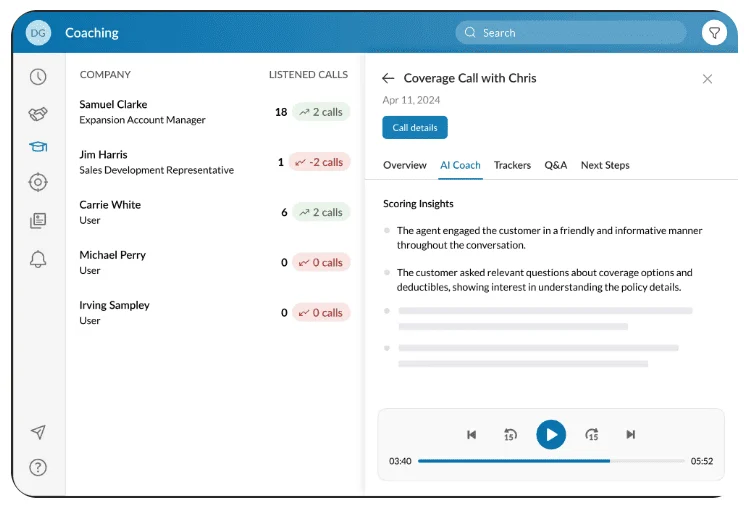
- Agent coaching: The supervisor dashboard offers various features for monitoring agent performance, including one-on-one coaching sessions and real-time feedback during calls through call monitoring.
- Intelligent routing: Use skill assignments to route calls based on agents’ specialties, increasing the chances of a positive customer experience and call outcome.
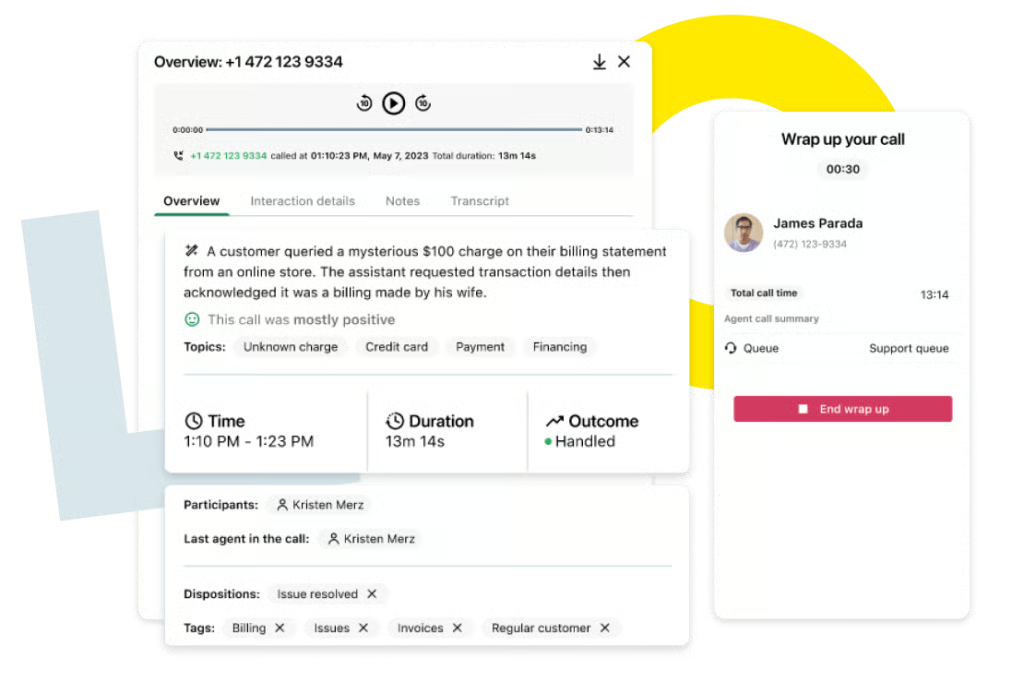
- Call wrap-up: After a call, agents are given time to wrap up their customer interaction by writing notes and scheduling follow-ups between calls.
How to choose the best cloud contact center provider
When evaluating cloud contact center software, consider the following factors:
- Communication channels: Choose a provider that supports the channels your customers use most, such as voice, email, SMS, live chat, social media, and messaging apps.
- Call routing capabilities: Look for features like automatic call distribution (ACD), skills-based routing, queue management, and IVR to ensure customers reach the right agent quickly.
- AI and automation: Consider tools like AI-powered self-service, agent assistance, call summaries, chatbots, and conversational analytics to improve efficiency and reduce agent workload.
- Workforce management: If you manage a larger support team, prioritize platforms with scheduling, forecasting, quality management, performance monitoring, and coaching tools.
- Reporting and analytics: Select a solution that provides real-time dashboards, customer interaction reporting, and agent performance insights to help improve service quality.
- Integrations: Verify compatibility with your CRM, help desk software, collaboration tools, and other business applications to create a connected customer experience.
- Scalability: Choose a provider that can support additional users, channels, locations, and customer interactions as your business grows.
- Pricing and implementation: Compare subscription costs, implementation requirements, onboarding support, and any additional fees for AI features, workforce management, integrations, or premium channels.
How I evaluated the best cloud contact center providers
For this article, I delved into the world of VoIP phone system providers, examining a range of discounts and features, including agent dashboards and call monitoring. I then rated each provider based on price and contact center capabilities to demonstrate the software’s overall value and usability.
Learn more about my evaluation criteria for the top cloud contact center providers below:
- Pricing (15%): Budget is a primary concern for small business owners, so I reviewed prices across all cloud contact center software, including annual plan discounts. I also included the number of contact center plans for each provider to assess scalability. Then, I recorded subscription prices, focusing on pricing transparency and the base price of each monthly plan.
- General features (30%): I examined each provider’s general features, including whether it offers automatic call distribution and omnichannel support for customers and clients. Specifically, I prioritized solutions with call monitoring and analytics reporting, which are becoming increasingly important for teams that track call metrics and other data-driven insights.
- Advanced features (20%): I assessed each provider’s workforce management capabilities and whether it has advanced artificial intelligence features. Similarly, I awarded points to contact centers with outbound dialers and business integrations to improve efficiency and productivity. Higher points were given to providers that included advanced features on their base plans.
- Ease of use (10%): I analyzed user-friendliness by testing products and training, reviewing demos, and evaluating reviews on reputable websites. I also considered whether the setup and configuration phase requires coding or other technical skills that can be prohibitive to small business owners.
- Customer support (10%): I checked each provider’s client support channels, including phone, live chat, email, help desk, and resource centers. I gave additional points when a provider offered customer support channels that are available 24/7.
- Expert score (15%): For the final evaluation, I assessed each provider’s quality and performance by examining standout features and value for money. I also considered the technology’s user-friendliness and its benefits for small business owners.
Frequently asked questions (FAQs)
What is a cloud contact center?
A cloud contact center is a platform that uses a cloud-based system to handle inbound and outbound calls across multiple communication channels. This omnichannel support is often offered through phone, chat, email, and social media, providing clients and customers with multiple contact options.
How do you choose contact center software?
When choosing a cloud contact center provider or software, five key factors to consider are price, omnichannel capabilities, reporting features, scalability, and security. Keeping these elements in mind as a business owner will help you narrow down which provider is best for your company.
What is an intelligent cloud contact center?
In contrast to traditional cloud contact centers, intelligent cloud contact centers are embedded with artificial intelligence capabilities to streamline the customer experience (CX) and automate agent workflows. These capabilities include, but are not limited to, smart or intelligent call routing, conversational IVAs, and customer sentiment analysis.
Bottom line
Cloud contact center software helps small businesses manage customer conversations without the cost and complexity of on-premise call center hardware. The best platforms combine call routing, omnichannel support, agent dashboards, analytics, AI automation, and quality management tools to improve both customer experience and team performance.
Based on my evaluation, Nextiva Contact Center is the best overall cloud contact center provider because it offers scalable plans, customer experience tools, intelligent routing, reporting, and automation for growing service teams. However, the right provider depends on your needs. Genesys Cloud CX is better for self-service systems, CallHippo is useful for fluctuating call volumes, and NICE CXone stands out for quality management.
