







As a marketer, one of the most exciting yet hectic parts of the year is planning a holiday marketing strategy. Black Friday season is on the horizon, holiday ads are popping up, and customers are getting into their holiday spending habits. In traditionally corporate B2B and B2C spaces, it’s the best time for loyalty campaigns and nurturing lasting relationships with clients and customers.
I won’t lie: Hectic as it is, holiday marketing is my favorite time of the year because it’s all about making customers feel good and rewarded and appreciated — the main reasons I wanted to be in marketing in the first place.
They also give marketing and sales teams the license to be a little more creative with our campaigns and be a little less formal compared to the rest of the year. The key is striking that perfect balance between being creative and personal, while maintaining a degree of professionalism and credibility.
The best holiday marketing campaigns make clients feel valued and build up your brand image, setting the stage for all your business transactions in the following year. What does it involve? In my experience, holiday email campaigns, physical merch, greeting cards, and relatable content marketing have always been reliable.
- 1. Send holiday greetings and end-of-year wins via email
- 2. Surprise and delight your best clients with premium, custom merch
- 3. Add festive holiday packaging to your orders
- 4. Send handwritten holiday cards and thank-you notes to encourage brand loyalty
- 5. Offer exclusive gifts, discounts, or free trials for a set holiday period to re-engage warm accounts
- 6. Publish end-of-year reports and forecasts for the upcoming year to build thought leadership
- 7. Offer early-bird discounts for the new year
- 8. Gift exclusive holiday-themed keepsakes at end-of-year events
- 9. Launch employee advocacy campaigns to promote your brand values and humanize your brand
- 10. Give away free templates and downloadables as a ‘thank you’ to your customer community
- Survival tips for starting your holiday marketing strategy on the right track
- Frequently asked questions (FAQs)
- Bottom line
1. Send holiday greetings and end-of-year wins via email
This is one of my go-to ways to kick off a holiday marketing strategy without much upfront spend. Email has always been a great way to reach clients in more direct ways, perfect for sending a personalized end-of-year thank-you note. Stand out from other emails by including end-of-year wins highlighting their biggest successes with your business.
For instance, I know a marketing agency that would send a recap of each client’s biggest “marketing wins” of the year, which included things like ”generated 75% new leads with Facebook ads” or “converted 50 new customers.”
Because this tends to take up time, I typically reserve this for top clients — the ones you want to keep doing business with in the upcoming year (and that you actually have success stories with).
2. Surprise and delight your best clients with premium, custom merch
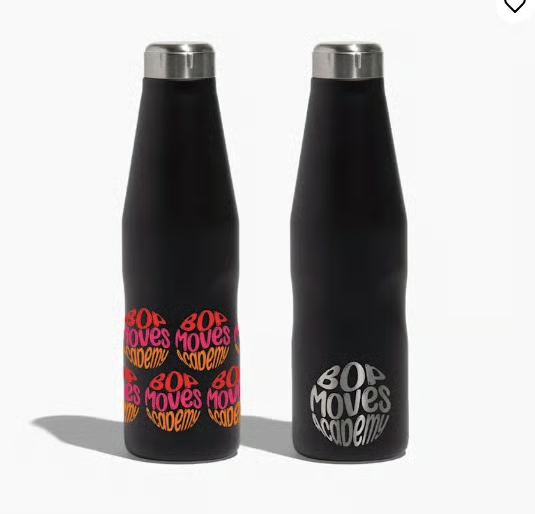
Everybody loves a present during the holidays, which is why gifted merch is a staple in any holiday marketing strategy, especially for B2B businesses that need to build long-lasting relationships with clients.
Gift your best clients premium, customized marketing swag. Office items like journals, insulated water bottles, and mugs are typically well-appreciated. But I’d stay away from tech accessories like flash drives or power banks as they typically wear out easily, and don’t always give off a credible impression (especially if you’re in the tech industry).
As mentioned, make sure your merch is customized with your brand identity. That doesn’t necessarily mean placing your logo front and center of your merch — your design can be something subtler but still in line with your industry. For example, a motivational or relatable quote with your brand’s color scheme and font.
3. Add festive holiday packaging to your orders
If you have an ecommerce store, one of the easiest ways to incorporate festive cheer into your orders is by switching to custom, holiday-themed packaging for your orders as a way to surprise and delight your customers. You can even go the extra mile and add customized thank-you cards and stickers as free extra gifts.
Branded packaging works because it’s a form of experiential marketing, which is a growing trend in marketing as a whole. Fully custom packaging creates memorable “mini-experiences” for customers that give brands extra brownie points and brand recall, and there’s no better time to do it than the holiday season.
VistaPrint also has a line of custom-branded packaging, which includes branded wrapping paper, insert cards, mailer boxes, and food packaging. This extra touch helps tie everything together and adds another layer of cohesive branding to your strategy.

4. Send handwritten holiday cards and thank-you notes to encourage brand loyalty
In the digital era, nothing makes you stand out like a handwritten holiday card or thank-you note, especially during the Thanksgiving season. While clients are inundated with thank-you emails and ads, a handwritten card will have more staying power.
Order a customized greeting card from a printing service like VistaPrint, then sign it off by hand, ideally with a personalized message.
Keep it short, heartfelt, and professional, and stick to something along the lines of “thank you for a wonderful year — here’s to another one.” Stray away from anything marketing- or business-related.

5. Offer exclusive gifts, discounts, or free trials for a set holiday period to re-engage warm accounts
Holiday marketing campaigns aren’t just for building brand loyalty. They’re also a great time to revisit warm accounts and offer an incentive to re-engage them with your business (and set them up for the following year).
Work with sales to get a list of previously-active-but-now-cold accounts and identify the best incentives to offer each. This could be anything from a free trial or free demo if you offer a software, or a limited-time holiday discount on a plan.
Set up messaging points for each incentive, then collaborate with sales on outreach emails and other ways to support them; for instance, through customer stories or testimonials.
6. Publish end-of-year reports and forecasts for the upcoming year to build thought leadership
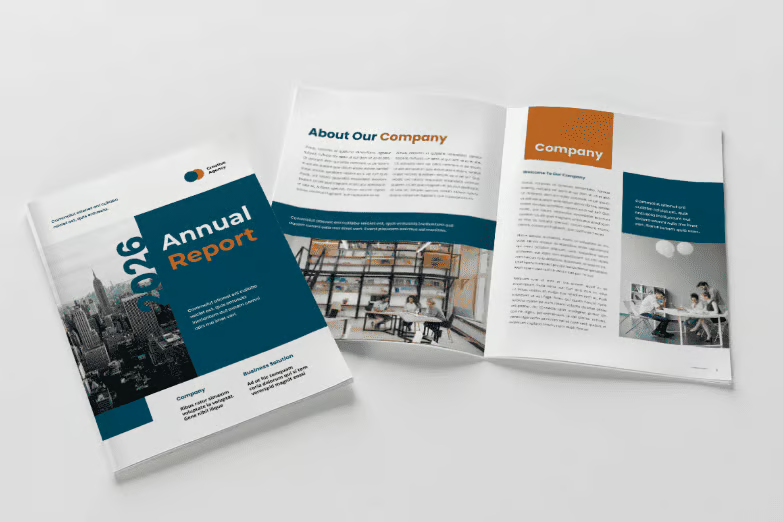
Yes, there’s a place for content marketing in holiday marketing campaigns. And while they’re technically not holiday-related, end-of-year reports and roundups are increasingly popular content (thanks, Spotify Wrapped).
But these don’t have to mean individualized reports for each client. An end-of-year report or analysis about your industry can significantly help build your brand authority, as well as forecasts and tips for the upcoming year.
For instance, a software company can release an end-of-year report about the biggest challenges in the software industry over the past year, how it navigated those challenges, what it learned, and its forecasts for the new year. An ecommerce fashion company could do a similar report highlighting fashion consumer insights and trends for the new year.
Like all other content marketing campaigns, end-of-year reports can establish brand authority and thought leadership. They’ll also make good repurposable content for blogs, email newsletters, and social media infographics.
7. Offer early-bird discounts for the new year
One of the biggest things businesses tend to overlook is that holiday marketing campaigns can (and should) also encompass the new year. One particular strategy I like launching throughout November-December is early-bird discount campaigns, say if you offer memberships or pricing plans that require yearly renewals.
Early bird discounts are always a popular incentive to encourage repeat purchases and build brand loyalty. And they don’t always have to be discounts — they can also be free gifts or exclusive access to gated content.
The trickiest part is communicating them effectively. For B2B, I’d opt for targeted email and direct mail campaigns to foster a feeling of exclusivity for your clients. Meanwhile, for B2C businesses, I usually go with a combination of paid ads, SMS campaigns, and social media.
8. Gift exclusive holiday-themed keepsakes at end-of-year events
End-of-year client events are a good time to go the extra mile and make attendees feel even more special. For end-of-year events, I usually like to forego the usual giveaway merch like stickers and tote bags and give something extra special or holiday-themed.
For instance, winter apparel like socks and beanies are always appreciated, or handy start-of-the-year items like calendars or planners, both of which are also easy to design and print with VistaPrint.
VistaPrint’s calendars are a particular favorite of mine, as there are lots of templates to start with if you don’t have a final design yet, and you can choose between a hanging or desk calendar. They’re also a great way to go fully creative and design something truly unique and memorable — that also exemplifies your brand.
It’s a small upgrade that makes a year-end event far more memorable and special, and your merch items more likely to be stored and used.
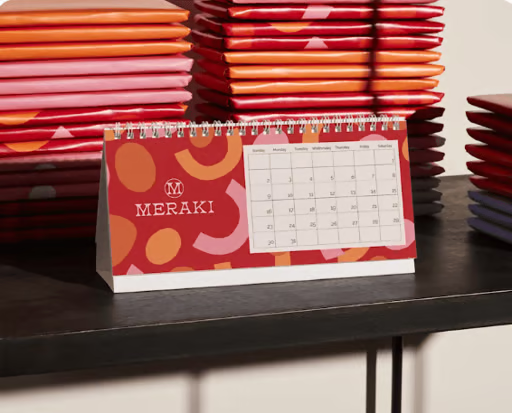
VistaPrint’s calendars are a particular favorite as they allow you to go fully creative and design something memorable. (Source: VistaPrint) 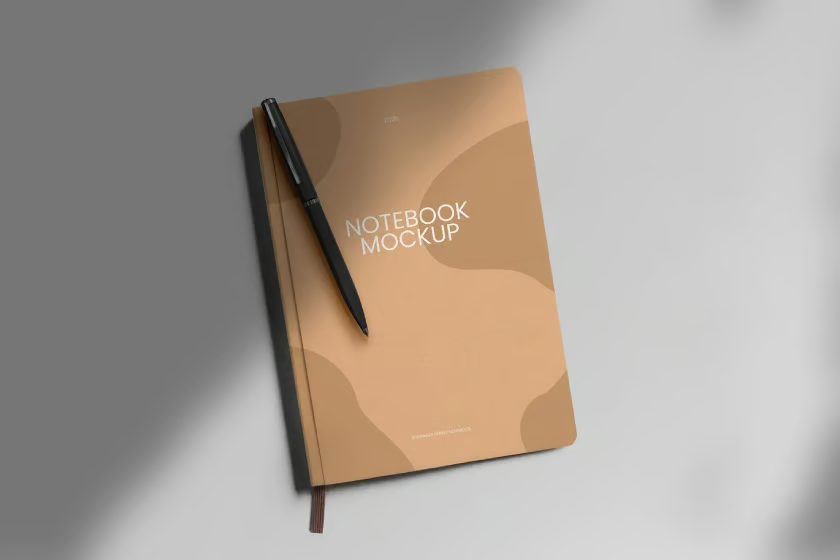
Premium planners for the new year always make for memorable and useful end-of-year keepsakes. (Source: Envato Elements)


9. Launch employee advocacy campaigns to promote your brand values and humanize your brand
Holiday campaigns are always the best time for emotional storytelling and exhibiting your brand values. They’re a chance to show off the human side of your business.
One of the best ways to do this is by launching employee advocacy campaigns on social media (usually LinkedIn). Encourage employees to share content about their day-to-day work life that speaks to your brand values, or one particular event from the past year that really resonated with the company’s mission or vision.
Give clear guidance and examples on the type of content they can post, but allow room to add their own spin and personality. Then, reshare and interact with employees’ posts on your company’s profile.
For instance, Oyster HR, a remote HR platform, regularly reshares its employees’ content on how they’ve benefited from remote work, which is a core value for the brand.
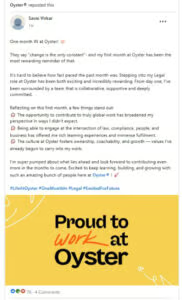
Employee advocacy can help your brand feel human and give outsiders a peek behind the curtain, and it’s been on the rise for a few years. It also drives business: 78% of consumers say employee advocacy content influences their purchase decisions. As a holiday strategy, it keeps your brand values and mission in the public’s periphery.
10. Give away free templates and downloadables as a ‘thank you’ to your customer community
One thing I’ve found particularly effective at keeping current customer communities engaged is by offering free downloadables via email — especially as gifts during the holiday season. Downloads can be templates, reports, ebooks, or a combination of various types. I usually like to give whatever content type was most popular throughout the year.
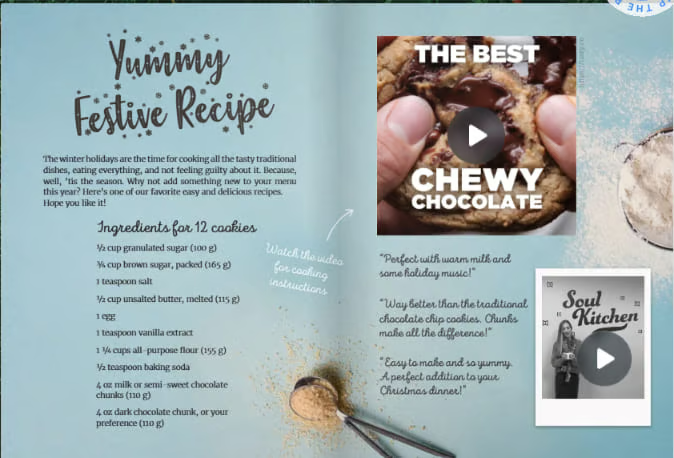
Also, make sure your downloadable content is genuinely valuable to your community. For instance, a marketing agency might give a free marketing ebook with templates, or a food content creator might give an ebook with their most popular recipes of the year.
The objective here is to “surprise and delight” your current customer community and boost their engagement with your emails — and to keep your brand top of mind until the end of the year.
Survival tips for starting your holiday marketing strategy on the right track
Holiday marketing can be a rollercoaster! But some of the things I’ve found helpful to avoid extra stress are to plan early and set clear objectives for the holiday season (among a few others I’ve listed below). This keeps things on track and gives you a blueprint you can build on for the following year.
- Start planning early. This is undoubtedly my number one tip. Start planning your holiday marketing strategy as early as September, if you can. Brainstorm ideas for campaigns, the customers or client groups you want to prioritize, and refine your core brand messaging.
- Set two or three realistic objectives for your campaigns. To prevent campaign overwhelm, set clear objectives for your holiday campaigns early on. I usually stick to around three objectives to focus all my strategies on; for instance, to encourage brand loyalty among our top brand ambassadors via exclusive gifting, or to generate 75% repurchase rates by offering early bird discounts.
- Fit things into your wider marketing strategy. One of the biggest mistakes I made early on was running holiday email marketing campaigns concurrently with our regular email newsletters and promotions.
This only led to higher bounce and unsubscribe rates — we were in our customers’ inboxes too often, which they didn’t appreciate. Keep in mind any other marketing campaigns you may need to pause to make space for your holiday campaigns, or plan campaign timelines accordingly.
- Keep your brand values present. Holiday campaigns ultimately feel hollow if there aren’t any strong brand values guiding them. Whether your business advocates for sustainability or data privacy, holiday marketing campaigns are a chance to let those values shine and take center stage in all your messaging, from email greetings to branded merch. Merriam-Webster’s recent viral ad is an excellent example of a brand steadfastly sticking to its values.
- Segment and prioritize audiences. As with all marketing strategies, audience segmentation is crucial in the planning stage. Gifted merch is typically reserved for top VIP clients or high-value brand partners and ambassadors, while mid-level clients might receive a handwritten note and holiday card. Meanwhile, for small businesses or startup marketing, email greetings and newsletters are usually a good option.
Frequently asked questions (FAQs)
Why is holiday marketing so important?
Holiday marketing is important because customers spend and act differently during the holiday season. They typically spend more and expect more rewards from brands to coincide with the festive season. It’s also typically a time for more emotional selling over hard-sell strategies. Having a holiday marketing strategy helps your business stay afloat during these seasonal changes and keep your brand top-of-mind until the following year.
What is a holiday campaign?
A holiday campaign is a marketing strategy made especially to navigate the holiday season. Each business’s holiday campaign is different depending on your industry and objectives, but they usually involve a good amount of creative emotional selling and brand advocacy (as opposed to hard sells), “surprise and delight” gifting to build brand loyalty, and seasonal greetings across all channels. Some notable examples of holiday marketing campaigns are Starbucks’ Red Cups campaign and Macy’s “I believe” campaign.
When to start holiday marketing?
There is no official date to start holiday marketing campaigns, but a good time is around the first week of November — a few weeks before Black Friday, the unofficial start of the holiday season.
However, planning for a holiday strategy can start as early as September and October to give enough lead time to plan out campaigns for key dates like Black Friday, Thanksgiving, Small Business Saturday, and Christmas, as well as other holidays like New Year’s, Hanukkah, and Kwanzaa.
Bottom line
There is no single holiday marketing strategy that works for every brand. Ultimately, it’ll depend on your particular objectives for the season and your industry, identity, and values as a brand. However, the tips I shared above are some of the best ones I’ve gathered throughout my career, and ultimately, they all hinge on showing gratitude and strengthening connections with clients and customers, as well as emphasizing your brand values in your messaging.
