







Advertising on social media is a great way to get your business in front of new audiences, but it’s important to remember that not all paid social media advertising platforms are the same. I made the rookie mistake years ago of assuming the ads that worked on Facebook would also work on X and Instagram. They did not! Don’t make the same mistake!
Each social platform has its own ecosystem, audience, and best practices, especially now that the ad landscape in 2025 has changed significantly, with things like video and user-generated content (UGC) gaining popularity. New players like Threads and Bluesky have also entered the chat. And Twitter was reborn as X.
But when it comes to the best social media advertising platforms, I generally have guidelines I stick to for certain use cases. For instance, YouTube and Facebook are better at reaching new audiences compared to LinkedIn or TikTok, where audiences are more ready to buy and convert.
- For reaching wide audiences of a certain demographic: Facebook, YouTube
- For reaching targeted audiences: X (Twitter), Reddit
- For getting engagement like profile or website visits (especially visual brands): Instagram, Pinterest
- For capturing ready-to-buy consumers (especially younger ones): TikTok, Snapchat
- For generating B2B leads: LinkedIn
However, these are in no way strict rules. It’s important to do in-depth research about where your specific audience is most active with their social media time, and to understand the type of content that resonates with them most.
Ultimately, good advertising is all about knowing your audience and then choosing the best platforms to reach them.
- An overview of the best paid social media advertising platforms
- Facebook Ads: Best for reaching wide audiences of a certain demographic
- Instagram Ads: Best for ecommerce brands or for reaching audiences of a specific interest
- Paid Social on Instagram Via Meta Ads
- YouTube ads: Best for reaching a wide audience through long-form video ads
- YouTube Advertising
- LinkedIn ads: Best for generating B2B leads
- LinkedIn Advertising
- TikTok ads: Best for D2C businesses and for reaching young consumers
- X (formerly Twitter) Ads: Best for timely ads and for reaching interest-based communities
- Twitter Advertising
- Reddit advertising: Best for building awareness among niche communities (especially tech and gaming)
- Snapchat advertising: Best for reaching Millennial and Gen Z consumers
- Pinterest ads: Best for visual and creative brands targeting younger consumers
- Pinterest Advertising
- Quora ads: Best for reaching people who need specific solutions
- Paid Social on Quora for Business
- Are paid social media ads the right choice for your business?
- Frequently asked questions (FAQs)
- Bottom line
An overview of the best paid social media advertising platforms
| Social media ad platform | Best for | Minimum daily ad budget | Monthly active users (Oct. 2025) |
|---|---|---|---|
 | Reaching wide audiences of a certain demographic | $1 | 3.07 billion |
 | Ecommerce brands reaching audiences of a specific interest | $1 | 3 billion |
 | Reaching a wide audience through long-form video ads | $5 | 2.58 billion |
 | Generating B2B leads | $10 | 1.15 billion |
 | D2C businesses and for reaching young consumers | $20 for ad groups and $50 for campaigns | 1.99 billion |
 | Timely ads and for reaching interest-based communities | $1 | 557 million |
 | Building awareness among niche communities (especially tech and gaming) | $5 | 765 million |
 | Reaching Millennial and Gen Z consumers | $5 | 932 million |
 | Visual and creative brands targeting younger audiences | $5 | 578 million |
 | Reaching people who need specific solutions | None | 400 million |
Sources: Data Reportal, DemandSage
Facebook Ads: Best for reaching wide audiences of a certain demographic
Who Facebook Advertising is best for
Given its size and prominence, nearly any type of company might benefit from marketing on Facebook. However, the nature of the platform makes it best for business-to-consumer (B2C) advertising.
Facebook advertising is also a smart play for any new company trying to build a brand presence with a local audience. As part of its ad targeting, you can select a service area by ZIP code, city name, radius, and more. You can also target people of a certain age demographic and interest (i.e., by specific topics they follow, like sports or fashion).
Facebook ads are displayed based on audience targeting, so it’s also appropriate for businesses that have built sophisticated ideal customer profiles. Finally, Facebook ads can retarget customers who previously visited your website or Facebook Page and bring them back to your business.
While B2B companies can (and many do) advertise on Facebook, its effectiveness is limited. For example, Facebook users scrolling news feeds are likely doing so during leisure time.
Types of Facebook Ads
Facebook offers a wide range of ways to advertise, including text, image, and video ads. Boosted posts are shown in the news feed, while paid ads can be displayed in many places, such as the news feed, side column, stories, and Facebook Messenger. You can also automatically cross-post campaigns to Instagram and the Facebook Marketplace.

Image ads are the most straightforward Facebook ad type. They’ll also come with a call to action button (in this case, “Shop now”). (Source: Strathberry via Facebook) 
Collection Ads appear like an image album. (Source: Flora by HLMN via Facebook) 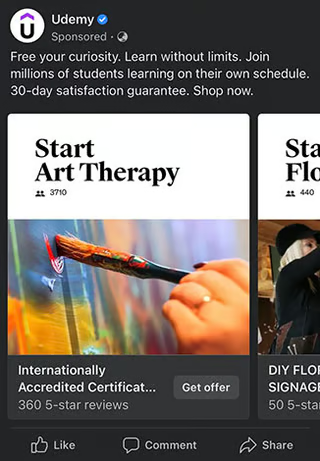
Carousel ads are also popular. (Source: Udemy via Facebook)


About Facebook’s audience demographics and how to get started
- Facebook has 3.07 billion active users as of February 2025 — more than any other social platform.
- 56.6% of Facebook’s audience identifies as male, and 43% as female.
- Nearly 69% of Facebook’s users log in every day.
- 32% of Facebook users are between 25 and 34, and 19.4% are between 18 and 24
- Most US adults spend between 22 and 36 minutes a day on Facebook.
- The average click rate for Facebook ads is 0.90%, with the legal industry bringing the most clicks at 1.61% followed by retail at 1.59%.
Facebook (aka Meta) is the world’s largest social network, with over 3 billion active users, including over 278 million in the US. It has a wide user base covering virtually all demographics, with various advertising opportunities, from sponsored posts that appear in news feeds to Facebook Messenger ads.
Using Facebook Ads via Meta Ads is affordable for small businesses, with Facebook ad costs averaging at just over $1 per click and a minimum daily ad spend of $1.
Getting started is also simple, though the key to doing them well is ensuring that you choose the right ad format and target the right audience. Inside your business’s Facebook page, visit the Meta Ads center in the Meta Business Suite. Choose your advertising objective, target your audience by demographic and interest, then upload your ad assets. Set your daily or lifetime ad budget, then launch your ad.
With Facebook, you want your ad to feel as relatable and organic as possible to your target audience. The highest performing ads don’t often feel like ads, but like regular content.
Instagram Ads: Best for ecommerce brands or for reaching audiences of a specific interest
Who Instagram advertising is best for
Instagram is large enough to reach nearly any business’s target audience. However, it’s the best paid social advertising platform for B2C businesses that can create aesthetically pleasing visual content, since it’s a very visual platform, featuring mostly images and videos.
For example, a real estate photographer may use Instagram to reach local realtors by displaying their high-quality work. Or a handcrafted jewelry maker could advertise on Instagram to build awareness and promote new products. A wedding videographer can share short clips as reels to promote bookings and target ads within a local region.
Instagram’s visual nature also makes it effective for lifestyle marketing or reaching audiences of a specific interest. Examples of advertisers who succeed here include clothing and apparel brands, cosmetics and skin care companies, accessories (e.g., handbags or shoes), travel and destination websites, and so on.
Like Facebook, it’s far better at promoting brand awareness and interest (i.e., getting people to visit your profile) rather than directly converting sales.
Types of Instagram Ads
Instagram Ads formats are pretty identical to Facebook’s and are created through the Meta Ads Manager. They can be images, videos, or Reels on users’ feeds, or on Instagram Stories with “swipe up” links. IG ads can also be Carousel, Shopping, or Collection Ads.

Example of an image ad in the Instagram feed with a CTA to learn more (Source: LDC Creative Studio via Instagram) 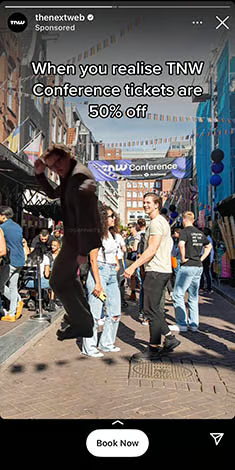
An example of an Instagram Story ad with a swipe-up link CTA (Source: TheNextWeb via Instagram) 
An example of an Instagram Collection ad (Source: Marc Jacobs via Instagram)


About Instagram’s audience demographics and how to get started
- Instagram has 2 billion active users as of February 2025, with nearly 180 million in the US, making it the third most popular social media platform.
- Gen Z-ers between 18 and 24 spend approximately 53 minutes a day on Instagram, more than any other age group.
- 7 out of 10 Instagram users check IG Stories daily, with 62% of users saying they were interested in a brand after seeing it on an Instagram Story.
- An analysis of 10 million Instagram profiles found that the topics with the most engagement on Instagram were photography (4%), cinema and acting (3.9%), and arts (3.8%).
Instagram is one of the most utilized social media platforms in the world for advertising, and with good reason: It’s low-cost, creative, effective, and conducive to ecommerce. Getting started with Instagram Ads is the same as Facebook: Set up your ads in the Meta Ads Center, target your audience, set your ad budget, and then launch your ad.
YouTube ads: Best for reaching a wide audience through long-form video ads
Who YouTube Ads are best for
YouTube is one of the most unique advertising platforms because of its dominance in online video, making it equally effective for both B2B and B2C advertisers. However, people visiting YouTube are often there for research or entertainment. This makes it far better for brand awareness and lead generation rather than conversions.
YouTube is the internet’s television, and it’s the only social platform that can run full-length video ads, aka commercials, before a video is played. This is perfect for showcasing your brand with creative storytelling and promoting your brand values and identity.
Like TV commercials, YouTube ads are also good for reaching a broad, captive audience and promoting brand recall — although not necessarily for prompting clicks or reactions in the same way as Facebook or Instagram ads.
Types of YouTube Ads
YouTube ads are often displayed before video content as pre-roll ads, requiring viewers to take in a few seconds of the ad before skipping to the video. However, unskippable ads are also available, as well as in-stream ads, which appear in the middle of the video.
Aside from in-video ads, YouTube also has in-feed ads, which appear on YouTube’s home feed alongside videos that your target audience will likely watch. YouTube also has YouTube Shorts Ads, which appear when people scroll through YouTube Shorts.
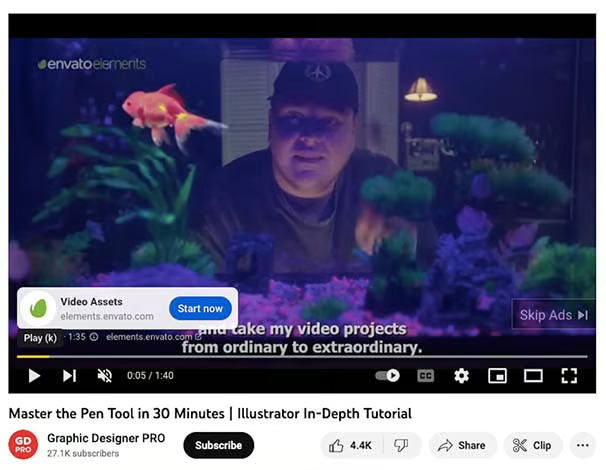
Skippable YouTube ads can appear pre-roll or in-stream. (Source: Envato Elements via YouTube) 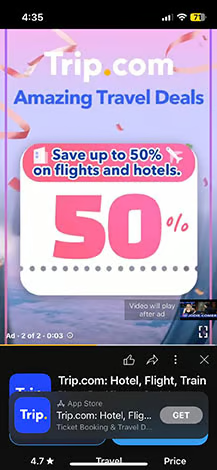
Skippable Ads get your audience’s full attention, but not always their full appreciation. (Source: Trip.com via YouTube) 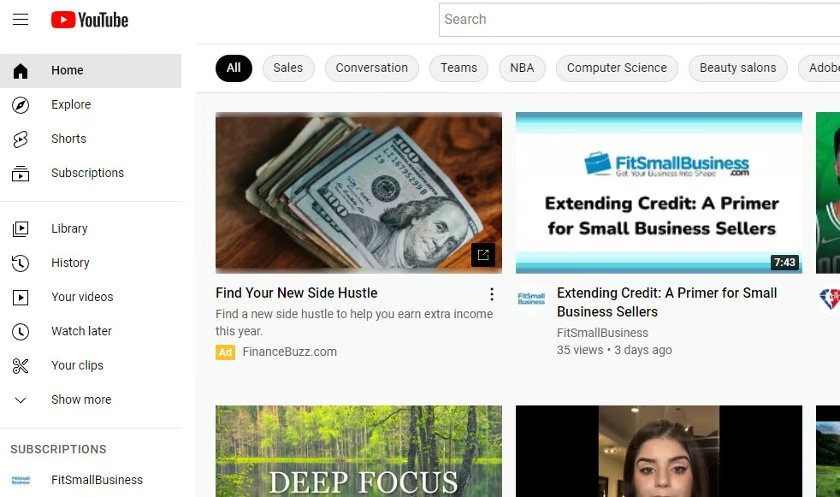
In-feed ads are more subtle, appearing alongside videos on users’ feeds. (Source: FinanceBuzz via YouTube)


About YouTube’s audience and how to get started
- YouTube has a monthly active user base of 2.58 billion people, making it the second most-visited social media platform after Facebook.
- YouTube ads reached a total of 30.9% of the global population in January 2025.
- 46% of YouTube users identify as female, and 54% as male in 2025.
- The average age of YouTube users is between 34 and 44 years old.
- People spent an average of 48 minutes and 42 seconds on YouTube in 2024, five minutes longer than in 2020.
Get started with YouTube Ads by signing up for a Google Ads account and connecting your YouTube channel. Inside your Google Ads account, select an ad campaign goal (generate phone calls, land page views, etc.), then upload your ad video and set your ad budget and audience.
LinkedIn ads: Best for generating B2B leads
Who LinkedIn Ads are best for
LinkedIn is unique as a B2B social media platform — it’s the only social platform made especially for businesses and professional networking. It’s also steadily growing as a platform for generating B2B leads.
For instance, a SaaS CRM business might use LinkedIn Ads to get in front of company decision-makers and turn them into leads. LinkedIn Ads also have the ability to offer downloads in exchange for lead contact information. For example, a company might use LinkedIn Ads to generate more downloads of its recently published report.
Types of LinkedIn Ads
LinkedIn has many ad formats, the most common of which are Sponsored Posts — regular content boosted to reach a wider audience. Sponsored posts can be text, images, carousels, or videos, and appear in users’ feeds.
LinkedIn also offers Dynamic Ads and Text Ads, which appear beside the LinkedIn feed and are personally targeted to each user’s interests. However, both of these ad types only appear on the desktop version of LinkedIn, not in-app, which narrows its audience.
Finally, LinkedIn has Sponsored Messaging, which are message-type ads that appear in users’ inboxes.
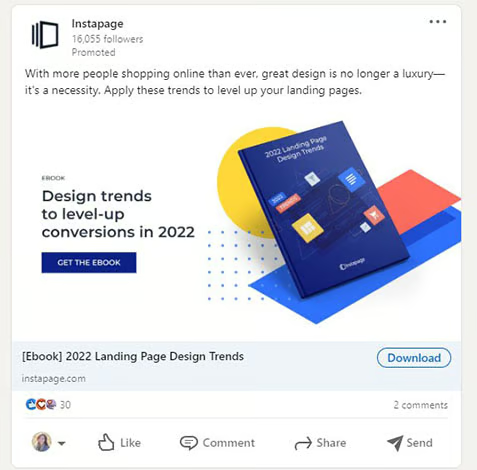
Sponsored posts are the most common type of LinkedIn ad. (Source: Instapage via LinkedIn) 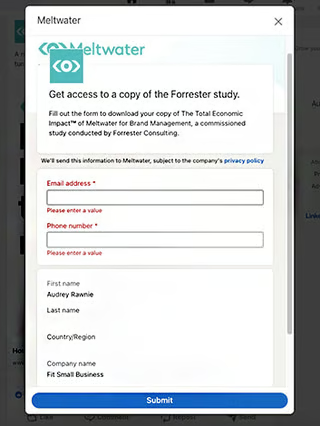
Downloadables can also help generate leads. (Source: Meltwater via LinkedIn) 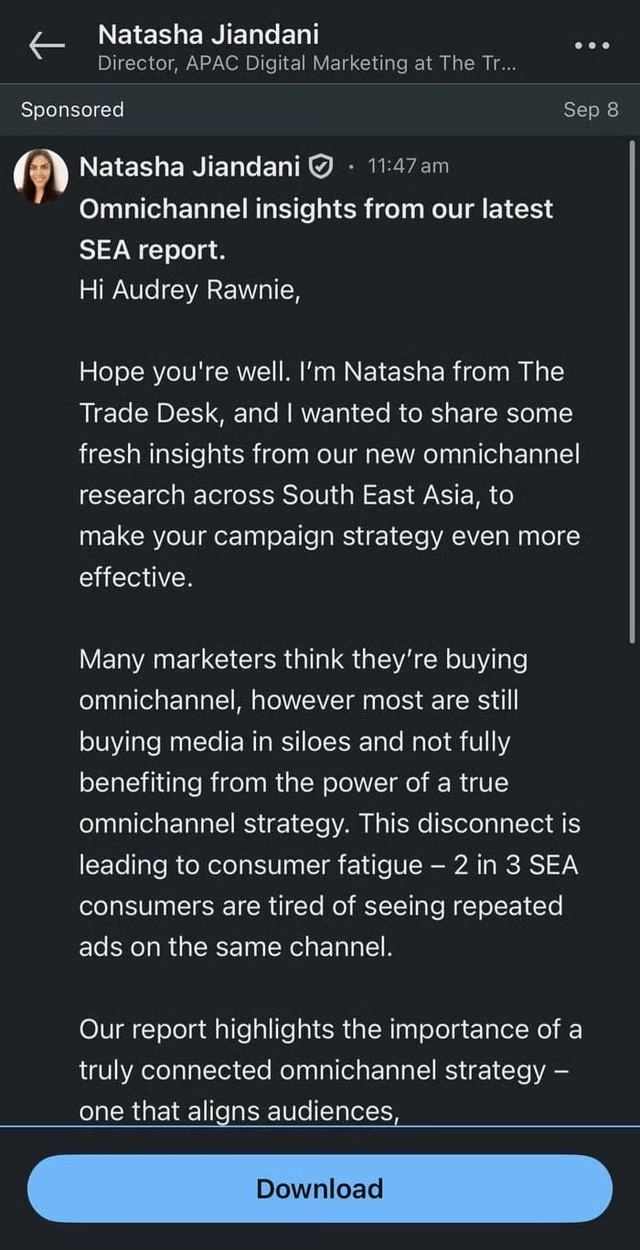
Sponsored messages go straight to targeted users’ inboxes. (Source: LinkedIn)


About LinkedIn’s audience and how to get started
- Nearly 36% of LinkedIn users are Millennials, aka people born between 1981 and 1996, making them the majority on the platform.
- Gen X and Gen Z come in second and third place, respectively, at 27.2% and 26.2%.
- 47.6% of professionals on LinkedIn are women, and 51.7% are men.
- However, men occupy 68.8% of tech roles, and only 29.9% of women. In the non-tech workforce, women take up 57.6% of roles, and men take up 42%.
- 54% of college graduates use LinkedIn, and 53% have an annual income above $100,000.
To get started on LinkedIn, create a LinkedIn page for your business. Then, sign in to LinkedIn Business and click on “Get Started” to access your ad campaign manager. Choose the ad you want to launch, set your budget, goal, and audience, then launch your ad.
TikTok ads: Best for D2C businesses and for reaching young consumers
Who TikTok ads are best for
If you know TikTok, you probably already know that the bulk of its user base is young Gen Z customers with an affinity for authenticity and humor and brands that really “get” them. TikTok is also a video-only platform, meaning ads that typically get attention are those with a good understanding of how vertical videos work (and TikTok-style videos specifically).
And because of TikTok Shop, direct-to-consumer (D2C) businesses typically have a higher chance of converting a sale on TikTok than on other platforms. After viewing and clicking an ad, users can instantly be led to TikTok Shop to complete a purchase. However, TikTok Ads can also be good for generating clicks and profile visits.
Types of TikTok ads
All TikTok ads are in the same vertical video format. However, there are two types of ads you can run: Spark and Non-Spark. Spark Ads are boosted posts — regular TikTok content you can boost to more audiences for a price. Non-Spark Ads are true-blue ads with a clear call to action. They’re usually more for end-of-funnel conversions, i.e., getting people to complete a purchase.

Non-Spark Ads are straightforward advertisements with calls to action. (Source: TikTok) 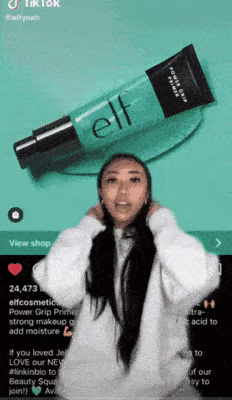
Meanwhile, Spark Ads are regular posts you can boost for a price. (Source: WebFX)


About TikTok’s audience and how to get started
- TikTok has 1.9 billion users as of February 2025.
- 58% of consumers are on TikTok, 82% of whom tend to be Gen Z.
- The average user spends over 55 minutes a day on TikTok.
- Beauty and personal care brands had the highest TikTok Shop sales with over 370 million units sold, followed by womenswear, food and beverage, and home supplies.
- 36% of all direct social media purchases were made on TikTok.
To get started on TikTok, visit TikTok for Business and click on “Get Started” to sign up for a business account. This will give you access to the TikTok Ads Manager. Choose the kind of ad you want to place (Spark or Non-Spark), choose your ad objective, target audience, and budget, and then launch your ad.
X (formerly Twitter) Ads: Best for timely ads and for reaching interest-based communities
Who X Ads are best for
X (formerly Twitter) is the best advertising platform for delivering timely information and real-time updates, and reaching niche, interest-based audiences.
Particularly, X is a more text-based platform compared to the other major paid social media advertising platforms, so I’d also recommend it more for text-based ads (aka sponsored posts), more than image or video ads. I recommend this option because visual ads on X often feel intrusive and, therefore, get scrolled over. Text posts look and feel more organic and are more likely to be interacted with.
One highlight with X ads, however, is its location and language targeting, making it a good option for local or franchise businesses. For instance, if you’re opening a business in a new city or are generating interest for an in-person event, X Ads would be a good option to help get the word out. You can target your ads by city, postal code, or set a radius of one to 50 miles around a certain location.
Types of X ads
There are two basic types of ads you can promote on X: A Promoted Tweet, aka a regular tweet you can promote to reach more audiences, and a full ad campaign. X has several types of ad campaigns:
- Timeline Takeovers place your ad on top of users’ timelines for 24 hours, so it’s the first ad they see upon opening the app.
- Spotlight Takeovers place your ad on top of the trending hashtags list.
- Immersive Takeovers are vertical video ads that appear first when users scroll through videos on the app.
- Reach Block places your ads on users’ home feeds regardless of demographic and is designed for maximum reach.
- Collection Ads place several images of your product under one post (similar to the Meta Ads of the same name).
There are also regular image and video ads that can be targeted to certain demographics and interests.
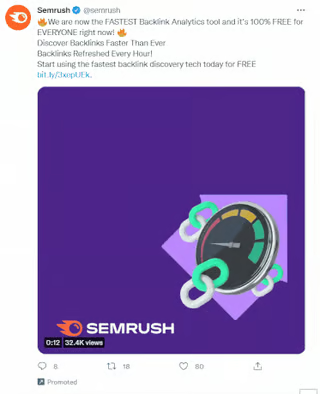
Promoted Tweets are one of the most popular ad formats on X. (Source: Ad Espresso) 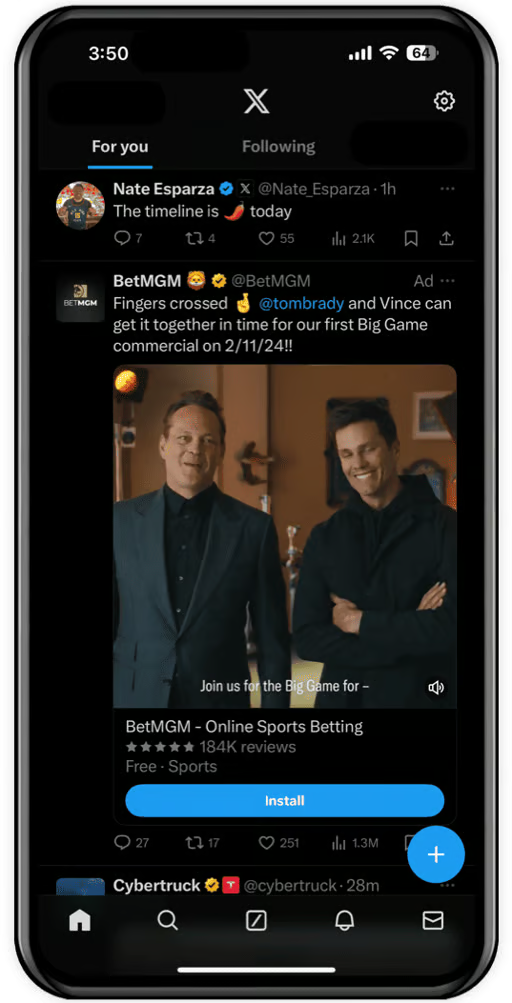
One of X’s most unique ad formats: Timeline Takeovers that place your ad on top of users’ feeds. (Source: X) 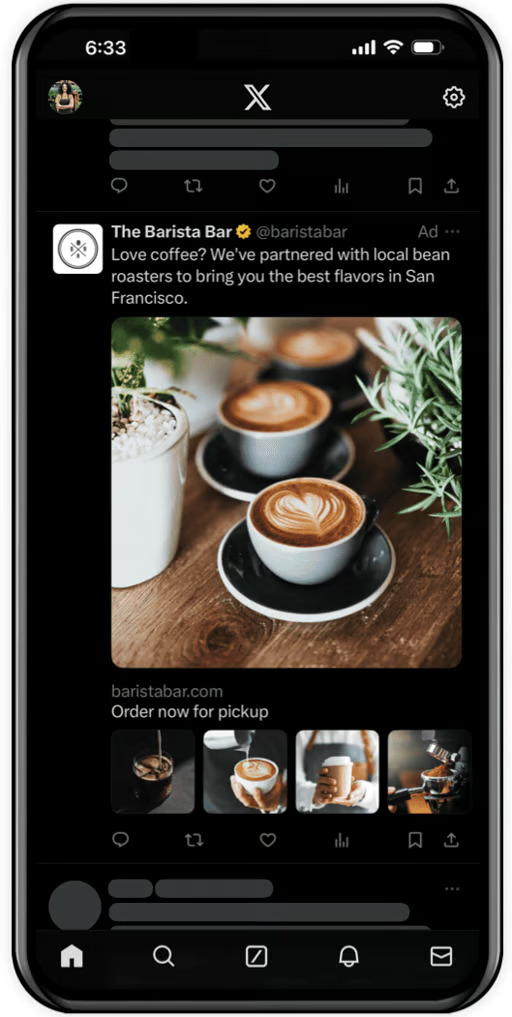
Collection Ads are another option, ideal if you sell physical products. (Source: X)


About X’s audience and how to get started
- X received 3.6 billion visits in September 2025. 778.6 million were unique accounts.
- Over half (52%) of X’s regular user base is between 18 and 34 (aka Millennials and Gen Z). About 19% are between 35 and 44.
- The most popular hashtags on X center around current events, pop culture, entertaining content, promoted posts, and social activism.
- The top brands on X have an average engagement rate of 0.08%.
- The average user spends a total of 28 minutes a day on X.
To get started on X, visit X for Business, then click “Create an ad,” which will prompt you to sign in to the X account you want to set up ads on.
Select your country, time zone, and billing currency, then choose the type of ad you want to create (a Promoted Tweet or a full ad campaign) and upload the necessary files or choose the necessary tweets to promote. Then, set your ad budget and length, enter your billing details, and launch your ad campaign.
Reddit advertising: Best for building awareness among niche communities (especially tech and gaming)
Who Reddit ads are best for
Reddit is arguably the internet’s biggest forum, more than a regular social media platform with “likes” and private messages. That’s particularly why it’s one of the best social media platforms for advertising to niche communities, particularly young people interested in tech or gaming, which make up a sizable portion of its user base.
It’s also possible to target Reddit users by location, demographic, or device type, although it’s not great for garnering engagement, only for general brand awareness.
Types of Reddit ads
Reddit ads appear as promoted posts on Reddit forums and come in the form of text posts, images, image carousels, and videos. Reddit also offers special ad types called “Conversation Placements,” which integrate your ad within discussions on the platform in a more organic, non-obtrusive way. These ads are displayed within subreddits or in the right-hand column.
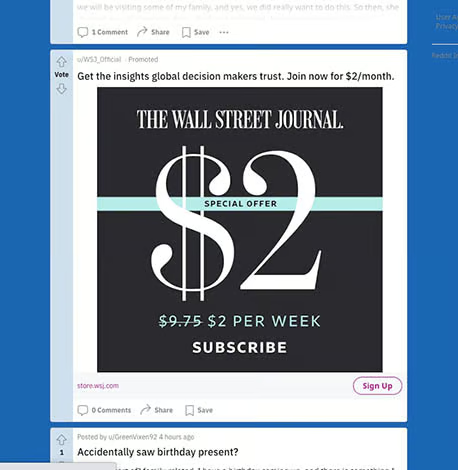
An example of an image ad on the Reddit feed (Source: The Wall Street Journal via Reddit) 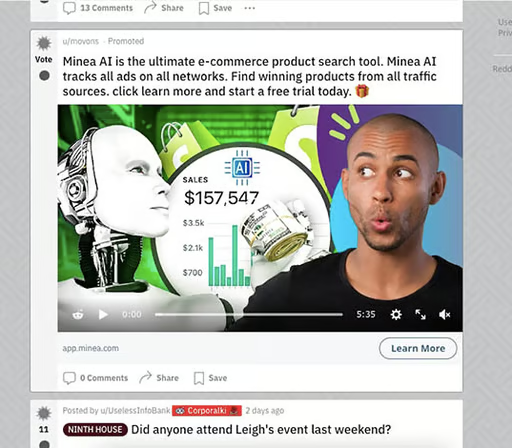
An example of a video ad on the Reddit feed (Source: Minea via Reddit) 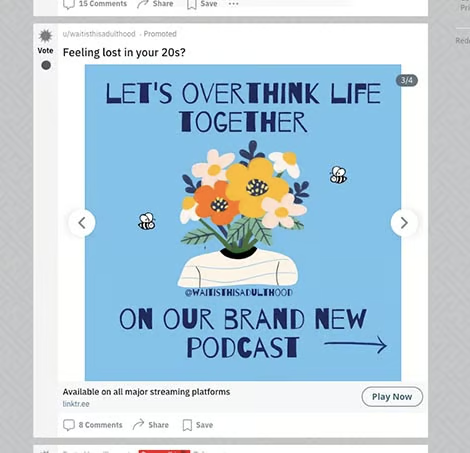
An example of a carousel ad on the Reddit feed (Source: Wait, Is This Adulthood via Reddit)


About Reddit’s audience and how to get started
- 44% of Reddit users are between 18 and 29, with the average age being 23.
- The majority of Reddit users are male — about two-thirds of its entire user base.
- 45.56% of Reddit’s daily active users are in the US.
- There are over 10,000 active subreddits on Reddit. Among the most popular are r/funny, r/gaming, and r/worldnews
- There were over 4.6 billion visits to Reddit generated by Google searches in January 2024.
Before setting up an ad on Reddit, determine if Reddit is the right fit for your audience. If you have an audience on the platform, create a Reddit for Business account. Choose an ad objective, select the audience you want to target, choose the type of ad you want to set, and then launch your ad. You can monitor its performance in Reddit’s performance dashboard.
Snapchat advertising: Best for reaching Millennial and Gen Z consumers
Who Snapchat Ads are best for
Snapchat has a much smaller user base compared to some of the other social media advertising platforms on this list, but it can also mean a much less competitive space for your ads and a more targeted audience.
Particularly, Snapchat’s users are predominantly Gen Z and Millennials who use it as a texting platform. However, to get their attention, you’ll also have to truly understand how your audience behaves and communicates. Snapchat users can often spot inauthenticity from a mile away and don’t get the best impression from brands that feel inauthentic, much like TikTok.
Snapchat supports app installs, so it’s also a good option for companies with software-as-a-service (SaaS) products. Plus, Snapchat’s filters and AR capabilities present a unique social media advertising opportunity for B2C companies marketing to younger consumers.
Types of Snapchat ads
The most common type of Snapchat ad is Sponsored Snaps, which are regular Snaps you can boost for a cost. Snapchat also has Image and Video ads, which are similar to Sponsored Snaps but have a call to action and button attached to them.
There are also Story Ads, which are multiple images or videos in a tappable “Story” format, Commercials, which are longer video ads, and Collection Ads, which are similar to Meta’s version and display multiple images of your product in each ad.
Finally, Snapchat’s most unique ad type is its custom AR Lenses and Filters, which let you create a custom filter of your brand that users can add to their Snaps.
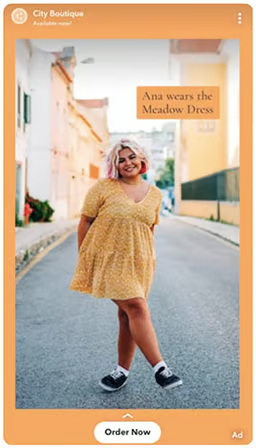
Snapchat image ads come with little CTA buttons at the bottom. (Source: Snapchat) 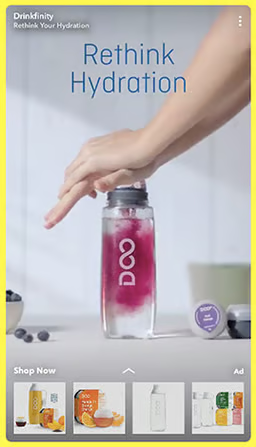
Collection Ads showcase multiple images of your product. (Source: Snapchat) 
One of its most unique ad types: custom filters. (Source: Snapchat)


About Snapchat ads and how to get started
- About 1 in 5 Snapchat users is a man between 18 and 24, while women of the same age group make up 17.2% of Snapchat users.
- Snapchat reaches up to 90% of 13- to 24-year-olds in many markets.
- 63% of Snapchat users say Snapchat has influenced them to make a purchase.
- 55% of Snapchat users have shared an ad with someone else (usually a custom filter).
- Snapchat is the number one app people use to tell other people about their purchases.
To get started with Snapchat ads, visit Snapchat for Business and click “Get Started.” Follow the prompts to set up your account, profile, and business information, including your address and currency. This will take you to your Snapchat ads manager.
Click on “Create Ads,” choose your ad objective and format, target audience, and ad budget. Then, upload your ad assets and launch your ad.
Pinterest ads: Best for visual and creative brands targeting younger consumers
Who Pinterest ads are best for
Pinterest is a very creative, visually oriented social media platform, and it’s also one of the “least” social. I say that because people are mostly there to look at creative ideas and inspiration more than to directly communicate with other people (although there is a messaging and notifications tab).
This means the ads that tend to work best on the platform aren’t hard-sell ads to encourage purchases, but sponsored content like blogs or how-to guides with high visual value. Pinterest also has an active small business user base, so small business-centered vendors also put up ads on the platform (for example, QuickBooks).
Pinterest users are also actively searching for images of specific things, from house plans to house plants, decorating ideas, color schemes, and more. This makes it a good option for B2C sellers looking to place bottom-of-funnel, high-converting advertising and marketing content. Its user base also makes it a great platform for those wanting to reach US women in general, and moms, in particular.
Types of Pinterest ads
Businesses can advertise on Pinterest through Promoted Pins and Pinterest Ads. Promoted Pins are regular pins you can promote to reach more users, while Pinterest Ads can be Images, Videos, Image Carousels, Collections, and Shopping Ads.
Pinterest also has Idea Ads, which are Instagram Story-style ads with tappable images and videos, and Quiz Ads, which are a Q&A ad format that gives personalized recommendations to users.
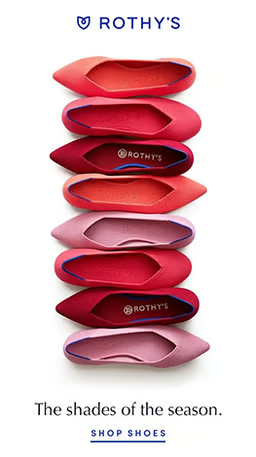
Pinterest image ads have clickable links. (Source: Pinterest) 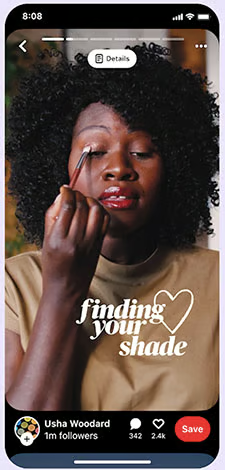
Idea Ads are tappable, IG-story style ads. (Source: Pinterest) 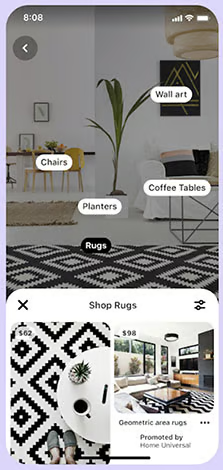
Pinterest Shopping Ads let you highlight specific items in a Pin that users can purchase. (Source: Pinterest)


About Pinterest’s audience and how to get started
- Pinterest Ads typically reach 70.4% of women and 22.4% of men aged 18 and above on the platform.
- Pinterest Ads can potentially reach up to 340.1 million people.
- The majority of US Pinterest users are Gen Z: 46% are between 18 and 24, and 40% are between 25 and 34.
- 85% of Pinterest users have made a purchase after seeing a branded post on Pinterest.
- Pinterest users spend 80% more on retail than non-Pinterest users.
To get started on Pinterest, visit Pinterest for Business and create an account (or convert your personal account into a business one), then claim your website. After finalizing your profile, you’ll enter your Pinterest Ads manager.
Click “Create Campaign” to set up a new ad, then choose an ad objective and ad format. Upload your ad assets, then preview and launch your ad.
Quora ads: Best for reaching people who need specific solutions
Who Quora ads are best for
Quora is less a social media platform than a question-and-answer forum, meaning it’s the best ad platform for reaching users who are looking for specific solutions to a problem. For example, a hardware store can set up ads on Quora to reach people who are asking about home improvement projects.
It’s also a decent ad platform for SaaS providers to reach people looking for the solutions they offer. Quora is also very information-centric, so it’s also a decent platform for B2B advertising, especially as it also has lead gen forms to capture user information.
Types of Quora ads
You have two options when advertising on Quora: via sponsored answers, which show up alongside organic answers, or via regular image, text, or video ads, which appear on the feed or on the right-hand column.
Quora offers advanced targeting options, including contextual targeting based on interests and content engagement, and audience targeting. There are also lookalike audiences, targeting based on user behavior, or broad targeting to reach the widest audience.
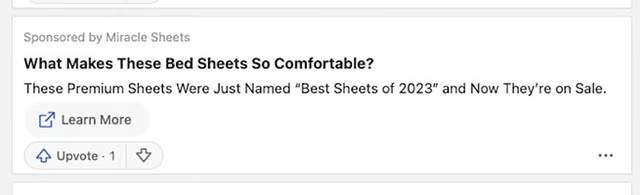
Quora text ads appear on users’ feeds like regular Quora posts. (Source: Miracle Made via Quora) 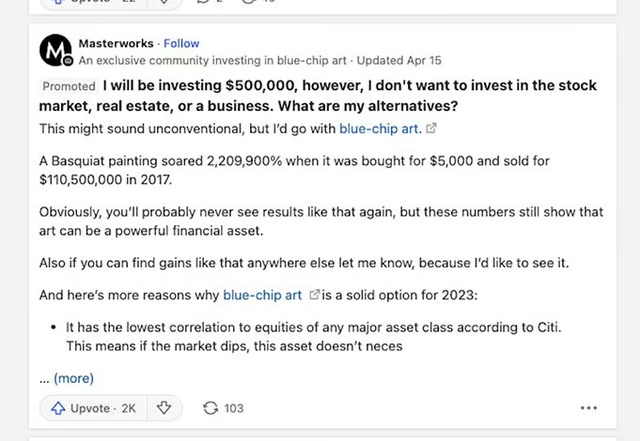
Promoted answers are also an option. (Source: Masterworks via Quora) 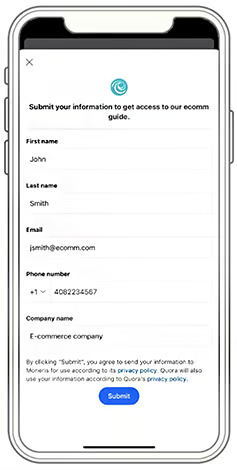
Quora also has lead gen forms, helpful for B2B advertising. (Source: Quora)


About Quora’s audience and how to get started
- Quora has 400 million monthly visitors, most of whom come to the platform looking for answers to a specific question or solutions to a problem.
- There are over 300,000 topics on Quora across 24 languages. Among the most popular are health, consumer electronics, B2B/SaaS, and consumer technology.
- The majority (30.11%) of Quora’s users are between 25 and 34, followed by 18 to 24 year olds (25.65%) and 35 to 44 year olds (17.92%).
- Over 56% of Quora users are male, and around 43% are women.
- Over 81% of Quora’s traffic comes from organic Google searches.
To get started with Quora ads, visit Quora for Business and click “Get Started.” Once you’re inside the Quora Ads Manager, click “New Campaign,” add a name for your ad campaign, then choose an objective. Add your campaign budget and set a schedule.
Set your ad’s location and audience, or turn on Quora’s automatic ad targeting feature to let it target your ads for you. Set your daily ad bid, then upload your ad content (or type it in if it’s a text ad. Then, preview and submit your ad. Once approved, it’ll be live on Quora in 24 hours.
Are paid social media ads the right choice for your business?
Social media ads are any type of promoted content on social media platforms, whether image, video, text, or something entirely platform-specific, like Snapchat’s branded filters. They have far more precise audience targeting capabilities than traditional advertising, like TV commercials or billboards.
For instance, with social media ads, you can target specific age groups, locations, interests, and even by the websites they’ve previously visited or the pages and profiles they interact with most. They also have more accurate measuring capabilities — you can measure your ads’ engagement and click rate, and the audiences they reached.
As an ad format, social media ads are also among the least costly, as you can set a budget per day or for the entirety of your campaign without going overboard.
However, with so many brands and people using social media ads, it’s also a very crowded market. And people are getting pretty fatigued from ads on social media, and most easily scroll past them without a second thought. Creating “scroll-stopping” ads takes a nuanced understanding of your target audience and what resonates with them.
| Pros of social media ads | Cons of social media ads |
|---|---|
| Multi-layered ad targeting by demographic, behavior, and interest | Learning curve for any platform |
| Great for reaching niche audiences | Success often depends on how well you understand and target your audience |
| Low cost-per-click and spending minimums | Many social media users are fatigued by ads |
| Effective for reaching new audiences beyond your following | Needs consistency and various strategies for it to be effective |
| Interactive by nature and encourages audience engagement | Not all customer engagements are positive |
| Produces results and analytics almost instantly | Landscape is already very crowded; it’s difficult to stand out |
| More direct contact with customers | Can be affected by shifting trends |
So, should you still set up social media ads? If you have a clear understanding of what captures your audience’s attention, sure. Your ads’ success also largely depends on how well you understand each platform’s unique ecosystem and how your brand fits in it.
For instance, a florist with high visual value might do well on visual platforms like Pinterest and TikTok, not so much on X or Quora.
There are no set rules or “secret formula” that works with social media ads. It differs for every business. In my experience, the most successful social media ads are the ones that don’t feel like ads, but like regular content — whether image or video. They’re also often effective for promoting limited-time discounts (i.e., “15% off until the end of October”) to create a sense of urgency.
Finally, social media ads are also good for retargeting campaigns, aka bringing people who previously visited your website or profile back to your business.
Ultimately, before setting up any social media ads, make sure you have a strong organic social media strategy, and use that to guide your ads based on what performs best.
Frequently asked questions (FAQs)
What are social media advertisements?
Social media advertisements are any type of promoted content on social media targeted to a specific audience. They can be image or video ads, or platform-specific ads like Stories on Instagram or branded filters on Snapchat.
Social media ads are usually meant to garner audience engagement and interest, or sometimes promote direct sales, i.e., on TikTok Shop or Instagram Shop. Some platforms can also generate B2B leads, like LinkedIn and Quora, while some ads are simply used to generate brand awareness and interest.
How do I do paid advertising on social media?
To start doing paid advertising, first choose the social media platform that best fits your audience and objectives, and create an ad account on that platform. Then, plan your ad budget and campaign length, and create and launch your advertisement.
Once your ad is live, measure its effectiveness by tracking its reach, click-through rates, conversion rates, and cost per click.
Is paid social media advertising worth it?
Social media ads can definitely be worth a try if you have a clear understanding of the type of content that resonates with your audience on social media and have one clear objective for your campaigns, whether to gain more followers, website visits, or to generate leads, and you have a specific audience you want to target. Social media ads are also a good option for retargeting audiences who previously interacted with your business.
Bottom line
Social media advertising varies with each platform. Each has its own ecosystem, best practices, and audience sets, and the best platform to advertise on will depend on your audience and objective. Before all else, research your audience to find out what platforms they’re most active on and what content topics and formats engage them the most. As much as possible, I recommend having a solid organic social media following before setting up ads so your campaigns can build on a good foundation.
