





.jpg?w=288)

Social media advertising is one of the most accessible ways for small businesses and independent brands to get in front of wide audiences. Social media offers a wide reach at low costs and more precise audience targeting than traditional broadcast advertising channels like television, radio, or print.
But the social media ad market is also more crowded and competitive than other ad platforms (and it’s only growing more competitive every year). Success will require a thorough understanding of your audience — not just their general demographics like age and location, but also their interests and the kind of content that engages them most on social media.
It’s why I recommend having a solid organic social media presence first before setting up ads. It helps to know what kind of content already works best with your audience and use that to guide your ad campaigns.
Advertisements on social media generally fall under two camps: sponsored content, which is regular content you boost to reach more audiences at a price, and true-blue ad campaigns, which are set up and targeted as ads from the get-go. Both are available on pretty much every social media platform.
Either way, some of the biggest benefits of social media ads are that they’re interactive by nature (instead of one-directional) and allow more advanced audience targeting and analytics.
They also come in many forms, from image and text-based posts to more creative formats like full-screen stories or interactive photo filters, and can be used for nearly any marketing objective, from building brand presence to increasing website or landing page traffic, generating leads, and closing sales.

Image ads on Instagram can lead people straight to your Instagram shop. (Source: @dukedester via Instagram) 
Carousel ads are another popular ad format on Facebook and Instagram for showcasing multiple photos of your product. (Source: Simply Flora via Facebook) 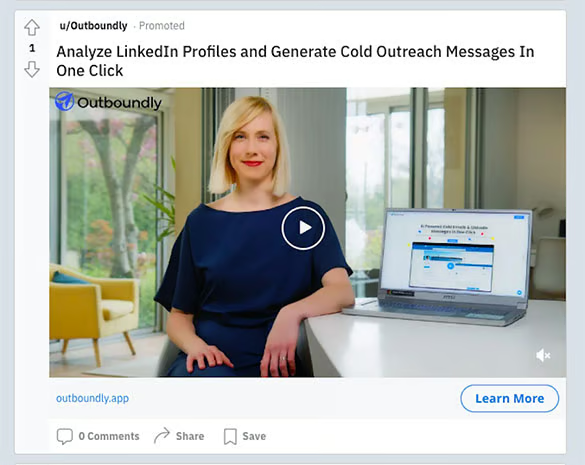
Video ads are popular on every platform, including this in-feed one on Reddit. (Source: Outboundly via Reddit) 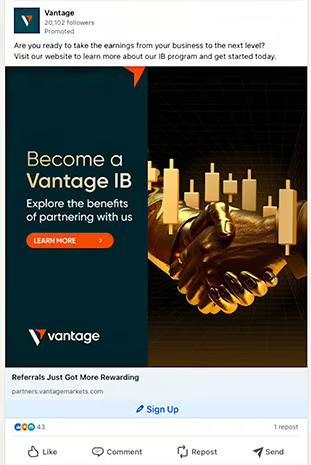
LinkedIn is the primary platform for B2B advertising and generating leads. (Source: Vantage via LinkedIn)


- Social media advertising — is it the right choice for your business?
- How much do social media ads cost?
- The elements of a social media advertising campaign
- How to set up a social media advertising campaign: A beginner’s guide
- My expert tips for advertising on social media successfully
- Some tools to help set up your social media advertising campaign
- Frequently asked questions (FAQs)
- Bottom line
Social media advertising — is it the right choice for your business?
Before anything else, clarify if social media ads are really the right choice to meet your marketing objectives. As mentioned, advertising on social media can help you reach a very specific and targeted audience.
But because there are so many ads on social media these days, it’s also increasingly difficult to stand out and get any meaningful engagement, i.e., people who click on your ads out of genuine interest in your business.
To advertise or not to advertise on social media ultimately comes down to your objectives and how active your audience is on social media.
Social media ads have proven to gain a wide reach quickly, and can be particularly helpful if you have a website that you want people to visit or a very specific online audience you want to target.
| Social media advertising pros | Social media advertising cons |
|---|---|
| Reach your ideal customer: Social media ads can target precise audience demographics, locations, interests, and behaviors. | Very competitive market: Almost every brand with a digital presence runs ads on social media, making it difficult to stand out. |
| Retargeting capabilities: Social media ads allow you to target previous site visitors and bring them back to your business< | Social media ad fatigue: A direct consequence of an oversaturated ad market is that social media users are fatigued from ads and have a negative perception of them. |
| Generate leads: Social media ads have proven to generate leads and build contact lists using content tailored to engage your target audience. | Irrelevant audiences: Despite their advanced targeting capabilities, social media ads still have a tendency to reach audiences that aren’t relevant to your business. |
| Influence buying behavior: Multiple studies have found that social media ads directly influence purchase decisions across demographics. | Subject to algorithm changes: The visibility of your social media ads ultimately depends on each platform’s algorithm, which can change regularly. |
| Drive traffic to your website: Ads on social media have a specific objective to drive audiences to your website as a landing page when they click on your ad. | |
| In-depth analytics: Social media ads have the most precise analytics out of any advertising platform, including click-through rates, cost-per-click, and engagement. | |
| Controlled budget: Unlike traditional ads, social media ads let you set an average daily budget or fixed total budget for your ads. | |
How much do social media ads cost?
One of the biggest benefits of running social media ads is their controllable budget — you can set a daily or weekly average for your campaigns or a fixed total budget for the entirety of your campaign.
However, social media ads are typically priced on a cost-per-click (CPC) basis (i.e., how much it costs to get a single click on your ads) or cost-per-mille (CPM), aka the cost per thousand views of your ad.
The average cost per click varies for different social media advertising platforms. For instance, on Facebook, they can be as little as 40 cents, while on TikTok, they’re around $1.
| Social media ad platform | Average cost per click | Average cost per mille | Monthly active users (October 2025) |
|---|---|---|---|
 | 40 cents | $14.40 | 3.07 billion |
 | $2 | $6.70 | 3 billion |
 | $1 | $10 | 1.99 billion |
 | $1.50 | $5 | 578 million |
 | $4 | $6.60 | 557 million |
 | $5.26 | $6.59 | 1.15 billion |
 | 30 cents | $20 | 2.58 billion |
Sources: AdRoll, Data Reportal
The elements of a social media advertising campaign
Social media ad campaigns are made of many moving parts, which are all integral to their success. They’re not just an image or video you upload to a social media ad platform and then immediately launch.
Every good social media ad campaign has a good objective and KPIs, assets, target audience, budget, and, of course, platform.
- Ad objective: Social media ads can help increase website visits, generate leads, drive purchases or app downloads, or just increase your general awareness and engagement. Your objective is the primary reason for your entire campaign and will be the main way you measure its effectiveness later on. Make sure you have a clear objective before launching any ad campaign.
- Key performance indicators (KPIs): KPIs are numerical metrics that you can use to measure your campaign’s effectiveness against its objectives. For instance, if your objective is to increase website visits, your KPI might be to increase your website traffic by 35% by the end of your ad campaign.
- Social media platform: The social media platform you choose plays a substantial role in its overall success. Each platform has its own ecosystem and content type that works best. For instance, Instagram is great for visual-oriented or lifestyle brands. The platform you choose depends on where your audience is most active.
- Ad content: Your content is the main essence of your campaign that will capture and hold people’s attention and motivate them to take action, whether your ad format is a single image, carousel, video, a combination of those, or something else entirely.
- Audience targeting: With any social media ad campaign, you can send your ad out to detailed customer profiles, down to their demographics, location, interests, and buying behavior. For example, on Facebook, if you own a pet care business, you can target ads to people who’ve interacted with pet content and follow animal or pet-centric pages.
- Campaign budget: One of the best things about social media ads is the ability to control your ad budget. You can set a specific daily budget or opt for PPC campaigns, which only charge you for every click on your ad. Some platforms also let you set a budget cap for the entirety of your campaign, where the platform will automatically adjust your budget every day.
- Social media analytics: Analytics are the way you’ll measure your ad’s effectiveness. Some common analytics you’ll find on social media ads are click-through rates, conversion rates, cost per click, and cost per conversion.
These are the most basic, essential elements of any social media ad campaign. However, there are also some more minute elements involved, like landing pages, which are where audiences land on after clicking on your ad, and link trackers and tracking pixels (like the Facebook ad pixel) that track how users interact with your ad.
How to set up a social media advertising campaign: A beginner’s guide
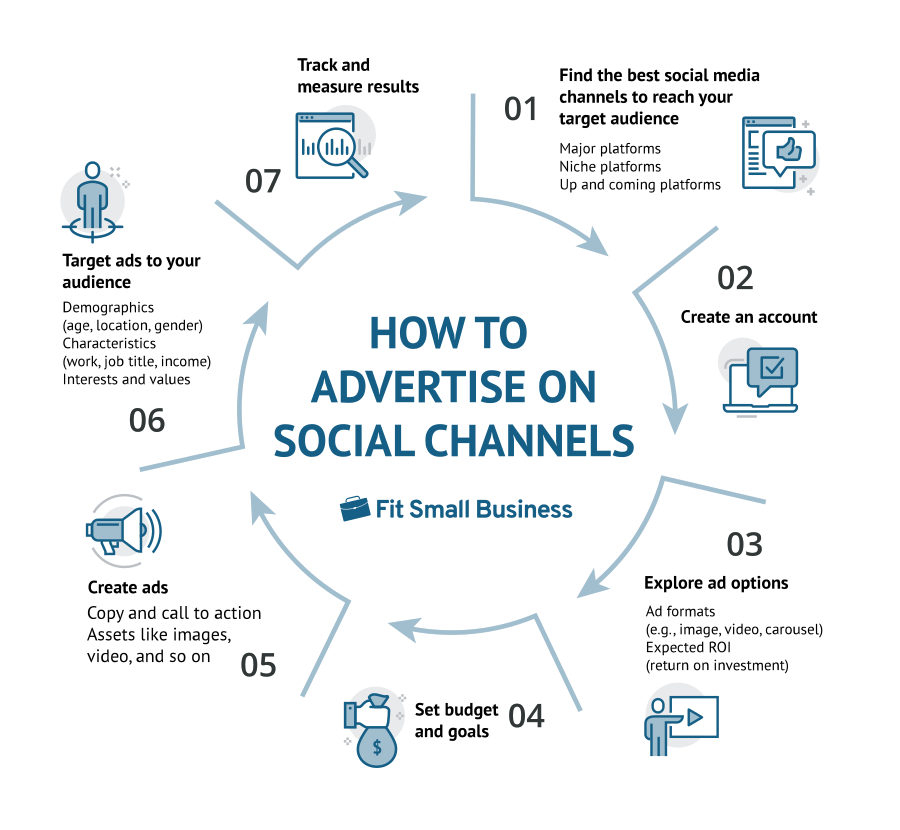
The specifics of creating a social media advertising campaign will vary on each platform, but the general process is the same. You start by choosing the best platform (or platforms) for your campaign, then create an ad account.
Choose the right ad format, set a clear objective and campaign budget, target your audience, then create and launch your ad campaign.
1. Find the best social media platform for your ads
Choosing the right social media platform is integral to your ad campaign because it dictates the audience that will see your ad, and the format and content of your ad.
Facebook, for instance, has a very wide audience base and pretty much every demographic, while TikTok is very Gen Z-focused, and Pinterest is where the artists and creatives hang out.
If you’re new to social media ads, I typically recommend advertising on the platform where your audience is already most active or where you already have an established presence.
2. Create an ad account on your chosen platforms
After selecting which social networks to advertise on, create an account and set up a profile. Even if your ads are driving traffic to your website, people learning about your brand will likely check out your social profile on the platform as well.
So, take the time to complete your profile by adding a cover and profile image and filling out the descriptive and business information sections.
3. Explore the paid advertising options
Once your account is set up, you can explore the platform’s ad creation and targeting tools. Each ad usually has a designated advertising platform, such as Facebook and Instagram’s Meta or Pinterest for Business, where you can explore your advertising options.
This includes finding what types of ads you can place on the platform, where they are displayed, what type and size of collateral you’ll need (such as for images or video), and what type of return you could expect to see.
4. Set your ad budget and objectives
Next, take some time to set a campaign budget and measurable goals. Both need to be realistic. If you’re just starting out, you can’t expect a massive return on a one-off ad or an advertisement run for just a few days. It’s also better to start with a small budget at first, then adjust later on depending on which ad types and settings produce the best return on ad spend (ROAS).
5. Create ad assets
Create your ad content, whether it’s in an image, image carousel, video, or blog. Include clear and specific ad copy that leads your audience to complete a specific call to action, whether it’s to visit your website or sign up for an event or email newsletter.
Some general ad content guidelines:
- For image ads, keep an 80:20 ratio for image and text. 80% visual, 20% text. Keep your copy short and to the point; avoid flowery language.
- Let audiences know how they’ll benefit from following your call to action. For example, if they visit your website, will they get a 20% discount? First dibs on your new product?
- Make sure your ad fits the correct sizes and aspect ratios for each platform and ad format. Always preview your ads before launching them to ensure they’re the right sizes and dimensions.
6. Define and target your audience
One of the best benefits of advertising on social media is its hyper-precise audience targeting. Once your ad is uploaded onto your social platform, you’ll need to target which audience set it will appear to.
Social media ads can be targeted by location, demographic, interest, as well as factors like household income, industry, and websites or pages visited. Targeting your audience accurately ensures that your ad reaches the right people and minimizes unnecessary ad spend.
7. Measure & track ad campaign results
Once your ads are up and running or when a campaign has ended, take time to analyze your results. Some metrics to look out for are your ads’ reach, click-through rate (CTR), cost-per-click (CPC), and traffic source, among others. Then, use what you learn to inform and better fine-tune your future social media campaigns.
My expert tips for advertising on social media successfully
What I’ve found so far from doing ad campaigns on social media is that much of their success hinges on good strategy, like how well you research and understand your audience, and the content of your ad.
The best ads don’t feel like ads, but any regular content on social media. It’s also about leaning into the ecosystem of each platform and how people interact in it, and fitting in as naturally as possible.
- Don’t sound or look like an ad. The first rule of social media advertising in 2025 is don’t post something that feels like an ad. The last thing people want is another brand unabashedly trying to sell them something.Social media ad fatigue is real, and audiences have higher standards for the kind of ads that really capture their attention and make them stop scrolling. Usually, those are ads that feel like organic content, or even UGC or testimonial-style ads.
- Play into each platform’s strengths (and don’t crosspost). As mentioned, each social media platform is its own ecosystem with its own “rules” and best practices. For example, on Instagram, highly visual content with good aesthetics usually works, and X has lots of real-time cultural commentary.Play to each platform’s strengths so that your ad feels intrinsic. And don’t crosspost ads everywhere. Tailor your ads to each platform and audience. What works on Facebook isn’t always going to work on X, and vice versa.
- Have a good landing page or “next step” for your ads. After people see your ads, where should they land next? Ideally, on a landing page, not just on the home page of your website. You should tailor your landing page to your specific ad campaign.For instance, if you’re promoting a new product on your online store, lead them straight to that product’s page. If you’re generating leads, make sure your landing page is a sign-up form with the information you need.
- Offer benefits, not products or services. One of my biggest advertising guides is always to offer benefits, not products or services, and to show results, not promises. Show audiences how they can benefit from your product or service.For instance, a pet care clinic might show ads of successful former clients, instead of enumerating the services it offers.
- Start small, then keep improving. There is no single secret formula for making successful social media ads. It’s a trial-and-error process that differs for every business. If you’re new to them, start with a small budget and a simple objective.Then, use what you learn from your campaign to inform future ones. For instance, if your ads didn’t resonate with the audience you targeted, try a different tone for your captions or another call to action.
Some tools to help set up your social media advertising campaign
As you know by now, social media ad campaigns are made up of multiple parts, from your ad content to your landing page, and they don’t all come from the same source.
You’ll need a good design platform (or graphic designer) to create your ad, a separate platform to build a landing page, and yet a separate one for tracking your links. Fortunately, there are many tools and resources for these, most of which are free, like HubSpot and Canva.
 |  |  |  |
|---|---|---|---|
| Bitly is a link-shortening and tracking tool that generates links for your ads from which you can track the number of visits and locations used. | HubSpot is one of the best landing page builders, whether you’re building sign-up forms or offering promo codes. | Canva has pre-set ad templates for Facebook, Instagram, and other social media platforms, already fit to the correct sizes and aspect ratios. | WordStream is a free tool that measures your ad against competitors and predicts how it’ll reach your target audience. |
| Visit Bit.ly | Visit HubSpot Landing Page Builder | Visit Canva | Visit Wordstream’s Facebook Ad Grader |
Frequently asked questions (FAQs)
What is social media advertising?
Social media advertising uses social media platforms like Facebook, LinkedIn, or YouTube to advertise your business to targeted audiences. Social media ads allow more specific audience targeting than most other platforms, including targeting by demographic, location, and online behavior. It also offers more interactivity.
For instance, social media ads can get people to visit a website or sign up for a registration form. They’re also effective for several objectives, like increasing brand awareness and website traffic, offering limited-time discounts, or promoting seasonal sales.
How effective are social media ads?
Social media ads can be very effective when they’re targeted to the right audience and have the correct messaging. Ultimately, the success of your social media ads depends on how well you target your audience and create ad content and calls to action that engage them.
Social media ads can also be particularly effective at retargeting campaigns (aka targeting previous website visitors to re-engage with your brand), or for advertising limited-time campaigns like holiday sales.
What are the benefits of social media advertising?
The biggest benefits of advertising on social media are its very precise audience targeting and its interactivity. With social media ads, you can reach people who fit your specific customer profile, from their location, age range, and interests, down to their previous buying behaviors and websites they interact with most.
Social media ads are also more measurable than most. They let you track how many times your ad was clicked and viewed, and how many people followed your call to action. They’re also less costly than traditional advertising, as you can set an average daily budget or total budget for your campaign.
Bottom line
Social media ads offer a ton of benefits for getting your small business in front of a wide audience that fits your ideal customer profile, all without spending an outlandish amount of money.
To get the best out of your social media ads, choose the social media platforms where your audience is most active, target your audience as precisely as possible, and have one clear call to action that they can easily follow. Social media advertising has a lot of trial and error — it’s all part of the process. Above all, keep your audience and their interests front and center.
