







If you are sitting on excess inventory that you need to get rid of, you are not alone. According to a study from McKinsey, in just the US, retailers have more than $740 billion worth of unsold goods. In the face of all this excessive inventory, the answer many retailers are looking to is liquidation.
Liquidation can either occur because banks or stockholders order the business to liquidate its products and shut down. However, for most independent retailers liquidation is voluntary and happens when you have products that are outdated or otherwise not going to sell.
Below are the nine best ways to liquidate inventory:
- 1. Hold a Liquidation Sale
- 2. Work With a Liquidator
- 3. Try a Liquidation Auction
- 4. Consider B2B Sales
- 5. Return Inventory to Your Supplier
- 6. Sell Your Products in Bundles on eBay
- 7. Donate to a Cause
- 8. Dispose of Your Goods
- 9. Use Them as Freebies
- When Should You Liquidate Inventory?
- Liquidation Frequently Asked Questions
- Bottom Line
1. Hold a Liquidation Sale

A liquidation sale is when you put either all of your products or your excess inventory on major markdown so you can sell through them. This is a common strategy, especially when a store is closing and trying to get rid of the remaining merchandise.
Calling your sale a liquidation sale indicates to buyers that you are in an “everything must go” position and that prices will be on the floor, so be sure not to shy away from steep discounts.
2. Work With a Liquidator
If you want to sell your goods back to a company rather than customers, you can work with a liquidator. This process involves contacting a liquidation company and telling them about the products you want to liquidate. They will then either accept or decline your application, and you will send them your products to sell. Once sold on their site, you get paid.
As with all liquidation strategies, your products will be sold for rock bottom prices, and the liquidator will take a cut, so your profits will be minimal, but it’s better than nothing, and the excess inventory will be off your hands.
Here are a few online resources where you can find liquidators and liquidation auctions:
3. Try a Liquidation Auction
Another way you can liquidate your products is by selling them at a liquidation auction. At liquidation auctions, vetted buyers are able to give their products to an auction company that will put them up at their auction events. Then buyers, typically other businesses, are able to buy the items at extremely low prices. If sold, you, the seller, gets paid, but the auction facilitators will also take a cut.
Simply reach out and apply to a liquidation auction site, and a rep will work with you to get your goods so they can put them up for auction. A few liquidation auctioneers that you can try are:
4. Consider B2B Sales
Rather than working with a liquidator or auction site to sell your products to other businesses, you can do it yourself and you won’t have to share any of the profits with a third party. If you know other retailers that might be interested in buying your excess products, reach out to them. Remember, though, that you should still offer a discount. As with all liquidation strategies, the goal is not to maximize profits but to get rid of excess.
5. Return Inventory to Your Supplier
Another liquidation option is to work with your supplier so it can either buy the products back from you at their original wholesale price, take them off your hands for free, or buy them back at a discount. While this is not a common way to liquidate, it is worth a try, especially if you have a strong relationship with your supplier.
Simply reach out to your vendor and explain the situation. Provide them with options for taking back the products and be sure to make them understand that the products were not the issue—it was an inventory management problem. In other words: It’s not them, it’s you. This strategy is not a sure way of liquidation but it can be one of the most economical.
6. Sell Your Products in Bundles on eBay
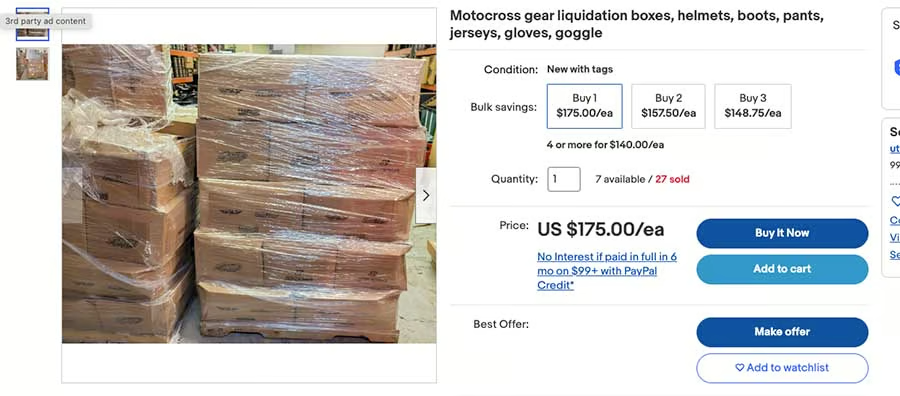
Another way that you can liquidate your inventory is by selling them in bundles on eBay. This is a common practice, and there are lots of buyers for liquidation bundles. Simply box up your products and bundle them as you wish (by the box, pallet, dozen, etc.) Then, list those bundles and include “liquidation” and the category of goods in your listing description. The pricing is flat for every unit, and the exact contents are a mystery to the buyer. This makes the process easy for you and allows you to get rid of large amounts of excess stock in single sales.
7. Donate to a Cause
You can also liquidate your inventory by donating the products to a cause you care about. While this means you won’t get cash for the products upfront, you can use your donations to your advantage in two ways:
- Marketing: Let customers know that you are involved in a cause and have donated—and even consider letting them get involved with donation opportunities. This will add to your brand image and may even inspire your shoppers to choose you over your competitors.
- Tax deductions: Many donations are tax-deductible, so you can write off the value of your donations in your end-of-year taxes and receive a return. Learn more about tax-deductible donations, how they work, and what donations qualify from the IRS’s guide to taxable donations.
8. Dispose of Your Goods

Throwing products away is not what anyone wants to do, but for perishable and seasonal items, disposal might be the only option. If you are in a situation where you cannot get rid of your products in time, and they are completely unsellable, be sure to throw things away responsibly, work with a disposal company, recycle when you can, and look down every other avenue before simply adding to the landfill.
9. Use Them as Freebies

Use your excess inventory as freebies. This will not only help you get rid of extra inventory, but you can also lock the freebies behind a certain spend threshold or a certain event to create an incentive for customers to buy more of your other products or attend an event.
When Should You Liquidate Inventory?
Liquidating inventory is not something a business owner ever wants to do, but sometimes it is necessary and even beneficial to liquidate inventory. Liquidating products can help reduce carrying costs, get you cash for products that otherwise would not sell, improve your inventory management, and free up storage and floor space.
Even so, liquidation is often seen as a last resort as it cuts into margins. However, some retailers are quick to liquidate inventory to make room for new products. It depends on your business and how much you depend on trends or seasonality.
In either case, before you liquidate, try:
- Remerchandising: Move the product around, display it in a new way, or try giving it new lift with rebranding.
- Discounting: Add a discount to the ticket price to see if demand increases as prices drop. There might also be an opportunity for BOGO pricing. Note that discount prices can be anywhere from 5%, unlike liquidation discounts which are expected to be much higher.
- Bundling: Sell the product alongside another one at a discounted total price.
- Marketing: Get the product out there and make it enticing with good marketing, like featuring the product on social media, taking photos that make it shine for your ecom store, and advertising it in-store with product placement and signage.
If all these efforts fail, liquidation might be the best route.
Another time that liquidation will be your best option is if you are going out of business. Holding a liquidation sale will give you some cash for your goods and will ensure you are not personally stuck with all your excess products.
Liquidation Frequently Asked Questions
Expand the questions below to get answers to some of your most frequently asked questions about how to liquidate merchandise.
How can you prevent liquidation?
Ideally, you will sell your products and never have to liquidate them. You can achieve this with good inventory management via inventory management software or by being more conservative with your buying and researching your target market thoroughly.
What can you do with too much inventory?
Liquidation is one option for excess inventory. You can also save the merchandise for the following year or try to sell it with promotions and other marketing techniques.
How do I sell unsold inventory?
You can sell unsold inventory by discounting it, bundling it with other items, or remerchandising the product. If all else fails, you can liquidate your merchandise.
How do you make money from excess inventory?
Liquidation is the best way to make some money on your unsold merchandise, but your margins and overall profit will not be as great as if you sold the products in-store for MSRP.
Bottom Line
In an ideal world, no retailer would ever have to liquidate, and their businesses would sell through products with no excess left behind. This, however, is not the reality–liquidation is part of the retail game. Here we looked at exactly what liquidation is, when you should do it, why it’s important, and ten ways you can liquidate inventory. With these tools, you have everything you need to liquidate merchandise and continue on with the knowledge (and cash) you gained.
