







After you’ve started your retail business and begin sourcing products, you will likely run into terms like wholesaler, distributor, dropshipper, and more. There are many types of retail suppliers on the market, and understanding their strengths and differences will improve your sourcing process and help you choose the best one for your cost, schedule, and product needs.
While quality standards and production capabilities will be largely based on your research of individual suppliers, four general things you should consider when deciding on the best supplier for your business are customization, order quantity, turnaround time, and middleman costs.
Let’s look at six types of retail suppliers, including what they are best for, pros and cons, and resources for finding them.
Retail Supplier Comparison
| Best For | Customization | Order Quantity Restrictions | Turnaround Time | Middleman Costs* | |
|---|---|---|---|---|---|
| Manufacturer | Custom goods | Yes | Yes | 1-6 months | No |
| Wholesaler | Bulk orders | No | Yes | 3 weeks-2 months | Yes |
| Independent | Unique, artisanal goods | Yes | Yes | 1-6 months | No |
| Trade Show Rep | Seeing products in-person | Sometimes (depends on company | Sometimes (depends on company | 3 weeks-6 months | Yes |
| Importer | Exclusive imported goods | Sometimes (depends on company | Yes | Yes | Yes |
| Dropshipper | Savings on logistics and storage | No | Yes | Yes | Yes |
*Sometimes known as a distributor in retail, a middleman is any entity that buys goods from producers to sell to retailers.
1. Manufacturers
| Best for: Custom goods | Turnaround time: 1-6 months |
|---|---|
| Pros | Cons |
| Cost-effectiveCustom capabilitiesCut out the middlemen | Long turnaround timesStrict buying termsQuantity restrictions |
A manufacturer is the entity in the supply chain that actually makes the products they sell to retailers or other distributors. Manufacturers typically own factories or other locations where labor, machinery, and raw materials are used to create products. Working with a manufacturer connects you directly to the source of the products you want to buy, allowing you to create custom products and cutting out the middleman markups.
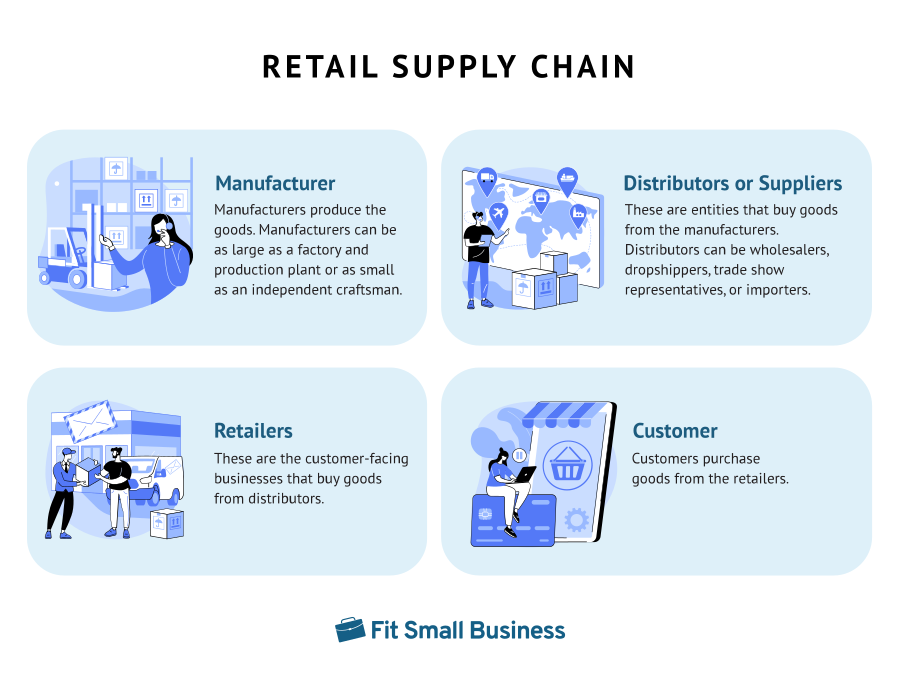
You can work with manufacturers in two different ways.
- Design a new product: Work with a manufacturer to develop and produce a new, custom product that you design. This process can take months at a time as you design your product, source materials, tweak samples, and finally enter production.
- Order the manufacturer’s wares: Work with a manufacturer to order products it already produces. Some manufacturers will have strict buying terms and quantity requirements, so be on the lookout and ready to negotiate.
While it can be cost-effective to work directly with manufacturers and open the door for custom designs, there are also some drawbacks. Unlike a wholesaler, manufacturers don’t always have goods on hand and often produce them once orders are placed. This, paired with the current supply chain issues, can cause product reordering to take months at a time.
2. Wholesalers
| Best for: Bulk orders | Turnaround time: 3 weeks-2 months |
|---|---|
| Pros | Cons |
| Wholesale priceFast turnaround timesLarge quantities | Order size restrictionMiddleman markupNo customization |
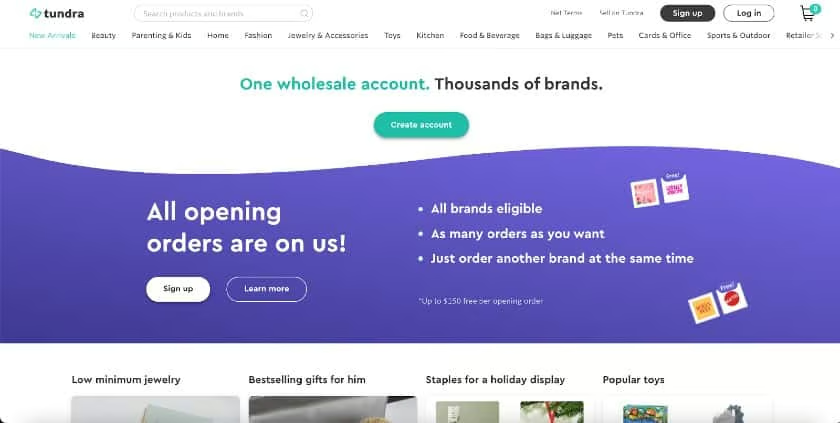
Wholesalers are part of the broad category of retail suppliers known broadly as suppliers or distributors. This group includes those that purchase manufactured goods to sell to retailers. Wholesalers, specifically, purchase manufactured goods to sell to retailers at wholesale or bulk manufacturing prices. Wholesalers buy in large quantities to drive down prices, so they can sell products to retailers in bulk quantities.
Typically wholesalers require bulk orders to keep their costs down; however, they usually already have the products on hand, so turnaround times are much faster than working with a manufacturer.
3. Independent Suppliers
| Best for: Unique, artisanal goods | Turnaround time: 1-6 months |
|---|---|
| Pros | Cons |
| Handmade goodsSupporting small businessCustomization possible | Long turnaround timesLimited quantitiesHigher price point |
Independent retail suppliers make their own goods and sell them at trade shows, via their personal websites, and by working with retailers directly. Independent suppliers typically work on a small scale, produce artisanal goods, and offer a highly personalized experience. A trade show or sales representative will sometimes represent them.
For example, my boutique was located in a busy shopping neighborhood in downtown Denver, so independent craftspeople would often stop in and solicit their products to stores across the neighborhood. We ended up working with a local jewelry company to order hundreds of custom earrings to sell across our stores.
While working with independent retail suppliers opens the door for custom designs and acquiring unique goods, there are some drawbacks. Because independent retail suppliers are typically small operations, turnaround times can be long and bulk orders are often impossible. Independent retail suppliers also can’t compete with larger operations in terms of price, so their fees and base costs tend to be higher.
4. Trade Show Reps
| Best for: In-person product evaluation | Turnaround time: 3 weeks-6 months |
|---|---|
| Pros | Cons |
| See before you buyMany suppliers in one locationRepresent diverse brands and goods | Travel costsNo guaranteeUnpredictable turnaround times |
Trade show reps are another type of retail supplier that you might run into when you are sourcing your products and buying new merchandise each season. They are brand or product ambassadors that attend trade shows to showcase and sell the wares of their respective companies. Unlike a dropshipper, when you work with a trade show representative you get to experience the product in person before purchasing.
At a trade show, hundreds of suppliers come together, typically alike in the types of products they are selling, so retailers can explore their offerings and place product orders. Depending on the products they represent, trade show reps might be coming directly from a manufacturer, an independent retailer, or an importer—really any kind of business.

While working with reps at trade shows allows you to see products in person and shop from various suppliers in one space, it also typically requires travel, so you should account for transport costs when setting your budget. Additionally, even if you attend, there is no guarantee you will find products you like, and different suppliers will have different turnaround times, so it can be difficult to schedule merchandise deliveries.
5. Importers
| Best for: International goods | Turnaround time: 1-6 months |
|---|---|
| Pros | Cons |
| Large volume ordersAccess to international marketsUnique products | High shipping costLong turnaround timesSet order quantities |
Importers are another kind of retail supplier with which you can work. Importers buy goods from one country and sell them in another at wholesale. Working with an importer is a great way to get access to exclusive international brands and find unique goods. While you can access many goods from around the world on different online marketplaces, importers get access to more exclusive items like wines, international-exclusive brands, artisanal goods, or less expensive wares.
Sometimes importers will have the goods on hand, but most of the time you will have to wait for anything you want to be ordered and shipped from overseas, which can take several months. Additionally, when working with importers, you typically have to place large, standard-size order quantities to offset the shipping and handling costs.
6. Dropshippers
| Best for: Saving on logistics and storage costs | Turnaround time: 3 weeks-2 months |
|---|---|
| Pros | Cons |
| Huge dropshipping marketDo not have to have a storefrontCost savings | Ecommerce specificDo not get to see goodsScammers |
The final kind of retail supplier that you might see is a dropshipper. Dropshippers are retail suppliers that hold your merchandise and send your orders for you. So, if you decide to use dropshipping, you as the retailer accept orders and transfer that information over to your dropshipping supplier, which will ship the products. That means that you never have to pay to have the goods sent to you or store the merchandise.
Dropshipping does not work for brick-and-mortar operations as this distribution method does not intend for retailers to physically hold the products they purchase.
Dropshipping is a great way to save on shipping and storage costs, and also gives people huge opportunities to operate retail businesses from their homes, without having to purchase a storefront or storage facility. Dropshipping is also popular for large goods, such as furniture, since it is so costly to ship and takes up so much space.
The drawback of dropshipping is that it forces you as the retailer to yield logistical control of product packaging and dispatch. This might be a plus for you since it takes something off your plate, but it can make it difficult to help customers with shipping questions. Additionally, a lot of the time, you won’t ever get to see the good you are selling unless you request a sample. You should also be wary of scammers on the dropshipping market. If the deal seems too good to be true, there are negative reviews, or you cannot contact anyone, do not risk getting scammed.
Bottom Line
There are many types of retail suppliers that you will run into as you source products for your business. The best option for your business comes down to the kinds of products you are looking for, your logistical needs, and the costs you are prepared to incur. With the information above, you can choose the retail supplier that will work best for your business and help streamline your product sourcing process.
