







Virtual reality (VR) in retail is rapidly changing how consumers shop and engage with brands. Using this technology, retailers can create immersive, interactive, and highly personalized shopping experiences for their customers.
In this article, we explore VR in retail’s growth and use cases, and show examples of brands implementing the technology in their online and brick-and-mortar stores.
Virtual Reality: Definition & Industry Statistics
VR is a computer-generated environment complete with objects that appear to be real. Using devices like VR headsets, helmets, and gloves, a user can immerse themselves in the environment—exploring and interacting in the virtual world as if they are truly there.
Virtual reality in retail employs specialized VR hardware and software to give an immersive ecommerce experience. VR technologies help retailers make shopping engaging, improve traditional customer interactions, and thus stand out from competitors.
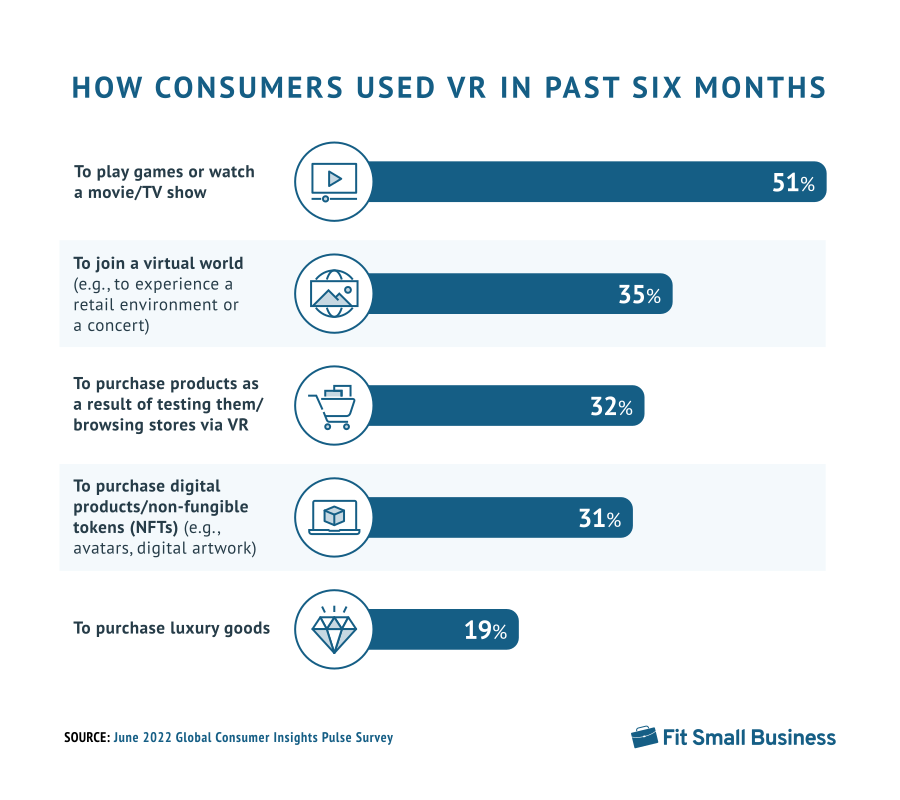
It is a promising and imminent retail trend. Although the metaverse is still an emerging channel, retailers may need to consider it part of their omnichannel presence. One in three respondents to a Global Consumer Insights Pulse Survey in June 2022 reports using a VR channel. In fact, according to the PWC survey, among consumers who use virtual reality, 32% use it to purchase products as a result of testing them or browsing stores via VR.
Virtual Reality (VR) vs Augmented Reality (AR)
You might have encountered both virtual reality and augmented reality when exploring emerging retail technologies. Part of a broader concept known as extended reality, they are both useful and impactful in retail. However, it is important to know their differences to make the right decisions for your business.
VR results in a complete auditory and visual experience in a 3D digital environment. The virtual environment completely replaces reality, allowing for maximum customer engagement. Meanwhile, AR retains the feeling of real-life experience with the user looking through a specific filter that embeds virtual objects in their environment.
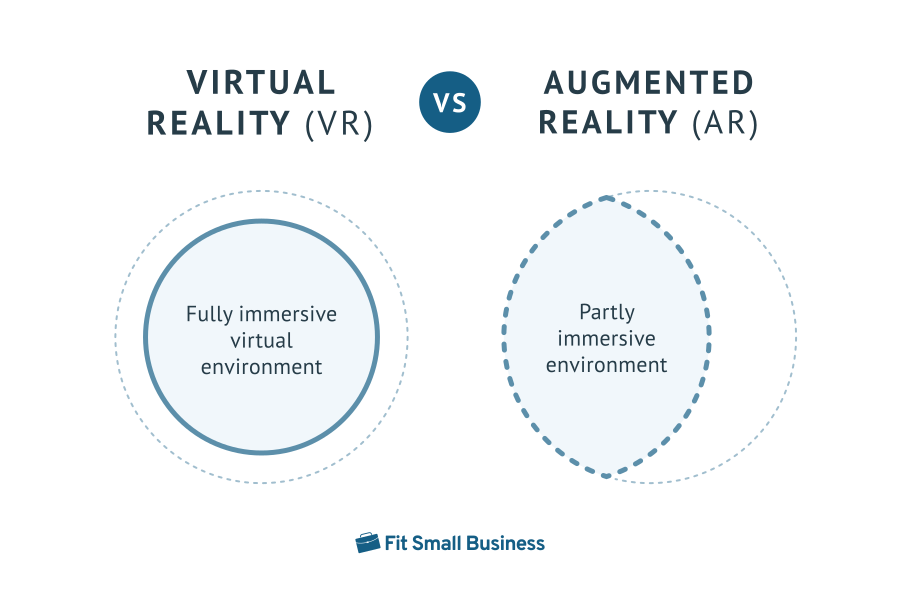
For example, VR may enable your customers to browse, shop, and try on items in a completely virtual store. AR, on the other hand, just enhances the way your customers can interact with real-world items, such as in virtual fitting rooms where they can evaluate how items might look on them without physically trying them on.
VR in Retail: Use Cases & Examples
VR can be applied in so many aspects of retail—in-store and online—and not just virtual reality shopping. We list the most common uses of virtual reality below, some of which use a mix of VR and AR.
1. VR Fitting Rooms
Retailers can leverage 3D technology to enhance the shopping experience through virtual fitting rooms. For example, the fitting room technology maker SizeStream is a mobile device in a fitting booth that captures customers’ body measurements. It helps shoppers sample the fit of many clothing items in seconds.
Fitting rooms can be upgraded through digital scans, color trials, 360-degree views, and other 3D features.
In Action:
- Retail brand Topshop deployed a virtual fitting room through AR and Microsoft Kinect. Customers can see themselves on screen with a 3D copy of a dress.
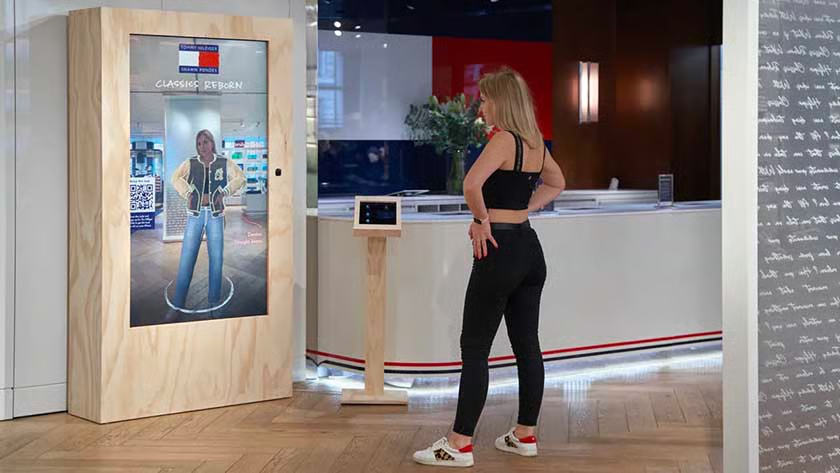
- Tommy Hilfiger also used an AR fitting room for its campaign, Prep World, by giving anyone with a mobile phone and close to a Tommy Hilfiger pop-up store the ability to engage with the brand. Users can superimpose clothing from the collection onto themselves using the phone’s camera.
- FaceCake, an AI-driven augmented retail platform, launched the Infinite Virtual Closet that enables users to create and build a dream closet with wardrobe and jewelry items, then virtually try them on. The AI-driven shopping platform also gives shoppers curated style recommendations.
2. VR Showrooms
VR showrooms allow retailers to let customers try out and purchase products online. Retailers can use high-resolution 3D images and video, overlaid product descriptions, zoom-in features, and multiple experience customization options.
In Action:
- Alibaba has a virtual reality shopping platform, Alibaba Buy+, that enables customers to explore the store, browse and interact with products using VR headsets, and make purchases.
- BMW uses AR to let car shoppers go into showrooms and customize cars with different colors or styles using their tablets or phones. Alternatively, they can use VR through goggles so they can experience what it’s like to drive the cars.
- Audi’s VR showroom lets customers explore and customize a car’s features, such as color and trim, and interact with the vehicle in an immersive environment.
Watch Audi’s virtual reality experience. (Source: YouTube)
3. Product Visualization, Placements & Testing
VR can help customers discover how a specific product would look when worn or placed in their environment. They can visualize it and look at it from different angles. Advanced technologies can even immerse customers in the environment to actually “use” the product.
In Action:
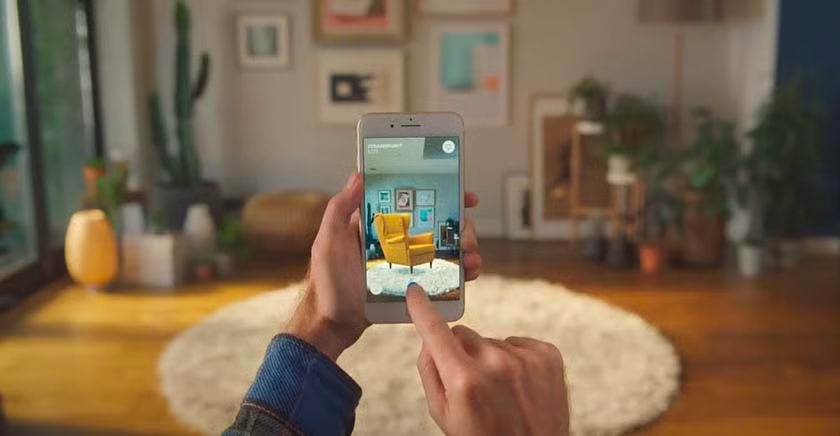
- IKEA has developed The Place App, which allows shoppers to use AR with their smartphones and place furniture items into their homes so they can visualize exactly how the item will look in their place.
- North Face has The North Face VR, a VR experience that lets customers test their outdoor gear in a simulated environment—different weather conditions and terrains.
4. Immersive Product Storytelling
VR can also be used by retailers as a retail marketing strategy by using immersive product storytelling to elicit a strong emotional response from the customer.
In Action:
- Nike uses VR to let customers experience the different steps in Nike’s supply chain so they understand how and where items are being made.
- TOMS, the shoe and apparel company, has installed VR in their retail stores to allow customers experience the impact of their initiatives in Peru. Toms donates $1 of every $3 they make to local people who play a part in their supply chain.
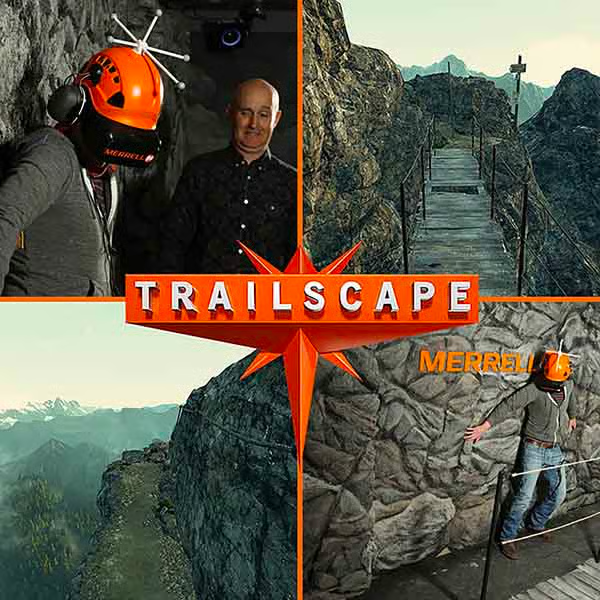
- Footwear brand Merrell has a VR experience called “TrailScape” that takes their customer through a mountainside environment to highlight their boots’ unique features, like grip, support, and durability.
5. VR Shopping Assistants
Shopping assistants can help increase retail sales, and with VR technology, you can double the impact of sales assistants. This can be particularly helpful during the holiday or sales season.
In Action:
- H&M’s digital fashion assistant uses VR technology to help customers find products, answer questions, and provide personalized recommendations. Since it uses natural language processing and machine learning, it helps create a more personalized shopping experience.
- Nordstrom’s TextStyle service uses VR to provide personalized shopping experiences to customers by analyzing shoppers’ preferences and purchase history. The virtual stylist then recommends products tailored to their needs.
6. Virtual Events, Pop-up Stores & Product Launches
Inspired by the pandemic, online events got an upgrade using VR and AR technology. Big retailers, especially luxury fashion brands, are using VR extensively to market and launch their products. This big VR push is not surprising, as a survey shows two in 10 consumers using VR technology have used it to purchase luxury goods.
In Action:
- Fashion brand Balenciaga showcased its Fall 2021 collection through a virtual fashion show. The immersive global event allowed viewers to experience the collection firsthand.
- Luxury fashion brand Gucci created a virtual pop-up store to showcase its limited-edition Décor collection and allowed customers to explore, view products, and make purchases, all within a virtual environment.
7. VR-enhanced Training for Retail Staff
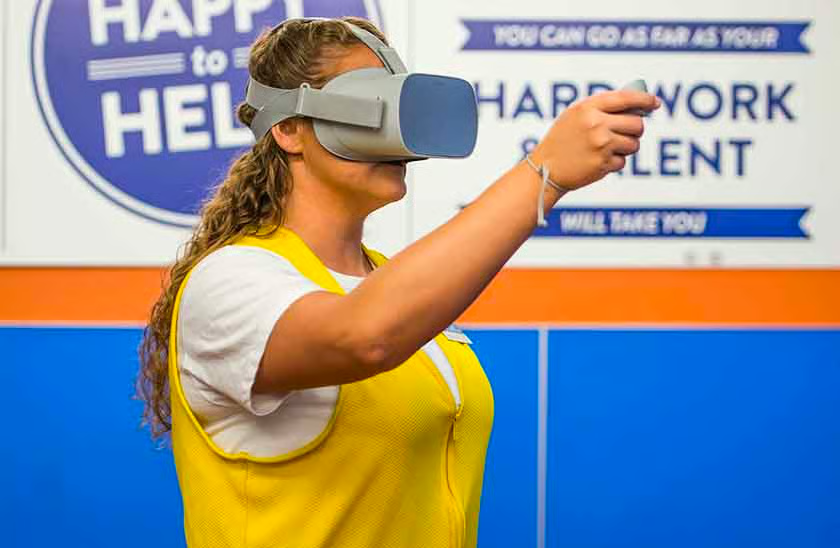
Store management, particularly continuous retail staff training and education, is crucial to business growth and customer satisfaction. Virtual reality can help retailers improve training outcomes. It is also a great option for remote training for those in remote locations or teleworkers, as it requires no other equipment than a headset and controllers.
In Action:
- Walmart uses Strivr, a VR training program, for employee training in customer service, sales techniques, and store management. Walmart has been an early adopter of VR since 2017, continuously ramping up the number of training centers and learning modules for daily and seasonal activities, like Black Friday or the holiday rush.
8. Gamification & Loyalty Programs
Gamification increases customer engagement and can drive customer loyalty. Employing VR in gamification helps you provide more unique and personalized experiences for your customers.
In Action:
- Sephora’s Beauty Insider program uses VR elements to reward loyal customers with unique experiences. Users can unlock exclusive VR content, like behind-the-scenes footage and virtual makeup tutorials, by earning points through the loyalty program.
9. Virtual Reality Market Research
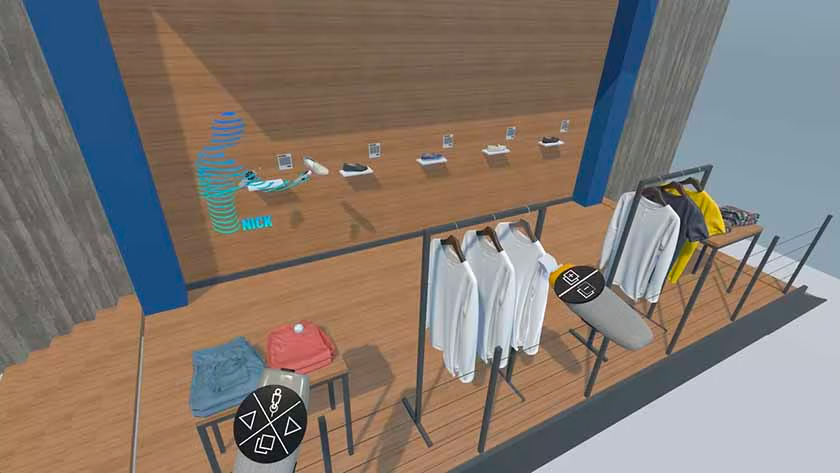
VR can also help retailers in merchandising. You can launch tests using VR to determine which strategies will work better when it comes to store placements and even marketing. By creating virtual store environments, retailers and research firms can test different store layouts, product displays, and promotional strategies to measure customer responses and optimize their shopping experience.
In Action:
- Kellogg used a VR solution to help find the best place for its newly launched product on grocery shelves. It created a lifelike virtual supermarket with aisles, shelves, and products where focus group participants could “shop” wearing VR headsets integrated with an advanced eye-tracking analytics solution. According to Kellogg’s research, the company saw an 18% sales increase during the testing period.
10. Collaborative Shopping
VR creates a virtual world where customers can even interact with one another, allowing for shared shopping experiences.
In Action:
- VR app The Wild enables its users to shop with other people in a virtual environment. Customers in different locations can explore and interact with products together. This collaborative shopping experience fosters social engagement and makes purchasing decisions easier, as they can share opinions and advice in real time.
Bottom Line
VR technology is the future of retail. Small retail businesses can leverage this technology to promote items, engage customers, and help reduce returns by allowing customers to “try before they buy” even virtually. The 10 virtual reality retail use cases we outlined above can help you decide how to employ virtual reality in-store or virtual reality shopping online.
