


Social media artificial Intelligence (AI) is the use of machine learning and data to make social marketing and advertising campaigns more efficient and effective. This includes things like AI-assisted social listening and brand monitoring, AI-generated captions and creatives, and both paid and organic data-optimized scheduling and distribution. Keep reading to see how to use these types of AI in social media to promote and grow your small business.
1. Social Media Listening
Social listening is one of AI’s most powerful uses for social media marketing. It scours through different networks of data in a matter of minutes or seconds. Afterward, it identifies the relevant keywords that come up related to your business and how they’re used online. The system then creates insights from the data to help aid in social media plan development, as in the examples below from Auris, an AI for social media listening tool.
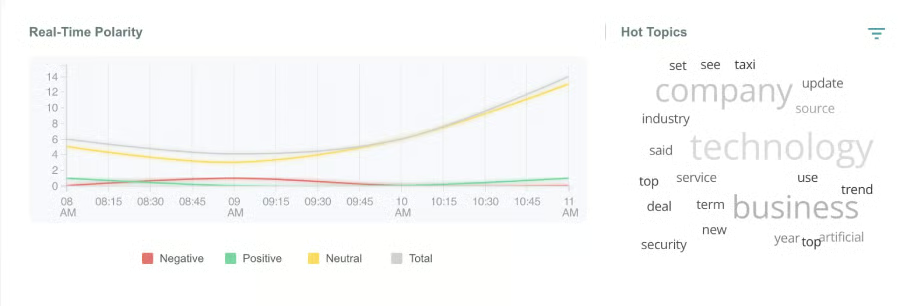
Track the keywords that are important to your business on a single dashboard. (Source: Auris) 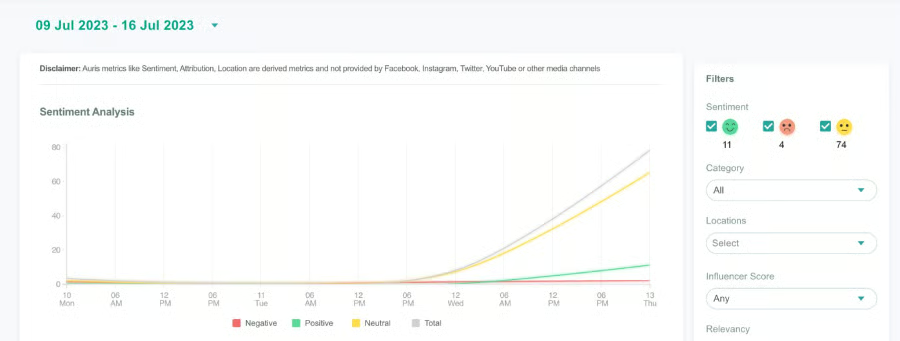
See your brand sentiment to find out how people feel about your business. (Source: Auris)


Social listening is a proactive strategy of tracking mentions to gauge brand presence, competitors, and relevant keyword trends throughout different social media platforms. It’s a labor-intensive strategy that, if done manually, would require you to gather and sift through massive amounts of data on multiple platforms.
It’s time-consuming and very easily prone to human error because of its intensive nature. As such, it’s easy to see how this type of AI benefits businesses that want to use social channels effectively.
2. Strategy & Content Planning
Creating a social media plan is key for a successful campaign, as this will help direct all of your content toward your marketing goals. But before the recent rise of artificial intelligence, social media marketers largely had to experiment with various strategies, measure them, and identify what works best.
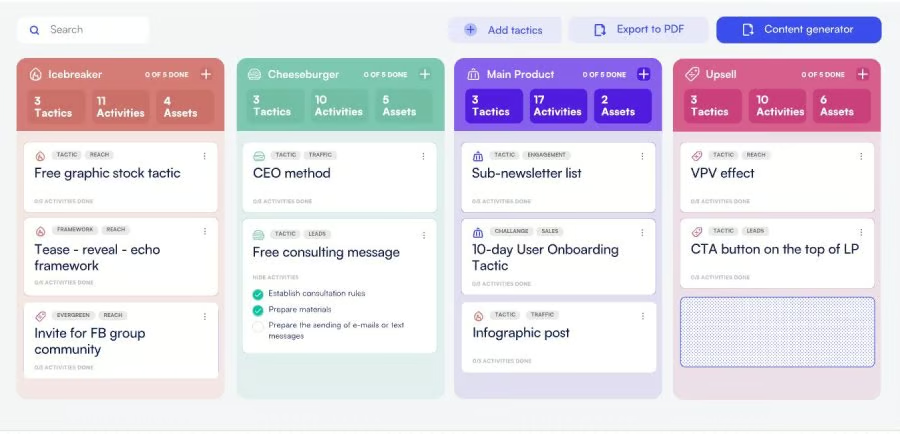
Now, AI tools like DigitalFirst.ai provide us with insights and tactics that help make up a social media strategy. Instead of just a retrospective approach to social media planning, AI can use previous data, campaign structures, and predictive analytics to recommend marketing strategies specific to your brand.
3. Automated Posting
The most upfront benefit of automated posting with AI-assisted social media schedulers is that it saves time from manually posting content on each platform. Additionally, these use audience behavior and platform insights to assess the optimal time for posting. This helps improve the reach and engagement of your content.
For example, tools like Feedhive have extended functionality for content distribution. It can auto-retweet your content after a set number of hours, which is useful for keeping your content active for audiences all over the world. You can also create a recurring posting plan that you only have to set up once. It will become an automated workflow, where variations are created by AI, ensuring that the time slots with the best engagement are always filled.
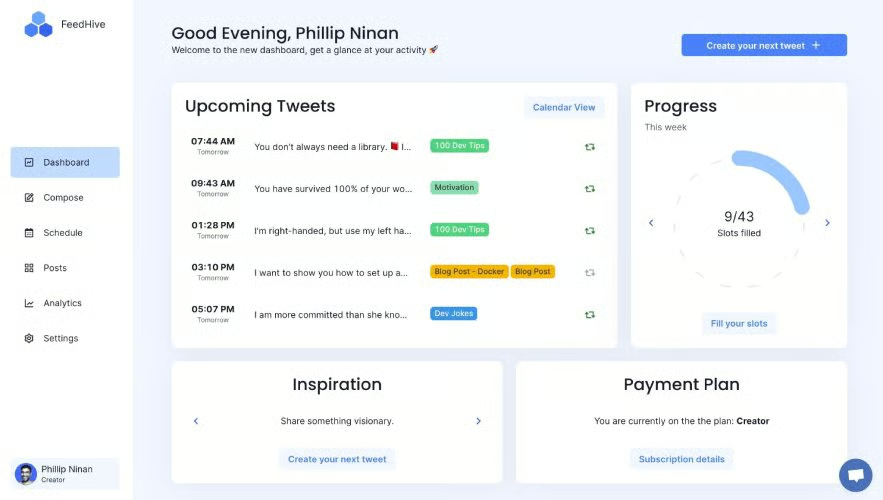
You can also set these platforms to promote your products as a comment on your best-performing posts. It even comes up with AI-driven performance predictions to show how well your content is expected to perform. All in all, it makes excellent use of artificial intelligence to distribute your social media content at the best possible times.
4. Caption Generation
Consistently coming up with social media captions for your content can be draining and time-consuming. That’s why over the past year alone, there are thousands of AI content marketing tools developed to help craft engaging post captions. Even some of the more classic social media tools like Hootsuite, HubSpot, and Canva now feature a built-in AI writer.
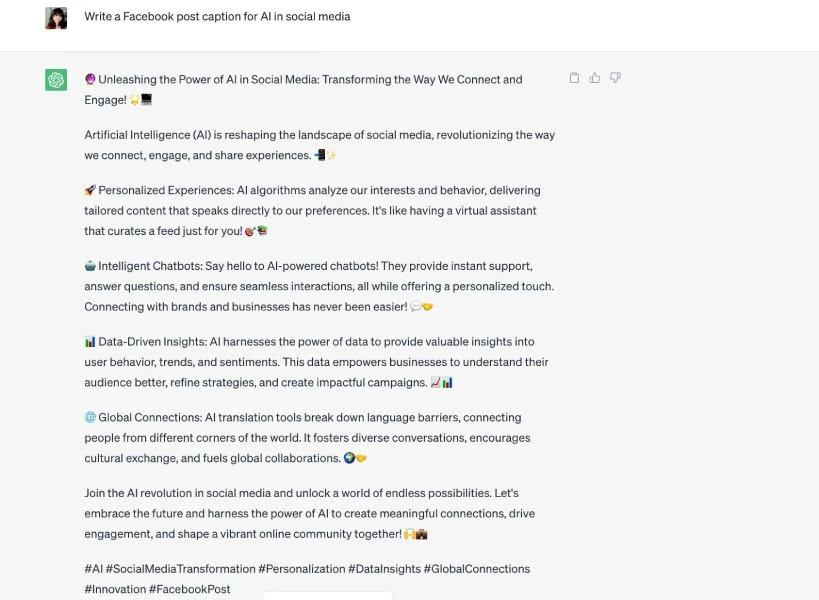
AI marketing stats show that more than 44% of small businesses are already using AI to create content. There are several AI writing tools available for a variety of purposes—and more are emerging every day.
5. Image & Video Media Generation
Generative artificial intelligence is capable of creating text, images, videos, and other media. This makes it possible to create original media content without having to hire photographers, videographers, or even graphic designers. The biggest advantage of using AI for posts and graphics is that it can exponentially cut down costs.

For example, DALL-E2—one of the most advanced and popular text-to-image generators to date—creates different iterations of an AI-generated artwork based on a text prompt. With the generated AI images, you can download, save, share, or even create more variations with the same prompt.
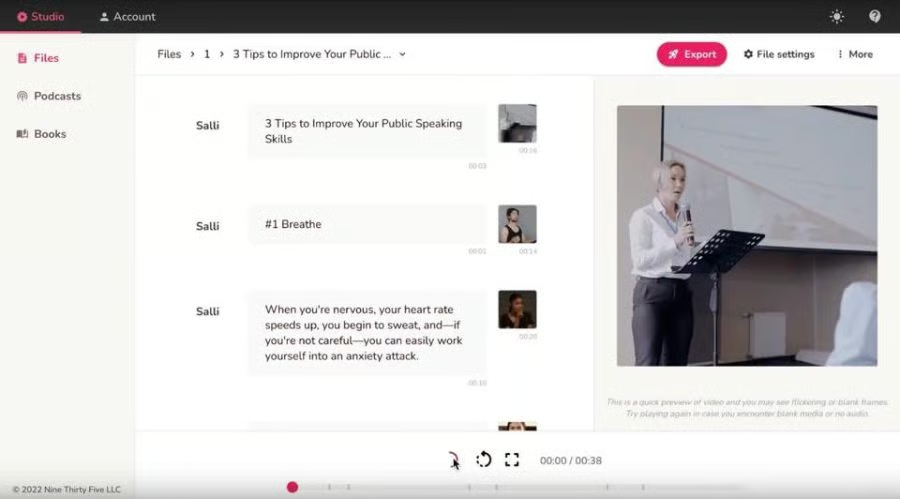
On the other hand, tools like Fliki allow users to create videos from texts, ideas, or already existing content. You can explore their video editor tool, use AI-generated or stock videos, and generate audio with an AI narrator by simply providing the script.
In addition to platforms like these, traditional graphic design software is upping its game as well. Photoshop recently introduced ways to remove unwanted elements from images and photos and to automatically generate extended backgrounds. Tools like these improve your ability to present your brand in visually impactful ways to your audience.
6. Social Media Advertising
The use of artificial intelligence in social media doesn’t stop with organic content. In fact, AI can vastly improve your return on paid social advertising. Tools like Smartly.io use data to automate ads, predict and allocate your budget, and personalize your ad content across six different platforms, including the extended ad networks of Meta and Google.
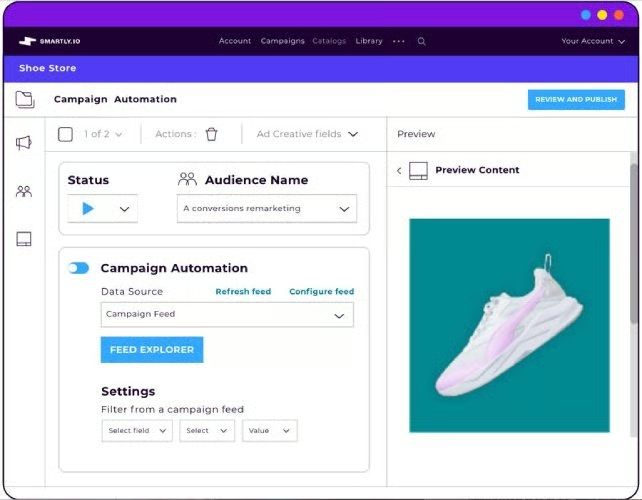
The extent to which smart tools can expedite data processing to optimize and personalize ads across social channels is a game changer. It extends to audience analysis and targeting, as well as media creation and dynamic personalization. It’s easy to believe that, in the near future, AI could enable posting different creatives tailored to each individual’s social feeds to maximize conversions.
Pros & Cons of Using AI in Social Media
| PROS | CONS |
|---|---|
| Quick turnaround | Can’t generate original ideas |
| Data-driven results | Can be inconsistent |
| Cost-effective | Lack of human emotion or voice |
| Not prone to human error | Risk of plagiarism |
Leveraging AI in social media apps and tools comes with obvious advantages, like increased content productivity in a shorter amount of time. However, AI-generated social media content comes with its own list of downsides that should be addressed, such as potential plagiarism, inconsistency errors, and a lack of human “tone.”
Additionally, Google has a content policy that prioritizes Experience, Expertise, Authoritativeness, and Trustworthiness (EEAT). This policy awards the top organic rankings to human-written content since it looks for evidence that the writer creates their content from a position of experience.
In general, the issues you can encounter by using AI on your social channels can be resolved by staying involved in the content creation process. For example, a lack of consistency in AI-generated captions can easily be fixed by a human editor. You can also run any AI-generated content through a trusted plagiarism checker like Grammarly to see if it’s flagged as plagiarism.
Do’s & Don’ts When Using Social Media AI
Each AI application is different, with its own instructions and capabilities. The best way to approach it is to conduct enough research on the AI software you want to use to be able to use it effectively. Nevertheless, here are more general best practices you can follow when using these types of tools for social marketing:
- Be as specific as possible: When writing prompts or giving instructions to AI, the more information you give, the better your output will be.
- Always double-check for errors: Just as you would check human-written content, check for errors in grammar, format, or even the accuracy of information.
- Run content through plagiarism checkers: To avoid getting flagged online, use online plagiarism detection software to check your content.
- Add in your voice: Incorporate your own sense of creativity and intuition into your content to ensure authenticity.
- Monitor and optimize along the way: Check what’s working for you or not. If using AI takes more time than doing it yourself, assess whether or not you really need it.
- Don’t overlook the limitations of AI: Evaluate and audit your AI systems to be aware of their capabilities, such as data cut-off and general capabilities.
- Don’t publish as-is: It is highly likely that you will produce the same content as the people who use the same software as you if you don’t edit your content accordingly. It produces a poor reader and user experience and could even hurt your rankings in online searches.
- Don’t take all the credit: Practice the ethical use of AI by not hiding the fact that you use it for your campaign.
Frequently Asked Questions (FAQs)
How is AI used in Facebook?
Artificial intelligence (AI) is used in Facebook’s algorithm for content moderation. It filters inappropriate or harmful content to maintain a safe user experience. It is also responsible for curating personalized content recommendations for each user. Marketers use AI to create captions and graphics, as well as to analyze Facebook campaign performance.
What is an example of AI in social media?
An example of AI in social media that is present in most platforms is the built-in “optimal time schedule” feature. It uses machine algorithms to analyze data, such as user behavior patterns and platform engagement metrics, to identify the most effective times to post your content.
Can I use AI to generate social media posts?
Yes, AI-powered content generation tools can assist in generating social media posts through caption generation, media generation, and automated scheduling. These tools use natural language processing and machine learning algorithms to analyze data and create compelling and relevant content.
Bottom Line
Using AI as part of your social strategy can increase productivity, lessen cost, and improve campaign performance through data-driven insights. Marketers can use AI in a number of ways, like social listening or post generation. To get the most out of these smart tools, incorporate your own voice and ideas to create unique and engaging content.
No time to dive this deep into social media tools? Leave it to the experts instead. Agencies like LYFE Marketing offer a full range of social media services, from creatives to captions, posting, and social media ad management. Visit LYFE Marketing for a risk-free consultation today.
