







AI-generated content is any content generated by artificial intelligence (AI) technology. This can be in the form of text, images, video, audio, and code, and can be used for multiple purposes. AI content is created by AI tools receiving instructional prompts from a human user, scouring the internet for information on that prompt, and generating new content from the collated data. Keep reading to learn more about AI content generation and 11 ways to use it to power your business.
- How AI Content Generation Works
- Types of AI-generated Content (+ Examples)
- Pros & Cons of Using AI Content
- Why Use AI Content Generation for Small Business Marketing
- 11 Ways to Use AI Content Generation Tools
- Best Practices for Using AI-generated Content
- AI Content Generation Frequently Asked Questions (FAQs)
- Bottom Line
How AI Content Generation Works
The best AI content generation tools understand human prompts and generate equally human responses through natural language processing (NLP). The higher the NLP model, the more natural and “human-like” the generated content (e.g., GPT-4 is more natural-sounding than GPT-3).
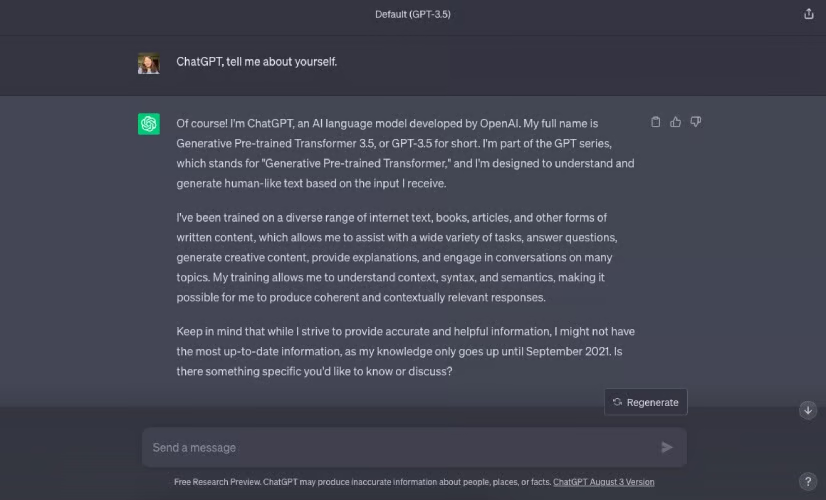
Here’s an example of AI-generated content in action from ChatGPT, the current leading AI content generation tool. From just one prompt, it’s able to generate multiple informative paragraphs about a certain subject:
But AI content isn’t limited to just text—it comes in many forms too, which is one of the reasons it can be very helpful for your small business.
Types of AI-generated Content (+ Examples)
AI-generated content takes five primary forms: text, images, audio, video, and code. These five can be used to create virtually any asset, from blog posts to art, to video news reports and even software. They can even be combined together to create websites. The possibilities with AI content generation are nearly endless—it’s only a question of using it well, responsibly, and for the best benefit of your small business.
Open the drop-downs below for examples of different applications for AI content generation:
Text
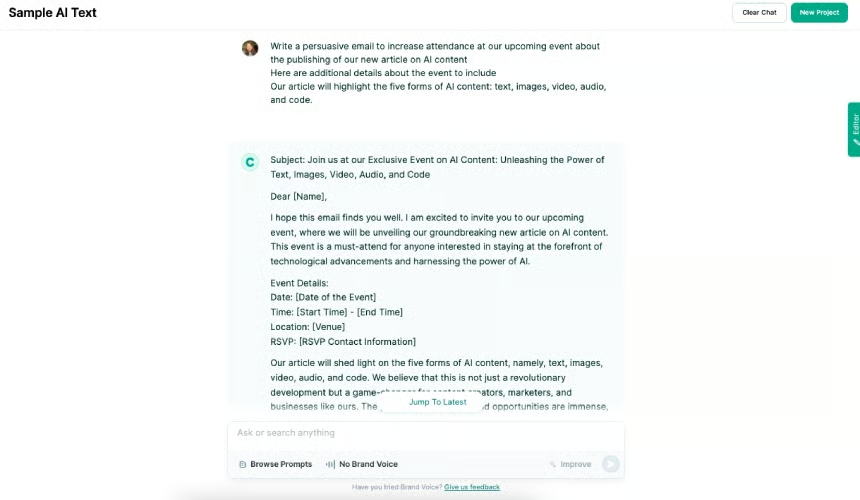
AI-generated text is the most widely used type of AI content, and the most versatile. From replies to question prompts and full-length articles to product descriptions and social media captions, AI text’s uses and applications are multi-fold. Some examples of AI content writers are WriteSonic and Copy.ai.
Images
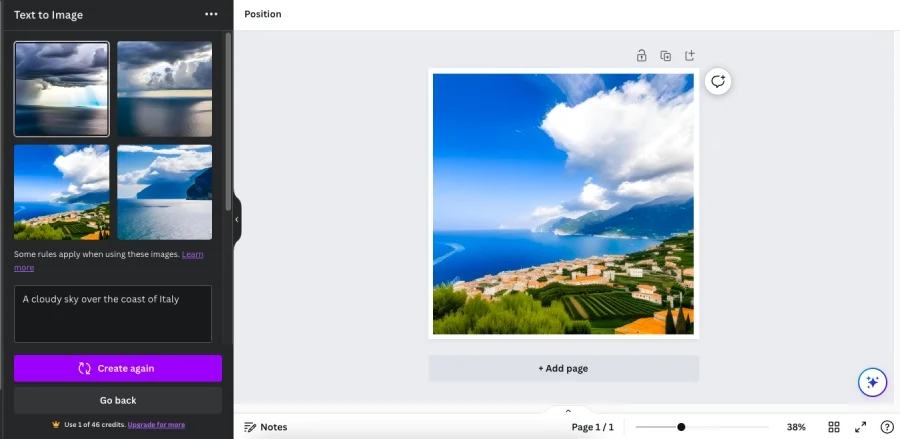
Second to text, AI images are also one of the most widely used applications of generative AI. From a few lines of text, AI image generators can produce new images, from artistic illustrations to branded marketing collateral. Some AI image generator tools you can use include Midjourney and Canva’s AI Image Generator.
Video
While AI won’t be making Hollywood-level movies anytime soon, it is capable of making simple videos like explainers or infographics from a few text prompts. An example of an AI video generation tool is Synthesia.
Audio
The most prominent forms of AI-generated audio are text-to-speech conversions. AI audio tools can simulate human voices to read out written text, which can be useful for adding voice-overs to videos, repurposing text content (for example, regular books into audiobooks), and others.
Code
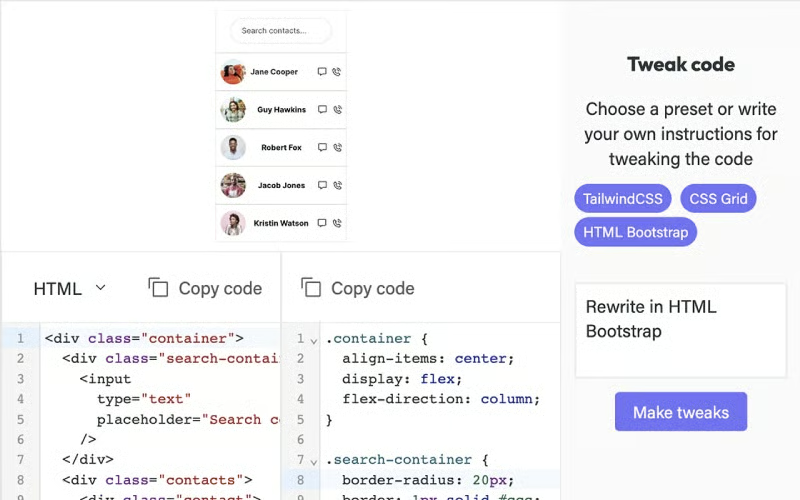
AI can also generate codes in various programming languages (e.g., JavaScript, Python, and so on). It can even edit pre-existing codes or translate codes from one language to another. These codes can develop software like websites. Some examples of AI coding tools are OpenAI Codex and GitHub Copilot.
Pros & Cons of Using AI Content
Like any tech software, AI has its share of pros and cons that are important to remember as you navigate through all its developments. It’s undeniable that it opens up multiple opportunities for growing your brand presence, but there are some caveats too—here are the biggest advantages and drawbacks with AI content.
| PROS | CONS |
|---|---|
| Streamlines your content creation process and boost productivity | AI-generated content still needs to be edited |
| Very cost-effective—one AI content generation tool can create various content | Has limited creativity, emotion, and nuance (i.e., it still feels “robotic”) |
| Inherently has SEO since data is collected from search engines | Ethical issues with AI are still ongoing (especially regarding plagiarism) |
| Very easy to use, even for total beginners | Doesn’t produce truly original content and results can be hit or miss |
| Quality is rapidly developing to be on par with human content | Limited language capabilities |
| Search engines are gradually prioritizing human content over AI | |
Why Use AI Content Generation for Small Business Marketing
Content AI is so prevalent these days because it’s opened a wealth of possibilities for small businesses. Here are some of its best benefits for your marketing strategy.
- Faster content production: You already know that AI content generators can boost productivity, but there’s a number for how much. Studies say that 88% of marketers found that using AI saved their business time and money.
- Creates quality content: With content generated by artificial intelligence, quality is still continuously shifting, but most think it’s already generally good. Almost 66% of people find content from AI just as good or even better than content created by humans.
- Returns credible data: Customers are also generally ready to trust AI-generated content. A recent survey found that nearly 71% of consumers found content from GPT credible.
- Better search engine optimization (SEO): AI content can be used to boost search rankings. Eighty-four percent of marketers say AI-generated content matches users’ online search intents more accurately.
- Targeted personalization: AI content generation also helps improve content personalization, which is substantially helpful in marketing. Eighty-five percent of marketers said AI can easily create highly personalized and targeted content according to each reader’s demographic, interests, and more.
- Effective content marketing: AI content marketing is well-regarded—over 72% of company executives plan to or already use AI content generation to plan their content marketing strategies.
With AI being such a new and developing landscape, it’s more critical than ever to use it responsibly and knowledgeably. In the end, it all comes down to finding the right balance between exploring its many benefits, especially for small business owners, while keeping an eye on its shortcomings—both in its content and its implications.
11 Ways to Use AI Content Generation Tools
There are also countless ways to use AI content creators for your business. Marketing is one of the most prominent—AI can generate content copy and visuals for virtually any marketing campaign—but it’s also useful in other areas, such as for drafting company announcements.
Here are other ways to use AI-created content to grow your small business:
1. Building Your Website
Websites are essential—put simply, it’s impossible to succeed in today’s digitally driven world without a website. And, one of the best uses of generative AI is that it can build a small business website with just a few prompts.
Because AI can generate code, images, and text, it’s also able to combine all of them to create a professional website. Two of the best AI website builders are Hostinger and Wix.

2. Research & Brainstorming
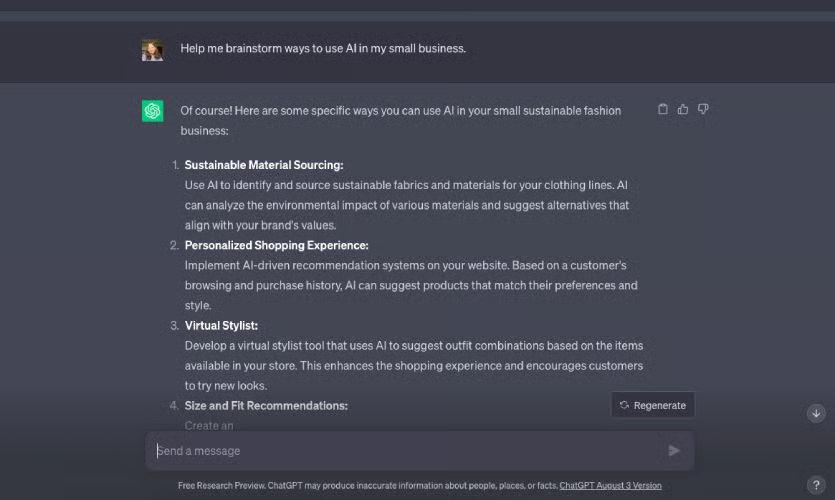
You can think of ChatGPT—or any other AI chatbot—as your own personal assistant or sounding-off board when researching or brainstorming ideas. Just type any question you have into the chat, and you’ll automatically get a credible, professional, and intelligent reply within seconds. It’s like having the internet search bar with all its information and intelligence but in a communicative, human-like form.
3. Creating Marketing Copy
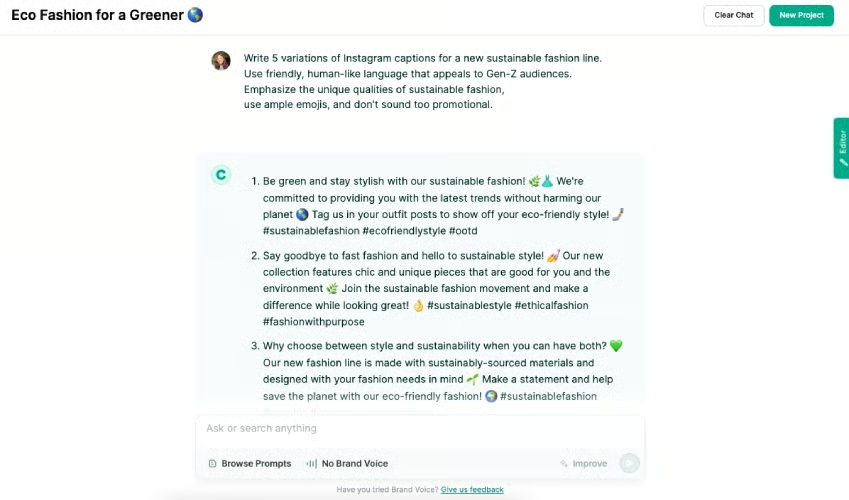
One of the most valuable uses of AI content generation is in creating marketing copies and assets. From full-length blog posts to AI press release generators and short-form social media captions, one of the best areas of content generation with AI is in marketing copies.
Some tools can even adapt your specific brand voice, tailor content to the best practices of each medium, and so on. You can also use AI to generate outlines or first drafts of your content.
4. Content Marketing Planning
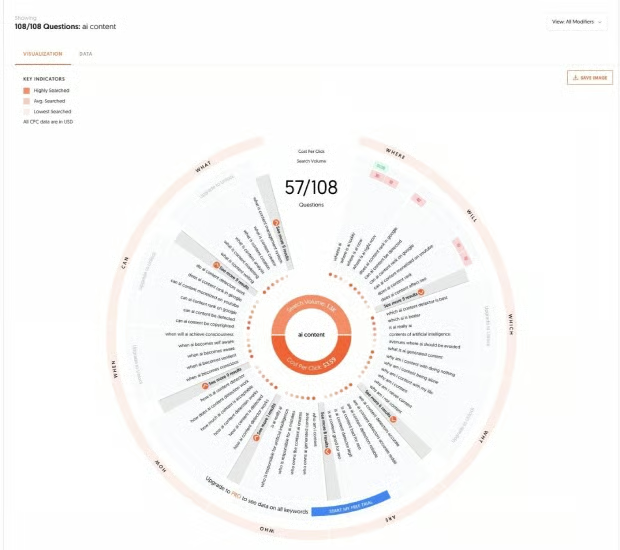
Beyond generating marketing copy, AI is also helpful for planning out your content marketing strategies, such as by AI-powered keyword or topic research. For instance, tools like Semrush or Answer the Public can easily tell you people’s searching habits on search engines on a particular topic, which you can use to help form your content marketing plan.
5. Repurposing Content
Repurposing content into other forms and channels is a great way to leverage the helpful information you’re writing for various sales and marketing collateral. For instance, you might write a blog post for your business’ website, then reuse the same content subject again later on for a video or podcast.
While you can certainly edit and record the same content by yourself, AI can also help repurpose and transform your from one content format to another more easily. AI text-to-speech tools are available, or even AI-powered article-to-video converters. You can even instruct AI chatbots to convert your blog article into a production-ready script.
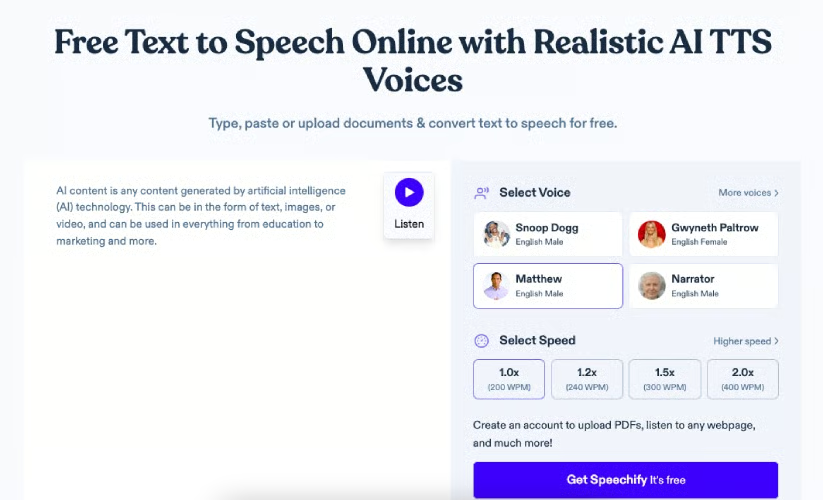
AI content creation is just the tip of the iceberg when it comes to artificial intelligence. Read our article showcasing a dozen ways to use AI for small business marketing.
6. Branding
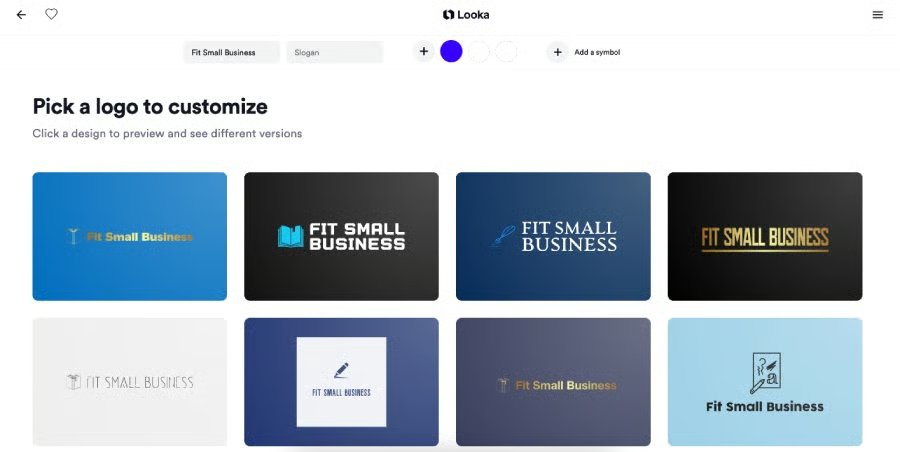
Branding is integral to your small business’ identity. Before you even start doing any marketing strategies, branding is the first step to developing your business’ public identity. And if you’re strapped with resources or skills to fully develop your branding, generative AI-powered branding tools can create your brand for you, such as Looka.
7. Social Media Marketing
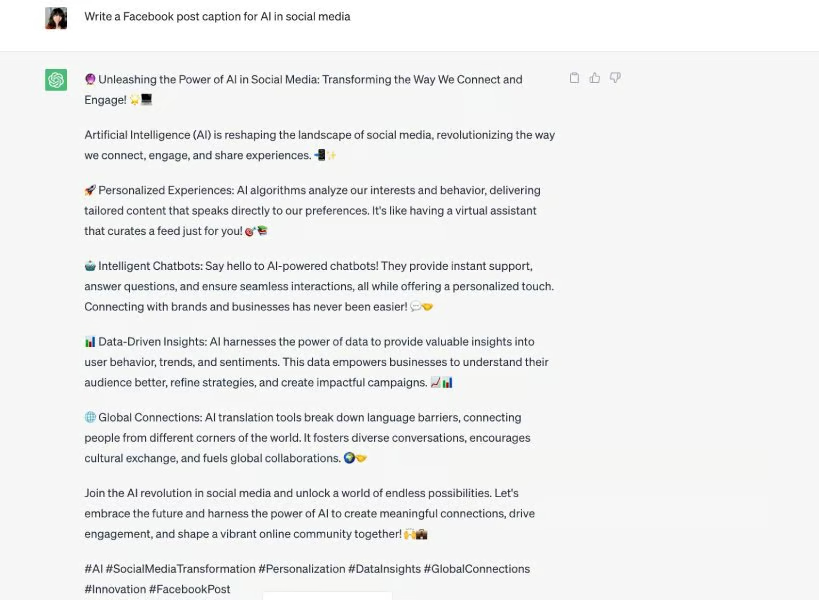
Writing text-based content isn’t the only way to use artificial intelligence to improve your return on social media marketing. For example, beyond post-creation with text and images, there are social listening tools that monitor conversations for mentions of products or services like yours (or your brand itself), automated posting AI, and AI-fueled advertising strategies.
Using AI in social media promises to streamline the process and give you data-rich insights to improve campaigns. AI content generation tools themselves can even quickly give you a list of different ways artificial intelligence is being used today (see below).
8. Creative Inspiration
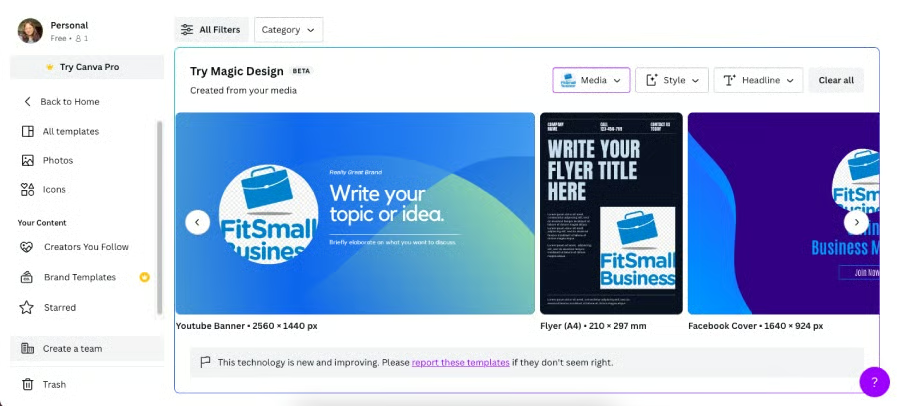
If you’re uncomfortable using visuals completely generated by AI in your marketing campaigns, use them as a source of creative inspiration. In fact, many web designers already do this: a study by HubSpot found that 49% of web designers used AI to experiment with design elements. So, whether to think up branding directions or graphic assets for social media, you can play around with AI image generators to take notes and inspiration from.
9. Internal Communications
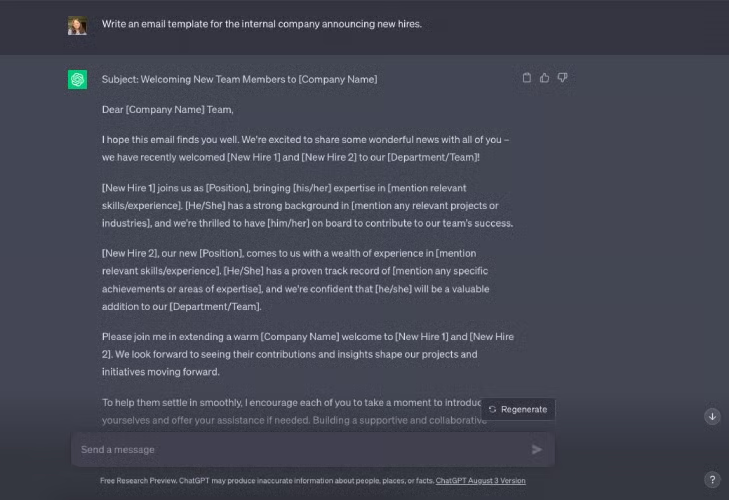
Internal company communications can sometimes be tedious. Transferring those tasks to AI systems can be one of its most helpful uses, even if only for assistance. From drafting company announcements and email templates to polishing up your company newsletters, AI content writing tools can significantly help streamline corporate communications.
10. Streamlining Complex Process & Logistics Planning
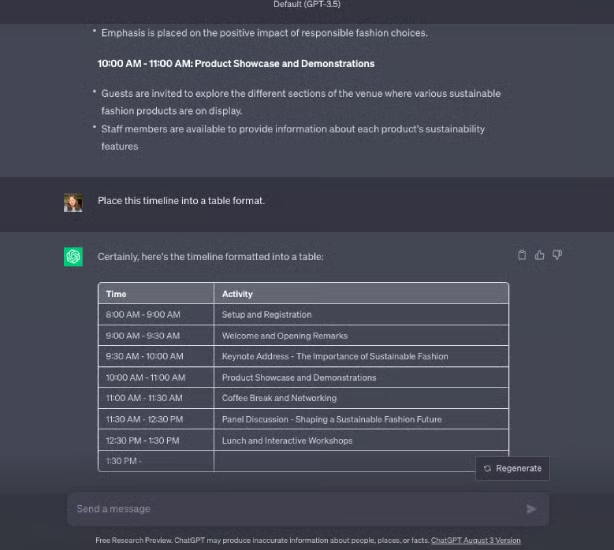
Generative AI is ideal for streamlining complex timelines, processes, and planning. What takes a few hours for any person to organize a schedule or plan, whether for an event, campaign, or even a budget, takes just a few minutes (or even less) with generative AI tools.
11. Customer Service Chatbots
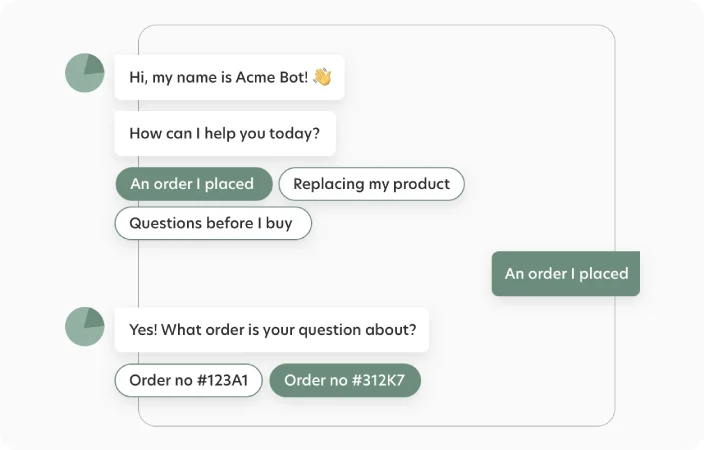
AI can also be used for customer relationships, specifically through AI-powered customer service chatbots. Whether as apps on your website or integrations on your social media messaging services, customer service chatbots can automate the majority of customer service-related tasks, answer frequently asked questions, and more. In all, they’re effective at improving customer experience and fostering customer relationships.
Best Practices for Using AI-generated Content
Now that you’re well aware of the pros, cons, and some practical ways to use AI to create content for your business, there are best practices you’ll need to follow. AI is not an exact science you’ll need to perfect—but from our experience, there are some best practices to get the best possible output and experience from AI tools.
- Learn how to write good prompts: Every piece of AI-generated content is as good as its prompt. Therefore, whether you’re generating text or a full website, write a clear, descriptive prompt. If your first prompt doesn’t generate satisfactory results, try and try again. You can even practice writing prompts on various AI tools, then test and refine to see what works best for your business and objectives.
- Edit and add a human touch: Even the most advanced AI will always lack some nuance, emotion, and a general sense of humanity. So, whatever type of content you create with AI, edit it to incorporate a human touch—especially if you’re writing for a public audience, like marketing copies. Of course, also double-check its grammar accuracy, readability, and so on.
- Check for plagiarism: Plagiarism is one of the biggest hurdles AI content faces today, which is inevitable as it’s still a developing system. Using it responsibly means always checking it for plagiarism, then editing accordingly. Some tools you can use to check plagiarism are Grammarly for text or even the Reverse Google Image Search for images. This is also especially important for public-facing content, such as blogs.
- Be transparent: A recent survey found that 91% of consumers don’t mind companies using AI-generated content on the condition that they are transparent about it. The consensus is clear: While consumers are slowly opening up to AI, they still want transparency from brands to earn their trust. If you use AI to write public-facing content, add a note to let readers know.
- Find the best AI tool for your business: There are dozens of AI tools available, and not all are built the same. Many have free trials you can use to test the best ones that suit your business’ needs before subscribing to a long-term paid plan. For marketing copy, for instance, Copy.ai is a good fit, while creative brands might prefer Canva’s AI image platform and those needing an all-in-one AI tool for online brand-building with a website should try Wix.
- Collaborate with (don’t completely rely on) AI: AI is at its best when it works alongside humans, not as a complete replacement. Whatever your objectives in using AI, integrate it as a supportive tool in your workforce. Having AI and humans in collaboration gives your business the best of both worlds: the efficiency and accuracy of AI, along with the creativity and talent of human beings.
- Stay updated on AI developments: The landscape of AI is changing every day, and the strategies and tools that work best for your company today might change in a week or two. Therefore, to continue getting the best benefits out of AI, keep your finger on the pulse of its rapidly shifting industry, then adjust your strategies accordingly. Also, keep an eye on updating AI regulations to ensure your business stays within them.
AI Content Generation Frequently Asked Questions (FAQs)
How do I identify AI content?
Some markers of AI-generated content are long and winding sentences, repetitive words and phrases, and a general lack of nuance or emotion that sounds “robotic.” You can identify written AI content using online AI detection tools, such as Copyleaks.com and Writer.com. Plus, you can also copy and paste content into Google and see if it’s directly taken from another source—if it is, chances are it’s generated by an AI.
Is AI-generated content good for SEO?
Yes and no. Technically, because AI content is taken directly from search engines and other websites, it is inherently optimized for search engines. However, search engines—Google most of all—are currently updating their algorithms to prioritize content from humans over that from AI. For instance, Google’s May 2023 “Perspectives” update prioritizes real-life human experience and testimonials on search results.
Is content created by AI plagiarism?
As long as the content created by AI isn’t copied verbatim from another source, it isn’t plagiarized—which is why it’s always important to check content created by AI for plagiarism. AI algorithms learn from info that is already on the internet, and then create something new from that information. However, it isn’t perfect. To make sure you don’t plagiarize, edit all your AI-generated content manually, and always do plagiarism checks.
Bottom Line
It’s easy to get overwhelmed by all the buzz around AI. But, the key to navigating this new landscape is understanding what AI-generated content is and how to use it for everyone’s benefit—businesses and consumers alike. AI presents multitudes of opportunities for your business’ growth, but its best results come from finding the right balance between the right strategies and your own human touch.
