







ePacket is a fast, low-cost global shipping service for packages from China and Hong Kong. Delivery to the US can take seven to 20 days, and shipping costs are estimated to be approximately US $20 for a 2 kg parcel. However, costs have increased for US importers because duties now apply to all shipments.
ePackets are ideal for merchants who source and sell small to mid-sized and lightweight goods from China and Hong Kong. It is also ideal for dropshippers, particularly those who use AliExpress, since they can offer or pass on the low-cost shipping fees to their customers.
This guide explores ePacket impact, benefits, challenges, and logistics.
ePacket’s Impact on Global Ecommerce
ePacket shipping, launched in 2011, originated from the partnership between USPS and the Hong Kong Post to bring more options to postal-qualified wholesalers in Hong Kong, especially those who want to establish and reach the US consumer markets.
From then on, ePackets grew in popularity because, in addition to affordable and fast shipping rates, they provide tracking services at no extra cost. Sellers’ and US-based consumers’ trust grew as more Chinese sellers were able to send packages quickly. ePacket shipping has now extended to over 40 countries globally.
These days, consumers and merchants who source their products from China use ePackets. Businesses that import products from AliExpress and dropship very commonly use ePackets.
Sellers have renewed confidence in buying from China because delivery timeframes have been drastically reduced since ePacket shipping started. Previously, products from China were sent through China Post and took months to arrive, with no way of tracking packages in transit.
Related:
- What Is Dropshipping & How Does it Work?
- How to Start a Dropshipping Business
- How to Set Up Shopify Store for Dropshipping
- Alibaba vs AliExpress: Which Is Best for Importing & Dropshipping?
- Dropshipping vs Order Fulfillment: Which Method Is Better?
Benefits of Using ePacket
There are several benefits of using ePacket for ecommerce, especially for consumers and online merchants who purchase products in Hong Kong and China.
Some of the benefits of using ePacket are:
- Lower shipping costs: ePacket shipping is less expensive than other international shipping options. This gives sellers an advantage since they can price their products more competitively. Do take note, though, that while base shipping costs are still low, duties now apply on all shipments, which affects overall landed cost for US merchants.
- Faster delivery times: ePacket shipping guarantees first-class USPS delivery to the US in 10 to 20 days—a far cry from the days when products from China were shipped via sea to the US and would take several weeks.
- Parcel tracking: ePacket provides end-to-end (door-to-door) tracking without additional costs. You can easily track your ePacket shipment on official websites such as EMS (China’s Postal Express) and USPS.
- Free returns on undeliverable items: Any undeliverable item is returned without any additional expense on the part of the merchant. This puts sellers in a better position to issue refunds on packages that were not successfully delivered.
- Postal customs payment: ePacket delivery goes through regular customs clearance, so any customs, duties, and/or taxes must be paid by the one who is receiving the shipment.
How to Get Started With ePacket Shipping & Delivery
If you are interested in getting ePacket shipping for your online store, make sure you meet the following conditions:
- You source products from China or plan to work with China-based merchants
- Your products are classified as lightweight goods and merchandise
- You operate in an ePacket-registered country
It is also good to know how it works. As an overview, ePackets are shipped and delivered door-to-door through several logistics partners.
Here’s how it usually works:
- A customer buys a product on an ecommerce website or marketplace like AliExpress.
- The merchant from China or Hong Kong prepares the parcel for collection by the China Post EMS.
- China Post EMS then transfers the ePacket parcel to China’s border for dispatch to the destination country.
- Once it arrives in the destination country, a local courier (i.e., USPS) picks up the parcel.
- The local courier then transfers the parcel to the post office closest to the destination address.
- The parcel is finally delivered to the customer.
Learn more below about the conditions needed to get started with ePacket shipping and how ePacket delivery and tracking work.
ePacket Parcel Requirements
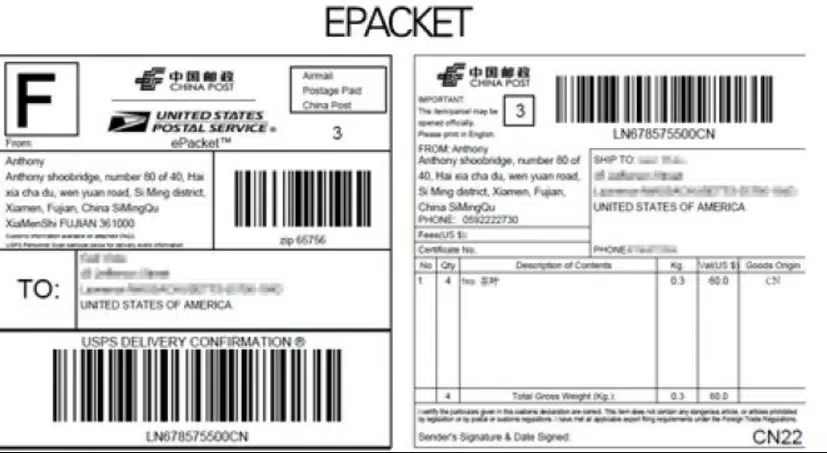
ePacket parcels need to be lightweight and meet the size requirements. The USPS lists the following size and weight requirements for parcels and rolls.
Package or Parcel Requirements:
- Length: Up to 24 inches
- Size: Minimum size is large enough to accommodate required elements—postage, address, and customs form
- Weight: Up to 4.4 lbs. or 2 kg
- Total of length, height, and thickness cannot exceed 36″
Rolls Requirements:
- Length: Minimum – 4 inches, Maximum – 36 inches
- Weight: Up to 4.4 lbs. or 2 kg
- Maximum length plus twice the diameter combined is 42″
- Minimum length plus twice the diameter combined is 6 3/4″
Parcel Value Requirement: Parcels that undergo shipping by ePacket should not exceed $400 in value.
ePacket Shipping Costs
ePacket shipping costs are way cheaper if you are sending parcels from China to anywhere in the world. For example, if you are sending a 1lb. parcel from China to the US, it will cost around $1–$1.50.
Here are some shipping cost estimates when using ePacket tracking and delivery to send parcels from China to specific countries. These estimates are based on a 2 kg package referring to base rates from China Post ePacket rates.
- China to the US: Approximately $23.40
- China to the UK: Approximately $21.62
- China to Australia: Approximately $20.44
List of Registered & Eligible ePacket Countries
As of this writing and based on the USPS website, there are more than 40 eligible countries using ePacket to ship from China, including the US, UK, and much of Europe.
- Australia
- Belgium
- Brazil
- Canada
- Croatia
- Cyprus
- Denmark
- Estonia
- Finland
- France
(includes Corsica and Monaco) - Georgia
- Germany
- Gibraltar
- Greece
- Hong Kong
- Hungary
- Iceland
- India
- Indonesia
- Ireland
- Israel
- Italy
- Japan
- South Korea
- Lebanon
- Lithuania
- Luxembourg
- Malaysia
- Malta
- Netherlands
- New Zealand
- Poland
- Portugal
- Romania
- Singapore
- Slovak Republic
- Spain
- Sweden
- Switzerland
- Thailand
- Turkey
- United Kingdom of Great Britain and Northern Ireland
ePacket Delivery Timeframes (China to US)
ePacket delivery timeframes vary depending on the destination country. For example, it takes between seven and 20 days for ePackets from China to arrive in the US. This is a significant improvement from the usual shipping timeframe of six to eight weeks via sea.
ePacket Tracking
Shipping by ePacket also gives customers and merchants the ability to track packages even though they go through different logistics partners.
The best way to track ePackets between China and the US is to use the official Postal Service websites—for the US, going to USPS, and for China, going to EMS. All you need is to get the 13-digit parcel tracking number from the supplier in China who sent the parcels.
You can also track your ePacket packages via third-party tracking services. A few popular options include:
- Parcels app: This website tracks ePackets across USPS and China Post EMS and even translates any Chinese information into English and provides an estimated delivery time.
- Aftership: This tracking website provides delivery statuses for up to 50 ePacket tracking numbers at a time.
- 17Track: This is a Shopify app that merchants can use to let their customers track their own purchases. They can also receive email notifications triggered by their package status.
Tariffs and customs with ePacket shipping
As mentioned, all parcels now pass through customs with applicable duties and taxes, regardless of value, following the suspension of the $800 de minimis exemption in 2025. Tariff rates vary by product category and are determined by the Harmonized System (HS) codes assigned to your shipment. Using incorrect codes can cause delays, extra fees, or penalties.
For merchants, staying updated on trade policies and ensuring products are accurately classified helps avoid unexpected costs. Customers receiving goods may also need to pay duties and taxes before delivery, depending on the item and destination country. Importers should clearly communicate these potential charges to buyers to ensure transparency in international transactions.
ePacket Challenges
ePackets have many advantages but also come with challenges. Consider these when deciding to go with ePacket shipping and delivery for your parcels from China.
- Restrictions: As mentioned above, ePackets are designed for lightweight and small to mid-sized packages.
- Customs taxes: It is best to inform customers right away if you are delivering goods via ePacket that these pass through customs and they may have to pay additional fees. As of August 2025, all shipments face duties, regardless of value, under the suspended de minimis exemption.
- Shipping delays: Any logistics company can experience unforeseen and uncontrollable delays. While ePacket delivery from China to the US typically takes seven to 20 days, it can occasionally take longer.
Frequently Asked Questions (FAQs)
Click through the tabs below to get the answers to the frequently asked questions about ePackets.
What is ePacket shipping?
ePacket shipping is a global shipping service for small and lightweight ecommerce packages from China and Hong Kong. ePacket shipping is fast and affordable, and can deliver to more than 40 countries.
How long does it take for an ePacket to be delivered?
ePacket delivery timeframes range from seven to 20 days if the country destination is the US.
Are ePackets shipped by air?
Yes, ePackets are shipped by air, which is why it takes less the amount of time than packages usually ship from China via sea.
How do I track an ePacket package?
You can track an ePacket package by checking for the 13-digit parcel tracking number in official courier websites like the USPS and China Post. You can also use third-party websites such as Aftership and Parcels app.
Is ePacket a courier?
No, it is not. ePacket is a shipping service that utilizes multiple logistics partners to deliver packages from China and Hong Kong to over 40 countries in the world.
Bottom Line
With the suspension of the de minimis exemption, ePacket remains a fast and affordable shipping option, but US merchants should no longer assume small parcels will bypass duties.
