







As I’ve explored telecommunication platforms, I’ve seen agentic AI marketed as one of their defining features. Entry-level subscriptions now include tools that generate automatic responses and insights from conversations, which makes it easier for small businesses to adopt AI-driven workflows right away.
For small businesses and startups, the shift to agentic AI offers new opportunities to compete at scale. In this article, I’ll explain how agentic AI is transforming unified communications and why adopting it can position your business for better improvements in customer experience.
What is agentic AI and its role in unified communications?
Agentic AI refers to AI systems capable of reasoning and taking action on behalf of users. While agentic AI vs generative AI is often compared, note that the latter focuses on producing content, while agentic AI operates with autonomy, using context and goals to execute tasks. This makes them powerful in environments where speed and accuracy are essential, such as team and customer interactions.
| Feature | Standard UCaaS platform | Agentic UCaaS platform |
|---|---|---|
| Price | Lower entry cost: Starts at $10 | Higher ROI from efficiency and automation: Starts at $25 |
| User experience | Manual task handling | Automated routing, personalized recommendations |
| Collaboration | Basic chat, video, and file sharing | AI-driven meeting and chat summaries and automatic task delegation |
| Customer service | Reactive ticket handling | Proactive AI agents resolving or escalating cases |
| Ease of setup/use | Requires manual configuration | Automated workflows and intelligent onboarding |
In unified communications as a service (UCaaS), agentic AI extends traditional tools by adding intelligence to workflows. Instead of just enabling calls, messages, and collaboration, AI agents in telecom can proactively route conversations and detect service issues before they escalate.
How agentic AI works
Agentic AI operates through a series of steps that enable it to understand and act on requests. Understanding these steps helps you evaluate how agentic AI will integrate into your workflows and where it can provide the most value.
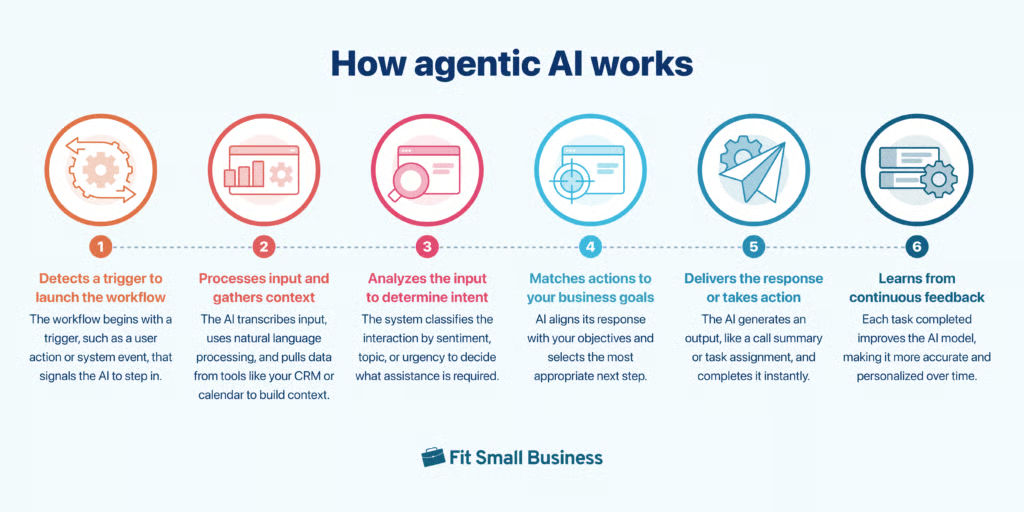
- Detects a trigger: The agentic workflow begins with a trigger, typically a user action or system event that signals the AI to intervene. For example, finishing a customer call might trigger post-call automation like drafting a summary or recommending next steps.
- Processes input and gathers context: When the input comes in as audio, the AI first transcribes it into text using speech recognition. From there, it applies natural language processing (NLP) to separate speakers and refine the text so the data is accurate and ready for analysis. To further make sense of the input, the AI pulls data from your CRM, communication history, or knowledge base.
- Analyzes the input to determine intent: The system classifies the interaction based on factors like sentiment or urgency. This helps it decide what kind of assistance is required and how to prioritize the task.
- Matches actions to your business goals: The AI now aligns its response with your objective, like resolving issues or booking meetings. It focuses on outcomes that matter to your workflow, not just task completion. Based on rules and past outcomes, the AI selects the most appropriate action.
- Delivers the output: The system then produces an output, which can be a call summary, suggested reply, or automated task assignment. These responses are completed instantly, keeping your operations moving without delays.
- Learns from continuous feedback: Every task completed feeds into the AI’s learning model, using user corrections, supervisor feedback, and performance results. As the system learns, it becomes more personalized and effective for future workflows.
How businesses benefit from agentic AI
Agentic AI is gaining significant traction, with Gartner noting a rapid surge in interest among businesses. Beyond efficiency, businesses are exploring agentic AI in telecom for measurable gains in service quality and customer satisfaction. If you’re considering an AI investment, understanding its benefits will help you identify where it can deliver the most impact for your team.
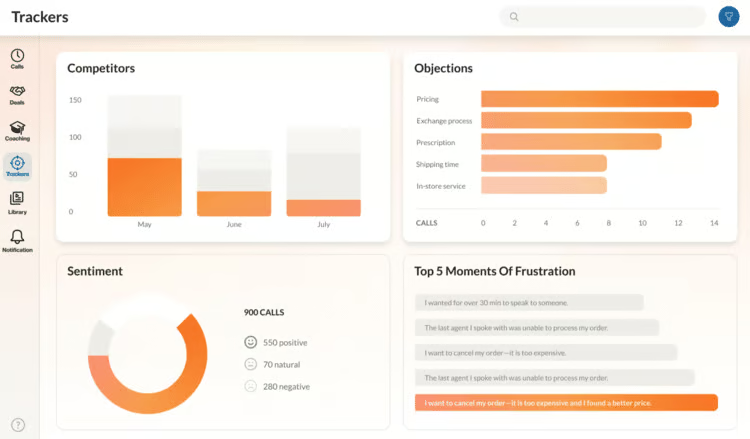
- Faster issue resolution: Agentic AI continuously evaluates live conversations to spot early signs of a problem, such as repeated questions or signals of customer frustration. By resolving these issues before they grow, the system shortens resolution times and delivers faster responses that strengthen customer confidence.
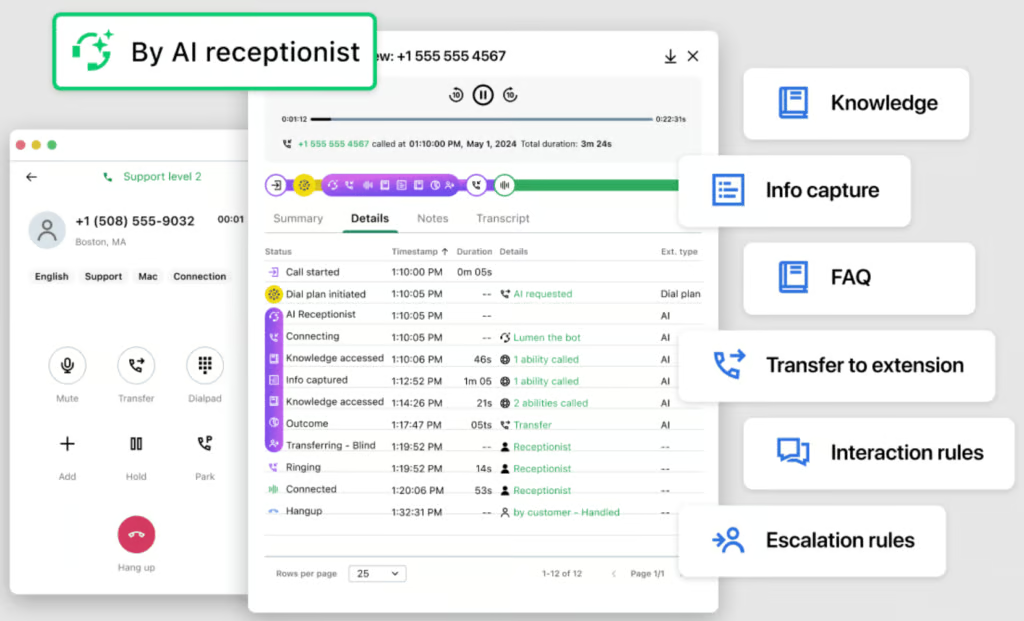
- Cross-channel consistency: Instead of handling each communication tool in isolation, the AI draws from a single source of context and knowledge. This allows it to provide consistent answers across platforms, so customers don’t feel like they are starting over each time they switch channels.
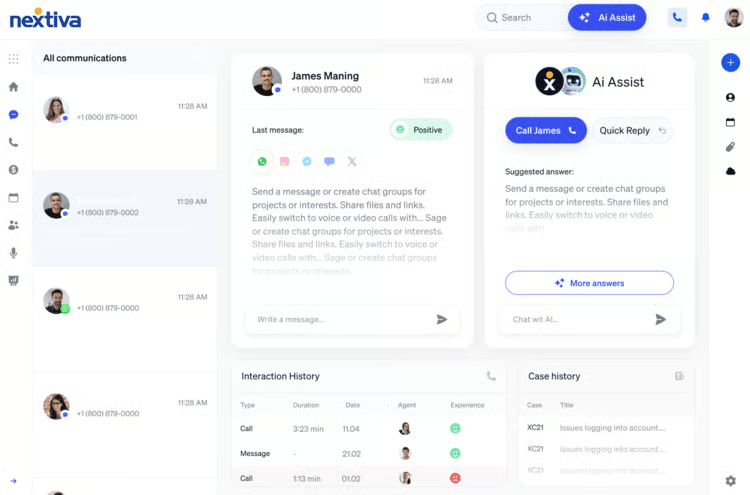
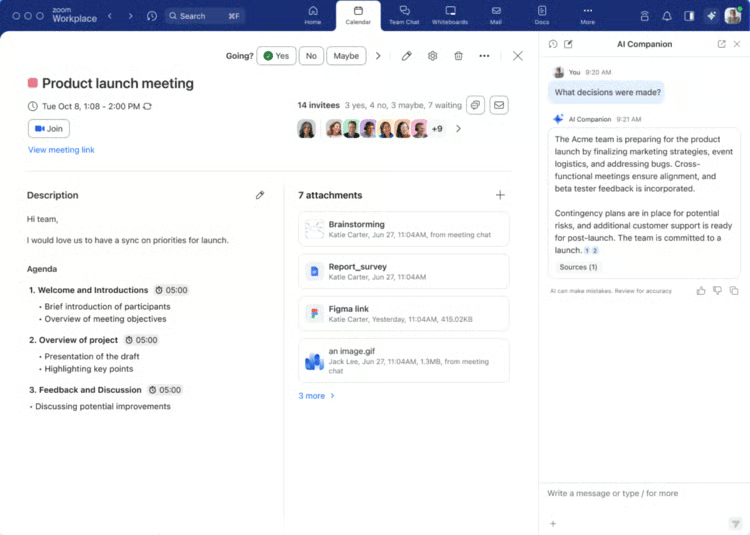
- Smarter collaboration: Agentic AI captures discussions during meetings and translates them into clear action items that are automatically pushed into team messaging platforms. It also condenses long message threads into quick summaries, keeping teams aligned without forcing them to sort through dozens of back-and-forth updates.
- Predictive insights: By reviewing historical interactions and identifying repeating patterns, AI can forecast shifts in demand or customer sentiment. This gives managers the lead time needed to add staff or prepare agents before communication bottlenecks appear.
Choosing the right UCaaS with agentic AI
With more UCaaS tools adding AI capabilities, choosing the right solution has become a critical decision. In fact, providers with built-in AI are attracting more buyers, based on a Metrigy research. While they come at a higher price point than traditional UCaaS, small businesses and startups often benefit the most, as the efficiency and service improvements deliver stronger value for money.
Below is a comparison of UCaaS providers with agentic AI capabilities.
| Provider | Best for | Monthly starting price (per user) | Agentic AI features |
|---|---|---|---|
| RingCentral | Full-featured call management | $30 |
|
| Nextiva | Managing customer interactions across channels | $23 |
|
| Zoom | Video-focused collaboration | $16.99 |
|
| GoTo Connect | Scalable call center platform | Custom pricing |
|
How to deploy agentic AI for responsible adoption
Adopting agentic AI without safeguards can introduce security and compliance risks that outweigh the benefits. A recent IBM study found that 97% of organizations experiencing AI-related security incidents had failed to put proper access controls in place, highlighting how easy it is to overlook the basics. The best place to start is with proven practices that strike a balance between AI adoption and protection.
- Establish access controls
Access should be based on defined roles rather than open permissions. By limiting who can view or act on AI outputs, you reduce the chance of data exposure while ensuring sensitive information is only handled by authorized staff. - Prioritize data governance
Strong data governance sets the foundation for responsible AI adoption. Establish policies for handling data so that customers know their information is secure and regulators can see proper compliance efforts. - Train your team
Employees need to understand both the strengths and limitations of agentic AI to use it effectively. Ongoing training programs help staff adopt the tools with confidence and reduce mistakes that can come from misuse or misinterpretation. - Monitor and audit performance
AI systems must be measured against benchmarks for reliability. Regular monitoring and audits verify that outputs are accurate and aligned with the business goals you set at the start. - Start with pilot programs
Rolling out AI in phases gives teams the chance to test features and provide feedback before a company-wide implementation. This controlled approach builds organizational knowledge while minimizing the disruption that often comes with new technology.
Selecting the right agentic AI platform is only the first step; the real opportunity lies in how these systems will evolve once securely deployed and embedded into UCaaS workflows.
Having studied how AI transforms communication workflows, the most exciting shift ahead is how agentic AI will move from assisting with tasks to forming entire workflows inside UCaaS platforms. I expect future systems to anticipate needs across voice, chat, and collaboration tools, making communication more proactive.
As adoption matures, I see agentic AI becoming the foundation of communication technology trends, enabling businesses to deliver faster and more consistent customer and employee experiences.
Frequently asked questions (FAQs)
How does agentic AI differ from generative AI?
Agentic AI takes actions based on goals and context, while generative AI produces outputs like text or images. In unified communications, agentic AI manages workflows and customer interactions more autonomously.
What are common use cases for agentic AI?
Some of the most common agentic AI use cases in telecom include real-time ticket handling and intelligent call routing. In practice, AI agents also help reduce wait times and improve call quality.
What frameworks or platforms support the development of agentic AI?
Platforms like Microsoft Azure AI, Google Vertex AI, and open-source frameworks, such as LangChain, support the development of agentic AI. Many UCaaS providers embed these frameworks into their offerings.
Is data readiness a challenge for agentic AI?
Yes. Without well-structured data, agentic AI can’t perform effectively. Preparing your data ensures AI agents in telecom and UCaaS environments operate with accuracy.
