





The best email marketing platforms help small businesses create professional campaigns, automate customer communication, track engagement, and grow revenue without needing a full marketing team. The right platform can make a major difference in how easily you build emails, manage subscribers, personalize campaigns, and measure results.
As an email marketer myself, I’ve tested dozens of email marketing tools over the years for newsletters, automated campaigns, ecommerce promotions, and lead generation. For this guide, I evaluated the top email marketing platforms based on ease of use, email design tools, automation features, deliverability, AI capabilities, pricing, reporting, and overall value for small businesses.
Below are the email marketing platforms that stood out most in my hands-on testing and real-world use.
Email software for marketing | Best for | Starting monthly price* |
|---|---|---|
| Zoho Campaigns | Small businesses (best overall) | Free or $3 |
| HubSpot | Lead generation and customer management | Free or $7 |
| Mailchimp | Personalized email campaigns and automation | Free or $13** |
| Brevo | Combined email and SMS campaigns | Free or $8.08 |
| MailerLite | Bulk email marketing | Free or $10.80 |
| Klaviyo | Advanced automated email workflows | Free or $20 |
| Omnisend | Detailed audience segmentation | Free or $16** |
| GetResponse | Tracking email campaign revenue | $15.58 |
*Annual billing, lump-sum payment, unless otherwise noted.
**Billed monthly.
- Overview of the best email marketing platforms
- Zoho Campaigns: Overall best email marketing software for small businesses
- HubSpot: Best email marketing platform for lead generation and customer management
- Mailchimp: Best for personalized email campaigns and automation
- Brevo: Best for combined email and SMS campaigns
- MailerLite: Best for bulk email marketing
- Klaviyo: Best for advanced automated email workflows
- Omnisend: Best email marketing campaign software for detailed audience segmentation
- GetResponse: Best for tracking email campaign revenue
- How to choose the best email marketing platform for your business
- Bottom line
Overview of the best email marketing platforms
Provider | Automated drip email campaigns | Automatic HIPAA/GDPR compliance | AI writing assistant | My expert score out of 5 |
|---|---|---|---|---|
✓ | ✓ | ✓ | 4.56 | |
✓ | HIPAA only | ✓ | 4.50 | |
✓ | GDPR only | ✓ | 4.42 | |
Higher plans only | GDPR only | X | 4.38 | |
✓ | GDPR only | ✓ | 4.35 | |
✓ | No, but it has data privacy tools | ✓ | 4.21 | |
✓ | GDPR only | ✓ | 4.09 | |
✓ | GDPR only | ✓ | 4.04 |
Why you can trust Fit Small Business
To ensure we provide readers with the best answers, the Fit Small Business editorial process adheres to strict standards, including rigorous research, assessment, and provider scoring.
In this review, I evaluated the best email marketing providers for small businesses, focusing on campaign management, automation, audience targeting, reporting, pricing, ease of use, and customer support. My full methodology reviewed provider documentation, published plan details, support resources, and available user feedback to compare features, identify subscription limits, and assess overall value.
Furthermore, I leverage the following work experiences when carrying out software reviews:
- Over 14 years of editorial research and writing
- Over eight years of writing expert reviews about sales and business technologies
- Over two years in insurance sales and team management
- Almost two years in sales territory management


Methodology: How I evaluated the best email marketing platforms
I used a weighted rubric to compare email marketing systems for newsletters, automated follow-up, lead nurturing, and ecommerce campaigns. My assessment drew on provider documentation, pricing information, support resources, and available user reviews. Where specified in the rubric, scoring distinguished between features included in free or base plans and those requiring an upgrade.
- Pricing (15%): I compared paid-plan costs for 1,000 contacts, monthly billing options, free-plan availability, and monthly email sending allowances of each small business email marketing software.
- General features (30%): I evaluated email scheduling, drip campaigns, triggered emails — including transactional messages — landing pages, SMS marketing, third-party integrations, and A/B testing.
- Niche features (25%): I assessed custom HTML templates, built-in CRM functionality, AI writing assistants, multivariate testing, autoresponders, customer journey mapping, advanced list segmentation, analytics, and access for multiple collaborators.
- Customer support (10%): I reviewed support hours, live chat or phone availability, knowledge bases or help centers, and webinars or video tutorials.
- Expert score (20%): I assessed feature depth, value for money, and ease of use using documented capabilities, setup resources, and available user feedback for the email campaign tools. Within this category, feature depth accounted for 40% of the score, while value for money and ease of use each accounted for 30%.
Zoho Campaigns: Overall best email marketing software for small businesses
Why I chose Zoho Campaigns
Zoho Campaigns is one of the most intuitive email marketing platforms I’ve tried and the one I recommend the most if you’re completely new to email marketing and want a no-fuss platform that does the job well.
In my experience, it strikes the best balance between simplicity, automation, and affordability, especially for teams new to email marketing. The platform is very intuitive. Creating campaigns, importing contacts, building automations, and reviewing reports all happen from one clean dashboard. I also like that Zoho includes practical templates for promotions, newsletters, customer feedback, and seasonal campaigns instead of overwhelming users with overly complex tools.
What I like best of all, however, is Zoho Campaigns’ feature to connect directly with your online store, whether on Shopify or on your own website (available only on paid plans). This makes it easier to track abandoned carts and send follow-up emails to end-of-funnel leads, aka leads who are nearing a purchase. Not many other popular email marketing platforms have the same capability. It’s another example of Zoho Campaigns being tailored to small businesses.
This is my best all-in-one and free software for email marketing by far, and even the free plan offers lots of value with all the essential capabilities. Like many of Zoho’s other free tools, it’s one of my best marketing tools for small businesses.
Pricing and key features
Zoho Campaigns plans | Free | Standard | Professional |
|---|---|---|---|
Monthly cost (billed annually) | $0 | $3 | $4.50 |
Monthly cost (billed monthly) | $0 | $4 | $6 |
No. of emails | 6,000/month | Unlimited | Unlimited |
No. of contacts | 2,000/month | 2,000/month | 2,000/month |
Sign-up forms | ✓ | ✓ | ✓ |
Users | 5 | 10 | 20 |
Audience segmentation | X | ✓ | ✓ |
Workflows | X | ✓ | ✓ |
Dynamic email content | X | X | ✓ |
Ecommerce emails | X | X | ✓ |
Key features
- Ecommerce tab: Connect your online store with Zoho Campaigns and automatically send cart abandonment emails
- Templates: 100-plus ready-to-build templates for newsletters, sales announcements, events, and more
- Contacts tab: Contact management platform with your contacts’ names, phone numbers, scores, associated topics, and activities
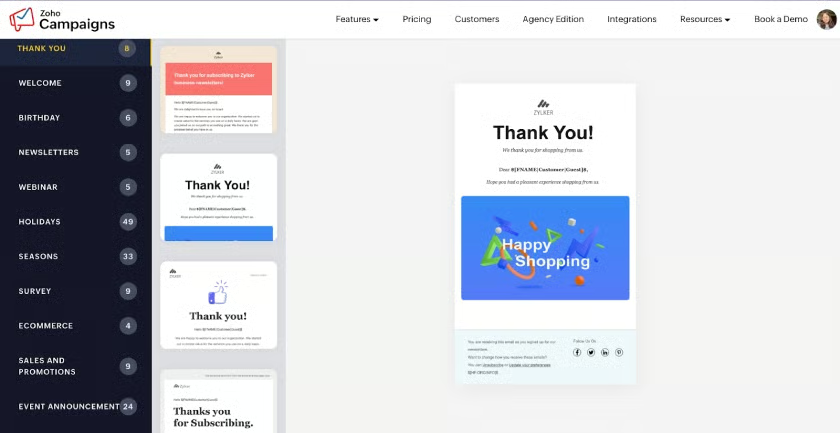
Zoho Campaign has ready-made templates for various email campaigns. (Source: Zoho) 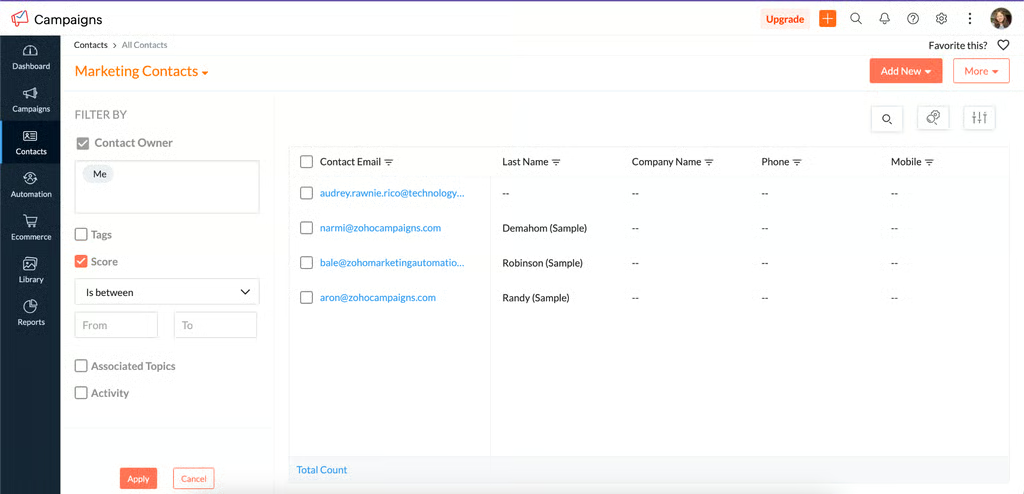
There’s also a built-in CRM platform with the basic contact info. (Source: Zoho)


HubSpot: Best email marketing platform for lead generation and customer management
Why I chose HubSpot
I chose HubSpot because it’s one of the best email marketing platforms for lead generation and CRM-driven marketing. In my testing, HubSpot stood out for how well it tracks, organizes, and nurtures leads across the entire customer journey, especially for B2B businesses and growing sales teams.
The biggest advantage is HubSpot’s built-in CRM, which automatically connects email campaigns with contact activity, lead scoring, sales pipelines, and customer interactions. I’ve found this especially useful for businesses managing high lead volumes or longer sales cycles where detailed customer tracking matters.
HubSpot’s email marketing tools are also easy to use despite the platform’s depth. Campaign reporting, automation, segmentation, and lead workflows are all accessible from one dashboard, although teams new to CRMs may need some time to learn the system fully. It doesn’t have the same design capabilities as Mailchimp or Zoho Mail (it’s also not a drag-and-drop builder), so I wouldn’t recommend it if you have a very specific or unique branding or look for your emails. Its CRM platform, more than anything, makes HubSpot one of the best email marketing platforms.
Pricing and key features
HubSpot Marketing Hub plans | Free | Marketing Hub Starter | Marketing Hub Professional |
|---|---|---|---|
Monthly cost (billed annually) | $0 for 2 seats | $7/seat | From $800 with 3 core seats |
Monthly cost (billed monthly) | $0 for 2 seats | $10/seat | From $890 with 3 core seats |
No. of emails | 2,000/month | No. of contacts × 5 | No. of contacts × 10 |
CRM platform | ✓ | ✓ | ✓ |
No. of contacts | 1,000 | 1,000 | 2,000 |
Email automation | X | ✓ | ✓ |
Email templates | 5 | 5,000 | 5,000 |
Forms & landing pages | ✓ | ✓ | ✓ |
Audience segmentation | 50 active audiences | 50 active audiences | 1,200 active audiences |
Ecommerce payments | X | ✓ | ✓ |
No HubSpot branding | X | ✓ | ✓ |
Key features
- Advanced CRM platform: Contact management platform with detailed info like last activity date and lead status, and lead pipelines
- Email automation: Automatic email sending triggered by form submissions, new contacts, and website visits
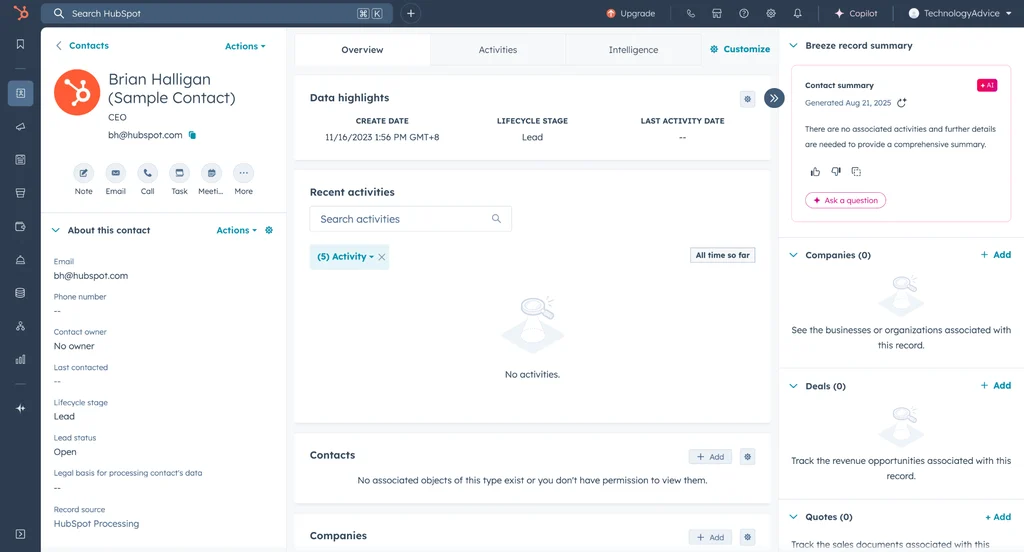
HubSpot has one of the most detailed CRMs you’ll find from an email platform. (Source: HubSpot) 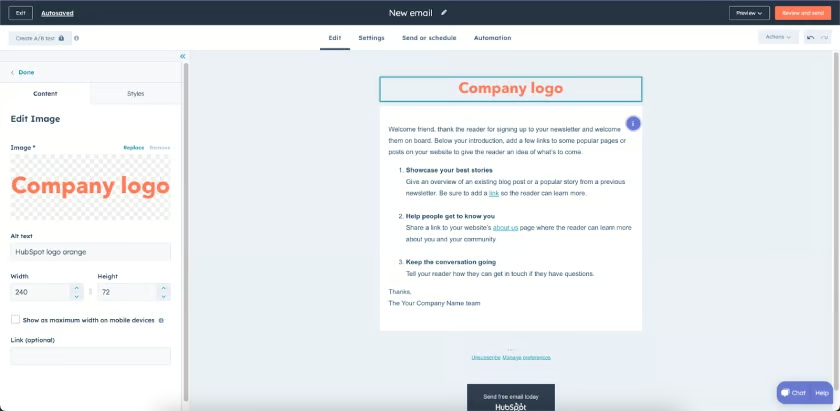
It has a capable email builder, albeit with limited design capabilities. (Source: HubSpot)


Mailchimp: Best for personalized email campaigns and automation
Why I chose Mailchimp
Mailchimp is one of the best email marketing services for small businesses, offering a full-featured platform for creating email campaigns and automating customer follow-up. I recommend it for teams managing newsletters, promotions, welcome sequences, and repeat-purchase campaigns. Its design tools, audience management, automation, and reporting support more sophisticated marketing as your needs grow.
The connection between segmentation and automation is the strongest reason for my recommendation. This automated email marketing software has a connected ecommerce store, so you can group contacts by purchase activity and email engagement, then build different follow-up paths for first-time buyers and returning customers. Landing pages and signup forms extend that workflow by capturing subscribers who can enter targeted email sequences. Together, these tools support customer acquisition, nurturing, and retention.
I’d consider the Standard plan for this broader use case because it adds advanced segmentation, branching automation, and multivariate testing. Essentials suits simpler campaigns, with automation flows limited to four steps. The main tradeoff is cost as your audience grows. Compare plans using your expected contact count and sending frequency, including any additional SMS or transactional email costs.
Pricing and key features
Mailchimp Email Marketing plans | Free | Essentials | Standard | Premium |
|---|---|---|---|---|
Monthly cost (billed monthly) | $0 | From $13 | From $20 | From $350 |
Seats | 1 | 3 | 5 | Unlimited |
Contacts limit | 250 | 50,000 | 100,000 | Custom |
Max. monthly email sends | 500 | 10x contacts | 12x contacts | 15x contacts |
Audience sets | 1 | 3 | 5 | Unlimited |
Automation builder | Single-step | Single-step | Multistep | Multistep |
Email scheduling | X | ✓ | ✓ | ✓ |
Customer journeys | X | ✓ | ✓ | ✓ |
Key features
- Marketing automation flows: Create triggered email sequences with delays and branching paths to personalize follow-up based on customer actions.
- Audience segmentation: Group contacts by profile details, email engagement, and connected-store purchase history to send more relevant messages.
- Email campaign builder: Design branded emails using customizable templates and a drag-and-drop editor.
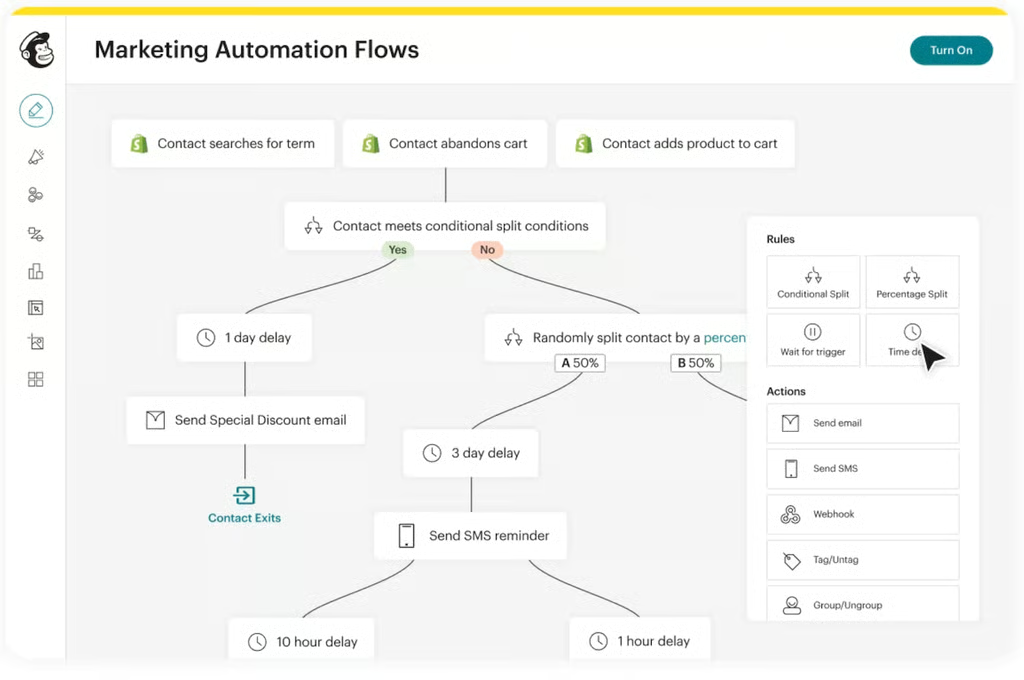
Build follow-up sequences that respond to customer actions, using delays and branching paths to tailor email and SMS messages. (Source: Mailchimp) 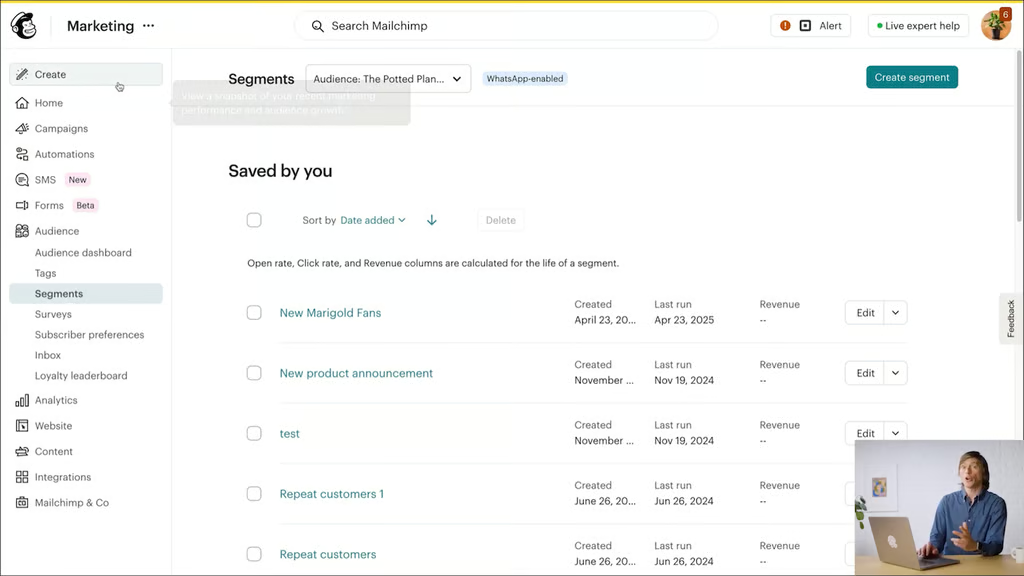
Organize contacts into saved segments, such as repeat customers, to send campaigns tailored to each group. (Source: Mailchimp) 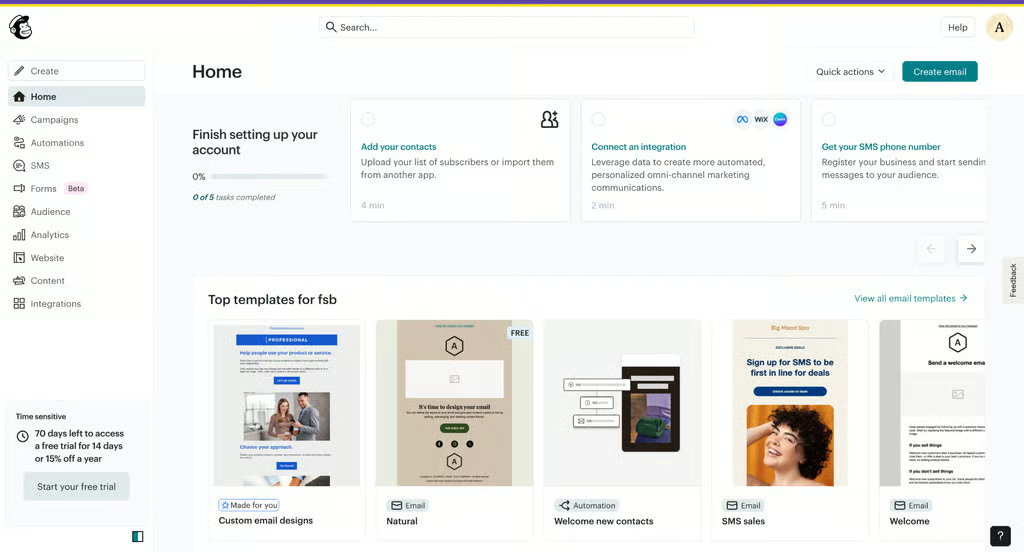
It’s also a great email marketing platform overall, with forms, automations, and analytics. (Source: Mailchimp)


Brevo: Best for combined email and SMS campaigns
Why I chose Brevo
Email and SMS marketing often go hand-in-hand as marketing strategies, and while a good number of email platforms offer both, Brevo’s is the most seamless one by far and offers the most value. There are no limits to how many text messages you can send a day (though, of course, text rates apply accordingly). And credits are available on a pay-as-you-go basis, so you can avoid wasting extra spend, which is another plus.
Brevo is also easy to set up and navigate, with lots of good email templates to choose from. The feature I particularly like is the unified inbox that makes it simpler to track and reply to multiple conversations at once, especially if you’re a one-person marketing team and need to handle messages across social media, email, and WhatsApp. It’s one of its newest features, which is another thing I like about Brevo — it continually adds more capabilities to its platform.
Brevo is another email platform I trust that hasn’t let me down yet, feature-wise, and the main reason I haven’t ranked it higher is because it doesn’t have a dedicated email analytics dashboard, which is important for calibrating your future email campaigns. It only shows your email metrics per campaign.
Pricing and key features
Brevo plans | Free | Starter | Standard |
|---|---|---|---|
Monthly cost (billed annually) | $0 for 1 user | $8.08/user | $16.17/user |
Monthly cost (billed monthly) | $0 for 1 user | $9/user | $18/user |
Contact limit | 100,000 | 500,000 | 500,000 |
Monthly email sends | 300/day | 100,000 | 500,000 |
Multichannel marketing automation | 2,000 contacts | 2,000 contacts | Unlimited |
Web push notifications | N/A | 1,000 targeted subscribers | 10,000 targeted subscribers |
SMS campaigns* | From $1.09 for 100 messages | From $1.09 for 100 messages | From $1.09 for 100 messages |
*Pricing applies to US customers. Data charges vary by country. Contact Brevo for custom pricing on Enterprise plans.
Key features
- SMS and email sending: All-in-one platform for sending emails, SMS, and WhatsApp messages, and push notifications
- Unified inbox: Manage and reply to emails, WhatsApp messages, and Instagram and Facebook DMs from the inbox under the one “Conversations” tab
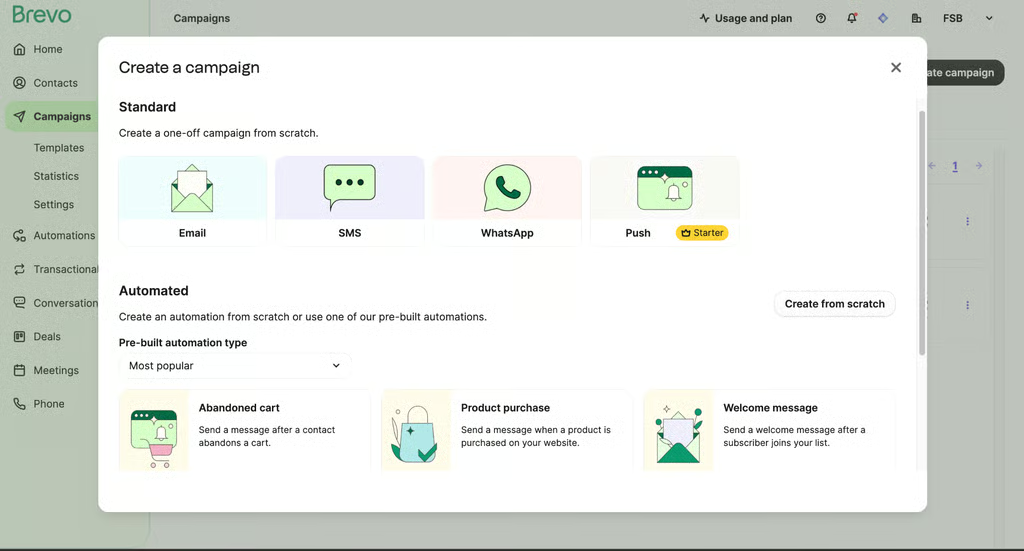
Send emails, SMS, WhatsApp messages, or push notifications with Brevo. (Source: Brevo) 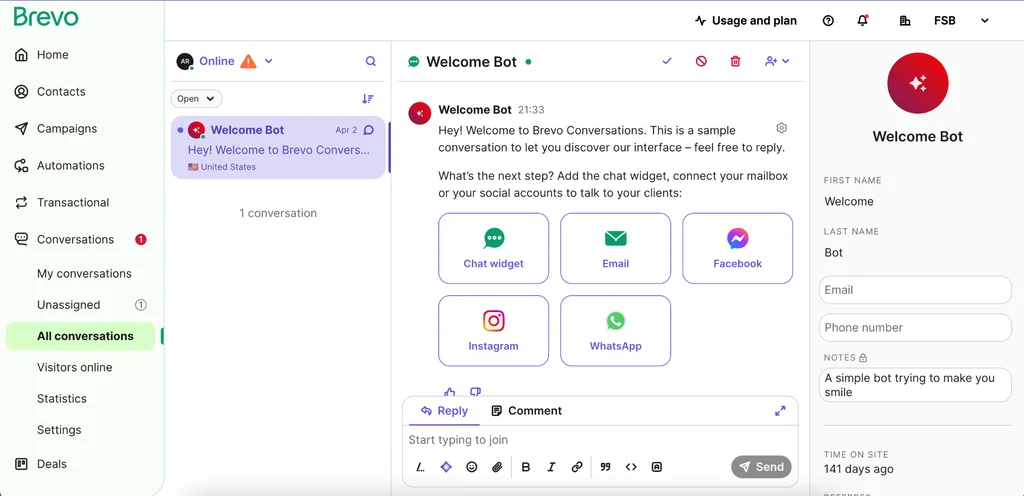
Another highlight: A unified inbox for responding to messages across email and text. (Source: Brevo)


MailerLite: Best for bulk email marketing
Why I chose MailerLite
Honestly, no other email platform offers unlimited email sends per month, which is why MailerLite is always one of my top bulk email marketing platforms. If you mostly send mass email announcements or audience-wide newsletters instead of targeted campaigns, MailerLite will, no doubt, be the most helpful email platform to you, especially if you have a large list.
You can also build unlimited landing pages for your emails, and both landing page and email campaign builders are easy to navigate, although because they’re block-based editors (not drag-and-drop), there are significantly fewer design capabilities. Unlimited email sending is also only available on paid plans, although with up to 12,000 on the free plan for up to 500 contacts, it’s still more than most.
More than anything, MailerLite is an email platform for a quick, simple, mass email send, not for highly targeted email campaigns. However, I do give it points for allowing A/B testing for subject lines, sender emails, content, and send times, so your messages reach your audience successfully. It also has a high email deliverability rating, which is another essential part of bulk email marketing, as it ensures your emails don’t go to spam.
Why I chose MailerLite
MailerLite Marketing plans | Free | Comfort | Power |
|---|---|---|---|
Monthly cost (billed annually) | $0 | $10.80 | $22.50 |
Monthly cost (billed annually) | $0 | $12 | $25 |
Users | 2 | 3 | Unlimited |
Contacts | 250 | From 500 | From 500 |
Monthly email sends | 2,500 | From 5,000 | Unlimited |
Websites | 1 | 10 | Unlimited |
Landing pages | 1 | 10 | Unlimited |
Active forms | 3 | 10 | Unlimited |
Key features
- Smart sending: Built-in tool that learns from your subscribers’ habits and preferences to send emails when they’re most likely to be opened
- Landing page, form, and pop-up builder: Aside from emails, MailerLite lets users build unlimited landing pages, forms, and pop-ups for campaigns, using templates and a block-based editor
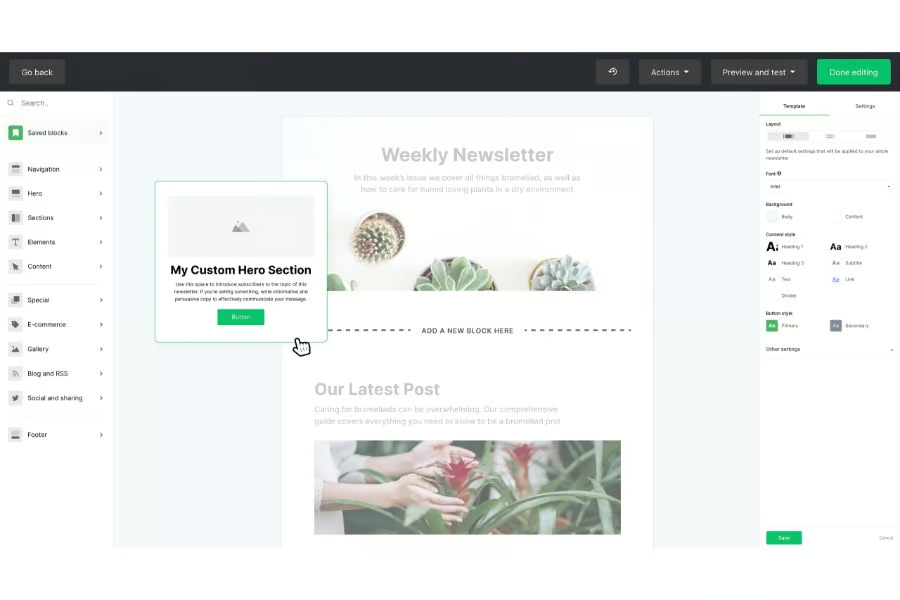
MailerLite has a block-based email builder that’s easy enough to use, but allows less design customization. (Source: MailerLite) 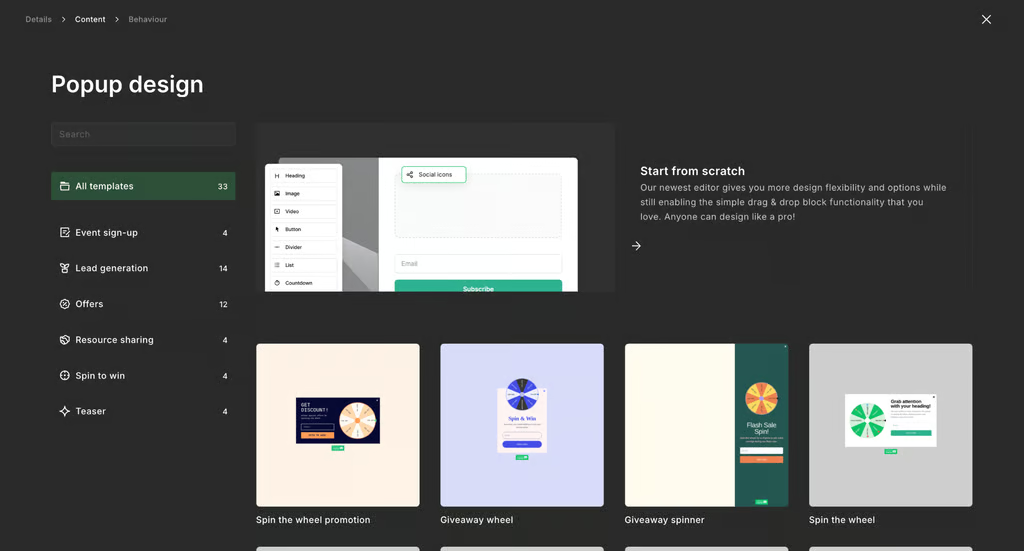
There are also templates for pop-ups, forms, and landing pages. (MailerLite)


Klaviyo: Best for advanced automated email workflows
Why I chose Klaviyo
Klaviyo is less an email marketing platform than an automation builder tool that serves emails (and SMS messages and review requests). Its main product is an automation workflow builder that can build specific, custom workflows based on specific triggers.
For example, you can build an automation to send an email with a promo code exactly three days after a customer abandons their cart on your online store. Another plus about Klaviyo is that it’s not difficult to build automation workflows, even if you’ve never done it before. It’s all a matter of dragging and dropping boxes to create a workflow, and then testing and saving it, which gives it major points.
The primary drawback of Klaviyo is that it won’t be applicable to every business, especially if you don’t have an online store, as most of its features are very ecommerce-specific. Its customer product recommendations feature, for example, learns your customers’ preferences based on past purchases to recommend products they’ll be interested in.
But if you do have an online storefront, Klaviyo is definitely worth considering (there’s a free starting plan) to upgrade your ecommerce experience.
Pricing and key features
| Klaviyo plans | Free | Marketing |
|---|---|---|
| Monthly cost (billed monthly) | $0 | From $20 |
| Contacts | 250 | From 500 |
| Emails per month | 500 | From 500 |
| Composer (AI campaigns and analytics) | $5 of usage/month | ✓ |
| Mobile messaging | $5/month | ✓ |
| Generative AI | X | ✓ |
| Predictive analytics | X | ✓ |
Key features
- Custom automation builder: Drag-and-drop platform to build custom automation workflows for your email campaigns with specific send times, triggers, and audience segments
- Klaviyo data platform: Smart CRM platform with customer demographic, preference, and behavior data, plus predictive analysis
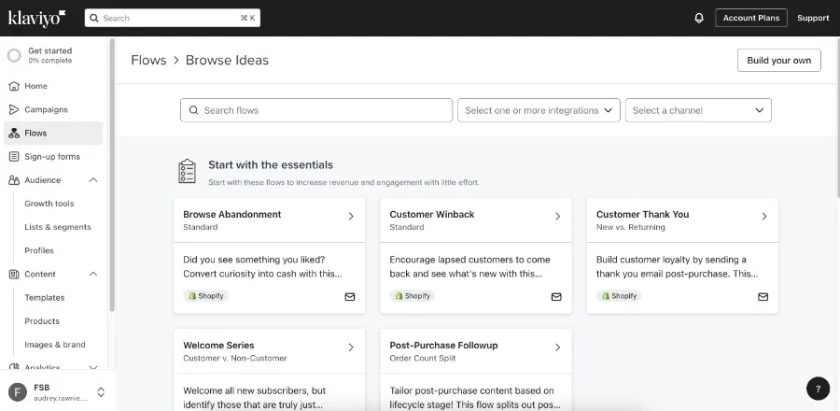
Build custom email automation flows with Klaviyo — or start with one of its templates. (Source: Klaviyo) 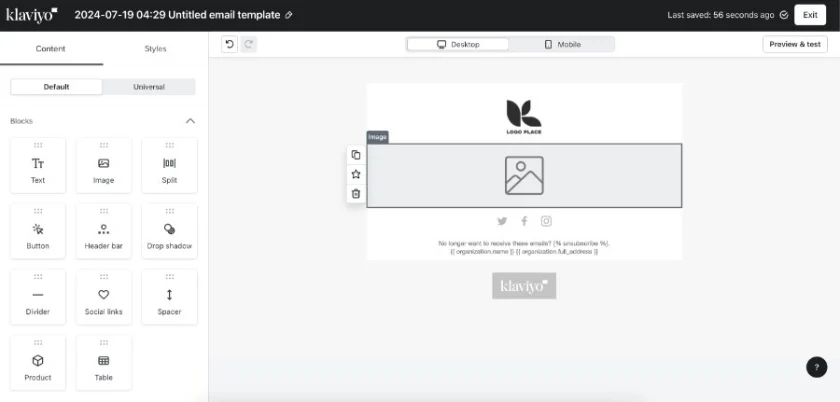
The drag-and-drop email builder is also easy to use, although email templates are pretty basic.


Omnisend: Best email marketing campaign software for detailed audience segmentation
Why I chose Omnisend
Omnisend is the best good email marketing platform that allows advanced audience targeting and segmentation based on my testing. Omnisend allows audience segmentation on multiple data points, from demographic data to engagement rates to shopping behavior, which is far more than most others allow. Even better: You can automate these targeted email sends once you find a combination that works.
I also love that Omnisend makes it easy to set up these segments, as you can choose from pre-made segments like “frequent store visitors” or “recent buyers,” or describe the segment you need, and Omnisend’s AI will build it for you. You can also build one from scratch.
Aside from audience segments, Omnisend also has all the email marketing essentials, including forms and landing page builders, although unfortunately, its CRM platform is very basic, which is its biggest drawback.
Its audience targeting capabilities are top tier, but it (strangely) doesn’t really have a CRM, just a contact list with recipients’ names, phone numbers, and email addresses, which makes it a little difficult to figure out what segmentation combinations are working best, and is the main reason it isn’t higher on my list.
Pricing and key features
Omnisend plans | Free | Standard | Pro |
|---|---|---|---|
Monthly cost (billed monthly) | $0 | From $16 | From $59 |
No. of emails | 500/month | From 3,000 | Unlimited |
No. of contacts | 250 | From 500 | From 2,500 |
Unlimited audience segmentation | ✓ | ✓ | ✓ |
Email & SMS automation | ✓ | ✓ | ✓ |
Email templates | ✓ | ✓ | ✓ |
Landing pages | ✓ | ✓ | ✓ |
No Omnisend branding | X | ✓ | ✓ |
Key features
- Unlimited segmentation: Segment email recipients by as many data points as you like, including shopping history, engagement rates, and customer lifecycle stage
- Google and Facebook customer syncing: Sync your customer segments with your Facebook and Google audience
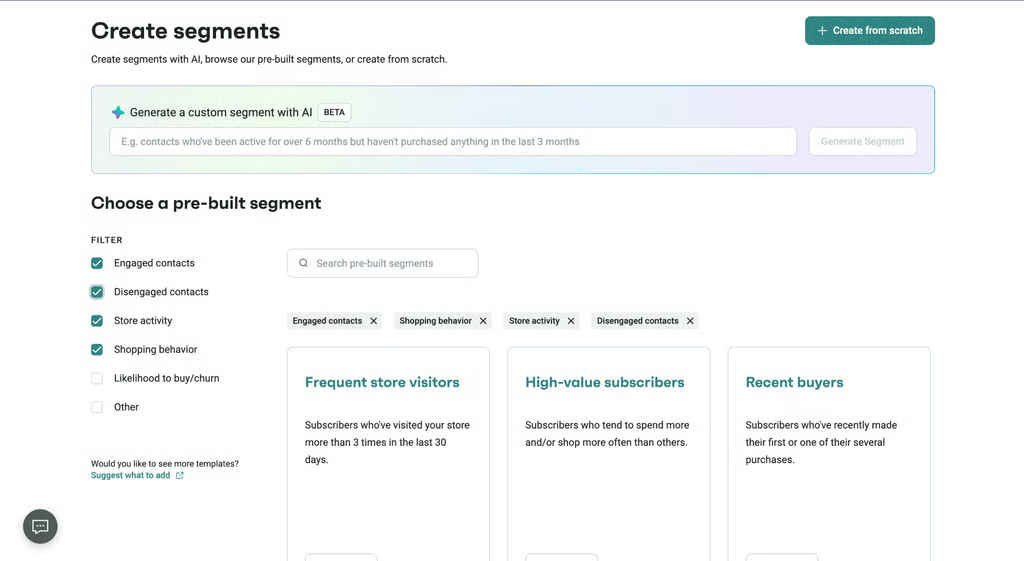
Omnisend has some of the most precise audience segmentation and targeting I’ve found in an email platform. (Source: Omnisend) 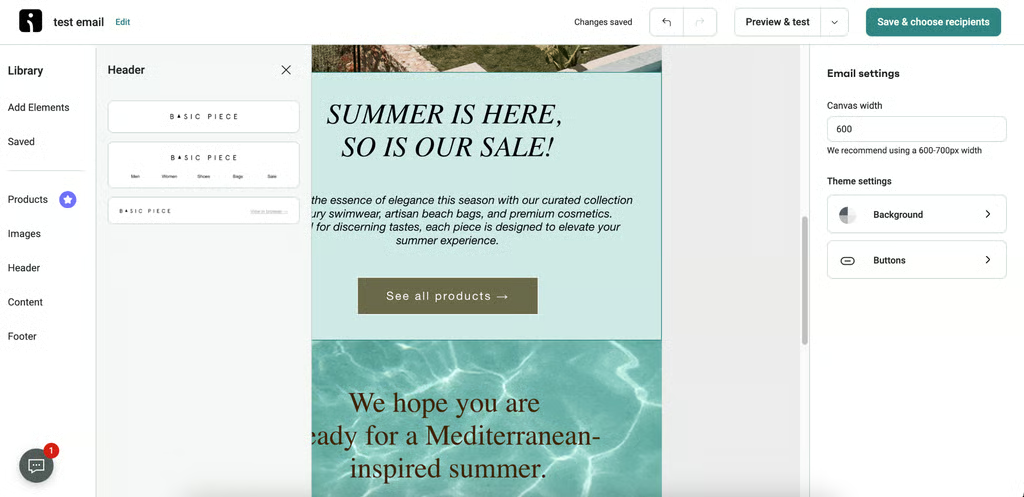
There’s also a drag-and-drop email builder. (Source: Omnisend)


GetResponse: Best for tracking email campaign revenue
Why I chose GetResponse
I chose GetResponse because it offers some of the most advanced email marketing analytics I’ve tested on a platform built for small and midsize businesses. Beyond standard open and click tracking, GetResponse can also monitor campaign revenue, complaints, email performance, and ecommerce activity, making it especially useful for businesses that generate sales directly through email campaigns.
What stood out most in my testing was how closely GetResponse ties email marketing to revenue tracking. Integrations with Stripe and PayPal make it easier to measure how campaigns contribute to sales, which is something many entry-level email platforms still handle poorly.
GetResponse also includes built-in tools for landing pages, automation workflows, webinars, and Facebook and Google Ads management. While I still prefer using dedicated ad platforms for audience targeting, having those tools connected in one dashboard is helpful for managing campaigns across channels.
The tradeoff is that GetResponse has a steeper learning curve than simpler platforms like Zoho Campaigns or Mailchimp. In my experience, it works best for businesses that already have an established email strategy and want deeper reporting, automation, and revenue insights rather than just a basic newsletter tool.
Pricing and key features
GetResponse plans | Starter | Marketer | Creator |
|---|---|---|---|
Monthly cost (billed annually) | $15.58 | $48.38 | $56.58 |
Monthly cost (billed monthly) | $19 | $59 | $69 |
Users | 3 | 5 | 5 |
Emails per month | Unlimited | Unlimited | Unlimited |
Email A/B testing | X | ✓ | ✓ |
Click tracking | ✓ | ✓ | ✓ |
Ecommerce tracking | X | ✓ | ✓ |
Automated email workflows | 1 | Unlimited | Unlimited |
Dynamic audience segmentation | ✓ | ✓ | ✓ |
Free trial: 14 days
Key features
- Email revenue and click tracking: Track your email campaigns’ click rates and revenue in real-time via your dashboard
- Ecommerce integrations: Integrate Stripe, PayPal, and ecommerce platforms like Shopify and WooCommerce to offer customized promotions to different buyer sets
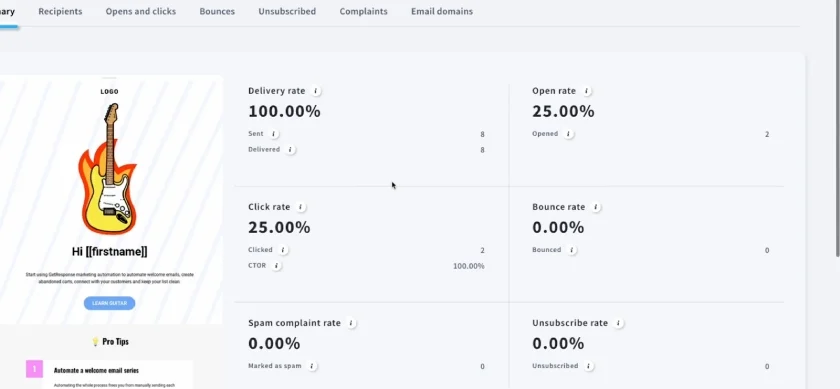
GetResponse is my best pick for tracking email campaign analytics. (Source: GetResponse) 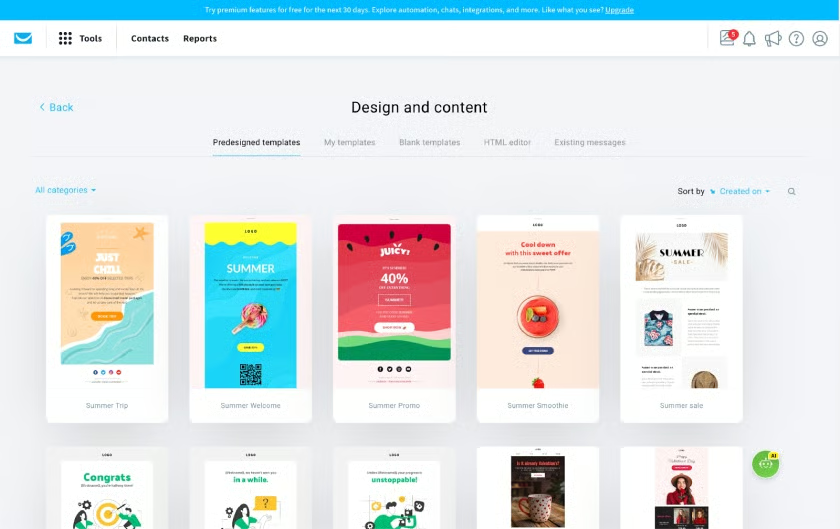
It also has decent email templates (although not my favorites). (Source: GetResponse)


How to choose the best email marketing platform for your business
Choosing the best email campaign software depends on your business size, marketing goals, budget, and how advanced your campaigns need to be. Some tools are better for simple newsletters and small contact lists, while others are designed for automation, ecommerce marketing, and detailed audience segmentation.
Use the steps below to compare email marketing platforms and find the best fit for your workflow, growth plans, and customer communication strategy.
- Start with your contact list size and growth plans. Pricing for email marketing software usually depends on subscriber count, email volume, or both, so choose a platform that can scale with your audience.
- Compare email send limits, not just monthly pricing. Some platforms limit how many emails you can send each month, even on paid plans, which can affect newsletters and automated campaigns.
- Test the email builder before committing. The best email marketing platforms should make it easy to create branded emails with drag-and-drop editing, templates, mobile previews, and reusable content blocks.
- Look closely at automation features. At a minimum, your platform should support welcome emails, drip campaigns, abandoned cart emails, and automated follow-ups.
- Choose a platform with strong segmentation tools. Advanced segmentation helps you target subscribers based on behavior, purchase history, engagement, or demographics for more personalized campaigns.
- Review deliverability and reporting tools. Good email marketing software should include spam testing, domain authentication guidance, open and click tracking, and bounce reporting.
- Evaluate AI tools carefully. Many email platforms now offer AI-generated subject lines, email copy, segmentation suggestions, and send-time optimization to speed up campaign creation.
- Check integrations with your existing tools. Make sure the platform connects with your CRM, ecommerce platform, website builder, POS system, booking software, or lead forms.
- Test customer support and onboarding resources. Responsive support, tutorials, and onboarding tools become especially important when setting up automations or migrating subscriber lists.
- Use a free plan or trial to test real workflows. Before committing, build a real campaign, import contacts, test automations, and review analytics to see how the platform performs for your business needs.
Frequently asked questions (FAQs)
What is the best email marketing platform for small businesses?
The best email marketing platform for small businesses depends on your goals, budget, and marketing strategy. Zoho Campaigns is one of the best all-around options for affordability and ease of use, while HubSpot is better for CRM-driven lead generation and GetResponse stands out for advanced analytics and automation.
What are the best free email marketing platforms?
Some of the best free email marketing platforms include Zoho Campaigns, Mailchimp, HubSpot, and Brevo. Free plans usually include basic email campaigns, templates, and limited automation, although subscriber and send limits vary by provider.
How do I compare email marketing platforms?
When comparing email marketing platforms, look at pricing, subscriber limits, automation features, email templates, segmentation tools, AI capabilities, deliverability reporting, integrations, and customer support. I also recommend testing the email builder and automation workflows through a free trial before committing.
Which email marketing software is easiest to use?
In my experience, Zoho Campaigns and Mailchimp are among the easiest email marketing platforms for beginners because they offer intuitive dashboards, drag-and-drop email builders, and simple campaign setup tools.
What features should the best email marketing software include?
The best email marketing software should include automation workflows, audience segmentation, templates, analytics, A/B testing, signup forms, integrations, and deliverability tools. Many top email marketing platforms now also include AI writing assistants and predictive send-time optimization.
Is email marketing still effective for small businesses in 2026?
Yes. Email marketing remains one of the highest-ROI digital marketing channels for small businesses. It helps businesses build customer relationships, promote products, recover abandoned carts, generate leads, and drive repeat purchases at a lower cost than many paid advertising channels.
Which popular email marketing platforms are best for ecommerce?
For ecommerce businesses, the best email marketing platforms are usually Klaviyo, GetResponse, Mailchimp, and HubSpot because they offer abandoned cart automation, customer segmentation, revenue tracking, and integrations with platforms like Shopify, WooCommerce, and Stripe.
Bottom line
The best email marketing platforms all vary to some degree. Some, like HubSpot, focus on leads and customer management, while Zoho Campaigns promotes efficiency with ready-to-build email campaign templates.
My advice is to evaluate your business’s needs first to find the best platform that supports them. Then, choose from the platforms above, which are all my best picks for email marketing for small businesses.
Related articles:
Email Marketing for Small Business: Overview, Costs & Benefits
18 Types of Emails for Small Business Marketing (+ Examples)
How to Create an Email Marketing Plan in 5 Steps (+ Free Template)