






Voice-over-Internet-Protocol (VoIP) plays a vital role in business communication, offering flexibility and cost savings over traditional landlines. If you’re new to cloud-based calling, a free VoIP phone service is a great starting point for basic needs and a limited budget. It provides just enough to operate professionally, including voicemail, a phone number, and unlimited calls. As your needs grow, paid VoIP plans offer affordable upgrade paths with more advanced capabilities.
Currently, my top pick is Ooma for home use because its Basic plan includes US calling, voicemail, and caller ID without a monthly service charge. But, if you are interested in other options, I have also included a few free and low-cost VoIP services, with options for individual users, home offices, and small teams:
Free and low-cost VoIP services | Best for | Starting cost and billing basis |
|---|---|---|
Home office use | Basic: $0 service fee, plus hardware and monthly taxes/fees | |
Small, collaborative teams | Free SIP calls; Unlimited: $18.95/user/month, 5-user minimum ($94.75) | |
Google Workspace users | Personal: free; paid plans from $10/user/month | |
Small teams and solopreneurs | $18/account/month; $14 with annual billing | |
Centralized communications | $30/user/month; $20 with annual billing | |
Multichannel client communications | $23/user/month; $15 with annual billing |
Why you can trust Fit Small Business
The Fit Small Business editorial process follows strict standards to ensure that our best answers are grounded in accuracy, clarity, authority, objectivity, and accessibility. Drawing on my experience evaluating VoIP and cloud communications solutions, I’ve identified industry-leading VoIP providers and popular choices among business professionals, thoroughly assessing each through in-depth reviews.
Review my full methodology to learn more about my evaluation process and criteria.


Best free and low-cost VoIP services compared
VoIP services | Free plan | Free trial | Key features | My rating (out of 5) |
|---|---|---|---|---|
Basic: taxes/fees apply | 60-day Premier trial |
| 4.92 | |
SIP calling only | 30 days |
| 4.63 | |
Personal use | X |
| 4.61 | |
X | 7 days |
| 4.16 | |
X | 14 days |
| 4.10 | |
X | X |
| 4.07 |
My expert opinion
Ooma Basic is my pick for a home phone when you want familiar calling features without a monthly service charge. However, you still need to purchase an Ooma Telo and pay recurring taxes and fees. But that purchase includes features like US calling, voicemail, caller ID, and address-based 911.
Due to its residential services, I would choose Ooma Office for a business that needs employee extensions, a virtual receptionist, and other professional call controls. But if your priority is a free number on your smartphone, consider Google Voice's personal option, or for internet calls between teammates using SIP addresses, look at OnSIP.
Ooma pricing
Ooma Home | Ooma Office | ||||
| Plan | Basic | Premier | Essentials | Pro | Pro Plus |
| Monthly cost | $0 + taxes/fees | $9.99 + taxes/fees | $19.95 | $24.95 | $29.95 |
Ooma Basic requires Telo hardware, sold separately. The included 60-day trial is for Premier, which costs $9.99 per month afterward, plus taxes and fees. Premier adds features such as enhanced call blocking and an Instant Second Line. Check your local taxes and fees before comparing the total cost with an app-based service.
Ooma Office is priced per user: Essentials is $19.95 per month, Pro is $24.95, and Pro Plus is $29.95, before applicable taxes and fees. Pro adds meetings, call recording, and voicemail transcription; Pro Plus adds features such as call queues, hot desking, and CRM integrations.
Standout features
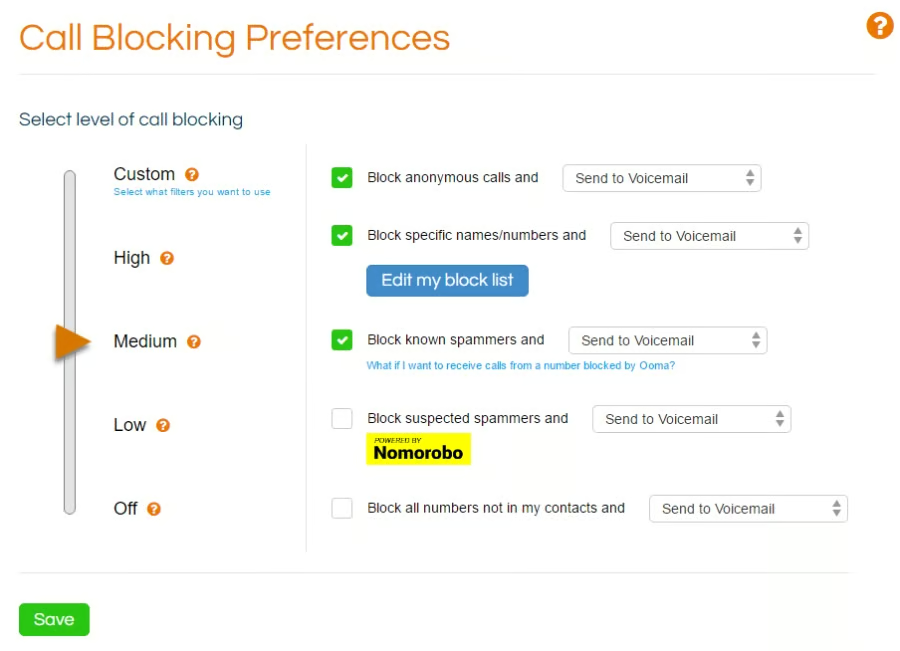
- Custom call blocking: Premier provides additional controls for screening unwanted home calls. Check the plan before assuming advanced blocking comes with Basic.
- Caller ID and voicemail: Basic supplies familiar home-phone tools, including caller ID and voicemail, with a connected Telo device.
- Virtual fax: Ooma Office includes virtual fax for business users. This is separate from the residential Basic offering.
My expert opinion
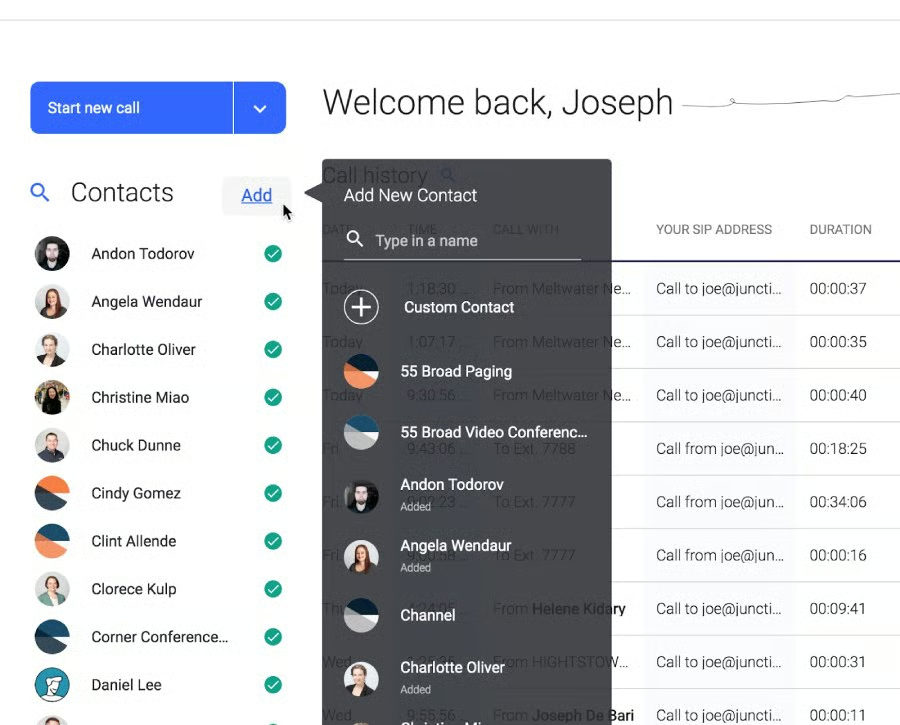
OnSIP is a useful free option for teams that communicate via SIP addresses rather than regular phone numbers. Its free account supports up to 100 users, unlimited extensions, and SIP-to-SIP voice and video calls. Therefore, I would use it for internal collaboration or web call links, but not describe it as a free replacement for a customer-facing business phone line.
For external phone calls, OnSIP offers paid Unlimited and Basic plans. Unlimited requires at least five users, so its advertised per-user price means a minimum of $94.75 per month. OnSIP also supports business SMS and MMS on paid plans. At the same time, I would compare its message allowances and usage charges with a flat account plan such as Grasshopper if texting is a priority.
OnSIP pricing
Plans* | Free | Unlimited | Basic |
Monthly cost | Free | $18.95/user; 5-user minimum | $49.95/account + usage |
*The free plan supports SIP-to-SIP calls, not regular phone-number calls. Unlimited starts at $94.75/month for five users and includes 250 SMS/MMS per account, with 1¢ overages. Basic excludes calling minutes: standard calls cost 3.2¢/minute and outbound SMS/MMS costs 1¢ per message.
Standout features
- SIP voice and video: Use the free account with OnSIP apps or compatible SIP devices to reach other SIP addresses.
- Call routing: Paid plans provide auto attendants and ring groups.
- Business messaging: OnSIP supports SMS and MMS on business numbers, but allowances and charges depend on the paid plan.
My expert opinion
Google Voice is my pick for Google Workspace users who wants a free US number without buying a separate home-phone adapter. The no-charge personal option includes domestic calling and texting, voicemail transcription, and forwarding. However, an eligible existing mobile number is required for this feature. It is also intended for one person, so I would not use it as a substitute for a centrally managed team phone system.
Google also sells standalone Starter and Standard subscriptions to US users with personal Gmail accounts, without requiring Workspace. However, teams still need Google Workspace plus paid Voice licenses. If you need broader team collaboration and more extensive call controls, I would recommend RingCentral.
Google Voice pricing
Plans | Personal | Google Workspace add-on | ||
Starter* | Standard | Premier | ||
Monthly cost | Free | $10 | $20 | $30 |
*US individuals can also buy standalone Starter for $10/month or Standard for $20/month with a personal Gmail account; Workspace is not required. The table's team plans require Workspace, billed separately. Team Starter supports up to 10 users. Auto attendants and ring groups require Team Standard or Premier; standalone Standard also includes an auto attendant.
Standout features
- Voicemail transcription: Automatically converts voicemail to readable text so you can read incoming voice messages discreetly.
- Auto attendants: Guide callers to a set of phone menus and customize your options and greetings through the text-to-speech tool with Team Standard and Premier access.
- Ring groups: Team Standard and Premier plans can distribute calls among multiple users.
My expert opinion
Grasshopper is a practical paid option for solo professionals and small teams that want to separate business and personal calls. Its account-based pricing can be easier to budget for than per-user subscriptions. While it’s business numbers, custom greetings, and call forwarding cover common needs, I would check the selected plan's user, number, and extension allowances.
That said, Grasshopper is a solid choice when straightforward call handling matters more than video meetings or a broad collaboration suite. Its feature range also includes call recording and transcription. Confirm which features your plan includes before signing on, and consider RingCentral if you need a unified communications platform.
Grasshopper pricing
Plans* | True Solo | Solo Plus | Small Business |
Monthly | $18 | $32 | $70 |
Annually | $14 | $25 | $55 |
*Prices are per account, not per user; annual rates are monthly equivalents billed annually. Grasshopper offers a seven-day trial rather than an ongoing free plan.
Standout features
- Voice Studio: Create a strong first impression by hiring professional voice talent to record your greetings, announcements, and auto-attendant messages.
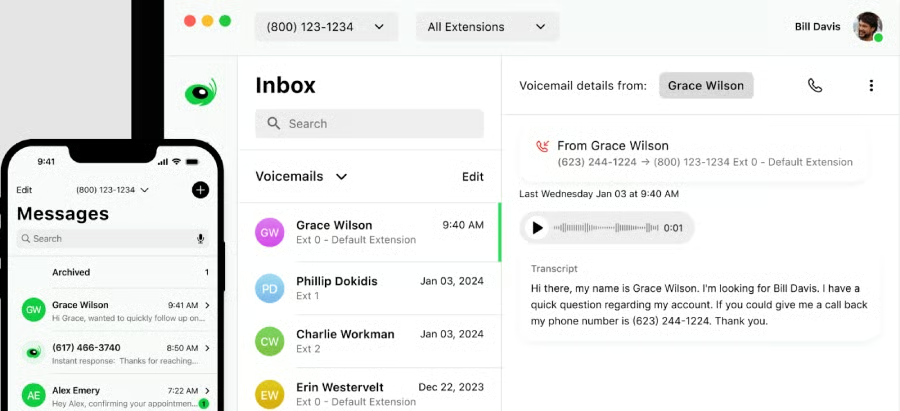
- Instant response: When you’re unavailable to answer a call, Grasshopper can automatically send a text message to the caller. This feature helps you stay responsive by letting potential clients know you’ve received their call and will follow up soon.
- Business texting: Every Grasshopper plan comes with unlimited business texting, so you can easily send quick updates or respond to customer inquiries via text. Registration is required to unlock this feature.
My expert opinion
If you need a VoIP solution that brings all your business communications under one roof, RingCentral, the leading small business VoIP service, is the clear standout. It combines voice, video, messaging, and team collaboration tools into a single platform, making it easier to manage communication across departments and devices.
RingCentral makes sense when consolidating calling, meetings, and messaging can replace several separate subscriptions. At the same time, included AI Assistant capabilities vary by tier, and products such as AI Receptionist cost extra. Before choosing this option, I would compare the full per-user cost with the tools your team actually needs. For a solo user focused on price, Google Voice or Grasshopper may be easier to justify.
RingCentral pricing
Plans* | Core | Advanced | Ultra | Customer Engagement Bundle |
Monthly | $30 | $35 | $45 | Contact sales for pricing |
Annually | $20 | $25 | $35 |
*RingCentral offers a 14-day trial for eligible new subscribers; SMS is excluded from trial use. Annual prices are monthly equivalents. AI Receptionist is a separate add-on starting at $39/month, and other optional products can increase the total cost.
Standout features
- Virtual numbers: Purchase any type of direct inward dialing (DID) number, including local, toll-free, vanity, and international numbers, to help you connect with clients from anywhere.
- Call flip: Seamlessly transfer live calls between devices without interruption. The call can only be picked up by the person who initiated the conversation.
- Shared lines: Allow multiple team members to manage calls from a single phone number.
You can also place a call on hold and then continue the conversation on another phone.
My expert opinion
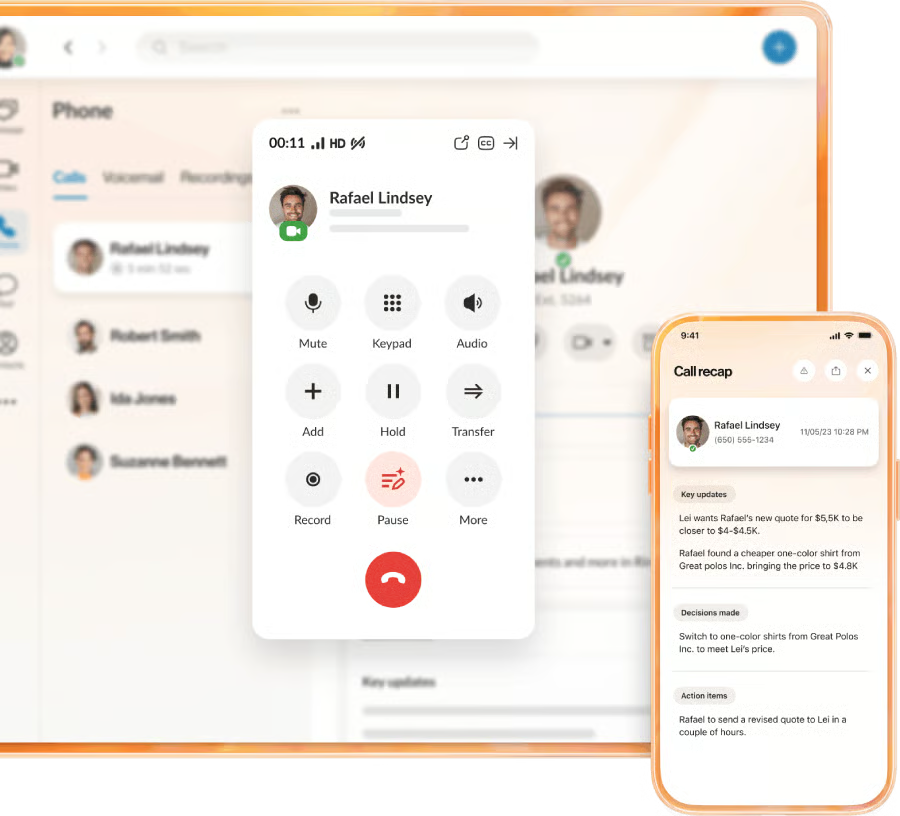
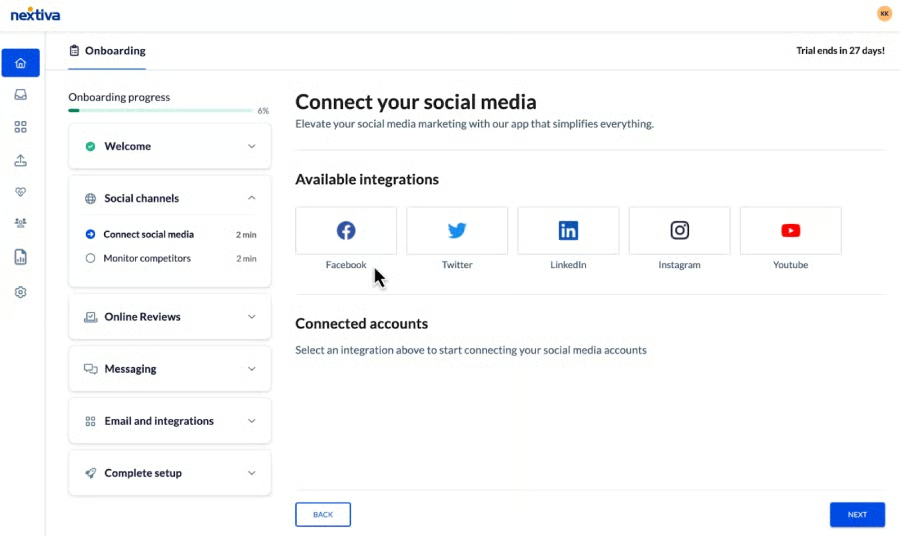
Nextiva shines if you’re looking for a VoIP provider that goes beyond voice for multichannel communication. It combines messaging apps, social media, and review management with voice, email, and SMS into a single, unified system. This makes it easier for your team to manage client interactions across multiple touchpoints without switching between apps.
While Nextiva isn’t among the free VoIP providers, it offers strong value through its feature-packed tiers designed for growing businesses. However, if your business relies solely on phone calls and doesn’t need chat, email, or workflow automation, Nextiva might be more than you need. For straightforward voice communication at a lower cost, Google Voice is a better fit.
Nextiva pricing
Plans | Core | Engage | Scale |
Monthly | $23 | $50 | From $75* |
Annually | $15 | $25 |
*Scale is advertised from $75/user/month. Annual Core and Engage offers require eligible new customers and a minimum 12-month paid agreement. CRM integrations and XBert are add-ons.
Standout features
- Group email mailbox: Empowers teams to deliver timely responses by having shared email accounts and routing incoming messages to a centralized inbox.
- Digital fax: Send and receive faxes securely through email or an online portal without the need for physical fax machines.
- Customer to team SMS: Team members can simultaneously manage all incoming text messages for any assigned user, enabling cross-team visibility into client interactions.
How I evaluated the best free VoIP services
I carefully selected a range of VoIP phone service providers that offer a free-forever plan and free trials. From there, I evaluated them against a set of criteria that reflect both hands-on experience and recent feedback from verified users. To learn more about my methodology, check out the list below to see how I identified the best free VoIP service.
- Pricing (30%): I gave top marks to providers with free-forever plans, free trials, and transparent pricing structures. Extra points were awarded to those who avoid ads and offer upgrade paths without hidden fees.
- General features (20%): Essential tools like free domestic calling, call handling, voicemail, and mobile access were key to this score. Providers that included a virtual phone number, business texting, and HD voice were rated higher for everyday functionality.
- Advanced features (10%): I looked for capabilities like auto-attendants, video conferencing, team messaging, and call recording. Providers that supported integrations with third-party tools and offered more robust functionality earned higher scores in this category.
- Ease of use (10%): Setup simplicity and day-to-day usability were both important, especially for non-technical users. Services with intuitive dashboards and minimal learning curves were rated the highest.
- Customer support (15%): Strong customer support was measured by availability across channels (phone, chat, email), 24/7 service options, and a well-maintained knowledge base. I also considered whether the provider offered built-in security tools for added peace of mind.
- Expert score (15%): Finally, I factored in my professional assessment of the platform’s overall feature set, user value, and third-party reviews. This allowed me to weigh real-world performance alongside product specs and user feedback. I also verified my findings with customer feedback to learn about their experiences and long-term use.
Frequently asked questions (FAQs)
Can you use VoIP without a provider?
Yes, you can use VoIP without a service provider, but it requires technical expertise. You’ll need to set up your own SIP (Session Initiation Protocol) server to manage call setup, routing, and disconnection over the internet. This approach gives you greater control and flexibility, but it’s best suited for users with experience in custom configurations and network management.
Is there a free VoIP service?
Yes, some platforms offer free VoIP services with basic functionality. Google Voice and OnSIP are popular options that let you make calls, send messages, and manage voicemail for limited use at no cost. Just create an account and verify it, but be aware that fees may apply for international or non-local calls.
Is there a free virtual phone number?
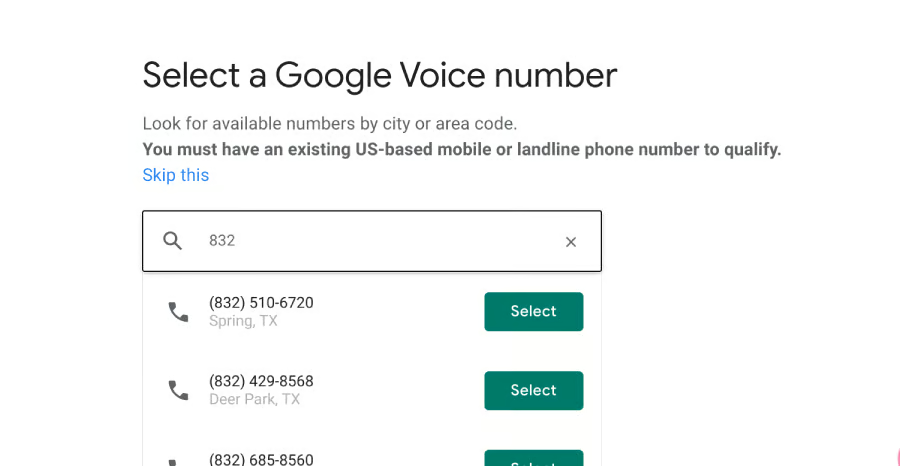
Yes, you can get a free virtual number by signing up for Google Voice’s Personal plan with your Google account. During setup, you can choose from available US numbers by local area code and link the virtual line to your existing US number.
Bottom Line
A free VoIP phone service is a smart way to manage business calls without adding to your monthly expenses. It gives you the flexibility to connect with customers, collaborate with your team, and stay accessible regardless of your location. If your business is growing, a low-cost VoIP plan may be worth the investment to enhance your professional image and provide a smoother caller experience.
Ooma stood out as the best VoIP phone service for free, thanks to its free residential phone plan, which covers essential calling features for home-based work if you purchase an Ooma device. When you’re ready to expand, Ooma Office gives you access to over 50 business-grade tools, making it easy to scale your communications as your company grows. Try Ooma today and discover how it can improve your calling experience.