





.jpg?w=288)

If you sell jewelry, the best jewelry inventory software should track stones and CTW
Based on my evaluation, the best inventory management software for small jewelry businesses are:
- Zoho Inventory: Best for online jewelry stores
- Orderry: Best for jewelry and watch repair shops
- Lightspeed Retail: Best for omnichannel retail jewelers
- Jewel360: Best for jewelers needing built-in appraisals and repairs
- wJewel: Best for brick-and-mortar jewelry stores
- Katana: Best for volume jewelry manufacturing
- Valigara: Best for selling on online marketplaces
- Craftybase: Best for handmade microbusinesses and solopreneurs
- Sortly: Best for simple barcode-based inventory tracking
I verified plan limits, workflows, and integrations via product pages, trials, and docs, and averaged user-review signals to avoid over-linking to marketplaces. The table and picks below reflect how each tool fits a real small jeweler’s workflow.
- Best jewelry inventory software of 2025 compared
- What is jewelry store management software?
- Zoho Inventory: Best for online jewelry stores
- Orderry: Best for jewelry and watch repair shops
- Lightspeed Retail: Best for omnichannel retail jewelers
- Jewel360: Best for jewelers needing built-in appraisals and repairs
- wJewel: Best for brick-and-mortar jewelry stores
- Katana: Best for volume jewelry manufacturing
- Valigara: Best for selling on online marketplaces
- Craftybase: Best for handmade microbusinesses and solopreneurs
- Sortly: Best for simple barcode-based inventory tracking
- Key features of jewelry inventory management software
- How to choose jewelry inventory software for your small business
- Frequently asked questions (FAQs)
- Bottom line
Best jewelry inventory software of 2025 compared
Here’s how the top POS systems compare at a glance:
| Provider | Best for (audience) | Pricing monthly fee (starts at) | Repairs, Appraisals, Memo (native) | GIA/Certificate fields (native) |
|---|---|---|---|---|
| Zoho Inventory | Online jewelry stores | $39 | No† | No† |
| Orderry | Jewelry and watch repair shops | $39 | No† | No |
| Lightspeed Retail | Omnichannel retail jewelers | $109 | No† | No |
| Jewel360 | Full-service retail jewelers | $199 | Yes | Yes |
| wJewel | Brick-and-mortar jewelry stores | $129 | Yes | Yes* |
| Katana | Volume jewelry manufacturing | $0 | No | No |
| Valigara | Amazon/eBay/marketplaces sellers | $600 | No | Yes |
| Craftybase | Handmade microbusinesses/solopreneurs | $24 | No | No |
| Sortly | Simple inventory, non-jewelry-specific | $0 | No | No |
Legend:
- Yes = native support on the recommended or entry plan for that use case
- No = not available natively
- Yes* = native but limited or plan-dependent
- No† = achievable via workaround (custom field, work order + notes)
Provider notes (workarounds or limits):
- Zoho Inventory: Repairs/Appraisals/Memo † via work orders/notes; GIA † via custom fields or attachments
- Orderry: Strong repairs; appraisals and memo † via custom workflows
- Lightspeed Retail: Repairs and layaway present; appraisals and memo † via add-ons or process workarounds
- Jewel360: Native repairs, appraisals, memo, and GIA/certification integration
- wJewel: GIA/certificates * available but implementation can vary
- Katana: Manufacturing-first; no retail repairs/memo or GIA fields
- Craftybase: Maker-focused; no retail repairs/memo or GIA fields
- Valigara: Jewelry catalog and certificate handling; no retail repairs/appraisals/memo
- Sortly: General inventory; no jewelry workflows or certificate fields
Methodology: How I evaluated each jewelry inventory system (update notes included)
I evaluated dozens of inventory solutions, focusing on inventory-first platforms as well as software that was purpose-built for the jewelry industry. I initially looked for core inventory management functions and jewelry-specific features, such as the capacity to store important item details (like metal type, stone type, diamond specs, CTW, and ring size) and location tools to track and organize small stones and findings. I also prioritized economical pricing and factors that contribute to overall ease of use, as well as the manufacturing features that makers need to stay on top of production.
Since jewelry inventory software isn’t a one-size-fits-all solution, it’s difficult to measure tools for different use cases against the same benchmarks. Because of this, even the lower-scoring providers on our list are excellent software options for the business types I specify.
I signed up for free trials whenever possible and reviewed documentation, pricing tables, and provider disclosures. I verified plan limits, module availability, and integrations on product pages and help centers. Where features were unclear (e.g., RFID or certificate fields), I checked secondary sources and knowledge bases, then scored as partial if only workarounds existed. For user sentiment (added in 2024), I averaged ratings to avoid over-linking to Capterra/G2 within the article.
Update notes
This rubric has been shaped by our team of Fit Small Business retail and payments experts through the years, ensuring our evaluations reflect both editorial insight and real-world experience. With each update, we revise the scoring criteria to reflect current small business priorities, Here’s how our evaluation system has changed through the years:
- 2022 — Initial evaluation: The first rubric was formed and was used to score a total of 21 providers (e.g., Lightspeed, Square, Shopify, Zoho, wJewel, Valigara, Katana, Craftybase, Orderry, Cin7, NetSuite, Sortly, Upserve, MarketMan, SkuVault, and more).
- 2023 — Editorial cleanup (shortened): UX were refreshed and sharpened — we fact-checked features/pricing, added exact pricing to the table, averaged user-review scores (so we weren’t linking out repeatedly), expanded feature blurbs with info icons, added H2 overviews and table intros, and added an FAQ.
- 2024 — Review signal added: I incorporated user-review context into each provider section and aligned the scoring notes with real workflows (repairs, appraisals, memo).
- 2025 — Rubric changes and current provider set: I updated the rubric and rescored providers in October 2025. Here are the changes:
- Weights now: Jewelry-specific features 30%, Core inventory & tracking 30%, Ease of Use 20%, Pricing & plans 10%, Expert score 10%.
- Integrations moved under Ease of Use (with explicit checks for accounting, ecommerce/marketplace/ERP, POS), and I added Customer service hours, Online training/forum/help docs, and Mobile UX quality as scored sub-criteria.
- Pricing now emphasizes free plan/trial, effective monthly price for a typical small jeweler, and user/SKU caps before a forced tier jump.
This cycle, I focused the write-up and rankings on the providers we’re featuring in the article: Zoho Inventory, wJewel, Lightspeed Retail, Orderry, Katana, Valigara, and Craftybase, and added Jewel360, JewelMate, and Sortly.
Rubric grading
Here is my full evaluation criteria:
Our Scoring Methodology
How we weighted each factor in this evaluation.
I look for a real free plan or at least a trial, then score how affordable the monthly cost is for a typical small jeweler. I also check how many users you get before you’re forced to upgrade and how generous the inventory or SKU caps are at those starter tiers.
I assess whether you can track serialized stones and components, store GIA or other certificate details, and capture core jewelry attributes such as CTW, metal purity, variants, and sizing. I also evaluate built-in workflows for appraisals and buybacks, repairs, layaway, consignment and memo, plus light manufacturing with BOMs or kitting. Barcode and RFID readiness adds points.
Here, I verify that the software is truly cloud-based with role permissions, supports mobile scanning, and keeps multi-location stock in sync with easy transfers. I test cycle counts and adjustments, purchase orders and receiving, and whether low-stock alerts and reorder points work reliably in day-to-day use.
I consider live customer service hours that fit retail schedules, the quality of online training, forums, and help docs, and how smooth the mobile experience feels during receiving and counts. I also score plug-and-play integrations with popular accounting, ecommerce or marketplaces, ERP tools, and POS systems to keep setup simple.
This wraps my hands-on take: stand-out features and depth, value for money at each tier, real-world usability, and overall popularity and adoption signals.
What is jewelry store management software?
When I say “jewelry store management software,” I mean an all-in-one toolkit to run a jewelry business day to day. You’ll manage inventory and product details, ring up sales at the POS, track repairs and appraisals, receive and transfer stock, and pull reports that show what is selling. Many systems also connect to your online store and accounting so your catalog, orders, and numbers stay in sync.
The best jewelry inventory software helps you organize metals, findings, gemstones, and finished products. You get control and visibility from purchase order to sale with fields jewelers care about, such as CTW, metal purity, sizes, variants, and certificate handling.
I recommend the following:
- For retail jewelers: Look for POS-based inventory so checkout, counts, and customer profiles live in one place.
- For makers or stores with in-house production: Add light manufacturing features such as BOMs, assemblies, and component consumption.
- For repair-heavy shops: Prioritize work orders with parts and labor, due dates, and customer messaging.
Here are signs you are ready to invest in jewelry inventory software:
- You are double-entering items in POS, spreadsheets, and ecommerce.
- Counts never match what is in the case or safe.
- Repairs, appraisals, or memo items are tracked in email or paper.
- Online stock oversells during promotions or holidays.
What jewelry inventory software typically costs and how long setup takes
Most small shops spend $0-$50 per month to start with basic apps, $50-$150 for stronger inventory or POS, and $150-$400+ for jeweler-native suites. Expect one to three weeks to import items, set barcodes, connect accounting and ecommerce, and train staff.
If you are not sure where to begin, use the checklist in “How to choose a jewelry inventory software” to shortlist three to five systems, then run a 30-minute demo script that mirrors your daily tasks.
Zoho Inventory: Best for online jewelry stores
Why I chose Zoho Inventory
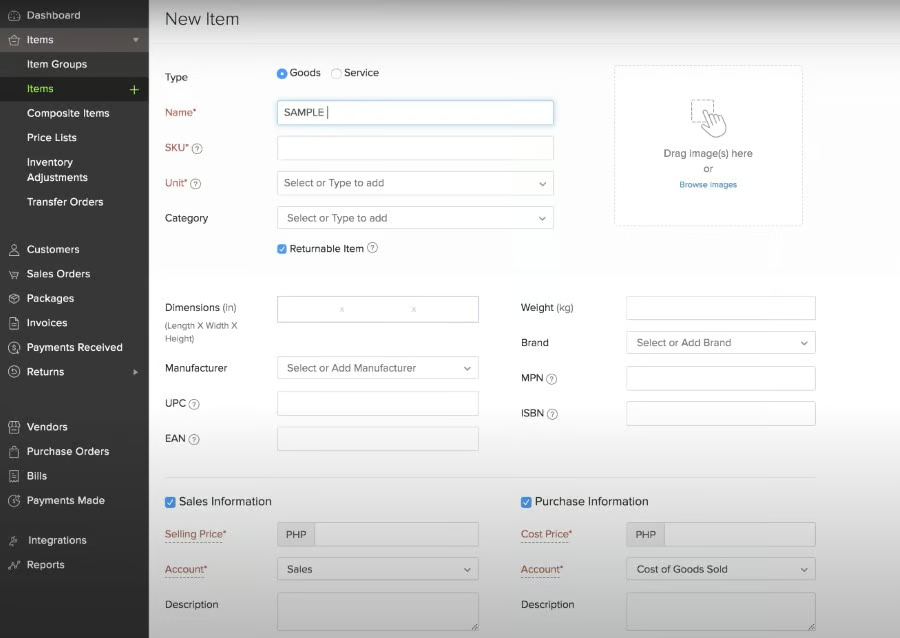
Zoho Inventory ranked first during my evaluation. While it’s not the most specialized jewelry store software on our list, Zoho provides all the basic tools to track findings and finished products across multiple warehouses and ecommerce channels at an affordable price.
Zoho earned a total score of 4.16 out of 5 in our evaluation, performing well in each category. Its only deduction was the lack of jewelry-specific features that wJewel and Valigara offer — such as default fields for specs like metal type and carat total weight (CTW) and the ability to pull gemstone reports from the GIA (Gemological Institute of America).
Who should use Zoho Inventory:
Zoho Inventory is a great fit for online jewelry stores because it comes with an online store builder with ecommerce integrations.
Zoho Inventory pricing
You can start on a full trial for 14 days; if you don’t upgrade, your data moves to the forever-free plan.
- Free: 1 user, 2 locations, and 50 orders per month
- Standard: $39 per month; 2 users, 2 locations, and 500 orders per month; good baseline for small online jewelers
- Professional: $99 per month; 2 users, 4 locations, 3,000 orders per month, serial/batch tracking
- Premium: $159 per month; 2 users, 6 locations, 7,500 orders per month, adds bins and stock counting
- Enterprise: $299 per month; 7 users, 10 locations, 15,000 orders per month
Annual billing is available at a discount.
Zoho Inventory standout features
- Multi-warehouse stock and transfers: Keep counts accurate across stores, safes, and warehouses with transfer orders.
- Reorder points and low-stock alerts: Set minimums and auto-suggest purchase orders so you don’t run out.
- Purchase orders and receiving: Create POs, receive against them, and print barcode labels on the spot.
- Mobile apps with scanning: Count, receive, and look up items from iOS and Android.
- Composite items (light BOM): Bundle components into finished goods and track what’s consumed.
- Serial and batch tracking (higher tier): Track items by serials or lots for better traceability.
- Ecommerce and marketplace sync: Connect Shopify and marketplaces to sync products, stock, and orders.
- Shipping and fulfillment tools: Rate shop, create labels, and update order status from one place.
- Accounting integrations: Connect to Zoho Books or QuickBooks to push invoices and COGS.
- Roles and approvals: Control who can view or edit pricing, costs, and sensitive records.
- Free plan and trial: Start small, then scale into paid tiers as order volume grows.
Orderry: Best for jewelry and watch repair shops
Why I chose Orderry
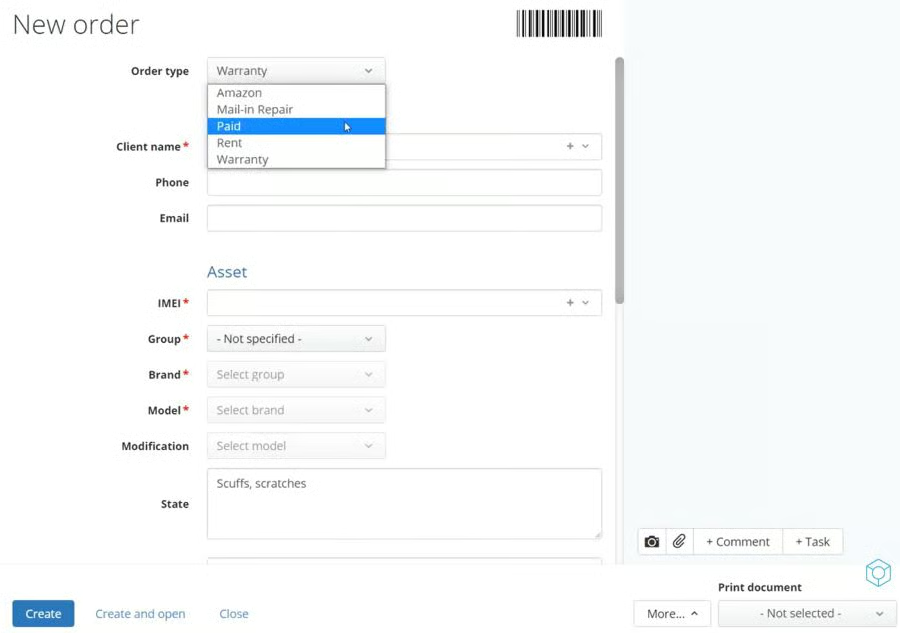
Orderry’s powerful work order management features make job processing and customer communication about their job order’s progress easier. It pulls work orders from multiple channels into a centralized database, which syncs with inventory in real time for full control and visibility. Jobs can be assigned to employees.
I gave Orderry a final score of 4.08 out of 5 in our evaluation. It offers robust functions tailor-made for repair shops at some of the lowest prices of any provider on our list, which earned it major points in our expert score for value. However, the software was docked for its lack of POS software and ecommerce platform connectivity, as well as its low number of user reviews.
Who should use Orderry:
Orderry’s platform has specific features for managing job orders and allowing for an unlimited number of bin locations with its built-in barcode generator — helping you keep findings, stones, and watch parts well-organized and easily accessible. These features make it ideal for jewelry and watch shops offering repair services.
Orderry pricing
You can start with a free 7-day trial; no credit card required.
- Hobby: $39 per month; 2 employees, up to 100 work orders/sales per 30 days
- Startup: $69 per month; 3 employees, add employees ($6 per month each) and locations ($49 per month each), up to 15 employees
- Business: $99 per month; 3 employees with tailored onboarding, add employees ($9 per month each) and locations ($79 per month each), up to 150 employees
- Enterprise: $199 per month; 3 employees with premium support and onboarding, add employees ($19 per month each) and locations ($179 per month each), up to 1,500 employees
Annual billing is available at a discount.
Orderry standout features
- Repair work orders built-in: Create tickets with parts, labor, statuses, due dates, and technician assignment.
- Customer updates via SMS/email: Automations keep clients informed on repair status and pickup.
- Inventory tied to jobs: Reserve parts to work orders, consume on completion, and keep stock accurate.
- POS and payments: Sell parts and services, process returns, and record deposits within the same system.
- Purchasing and receiving: Reorder from low-stock alerts, issue POs, and receive items into locations.
- Mobile app for techs and staff: View jobs, update statuses, and check items without a desktop.
- Roles and permissions: Limit access to pricing, costs, and sensitive customer data.
- Dashboards and reports: Track revenue, margins, technician performance, and aging repairs.
- Integrations: Connect accounting and communications tools to streamline invoices and notifications.
Lightspeed Retail: Best for omnichannel retail jewelers
Why I chose Lightspeed Retail
Lightspeed Retail is another full-featured POS system but, unlike wJewel, it was built to serve a wide variety of industries. The software packs powerful inventory management features into its cloud-based system, accessible from any computer, mobile device, or Lightspeed’s proprietary hardware. It connects with online channels to sync inventory in real time, manage orders, run advanced reports, and facilitate hybrid fulfillment techniques like click and collect.
In our evaluation, Lightspeed was awarded for its powerful inventory features and well-rounded store management capabilities, earning a final score of 4.06 out of 5. It also scored points for its overall popularity and granular inventory detail. However, the software was docked for its clunky user interface, and lack of jewelry-specific features.
Who should use Lightspeed Retail:
Lightspeed Retail has robust connectivity and multichannel management capabilities, making it my top recommendation for juggling both in-store and online jewelry sales.
Lightspeed Retail pricing
- Basic: $109 per month; 1 register included, integrated payments, core inventory management, and baseline reports
- Core: $179 per month; everything in Basic plus stronger management tools for growth, advanced sales/staff/inventory reporting, and key integrations
- Plus: $339 per month; designed for larger or multi-store operations needing advanced customization and scalability
Free trial available. Annual billing is available at a discount.
Lightspeed Retail standout features
- Polished POS for multi-store retail: Fast checkout with discounts, taxes, serials, layaway, and customer profiles; built for iPad and desktop.
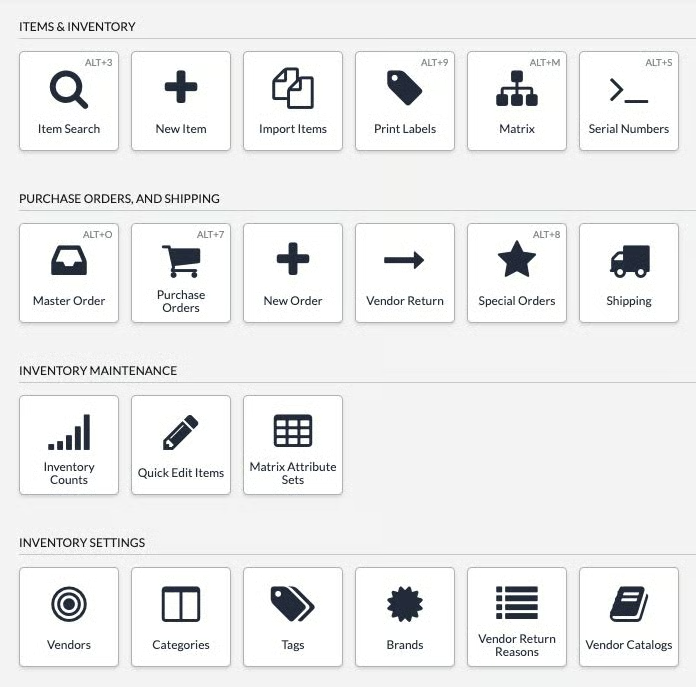
- Strong inventory controls: Multi-location stock, transfers, variants, matrices, low-stock alerts, and purchase orders/receiving.
- Built-in counts and scanners: Mobile app support to run cycle counts, spot checks, and barcode-based receiving.
- Deep reporting: Sales, inventory, employee performance, and margin/turn reports you can filter and schedule.
- Large integration ecosystem: Connect accounting (e.g., QuickBooks, Xero), ecommerce (e.g., Shopify, Woo), marketing, and loyalty tools.
- Roles and permissions: Granular access to protect costs, pricing, and sensitive customer data.
- Customer tools: Profiles, purchase history, gift cards, store credit, and basic loyalty options.
- Omnichannel basics: Sync catalog and inventory with your online store for unified stock and orders.
Jewel360: Best for jewelers needing built-in appraisals and repairs
Why I chose Jewel360
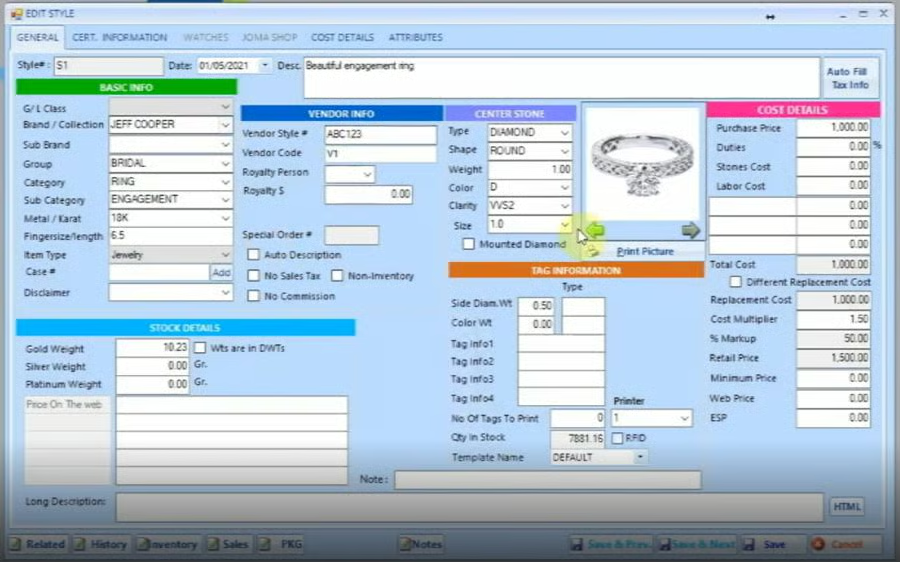
Jewel360 is purpose-built for jewelry retail, so staff can record metal purity, stone type, and carat weight, manage repairs and appraisals without workarounds, and keep in-store and online inventory in sync. It scored 3.91 out of 5, ranking higher on jewelry-specific features than general POS options like Lightspeed or Zoho.
You’ll pay more than lightweight tools and some capabilities (multi-location, built-in messaging) sit on higher tiers, but the tradeoff is fewer gaps for true jeweler workflows. If you want a POS that handles appraisals and repairs out of the box and unifies store + ecommerce, Jewel360 is a strong fit.
Who should use Jewel360:
Jewel360 is best for jewelers needing built-in appraisals and repairs — shops that want native workflows for repairs, custom work, appraisals, and memo in the same system, plus an iPad POS that syncs with their website.
Jewel 360 pricing
- Startup: $199 per month; native POS with website integration, integrated payments, unlimited users/products, pooled inventory tracking, basic purchasing/receiving, basic reports, and phone/email support
- Core: $299 per month; everything in Startup plus stone management, serialized inventory, repairs/custom work tracking, appraisals, memo, GIA stone certification integration, consignment, trade-in tracking, sales commissions, wishlist/registry, QuickBooks integration, and Geller’s Blue Book integration
- Plus: $399 per month; everything in Core plus multi-location functionality, restricted items, native email and text messaging with automated campaigns, scheduled sales and review requests at the register, Avalara and Shopify integrations, and custom reports
Jewel360 standout features
- Jeweler-native workflows: Built-in repairs, custom work, appraisals, and memo so staff follow real shop processes without hacks.
- Stone management + certificates: Track stone specs and attach certification data with GIA integration.
- Retail POS + website sync: iPad POS tied to your online store so products, stock, and orders stay aligned.
- Multi-location inventory (higher plan): Pooled inventory, transfers, and centralized visibility across stores.
- Integrated pricing/accounting: Geller’s Blue Book tools for repair pricing and QuickBooks integration for sales and COGS.
- Sales tools for jewelers: Consignment, trade-ins, commissions, and wishlists/registries to support common sales scenarios.
- Customer messaging (higher plan): Built-in email/text with automated campaigns and review requests at checkout.
- Tax and ecommerce integrations: Avalara for tax automation and Shopify integration for online sales.
- Reporting: Custom and out-of-the-box reports for sales, margins, and inventory aging.
wJewel: Best for brick-and-mortar jewelry stores
Why I chose wJewel
wJewel is a retail POS (point-of-sale) jewelry store management software built to manage all aspects of your jewelry business. Unlike similar software (such as Lightspeed), every feature in wJewel is purpose-built for jewelry stores, enabling a variety of industry-specific functions that most competing platforms either can’t do or require workarounds to perform.
The software includes a sophisticated inventory management suite with real-time inventory tracking across sales channels and locations, including off-site locations held by contractors. It can even be set to automatically adjust selling prices based on real-time changes in the Rapaport Price List.
wJewel scored 3.8 out of 5 in our evaluation, earning points for its impressive features and jewelry-specific tools. I deducted points for the software’s outdated user interface; I found that it’s simple enough to navigate, but the old-school platform is far less sleek than competitors like Lightspeed.
Users report that the system also struggles with online integrations, making it a better choice for brick-and-mortar retailers than omnichannel sellers. There is also no free plan like you find with Zoho.
Who should use wJewel:
I recommend wJewel for brick-and-mortar jewelry stores because it updates inventory in real time, even at off-site locations held by contractors, for secure tracking.
wJewel pricing
- Starter: $129 per month; POS, layaway, special/custom orders, integrated payments, jewelry/diamonds/watches inventory, product catalog with tagging/imaging, repair orders, appraisals, customer purchase tracking, integrated email, driver license scan, unlimited support
- Standard: $229 per month; everything in Starter plus unlimited users, trade-in and scrap gold buying, CRM, repair/custom work tracking, accounts payable, consignment, general ledger accounting, customer birthdays/anniversaries, Excel import, warranty tracking, banking reconciliation, aged inventory, vendor POs, per-user permissions
- Professional: $329 per month; everything in Standard plus repair job costing, texting/SMS, Geller’s Blue Book integration, quotes/wishlists, sales commissions, reminders, prospects/potentials, Shopify and QuickBooks integrations, luxury tax, Avalara integration, pawn shop loans
- Elite: $429 per month; everything in Professional plus registry, employee hours tracking, loyalty and referral points (via app), mobile access, multi-store transfers, serialized inventory, AI style descriptions, AI-assisted appraisals, wholesale module, Podium and Salesforce integrations, memos to customers, proforma invoices, automatic interest for past dues, custom website integration, RFID integration
Annual billing is available at a discount.
wJewel standout features
- Jeweler-specific POS and workflows: Sales, appraisals, repairs, layaway, trade-ins, store credits, gift cards, and commissions in one system.
- Inventory and tagging built for jewelry: Item tagging, diamond/stone tracking, consignment handling, multi-store support, and label printing.
- Accounting and back-office controls: AR/AP, banking, and exports to QuickBooks to keep books aligned with daily sales.
- Website connections: Sync with Shopify or your existing website to keep products and stock up to date.
- RFID and barcode options: Support for RFID and barcode workflows to speed counts and reduce shrink.
- CRM and outreach: Customer records, bridal registry, wishlists/quotes, and SMS messaging for follow-ups and service updates.
- Multi-location and roles: Centralized control across stores with user permissions and employee time tracking.
Katana: Best for volume jewelry manufacturing
Why I chose Katana
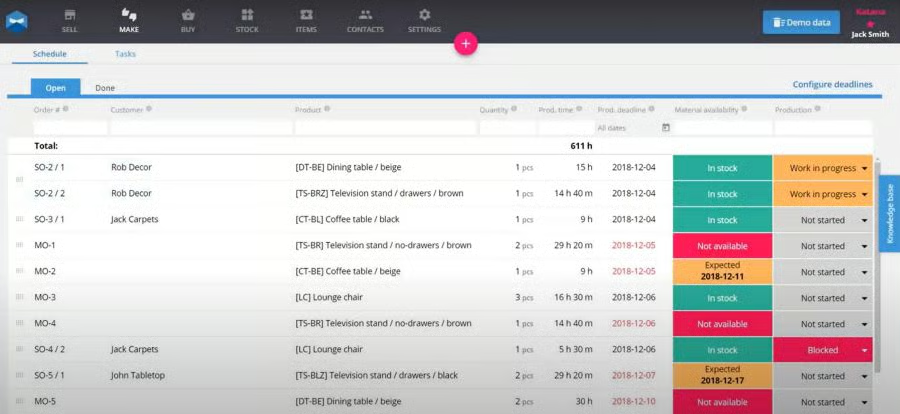
While the majority of software options on this list have basic features to support manufacturing, Katana comes with sophisticated tools for tracking raw materials, components, products, tools, orders, and labor, as well as managing production with precise planning and costing. It can even create contract manufacturing workflows to give high-level visibility on outsourced production.
That being said, it doesn’t come with features to create and manage work orders for functions like jewelry repair.
Katana scored 3.73 out of 5 in our evaluation, earning points for its powerful specialized functions and solid ease of use. But the software comes at a high price point and includes overkill features that many small jewelry businesses don’t need, which ultimately brought down its score. Overall, these attributes make it best for mid- to high-volume manufacturers, while we recommend Craftybase for small-scale makers.
Who should use Katana:
Katana gives full visibility and control over all aspects of operations — from purchasing raw materials to fulfilling customer orders, making it ideal for mid- to high-volume manufacturers.
Katana pricing
- Free: $0 per month; explore all features and add-ons with up to 30 SKUs and 3 inventory locations
- Standard: $399 per month; unlimited users and SKUs, 3 inventory locations, advanced insights, multicurrency, custom user permissions, and barcode scanning
- Professional: $899 per month; unlimited users and SKUs, 10 locations, plus API access, full traceability, planning and forecasting, and warehouse management
- Professional Plus: $1,999 per month; unlimited locations, dedicated account manager, and priority support
All prices are billed quarterly. Annual billing is available at a discount.
Katana standout features
- Real-time, multilocation inventory: Live visibility for products and materials with automated stock movements, batch/lot and serial tracking, barcode-enabled workflows, and expiry date management.
- Manufacturing control with BOMs: Plan and track production using bills of materials and subassemblies, a shop floor app, scheduling, and cost calculations for in-house or contract manufacturing (MTO/MTS).
- Order management across channels: Omnichannel sales order sync plus returns, kits/bundles, partial fulfillment, and custom fields to keep every order on track.
- Smart purchasing: Create POs from demand with reorder points, lead-time awareness, multicurrency support, and purchasing insights.
- Warehouse operations: Dedicated warehouse app for pick, pack, receiving, stocktakes, bin locations, transfers/adjustments, and barcode scanning; supports 3PL/WMS integrations.
- Ecosystem and API: Native integrations for ecommerce and accounting (e.g., Shopify, QuickBooks, Xero, BigCommerce, HubSpot) plus an open API to extend workflows.
Valigara: Best for selling on online marketplaces
Why I chose Valigara
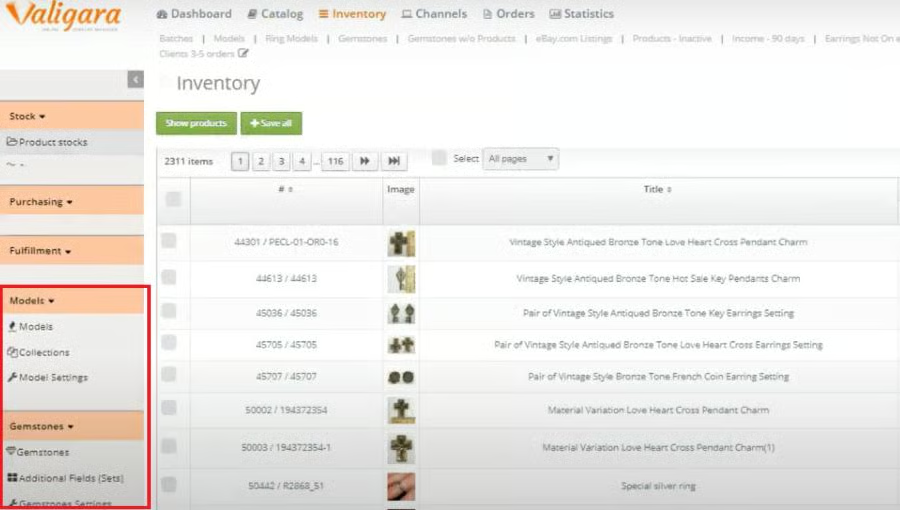
Valigara is a specialized product information management (PIM) software with an intuitive user interface and tools for tracking materials, products, and variations in real time. It records granular product info with dynamic custom fields and connectivity to GIA and RapNet for pulling reports.
I also like Valigara’s Data Enhancement tools that use your product info to automatically generate listing content optimized for each marketplace’s search algorithm. This can lead to greater visibility and more sales.
While it has a higher price point than the others on our list, its fine-tuned, jewelry-specific features and overall ease of use helped bolster its final score, ultimately earning 3.61 out of 5.
Who should use Valigara:
Valigara is recommended for businesses selling jewelry on online marketplaces because of its marketing and listing optimization tools — which include automations for posting, revising, and renewing listings as well as robust ecommerce SEO features.
Valigara pricing
Valigara uses tailored plans that start at $600 per month with monthly or annual subscriptions and no revenue share. There’s a one-time setup fee that covers personal onboarding and data migration. During a personal demo, the team matches the package to your needs. Contact the provider for a more detailed quote.
Valigara standout features
- Jewelry-specific PIM and cataloging: Central product information management tailored to jewelry and diamonds, with attributes, images, and content optimized for online selling.
- Multi-channel listings with shared inventory: List and sync across marketplaces, websites, social channels, and wholesale while keeping one stock source of truth.
- Certificate and gemstone data handling: Workflow to attach certificate files and fetch available gemstone parameters from labs (GIA/IGI), with notes on current API/policy limits.
- Built-in order, fulfillment, and logistics tools: Streamline orders, invoicing, documentation, and shipping from the same platform.
- Integrations across the jewelry stack: Connect to ecommerce platforms and jewelry/diamond ERPs; import via premade connectors, scheduled feeds, or API.
- Analytics and optimization: Reporting and product optimization features aimed at improving online jewelry sales performance.
- Integrations: Native integrations with major marketplaces (e.g., Amazon, eBay, Etsy, Walmart, Alibaba), six shopping carts (Shopify, WooCommerce, BigCommerce, Magento, WordPress/VirtueMart), 100+ shipping providers, and a range of business tools (QuickBooks, Mailchimp, SendGrid, Stripe, PayPal, GIA).
Craftybase: Best for handmade microbusinesses and solopreneurs
Why I chose Craftybase
While Craftybase lacks many of the functions that growing businesses may need (like POS connectivity, accounting integrations, and purchase ordering), it delivers comprehensive inventory features on a user-friendly platform at highly affordable prices, helping it achieve a final score of 3.54 out of 5. It lost points for plan limitations, even its highest-tier plan can only accommodate small teams.
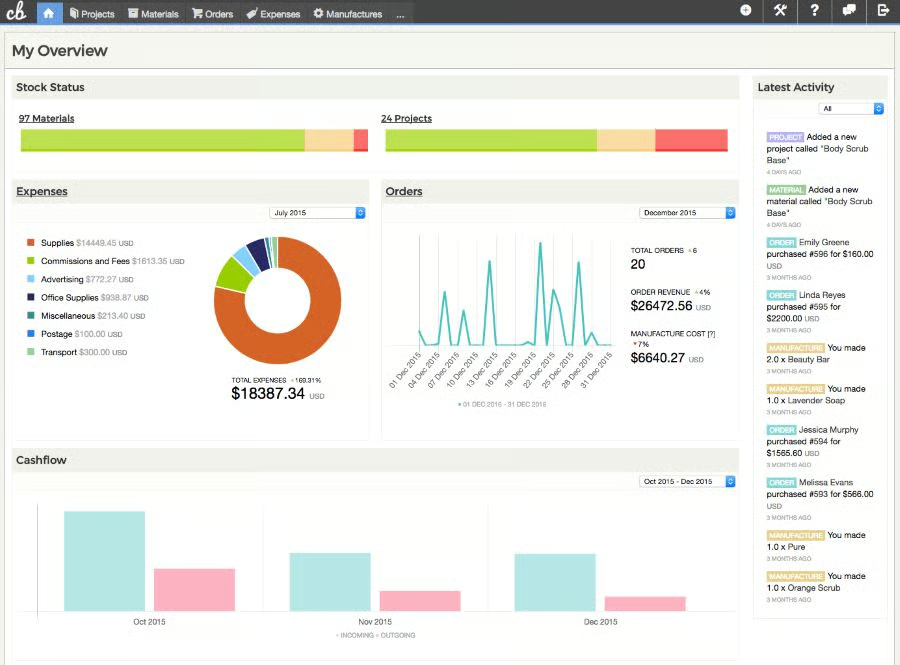
Craftybase integrates with online storefronts to track inventory and orders in real time. Its built-in manufacturing capabilities let you organize items by materials, components, and finished products, as well as create “recipes” for your assemblies. It uses your materials and labor costs to offer pricing guidance and tallies your COGS (cost of goods sold) with GAAP-compliant calculations throughout the year.
Who should use Craftybase:
Craftybase is an enterprise resource planning (ERP) solution for tracking manufacturing and inventory for small in-house manufacturing teams — making it an excellent tool for small-scale, handmade jewelry businesses.
Craftybase pricing
- Pro: $24 per month; 50 order lines per month, 1 integration, manual imports, basic reports, stocktaking
- Studio: $49 per month; 250 order lines, unlimited users and integrations, daily automated imports, advanced reports, stocktaking, location tracking, component assemblies
- Indie: $99 per month; 1,000 order lines, unlimited users, multi-channel sync, user roles, unlimited integrations, daily automated imports, advanced reports, location tracking, component assemblies, multi-level BOM, traceability and compliance, automated assemblies
- Business: From $149 per month; 1,000+ order lines, hourly automated imports, multi-channel sync, user roles, unlimited integrations, advanced reports, location tracking, component assemblies, multi-level BOM, traceability and compliance, automated assemblies, production scheduling, priority support
Free 14-day trial available. Annual billing is available at a discount.
Craftybase standout features
- Bill of Materials (BOM) and assemblies for small-batch manufacturing, including recipes and component rollups.
- Multi-channel inventory sync to keep stock accurate across connected storefronts (e.g., Shopify, Etsy, more).
- COGS and pricing guidance that uses tracked material and labor costs to suggest profitable prices.
- Lot and batch tracking with traceability for materials and finished goods.
- Production scheduling and order tracking to plan makes and follow work through completion.
- Stocktaking and location tracking for counts and bin/warehouse visibility (including consignments).
- Reports for makers showing what’s in stock, usage, and trends.
Sortly: Best for simple barcode-based inventory tracking
Why I chose Sortly
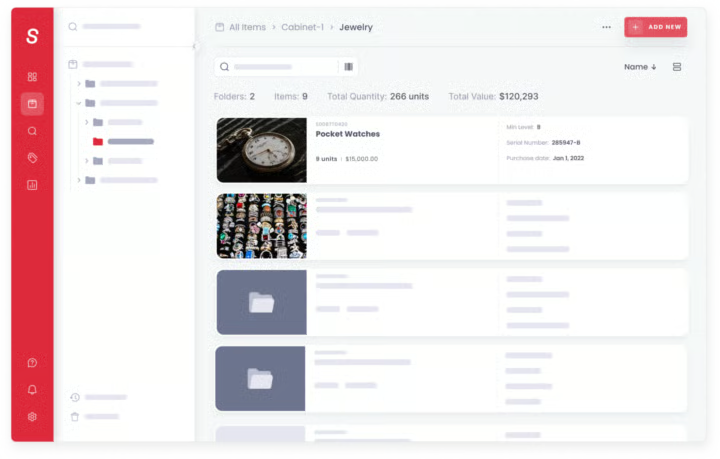
Sortly is quick to set up, easy to scan on mobile, and great for organizing items with custom fields and photos. It’s more affordable and simpler than retail POS suites, which helped it earn a final score of 3.45 out of 5. Compared with options like Lightspeed or Jewel360, Sortly trades depth for speed: there’s no native repairs, appraisals, memo, or GIA fields, and it isn’t a POS, so you’ll pair it with other tools. It suits a small catalog that needs clean labeling, low-stock alerts, and basic activity history; growing catalogs should watch item/user caps by tier.
Who should use it:
Sortly is a simple, mobile-first inventory app that’s best for solo jewelers and small teams that need fast barcode/QR tracking and basic alerts — not full POS or jewelry-specific workflows.
Sortly pricing
- Free: $0 per month; 100 unique items and 1 user
- Advanced: $49 per month; 500 unique items, 2 users, unlimited QR code label creation
- Ultra: $149 per month; 2,000 unique items, 5 users, unlimited QR and barcode label creation, purchase orders
- Premium: $299 per month; 5,000 unique items, 8 users, customizable role permissions, QuickBooks Online integration
- Enterprise: Custom pricing; 10,000+ unique items, 12+ users, API/webhooks, dedicated customer success manager
Annual billing is available at a discount.
Sortly standout features
- Mobile-first inventory: Scan items, adjust counts, and look up details from the app.
- Built-in QR/barcode labels: Generate and print labels from desktop or phone.
- Custom fields and photos: Capture specs, condition, and certificate images per item.
- Low-stock alerts: Set minimums and get notifications before you run out.
- Simple activity history: See who changed what and when for basic audit needs.
- QuickBooks Online integration (higher tier): push item and transaction data to your books.
- Purchase orders (higher tier): Create and track POs without a separate tool.
- Role permissions (higher tier): Limit who can edit items vs just view/scan.
Key features of jewelry inventory management software
Use this checklist to compare providers. I keep each feature short so you can match it to your workflow, then score vendors against your rubric.
- Centralized, multi-location inventory: One source of truth for stores, safes, and warehouses with easy transfers.
- Item catalog with jewelry data: Record metal, stones, sizes, styles, and certificates or attach them as files.
- Reorder points and forecasting: Set minimums, get alerts, and auto-build purchase orders to prevent stockouts.
- Inventory counts and adjustments: Run cycle counts, resolve variances, and keep accurate on-hand numbers.
- Barcoding and labels (RFID optional): Print tags and scan at receiving, counts, and checkout to cut errors.
- Repairs and services: Create work orders, add parts and labor, set due dates, and log communications.
- Appraisals and buybacks: Capture valuations, condition, payout, and attach documents to the item or customer.
- Consignment, memo, and layaway: Track out-on-approval items and customer payment plans.
- Light manufacturing and BOMs: Build pieces from components, consume materials, and roll up costs.
- POS and payments: Ring up sales, taxes, discounts, split tenders, and returns in one place.
- Customer profiles and CRM: See purchase history, warranties, preferences, and send follow-ups.
- Ecommerce and marketplaces: Sync products, stock, and orders with your website and channels.
- Accounting and reporting: Push invoices and COGS to your books and monitor sales, margins, and turns.
- Permissions and roles: Control who can view or edit pricing and sensitive data.
- Mobile apps and scanners: Receive, count, and look up items from a phone or tablet.
- Shipping and fulfillment: Print labels, track shipments, and update order status automatically.
How to choose jewelry inventory software for your small business
When I help a jeweler pick software, I tell them to start with the work they actually do every day, not a feature grid. Think through your sales mix (in-store, online, repairs, custom), your staff size, and the channels you plan to add. From there, compare only the tools that can handle your non-negotiables without hacks.
Step 1: List your non-negotiables
First, clarify what you can’t live without. If a platform needs custom fields or a workaround for a core task, mark it as partial so you don’t overestimate fit. Consider these features and determine if it’s a non-negotiable:
- Serialized stones and components
- CTW, metal purity, sizes, and variants
- Repairs, appraisals, consignment or memo
- Multi-store stock and transfers
- Ecommerce or marketplace sync and accounting connection
Step 2: Set a working budget
Price the setup you would actually run. Do not pick the teaser tier if it lacks your needs. Include users, item caps, add-ons like advanced inventory or SMS, and any hardware, such as scanners or printers. Leave a small buffer for seasonal hires.
Step 3: Shortlist 3 to 5 providers by store type
Use your non-negotiables to narrow your list. If a vendor cannot show your must-have workflow in a demo, move on.
For example, retail-first chains often start with Lightspeed, Jewel360, or wJewel; makers lean to Katana or Craftybase; online-heavy sellers look at Zoho Inventory or Valigara; repair-led shops consider Orderry. If a vendor can’t show your must-have workflow in a demo, move on.
Step 4: Run a focused demo script
Ask the rep to perform the tasks you do every week, using your terminology. Here’s an example task list you can start with:
- Create an item with CTW, purity, size, and a certificate file
- Receive against a PO, print a barcode, and transfer between locations
- Run a quick cycle count on mobile and resolve a variance
- Open a repair or appraisal ticket and message the customer
- Complete a sale and a return, then confirm inventory updates
- Push an order to accounting and verify COGS
Step 5: Test it yourself for one day
If there is a trial, use real sample items and customers. If you cannot complete routine tasks on your own in a day, plan for extra training time and cost.
Step 6: Confirm limits and extra costs
Get caps and add-ons in writing before you choose. Check included users, item or SKU caps, warehouse limits, order or transaction ceilings, add-ons required to match the demo, and support hours that fit retail schedules.
Frequently asked questions (FAQs)
Click through the questions below to get answers to some of your most frequently asked jewelry inventory software questions.
What is jewelry inventory software?
It is a system to track your products, stones, and components; ring up sales; manage repairs and appraisals; and sync stock across stores and online channels. The best tools also print labels, run cycle counts, and push sales and COGS to accounting.
Do I need POS-based or standalone inventory for my jewelry business?
If you sell in-store, I recommend a POS-based system so checkout, stock, and customer data stay in one place. Go standalone only if you sell mostly online and already like your current POS or marketplace tools. I look for easy integrations either way.
How do I track gemstones and CTW?
Use item attributes for metal, shape, size, and purity, plus fields for carat total weight. For loose stones or multi-stone pieces, turn on serialization so each stone or component has a unique ID. Attach certs as files or use certificate fields if the software supports them.
What’s the difference between retail and manufacturing inventory?
Retail inventory tracks finished goods, tags, transfers, counts, and sales. Manufacturing inventory adds BOMs, work-in-process, and component consumption. If you assemble or make pieces, choose a system with BOMs and simple shop-floor steps.
How much does jewelry inventory software cost?
Entry plans run about 0 to 50 dollars per month, mid-tier plans 50 to 150 dollars, and advanced plans 150 to 400 dollars or more. Budget for users, SKU caps, locations, add-ons like advanced inventory or SMS, and hardware such as scanners and printers.
Barcode vs RFID for jewelry: which should I use?
Barcodes are cheaper and work for most small shops. RFID speeds counts and works well for high-volume or high-value cases, but tags and readers cost more. My rule: start with barcode labels and upgrade to RFID in busy cases or during annual counts.
Can I use Excel instead of jewelry inventory software?
You can for very small catalogs, but it breaks as soon as you add repairs, multi-location stock, online sales, or audits. Software gives real-time on-hand, transfers, barcodes, and audit history. I still keep a simple spreadsheet for one-time imports and backups.
Bottom line
Using a jewelry inventory system is an effective way to save time, increase efficiency, and prevent costly issues like shrinkage and stockouts. Inventory solutions are available as standalone software or tools that come incorporated into your store’s POS.
The best jewelry inventory software depends on your unique business needs — such as your inventory type, business model, manufacturing process, and sales channels. For small ecommerce jewelry businesses, we recommend Zoho Inventory.
