






Every incoming call is a chance to win a customer, but small businesses don’t always have someone available to answer. The best auto attendant phone systems greet callers, guide them to the right person, and keep calls moving when your team is busy. I compared seven providers based on pricing, call routing features, and ease of use, with RingCentral earning my top pick for its customizable menus and flexible call management tools.
To help you discover the right fit for your needs, check out my list of the best auto attendant phone systems along with their unique use cases and an overview of how each solution can improve your business communications.
Automated phone systems | Best for | Starting price |
Small businesses | $30/user/month, billed monthly | |
Customer communication | $23/user/month, billed monthly | |
Scalable plans | Contact sales | |
Cloud call centers | $20/user/month, billed annually; 3-user minimum ($60/month equivalent) | |
Virtual numbers and extensions | $18/account/month, billed monthly | |
Business messaging | $19/account/month; call menus start at $39/account/month | |
Mobile call management | $19.99/line/month, billed monthly |
- Comparing the best auto attendant phone systems
- RingCentral: Best overall automated attendant phone system
- Nextiva: Best for customer communication
- GoTo Connect: Best for scalable plans
- MightyCall: Best for cloud call centers
- Grasshopper: Best for virtual numbers and extensions
- Talkroute: Best for business messaging
- Vonage: Best for mobile call management
- Bottom line
- You might also like
Comparing the best auto attendant phone systems
Best auto attendant phone systems | Multi-level auto attendant | Key features | Rating out of 5 |
✔ |
| 4.85 | |
✔ |
| 4.74 | |
✔ |
| 4.73 | |
✔ |
| 4.64 | |
✖ |
| 4.62 | |
✔ |
| 4.57 | |
✔ |
| 4.35 |
My expert opinion
I consider RingCentral the best overall auto attendant phone system because of its effective call management and routing tools, such as IVR, custom business hours, call handling, and a dial-by-name directory. Its multilevel auto attendant enables users to create complex call flows, and the Visual IVR editor simplifies customization of phone tree menus and inbound call routing.
Businesses that want conversational answering can add RingCentral’s AI Receptionist, which can route calls and answer common questions. But it’s important to note that this is a separate paid product, so account for that cost when comparing subscriptions. RingCentral also limits included text messaging. If texting is a priority, compare those allowances with Talkroute’s messaging plans or Grasshopper’s business texting before choosing a provider.
Pricing
Plans and pricing (per user)* | Core | Advanced | Ultra | Customer engagement bundle |
Monthly | $30 | $35 | $45 | Contact sales for pricing |
Yearly | $20 | $25 | $35 |
Pricing shown is for 1–100 users; custom pricing is available for larger teams. AI Receptionist is a separate add-on starting at $39/month.
Standout features
- Phone extensions: Assigning extensions lets you connect multiple departments across different locations. Each employee also gets a distinct number with voicemail and answering rules.
- Shared lines: Share a single phone line across multiple phones to answer calls from any phone and efficiently distribute calls within your workspace.
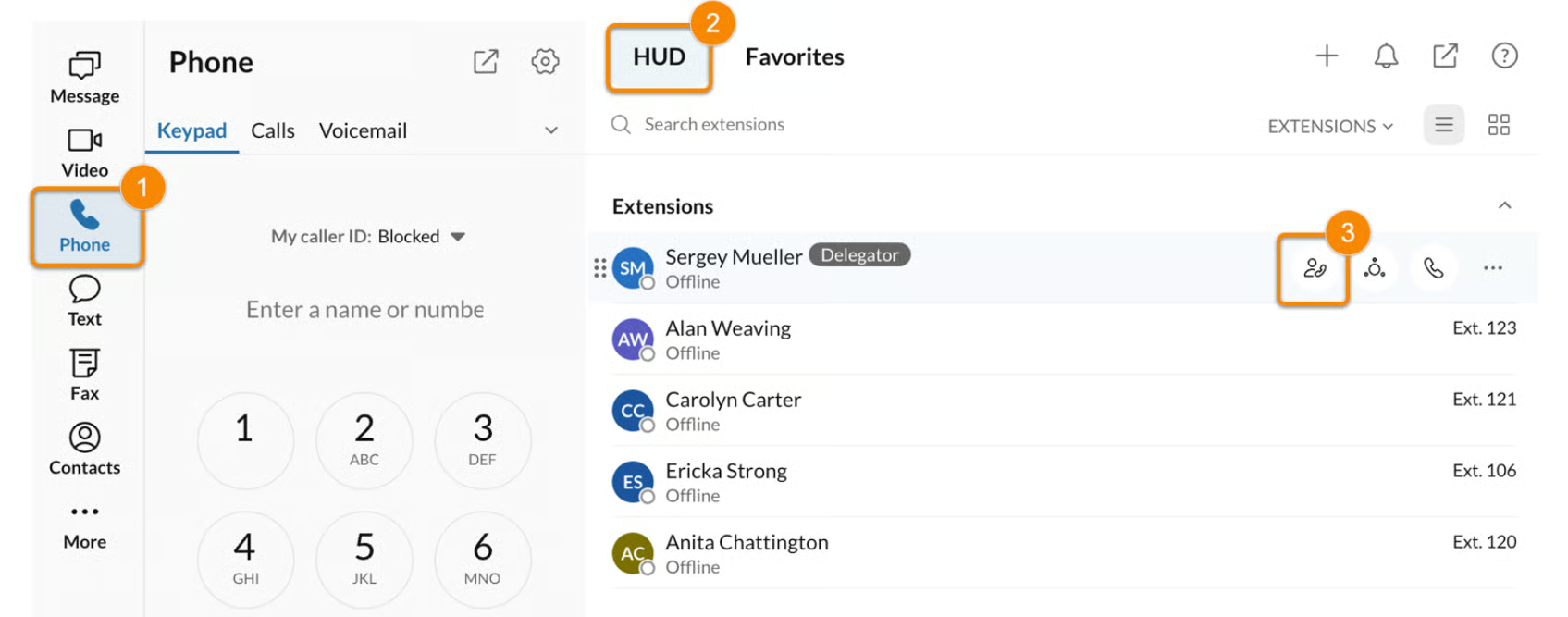
- Call delegation: Enable admins to assign assistants to answer calls on behalf of a line owner. A delegate can manage multiple incoming calls for up to 10 executives.
My expert opinion
Nextiva is always my top choice for customer experience and engagement, making it one of the best auto-attendant platforms for call management. Employees working off-site can use the Nextiva mobile app and remote calling features to handle customer conversations from anywhere. This allows you to maintain professionalism and accessibility to your customers.
Nextiva’s call menus let you organize incoming calls, but businesses should distinguish standard auto-attendant functions from advanced contact-center routing. Simple IVR requires a call-center add-on with Engage and is included with Scale. Scale also provides supervisor monitoring, while the XBert AI Receptionist is a separate add-on. CRM integrations still cost extra across the small-business plans. If included integrations are a priority, compare the apps available with your selected RingCentral plan.
Pricing
Plans and pricing (per user)* | Core | Engage | Scale |
Monthly | $23 | $50 | From $75* |
Yearly | $15 | $25 |
*Scale is advertised at $75/user/month; confirm its billing term and any annual rate with sales. Annual small-business pricing requires an eligible new account and a minimum 12-month paid agreement. Nextiva also offers enterprise contact-center plans. Scale advertises unlimited texting; Core and Engage have monthly allowances. XBert and CRM integrations cost extra, and call recording is an add-on on Core.
Standout features
- Directed call pickup: Pick up an incoming call on another user’s extension using a feature access code. It is helpful if a teammate is away from their desk.
- Voicemail transcription: Nextiva converts voicemail audio to written transcripts, making it easier to access messages on the go.
- Smart call routing: Route callers through menu options to the appropriate team. Advanced routing depends on the subscription: simple IVR requires the Engage call-center add-on or Scale, which also advertises skills-based routing.
My expert opinion
GoTo Connect is my top choice for scalable plans because it offers four packages: Phone System, Customer Experience (CX), CX Complete, and Contact Center. The Phone System package includes unlimited auto attendants and call queues, making it straightforward to build call flows for multiple departments or locations.
As your needs grow, CX adds a shared inbox and Attendant Console, while CX Complete expands the options for AI-driven call handling. However, advanced capabilities can increase your subscription cost, and pricing requires a quote. If you prefer published pricing for a simpler setup, consider Talkroute’s Plus or Pro plan. Plus includes one call menu, while Pro supports unlimited menus.
Pricing
GoTo Connect doesn’t publish its pricing, so contact sales for pricing on Phone System, Customer Experience (CX), CX Complete, or Contact Center. Confirm which AI features and add-ons are included in your quote.
Standout features
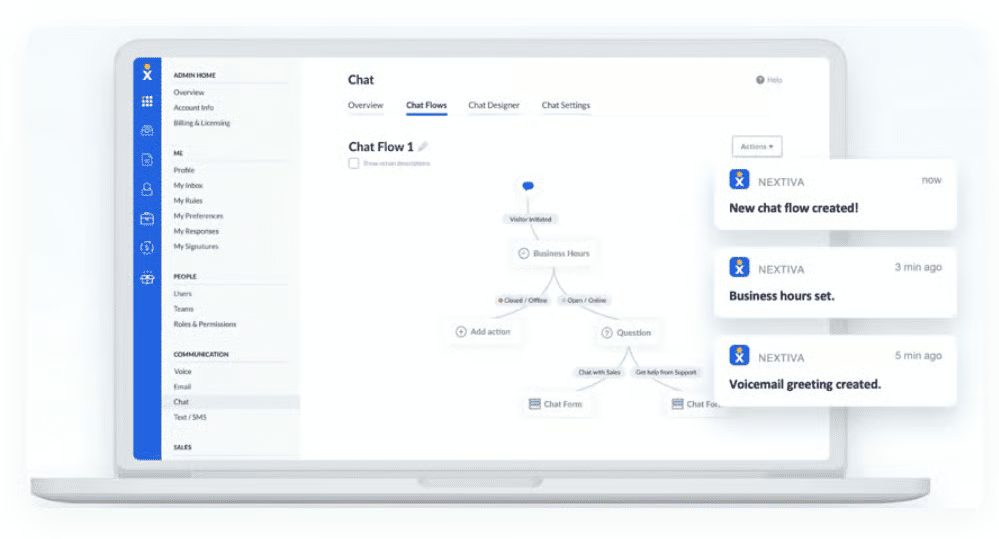
- Customizable dial plans: Use the visual call flow editor to create unlimited dial plans with customizable call routing, scheduling, and auto attendant features.
- Text-to-speech greetings: Create messages and greetings for your auto attendant system with AI text-to-speech tools.
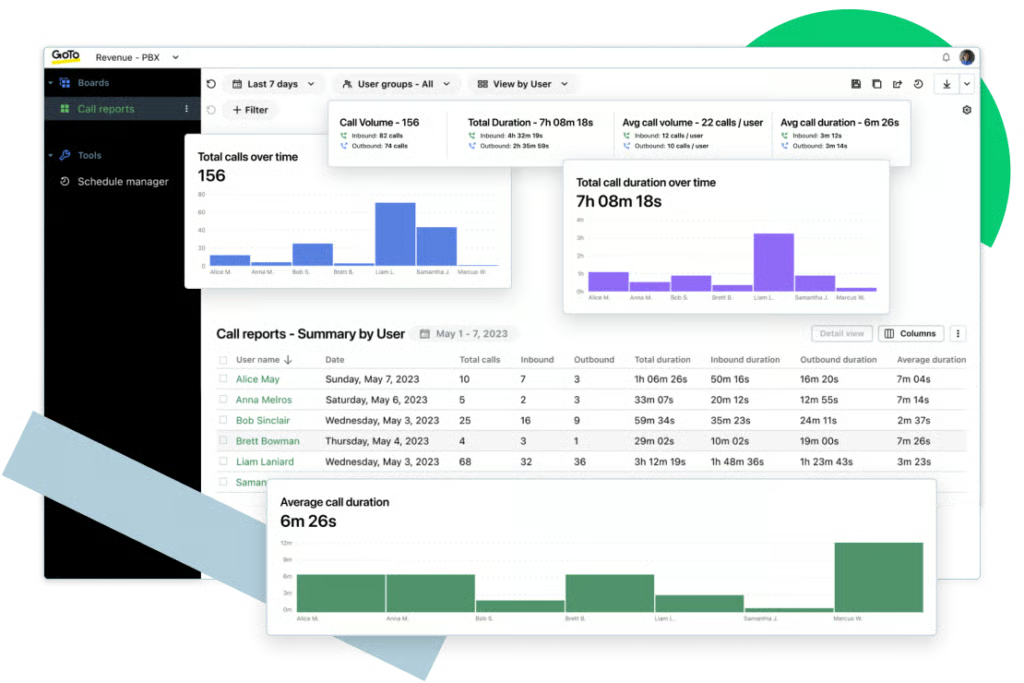
- Call routing optimizer: View call-flow analytics to understand where callers are routed and identify opportunities to improve their experience.
My expert opinion
Although there are many reasons you might be interested in an auto attendant phone system, call centers, sales, and customer support teams often benefit most from this feature. Therefore, I wanted to choose at least one standout provider for cloud call center solutions, and MightyCall is my top choice.
As a cloud-based system, MightyCall doesn’t require expensive phone hardware, which helps reduce upfront costs. Its mobile app also lets employees manage calls on the go. The three-user minimum means Core starts at $60 per month, equivalent with annual billing, so a solo business should compare the total subscription cost. However, teams that need broader collaboration features, try GoTo Connect.
Pricing
Plans and pricing* | Core | Pro | Power | Enterprise |
Monthly | $25 | $45 | $65 | Monthly: Contact salesAnnual: $65/user/month |
Yearly | $20 | $38 | $54 |
*There is a 3-user minimum for Core, Pro, and Power and a 5-user minimum for Enterprise. Core’s annual-billing minimum is $60/month equivalent; Enterprise’s is $325/month equivalent. Taxes, fees, and optional extras may apply. Unlimited calling and messaging are subject to MightyCall’s fair-use policy.
Standout features
- Call verification: MightyCall supports caller ID authentication, which helps verify calling identities and reduce spoofing.
- Cold transfer: Pass an incoming call to another agent or department without first speaking with the receiving party.
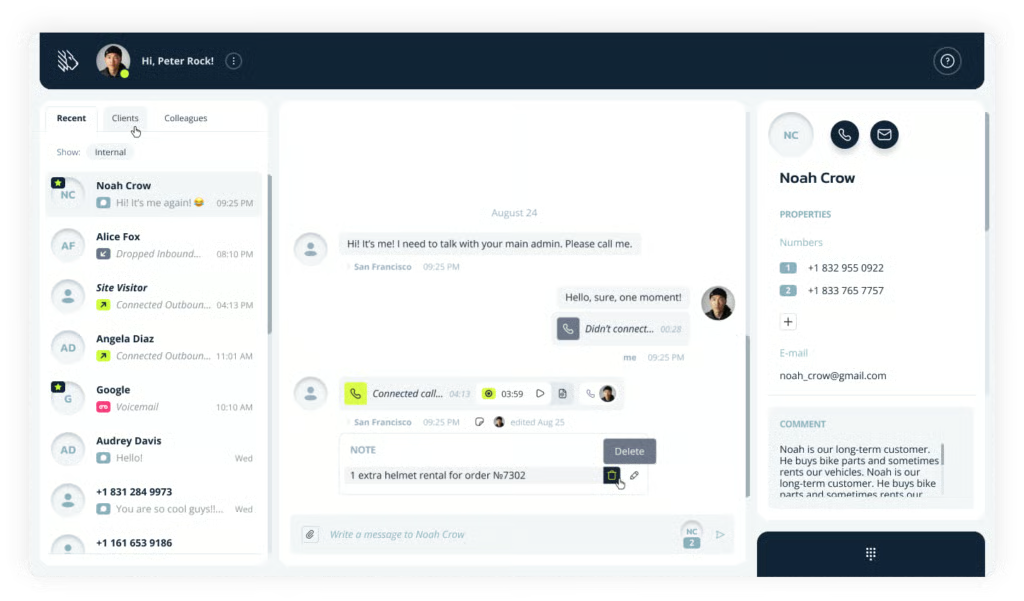
- Call notes: Allow agents to document calls and add comments after a conversation. Pro also includes AI call summaries to help teams review interactions.
My expert opinion
Grasshopper is my preferred choice for small teams that want shared business numbers with multiple extensions. This allows you to present a professional image with a single number that connects callers to sales, support, and management. Its flat account pricing can also make costs easier to predict as your team grows, although the numbers and extensions available depend on the plan.
Grasshopper’s current small-business offering also highlights a shared inbox, call recording, and recording transcription. But, if you need a unified communications solution with video meetings and more extensive collaboration tools, consider Nextiva, which combines voice, team chat, video, and customer engagement options.
Pricing
Plans and pricing | True Solo | Solo Plus | Small Business |
Monthly | $18 | $32 | $70 |
Yearly | $14 | $25 | $55 |
Standout features
- Call blasting: This paid add-on rings up to 15 lines simultaneously, helping you avoid missed calls and reduce wait times.
- Instant Response: Automatically send a text message to new callers when you miss their call. Customize the message with information that helps callers follow up.
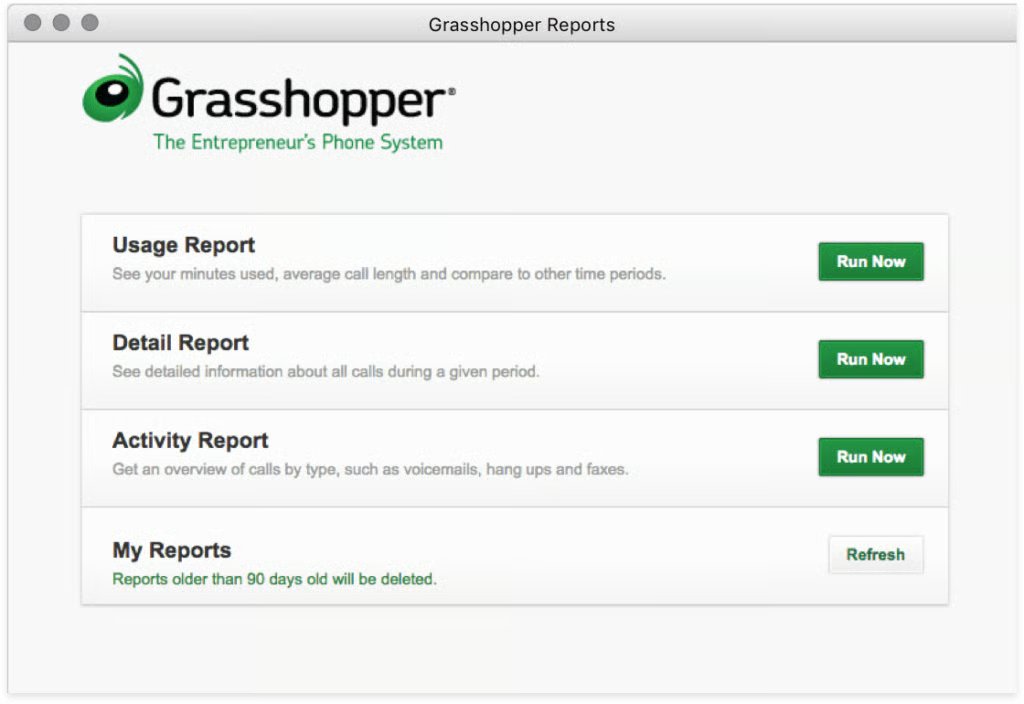
- Call analytics: Collect usage, activity, and call information through reports to understand how your team handles incoming and outgoing calls.
My expert opinion
Talkroute is my pick for business messaging because it combines customer texting with account-based phone plans that include a set number of users. You can use your business number for calls and texts, then add a bulk text messaging package if your team needs campaigns or higher volumes. Basic includes 500 messages per month, Plus includes 2,000, and Pro includes 5,000.
For an auto attendant, start with Plus at $39 per month for one menu or Pro at $59 for unlimited menus. But if you want a broader selection of ready-made app integrations, you should also consider RingCentral.
Pricing
Plans and pricing | Basic | Plus | Pro | Enterprise |
Monthly | $19 | $39 | $59 | Contact sales |
Users | 1 | 3 | 10 | 20+ |
Basic includes 500 messages/month, Plus 2,000, and Pro 5,000. Plus includes one call menu; Pro and Enterprise include unlimited menus. Additional users cost $5/month. Bulk texting starts at $55/month extra. AI Receptionist beta starts at $39/month plus usage and requires an active Business Phone subscription.
Standout features
- Voice Studio: Order professional recordings for greetings and menu prompts. Pro includes five clips.
- Call reporting and analytics: Pro and Enterprise include downloadable call analytics to help review activity.
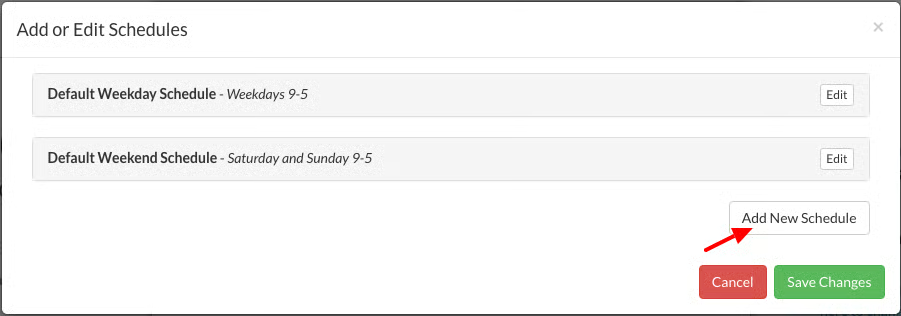
- Scheduled call forwarding: Available on Pro and above, this lets you schedule calls to ring specific receiving phones.
My expert opinion
Vonage is my top choice for managing mobile calls due to its user-friendly application and range of remote calling features. Vonage Business Communications (VBC) offers tools such as voicemail-to-email and call forwarding to help employees stay reachable away from their desks. However, administrators must use the Admin Portal to create or modify a Virtual Receptionist.
Premium adds access to the VBC App Center, while Advanced includes 15 hours per month of on-demand call recording. That makes it important to compare the selected plan and any additional features before estimating costs. Receptionist forwarding to outside lines also incurs per-minute charges. For a simpler option with flat account pricing, check out Grasshopper.
Pricing
Plans and pricing (per line) | Mobile | Premium | Advanced |
Monthly | $19.99 | $29.99 | $39.99 |
Yearly | Confirm current offer | Confirm current offer | Confirm current offer |
Prices vary by line count and exclude taxes and fees. Vonage advertises discounted annual-contract offers, but confirm the applicable rate and duration at checkout. Annual contracts can carry early termination fees.
Standout features
- Mobile call management: Use the Vonage mobile app on Android or iOS to handle business calls. Virtual Receptionist setup and editing require the Admin Portal.
- Busy lamp field (BLF): View the call status of up to 50 lines in your phone system. You can also use BLF keys to speed-dial extensions and streamline employee communication.
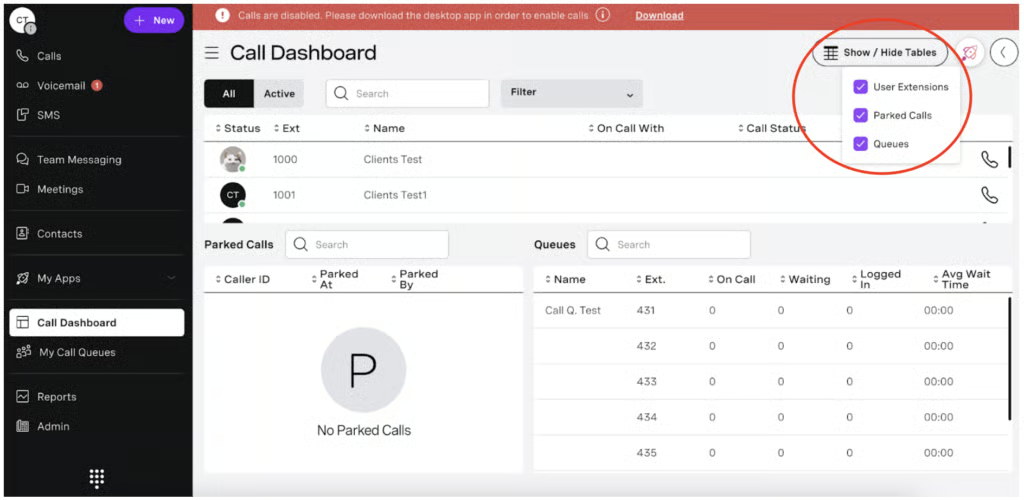
- Call dashboard: Display user extensions, parked calls, and call queues, with customizable settings to control which tables or information are displayed.
How I evaluated the best auto attendant phone systems
I looked at several VoIP phone systems with auto attendants in their subscription plans. From there, I selected the top seven providers by evaluating critical factors for small business owners, including pricing, key features, and ease of use.
Specifically, I assessed the top auto attendant phone systems by using the criteria below:
Cost is a key factor when choosing an automated phone system for small business owners. I rated each provider based on the current cost of its plans and confirmed whether there is a free trial, annual billing, termination fees, and volume discounts.
A small-business phone system with an auto attendant should include basic features, such as menus, voicemail transcription, and unlimited domestic calling. Providers that offered standard tools such as number porting, integrations, and mobile apps also received higher scores.
An automated phone call system should include advanced call management tools to ensure a smooth call routing experience. These include custom greetings, analytics, call-handling capabilities, working-hours configuration, and virtual numbers.
Usability is crucial for businesses new to setting up automated phone systems. The system should be easy to set up and operate, particularly for small businesses with limited in-house technicians and IT experts. An intuitive interface is also essential, enhancing the overall user experience and boosting providers’ ratings.
In my review, I assessed each provider’s support options, including phone, live chat, and an email ticketing system. As I looked through several auto-attendant phone systems for small businesses, I awarded extra points to those that offered 24/7 support across all channels.
To develop my expert score, I considered each phone system’s standout features and overall value for the cost. I also evaluated its interface and phone menu editors for usability. Finally, I reviewed online reviews from real customers to gauge each platform’s popularity and ease of use.
Frequently asked questions (FAQs)
How much does an auto attendant cost?
The cost of an auto attendant varies by service provider. While some providers charge extra for auto-attendant features as an add-on, most include them in the monthly fee for a business phone answering system. On this list, Grasshopper and Vonage offer the lowest-cost phone system plans with auto-attendant features. However, higher-tier or enterprise plans can be more expensive.
What are the advantages of an automated business phone system?
The primary benefit of using an auto attendant is enhancing the caller experience. Auto attendants greet callers, provide company information, and route calls to the right destination, helping create more efficient call flows. They also support self-service by instantly providing callers with the answers they need and reducing wait times for human agents.
How do I set up an automated phone system?
Setting up an automated phone system first requires choosing a service provider. Use our guide to find the right auto attendant phone system for your business. Then, create a call management plan using the provider portal, dashboard, or mobile application.
Your plan should include custom messages and call flows, so begin by recording or uploading call greetings, then construct menu options to route calls through your business directory. Finally, you can enable additional features, like voicemail options, custom caller IDs, and call forwarding to extensions and business phone numbers.
Bottom line
Auto attendant phone systems are essential for businesses looking to enhance their call management and elevate customer service. Acting as virtual receptionists, they expertly route calls to the right departments, individuals, or extensions. By efficiently managing call flows, auto attendants not only minimize wait times but also handle high call volumes with ease. This ensures that every caller enjoys a polished, professional experience, making your business stand out in a competitive landscape.
RingCentral stands out among its competitors for its advanced features, including IVR menus, custom greetings, and user extensions. If you’re interested, sign up and try RingCentral today.
You might also like
17 Auto-attendant Scripts [+Free Templates & Tips]
What Is Call Handling? (+ Best Practices for Small Businesses)
