







Every business faces competition. The real question is how you handle it. Whether you’re up against a local shop or a national brand, your ability to respond can mean the difference between growth and decline.
In this guide, you’ll learn seven proven tactics on how to manage competition in business, from identifying your real rivals to building customer loyalty, optimizing pricing, and out-innovating the market. Each tactic is practical, easy to apply, and designed to help you avoid losing business to your competitors while positioning your brand to beat the competition long term.
- 1. Understand your competitive landscape
- 2. Define your unique value proposition
- 3. Build relentless customer focus
- 4. Optimize product, pricing, and packaging
- 5. Master branding, messaging, and storytelling
- 6. Monitor, adapt, and out-innovate
- 7. Compete ethically and strategically
- Frequently asked questions (FAQs)
- Bottom line
1. Understand your competitive landscape
Before you can figure out how to manage competition in business, you first need to know exactly who you’re competing with and how they operate. Many small business owners assume their competitors are only those who sell the same product or service, but business competition often comes from unexpected places.
Direct vs indirect competitors
Competitors don’t all look the same; some overlap directly with what you do, while others solve the same customer problem differently.
- Direct competitors sell the same thing you do to the same audience. For example, if you run a local coffee shop, the café down the street is a direct competitor.
- Indirect competitors meet the same customer need in a different way. That same coffee shop might also compete with a smoothie bar or even a grocery store that sells ready-to-drink cold brews.
Recognizing both types is an essential part of competition handling, because you can’t prepare for what you don’t see coming.
How to identify your real competitors
Pinpointing competitors takes more than guesswork — it requires gathering insights from your customers and your market. Here are a few practical ways to do some market research:
- Ask your customers where else they shop or who else they considered before buying from you.
- Search online for your product or service in your area or industry — look at both ads and organic results.
- Check review sites and social media to see who customers compare you with.
- Look upstream and downstream in your supply chain; sometimes suppliers, marketplaces, or even DIY solutions can be hidden competition.
These steps help you spot both obvious rivals and hidden threats that could cause you to lose business to your competitors.
Map your competitive position
Once you know who your competitors are, the next step is to visualize how you compare. A competitive analysis tool, like a matrix or SWOT (strengths, weaknesses, opportunities, threats), makes this easier.
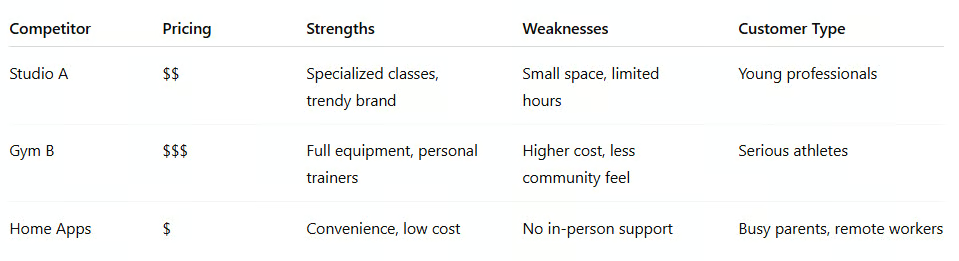
Free downloadable template
Download our free competitive analysis matrix to compare strengths, weaknesses, and opportunities in your market. Use it to plug in your direct and indirect competitors and spot exactly where you can stand out.
This quick snapshot shows not just who your competition is, but also where your business fits in and where you can beat the competition.
Taking time to analyze your competitive landscape is one of the most effective business competition strategies. Without it, you risk competing blindly on price, overlooking new entrants, or missing opportunities to carve out a unique position. With this matrix, you’ll be able to anticipate threats, identify gaps, and build a strategy that plays to your strengths instead of reacting in panic.
2. Define your unique value proposition
Once you’ve mapped out the competition, the next step in learning how to manage competition in business is clarifying why customers should choose you instead of them. This is your unique value proposition (UVP), a clear statement of what makes your business stand out. Skipping this step may potentially lead to blending into the crowd and relying only on price, which is one of the riskiest business competition strategies.
Why a UVP matters
In any market where business competition is fierce, customers need a reason to pick you. Price is rarely a sustainable differentiator because someone can always undercut you. Instead, your UVP, or unique selling proposition (USP) for products, can focus on areas that help you beat the competition long term, such as:
- A better experience (faster service, friendlier staff, more convenience)
- Specialized expertise (niching down in a specific market or audience)
- Superior quality (ingredients, craftsmanship, technology)
- Stronger connection (brand values, community ties, customer relationships)
How to craft your UVP
If you’re serious about competition handling, you need to spell out your UVP clearly. Start by answering a few core questions:
- Who is your ideal customer?
- What problem are you solving for them?
- How do you solve it better, faster, or differently than competitors?
- Why should they trust you over anyone else?
From there, distill your answers into a one-sentence statement.
Sample UVPs:
- “We help busy parents eat healthier by delivering fresh, family-sized meals in under 30 minutes.”
- “Our accounting firm specializes in small retail businesses, offering flat-fee bookkeeping so you never worry about surprise costs.”
Test and refine
Your UVP shouldn’t just live on paper; it should be tested in actual interactions. Add it to your website, weave it into sales conversations, and ask customers if it resonates. If it feels too generic or forgettable, refine until it’s clear and memorable.
Strong UVPs also help you avoid losing business to your competitors, because customers immediately understand the value they get from you. And when your message resonates, it builds trust and loyalty, the kind that keeps customers coming back even when rivals try to lure them away.
A well-defined UVP is your anchor in a crowded market. It shapes your marketing, guides product decisions, and strengthens your business competition strategies. Most importantly, it ensures that customers see you as the obvious choice, helping you beat the competition without racing to the bottom on price.
3. Build relentless customer focus
One of the smartest ways to beat the competition isn’t by watching what they do; it’s by paying closer attention to your customers. When you understand what your customers want, need, and value most, you’ll naturally stay ahead because your competitors can’t copy genuine loyalty.
Why customer focus wins
Many small businesses think business competition strategies are about lowering prices or adding flashy features. In reality, customers stick with the businesses that:
- Solve their problems consistently
- Provide friendly, personalized service
- Make it easy to buy, return, or get support
- Show that they care about feedback and improvement
This type of customer-centric approach helps you avoid losing business to your competitors, because people would rather stay with a brand they trust than gamble on an unknown.
Practical ways to build customer loyalty
To put customer focus into action, weave it into your everyday operations:
- Collect feedback regularly through surveys, reviews, or quick conversations at checkout.
- Act on feedback so customers see that their voices lead to improvements.
- Create loyalty programs with perks or rewards that encourage repeat purchases.
- Offer proactive support by anticipating needs (e.g., sending reminders, providing tutorials, or suggesting add-ons that genuinely help).
- Personalize experiences by remembering customer preferences or tailoring communications.
These practices may seem small, but together they build a competitive moat that’s hard to replicate. Running customer incentives doesn’t have to be complicated. See our guide on Sales Contest Ideas for practical ways to motivate and reward engagement.
If you want to know how to manage competition in business sustainably, the answer almost always circles back to your customers. Competitors may try to copy your products or promotions, but they can’t easily copy genuine loyalty. By making customer satisfaction the center of your strategy, you reduce churn, strengthen word-of-mouth, and create resilience against even the toughest rivals.
Happy employees create happy customers. Tools like Gusto make payroll, benefits, and HR simple, so you can focus on your team and deliver the kind of service that keeps customers coming back.
4. Optimize product, pricing, and packaging
Another crucial part of learning how to manage competition in business is making sure your product, pricing, and packaging work together to deliver maximum value. While your competitors may offer something similar, the way you structure and present your offer can help you beat the competition without racing to the bottom on cost.
Competing on value, not just price
Many owners immediately think that business competition strategies start with lowering prices. But competing solely on cost can quickly shrink your margins and put you in a price war you can’t win. Instead, focus on delivering better overall value through:
- Bundled offers that create convenience for customers
- Tiered pricing that appeals to different budget levels
- Premium options that increase average order value
- Creative packaging that enhances perceived quality
Flat pricing vs. tiered bundles
One proven tactic in competition handling is to rethink how you charge. Here’s how these two common approaches stack up:
| Flat pricing (single pricing for all customers) | Tiered bundles (different levels or packages) | |
|---|---|---|
| Best for | Businesses with straightforward products or services | Businesses with diverse customers or multiple service levels |
| Pros | Simple, easy to understand | Appeals to multiple budgets, increases upsell potential |
| Cons | May leave money on the table if some are willing to pay more | Slightly more complex to explain |
Matching your pricing to your customer base can help you avoid losing business to your competitors while also improving profitability.
If you want flexible tools to test different pricing models, Square makes it easy. With built-in POS, invoicing, and online selling features, you can experiment with flat pricing, bundles, or premium add-ons, all while keeping payments simple for customers.
Packaging as a differentiator
Never underestimate the power of presentation. Good packaging doesn’t just protect a product; it communicates quality, builds brand recognition, and creates an experience customers remember. Even service-based businesses can “package” offerings creatively by naming service tiers, bundling extras, or adding bonuses.
Optimizing your product, pricing, and packaging is one of the most effective ways to outmaneuver rivals. When you design offers that speak directly to customer needs, you make it harder for competitors to lure them away. When done right, this approach strengthens your brand and helps you beat the competition on more than price alone.
5. Master branding, messaging, and storytelling
Strong branding and clear messaging are some of the most powerful business competition strategies you can use. Even if your competitors sell something similar, the way you tell your story can make your brand’s customers remember and trust. In fact, when you refine your brand identity and messaging, you often beat the competition without having to change your product at all.
Why branding matters in competition handling
Branding isn’t just a logo or color scheme; it’s the perception people form about your business. When customers feel emotionally connected to your brand, they’re far less likely to switch, which helps you avoid losing business to your competitors. A strong brand communicates:
- Consistency (customers know what to expect every time)
- Trustworthiness (you deliver on your promises)
- Values (you stand for something customers care about)
- Story (you’re more than just a transaction)
Messaging that sticks
Your message should answer a simple but critical question: Why should customers choose you? In competitive markets, vague claims like “great service” or “high quality” don’t stand out. Instead, craft messaging that highlights your UVP and speaks directly to your target audience’s needs.
Here are side-by-side examples of messaging:
| Generic messaging | Storytelling-driven messaging |
|---|---|
| We sell handmade candles. | We craft eco-friendly candles inspired by local botanicals, bringing the scents of your hometown into your home. |
| We offer accounting services. | We help small business owners stress less about taxes by providing flat-fee bookkeeping and year-round support tailored to retail shops. |
| We’re a neighborhood gym. | We’re your fitness family, helping busy parents and young professionals build strength, energy, and community just five minutes from home. |
| We build websites. | We design conversion-focused websites that help local businesses turn browsers into loyal customers, without needing a big-agency budget. |
The second version doesn’t just describe a product; it tells a story, creates an emotional hook, and positions the business uniquely.
How to strengthen your brand & storytelling
If you want to know how to manage competition in business through branding, focus on:
- Defining your brand voice (casual, professional, bold, etc.)
- Sharing customer stories that highlight your impact
- Using visuals consistently across all platforms
- Telling your origin story to build authenticity
- Connecting your brand to customer values (eco-friendly, community-driven, innovative, etc.)
Good branding and storytelling help you rise above a crowded market. Competitors may offer similar features or pricing, but they can’t replicate your unique identity and message. When customers connect emotionally with your brand, they become loyal advocates, making it much harder for competitors to sway them.
Consistent messaging is easier when you have the right tools. HubSpot helps small businesses manage customer relationships, automate marketing, and track engagement, so your brand story reaches the right people at the right time.
6. Monitor, adapt, and out-innovate
Markets shift quickly, and not just occasionally. In fact, 88% of C-suite executives expect even more change heading into 2025, underscoring the pace at which leaders must stay agile and responsive. A key part of knowing how to manage competition in business is consistently monitoring your rivals, adapting to changes, and finding ways to innovate before they do.
Why monitoring matters
You don’t have to copy your competitors, but you should always know what they’re up to. Regular monitoring helps you:
- Spot new product launches or pricing changes early
- Identify gaps in their strategy that you can exploit
- Anticipate moves that could cause you to lose business to your competitors
This kind of intelligence makes competition handling more strategic and less reactive.
Tools to track competitors
Keeping an eye on your competition doesn’t have to be complicated. A few simple tools can give you ongoing visibility:
- Google Alerts: mentions of competitors’ brands, products, or executives
- Social listening tools: Tools like Hootsuite or Sprout Social can monitor engagement and customer sentiment
- Competitive analysis platforms: Platforms like SimilarWeb or Semrush can track website traffic, keywords, and ad campaigns
- Customer feedback: Sometimes, your own customers will tell you directly what competitors are offering
Adapt faster than competitors
Even small businesses can beat the competition by being more agile. Big companies often take months to adjust; you can pivot in weeks or even days. Examples include:
- Adjusting your menu or product mix based on seasonal trends
- Offering a quick promotion in response to competitor discounts
- Improving customer service policies to address complaints faster than anyone else
Out-innovate, don’t just imitate
Monitoring competitors should inspire you, not make you a copycat. The goal is to innovate in ways that matter to your customers. That could mean:
- Introducing a subscription model where others don’t offer one
- Adding new features based on customer feedback before rivals catch on
- Using technology (like mobile ordering or automation) to create convenience that competitors can’t match
In a world of constant business competition, standing still is the fastest way to fall behind. By monitoring, adapting, and innovating, you create resilience and ensure that your business isn’t just reacting — it’s leading. That’s one of the most effective long-term business competition strategies to stay relevant and win customer loyalty.
7. Compete ethically and strategically
Not all business competition is fair, but how you respond says a lot about your brand. Small businesses often wonder whether they should fight fire with fire when competitors cut corners. Still, in the long run, ethical practices are what protect your reputation and help you beat the competition sustainably.
Why ethics matter in competition handling
Unethical tactics, like false advertising, poaching staff, or copying branding, might create short-term wins, but they almost always backfire. Customers value honesty and transparency, and businesses that compromise these values usually end up losing trust (and market share). For small businesses, that trust is one of your most important assets.
Compete with strategy, not shortcuts
Rather than focusing on undercutting competitors, use smarter business competition strategies:
- Differentiate on value, not just price.
- Double down on customer loyalty programs and personalized service.
- Form partnerships or alliances with businesses that complement yours (a form of “coopetition” that can expand your reach).
- Invest in long-term improvements, like brand building and innovation, instead of chasing short-term wins.
These strategies not only help with competition handling, but they also make it harder for rivals to replicate your success.
What to do if a competitor copies your work?
Remember: Customers usually know the original from the imitation. By staying professional, you not only avoid losing business to your competitors, but you also gain credibility.
If you want to know how to manage competition in business long-term, the answer lies in pairing strategy with integrity. When you compete ethically, you build a reputation that customers respect and create a foundation for growth that outlasts quick, shady wins by rivals.
Frequently asked questions (FAQs)
Click through the sections below to read answers to common questions about business competition:
What is the best strategy to handle competition in business?
The best strategy is to combine customer focus with differentiation. Instead of relying only on discounts, build a strong unique value proposition and invest in loyalty. This type of competition handling ensures you’re not just reacting to rivals but proactively creating reasons for customers to stay with you.
Should small businesses compete on price?
Competing on price alone is rarely sustainable. Larger competitors can usually afford to go lower, which puts your margins at risk. A smarter approach to managing competition in business is to compete on value, such as better service, convenience, or quality, so you can beat the competition without losing profitability.
How often should I track my competitors?
Monitoring your competitors should be an ongoing process, not just once a year. Setting up Google Alerts or social listening tools allows you to stay updated in real time. Regular tracking helps you adapt quickly and avoid losing business to your competitors when market shifts happen.
Can collaboration be better than competition?
Yes, sometimes “coopetition” is one of the smartest business competition strategies. Partnering with businesses that serve the same audience but don’t directly overlap with you can expand your reach, lower costs, and strengthen your market position, all while helping you beat the competition in a healthier way.
Bottom line
You can’t avoid business competition, but you can control how you respond. Success comes from building strategies that make your business stronger, not from obsessing over rivals.
To avoid losing business to your competitors and consistently beating the competition, know your market, define a clear value proposition, focus on customers, optimize pricing and packaging, build a strong brand, innovate quickly, and compete ethically.
Learning how to manage competition in business means turning competitive pressure into clear strategies, such as refining your value proposition, innovating more quickly, strengthening customer loyalty, and using customer needs as your ultimate guide.
