





.jpg?w=288)

Starting a catering business is one of the most affordable and flexible ways to break into the food industry. You don’t need a storefront, and you can scale at your own pace, whether you’re cooking from home, renting time in a shared kitchen, or launching a mobile catering setup. But succeeding in catering requires more than great recipes. You need a menu that travels well, a pricing model that protects your margins, and a workflow that keeps food safe from prep to service.
This guide walks you through how to start a catering business step by step, with actionable checklists, real cost ranges, niche strategies, and modern client-acquisition tactics that most guides skip. You’ll learn how to validate your niche, build a profitable menu, choose the right kitchen setup (including home-based and shared-kitchen options), and market your services using platforms like ezCater, coworking partnerships, and social video.
Before diving in, download our Catering Startup Checklist to follow along as you work through each step.
- Step 1: Choose your catering niche (and validate demand)
- Step 2: Decide where you’ll operate
- Step 3: Create your catering menu and pricing strategy
- Step 4: Write a business plan
- Step 5: Register, license, and certify your catering business
- Step 6: Estimate your startup costs and buy equipment
- Step 7: Set up operations, staffing, and logistics
- Step 8: Market your catering business
- Step 9: Launch, test, and scale your catering business
- Frequently asked questions (FAQs)
- Bottom line
Step 1: Choose your catering niche (and validate demand)
Choosing a niche is the most important early decision you’ll make. Your niche determines your menu, pricing structure, equipment needs, staffing, and even where you should market. Most new caterers try to offer everything — weddings, corporate lunches, private events, bar service, meal prep — only to overwhelm themselves and waste money on inventory they rarely use.
Start by picking one primary niche and one complementary niche you can support without adding much extra cost or equipment.
Common catering niches
Use this table to quickly compare niches:
| Niche | Best For | Pros | Cons |
|---|---|---|---|
| Corporate Catering (office lunches, meetings, trainings) | Caterers who prefer predictable, weekday revenue | High repeat orders, consistent volume, simple menus | Lower per-person pricing, tight delivery windows |
| Wedding Catering | Caterers offering plated meals, upscale service | High ticket size, premium pricing | Seasonal demand, long client lead times |
| Private Events & Parties | New caterers starting small | Flexible menus, quick bookings | Lower order consistency |
| Meal Prep & Subscription Catering | Caterers who want steady weekly cash flow | Recurring revenue, easier operations | Must manage labeling, nutritional info, weekly planning |
| Food Truck Catering & Mobile Catering | Caterers who want visibility + catering | Low overhead, built-in marketing | Truck maintenance, weather limitations |
| Specialty / Dietary Catering (vegan, gluten-free, Kosher-friendly) | Caterers in dense metro areas | High pricing power, less competition | Requires strict ingredient control |
How to pick the right niche
Ask yourself:
What type of event food am I most confident cooking repeatedly and consistently?
Catering ≠ restaurant. Only offer items that travel well and can be held at safe temperatures.
What niche has unmet demand in my area?
Many markets are saturated with wedding caterers but lack reliable weekday corporate caterers or plant-based options.
What fits my available kitchen setup?
- Home-based: Small parties, meal prep
- Shared kitchen: Corporate catering, small events
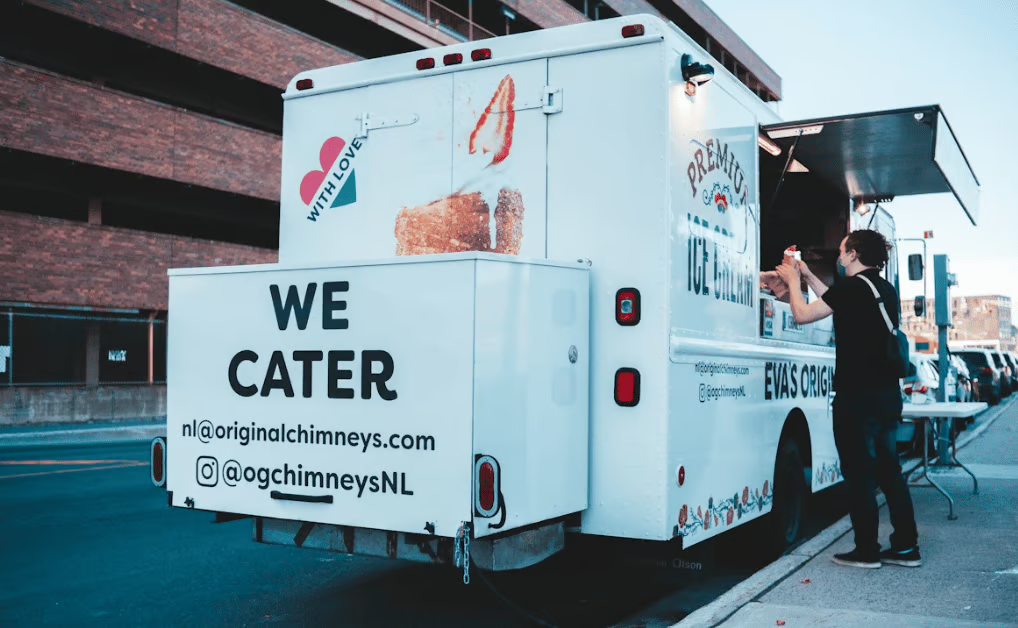
- Food truck: Mobile drop-offs + pop-ups
- Commercial kitchen: Full-service weddings
Where can I start quickly without major investment?
If you need revenue fast, corporate lunches or meal prep deliver sooner than weddings.
Do a quick market validation
You don’t need a formal study; just enough data to confirm demand.
- Scan local competitors
- Search “[your city] + catering” on Google & Google Maps
- Note their niches, menus, starting prices, and number of reviews
- Identify gaps, such as:
- No vegan caterers
- No consistent corporate lunch providers
- High delivery fees
- Outdated menus
- Check event venues’ preferred vendor lists
Event venues often rely on a small list of trusted caterers. If the same names appear repeatedly, it may signal that the market needs fresh vendors.
- Look at online catering platforms
- Check demand in platforms like ezCater, CaterCow, and Foodee.
- Search your ZIP code and note:
- How many caterers already serve your area?
- What cuisines are missing?
- What price ranges are popular?
- Review local demand signals
- Google Trends for “catering near me” + city
- Local coworking spaces (these are major corporate catering buyers)
- Facebook groups and community boards looking for event vendors
Picking the right niche early helps you build a focused menu that reduces food costs and waste, stand out in a crowded local market, start marketing faster, avoid buying unnecessary equipment, and attract clients who are already actively searching for your specialty.
Step 2: Decide where you’ll operate
Your kitchen setup determines what you’re legally allowed to cook, how much you can produce, and how much you’ll spend on startup costs. You don’t need a full commercial kitchen to begin but you do need to choose the right setup for your menu, scale, and local rules.
Below are the four most realistic options for new caterers, including the one most guides skip: shared kitchens. For many beginners, these provide the fastest, lowest-risk way to launch.
Option 1: Start a catering business from home
This is the lowest-cost path, but availability depends heavily on your state’s regulations.
| What you can usually do from home | Home catering works best for:
|
|---|---|
| Limitations | Most states do not allow:
|
| Home catering compliance checklist | Use this to quickly determine whether your home qualifies:
|
If your state doesn’t allow full catering from home, the next option solves that problem.
Option 2: Rent a shared, commissary, or incubator kitchen
Shared kitchens are the best entry point for most new caterers. This option allows you to operate like a full-fledged caterer without upfront capital — you get commercial-grade equipment, required inspections, and storage, without the $50,000 to $250,000 cost of building your own kitchen.
| Why this option stands out |
|
|---|---|
| Average shared kitchen costs |
|
| What to look for when choosing a shared kitchen |
|
Option 3: Use a food truck or mobile kitchen
A food truck can function as a mobile prep or cooking space, perfect if you want to combine vending + catering.
| Best for |
|
|---|---|
| Pros |
|
| Cons |
|
Related: 5 Top Food Truck Lenders in 2025
Option 4: Build or lease your own commercial kitchen
This is the most expensive and usually unnecessary for first-time caterers.
| Choose this only when |
|
|---|---|
| Typical costs |
|
For most beginners, this step comes after you’ve proven demand.
Start with the lowest-cost kitchen that still meets legal requirements for your menu. For most new caterers, a shared kitchen provides the fastest, most affordable path to getting licensed and producing food safely at scale.
Step 3: Create your catering menu and pricing strategy
Your menu is more than a list of dishes. It’s an operations plan, a pricing formula, and a branding tool. A strong catering menu should be limited, scalable, and profitable, with items that hold well, transport safely, and match the niche you chose in Step 1.
This step helps you build a menu that’s easy to execute and priced to protect your margins, even when ingredient costs fluctuate.
Build a focused, profitable menu
Use the “Rule of 12” for menu simplicity
A practical way to create a manageable starter menu is to follow the “Rule of 12” — four mains, four sides, two salads, and two desserts. This structure keeps your offerings focused while preventing the overbuying and prep chaos that come with an oversized menu. You can rotate in seasonal specials to keep things fresh, but your core items should remain steady so you maintain consistent food costs and predictable production times.
Choose items that travel well
Catering success relies heavily on how well food holds up during transport and service. Dishes like braised proteins, pasta, roasted vegetables, hearty salads with dressing on the side, and sandwich or slider trays typically travel well and stay appealing after being held in hot or cold storage.
In contrast, fried foods, delicate seafood, steaks that require individual temperature accuracy, or dishes dependent on fragile sauces often lose quality quickly unless prepared on-site. Prioritizing travel-friendly dishes helps you avoid complications and ensures customers receive consistent results.
Build “modular menus”
Modular menus allow you to keep operations simple while giving clients the flexibility they want. Start with a base package, for example, a protein with two sides and a salad, then let clients choose add-ons such as appetizers, desserts, plated service, rental equipment, or premium upgrades.
This approach boosts your average order value without forcing you to expand your core menu or complicate prep. It also makes quoting easier, since the structure is clear and predictable.
Standardize portions
Portion accuracy is one of the most overlooked parts of catering, yet it has the biggest impact on your margins. When you consistently portion your food, you protect your profits, reduce waste, and quote with confidence. Even small miscalculations, such as an extra ounce of protein per guest or underestimating appetizers, can wipe out your margin quickly, especially on large events.
Instead of guessing, use standard portion benchmarks based on the event type. Corporate lunches typically require 5 to 6 ounces of protein per person, while buffet dinners often need 6 to 8 ounces, plus additional sides and a guaranteed dessert.
Passed appetizers follow an hourly consumption pattern, and plated dinners have predictable portion expectations per plate. Keeping these guidelines in mind ensures that your food costs stay under control and your pricing aligns with what you’re actually serving.
Here’s a quick portion planning cheat sheet you can rely on:
| Event Type | Protein | Sides | Dessert |
|---|---|---|---|
| Corporate lunch | 5-6 oz per person | 1-2 | Optional |
| Buffet dinner | 6-8 oz per person | 2-3 | 1 |
| Passed apps | 4-6 pieces per hour per guest | — | — |
| Plated dinner | 6-7 oz per plate | 2 | 1 |
Using consistent portion standards will help you avoid overproduction, quote accurately, and maintain healthy profit margins across every event, whether big or small.
Price your catering menu correctly
Your pricing has to cover food costs, labor, overhead, transportation, setup, and profit margin. There are three common models.
Per-person pricing (Most common)
Per-person pricing is the simplest and most familiar model for clients. You determine your food cost per guest, divide it by your target food-cost percentage, and set your rate from there. For example, a $6.50 food cost with a 30% target lands around $22 per person. This approach keeps quotes consistent and easy to compare, making it ideal for corporate catering, weddings, and private events.
Tiered packages
Tiered packages let clients pick from preset bundles, often labeled Standard, Premium, and Signature. Each tier includes set menu combinations or upgraded ingredients. This structure speeds up quoting, prevents custom menu overload, and helps you upsell naturally. It works especially well for buffets, family-style catering, and menus with predictable portions.
Cost-plus pricing
Cost-plus pricing is best for custom menus or corporate clients who need itemized costs. You total your ingredient expenses, add a markup, then include labor, overhead, delivery, and service charges. It takes more tracking but gives you flexibility for unique menus or premium events.
What your pricing must cover
Regardless of model, your pricing should consistently account for food, labor, overhead (including kitchen rental), transportation, disposables, setup/breakdown, admin time, and a profit margin. Keeping these elements built into your structure ensures you stay profitable while still offering clear, simple pricing options to clients.
Build out your pricing: Include these line items
Even the best pricing model falls apart if you overlook core expenses. Catering has many hidden costs, such as transport time, onsite labor, and kitchen rental hours, that don’t show up on a recipe card but directly affect your profitability. Before finalizing your rates, make sure every quote reflects the true cost of producing, delivering, and servicing an event from start to finish.
Make sure your pricing covers:
- Food and ingredient costs
- Labor (prep, cooking, on-site service)
- Overhead (kitchen rental, utilities, insurance)
- Equipment rental (chafers, cambros, induction burners)
- Disposables (plates, cutlery, napkins)
- Delivery and transportation
- Setup and breakdown
- Administrative time (proposal writing, client calls)
- Profit margin (10-25% is typical for new caterers)
Sustainability and dietary options
Sustainability and dietary accommodation aren’t just nice-to-have features anymore; they’re fast becoming decision-makers for clients, especially corporate teams and event planners.
Many markets still lack caterers who offer thoughtful eco-friendly practices or clear dietary labeling, which means even small adjustments can set you apart from competitors. Incorporating these elements into your menu and operations can boost trust, broaden your customer base, and position you as a modern, client-focused caterer.
Consider offering:
- Plant-based menu packages
- Compostable serving ware
- Low-waste or zero-waste menu options
- Locally sourced ingredients
- Allergen-friendly zones and clear labeling
These additions help you stand out, particularly with businesses prioritizing sustainability and inclusive dining options.
Step 4: Write a business plan
A catering business plan doesn’t need to be long or formal, but it must be clear. Think of it as your roadmap for validating your niche, projecting your costs, and outlining how you’ll operate day to day. A solid plan helps you avoid costly missteps, stay organized as you launch, and present a credible proposal if you ever apply for financing or a kitchen rental membership.
Below is a streamlined structure designed specifically for food businesses, with the sections that matter most for caterers.
| Section | What to Include |
|---|---|
| Executive Summary | A brief overview of your catering concept, niche, service area, and what makes you different. |
| Business Description | Your business model (corporate catering, weddings, meal prep, mobile catering), target audience, and kitchen setup. |
| Market Analysis | Competitor scan, pricing comparisons, demand insights, and your ideal client profile. |
| Menu & Pricing Strategy | Your focused starter menu, pricing model (per-person, tiered, or cost-plus), and portion standards. |
| Operations Plan | Where you’ll cook, production workflow, food safety, transportation process, and required equipment. |
| Staffing Plan | Initial team structure (even if it’s just you) and future roles such as servers, prep cooks, or event leads. |
| Marketing & Sales Strategy | How you’ll get clients — website, local outreach, venue partners, corporate platforms like ezCater. |
| Startup Costs & Financials | Estimated startup expenses and simple revenue projections based on expected event volume. |
| Appendix (Optional) | Sample menus, pricing sheets, permits, bios, or kitchen rental agreements. |
Learn more:
- Types of Business Plans: Ultimate Guide for Business Owners
- How to Write a Business Plan in 7 Steps
- One-Page Business Plan: The Step-By-Step Guide
Step 5: Register, license, and certify your catering business
Catering businesses face more regulatory requirements than most home-based or service businesses because they’re preparing and transporting food for the public. Your exact steps depend on your state and whether you’re operating from home, a shared kitchen, or a mobile setup, but the core requirements are similar across most jurisdictions.
Below is a clear, skimmable breakdown of what you’ll typically need to get fully legal and ready to serve.
| Requirement | What It Is | When You Need It |
|---|---|---|
| Business Registration + EIN | Register as a sole prop, LLC, or corporation; obtain an EIN for taxes. | All catering businesses, regardless of location. |
| Sales Tax Account | State registration to collect/remit tax on prepared food. | States where prepared food is taxable (most). |
| Food Service Permit | Health department permit allowing you to produce food legally. | Any catering business cooking in a commercial, shared, or approved home kitchen. |
| Health Department Inspection | Inspection of your kitchen, equipment, and food safety practices. | Required for commercial or shared kitchens; sometimes required for home kitchens depending on local rules. |
| Food Protection Manager Certification | ServSafe or state-approved certification for safe food handling. | Required for at least one owner/operator; many states require it for supervisors. |
| Food Handler Cards | Basic food safety training for staff. | Required for employees who prepare or handle food (varies by state). |
| Catering License | A specific license for businesses preparing food off-site and serving at events. | Required in many states/cities when transporting or serving food at events. |
| Mobile Food License | License for food trucks, trailers, or mobile kitchens. | Needed if you use a food truck or mobile unit for catering or on-site cooking. |
| Zoning or Home Occupation Permit | Local approval to operate a home-based business. | Home-based caterers or those storing equipment at home. |
| Insurance | Liability, product liability, commercial auto, workers’ comp. | Required by venues and recommended for all caterers; workers’ comp required if you hire staff. |
| Alcohol License | Permit to serve, sell, or pour alcohol at events. | Required if offering bartending or beverage service, including champagne toasts. |
Learn more:
- Business Types: Which Is the Best Structure for Your Business?
- What Is an LLC and How to Start One
- 6 Best Small Business Insurance Companies
Step 6: Estimate your startup costs and buy equipment
Catering has a wide cost range depending on your kitchen setup, menu, and scale. Some caterers launch for just a few thousand dollars using a shared or approved home kitchen, while others invest more heavily in mobile units or commercial spaces. Understanding your likely costs upfront helps you set realistic pricing, choose the right setup, and avoid unnecessary spending.
Below is a consolidated look at common startup budgets and the expenses that typically make up those totals, followed by an equipment list you can use to plan your initial purchases.
| Setup Type | Total Estimated Cost | Major Cost Drivers |
|---|---|---|
| Home-Based Catering | $50,000-$250,000+. | Small equipment, insurance, licenses, initial food inventory, basic transport gear, website/branding |
| Shared/Commissary Kitchen | $5,000-$25,000 | Kitchen membership, small equipment, insulated carriers, transport carts, insurance, marketing, early labor costs |
| Mobile Catering / Food Truck | $40,000-$100,000 | Food truck or trailer purchase, equipment installation, commissary parking, permits, signage/branding |
| Commercial Kitchen Buildout | $50,000-$250,000+ | Leasehold improvements, hood system, commercial appliances, inspections, utilities, furnishings |
Step 7: Set up operations, staffing, and logistics
Catering is all about consistency, producing high-quality food, transporting it safely, and serving it smoothly at every event. A clear operations plan helps you avoid last-minute chaos, staffing shortages, and food safety issues. This section breaks down how to structure your workflow so you can deliver reliably from prep to cleanup.
Build your catering workflow
A streamlined workflow keeps events predictable and profitable. Most caterers follow a similar six-stage process:
Prep → Cook → Pack → Transport → Setup/Serve → Breakdown
In practice, this means planning production schedules in advance, labeling everything clearly, and packing items in the order you’ll use them on-site. Hot food should be held in Cambros at safe temperatures, and cold food should remain chilled right up until service.
Having a written standard operating procedure (SOP) for each stage, especially for pack-out and transport, helps ensure nothing gets forgotten.
Staffing your catering business
You don’t need a full-time team to start, but you should build a roster you can call on for different types of events.
Common catering roles
- Prep cooks: Assist with batch cooking and packaging
- Servers and event staff: Handle buffets, plated service, and guest interaction
- Bartenders: Required if offering beverage service
- Event lead or captain: Manages timing and client communication on-site
- Drivers: Transport food and equipment safely and on schedule
Most new caterers begin solo or with one helper for prep, then hire 1099 event staff as needed. As volume grows, you can transition key roles to W-2 employees for reliability.
Key logistics to get right
Logistics make or break a catering business. You can cook perfectly, but if the food arrives cold or late, clients won’t rebook. Pay special attention to:
| Transport & Holding |
|
|---|---|
| On-Site Setup |
|
| Food Safety |
|
| Contingency Planning |
|
Step 8: Market your catering business
Marketing a catering business is about building visibility, proving reliability, and getting in front of people who book events often. Instead of relying solely on social media or word of mouth, focus on high-ROI channels that drive consistent inquiries, especially corporate catering platforms, venue partnerships, and a strong Google presence.
Build your local online presence
Your first goal is to make it easy for potential clients to find you. Most catering searches start online, so your website and Google Business Profile become your primary sales tools.

Manakish is a catering service company in California that uses a one-page website. 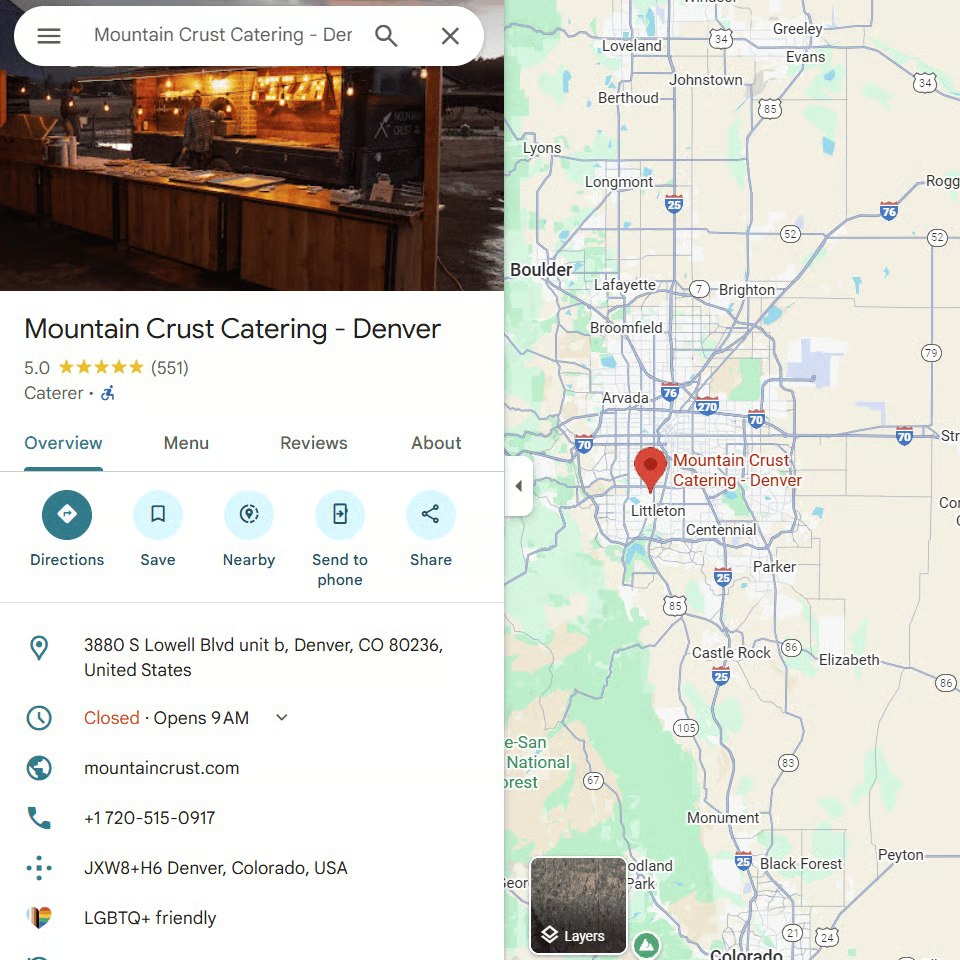
A complete Google Business Profile, like this listing from Mountain Crust Catering in Denver, helps customers find you and boosts local search visibility.


Website essentials
Your website simply needs to answer key questions:
- What services you offer
- Menu or sample menus
- Pricing ranges or packages
- Service area
- Photos of food and events
- Inquiry form
- Clear contact information
A clean one-page website is enough to start.
Google Business Profile
Create your Google Business page. It is one of your most powerful marketing channels. Add:
- High-quality food photos
- Menu items
- Service descriptions
- Hours and delivery radius
- A booking or inquiry link
Encourage clients to leave reviews after every event, as this dramatically increases visibility.
Partner with local venues
Venues often maintain a “preferred vendor list,” and getting on even a few can provide a steady stream of bookings. Reach out to:
- Event halls
- Wineries
- Churches
- Co-working spaces
- Museums and galleries
- Wedding venues
Offer to drop off tasting platters or cater one of their staff meetings. Many venues give new caterers a trial run before adding them to their list.
Leverage corporate catering platforms
Corporate catering is one of the most reliable and profitable niches for beginners, and platforms make it easy to get started. Here are some ideas of where to list your business:
These platforms have built-in demand and handle marketing, order flow, and invoicing. The trade-off is a commission per order, but the volume often justifies it, especially when you’re new.
Use social media smartly
Instead of trying to post everywhere, focus on visual platforms that showcase food well. Short social videos are particularly effective for catering. Here are some ideas of what to post:
- Behind-the-scenes prep
- Event setups
- Menu highlights
- Before/after buffet displays
- Customer testimonials
Platforms like Instagram Reels, TikTok, and Facebook groups often drive local inquiries faster than static posts.
Connect with local businesses and organizations
Direct outreach still works, especially for corporate lunches and recurring events. Here are some businesses and organizations you can target that can deliver high ROI:
- Coworking spaces
- Real estate offices
- Schools and universities
- Medical offices
- Nonprofits
- Local chambers of commerce
Drop off a sample box or offer an introductory discount to get your foot in the door. Consistent weekday orders can become the backbone of your revenue.
Related:
- How to Get More Google Reviews: 14 Tips to Improve Rankings
- How to Build Local SEO Citations (+ 7 Ways to Build Them)
Step 9: Launch, test, and scale your catering business
Once your menu, pricing, and operations are in place, it’s time to launch. The most successful caterers start small, gather feedback quickly, and scale based on what clients actually book, not just what they expect will sell.
Do a soft launch
A soft launch helps you get real-world feedback without the pressure of a large event. Here are some simple ideas on how to launch:
- Cater a friend’s or family member’s event at cost
- Host a small tasting for local businesses or venue managers
- Offer discounted corporate lunches for offices nearby
- Deliver sample platters to coworking spaces, realtors, or community organizations
These early events allow you to test your workflow, portion sizes, and timing, and to collect photos and testimonials for your website.
Improve with each event
After each event, review what worked and what didn’t. Here are the things to evaluate:
- Production timing
- Food transport and holding temperatures
- Prep labor needs
- Menu items that were difficult to scale
- Client feedback
- Profit margins
Small adjustments early on make your operations smoother and more profitable as you grow.
Add reliable revenue streams
Once you’ve stabilized your core catering service, consider adding complementary offers that increase your revenue without adding too much complexity. Here are some ideas for high-ROI add-ons:
- Corporate meal service: Weekly or monthly lunch contracts
- Meal prep or subscription boxes: Great for weekday cash flow
- Holiday menus: Preorders for Thanksgiving, Easter, graduations, etc.
- Grazing boards or cocktail catering: Low labor, high perceived value
- Rental items: Chafers, linens, décor, and serviceware rentals
These help you generate consistent income even during slow event seasons.
Consider strategic pivots when demand shifts
Event demand isn’t always predictable. Having built-in pivots keeps your business stable. Here are some ideas of smart pivot options you can explore:
- Offer pickup or delivery meal boxes
- Create seasonal family-meal packages
- Partner with ghost kitchens for weekday sales
- Sell signature sauces or packaged items
These strategies help you generate revenue even when weddings or corporate events slow down.
Frequently asked questions (FAQs)
Click through the sections below to read answers to common questions about starting a catering business:
How profitable is a catering business?
Most caterers aim for profit margins between 10% and 25%, depending on their menu, labor costs, and kitchen setup. Corporate catering and recurring contracts often provide the most reliable, predictable profit.
Can I start a catering business from home?
Yes, if your state allows it. Some states permit home-based catering under cottage food laws, while others require a commercial or shared kitchen. Check your local health department’s rules before starting.
How much does it cost to start a catering business?
Startup costs range from $2,000 to $25,000 for most new caterers, depending on whether you use a home kitchen or a shared commercial kitchen. Mobile units and food trucks require more, often $40,000 to $100,000.
Do I need a commercial kitchen to start?
Not always. Many caterers begin in a shared or commissary kitchen, which is already licensed and inspected. This avoids the upfront cost of building a full commercial kitchen.
What licenses do I need to start a catering business?
Common requirements include a business registration, food service permit, health department approval, Food Protection Manager certification, liability insurance, and, if applicable, a catering or mobile food license. Requirements vary by state.
How long does it take to start a catering business?
You can usually launch in 4 to 8 weeks, depending on how quickly you complete licensing, inspections, menu development, and kitchen setup.
What type of catering makes the most money?
Corporate catering and recurring office meal programs typically provide the highest consistency, while weddings and large private events offer higher individual ticket sizes. Many caterers do both to balance seasonal demand.
How do I price my catering services?
Most caterers use per-person pricing or tiered packages, based on food costs, labor, overhead, transportation, and desired profit margin. Cost-plus pricing is common for custom menus.
Do I need insurance for my catering business?
Yes. At a minimum, you should carry general liability and product liability insurance. Many venues require proof of coverage before allowing you to serve food on-site.
What’s the biggest mistake new caterers make?
Offering too many menu items. A small, focused menu helps control food costs, simplifies prep, and makes your events more consistent.
Bottom line
Starting a catering business is one of the most flexible and affordable ways to enter the food industry. With the right niche, a streamlined menu, a compliant kitchen setup, and efficient operations, you can launch quickly and scale at your own pace. Focus on dishes that travel well, build a simple pricing structure, and market where clients are actively looking, such as Google, local venues, coworking spaces, and corporate catering platforms.
Whether you’re starting from home, a shared kitchen, or a mobile setup, the key is to begin small, refine your process with each event, and expand based on what customers actually book. With thoughtful planning and consistent execution, catering can turn into a profitable, year-round business that grows steadily over time.
