







Lingering economic uncertainty and several years of supply chain disruption are among the reasons retailers across the country are finding themselves with excess inventory. In fact, a new study found that 27% of businesses are looking to sell overstock inventory on secondary markets.
The dilemma of how to sell excess inventory is not new but is perhaps more pressing than ever. This guide covers strategies for selling your excess stock and ways to prevent a surplus in the future.
Strategies for Selling Excess Inventory
If you have excess merchandise that you need to sell, consider these nine options. If all else fails, liquidation might be your best option.
1. Try an End of Season Event

Oftentimes, excess inventory includes items that are seasonally bound and won’t be relevant once the time of year changes. For example, at my store, we got tons of sundresses for the summer, but by the time October rolled around and the temperatures dropped, any leftover dresses would not sell, and we would move them to sale or reserve them for next season.
If you come to the end of a season and realize that you have a lot of leftover stock that won’t be relevant or sellable once the new season rolls around, hold an end-of-the-season sale. Mark your items down, and market the event as a seasonal capstone so people know what type of merchandise to expect.
2. Feature the Products on Socials
Another strategy that you can use to sell excess merchandise is to feature the product on your social media account. Sometimes, products you have in excess are not unsellable because there isn’t demand but rather there hasn’t been enough marketing of the product.
For example, my store introduced a new vest product when I was working there. We put the product on the floor, but no one was going for it. Then, we featured the vest on our Instagram in both a post and a try-on video, and we sold out of the item in a week.

3. Improve Your Online Listing
Another way that you can help sell your excess inventory is by improving its online listing (or listing it online in the first place). Maximizing where customers can discover and buy products will boost your chances of selling the items. But, if your listing isn’t good, people won’t trust the listing or have the confidence to purchase. Improving your online listings will help your excess inventory shine, build shopper confidence, and increase purchasing potential.
There are two primary ways that you can improve online listings—first, through a strong product description that covers all relevant information and answers any questions that shoppers might have. And second, through high-quality product photos that show customers exactly what the product looks like, up close and far away, and from every angle.
4. Entice Shoppers With BOGO Sales
“Buy one, get one” or BOGO sales are not only a great way to get people to buy your excess inventory, but it also frees you of two units with every one sale. It’s a win for both your stockroom and your customers.
Alternatively, you can mark the products as buy one, get one X% off, but regardless, the idea is that adding a freebie to the purchase of your excess inventory product will create more incentive for shoppers to buy that product.
5. Refresh Your Merchandising
Just as you will want to improve your online listing to boost visibility and purchasing potential, you should also improve how your excess inventory is displayed within your store. As we mentioned earlier, excess inventory is not always due to people not wanting the product but sometimes simply because they haven’t seen the product in its best light (or at all).
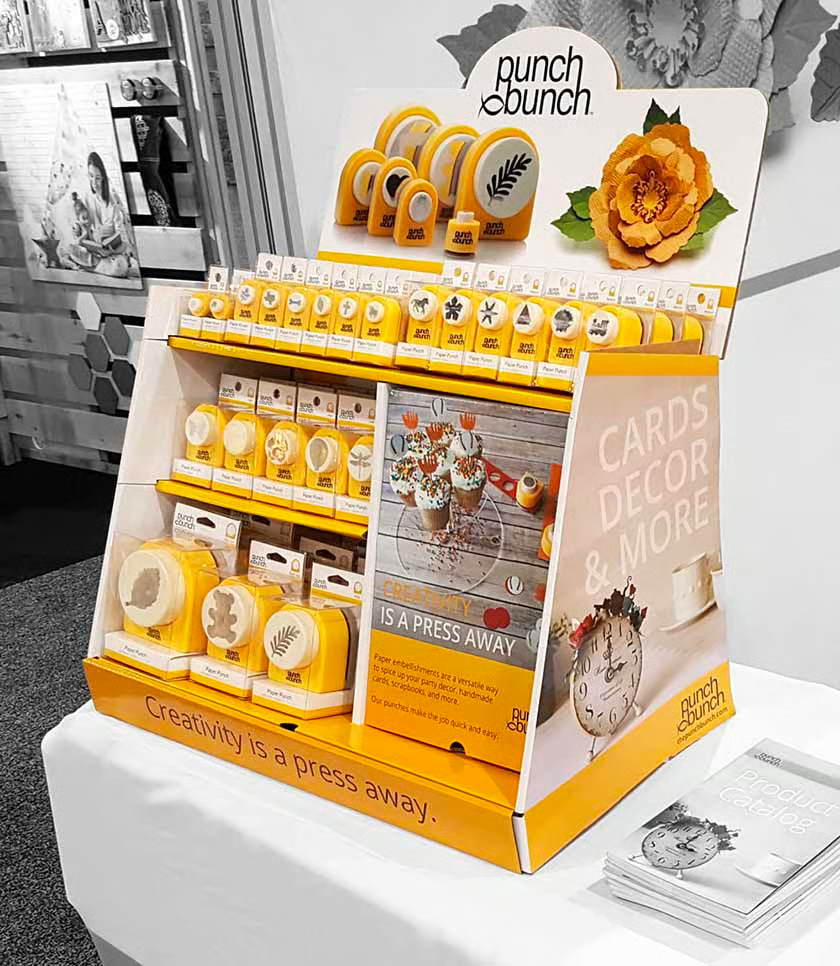
Here are a few ideas for remerchandising your excess inventory:
- Put it in the decompression zone: Add the item to the front of your store (or the decompression zone) so that customers see it first when they come into your store.
- Create a product display: Let the item shine by giving it its own display area with decor and information so shoppers can’t help but stop and look at it.
- Place it in the focal point: Focal points are key visual areas that customers will naturally be attracted to, like a display wall, a cluster of mannequins, or other visual points of interest. Adding your excess inventory to these areas will boost its visibility.
- Add signage and lighting: Eye-catching signage and some good lighting will ensure that customers can easily find and identify the product.
6. Hold a Clearance Sale
A clearance sale is a great way to sell overstock inventory, especially if you have a variety of products. To hold a clearance sale, first, remove your sale inventory from the floor and price it for the sale. Typically clearance indicates a steep discount—anywhere from 40% to 70%. Price your items accordingly. This strategy will hopefully create enough incentive to sell through your excess products.
Be sure to announce your event about a month ahead and then market your sale in-store and online.
Be sure to staff your sales floor adequately for sale day and use signage to display your items appealingly. If you have any remaining stock after sale day, you can either keep it on clearance until it sells or remove it from the sales floor for another clearance event.
7. Bundle the Item With a Best Seller
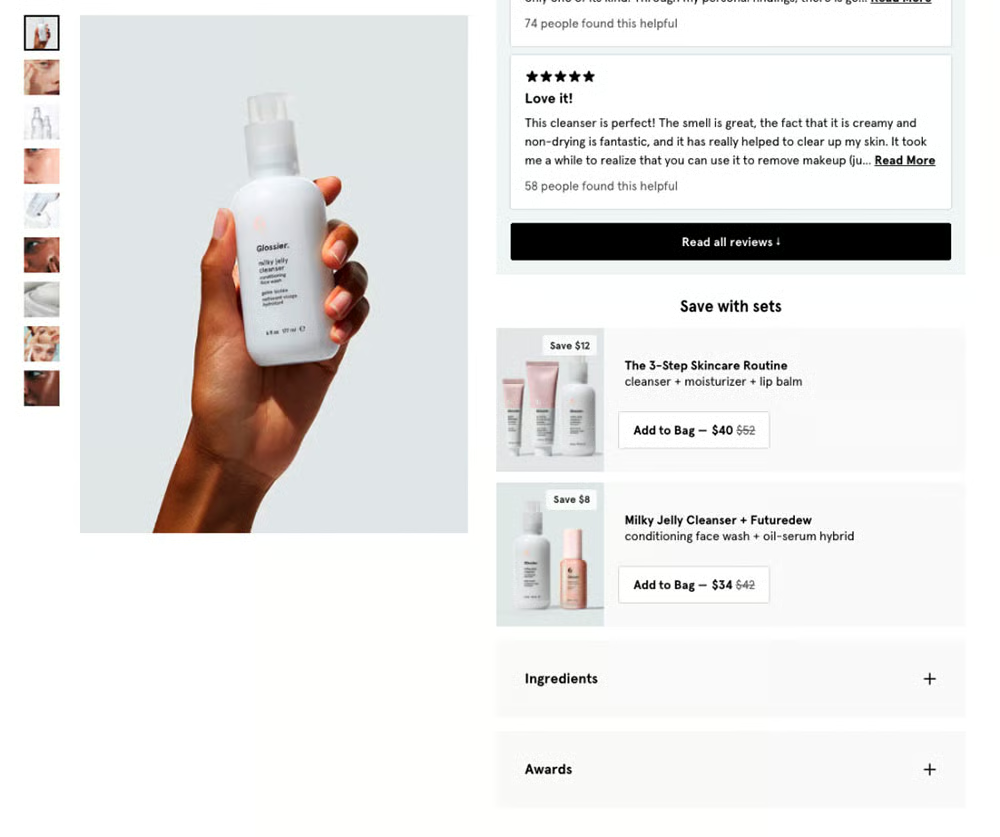
Another strategy you can try for selling excess inventory is to bundle it with best-selling products. Bundling is when you sell multiple products together at a discount. Typically, bundle items are complementary in some way, and the discount is either off of their prices if bought individually or an overall percentage off.
8. Offer a Bulk Discount
An effective way to both create a buying incentive for customers and sell through a large amount of excess inventory is to use bulk discounting. This is when you offer a discount when customers buy a certain number of a product.
For example, at my store, we had an excess of lace camisoles at the end of the summer season, so we offered a bulk discount of five for $25. This strategy works well for large and small bulk quantities, and while it will cut into your margins, it will make it easier to sell your excess inventory.
9. Consider Liquidation
Liquidation is when a company sells its inventory at a steep discount either because the business is failing or because the inventory has been deemed unsellable. Liquidation can either be bank- or court-ordered, or it can be a personal decision by the business owner.
Liquidation should come as a final resort once you have tried all other methods to sell your inventory. However, if you do come to the decision to liquidate, read our guide to liquidating inventory to learn about your options.
Tips for Avoiding Excess Inventory
Even better than the strategies we covered above is to prevent a buildup of excess inventory to begin with. While it is almost impossible to completely eliminate excess inventory, these practices can help mitigate it.
- Improve your inventory management: There are lots of ways that you can improve your inventory management practices, like performing regular stock counts, setting low stock alerts, adopting inventory management software, analyzing and reporting on your stock, and keeping track of your levels in real time. All these practices will help you have a better understanding of your inventory and a more accurate picture of your stock levels and product performances.
- Use demand forecasting: Demand forecasting is when a business uses past data and other resources to predict upcoming consumer demand so you can make better supply chain, management, inventory, and budgeting decisions. This is especially important as the economy continues to be in flux, and experts anticipate moderate retail spending growth compared to previous years.
- Understand your sales forecast: Your sales forecasting is the anticipated revenue you expect to generate during a specific time period. A clear picture of this will help you better plan your buys and predict just how much inventory you can sell through so you don’t end up with excess.
- Limit your safety stock: Safety stock is the amount of inventory a retailer should have on hand to avoid stockouts. While I agree that stockouts are never ideal, massive amounts of excess inventory are worse. For products with reliable and fast fulfillment especially, try not to go overboard with your safety stock numbers to avoid surplus.
- Buy seasonal items conservatively: Seasonal items or products tied to a specific event are great for keeping your store fresh, but they have a shorter period of relevance than most inventory and quickly become excess stock. When you are looking to purchase seasonal items, do so conservatively with the knowledge that they will only be relevant on your shelves for a short period.
Why You Should Avoid Excess Inventory
As we mentioned above, some excess inventory is simply part of running a retail business. However, mitigating it is definitely worth your time and effort. Here’s why:
First, you have to consider the carrying cost of storing goods for such a long time. Inventory carrying costs refer to all the expenses associated with holding and storing unsold merchandise. These expenses include direct costs like warehouse fees, labor, insurance, utilities, and taxes, as well as indirect costs like depreciation and shrinkage.
In addition to the costs of holding your excess inventory, there is also the question of space. If your excess inventory is taking up space, it is taking away space from new, more sellable goods. Even if you have to cut into your margins to clear it out, giving yourself back some warehouse space is important for keeping your inventory fresh and appealing to shoppers.
Finally, excess inventory often leads to decreased margins as you are forced to sell the surplus at discounted rates. Read below to learn how you can avoid incurring excess inventory in the first place and avoid these issues altogether.
Bottom Line
Excess inventory is often a result of poor inventory management and can be avoided with better sales forecasting and research practices. However, surplus is also a part of the retail game, and outside factors can make it a near inevitability. The question then becomes, how can I sell my excess stock? Here we looked at nine strategies for doing just that so you can sell your extra inventory, clear out space, and make a little money in the process.
