







Tracing a voice-over-internet-protocol (VoIP) number isn’t as simple as tracking a landline or mobile phone, but it can be done. With the right tools and methods, you can trace a VoIP number successfully by identifying its service provider, location, or even registered owner.
For small business owners, tracing VoIP numbers can help verify customers, prevent fraud, and stop spam calls that not only disrupt productivity but also threaten to steal money and personal information. The FBI reported losses of up to $16.6 billion in 2024 from online scams and other internet crimes.
This guide walks you through the practical ways to trace a VoIP number, when to involve authorities, and how to safeguard your business against VoIP-related threats.
How VoIP numbers work (and why they’re harder to trace)
VoIP is an internet-based business phone system that offers flexibility and cost savings, which is why so many small businesses adopt it. However, that same flexibility makes VoIP numbers less tied to geography and harder to trace.
A caller in another country could appear as if they’re calling from your local area code simply by selecting a virtual number during registration.
- Dynamic routing: VoIP calls automatically take the fastest network path, which changes based on server load and conditions. This makes it hard to trace the original source without carrier cooperation.
- Caller ID masking: Businesses use caller ID masking to display branded numbers, but scammers exploit it to spoof trusted identities and deceive customers.
- Number portability: VoIP numbers aren’t tied to one provider and can be transferred quickly or reassigned, complicating traceability.
- Disposable accounts: Temporary VoIP numbers and free virtual lines can be created easily or deleted, making it difficult to identify the true caller.
For more information, review how VoIP works, plus its features and costs.
Methods to trace a VoIP number
Learning how to trace VoIP numbers should not be complicated right away. You can begin by utilizing your own call records or seeking support from your VoIP provider. However, as the situation gets more serious, there are ways to handle them with the help of authorities.
1. Use a reverse phone lookup tool
A reverse lookup is the easiest way to start. Websites and apps like TrueCaller, Whitepages, or BeenVerified can identify whether a number is VoIP-based, list its carrier, or show how other users have reported it. These databases compile public information, user submissions, and spam reports to help you determine if a caller is legitimate or a potential scammer.
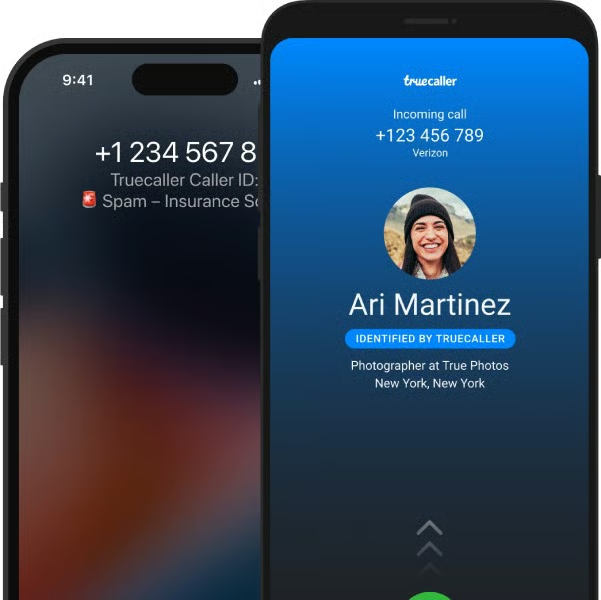
While not every VoIP number appears in public databases, reverse lookups provide quick insight without technical knowledge. They’re particularly useful for initial screening, especially if your business frequently receives cold calls or unknown client inquiries. If the number looks suspicious, you can take the next step by identifying its provider or reporting it to your VoIP service.
2. Contact the VoIP service provider
Once you suspect a number is VoIP-based, your next step is to determine which company issued it. You can use tools like VoIP Detective, WhoCallsMe, or specialized carrier lookup services to find the VoIP provider behind the number. After identifying the provider, contact their support or abuse department and share call details such as time stamps, call duration, and any related messages.
While most providers won’t release subscriber data directly due to privacy laws, they often cooperate with law enforcement or take action against abusive users. This step is particularly effective when you’re dealing with repeated harassment, phishing attempts, or fraud. The more accurate and complete your records, the faster the provider can investigate and restrict the number.
3. Review your own VoIP system logs
Your business’s VoIP dashboard or PBX system stores valuable data that can help trace suspicious calls. Review your call detail records (CDRs) and session initiation protocol (SIP) logs to see time stamps, caller IDs, and call routes. These logs often contain identifying information, such as SIP headers, caller name (CNAM), and user agents, which can reveal patterns or technical details about the caller.
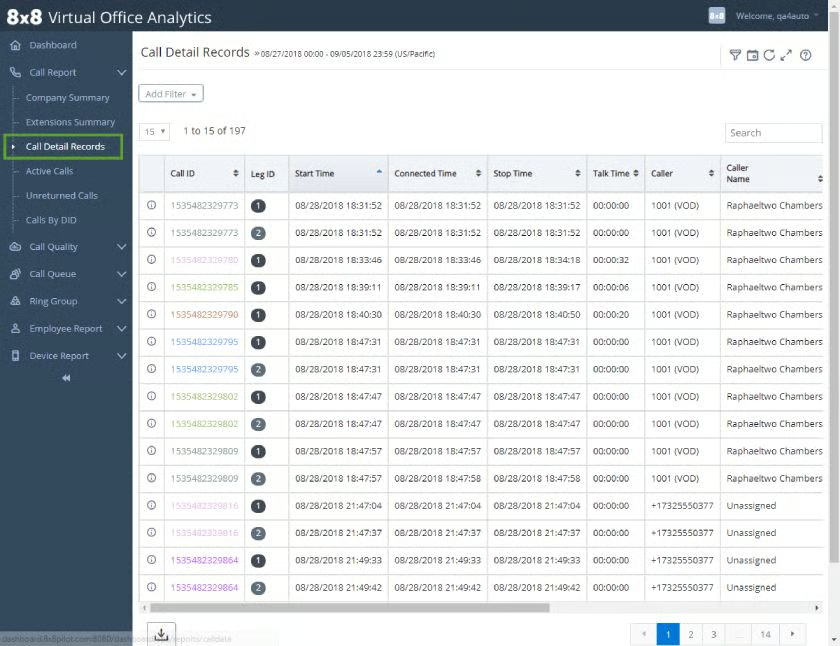
If you use a hosted VoIP provider, request log access from their technical team or admin portal. Having these records ready allows you to cross-reference them with lookup results or provide more substantial evidence when reporting issues. Even though spoofed caller names are common, your system’s logs can confirm whether a call came through legitimate channels or was routed via an external source.
4. Run IP traces or WHOIS lookups
If your SIP or system logs show an IP address linked to the call, you can take the next step by running a WHOIS or traceroute search. These tools reveal which organization or hosting company owns that IP address and where it’s registered. Often, the IP will belong to a VoIP provider, cloud service, or telecom carrier, helping you narrow down the call’s source.
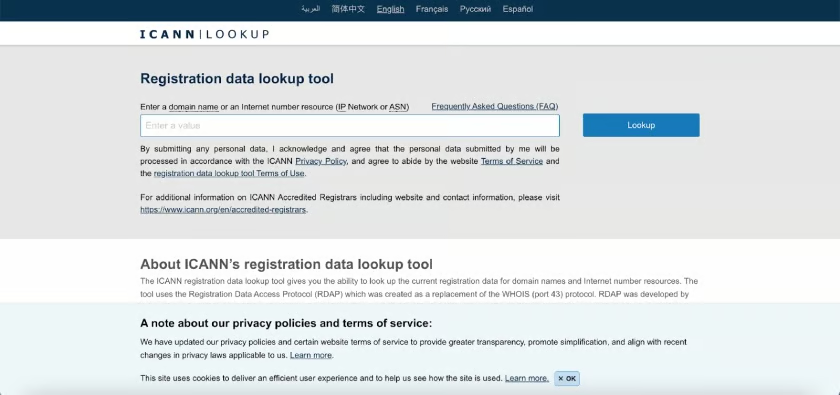
While these searches won’t directly reveal the individual behind a call, they can confirm whether it came from a recognized provider or a suspicious hosting network. This kind of trace is especially useful when you’re seeing multiple spam calls from the same IP range. Keep in mind that some results may point to large hosting providers that manage thousands of customers, so use this data as one piece of a larger investigation.
5. Check SIP or packet metadata
For businesses with in-house IT teams or managed networks, analyzing SIP metadata or packet captures offers deeper tracing capabilities. Tools like Wireshark can capture call traffic and reveal information such as originating IP addresses, proxy hops, and device signatures.
By inspecting SIP headers, especially fields like “Via,” “Contact,” or “User-Agent,” there’s a chance to identify the service or network that originated the call.
However, this is an advanced method that requires technical knowledge and should be performed only on systems your business owns. It’s particularly valuable for investigating fraud or call-spoofing incidents affecting your phone network. Always handle this data carefully, as packet captures can contain sensitive information. If in doubt, consult an IT professional or cybersecurity expert to interpret the results safely.
6. Report suspicious activities to authorities
If your findings suggest harassment, threats, or financial fraud, it’s time to involve law enforcement or regulatory agencies. In the US, you can report VoIP-related scams to the Federal Trade Commission (FTC), the Federal Communications Commission (FCC), or your local cybercrime unit. These organizations can subpoena VoIP providers to access detailed subscriber data that’s otherwise unavailable to the public.
7. Engage a cybersecurity or forensics professional
For complex or recurring VoIP threats, professional help may be your most efficient option. Cybersecurity consultants or digital forensics specialists have the expertise and legal clearance to collect and analyze detailed call routing data. They can identify patterns across networks, coordinate with carriers, and recommend specific countermeasures to prevent future incidents.
Hiring experts can be cost-effective if your business is facing ongoing spoofing, fraud, or harassment that damages productivity or brand trust. They not only trace the origin of problematic calls but can also strengthen your VoIP system’s overall security posture. For most small businesses, this is the final step, and the one that turns reactive tracing into proactive prevention.
Why you might need to trace a VoIP number
Tracing a VoIP number serves several legitimate business purposes, ranging from fraud prevention to customer verification. While VoIP calls are part of modern business communication, not every caller uses them responsibly. Understanding why and when to trace can help you protect your organization from potential risks while staying compliant with privacy laws.
To prevent fraud and scams
VoIP technology makes it easy for scammers to disguise their real identities or locations. Small businesses are frequent targets of these schemes. Fraudsters might impersonate suppliers, tech support agents, or even internal employees to request money transfers or confidential data.
Tracing a suspicious VoIP number can help you confirm whether the call came from a verified provider or a fake line. When combined with spam-reporting tools, this can significantly reduce the number of malicious calls that reach your team.
To verify customer or vendor identities
If your company regularly interacts with new clients or remote contractors, it’s crucial to ensure that their contact information is authentic. Many legitimate businesses use VoIP numbers for flexibility, but cross-checking those numbers through lookup tools or provider records adds a layer of security. This verification step can prevent miscommunication, reduce chargeback disputes, and ensure that contracts or payments go to the right party.
To report harassment or suspicious activity
The reality is that some callers intentionally misuse VoIP systems for harassment or repeated unwanted contact. Because VoIP numbers are inexpensive and disposable, abusers can quickly change numbers to avoid detection.
By tracing the number and collecting evidence, such as call logs or time stamps, you can file a more effective report with your VoIP provider, the FTC, or local law enforcement. Having detailed trace information helps authorities take faster action.
To control spam and robocalls
Persistent robocalls can waste time and resources, especially for small business owners who manage their own lines. Many robocalls now originate from VoIP-based systems because they’re cheap to automate.
Tracing these numbers lets you block them at the network level or report them to your provider’s spam database. Over time, this improves call quality and ensures your team only spends time on legitimate business calls.
Legal and ethical considerations
VoIP tracing falls under several privacy laws, including the Electronic Communications Privacy Act (ECPA) and General Data Protection Regulation (GDPR) for international contacts. Businesses can perform basic tracing to protect operations, but cannot conduct unauthorized surveillance or use hacking methods.
Before tracing a number beyond public data, consult your legal counsel or your VoIP provider’s acceptable use policy. Unauthorized tracing attempts could expose your business to liability or service suspension.
Security risks of untraceable VoIP numbers
Fraudsters often exploit VoIP technology to impersonate legitimate organizations or target small businesses. Common tactics include:
- Phishing calls, where callers pretend to be vendors or clients and request payments.
- Tech support scams, where callers pose as IT staff to gain remote access.
- Spoofed numbers, where callers display fake caller IDs to appear local or familiar.
Recognizing these risks early helps you train your team and tighten your call verification protocols.
How to protect your business
While tracing suspicious calls helps, prevention is your strongest defense. Secure your communication system using these best practices, like filterng spam, verifying callers, and training employees.
Spam filters and call blocking
Use spam-blocking services or enable your VoIP provider’s built-in spam filter. These tools automatically screen incoming calls against known robocaller and scam databases, reducing unwanted disruptions. Over time, they learn from new reports to better identify and block emerging threats.
Caller verification and authentication
Choose a VoIP system that supports STIR/SHAKEN authentication or verified caller ID. These standards confirm that the caller’s number hasn’t been spoofed and that it matches a legitimate source. This technology makes it harder for scammers to impersonate real businesses or local area codes when reaching your team.
Employee security training
Even with strong technology, human awareness is your first line of defense. Hold regular training sessions to teach staff how to verify unfamiliar callers, recognize phishing attempts, and avoid sharing sensitive information over the phone. A quick internal checklist (i.e., verifying the caller’s department or callback number) can prevent costly mistakes.
Encouraging employees to report suspicious calls rather than ignore them also helps you track patterns and coordinate with your VoIP provider. It turns security from an IT issue into a shared responsibility across your organization.
Secure VoIP setup and access controls
Make sure your VoIP platform and connected devices are configured with strong passwords, two-factor authentication, and encryption. These settings protect your accounts from unauthorized logins and prevent hackers from intercepting call data. Regularly review who has admin access to your system and revoke permissions that are no longer needed.
Network monitoring and intrusion detection
Set up network monitoring tools or firewalls that can detect unusual traffic, especially repeated failed login attempts or high call volumes from unknown IP addresses. Many VoIP routers and platforms have built-in intrusion detection systems that send alerts for suspicious behavior. Continuous monitoring helps identify threats before they escalate into data breaches or service interruptions.
Keep software and hardware updated
Regular updates are a simple but powerful defense against VoIP threats. Outdated firmware, routers, or apps often contain vulnerabilities that attackers exploit. Schedule routine checks to ensure your phones, firewalls, and VoIP software are always running the latest versions released by your vendor.
Choose a reputable VoIP provider
Not all VoIP services offer the same level of protection. Work with established providers that comply with modern security standards like the Health Insurance Portability and Accountability Act of 1996 (HIPAA) or SOC 2, where applicable. These companies typically include encryption, fraud monitoring, and verified routing as part of their infrastructure, keeping your communications secure by default.
Frequently asked questions (FAQs)
Are VoIP numbers anonymous?
Not completely. While VoIP technology can mask a caller’s identity, the provider still maintains records that can be accessed through proper legal channels.
Can police track VoIP calls?
Yes. Law enforcement can subpoena VoIP providers to obtain call logs, IP addresses, and account details in investigations of fraud or criminal activity.
Is tracing a VoIP number legal?
Yes, tracing is legal if you use public tools or ask your provider for help. It becomes illegal only if you try to access private data without consent or proper authority.
Bottom line
Tracing VoIP calls can be complex, but using the proper methods and tools, such as phone number and IP address lookups, can effectively identify call origins and enhance your security measures. The techniques outlined in this guide will help you address potential threats and ensure reliable communication.
Learning how to trace VoIP calls is only part of the solution. It’s equally important to choose a reliable VoIP provider that implements robust security measures, such as encryption and access controls. Integrate these approaches to protect your phone system from potential threats.
